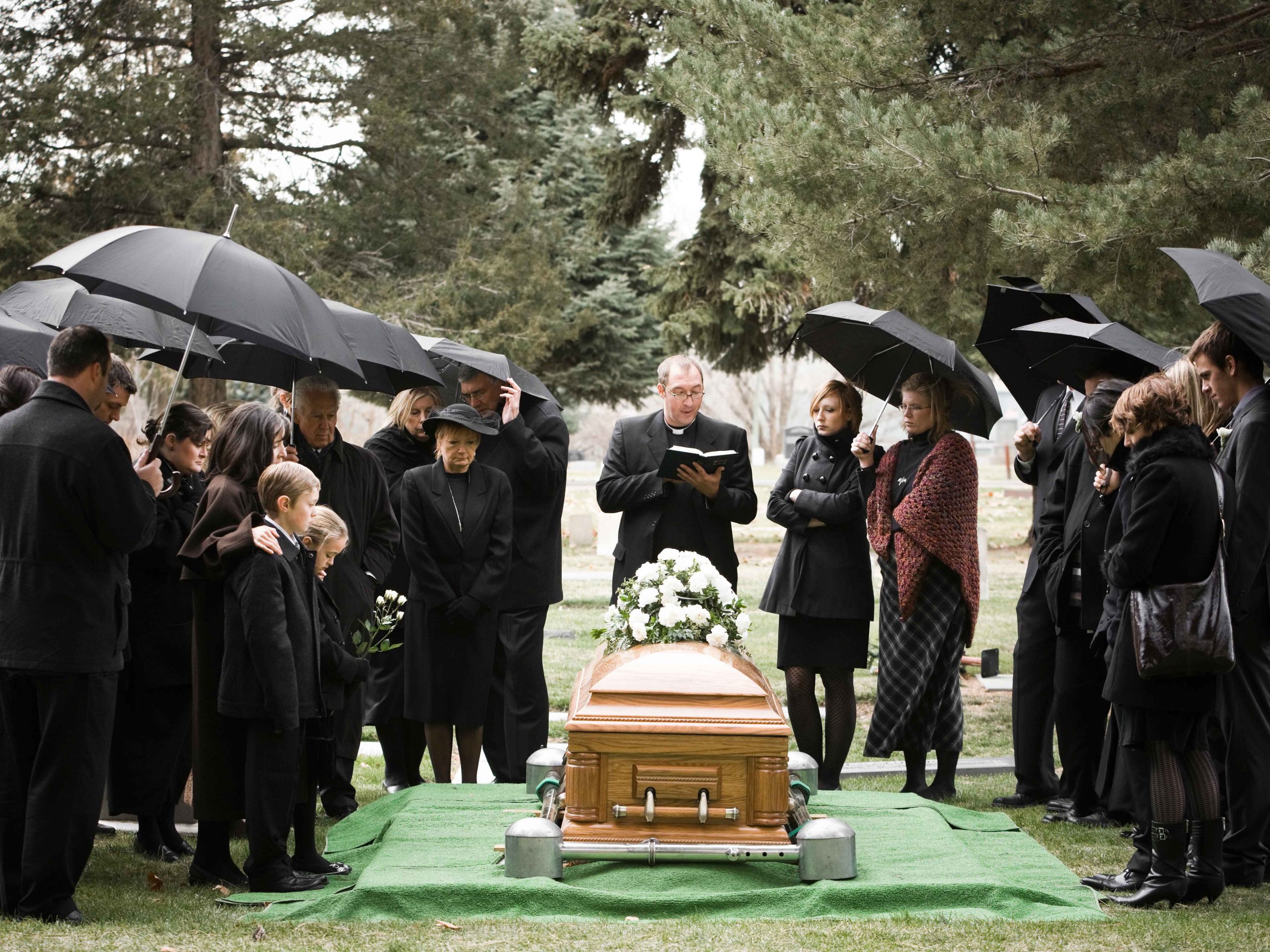
I walked in from the funeral with the smell of wet earth still on my coat, and my husband would not even let me sit down.
He looked straight at me and said, in a voice with no heat in it at all:
“Mom left everything to me. You have two days to pack.”
I had been caring for his mother for ten years.
Ten years of appointments and pill organizers and midnight fevers. Of lifting and cleaning and swallowing my own exhaustion so she would not have to see it on my face.
And that afternoon, after the pastor’s soft words about peace and rest, after the last wet clods of earth had thudded down onto the casket, I came home and found Ryan, his sister Lisa, and a man in a gray suit already sitting in my living room.
On the coffee table was a neat stack of papers, squared up like they’d rehearsed the placement in the car on the way back from the cemetery.
The man opened the pages and read out clearly:
“The house goes to Ryan. Elena receives five thousand dollars for her service. You have forty-eight hours to vacate.”
I did not argue.
I did not cry.
I walked back outside like a stranger in my own home.
Three days later, in a motel room off the highway, I opened the envelope Margaret had pressed into my hand before she died.
And that is when everything started.
February in Ohio does a particular thing to a person.
The sky comes down low and gray and stays there for six weeks. The air is damp without ever committing to rain. It’s the kind of cold that gets into your bones and settles in and does not leave until April.
My shoes were still wet from the cemetery grass when I unlocked the front door. My hands were still shaking from the moment I let go of the casket handle and watched it go down.
I expected an empty house.
Instead I walked into something that had clearly been staged.
Ryan was on the couch with his legs crossed like a man in a hotel lobby.
Lisa sat beside him with her purse in her lap, her back very straight, and something almost eager in her posture.
And across from them, in the armchair by the window where Margaret used to sit with her tea in the afternoons, was a man I had never seen in my life.
Gray suit. Too formal for a house that still smelled faintly of antiseptic wipes and Margaret’s lavender soap.
For about half a second I thought maybe they were waiting to talk about paperwork. The funeral home invoice. Something normal. Something human.
But nobody stood up when I came in.
Nobody said I’m sorry for your loss.
Nobody asked if I was all right.
They just looked at me the way people look when they’ve been waiting for a witness to finally show up so the thing can begin.
I closed the door behind me slowly. The latch sounded much louder than it should have.
My coat was soaked through at the shoulders and the fabric was cold against the back of my neck.
Ryan didn’t even pretend to be uncomfortable. He leaned back and rested one arm along the top of the couch.
Lisa’s eyes went to my wet shoes, then the floor, then back to my face. The corners of her mouth twitched like she was holding something in.
The man in the suit cleared his throat.
And that was the moment I understood.
This was not a conversation.
It was an announcement.
“Elena,” Ryan said, without getting up. “We need to talk.”
I didn’t answer him. I stood by the door with my keys still in my hand and my heart going too loud in my ears, the way a body does when it’s trying to warn you about something your mind hasn’t caught up to yet.
The lawyer opened a leather folder and adjusted his glasses.
He introduced himself. His name went straight past me and I have never been able to retrieve it. All I could see was that folder on his knee, thick and official, sitting there like a verdict.
He said he was there to read the will.
He did not ask me to sit down.
Nobody did.
I stayed where I was, near the door, because some part of my body already understood I might need to leave quickly.
He began to read.
His voice was calm and measured and completely professional. The kind of voice that has never once broken in a room where a life was coming apart.
“The house,” he said, “will go to Ryan.”
Something tilted inside me, like the floor had moved three inches to the left.
“The savings will also go to Ryan.”
He turned a page.
“Elena,” he said, glancing up briefly, “will receive five thousand dollars for her service.”
For her service.
The words did not land all at once. They came in slowly, in pieces, like glass.
Five thousand dollars.
Ten years reduced to a line item on somebody’s balance sheet.
Feeding her. Bathing her. Lifting her out of a chair with my knees locked and my arms burning. Sitting through eleven rounds of chemotherapy. Cleaning up blood and vomit and fear. Sitting upright at three in the morning with my hand flat on that woman’s chest, counting each breath like counting could keep her here.
Five thousand dollars.
Lisa made a small sound. Something between a laugh and a scoff. She didn’t even bother covering her mouth.
The lawyer wasn’t finished.
He squared the papers on his knee and said, almost gently, that I would have forty-eight hours to vacate the premises.
“Forty-eight hours?” I heard myself say, and my voice sounded like it belonged to somebody else in another room.
As though I were a tenant whose lease had run out.
Not the woman who had slept in the next room for a decade listening to another woman’s breathing, waiting for it to change.
Ryan finally stood up.
He came toward me and stopped just far enough back to feel safe about it, and his face was hard and completely decided.
“You heard him,” he said. “This is how it is.”
I looked at that face. The face I had kissed. The face I had defended at Christmas when his cousins made jokes about how rarely he came around.
I searched it for something I recognized.
There was nothing there.
“You’re not family,” he added. “You were the caregiver.”
Lisa smiled openly at that. Quick and sharp, gone almost before it arrived, like she genuinely could not help herself.
The lawyer cleared his throat again and used the word eviction, carefully, the way you set down something breakable.
He explained what would happen if I didn’t comply. Legal steps. Notices. Enforcement.
I stopped listening after that one word.
Eviction.
It went around in my head louder than the sound of the door closing behind me when I’d walked in.
I looked around that room.
At the sofa Margaret and I had picked out from a catalog in 2017 because the old one was too low for her to get out of.
At the framed photograph on the wall of her standing in that exact spot years earlier, healthy, laughing, before illness rearranged the entire architecture of all our lives.
And I understood something with a terrible clarity.
This was not my home anymore.
It had been taken from me while I was standing at a grave.
I thought about screaming.
I thought about asking how they could possibly do this on the same day we buried her. About reminding Ryan exactly where he had been on the night his mother’s fever hit 104 and I drove her to the emergency room by myself at two in the morning.
None of it came out.
Ten years of caregiving teaches you something most people never have to learn.
You do not waste energy on noise.
You save it for what actually matters.
So I nodded.
I said nothing at all.
I turned and went upstairs.
I packed a small bag. I didn’t take much — just what I could carry without my hands shaking hard enough to drop it.
When I came back down, all three of them were still sitting there, watching me like I might change my mind.
I didn’t look at any of them.
I walked out the front door, past ten years of a life built entirely around another person’s needs, and into the cold.
And I carried out with me the one thing none of them knew existed.
An envelope Margaret had pressed into my hand nine days before she died, with her fingers closed around mine, telling me not to open it until she was gone.
I need to go backward for a while, because otherwise you’ll wonder how a person lets it get this far.
Ten years before that afternoon, I drove home from a hospital on that same road with my hands gripping the steering wheel so hard my fingers went numb.
Margaret had a stroke on a Tuesday in March.
My phone buzzed in the passenger seat the whole drive. Ryan’s name, over and over, until it stopped.
Back then I had a life that was just starting to open up.
I was thirty-four. I had a steady job as an office manager at a dental group in Dublin. I had plans I said out loud to people. I had mornings that belonged to me.
All of that ended in a fluorescent hallway when a doctor pulled us aside and spoke in careful, measured sentences about brain damage and mobility and long-term care needs.
Ryan stood beside me nodding and saying all the right things.
“We’ll figure it out,” he said.
Lisa cried with her hand pressed to her mouth, which is a gesture I have seen that woman perform in six different rooms over twelve years.
Somebody had to make a decision quickly, the doctor said.
Somebody had to stay.
Ryan had a job with responsibilities he could name out loud and have people nod sympathetically about. Lisa said she wasn’t good with medical things.
And so, without a family meeting, without a single formal conversation, without anybody ever once asking me directly, the entire thing settled onto my shoulders like it had always been designed to land there.
At first I told myself it was temporary.
Just until she got stronger.
Just until rehab was finished.
Then the cancer came, quietly, three years later, hiding behind vague symptoms and tired smiles until the scans made it impossible to keep pretending.
Liver. Aggressive. The kind that turns weeks into months and months into years of appointments and medications and side effects that no brochure ever fully prepares you for.
I moved into the spare room.
Then my clothes moved into the hallway closet, because we needed the spare room closet for supplies.
And eventually I stopped thinking of myself as somebody who lived there at all.
I was just the person who was always present.
My days became measured in doses and alarms.
Six a.m. medications. Breakfast, which took forty minutes. Mid-morning. Appointments. Afternoon dose. Dinner. Night check at ten. Night check at one, if the day had been bad. Night check whenever the sound changed.
I learned how to lift a woman without hurting her or myself. How to clean a wound without flinching where she could see it. How to smile when she apologized for needing help getting to the bathroom.
I learned the exact sound of pain she made when she was trying not to wake me at three in the morning. That particular hush. That meant run.
I slept lightly for ten years. Always listening.
There is a kind of exhaustion that settles so far into your bones that it becomes invisible to you. You stop noticing it, because there’s no alternative on offer.
Ryan and Lisa visited on holidays.
Thanksgiving. Christmas. A birthday here and there.
They brought flowers. Expensive ones, still in the crisp paper from the shop. Sometimes a pie from the bakery counter at Kroger — the kind of thing people bring when they want the credit without the effort.
They stayed an hour. Sometimes two.
They talked about how strong she looked. How well she was doing.
Ryan would clap me on the shoulder on his way out and say, “You’re amazing. We couldn’t do this without you.”
Lisa would promise to come by more often. To give me a break. To help once things slowed down at work.
Nothing ever slowed down at work.
The promises evaporated the second the front door closed behind them.
Weeks would pass. Then months.
If I called, Ryan would say, “Mom sounded fine on the phone.”
Lisa would say, “You know how dramatic she can be.”
They believed whatever was convenient.
I lived with what was real.
There were nights when the pain medication stopped working and Margaret cried quietly, embarrassed by her own tears, apologizing to me for crying.
I sat on the edge of that bed holding her hand telling her it was okay. That she was not a burden. That she was loved.
Nobody else in that family ever heard those words said in that house.
Nobody else saw the way her body shook when the pain spiked, or the effort she put into being brave about it for my sake.
When the hospice nurse finally came, in the last November, she looked around the house and then at me with something like surprise.
“You’re doing this alone?”
I nodded.
It had genuinely never occurred to me that there was another option available.
I have never thought of myself as a victim. That word implies anger and injustice and something owed.
I thought of myself as somebody who stayed because leaving was not something I could have lived with afterward.
Every time resentment came up in me, I pushed it back down, because resentment costs energy and Margaret needed what little I had left.
So I gave it to her.
I put my career on hold.
Then I stopped answering emails.
Eventually nobody asked anymore.
My whole world narrowed to the size of that house. To the sound of her breathing. To the small victories of a good day and the quiet grief of a bad one.
The motel sign was flickering when I pulled in, one letter dimmer than the rest, buzzing faintly in the cold.
I didn’t recognize the name. I didn’t care to. It was near the highway and it was cheap and it had a VACANCY sign glowing red.
Inside, the lobby smelled like old coffee and industrial cleaner. The man behind the desk didn’t look up. He slid a clipboard across, took my card, and gave me a key without asking me one question.
Standing there with my coat still on, I realized something.
It was the first time in ten years that nobody in the world needed anything from me.
The room was small and dim. The carpet was worn thin in a path where a thousand people had walked before me. A heater rattled in the corner and coughed out bursts of warm air on no discernible schedule.
I sat on the edge of the bed and waited for my body to react.
Crying, maybe. Panic. Something.
Nothing came.
I took off my shoes and lined them up neatly against the wall, a habit that would not leave me even there.
Everything I owned fit in one bag.
A change of clothes. Toiletries. A few papers I hadn’t had the heart to throw away.
And at the bottom, still sealed, the envelope.
I didn’t touch it. I closed the bag and pushed it under the bed, as if putting distance between myself and the last unknown thing might make the night easier to get through.
The first night I did not sleep at all.
Every time I closed my eyes my mind replayed that living room in fragments. Ryan’s voice. Lisa’s smile. The word eviction.
I wasn’t angry in the way people expect anger to look. There was no fire in it, no urge to call anybody and demand anything.
What I felt was hollow. Like something essential had been scooped out and taken.
In the morning I counted the money.
Five thousand dollars. The transfer had already gone through. Efficient. Impersonal.
I did the math automatically the way I always had.
Motel rate. Food. Gas.
Three weeks, if I was careful. Maybe four.
I went to a grocery store in a strip mall between a dollar store and a nail salon and bought bread, peanut butter, and soup, and stood in line watching the total climb on the little screen with my stomach getting tighter with every item.
I had paid for medications that cost more than that in a single month for a decade, and I had never once kept track.
Now every dollar mattered.
On the second night I dreamed she was calling for me.
I woke up gasping with my heart going and my body already moving before my mind caught up.
It took me a few seconds to understand where I was.
The motel. The bed. The heater.
No monitor. No footsteps down a hallway. Nobody needed me.
That brought an ache I had not expected at all.
For ten years my purpose had been defined entirely by another person’s survival.
Now it was gone, and I did not have the first idea who I was supposed to be without it.
By the third day the room felt smaller. I paced the length of the carpet counting my steps.
I had nothing left to lose. The house was gone. The family I thought I had was gone. My past had been converted into a transaction and read out loud by a stranger.
I stopped in the middle of that room and looked under the bed.
I pulled the bag out and took the envelope and set it on my lap.
The paper was thick. The edges were worn slightly where Margaret’s fingers had held it, and I could see the faint impression of her handwriting pressed through from the other side.
She had made me promise.
I remembered the weight of her hand on mine on one of the rare days near the end when the medication haze lifted and her eyes came back.
Don’t open it until I’m gone.
I had kept that promise through the funeral. Through the drive home. Through being told to get out of my own house in forty-eight hours.
Now, alone in a room that smelled like bleach, I finally understood why she had made me wait.
She had not given me that envelope to spare me pain.
She had given it to me because she knew I would need something solid in my hands at the exact moment everything else came apart.
I slid my finger under the seal.
The paper tore with a sound barely louder than a breath, and it was the loudest thing in that room.
Inside was not money.
It was a small metal key, taped carefully to a folded sheet of paper.
The key was cold and heavier than it looked. The kind used for old lockboxes. A white tag was attached to it in neat handwriting.
First National Bank. Safe deposit box.
I unfolded the paper.
Margaret’s writing. The careful deliberate strokes that had gotten shakier over the years but never lost their precision.
Elena, it began.
If you’re reading this, then I’m gone, and I need you to listen to me now the way you always have.
I had to stop and press the page flat against my knee.
I know my children. I have made excuses for them far too long, the same way you have. But I see clearly now.
My hands were shaking.
I know what they will try to do.
The will they show you is not the real one.
The real will is in the box.
There is also a video.
I did this to protect you. It is already set in motion.
A chill went through me that was not fear.
It was recognition.
She had not been guessing.
She had been preparing.
Call Mr. Harris.
There was a phone number written carefully in the margin.
He helped me with everything. He knows. He has been waiting for you.
I’m sorry I couldn’t make this easier. You deserve better than what’s coming.
And at the bottom, in smaller letters:
Please forgive me for not being braver sooner. I love you.
I sat there a long time with that paper in my hands and the key dull under the weak motel light.
There was no rush of triumph. No relief.
What I felt was a deep quiet sadness with something else underneath it that I had not expected.
Being seen.
Margaret had seen me. Not as the daughter-in-law who stayed. Not as the caregiver who made her life possible. As a person who was going to need protecting, from her own children, and who would not do it for herself.
She had known I would not fight loudly. That I would not demand anything I was owed.
So she had done it for me, the only way she still could.
I thought about every night she apologized for needing help. Every time she thanked me for something that should not have required gratitude.
I had always told her she didn’t owe me anything.
Sitting on that bed, I understood how wrong I’d been.
She didn’t owe me a house or money.
She owed me the truth.
And she had put it in an envelope and made me carry it until I was alone enough to hear it.
The law office was above a bakery on a quiet street downtown.
I could smell bread the whole way up the stairwell.
The office was modest. Wooden furniture. Framed certificates gone yellow at the edges. No glass walls, no sharp lines, nothing designed to intimidate.
The man behind the desk stood up when I came in.
He was older than I’d expected. White hair. Unhurried but precise. His handshake was firm enough to feel like something to hold onto.
“Elena,” he said. “I’m glad you came.”
He didn’t ask how I was. He didn’t offer condolences. He gestured to a chair and waited until I sat before he took his own.
I put the envelope on his desk.
He nodded like he’d expected nothing else.
“Margaret came to see me eight months ago,” he said. “She was very clear. Very determined.”
He didn’t sound surprised. He sounded respectful.
“She asked me to be patient. She said if you ever came, it would mean things had gone exactly the way she was afraid they would.”
I told him what had happened. Not in detail. Just the facts.
The living room. Ryan. Lisa. The lawyer. The will. The forty-eight hours.
I watched his face the entire time, looking for disbelief.
There wasn’t any. He listened without interrupting once, hands folded on the desk.
When I finished he let out a slow breath.
“They showed you a will,” he said, choosing his words carefully. “But it was not the one she executed with me.”
He asked for the key. I gave it to him. He looked at it briefly and set it aside.
“That belongs to a box she opened in her own name. She asked me to hold certain documents here until the right moment.”
Then he looked at me. Really looked, the way you measure something.
“Before we go further, I want you to understand something. What you’re about to see will not fix what they did to you. But it will change who has the power.”
Power.
I had gone ten years without it and had never once noticed it was missing.
He went to a metal cabinet along the wall and unlocked it with a key of his own.
Inside were labeled folders and a USB drive sitting on top of one stack.
He brought them back and set them on the desk between us.
“This is Margaret’s last will and testament. Properly executed. Notarized. Filed.”
He didn’t open it. He let the sentence sit there.
“I’ve been expecting you,” he said. “She was worried you wouldn’t come. She thought you might decide it wasn’t worth the fight.”
The old instinct went through me. Step back. Make it smaller. Don’t be trouble.
He must have seen it happen on my face, because he leaned forward slightly.
“She also believed you deserved to know the truth,” he said. “Even if you never chose to act on it.”
He opened the folder.
The house was left to me. Not shared. Not conditional. Mine.
A portion of the savings was also left to me, specified down to the dollar.
Ryan and Lisa were named further down, receiving considerably less. Even that came with conditions attached.
Then he reached for the USB drive.
“There’s something else. She insisted on it.”
He put it in his laptop and turned the screen toward me.
For a second there was nothing.
Then her face filled the frame, and the room seemed to close in around me.
She was in the blue armchair. She was wearing the blue cardigan I’d given her two Christmases before.
Her hair was thin. Her skin was pale.
But her eyes were clear. Clearer than I had seen them in a long time.
She looked straight into the camera. Not smiling. Not apologizing.
Just present.
“My name is Margaret,” she said. “I am of sound mind.”
A pause. A faint smile.
“My body is failing me. My mind is not.”
She folded her hands in her lap.
“I’m making this recording because I know what happens in families like mine when somebody dies.”
She did not raise her voice. She did not sound angry.
She sounded tired, and resolved.
“My son Ryan and my daughter Lisa have not been present in my care. They visit when it’s convenient. They call when they remember. They have chosen not to be here, and that was their choice to make, and I am not going to pretend otherwise now.”
Hearing their names said out loud like that — plainly, without a single excuse attached — went through me like current.
Margaret had never said any of this in front of me while she was alive.
She had protected them.
She was not protecting them anymore.
“My daughter-in-law Elena has been my caregiver for ten years,” she said. “She has bathed me. Fed me. Lifted me. Taken me to every appointment. Sat with me through pain and fear and nights when I did not think I would see the morning.”
Her voice went for a second. Then it came back.
“She has done all of it without complaint, without expectation, and without help from anyone in this family.”
My throat closed. My hands went into fists in my lap.
I did not look away.
“The house belongs to Elena,” she said.
“The money belongs to Elena.”
No flourish. No dramatic pause. Just fact.
“She has earned it, though nothing could ever truly repay what she has given me.”
Then she leaned toward the camera, and her expression sharpened.
“If anyone attempts to take this from her — if anyone produces a different will — know that it is not mine. I am saying this now so there can be no confusion afterward.”
She straightened up. The effort of it showed.
“This is my final decision.”
The screen went black.
The silence after it pressed down on my chest. I realized I had been holding my breath and let it out.
My whole body was shaking.
Mr. Harris poured me a glass of water and slid it across the desk without saying anything.
“There’s more,” he said, when I’d drunk some of it. “When you’re ready.”
He opened another folder. Thicker. Heavier.
Inside were pages and pages of handwritten notes in Margaret’s script.
Dates. Times. Observations.
She had kept a journal for the last three years documenting who visited, who called, and who didn’t.
Broken promises. Missed holidays. Two requests for money that came with no offer of help attached.
And my name on nearly every page.
Sometimes just a phrase.
Elena stayed.
Elena handled it.
Then medical records. Appointment summaries. Medication lists. Hospice reports with the names of nurses who had come and gone.
And in the assessments, the same line appearing over and over:
Primary caregiver present. Family absent.
He showed me signed statements from two hospice nurses attesting that I was the only family member consistently at that bedside in the final weeks.
One of them, in careful handwriting:
Daughter-in-law provided all care. No other relatives present during night hours.
I sat there looking at all of it with a strange mixture of things moving through me.
Vindication, yes.
But grief too, because I had never asked Margaret to document my life. She had turned our ten years into evidence, and she had done it because she knew nobody else would.
“She was worried you wouldn’t fight,” Mr. Harris said quietly. “She told me you were the kind of person who’d walk away rather than make a scene.”
He looked at me over the top of his glasses.
“So she made sure you wouldn’t have to.”
I thought about that living room. Ryan’s certainty. Lisa’s smile. How small I had felt standing by that door with my keys in my hand.
How easily a decade of my life had been erased in ninety seconds by a man in a gray suit.
Sitting there surrounded by proof, something in me came loose.
Not rage. Not triumph.
Closer to release.
“What happens now?” I asked. My voice was steadier than I felt.
He stacked the folders carefully.
“Now,” he said, “you decide what to do with the truth.”
He met my eyes.
“Whatever you choose, you won’t be doing it without proof. And you won’t be doing it alone.”
I asked for a copy of everything.
Then I drove to the police station.
It was quieter than I expected. Neutral walls, fluorescent lights, that faint disinfectant smell that reminded me of hospital corridors.
I told the officer at the desk that I needed to file a report.
“What kind?”
I took a breath.
“Forgery. Fraud. Elder abuse.”
The words felt enormous in my mouth. Heavier than anything I’d said out loud in years.
He didn’t raise an eyebrow. He nodded and asked me to sit down.
The detective who came in was about my age with her hair pulled back and an open, focused expression.
I told her everything from the beginning.
I slid the folder across the table and watched her posture change when she saw what was in it.
When I finished she sat back and folded her hands.
“I want to be very clear with you,” she said. “This is not a civil family dispute.”
She gestured at the papers.
“Presenting a forged will, attempting to transfer property on the basis of it, and using it to force someone out of their home is serious criminal conduct. If there was intent — and from what you’re describing, there was — this is felony fraud.”
She paused.
“If Margaret was medically vulnerable at the time they created that document, that opens the door to elder abuse charges as well.”
My stomach tightened.
Not with fear. With relief.
Naming a thing correctly has power in it.
For four days I had been walking around wondering whether I was overreacting. Whether speaking up would make me look petty. Whether I was making a scene.
Hearing a professional stranger call it exactly what it was cut clean through all of that.
“I don’t want revenge,” I said. “I just don’t want them to get away with it.”
She nodded.
“That’s how most of these start. Somebody finally decides to stop protecting the people who hurt them.”
She told me not to contact them. Not to warn them.
“We’ll handle that. If they believe their document is valid, they won’t destroy it. And if they do destroy it, that tells us something too.”
Three days later she called.
“We’re going to the house today. I wanted you to know.”
She didn’t ask me to come. She didn’t tell me to stay away. She just gave me the choice.
I drove over and parked across the street, far enough back that nobody would notice me.
The house looked exactly the same. Sun on the windows. The yard neatly trimmed.
Ryan’s car in the driveway. Lisa’s behind it.
The front door was standing open and I could see movement in the hallway.
There were boxes stacked near the entrance. Some of them labeled in Lisa’s careful handwriting.
CHRISTMAS. KITCHEN.
A cruiser turned the corner with its lights off and stopped in front. Another came behind it.
Two officers walked up the path and knocked.
Ryan appeared in the doorway with the relaxed posture of a man who believes everything is settled.
I couldn’t hear a word from where I sat, but I watched his face change.
Confusion. Then irritation. Then something brittle.
Lisa came up behind him, peering over his shoulder, her hands going.
One officer raised a hand and stopped her mid-sentence.
They asked both of them to step outside.
Ryan hesitated for one second, then came out onto the porch still talking, still explaining, gesturing back toward the house and the boxes and the rooms he had already started claiming.
That’s when the handcuffs came out.
It was quieter than I had imagined it. No shouting. No struggle.
Just the soft click of metal closing around two pairs of wrists that had been so certain of themselves four days before.
Ryan’s mouth came open and no words arrived.
Lisa went completely white and looked around the street like she was searching for somebody to make this stop.
There wasn’t anybody.
They were read their rights on that porch. Ryan’s voice changed as he tried again, and it had lost its edge entirely. Lisa began to cry, loudly, nothing at all like the composure she’d worn in my living room.
I watched from across the street, unnoticed.
Behind them, the house stood silent.
It wasn’t his house. It never had been. And for the first time, that was being said out loud in actions instead of words.
The boxes sat abandoned on the porch. I could see the corner of a picture frame sticking out of one, with Margaret’s handwriting faint on the back of it.
For a moment anger came up sharp.
Then it went, and left something steadier.
As they were walked down the steps, Ryan’s eyes went up and down the street, searching for sympathy, for an ally.
They did not land on me.
I stayed still.
Neighbors came out onto porches. Curtains moved. A woman two houses down put her hand over her mouth.
I wondered what stories would get told later. What assumptions would get made.
I found I did not care about any of it.
The cars pulled away and the street settled back into stillness the way it does after something irreversible.
I did not feel triumph.
I felt a quiet alignment, like something deeply crooked had finally been set straight.
Eventually I started the car and drove away. I didn’t go inside.
I didn’t need to.
The court process moved slowly, the way serious things always do.
Weeks turned into months, marked by envelopes and by calls scheduled days ahead.
Filings. Motions. Hearings set and postponed.
Through all of it, the facts stayed exactly the same.
The forged will. The recorded video. The journals. The hospice statements. The signatures that did not match.
Evidence doesn’t argue. It waits.
When the plea negotiations started, Mr. Harris called me first.
“They’ve retained counsel,” he said. “And they’ve seen what we have.”
A pause.
“They’re prepared to plead guilty to forgery and fraud.”
Guilty.
Not misunderstood. Not misrepresented.
Guilty.
The day the pleas were entered, I sat at the back of the courtroom and nobody noticed me.
Ryan looked smaller than I remembered. His shoulders were rounded. Lisa’s hands were clasped so tightly her knuckles had gone white.
When the judge asked how they pleaded, their voices were barely audible.
The word went up into the ceiling and disappeared like a breath let out.
Ryan received a custodial sentence with a portion suspended, plus significant fines. Lisa received a shorter term and probation.
The gavel came down once, clean.
Nobody clapped. Nobody cried.
Justice, I learned that year, almost never announces itself.
The will was executed without delay.
The house transferred into my name, clean and uncontested. The funds were released according to Margaret’s instructions, itemized and exact.
I signed the papers with a hand that did not shake.
Mr. Harris slid the last document across and said, “It’s done.”
They asked to speak to me once, through their attorneys.
I agreed to a brief meeting in a neutral office with the door open.
Ryan apologized first. He said the things people say when they have run out of options. Pressure. Fear. Mistakes.
Lisa apologized more quietly, with her eyes on the table.
I listened without interrupting, with my hands in my lap.
When they were done, the room went still.
“I hear you,” I said. And it was true. I did.
“But I’m not ready to forgive.”
I didn’t raise my voice. I didn’t list grievances. I didn’t explain myself.
Forgiveness is not an obligation. It’s a choice that requires time and safety, and I had only just gotten one of those back.
I moved back into the house on a quiet Tuesday morning.
Everyone assumed I would sell it. Agents left cards in the mailbox. Distant relatives suggested it gently, the way you suggest closing a wound.
I thanked them and did nothing.
That house was not a burden to me. It was a record. Every hallway and corner held the shape of years that mattered, even when nobody had been looking.
Selling it would have felt like destroying the evidence.
I unpacked slowly. Not because I was overwhelmed, but because I was learning to live without urgency.
For ten years everything had been immediate. Pills at this hour. Appointments at that one. Emergencies that could not wait.
Now the days went out ahead of me, quiet and undecided.
I opened the windows every morning and let air move through rooms that had been sealed tight against illness for a decade.
In the living room I hung a photograph of Margaret I hadn’t seen in years — standing in the backyard in sunlight, laughing at something outside the frame.
Not the woman from the hospital bed.
The woman she was before pain narrowed her whole world down to one room.
The idea came quietly, the way the good ones do.
It started at the pharmacy counter. Then again at the grocery store.
People heard what had happened and told me their own stories in lowered voices. Years spent caring for a parent, a spouse, a sibling. Jobs abandoned. Lives on hold. Gratitude almost never expressed.
When I said I understood, I watched their shoulders come down.
Recognition can be as powerful as help.
I used part of what Margaret left me to start something small.
Not a foundation with a name on a building. A network.
A place where caregivers could come once a week, sit in a circle, and talk without having to explain themselves first.
We met in my living room with folding chairs borrowed from the community center.
I called it At Margaret’s House.
Not because it was hers. Because she made it possible.
Four people came to the first one.
By the third month there were fifteen.
We share resources. Legal information. Names of doctors who actually listen. How to fight an insurance denial. How hospice intake works.
But mostly we share the nights nobody else sees. The guilt. The resentment people are ashamed to admit out loud.
I don’t run it as an expert. I sit in the circle as somebody who was there and came out the other side.
In the backyard I planted roses, because she loved them. I dug the beds myself and felt the honest ache of work I had chosen.
People still ask me whether I’ll ever forgive Ryan.
I tell them the truth, which is that I don’t know.
Forgiveness isn’t a finish line. It unfolds, or it doesn’t, depending entirely on what comes after.
What I do know is this.
I no longer confuse forgiveness with access.
A boundary is not a punishment. It’s protection.
And loving somebody has never once required surrendering your entire life to their expectations — I just spent ten years believing it did, and it took a dying woman with a safe deposit box to prove otherwise.

Specialty: Emotional Turning Points
Rachel Monroe writes character-driven stories about betrayal, second chances, and unexpected resilience. Her work highlights the emotional side of family conflict — the silences, the misunderstandings, and the moments when someone quietly decides they’ve had enough.