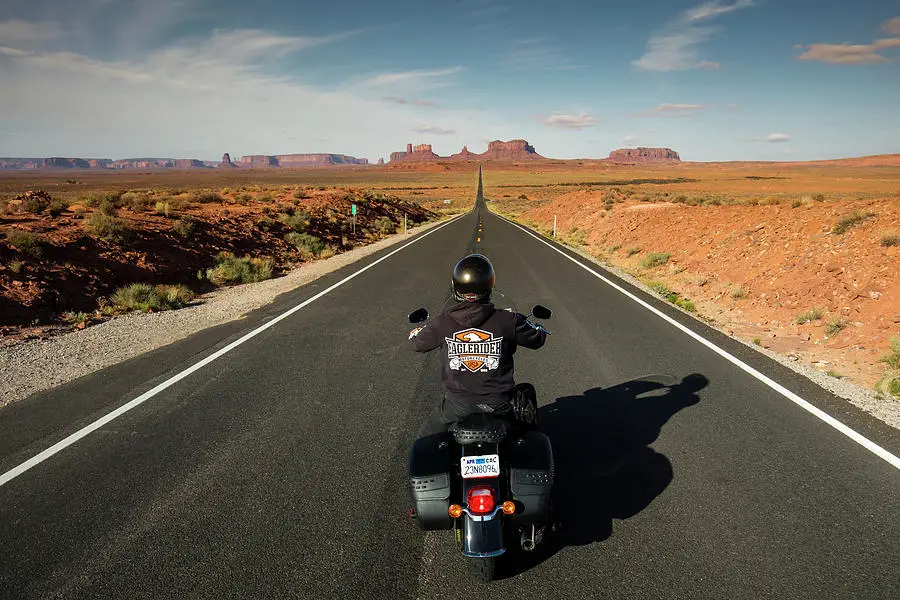
The morning the sheriff came to take my house, an old biker in a leather cut tore the eviction notice off my door in front of him, turned around slow, and said the house was not mine to lose.
I need to tell you about that morning. All of it. And to do that, I need to tell you about the year that led up to it, because in the space of about four hours, I lost everything I thought I knew about my own life and got back something I didn’t even know I was allowed to want.
My name, the name I grew up with, is Charlie Hollis. I’m thirty-one years old, and until that morning I believed three things about my life the way you believe in gravity. I believed my father was a monster my mother had rescued me from when I was nine. I believed my grandmother died before I ever got the chance to know her. And I believed that when everything falls apart, you fall alone.
I was wrong about all three.
Let me start with Kyle, because Kyle is where the falling started.
I married Kyle Hollis when I was twenty-five. He was charming the way a storefront is charming, all window and no stockroom, but I didn’t know that yet. What I knew was that he made me laugh, he wanted kids, and he never raised his voice. After the childhood I’d had, a man who never raised his voice seemed like a miracle. We bought the little house on Marigold Court the year Emma was born. Three bedrooms, a back porch, a maple tree Danny would eventually spend hours parking toy trucks under. I thought we were building something.
What Kyle was actually building, I found out later, was an exit.
It happened in layers, the way rot happens. First the savings account got thin, and he had an explanation. Then the 401k I’d built up from six years of office work got “moved to a better fund,” and he had an explanation for that too. Then one morning my car was gone from the driveway and he said he’d sold it because we only needed one, and money was tight, and did I really want to fight about a car when we had two babies to think about? I didn’t fight. I never fought. I had learned as a little girl that fighting was dangerous, even though, as it turns out, I had learned it about the wrong man.
Then, fourteen months ago, Kyle went to work on a Tuesday and never came home. No note. No call. His closet cleaned out to the hangers. Danny was ten months old. Emma kept asking when Daddy was coming back, and I kept saying soon, sweetheart, soon, because I didn’t have any better words and neither did she.
Three weeks after he vanished, the first letter came from the bank. That was how I learned about the second mortgage. Eighty-nine thousand dollars borrowed against my house, with my signature on the paperwork, except I had never signed anything. I stood in my kitchen holding that letter and reading my own name written in handwriting that was almost mine, close enough to fool a notary who wasn’t looking hard, and I felt the floor of my life open up underneath me.
I did everything you’re supposed to do. I went to the bank with my hands shaking and told them the signature was forged. A man in a gray suit looked at me across a desk with genuine pity and explained that the bank had valid documentation, and that fraud claims of this nature take time to investigate, and that in the meantime, the debt was attached to the property. I hired a lawyer with the last fifteen hundred dollars I had. He wrote two letters, told me I had a real case but a long road, and then my money ran out, and so did he.
After that it was just me and the notices. They came in envelopes with red stripes, and I learned to know them by the sound they made coming through the mail slot, a heavier slap than the grocery flyers. Late notice. Demand letter. Notice of default. Notice of acceleration. I took a night job stocking shelves twice a week, leaving the kids with my neighbor Mrs. Alderman, and it was like bailing the ocean with a coffee cup. Some nights, after Emma and Danny were asleep, I’d sit at the kitchen table doing arithmetic that never once came out in my favor, and I would think, with a kind of numb wonder, that I had no one. My mother had died when I was nineteen. My sister lived three states away with problems of her own. My father was a monster I hadn’t seen since I was nine. That was the whole family tree, as far as I knew. Burned on one side, bare on the other.
Except for Mrs. Alderman.
I have to tell you about Mrs. Alderman, because nothing about that final morning makes sense without her. She moved in next door six years ago, a widow in her seventies with sharp eyes and a soft voice, and she folded herself into my life so gently I never thought to question it. She babysat and wouldn’t take money. She showed up with casseroles on exactly the days I hadn’t managed to cook. When my electricity was two days from shutoff last winter, she paid the bill and told me she’d done it after the fact, so I couldn’t refuse. And she listened. Lord, that woman listened. Every notice, every bank meeting, every dead end with the lawyer, I told her over coffee at her kitchen table, and she never seemed surprised, and she always asked exactly the right questions. What was the date on the notice. Which department sent it. What was the case number.
I thought she was just a careful old woman. I know better now.
The final notice came on a Thursday. Writ of possession. Forty-eight hours to vacate. I read it standing on my porch and then I sat down on the top step, right there in the open where the whole street could see me, and I couldn’t even cry. I was past crying. I hadn’t slept properly in three days by then, hadn’t really eaten in two, and there is a specific kind of tired that lives below tears, and I was in it. That night I packed two boxes, one of Emma’s things and one of Danny’s, because I couldn’t make myself pack anything of mine. Where do you even pack a life to go, when there’s nowhere for it to arrive?
Saturday morning, eight fifteen, Deputy Willis pulled his cruiser up to my curb.
I watched him come up the walkway with his hat and his clipboard, looking like a man who would rather be anywhere else on God’s earth, and I came out onto the porch in my slippers with Emma on my hip and Danny holding onto my leg. He was kind about it, I’ll say that. He explained the writ. He stapled the paper to my door. Forty-eight hours. Emma asked me why the policeman was putting a sign on our house, and I opened my mouth and nothing came out.
That’s when I heard the motorcycle.
It came up the street like distant thunder rolling closer, and then it turned into my driveway, and an old man swung off it like a man half his age. Gray beard. Leather cut. He started up my walkway like he owned it, and Deputy Willis turned and put his hand on his belt. He didn’t draw. But his fingers stayed there.
“Sir, this is a legal proceeding. I’m going to need you to step back.”
The biker didn’t stop. He didn’t even slow down. He walked right past me. Past Emma. Past Danny. And he pulled the eviction notice off my door in one clean rip.
Then he turned to the sheriff. Slow. Steady. Like a man who had rehearsed this moment for years.
“You need to make some calls, Deputy Willis. Because that paperwork you just served is not worth the ink it was printed with.”
I opened my mouth to say something. Anything. Who are you. Get off my porch. Please, God, let this be real. Nothing came out.
He looked at me for the first time. Gray beard. Blue eyes. The same blue eyes I saw every morning in the mirror. The same blue eyes on my daughter’s face.
“You don’t remember me, do you, baby girl?”
My knees nearly went out from under me. I hadn’t heard that voice in twenty-two years. Not since I was nine years old and my mother put me in the car in the middle of the night and drove us four states away, telling me the whole way that we were finally safe.
The sheriff was on his radio now, muttering, his forehead creased. The biker took a folded envelope out of his cut, worn soft at the edges the way paper gets when a man has carried it against his chest for a very long time.
“This house has been paid off for six years, sugar. The deed is not in your name. It never was. It’s been in the name of a trust I set up the year your husband first missed a payment.”
He held the envelope out. My fingers didn’t want to work. Danny had let go of my leg and was staring up at this stranger with a scared kind of wonder.
I opened it. Inside was a title. Not the paperwork the bank had been waving at me for three months. The real one, notarized, recorded, stamped. And the name on the trust was Raymond Cole.
My father’s name.
The world went very quiet and very small, just me and that piece of paper and twenty-two years rearranging themselves.
Deputy Willis came back over with his hat in his hand and his radio hanging loose. “Ms. Hollis, I’m going to need to hold off on serving this notice today. Dispatch says there’s a hold order that came through this morning. Some kind of federal fraud investigation. I wasn’t briefed.” He looked embarrassed. He looked at the biker, then at me. “Ma’am, I am truly sorry. If I had known, I never would have come out here.”
He tipped his hat, got in his cruiser, and drove away, and then it was just me and my children and a ghost standing in the morning sun.
The biker turned back to me, and all the steel had gone out of his voice.
“I told him what I came here to tell him. This house was not yours to lose. Not today. Not ever.”
I stood there in my slippers with two babies and a stranger who had my eyes, and I did not know what to do with my hands.
“Emma,” I finally said, and my voice sounded like it belonged to someone else. “Danny. Let’s go inside. Mommy needs to sit down.”
The biker didn’t move to follow. He stood at the bottom of the steps with his hands folded in front of him. Waiting. Asking for nothing.
“You want a glass of water,” I said. “Or something.”
He nodded once. “I’d like that.”
He took his cut off before he stepped through my doorway, folded it neat, and laid it across the arm of the couch like it was something sacred. That’s when I saw the patches up close. Not the ones I’d been taught to fear my whole life. A veterans patch. A widower’s patch. And a small embroidered angel with the initials S.C. underneath.
Sarah Cole. My grandmother. His mother. The woman my own mother told me was dead before we ever left. The woman who, I would learn before that day was over, lived another eleven years after we ran.
I sat down at the kitchen table because my legs had stopped negotiating with me. My hands shook so badly I couldn’t pour the water, so he took the pitcher gently out of my hands and poured it himself. Then he poured juice for the kids and set the cups in front of them without asking their names.
“I know their names,” he said, reading my face. “Emma Grace. Four years and two months. Danny Ray. Two years and three weeks. I’ve had pictures of them since the day they came home from the hospital.”
I couldn’t breathe. “How.”
“Your neighbor. Mrs. Alderman. She was my mother’s best friend from high school. When she moved next door to you six years ago, that was not an accident, baby girl. That was me finally finding you.”
I sat there and felt six years of my life turn over and show me its other side. The casseroles on exactly the right days. The electric bill. The careful questions about dates and case numbers. She had been reporting to him. All of it. For years. I didn’t know whether to feel spied on or held, and I have since decided, firmly, that the answer is held, but in that moment the whole floor of my life was tilting.
“Why,” I said. “Why didn’t you just come to the door?”
He looked down at his big hands on the table, scarred with the kind of scars that come from work and years I knew nothing about. He was quiet for a long time.
“Because when your mother took you, she told a court that I had hurt her. She had bruises. Real ones. And a police report. And a judge who agreed with her. And by the time it all came apart, by the time I could prove it was my brother Wade who did it and let me take the fall, you were nine years old and terrified of me. She had told you I was a monster for enough years that you believed it.” He looked up, and those blue eyes were steady and ruined at the same time. “So I stayed away. I served the time I didn’t owe. And when I got out, I found where you were, and I watched you from as far away as I could. Because you did not need a monster showing up on your doorstep asking to be your daddy again.”
Emma had crawled into my lap by then. Danny leaned against my leg. Both of them staring at this man like something out of their storybooks.
“But then Kyle happened,” he went on. “And I watched him drain everything from you. The 401k. The savings. Your car. And then he forged your name on that second mortgage and disappeared, and I knew if I did not move, you were going to lose this house and end up in a shelter with the babies.” He turned his water glass slowly on the table. “So I did what I could do quiet. I bought the primary mortgage from the bank three years ago, before Kyle even did what he did. I put the house in a trust so no one could touch it, not the bank, not Kyle, not anyone. Mrs. Alderman kept me posted every time you got another notice. My lawyer filed a federal fraud complaint on the forged signature six months ago. And when Mrs. Alderman called this morning and said the sheriff’s cruiser had pulled up, I got on my bike.”
“You’ve been ten miles away,” I said. It wasn’t a question. It came out of me like an accusation and a prayer at the same time.
“Eight,” he said. “Eight miles.”
Twenty-two years. My father had been eight miles away. Close enough to come running. Far enough to never frighten me. I was still trying to hold the size of that when Emma reached out. Her tiny hand went across the table toward his big scarred one, and she touched two of his knuckles, carefully, like they were something in a museum.
“Grampa,” she said.
I had never spoken that word to her in her life. Kyle’s parents died before she was born. She had never met a grandfather, never had one pointed out to her in a photograph. But she said it like she had been waiting her whole four years to say it. Like she knew.
Raymond Cole, who had ridden across town to tear an eviction notice off the door of a daughter who had been taught to fear him, put his forehead down on my kitchen table and cried without making a single sound. His shoulders just shook. And Danny, my Danny, climbed up onto his back like he was climbing a mountain and patted his shoulder with one small hand.
“It’s okay, Grampa,” Danny said. “Mommy cries too sometimes.”
I made him lunch. I couldn’t tell you what. He ate every bite like it was the finest meal of his life. He asked Emma about her stuffed rabbit and received a nine-minute biography of that rabbit without once glancing away. He asked Danny about the trucks lined up along the baseboard, and then he got down on the floor, all six-plus feet and sixty-some years of him, and admired each truck individually, in order, the way Danny requires.
Later, when the kids went down for their nap, we sat on the back porch, and he told me the rest. All of it. I’m going to tell it to you the way he told me. Plain. Because it deserves to be told plain.
He told me about Wade. His older brother. The family favorite, right up until he wasn’t. About the night twenty-three years ago when Wade came home drunk and put my mother into a wall while my father was on a haul run to Bakersfield. About the police showing up two days later with a warrant and a photograph of her bruises, and how my mother pointed at Raymond, not Wade. Not because she hated my father. Because Wade had stood over her before the police came and promised, in detail, that if she told the truth about him, he would hurt me. Her daughter. Me. She picked the lie that kept her child safe, and it cost an innocent man everything, and she spent the rest of her life unable to take it back.
He told me about the eleven years he served on a domestic assault plea his own lawyer told him to take, because juries in that county did not look kindly on men in leather cuts, and a trial would have gone worse. Eleven years for a crime his brother committed. He said it without bitterness, which is the part I still can’t get over. He said prison was where he got his welding certification and where he started writing letters to me that he never sent. He still has them, he told me. A shoebox full. Twenty-two years of birthdays and Christmases, written and stamped and never mailed.
He told me about the year he got out, and how the first thing he did, before he found an apartment, before anything, was drive to my high school. He parked across the street and watched me walk to my car with my friends. Sixteen years old, laughing about something he couldn’t hear. He said I looked exactly like his mother. He said he sat in that truck for an hour after I drove away, and then he made himself a rule that he kept for the next fifteen years. Near enough to help. Far enough to never scare her.
He told me how Mrs. Alderman came into it. His mother, Sarah, and Ada Alderman had been best friends since 1961. When Sarah was dying, she made Ada promise to watch over “Raymond’s girl” if the chance ever came. Two years later, the house next to mine went up for sale, and Ada Alderman, seventy years old, sold her condo and moved next door to a stranger with a baby on her hip, and became my best friend, and never once let it slip that she’d known my face from photographs before she ever knocked on my door.
He told me about the day Kyle left. He knew before I did, almost. Mrs. Alderman had noticed the closet boxes going into Kyle’s trunk over three days. My father hired an investigator that same week. It took the man four months to trace what Kyle had done, and when the investigator laid the forged mortgage documents on my father’s kitchen table, side by side with samples of my real signature, my father said he sat there for a long time deciding whether to handle it the old way or the right way. “The old way would have felt better for about a day,” he told me, looking out at the maple tree. “The right way got you your house.”
The right way was a federal fraud complaint, filed six months ago, fed by everything the investigator found. Bank fraud, forgery, identity theft. The wheels ground slow, the way wheels do. And then, at seven forty a.m. on the exact morning the sheriff came to my door, a federal hold order landed on my case file, freezing the eviction, freezing the second mortgage, freezing everything. That timing wasn’t a miracle. It was six months of a patient man grinding paperwork through a system that had once ground him up, and refusing to quit, and making one phone call after another until somebody with a stamp finally listened.
He told me about Wade dying in a bar fight nine years ago, and how he went to the funeral. Not to grieve. Just to stand at the back and make sure it was over.
And when I asked about the little angel patch with S.C. underneath, he went quiet for a moment.
“My mother,” he said. “Your grandma Sarah. She died four years ago last April. She never stopped asking about you. She left you her wedding ring. It’s in a safe deposit box at the Wells Fargo on Main. I’ve been paying the rent on that box for four years, waiting for a day I could give you the key.”
He took a small brass key out of his wallet and set it on the glass table between us, and slid it toward me with one finger.
“I don’t want anything from you, Charlotte,” he said.
Charlotte. My mother changed my name to Charlie when we ran, sanded the edges off it so it couldn’t be searched. I hadn’t heard my real name spoken aloud in twenty-two years, and hearing it in his voice did something to my chest I still can’t properly describe.
“I don’t need you to call me Dad,” he said. “I don’t need you to introduce me to the kids as their grandfather. I just needed you to know the house was safe. And that you never had to be scared again.”
I looked at my father across a glass table, on a porch he had quietly paid for, in a house he had quietly saved, in a life he had quietly guarded for years from eight miles away, asking for nothing.
“Raymond,” I said, and his name felt strange and important in my mouth. “Would you like to stay for dinner?”
He looked at me for a long time. His blue eyes, my blue eyes, Emma’s blue eyes, filled up and did not spill over.
“Yes,” he said. “I would.”
He stayed for dinner. He stayed for the bedtime story too. Emma made him read Goodnight Moon twice because, she announced, he did the voices better than Mommy, which I have decided to forgive. Danny fell asleep with his cheek on Raymond’s forearm, and my father sat there without moving that arm for forty minutes, like a man holding something breakable, because he was.
When both kids were down, I walked him to the door. His bike sat gleaming in the driveway, big and black, older than I am, polished within an inch of its life.
“Where are you going?” I asked.
“Motel on Route 9,” he said. “Figured you’d want your space.”
“Come tomorrow morning,” I said. “Emma has preschool at nine. Danny likes pancakes. You can help me make them if you want.”
Something moved across his face, slow, like sunrise. He nodded. He put his cut back on. At the bottom of the porch steps he turned around.
“Charlotte.”
“Yeah.”
“Your mother wasn’t a bad woman. She was a scared woman. And Wade scared her into something she couldn’t take back.” He paused. “When you’re ready, I’ll tell you where she’s buried. I’ve been putting flowers on her grave for twelve years.”
I couldn’t say anything to that. There wasn’t anything to say. The man who lost eleven years of his life to her lie had been tending her grave for twelve. He put his helmet on, started the bike, and that thunder rolled again, only this time the storm was leaving instead of coming. He rode down my street at exactly the speed limit and disappeared around the corner past Mrs. Alderman’s porch.
Mrs. Alderman was standing in her window. She’d probably been standing there all day. She waved at me, and there were twenty-two years of secrets in that wave, every one of them kept out of love.
And I waved back.
I want to tell you about the days after, because the morning was only the door. What came through it was a whole life.
He showed up the next morning at seven thirty with a bag of flour, because, he said, a man doesn’t come to make pancakes empty-handed. He was terrible at flipping them and excellent at pretending the broken ones were “the special ones,” which Danny now demands by name. He drove behind me to Emma’s preschool, at exactly the speed limit, and waited in the parking lot until she was inside, and I understood, watching him in my rearview mirror, that this was a man who was never again going to let anyone he loved walk anywhere unwatched.
On Wednesday, I went to the Wells Fargo on Main with the brass key. The clerk led me into a small quiet room, set the long metal box on the table, and left me alone. Inside was a ring, gold gone soft with sixty years of wear, and underneath it, a stack of envelopes with my name on them. Charlotte. Eleven of them. One for every birthday between the year we ran and the year she died, written by a grandmother I never got to meet, addressed to a girl she never stopped believing she’d find. I sat in that little room and read every one, and I cried harder than I have ever cried in my life, and when I came out, Raymond was leaning against his bike in the parking lot, not asking, just there. I held up my hand with the ring on it. He nodded once and looked away down the street until his face was his own again.
On Friday, an FBI agent named Delgado called. They’d found Kyle. Two states over, living under a half-changed name, four months into running the same game on another woman, another forged application already in motion. The forged mortgage on my house was formally voided six weeks later. The bank sent a letter that managed to apologize without using the word sorry, which my father read out loud on the porch in a lawyer voice that made me laugh until my sides hurt, and I realized it was the first time I’d laughed, really laughed, in over a year.
And one Sunday in October, when I was ready, he drove me two hours north to a small cemetery on a hill, and he stood back at the gate with the kids while I walked alone to my mother’s grave. There were fresh flowers on it. There are always fresh flowers on it. I stood there a long time, and I told her I finally knew everything, and that I understood why she did it, and that the man she wronged had spent twelve years making sure she was never forgotten. I don’t know if forgiveness is one moment or a thousand. I think it’s a thousand. But one of them happened on that hill.
Emma calls him Grampa like she invented the word. Danny saves him the red truck, which I’m given to understand is the good truck. Mrs. Alderman comes for Sunday dinner now, no more secrets to carry, and she and my father argue about pie crust like the two old friends they’ve been all along. On my hand is my grandmother Sarah’s wedding ring. On my door there is nothing stapled at all.
The house is safe. The kids are safe. I sleep through the night.
It turns out I was never as alone as I thought I was. Some people love you loudly, from across the dinner table, where you can see it. And some people love you from eight miles away, in silence, for twenty-two years, paying rent on a safe deposit box, keeping flowers on a grave, keeping a promise to a dying mother, keeping a rule, near enough to help, far enough to never frighten you, until the one morning you need thunder.
And then it comes up your driveway, tears your worst day off the front door in one clean pull, and says the truest thing anyone has ever said to me.
This house was not yours to lose. Not today. Not ever.

Specialty: Emotional Turning Points
Rachel Monroe writes character-driven stories about betrayal, second chances, and unexpected resilience. Her work highlights the emotional side of family conflict — the silences, the misunderstandings, and the moments when someone quietly decides they’ve had enough.