What Raymond Knew
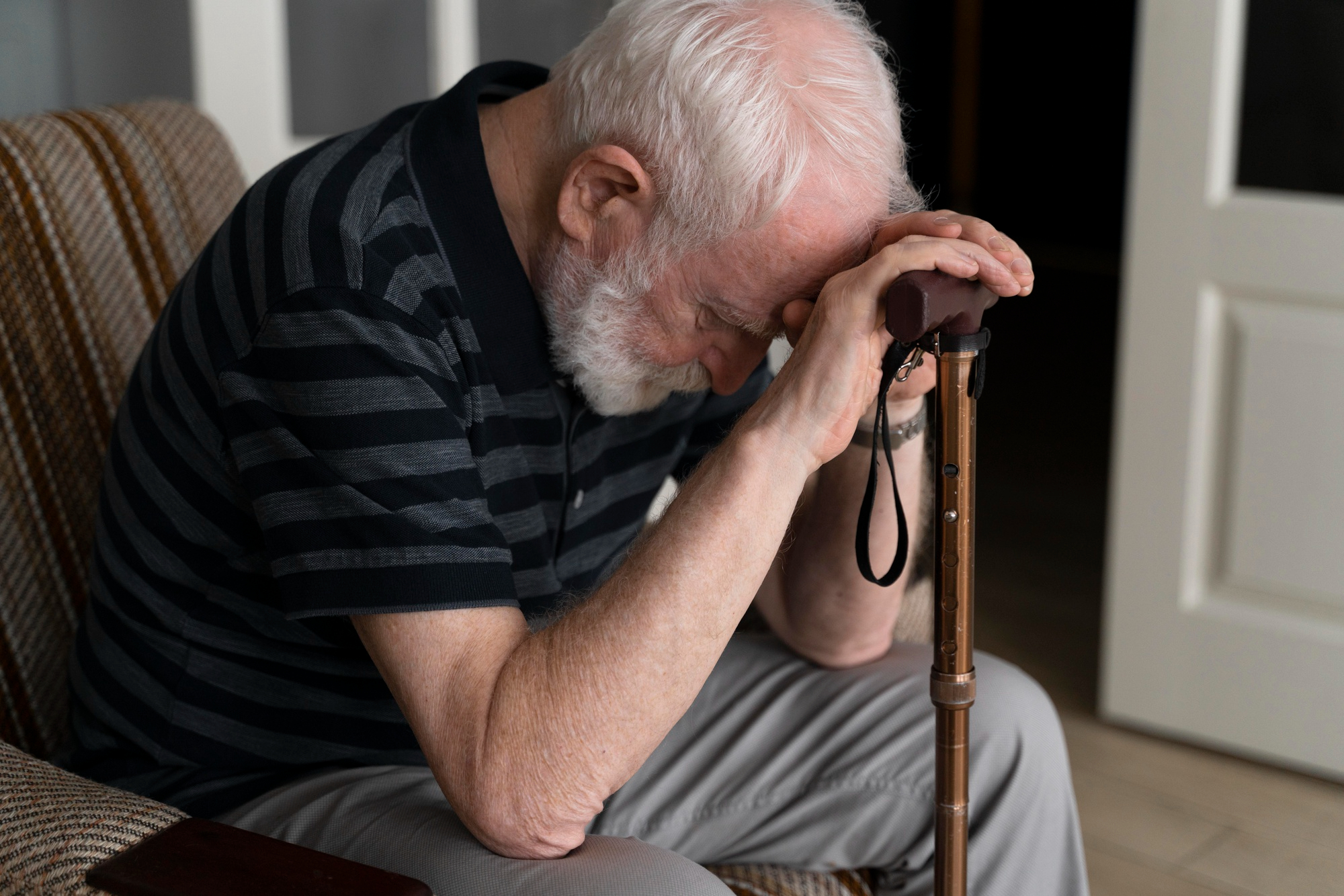
My father came to my house on a Tuesday afternoon with his hands clasped in front of him and his shoulders curved forward, and I recognized before he said a word that this posture had cost him something, because Raymond Mercer was not a man who asked for things.
I want to be clear about this from the beginning. My father spent thirty-three years in construction work, hauling lumber and pouring concrete and repairing roofs under the Colorado sun, and in all those years I had watched him manage every difficulty that came his way through the particular combination of hard work and quiet endurance that defined him. He had never once asked me for money. He had, in the years before I understood what things cost, given me things without telling me what the giving required. He sold his motorcycle the summer before I started college. I found out twelve years later from his sister, who mentioned it at a holiday gathering with the casualness of someone referencing a known fact. He sold his only good suit when I was nine so I could have new shoes for school, and I only knew this because I found the pawnshop receipt in a box of his papers when I was helping him move apartments in my late twenties.
He never told me about either thing.
He was not a man who kept score or sought credit. He was a man who simply did what he believed needed doing and then continued on.
So when he appeared at my kitchen door on that Tuesday with his hands trembling slightly and his eyes on the floor, I understood that whatever had brought him here had already cost him considerably before he said a single word.
He did not get to say many words.
“Grant,” he said, “I need to borrow some money. A thousand dollars. I need certified records and some legal advice, and there’s a test I have to take.”
He did not say more than that before Natalie spoke.
“Tell him to find another job,” she said, loudly, from across the kitchen, with the specific carrying tone of someone who wants to be heard. “We aren’t a bank.”
My father’s hands tightened against each other.
His eyes dropped to the floor.
I have thought about that moment many times since, about the specific quality of what I watched happen to my father’s face, the way the last remnant of whatever had sustained him through the difficulty of asking contracted into something smaller and more careful. He was sixty-four years old and he had sold his motorcycle and his good suit for me and he had checked my homework when he came home exhausted and had packed my lunches and had done all of the ten thousand things that fathers do for children who later grow up and have kitchens that other people can stand in and make them feel small.
“That’s enough,” I said to Natalie.
She rolled her eyes and turned back to the counter.
I guided my father outside.
He told me, standing in the backyard with his hands still rubbing together against a cold that wasn’t there, that he needed adoption records. Old ones.
“Whose adoption?” I said.
His eyes moved toward the house.
“I need proof before I tell you anything,” he said. “Otherwise someone will say I’m confused. Or that I’m trying to interfere.”
“Interfere with what?” I said.
He put his hand on my shoulder.
“I’m trying to give you something I should have given you years ago.”
There was something in his voice that I didn’t know how to name, a quality of urgency that he was working to keep controlled, and it frightened me in the specific way of things that are frightening precisely because they are being managed carefully by someone who never manages things carelessly.
I got the money from the safe in my office.
Natalie appeared in the doorway while I was getting it.
We argued. It was not the first time we had argued about my father and it was not the worst argument we had had about him, but it was the one that produced a sentence I kept returning to afterward.
This is our house.
She said it to mean that the house and its resources were jointly hers and therefore my father’s request required her agreement. But the house was mine legally, had always been mine legally, because my father had provided the majority of the down payment from the sale of the last parcel of land his mother had left him. Natalie knew this. She had known it when we bought the house and had known it since, and her use of the word our in that specific context was a choice rather than an error.
I gave my father the envelope at the door.
He slipped it into his jacket without opening it and walked away without the hug we usually exchanged at the door, which told me how much the afternoon had cost him and which stayed with me long after his car had pulled away.
Three days later, the hospital called.
Valley Regional was forty minutes from our house. I drove it without remembering most of the drive, which is what happens when something is large enough to require all of the mind’s attention and leaves none for the peripheral task of noticing the route.
The nurse at the ICU desk was efficient and kind and she handed me a sealed envelope with my name on it in my father’s handwriting, and she mentioned the attorney, and she mentioned what my father had specifically requested, which was that I not discuss the envelope with Natalie until I had spoken with the attorney.
I stood at the desk and held the envelope and thought about the fact that my father, before being sedated for surgery to repair an aortic aneurysm, had given specific instructions about my wife.
The attorney was in the family waiting room. Her name was Priya Desai and she was perhaps forty, compact and precise, with a briefcase and the manner of someone who has been in difficult waiting rooms many times and has learned to bring calm into them rather than absorb the existing anxiety.
“Mr. Mercer,” she said.
“Is he alive?”
“He was stable when he entered surgery thirty minutes ago,” she said. “The surgical team is experienced. The aneurysm was caught before rupture. The prognosis is cautiously good.”
I sat down.
She sat across from me.
“Your father retained me six weeks ago,” she said. “He asked me to be present when you received the envelope and to provide context for what you find inside, because he was concerned you might receive it alone and in difficult circumstances.”
“He knew about the aneurysm six weeks ago?”
“He had been monitoring it for four months with his physician,” she said. “The progression was faster than anticipated. He had hoped to have everything resolved before the situation became urgent.”
“The thousand dollars,” I said. “The records and the legal advice.”
“Yes,” she said. “He had been trying to complete something. The money accelerated his ability to do so.”
I looked at the envelope in my hand.
“Open it,” she said. “I’ll explain as we go.”
My father’s handwriting was the handwriting of a man who had left school at sixteen and had taught himself the rest, careful block letters formed with the attention of someone who knows that handwriting is a communication about seriousness.
The letter began: Grant, if you are reading this then something has gone wrong before I could tell you in person, which I did not want. I am sorry for the way this arrives. You deserve to have heard it from me over coffee at a kitchen table, not from a sealed envelope in a hospital. But here is what I need you to know.
He had known, he wrote, for three years.
He had hired a private investigator four years ago, initially for reasons unrelated to me, trying to locate records related to his own family history after his sister mentioned something at a gathering that he had not been able to set aside. The investigator had found what he was looking for, and in the process had found something else, something he had not been looking for, and had brought it to my father because the investigator was a man of conscience and believed my father needed to know.
I read the next section twice.
Then I set the letter on my knee and looked at the ceiling of the waiting room for a moment.
Priya Desai waited.
“Tell me about Natalie,” I said.
“What your father’s investigator found,” she said carefully, “was that your wife has a prior marriage that was not disclosed to you before your own marriage. The prior husband is still living. The divorce, your father’s investigator initially believed, had not been finalized before your wedding.”
“Initially believed,” I said.
“The investigator was correct that the divorce was not finalized on your wedding day,” she said. “It was finalized eleven days later. Your marriage to Natalie occurred while she was technically still married to another man.”
I sat with this.
“That makes our marriage.”
“Voidable,” she said. “Not automatically void, but voidable, which means you have the legal option to have it annulled on grounds of fraud, specifically the fraudulent misrepresentation of her marital status at the time of your marriage. Whether you pursue that option is entirely your decision.”
“She knew,” I said.
“The prior divorce was filed in another state and the finalization was delayed due to a procedural issue with the filing,” Priya said. “Whether she was aware of the delay is something that would need to be established. The fact of the prior marriage she certainly knew.”
I looked at the letter in my hand.
“My father has known this for three years,” I said.
“He struggled significantly with what to do,” Priya said. “He was concerned that if he came to you without documentation, you would not believe him, or that your wife would characterize him as interfering and it would damage your relationship with him. He was also concerned about the impact on you. He spent three years gathering documentation and consulting with me about the appropriate way to bring this forward.”
Three years.
I thought about three years of my father holding this knowledge. Coming to Sunday dinners, when we had them. Calling on my birthday. Sitting across from Natalie at the holiday table. Holding this for three years because he loved me and was afraid of the damage it would do and was trying to find the right way.
And then standing in my kitchen with his hands clasped and his eyes on the floor, asking for a thousand dollars to complete the documentation, and my wife telling him to get a job.
“The adoption records,” I said.
“Your father was adopted,” Priya said. “He learned this four years ago and it sent him on the search that ultimately led to the investigator. The adoption records were part of establishing his own legal identity for purposes of the documentation he was compiling. They were also necessary for something he wanted to give you, which is in the envelope.”
I looked back at the letter.
The next section was about a trust.
My father’s biological family, which he had located through the investigator’s research, included a grandmother who had died two years ago and who had, not knowing of my father’s existence, left a portion of an estate in trust with instructions that if any direct descendants were identified, they would receive their share. The estate had been held pending a DNA test and documentation of lineage, which was the test my father had mentioned.
The trust, once established, would pass to me as his heir.
The amount was not enormous but was significant, and it was mine irrespective of my marital status and outside the marital estate.
My father had spent three years and one thousand dollars making sure that what was mine was protected.
I set the letter down.
“He thought,” I said slowly, “that if he told me about Natalie and I chose to stay in the marriage, the trust could be structured to protect those assets.”
“Yes,” Priya said. “And if you chose to leave the marriage, the documentation regarding her prior marriage gives you grounds that would affect the settlement significantly.”
“He was protecting me,” I said.
“He was trying to give you options,” she said. “He told me, at our first meeting four years ago, that his job as a father was not to make decisions for you. It was to make sure you had what you needed to make them for yourself.”
I closed my eyes.
The waiting room had a television on a high shelf with the sound turned low and two other people on the opposite side of the room talking quietly and outside the windows the Colorado afternoon was doing what it does in autumn, turning the light the particular gold that comes just before the mountains take it.
“What do I do now?” I said.
“Right now,” Priya said, “you wait for news about your father.”
The surgery took four hours.
The surgeon appeared at three in the afternoon with the expression of someone who has completed something difficult and is cautiously satisfied with the result. The aneurysm had been repaired. My father was in recovery. The next twenty-four hours would be important but the early indicators were positive.
I sat with this information for a moment.
Then I called Natalie.
I told her my father was in surgery and that I would be at the hospital until he was stable, and I said it in the voice I use when I am managing something and am not available for discussion, and she said she would be there, and I said that was not necessary, and after a pause she said all right and we ended the call.
I sat in the waiting room for three more hours.
Priya had left after the surgery update, giving me her card and the folder of documentation my father had assembled, and I sat with the folder on the chair beside me and read through it slowly and thoroughly in the way of someone who needs to understand everything that has been given to them.
The documentation was meticulous.
My father, I understood, had spent three years doing for me what he had always done, the careful invisible work of a man who loved someone and was trying to make sure the person he loved was not harmed by things he could prevent.
He had sold his motorcycle and his suit.
He had checked my homework.
He had held this for three years.
I was allowed to see him briefly at seven in the evening.
He was in a bed in the ICU with the specific appearance of a person who has been through something significant and is on the other side of it, diminished and more present simultaneously. He was awake, barely, and he turned his head when I came in.
“You read it,” he said.
“I read all of it,” I said.
He looked at me.
“I didn’t want to tell you like that,” he said.
“I know.”
“I was afraid of what it would do to you.”
“I know that too,” I said. “You were afraid of it for three years.”
He closed his eyes briefly.
“Your mother,” he said, meaning my late mother, who had died when I was fifteen, “always said I held things too long because I was afraid of the hurt. She was right about that. I’m sorry it came this way.”
“Don’t apologize,” I said. “You gave me everything you could.”
“I sold the motorcycle,” he said suddenly, as though this had been on his mind.
“I know,” I said. “Aunt Clara told me. Twelve years ago.”
He looked at me.
“I should have told you,” he said.
“You didn’t need to,” I said. “I know who you are.”
His hand moved on the blanket and I put mine over it.
We stayed like that for the few minutes the nurse allowed me, and then I went back to the waiting room and I sat and I thought about my father holding a secret for three years out of love and about my wife holding a secret for four years out of something that was not love, and I thought about the difference.
The conversation with Natalie took place five days later, when my father had been moved from the ICU to a step-down unit and I was certain he was stable enough for me to be away from the hospital.
I had thought carefully about how I wanted to do this. I had spoken with Priya again and with my own attorney, a man named Dale Hutchings who had handled my business matters for ten years and who listened to the situation with the careful attention he brought to everything and said I had options and that the path I chose was mine to choose.
I chose honesty.
I sat across from Natalie at the kitchen table and I told her what I knew, not as an accusation but as an accounting, the way you account for something when you need to establish the facts before discussing the implications.
I told her about the prior marriage.
I told her about the eleven days.
I told her that my father had known for three years and had spent that time trying to find the right way to tell me.
She went through several expressions quickly, the first being the expression of someone caught who is calculating whether denial is still possible, and when she could see from my face that it was not, the expression of someone deciding what the next approach is.
She chose the approach of reframing it as a clerical error, a technicality, something that had been out of her control and that had resolved itself and that she had not mentioned because she had not wanted to upset me over something that was already handled.
I listened to all of this.
Then I asked her one question.
“Did you know, on the day we got married, that your divorce was not yet final?”
She looked at her hands.
“Natalie,” I said. “I need you to answer this. Not for anyone else. For me.”
A long silence.
“Yes,” she said.
I nodded.
“Thank you for telling me the truth now,” I said.
We talked for three hours. It was not a clean conversation and it did not resolve cleanly, because some things do not resolve cleanly and pretending they do is its own form of dishonesty. She told me things about the prior marriage and about why she had not told me and about the fear she had carried, and some of it I believed and some of it I was not sure about and I told her both things, which she did not receive easily but received.
At the end of the conversation, I told her that I needed time to decide what I wanted to do, and that during that time I needed her to understand that the decision was mine and that I was not going to be hurried or managed toward any particular outcome.
She said she understood.
I was not certain she did, but I took her at her word and watched what followed to see what the word was worth.
My father came home from the hospital fourteen days after the surgery.
I drove him because he had no one else, which was the fact of his life and which I had not sufficiently attended to, and I set him up in his apartment with groceries and his medications organized the way he had taught me to organize things, by day and by function, and I sat with him the first afternoon while he slept in his chair the deep sleep of someone still recovering, and I read through the rest of the documentation he had given me.
The DNA test had been straightforward, completed before the surgery, and the results were in the folder. The trust documentation was in process. Priya had told me it would take several months to finalize.
My father woke at four and found me in the chair across from him.
“You’re still here,” he said.
“I’m still here,” I said.
He looked at me with the expression I had seen on his face my entire life, the expression of a man who has done what he set out to do and is resting in the completion of it.
“The thousand dollars,” he said.
“Forget it,” I said.
“I’ll pay you back.”
“You have paid me back,” I said. “Repeatedly and at significant personal cost, for my entire life. We’re settled.”
He was quiet for a moment.
“Natalie,” he said.
“I’m thinking about it,” I said. “I’m not rushing.”
He nodded. This was the right answer and he knew it.
“Whatever you decide,” he said, “decide it for yourself. Not for me. Not for anyone else.”
“I know,” I said.
“I only wanted you to have the information,” he said. “What you do with it is yours.”
I looked at my father in his chair, sixty-four years old and recovering from surgery, with his calloused hands resting on the armrests, a man who had sold his motorcycle and his suit and his grandmother’s land and had held a difficult secret for three years, all without keeping score, all without asking for credit, all because he had decided a long time ago that what fathers did was give what they had to give and trust the child to make something good of it.
“You gave me a lot,” I said.
“You deserved it,” he said.
“I’m going to come twice a week,” I said. “While you’re recovering. Don’t argue with me.”
He almost smiled.
“I wasn’t going to argue,” he said.
I stayed through dinner and made the soup he had made for me when I was sick as a child, the simple one with the egg noodles, the recipe he had gotten from his own mother and which required no particular skill but was exactly right for the occasion. He ate it at the kitchen table and I sat across from him and we talked about ordinary things, about his neighbor’s dog and a book he had been trying to finish and the progress of a construction project visible from his window.
It was the kitchen table conversation the letter had said he wished he could have had.
We had it now.
It was enough.

Adrian Hawthorne is a celebrated author and dedicated archivist who finds inspiration in the hidden stories of the past. Educated at Oxford, he now works at the National Archives, where preserving history fuels his evocative writing. Balancing archival precision with creative storytelling, Adrian founded the Hawthorne Institute of Literary Arts to mentor emerging writers and honor the timeless art of narrative.