I never imagined that at sixty-four years old, I’d discover just how little I really knew about my own son.
Grant had always been distant, even as a child. Other mothers talked about their boys running to them with scraped knees and secrets. Mine studied people from doorways. I told myself that was just his personality. Some people aren’t naturally affectionate, right? I repeated that to myself for thirty years, the way you repeat a prayer, hoping repetition will make it true. I repeated it even harder after he married Emily three years ago and the distance grew teeth.
When Grant called me last Tuesday morning, his voice carried that familiar tone of obligation rather than warmth.
“Mom, Emily and I need to take an emergency trip to Seattle. Her mother had another episode, and we can’t leave her alone.”
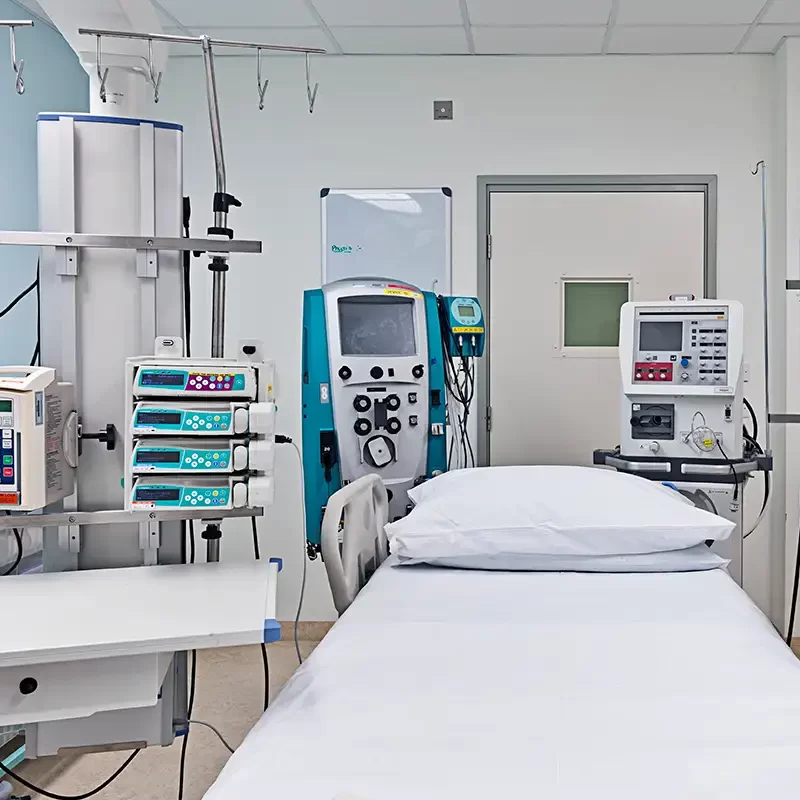
Maryanne had been in what the doctors called a vegetative state for six months, ever since the car accident that left her with severe brain trauma. The poor woman just lay there in the hospital bed they’d set up in Grant’s guest room, monitors beeping around her, completely unresponsive to the world.
“Of course, sweetheart,” I heard myself saying, though something in his tone made my stomach tighten. “How long will you be gone?”
“Just four days. Maybe five.” A pause. “The nurse will come by twice a day to check her vitals and adjust her medications. You just need to be there in case of emergencies.”
I should have asked more questions. I should have wondered why a woman who needed constant supervision didn’t have a full-time caregiver, why a couple with their money would leave her with a sixty-four-year-old instead. But I was so grateful that my son needed me for something, anything, that I ignored every warning bell in my head. That’s the thing about starving for your child’s attention. When crumbs finally come, you don’t inspect them. You just eat.
Thursday morning I arrived at their house in Riverside with my small overnight bag. The house always felt cold to me despite the expensive furnishings. Emily greeted me at the door with her usual practiced smile, the one that never quite reached her eyes.
“Thank you so much for doing this, Lorine,” she said, her gratitude sounding rehearsed. “Mother has been so peaceful lately. The doctors say she’s stable, but we just can’t risk leaving her alone.”
Grant appeared behind her, already checking his watch. “Our flight leaves in three hours. The nurse, Mrs. Patterson, will be here at nine and six every day. Her medications are all labeled in the kitchen.”
They walked me to the guest room where Maryanne lay motionless. Machines beeped softly, monitoring her heart and oxygen. Her silver hair was neatly brushed, and someone had put a light pink lipstick on her pale lips, which struck me as strange even then. Who puts lipstick on a woman in a coma? She looked almost peaceful. Almost staged.
“She hasn’t shown any signs of consciousness in months,” Emily whispered at the bedside. “Sometimes I talk to her, hoping she can hear me, but the doctors say there’s probably no awareness left.”
Something about the way she said it made me look at her more carefully. There was something cold in her face as she stared down at her mother. Something that didn’t match the concern in her voice, like an actress whose eyes had wandered off script.
Grant kissed my cheek, quick and perfunctory. “We’ll call tonight. Emergency numbers are on the refrigerator.”
Then they were gone, designer luggage rolling across the marble, the front door clicking shut with a softness that somehow sounded final.
I stood in the hallway listening to the house settle. The silence was heavy, broken only by the steady beeping from Maryanne’s room. I walked back to check on her and leaned over to smooth her hair and adjust her blanket.
That’s when it happened.
The moment my fingers touched her forehead, Maryanne’s eyes snapped open.
I gasped and stumbled backward, my heart hammering. Her blue eyes, clear and alert, locked onto mine with an intensity that stole the breath right out of me.
“Thank God,” she whispered, her voice hoarse but unmistakably conscious. “I was beginning to think they’d never leave.”
I felt the blood drain from my face. “Maryanne. You’re… you’re awake.”
She struggled to sit up, wincing. “Help me, please. I’ve been lying still so long my muscles are cramping.”
My hands shook as I adjusted her pillows. “But the doctors said. Grant and Emily said you were in a coma.”
Her laugh was bitter, full of a pain that went past the physical. “Oh, my dear Lorine. There’s so much you don’t know.” She gripped my hand with surprising strength. “They think I’m in a coma because that’s what they need everyone to believe.”
“I don’t understand,” I whispered, sinking into the chair beside her bed.
Her eyes filled with tears, but her voice stayed steady. “They’re drugging me, Lorine. Every day, sometimes twice a day, Emily gives me injections that knock me unconscious. She tells everyone they’re prescribed by my neurologist. They’re not.”
The room seemed to tilt. “That’s impossible. Why would they do such a thing?”
“Because,” Maryanne said, dropping to barely a whisper, “they’re stealing everything I own, and they need me unconscious so I can’t stop them.”
I stared at her, my mouth dry. “What do you mean, stealing?”
“My bank accounts. My investments. My house in Portland. They’ve been forging my signature, claiming I gave them power of attorney while I was supposedly unconscious. They’ve already moved over two hundred thousand dollars out of my retirement fund.”
The number hit me like a blow. “Two hundred thousand. But Grant would never. He’s my son.”
“Your son,” she said, gently but without flinching, “is not the man you think he is. And Emily…” Her voice hardened into something I’d never heard from her. “Emily is a monster.”
“How do you know all this if they’re keeping you unconscious?”
“Because sometimes I fight off the drugs long enough to hear them talking. They think I’m completely out, so they don’t bother leaving the room when they discuss their plans.” Her grip tightened. “Last week I heard Emily on the phone, laughing about how easy it’s been to fool everyone. She said the hardest part was pretending to cry at the hospital.”
The walls felt like they were closing in. “This can’t be real.”
“It gets worse,” Maryanne whispered, and something in her tone put ice in my veins. “They’re not planning to keep this up forever. I heard them arguing about timing. About when to let me naturally slip away.”
The words hung in the air like a sentence being read out.
“They want to kill you,” I said, the words foreign in my own mouth.
She nodded slowly. “And Lorine, I think you might be in danger too.”
The silence after that was deafening. “What do you mean, I might be in danger?”
“You’re here as their witness,” she said. “The devoted grandmother, caring for her son’s poor mother-in-law out of the goodness of her heart. When something happens to me, you’ll be the one to testify that I never showed a single sign of consciousness. The perfect, honest, unsuspecting witness.”
The implication landed like a sledgehammer. “They’re using me.”
“They’re using both of us. But you still have the chance to walk away. I don’t.”
I stood and paced to the window. The suburban street outside looked so normal. Children on lawns. A man walking a dog. How could this be happening one wall away from all that ordinariness?
“Tell me everything,” I said, turning back. “From the beginning.”
And she did. The accident had been real. She’d been unconscious about a week, and when she started to wake, when the doctors began discussing recovery and rehabilitation, Emily went to work. She told them her mother was having setbacks. Agitation. Confusion. Violence. She showed up to one appointment with scratches on her arms.
“Scratches she gave herself,” Maryanne said, disgust thick in her voice.
“And the doctors believed her?”
“Why wouldn’t they? She was the devoted, exhausted daughter. She cried at the appointments. She even brought Grant to confirm her stories, and he played his part perfectly. Talked about how worried he was for Emily’s mental health, suggested medication might calm my aggression. So they prescribed sedatives. Mild ones at first. Then Emily kept reporting they weren’t working, and the prescriptions got stronger, and somewhere along the way she started preparing her own injections. Adding her own drugs. Things she gets somewhere else.”
“Where would she even get—”
“She used to work at a rehabilitation facility for elderly patients. She was fired about five years ago. Grant never told you why, did he? There was an investigation involving patient medications. Nothing was ever proven.” Maryanne let that settle over me. “I don’t think she and Grant met at a coffee shop, Lorine. I think they found each other through her work with vulnerable old people, and I think they recognized something in each other.”
I thought about Grant as a teenager, suspended for selling fake IDs, and me at the principal’s office making excuses for him. I thought he’d outgrown that phase.
“He didn’t outgrow anything,” Maryanne said, reading my face. “He just got better at hiding it. And Lorine, I need you to understand something. This isn’t only about money for them. They enjoy it. Sometimes when they’re sure I’m under, Emily leans over this bed and whispers things. How pathetic I am. How nobody will miss me. Grant stands right there talking about what they’ll buy. They’ve turned my suffering into entertainment.”
Rage built in my chest, hot and unfamiliar. “Those monsters.”
“They’ve booked a Mediterranean cruise,” she said. “Month-long. Fifteen thousand dollars, paid with my money. They want me dead before Thanksgiving so they can enjoy it as the grieving family.”
“How do you know all these details?”
“Because when you believe someone is unconscious, you stop watching how loudly you speak. They’ve essentially confessed their entire plan to me, a piece at a time, for months.” She looked straight at me. “Starting when they get back, Emily will begin documenting my decline. Labored breathing. Poor color. Then she’ll increase the doses to actually cause what she’s been reporting, until my body gives out. It will look completely natural. A brain-injured woman who finally lost her fight. Ten days, maybe twelve.”
“We have to call the police,” I said. “Right now.”
“With what proof?” she asked gently. “It’s my word against theirs. The medical records support their story. The forged documents look legitimate. And I’m a woman with a documented brain injury and a diagnosis of early dementia that Emily manufactured through months of false reports. I’m either a vegetable or a confused old woman making wild accusations against her devoted family. They’ve built the walls of this trap very carefully, Lorine.”
“Then what do we do?”
She gripped my hand, and her eyes had a fire in them that no coma had ever touched.
“We beat them at their own game.”
Over the next two days, we worked like detectives. It had to be timed around Mrs. Patterson’s visits. When the nurse came, Maryanne went limp and silent, and I played the concerned caregiver, and I hated how easily the lies came. Mrs. Patterson was a kind woman in her fifties who genuinely cared, gently checking vitals and tucking blankets, and watching her made me realize how thoroughly Grant and Emily had deceived every single person around them.
Between visits, Maryanne directed me through the house like a woman reading a map from memory.
“Check the filing cabinet in Grant’s office. Top drawer, behind the tax documents.”
I found copies of power of attorney papers, medical directives, bank authorizations, all bearing Maryanne’s signature. When I compared them to her real handwriting on old Christmas cards, the differences jumped out.
“They practiced,” she said when I showed her. “I caught Emily tracing my signature months ago. She told me she was helping with thank-you notes for get-well cards. I believed her.”
In a box in their bedroom closet, I found the shipping records. Emily had been ordering sedatives through online pharmacies with fake prescriptions and multiple identities, delivered to post office boxes, to neighbors’ houses, even to Maryanne’s old Portland address. Over three thousand dollars’ worth in four months, paid for with transfers from Maryanne’s own accounts. They were using her money to buy the drugs meant to kill her.
But the worst discovery was the journal.
It was hidden behind books in their bedroom. Not a diary. Planning notes. Emily had documented everything in a neat, tidy hand. I sat on the edge of Maryanne’s bed and read entries aloud because she asked me to, and my voice shook the whole time.
October 15th. Increased morning dose to 4 ml. Subject remained unconscious 19 hours. Heart rate dropped to 58. Need to adjust to avoid suspicious readings during nurse visits.
October 22nd. Subject showed signs of awareness around hour 16. Made soft sounds when repositioned. Administered additional dose immediately. May need to increase standard dosage to prevent breakthrough consciousness.
October 28th. Discussed timeline with G. Agreed to begin final phase after Seattle trip. Estimate 10 to 12 days for complete respiratory failure. G excited about December cruise. Suggested upgrading to suite with our windfall.
And then the entry that made my hands go cold.
November 2nd. L will be perfect witness to final days. Her testimony about peaceful final weeks will be crucial for any insurance investigation. G says his mother has always been easy to manipulate. She’ll never suspect anything.
“She calls you the subject,” I said, “and me L. Like we’re not even people.”
“Because to them, we’re not,” Maryanne said. “We’re obstacles and tools. Did you photograph every page?”
“Every page.”
“Good. Now put everything back exactly where you found it.”
We spent Friday evening replacing the evidence to the millimeter. Saturday morning, Mrs. Patterson frowned at her chart and asked whether anyone else had been giving Maryanne medications, because her heart rate seemed slower than usual. My mouth went dry as I said no, just the schedule. After she left, Maryanne had me examine the IV, and I found it, a small extra chamber spliced into the line, nearly invisible. Emily was dosing her remotely, even from Seattle.
“Should I remove it?”
“No. If my vitals change before they’re back, it raises questions we’re not ready to answer. I can fight it a while longer.”
Sunday afternoon, my phone rang. Grant.
“Mom, change of plans. Our flight got moved up. We’ll be home in about three hours.”
Ice down my spine. “Oh, that’s wonderful, sweetheart.”
“How has she been?”
“The same. Very peaceful.”
“Good. Listen, Mom, I want to prepare you for something. The nurse mentioned Maryanne’s condition might start declining soon. These things happen with brain injuries. Patients seem stable for months and then take a sudden turn.”
He was laying the groundwork exactly as Maryanne had predicted, and he was doing it to his own mother in a voice as casual as a weather report.
“Oh no. What should I watch for?”
“Changes in her breathing, her color. But don’t worry. Emily will know what to do when we get back.”
I ran to tell Maryanne. Three hours. She sent me to the basement, behind the water heater, where I found a box that left me speechless. A digital recorder. A tiny camera. Real surveillance equipment.
“Where did you get all this?”
“I ordered it months ago, when I first understood what they were planning. It took weeks of pretending to be unconscious while packages arrived, but I hid it all before they found it.” Her eyes gleamed. “They think they’re so clever. I’ve been preparing to destroy them since summer.”
There was one more thing she told me while we placed the camera and wired the rooms, and it changed everything I thought I understood about our situation. She had not been waiting alone. Months ago, during a window of consciousness, she had gotten a letter out through a lawyer friend, and that letter had reached the FBI. Healthcare fraud. Elder abuse. The financial transfers were already being tracked. What the investigators still needed, the piece that would turn theft into attempted murder, was proof of intent. A confession. A recorded act.
“They needed evidence of the plan itself,” Maryanne said. “And Grant and Emily are about to hand it to us.”
We heard the car in the driveway. She squeezed my hand once, then went limp against the pillows, and the transformation was so complete that even knowing the truth, I half believed it.
“Lorine, we’re home!” Emily’s voice, bright and artificial, floated down the hall.
What followed was the longest evening of my life. Emily bent over her mother with theatrical tenderness, murmuring poor Mother, she’s been fighting so hard. Grant asked concerned questions with calculation swimming behind his eyes. Over takeout Chinese, his phone buzzed and he smiled at it. The cruise line had confirmed their upgrade. Penthouse suite, private balcony. He mentioned it to me casually, the way you’d mention good weather, sitting forty feet from the woman whose stolen money had paid for it and whose death was meant to clear the calendar.
At ten, Emily gave Maryanne her evening injection while I watched, narrating the vials like a cooking show. Pain management. Muscle spasms. And this one helps her sleep peacefully. I stood there and let it happen, because Maryanne had insisted she could take one more night, and because we needed them comfortable. Confident. Careless.
Then, in the living room, Grant set down his scotch harder than necessary.
“I think we need to have a conversation first.”
He pulled the curtains closed. Emily moved to stand beside him, and suddenly they didn’t look like a tired couple anymore. They looked like a team.
“Mom, I need you to understand something about the situation here,” Grant said. “Maryanne is going to die this week, and you’re going to help us make sure no one asks any uncomfortable questions about it.”
Even knowing. Even expecting it. Hearing my son say those words out loud made the room go gray at the edges.
“Grant, what are you talking about?”
“Don’t play dumb, Mom. It doesn’t suit you.” His voice hardened, shedding thirty years of pretense in a single sentence. “You’ve been here three days. You’ve seen her condition. When she dies, and she will die very soon, you’re going to tell everyone she went peacefully, surrounded by family who loved her.”
“You’re scaring me,” I whispered, and that part was no act.
Emily stepped forward, the sweetness gone entirely. “You should be scared, Lorine. Because you have a choice to make. You can be part of this family, or you can be a problem that needs to be solved.”
Grant sat across from me, elbows on knees, and explained it the way a man explains a mortgage. Over the coming days her breathing would grow labored, her heart irregular, and eventually her body would give up the fight, and I would be there to witness the family fighting to save her, and when the paramedics and the police and the insurance investigators asked their routine questions, I would tell them exactly what I saw.
“And if I don’t?” I asked.
The temperature in the room dropped.
“Mom,” Grant said softly, “you’re sixty-four. You live alone. You don’t have much family besides me. Accidents happen to elderly people all the time.”
My own son. Wrapping a death threat to his mother in a gentle voice, the same voice I taught him to say please and thank you in.
“We really hope we won’t have to,” Emily said, bright and cheerful again, and the brightness was the most frightening thing I’d ever heard. “We’d much prefer having you as our ally. After all, family should stick together.”
“I need time to think,” I managed.
“Of course you do.” Grant stood and patted my shoulder, and the touch felt like something coiling. “But we start tomorrow morning, and we need to know you’re with us.”
I walked to the guest room on legs that barely worked, hearing them whisper behind me. I closed the door and sat on the bed, shaking. They had just threatened my life as easily as discussing dinner plans.
And every word of it had gone straight onto Maryanne’s hidden recorders.
The trap was sprung. They just didn’t know it yet.
Morning came after a night of no sleep. At seven, Grant knocked with coffee and a face full of manufactured warmth, and asked if I’d thought about our discussion. I looked into my son’s eyes and found no trace of the boy I’d raised, and I said the words that tasted like poison.
“Yes. I understand what you need from me.”
Relief loosened his shoulders. “I knew you’d see reason, Mom. Family has to stick together.”
What followed was a full day of performance on every side. Emily documented “concerning changes,” made worried calls to a Dr. Brennan I was no longer sure existed, and coached me on what I was witnessing. Grant made tearful phone calls and squeezed my hand and told me at lunch that Emily thought it might happen within twenty-four to forty-eight hours. Mrs. Patterson came, frowned at the low oxygen numbers that Emily’s drugs were producing, and said gently that it could mean the body was starting to shut down, and I watched Emily glow with satisfaction at a kind woman unknowingly documenting a murder in progress.
That evening Grant opened wine and toasted to family. They talked about Florida. A fresh start. They hoped I’d visit often, maybe relocate near them, and I understood they intended to keep their witness on a leash for the rest of her life. I smiled and said that sounded wonderful.
Then Emily announced it was time for the evening medications, and her voice dropped.
“This might be the last dose we give her. I’m going to increase the respiratory suppressants. If her body is already struggling, this should ease her transition.”
Transition. Such a soft word for it.
I followed them into the bedroom and watched her prepare the syringe with more care than usual, measuring precisely, making her tidy notes.
“This is a merciful thing we’re doing,” she said. “She’s already gone, really. We’re just helping her body catch up to what her mind already knows.”
Grant nodded solemnly. “It’s what she would have wanted.”
Emily moved toward the IV port, syringe in hand, and my heart slammed against my ribs.
“Wait,” I said.
They both turned. Emily’s hand froze halfway.
“I want to say goodbye first. In case she doesn’t wake up.”
“Of course,” Grant said gently. “Take your time, Mom.”
I leaned over Maryanne, my lips close to her ear, as if whispering last words of comfort.
What I whispered was, “Now.”
Maryanne’s eyes snapped open.
The effect was electric. Emily screamed and dropped the syringe, its contents spilling across the floor. Grant stumbled backward into the dresser, his face going white.
“Hello, Emily,” Maryanne said, sitting up in bed, her voice clear and strong. “Surprised to see me awake?”
For a moment nobody moved. They stared at her like she’d risen from the dead, which, in every way that mattered, she had.
“That’s… that’s impossible,” Emily stammered. “You’ve been unconscious for months. You’re brain damaged. You can’t—”
“Can’t what? Think? Remember? Plan?” Maryanne swung her legs over the side of the bed. “Oh, my dear Emily. I remember everything. Every injection. Every forged signature. Every dollar.”
Grant found his voice. “You’re having some kind of episode. You’re confused.”
“Am I?”
She reached to the bedside table and picked up a small recorder, and pressed play, and the room filled with their own voices from the night before.
Maryanne is going to die this week, and you’re going to help us make sure no one asks any uncomfortable questions about it.
Grant’s face went from white to gray.
Over the next few days, her condition is going to deteriorate. Her breathing will become labored. Her heart rate will become irregular. And eventually her body will give up the fight.
“You recorded us,” Emily whispered.
“For months,” Maryanne said. “Every confession. Every casual discussion of my murder. Did you really think I would just lie here while you dismantled my life?” She paused, and delivered the last of it almost kindly. “And you should know those recordings are already with the police, the FBI, and the district attorney. They’ve been watching this house since yesterday afternoon. I’ve been working with federal investigators for months. The one thing they still needed was proof of intent. You gave a full confession to your own mother in your own living room. Thank you for that.”
Grant lunged toward her, and as if summoned, car doors slammed outside. Heavy footsteps hit the porch.
“Police! Open up!”
Emily collapsed into the chair with her face in her hands. Grant stood frozen, mouth opening and closing, as armed officers flooded the house. They were handcuffed and read their rights in the room where they had planned a murder, next to the bed of the woman who had out-planned them.
As they led him out, Grant twisted back to look at me, and his eyes held something like betrayal.
“Mom. How could you do this to your own son?”
I looked at this stranger wearing my child’s face, and I felt the last thread finally let go.
“You’re not my son,” I said quietly. “My son died a long time ago. You’re just a criminal who happens to share my DNA.”
After the police left, Maryanne and I sat in the quiet kitchen with tea, two women in a suddenly peaceful house.
“How long have you been planning this?” I asked.
“From the moment I understood what they were doing. My lawyer friend got word to the FBI. The financial trail was already being tracked. They just needed the intent.” She smiled at me over her cup. “Your presence here as their chosen witness was the final piece. Lorine, without you, they would have gotten away with it.”
“What happens now?”
“Now they go to prison for a very long time. And I live. For the first time in months, without fear.” She studied me. “And you?”
I thought about it. Sixty-four years old. No son, in any way that counted. Nobody left to please, nobody left to make excuses for.
“I think I might travel,” I said, surprising myself. “I’ve always wanted to see Ireland.”
Her whole face lit. “I’ve always wanted to see Ireland too. Perhaps we go together.”
Six months later, Maryanne and I stood on the Cliffs of Moher, watching the Atlantic hammer the rocks below, laughing like schoolgirls as the wind ruined every photo we tried to take.
Grant and Emily were each sentenced to twenty-five years in federal prison. The trial was a media sensation, the son and daughter-in-law who drugged an elderly woman and planned her death for an inheritance. I testified at the sentencing. I looked them both in the eye and described what it felt like to be threatened by my own child, and neither of them showed a flicker of remorse. Even facing decades inside, they insisted they were the victims of a setup. The stolen money had already been traced and returned. The FBI had tracked every transaction all along.
Justice was served. But something better than justice happened too. Maryanne and I found a friendship neither of us saw coming, forged in whispers beside a hospital bed, two women everyone had underestimated, one presumed unconscious and one presumed easy to manipulate.
As we walked back toward the rental car, she linked her arm through mine.
“Where to next?” she asked.
I smiled, feeling lighter than I had in years, maybe ever.
“Anywhere we want.”
And for the first time in my life, that was exactly true.

Laura Bennett writes about complicated family dynamics, difficult conversations, and the quiet moments that change everything. Her stories focus on real-life tensions — inheritance disputes, strained marriages, loyalty tests — and the strength people find when they finally speak up. She believes the smallest decisions often carry the biggest consequences.