My name is Wanda, and at sixty-seven years old, I thought I had seen every kind of heartbreak life could throw at me. I was wrong. The worst one was still waiting for me, standing in a doorway I had every right to walk through, wearing my son’s face.
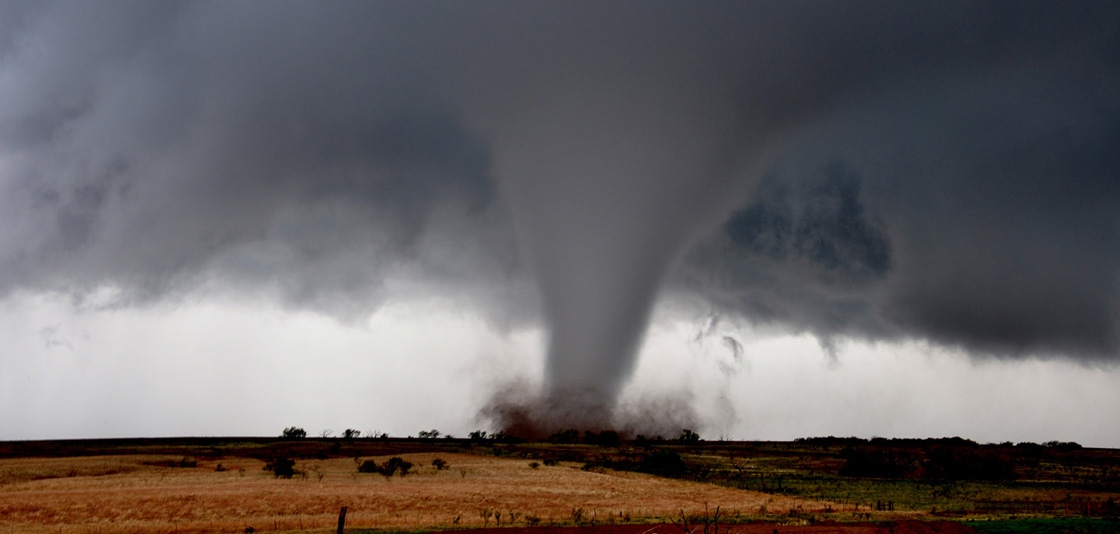
The tornado siren started wailing at 3:15 on a Tuesday afternoon that began like any other. I was in my kitchen, the same kitchen where I’d raised Marcus, making my usual afternoon tea. The weatherman had mentioned possible storms, but in Oklahoma that’s like mentioning the sky might be blue. We’d weathered dozens over the years. Harold used to stand on the porch watching the clouds roll in while I hollered at him to get inside, and he’d laugh and say the house had good bones and would outlive us both.
He was half right.
The wind picked up faster than I’d ever seen. Within minutes the sky turned that ominous green-black color that makes your stomach clench before your brain catches up. I grabbed my emergency radio and heard the words that would change everything.
“Large tornado on the ground, moving northeast toward Maybrook subdivision.”
That was my neighborhood.
I had maybe ten minutes. My hands shook as I threw photo albums, documents, and a few pieces of jewelry into a suitcase. Forty-three years of memories, and I could only save what fit in one bag. The wedding photo of Harold and me. Marcus’s baby pictures. My mother’s pearl necklace. At the last second I grabbed Harold’s old gray sweater off the hook by the basement door, the one I’d never been able to give away, and everything else stayed behind to face what was coming without me.
The basement felt different that day. Colder. More final. I huddled in the corner clutching that sweater, listening to what sounded like a freight train tearing through my world above. The house groaned and fought, that sturdy frame Harold had been so proud of when we bought it in 1980, and then came the silence. That awful, hollow silence that means everything you knew is gone.
When I climbed the basement steps, my legs barely held me. Where my living room used to be, there was sky. Just open sky, and debris scattered like confetti after a cruel celebration. The kitchen table where Marcus did his homework for twelve years was embedded in what remained of the garage wall. My rose garden, twenty years of careful tending, looked like it had been fed through a blender.
I stood in the ruins of my life, wearing Harold’s sweater, and cried for the first time since his funeral eight years before.
The neighbors who still had houses took me in that first night. Sweet Mrs. Patterson from next door insisted, though her place was damaged too and she had her own family to worry about. The Red Cross set up shelters, but the thought of sleeping in a gymnasium full of strangers made me feel even more lost. That’s when I knew I had to call Marcus.
My son lives forty-five minutes away in Tulsa, in a neighborhood with tree-lined streets and houses that look like they belong in magazines. He moved there five years ago when he got promoted to regional manager at the insurance company. We weren’t close, not the way mothers and sons are supposed to be. Somewhere between his divorce and his new girlfriend and his new zip code, I’d become a birthday call and a Christmas dinner. But he was all the family I had left.
I used Mrs. Patterson’s phone because mine was somewhere under what used to be my bedroom. My hands trembled as I dialed the number I’d memorized but rarely used.
“Marcus, honey, it’s Mom.” My voice came out smaller than I intended.
“Mom? What’s wrong? You sound upset.”
“The tornado hit the house, sweetheart. It’s gone. Everything’s gone.”
There was a pause that felt like forever. “Are you hurt?”
“No, I’m okay. But I need somewhere to stay while I figure things out. Just temporarily.”
Another pause. Shorter than the first, but I heard it. I would remember that pause later.
“Of course, Mom. Of course. Come over. We’ll figure this out.”
The relief nearly buckled my knees. My son would take care of me. Despite all the distance, all the missed calls and awkward holidays, he was still my boy.
The next morning, the insurance adjuster, a young man who looked like he’d rather be anywhere else, walked through the wreckage with a clipboard. “Total loss,” he said, matter-of-fact, as if those two words didn’t hold my entire life.
“How much?” I asked.
“You had a hundred-twenty-thousand-dollar policy on the structure, but with your deductible and depreciation, you’re looking at maybe ninety. Maybe less.”
Ninety thousand dollars to rebuild forty-three years. Mrs. Patterson helped me pack what I’d salvaged into her car, which she was lending me for the week. Three garbage bags of clothes that smelled like mud and disaster. One suitcase of photographs and documents. And Harold’s toolbox, which had somehow survived in the garage like the stubborn old thing its owner had been.
That was it. That was everything.
The drive to Marcus’s house felt like traveling to a foreign country. Familiar landmarks, the gas station where I bought my lottery tickets, the diner where Harold and I had Sunday breakfast, all seemed to belong to someone else’s life now. Marcus’s neighborhood was untouched by the storm. Perfect lawns, perfect driveways, perfect lives continuing exactly as they had the day before. I felt like an intruder carrying my disaster into their pristine world.
His house was a two-story colonial with white shutters and a red door that Sophia had picked out. His girlfriend of two years, whom I’d met exactly three times. She was thirty-two to his forty-one, worked at a marketing firm downtown, and had confident opinions about everything from wall colors to wine.
I parked in their driveway and sat a moment, gathering courage. This was temporary, I told myself. Just until the insurance came through. I never imagined that walking to my own son’s front door with three bags of belongings would be one of the hardest things I’d ever do.
Marcus opened the door before I knocked, like he’d been watching from the window. For a moment, seeing his familiar face, Harold’s eyes, my stubborn chin, I felt like everything might be okay.
“Mom.” He stepped aside to let me in, but his voice held something I couldn’t identify yet. Distance. Discomfort.
Sophia appeared behind him immediately, like she’d been waiting in the wings. White jeans, a silk blouse, blonde hair in one of those messy buns that somehow looks perfectly arranged, and a smile that never reached her eyes.
“Wanda, how awful about your house,” she said. But she was looking at my garbage bags, not at me.
I set my bags down in their spotless entryway, suddenly aware of how I must look, and smell. Wet wood. Mud. Loss.
“It’s just temporary,” I said quickly. “Just until I can get back on my feet.”
Marcus and Sophia exchanged a look. One of those wordless conversations couples have. Harold and I used to have them too, but from the outside, that look felt like a door closing.
“Let’s sit down and talk,” Marcus said.
Their living room was beautiful the way magazine homes are beautiful. White furniture no one had ever really sat on. Glass tables. Windows so clean they seemed invisible. I perched on the edge of the sofa, and Sophia winced at my shoes on her hardwood.
“So what’s the plan?” Marcus asked, settling into the chair across from me. Not beside me, where a son might put an arm around his grieving mother. Across from me. Like a meeting.
“Well, the adjuster said it’ll take a few weeks to process. Maybe a month. I was hoping I could stay here until then. Just until I find a small apartment.”
The silence lasted about ten seconds too long. I watched Sophia’s jaw tighten. She reached over and placed her hand on Marcus’s arm, a gesture that looked supportive and felt possessive.
“Mom,” Marcus started, and I knew from his tone that whatever came next would break my heart. “The thing is, Sophia and I have been talking, and we really value our privacy here. We work long hours, and this is our sanctuary, you know?”
I blinked. “I wouldn’t be in your way. I’d stay out of your hair. I’d help with cooking, cleaning. I wouldn’t be any trouble.”
Sophia leaned forward, her voice gentle the way a scalpel is gentle. “It’s not about trouble, Wanda. It’s about space. This house is our first home together, and we’re still finding our rhythm as a couple.”
“I’m his mother,” I said, sharper than I intended.
“Of course you are,” she replied smoothly. “And that’s exactly why we think you’d be more comfortable somewhere else. Somewhere you can have your independence while you rebuild.”
I looked at Marcus. I waited for him to contradict her. To remember the woman who sat up with him through every fever, who worked double shifts for his college textbooks, who held his hand through his divorce three years ago when his ex-wife left him and he cried at my kitchen table like a boy.
Instead, he nodded. “Sophia’s right, Mom. We think you’d be happier with your own space.”
The words hit like a physical blow. My chest actually tightened.
“Happier, Marcus? I lost everything yesterday. Everything. And you think I’d be happier alone in some motel room than here with my family?”
“It doesn’t have to be a motel,” Sophia said quickly. “There are some lovely extended-stay places near the mall. Very clean, very safe, and they have little kitchenettes so you could cook for yourself.”
I stared at this woman, two years in my son’s life, telling me where I should live after losing my home of forty-three years.
“And how am I supposed to pay for this lovely extended-stay place? The insurance money won’t come for weeks.”
Marcus shifted. “I could help with that. A few hundred to get you started.”
A few hundred. Like I was a distant relative he barely knew. Not the woman who gave him life.
“Marcus,” I said, barely above a whisper. “I changed your diapers. I walked the floor with you when you had colic. I taught you to ride a bike. I held you when Sarah Jenkins broke your heart in seventh grade.”
His face reddened, but Sophia squeezed his arm tighter, and I watched her grip win.
“Nobody’s questioning your history,” she said. “We just think everyone would be more comfortable with some boundaries.”
“You’re kicking me out,” I said flatly.
“We’re not kicking you out,” Marcus protested. “We’re just saying maybe this arrangement wouldn’t work for anyone.”
“Whose idea was this?” I asked, though I could see the answer in the satisfied way Sophia settled back into the cushions.
“We discussed it together,” Marcus said, and he wouldn’t meet my eyes, and that was the answer too.
I stood slowly, my knees reminding me I was sixty-seven and alone in the world. “I see.”
“Mom, don’t be like this. We’re trying to do what’s best for everyone.”
“What would be best for everyone, Marcus, is if your mother didn’t have to sleep in her car tonight.”
Sophia arranged her face into concern. “You don’t have to sleep in your car. Like I said, there are options.”
I looked around their pristine living room one last time. At the family photos that included the two of them and none of me. At my son, who had chosen this cold, beautiful woman over the person who made him.
“You’re right,” I said finally. “There are always options.”
I picked up my garbage bags and Harold’s toolbox, heavier now that I knew where I wasn’t welcome. Marcus stood, uncomfortable, but not uncomfortable enough to change anything.
“I’ll call you in a few days,” he said. “Once you get settled somewhere.”
“Don’t bother,” I said, surprised at how steady my voice sounded. “I wouldn’t want to intrude on your sanctuary.”
I walked out of that perfect house and sat in Mrs. Patterson’s borrowed car a long time before I could start the engine. Through their front window I could see them talking, probably about how difficult I was being. I drove to a Walmart parking lot and sat there as the sun went down, trying to work out where a sixty-seven-year-old woman with ninety-three dollars in her purse was supposed to sleep.
That’s when I remembered the business card.
I’d been carrying it in my wallet for almost fifty years, yellow with age, soft from handling. A card I never thought I’d use, from a boy I’d loved when the world was young and everything seemed possible. James Morrison. The boy who promised to come back for me before life got in the way and someday never came.
I spent three nights in that car before I found the courage. Three nights of waking with a crick in my neck and the taste of shame in my mouth. Three nights of rotating parking lots so security wouldn’t notice the elderly woman living in her vehicle. Three nights of gas station bathrooms, avoiding my own reflection because I couldn’t stand what I saw there.
I want to tell you about those nights, because people skip this part when they tell stories like mine, and skipping it is a lie. The first night, I told myself it was an adventure, one night, like camping. The second night, a police cruiser rolled slowly past at 2 a.m. and I pretended to be asleep, and after it passed I cried into Harold’s sweater so nobody would hear. The third night, I caught myself planning how to make my ninety-three dollars last two weeks, doing the arithmetic of crackers and tap water, and I understood with terrible clarity how quickly a person becomes invisible. Four days earlier I had been a homeowner with a rose garden. Now cashiers looked through me.
On the fourth morning I sat in a McDonald’s parking lot holding that card. James Morrison, in faded blue ink, and a phone number. On the back, in my own seventeen-year-old handwriting, always remember. W.
He was eighteen when I loved him, with dark hair that fell across his forehead and eyes the color of summer storms. He worked at his father’s auto shop and dreamed of building something that mattered. We dated eight months, which at seventeen is forever. He used to drive me to the old quarry outside town, and we’d sit on the hood of his beat-up Chevy while he talked about the business he’d build.
“I’m going to come back for you, Wanda,” he promised the night before he left for college in California. “I’m going to make something of myself. And then I’m going to come back and marry you.”
But seventeen-year-old promises fade when real life takes over. His letters got shorter, then rarer. When I met Harold six months later at a church social, James felt like a beautiful dream I’d had once. Harold was steady, reliable, twenty-five with a good job at the phone company. He didn’t promise me the world. He promised me a home. I said yes, and I tucked James’s card into my wedding dress pocket, a secret I couldn’t quite throw away, and I want it understood that I loved Harold. Truly. For forty years I loved that steady man. But you can love your whole life honestly and still keep one small folded question in your wallet.
Over the years, the way you do with first loves, I’d heard things. He’d made good. Started a construction company that grew into something big. Morrison Development, shopping centers and office complexes across three states. Never married, which surprised people. Too busy building his empire, they said.
What would that man want with a sixty-seven-year-old widow sleeping in a borrowed car? The rational part of me called it ridiculous. But rational thinking is a luxury for people who aren’t counting quarters. My back ached. My clothes smelled like the inside of a car. I had just spent my last cash on a gas station sandwich that tasted like cardboard and despair.
I dialed. Each digit felt like a step off a cliff. It rang once. Twice.
“Morrison Development. This is James.”
His voice. Deeper, weathered by time, but his. After fifty years I would have known it anywhere. I almost hung up. Something in his tone, some warmth reaching through the phone, made me speak instead.
“James, this is… this is Wanda. Wanda Sullivan. Well, it’s Wanda Peterson now, but it used to be Sullivan.”
Silence, long enough that I thought the call had dropped.
Then, “Wanda.” Just my name, spoken like a prayer, like he couldn’t quite believe it.
“I’m sorry to call you like this,” I rushed on, words tumbling. “I know it’s been a long time, and I probably shouldn’t be calling, but I didn’t know who else—”
“Where are you?” He cut in, sharp with concern.
“I’m in Tulsa. Well, sort of. I’m in a parking lot in Tulsa, and I know this sounds crazy, but my house was destroyed in the tornado last week, and my son, he doesn’t want me to stay with him, and I don’t have anywhere to go.”
Saying it out loud, admitting my own child had turned me away, felt like confessing I’d failed at the most fundamental part of being human.
“Give me your location,” James said, all business now. “I’m coming to get you.”
“You don’t have to do that. I just… I don’t know why I called. I guess I needed to hear a friendly voice.”
“Wanda.” His voice broke on my name. “No argument. Tell me where you are. I’m already walking to my car.”
Through the phone I heard a door close, an engine start. This man I hadn’t spoken to in fifty years was dropping everything to rescue me from a McDonald’s parking lot.
I gave him the address, then whispered, “James, I look… I’m not the girl you remember.”
“Neither am I,” he said, and I could hear the smile. “But I’ve been waiting fifty years for this call.”
I sat in that lot for two hours, swinging between panic and disbelief. And then at 11:37 exactly, a silver Lexus pulled in, moving slowly, searching. It stopped three spaces from mine. The door opened.
Even after fifty years, even with silver hair and lines around his eyes, I knew him instantly. James Morrison stepped out of that car like he was stepping out of my dreams, and when his eyes found mine through the windshield, the decades collapsed like they’d never existed.
He walked over with the same easy confidence he’d had at eighteen, refined now, polished. He tapped gently on my window, and I rolled it down, unable to breathe. I wanted to apologize for my four-day hair, my slept-in clothes, for calling him with nothing to offer but problems.
He studied my face for a long moment, those storm-gray eyes taking in every detail. And then he said three words that changed everything.
“You look beautiful.”
I started crying. Right there in that parking lot, I broke down completely. Fifty years of held-back tears, four days of sleeping rough, a lifetime of being told, one way or another, that I wasn’t quite enough. It all poured out in ugly, gasping sobs.
He didn’t shush me. He didn’t tell me everything would be okay. He just opened my car door, helped me out, and held me while I fell apart against his chest. He smelled like clean laundry and cedar. His arms were strong around my shaking shoulders.
“I’m sorry,” I gasped. “I shouldn’t have called. I shouldn’t have dragged you into this mess.”
“Shh,” he murmured into my hair. “You should have called years ago.”
When the tears finally stopped, I pulled back, mortified by the wet patch on his expensive sweater. “I must look like a disaster.”
He brushed a tear from my cheek. “You look like someone who’s been through hell and survived it. That’s not disaster, Wanda. That’s strength.”
I laughed, shaky and bitter. “Strength? I’m sixty-seven, sleeping in a borrowed car because my own son doesn’t want me. That’s pathetic.”
His jaw tightened, and I saw a flash of the anger he was holding down. “Your son is an idiot.”
“You don’t know him.”
“I don’t need to. I know you. Or I knew you. And the Wanda Sullivan I knew would never turn away someone in need. Especially not family.”
He loaded my garbage bags and Harold’s toolbox into his Lexus like they were precious cargo. If he was appalled by how little I had, he never showed it.
“Where are we going?” I asked as he opened my door.
“Home,” he said simply.
The drive wound through increasingly beautiful country until we reached rolling hills dotted with estates behind stone walls. He turned in at a long driveway marked by a small brass plate reading Morrison, and the drive curved through mature oaks before opening onto a house that took my breath. Not showy. Elegant the way real money is elegant. Stone and timber, tall windows catching the light, a wraparound porch that invited you to sit a while.
He parked but didn’t get out right away. He sat looking at the house like he was seeing it through my eyes.
“It’s too big,” he said quietly. “Always has been. I built it thinking I’d fill it someday, but…” He shrugged, and the gesture was so familiar it ached. “Some dreams don’t work out the way you plan.”
“You never married?” The question slipped out.
“Came close a few times. But there was always something missing.”
“What?”
“You,” he said, like it was the most obvious thing in the world.
Inside, the house surprised me again. Books everywhere, comfortable reading chairs by windows, photos on side tables. A home someone actually lived in. He made lunch, and he could genuinely cook, moving around that enormous kitchen with the ease of a man who’d learned to take care of himself. And over grilled chicken that tasted like heaven after days of gas station food, he said, “Tell me about your life. Tell me about Harold, about your son, about everything I missed.”
So I did. I told him about steady, comfortable Harold, who gave me security and companionship if not fireworks, and who I mourned honestly. About Marcus, the baby I’d wanted so desperately, who grew into a stranger who valued his girlfriend’s comfort over his mother’s safety. About the tornado that took everything I owned, and the son who took everything I had left.
James listened without interrupting once. When I finished, he was quiet a moment.
“I’m sorry,” he said. “About Harold. About your house. About your son. But I’m not sorry you called me.”
“Why?”
He reached across the table and took my hand. “Because I never stopped loving you. Because every deal I made, every dollar I earned, some part of it was so I’d be worthy of you if you ever came back.”
“James, that’s—”
“Crazy. I know. Fifty years is a long time and we’re different people. But when I heard your voice this morning, the missing piece of my life clicked into place.”
Later, by his fireplace with rain on the windows, he told me the rest. There had been a woman named Rebecca, five years ago. A lawyer, brilliant, beautiful. He’d proposed on Christmas Eve, ring from Tiffany, the whole production, and she said yes. The night before the wedding, he called it off.
“What did you tell her?” I whispered.
“The truth. That I was still in love with a girl I’d known fifty years ago, and it wasn’t fair to marry her while my heart belonged to someone else.”
“You called off your wedding because of me?”
“Because of the possibility of you. Because somewhere, someday, you might need me, and I’d be here.”
“That’s crazy,” I said again.
“Is it?” He leaned forward. “Any crazier than keeping my business card in your wallet for fifty years?”
He had me there. We were both crazy. But our particular brand of insanity had waited us out and brought us back.
Living with James was like discovering a version of myself I’d forgotten. He gave me the guest wing, a bedroom bigger than my old living room, and the first week we tiptoed around each other like polite strangers. Then, gradually, the routines came, natural as breathing. Morning coffee on the back porch, him with his business reports, me with the birds at his feeders. Afternoon walks through gardens he’d planted himself. Evenings for talking, fifty years to excavate, and we did it slowly, like archaeologists handling something precious.
I started cooking on the days Maria the housekeeper was off. The first time I made pot roast, Harold’s mother’s recipe, James ate like a man who hadn’t had a home-cooked meal in decades, because he hadn’t.
“This is incredible,” he said. “You’re incredible.”
I was sixty-seven with gray roots and age spots and a body gone soft in places that used to be firm. But when James looked at me, I saw myself in his eyes as someone beautiful. Someone worthy. Do you know what that does to a woman who spent years being treated like furniture? It doesn’t just warm you. It rebuilds you.
Three weeks in, Marcus called. I was in the kitchen humming, actually humming, when his name lit my screen and my stomach clenched with the old anxiety.
“Hi, honey.”
“Mom.” His tone was strange, carefully controlled. “I’ve been trying to reach you. Mrs. Patterson said you’re not at the extended-stay place. Where are you living?”
“I’m staying with a friend.”
“What friend? Mom, you don’t have any friends with money.”
The assumption stung because it had been true for so long. “You’d be surprised,” I said coolly.
A pause while he processed. “Mom, I think we need to talk. Sophia and I have been discussing it, and maybe we were too hasty. Maybe you could stay in our guest room for a while. Family should stick together.”
The offer that would have meant everything a month ago now felt hollow. And I understood exactly what had happened. The neighborhood gossip network. Someone had seen the widow Peterson with a well-dressed man in an expensive car, and curiosity had made my son generous.
“That’s very kind,” I said. “But I’m perfectly happy where I am.”
“Mom, you can’t just move in with some stranger. It’s not safe. What do you even know about this person?”
“I know he’s never made me feel like a burden. I know he values my company, appreciates my cooking, and tells me I’m beautiful every single day.”
The silence stretched. “Is this some kind of relationship?” he finally asked, tight-voiced.
“I don’t think that’s any of your business.”
“Of course it’s my business. You’re my mother. I’m worried about you being taken advantage of.”
“Like you took advantage of me?” The words came out before I could stop them, sharp and true. “You turned me away when I needed help most, Marcus. You chose your girlfriend’s comfort over your mother’s safety. And now that you think I might have found something, suddenly you’re concerned for my welfare.”
“Why don’t you bring your friend to dinner Sunday,” he said, in the patient voice he used when he thought I was being difficult. “We’d like to meet him.”
“No.”
“No?”
“I said no. You don’t get to approve or disapprove of my choices anymore. You gave up that right when you kicked me out. I’m happy, Marcus. Truly happy, for the first time in longer than I can remember. If you want to be part of my life, you’re welcome to try. But you don’t dictate the terms anymore.”
I hung up with my hands shaking, and James found me at the window and wrapped his arms around me from behind, and when I told him Marcus wanted to meet him, he kissed the top of my head and said, “Good. I’ve been looking forward to it.”
“You’re not worried what he’ll think?”
“Wanda, I waited fifty years for you to come home. I’m not letting anyone, not even your son, make you doubt that you belong here.”
We married six months after that phone call in the parking lot, in his back garden on a crisp October morning. Nothing like my first wedding, which had been all about what other people expected. This time there was a minister who was an old friend, Maria and James’s business partner Thomas as witnesses, a simple blue dress that James said brought out my eyes, and two people who had found each other again after half a century, promising to spend whatever time was left together.
Marcus came. I’d debated inviting him at all, but James said, “He’s your son. You’ll regret not giving him the chance to do the right thing.” So I called two weeks before.
“James and I are getting married. October fifteenth at two o’clock. You’re welcome to come. Sophia isn’t invited.”
“Mom, you barely know this man.”
“I’ve known him longer than I knew your father when I married him.”
“What about Sophia? She’s part of my life. If you can’t accept her—”
“I can accept her,” I interrupted. “But I won’t be managed by her. She made it clear I wasn’t welcome in your home when I needed help. Now she’s not welcome at my wedding. Actions have consequences, Marcus.”
He showed up alone, uncomfortable in an expensive suit, shook James’s hand, made small talk, even smiled at the pronouncement. But I saw the inventory his eyes were taking. The house. The car. The markers of wealth. This wasn’t a son supporting his mother’s happiness. This was a man positioning himself.
Over the following weeks he called regularly, something he hadn’t done in years. He asked about my health, my happiness, and somehow every conversation circled back to James’s business, James’s investments, James’s plans. At our occasional dinners he deployed his salesman’s charm, telling stories about what a devoted son he’d always been. Revisionist history, performed for an audience of one wealthy man. James saw through it instantly and squeezed my hand under the table during the performances.
Sophia, meanwhile, decided that if she couldn’t beat me she’d buy me. Expensive candles. Gourmet chocolates. A silk scarf that cost more than I used to spend on clothes in a year, each gift with a card about fresh starts.
“She’s trying to purchase her way back into your good graces,” James observed.
“I know,” I said. “The question is what she thinks she’s buying.”
We found out three months later. Marcus called one evening while James was at a business dinner, his voice thick with rehearsed concern.
“Mom, I need to ask you something, and I hope you won’t be offended. Have you and James discussed what happens to his assets when… well. In the future.”
There it was. The question he’d been building toward for months.
“Marcus, that is an incredibly inappropriate thing to ask.”
“I’m just worried about you. You’re older now, and if something happened to James, I want to make sure you’re protected. That his business partners or distant relatives don’t take advantage.”
The audacity took my breath. The same son who turned me away homeless was now guarding my financial security.
“When I needed help, you turned me away,” I said coldly. “Remember? And now you’re making another mistake.” I hung up, and underneath my anger was the old ache, the persistent bruise of understanding that even now, my son saw me as an opportunity rather than a person.
James came home and found me crying, and listened to all of it, his jaw getting tighter with each detail.
“I keep thinking I failed him,” I whispered. “That if I’d been a better mother, he’d be a better man.”
James cupped my face in his hands. “You raised him the best way you knew how. His choices as a grown man reflect on him. Not on you.”
Two weeks later, James invited Marcus and Sophia to dinner. He didn’t ask me first, just announced it at breakfast, and said there were things that needed saying. That evening I saw a side of my husband I’d never witnessed. James Morrison, the businessman. Polite. Gracious. And underneath the courtesy, steel.
After Maria’s excellent dinner, in the living room, he began. “I wanted to talk to you both about Wanda. About your relationship with her, and about certain expectations that seem to have developed.”
Marcus shifted. “I’m not sure what you mean.”
“I think you do.” Pleasant. Conversational. Implacable. “You’ve been very interested in my business, my investments, my plans. You’ve been treating your mother with a level of attention that’s remarkably different from how you treated her when she actually needed you. So I want to be clear about something. Wanda doesn’t need your approval for our marriage, your permission to be happy, or your protection from fortune hunters. What she needs, what she has always needed, is for you to love her unconditionally. The way she’s loved you your entire life.”
Marcus’s face flushed. “I do love my mother.”
“Do you? Because from where I sit, it looks like you love what you think she might inherit. You turned her away when she had nothing, and you’re courting her now that she’s married to money. That’s not love, Marcus. That’s opportunism.” He let the silence sit, and nobody rushed to fill it. Sophia was staring at her hands, pale. “I think you need to decide what kind of relationship you actually want with your mother. If you’re here because you genuinely care about her happiness, you’re welcome anytime. If you’re here because there might be something in it for you, you’re wasting everyone’s time.”
After they left, Sophia practically towing Marcus out the door, James and I sat holding hands in the quiet.
“Was I too harsh?” he asked.
I thought about the years of taking Marcus’s calls out of obligation instead of joy. “No,” I said. “You were honest. Maybe for the first time in his life, someone told him the truth about his behavior.”
That was eight months ago. Marcus still calls, but the conversations are different now. Shorter. More genuine. Less calculated. He asks about my garden, my book club, my volunteer shifts at the animal shelter. He doesn’t ask about James’s business anymore. Sophia stopped sending gifts. I don’t know if my son and I will ever have the closeness I once dreamed of. But we have something honest, something real, and at sixty-eight, maybe that’s worth more than the dream.
This morning I woke in my husband’s arms, in the bedroom that’s become ours, in the house that’s become home. Sunlight streamed through windows overlooking gardens we tend together, and I could smell the coffee James makes every morning before I wake.
At sixty-eight, I am happier than I have ever been. Not because of the money or the beautiful house, but because someone sees me, really sees me, and chooses to love what he sees.
The tornado took my old life. Tore it apart and scattered the pieces across a county. But sometimes, I think, watching James read his paper across the breakfast table, destruction is just another word for renovation. Sometimes you have to lose everything you thought you wanted to find everything you actually needed.
And sometimes, if you’re very lucky, first love gets a second chance to become forever love.
The business card I carried for fifty years is framed now, sitting on James’s desk in his study. Faded blue ink on the front. My seventeen-year-old handwriting on the back. Always remember.
Some promises are worth keeping, even when it takes half a century to fulfill them.
Especially then.

Ethan Blake is a skilled Creative Content Specialist with a talent for crafting engaging and thought-provoking narratives. With a strong background in storytelling and digital content creation, Ethan brings a unique perspective to his role at TheArchivists, where he curates and produces captivating content for a global audience.
Ethan holds a degree in Communications from Zurich University, where he developed his expertise in storytelling, media strategy, and audience engagement. Known for his ability to blend creativity with analytical precision, he excels at creating content that not only entertains but also connects deeply with readers.
At TheArchivists, Ethan specializes in uncovering compelling stories that reflect a wide range of human experiences. His work is celebrated for its authenticity, creativity, and ability to spark meaningful conversations, earning him recognition among peers and readers alike.
Passionate about the art of storytelling, Ethan enjoys exploring themes of culture, history, and personal growth, aiming to inspire and inform with every piece he creates. Dedicated to making a lasting impact, Ethan continues to push boundaries in the ever-evolving world of digital content.