He built the fence on a Saturday, and I almost didn’t notice.
That’s the part people never believe when I tell this story now. I didn’t come storming out of my house the moment the first post went into the ground. I was inside making coffee, half-watching the news, and it wasn’t until I heard the compressor kick on that I even looked out the kitchen window. Two men in matching polo shirts were unloading cedar panels from a trailer parked crooked across Tyler’s driveway. Tyler himself stood at the edge of what I still thought was my yard, arms crossed, nodding at something one of the workers said, looking like a man supervising the construction of his own kingdom.
I remember thinking, that’s a big project for a Saturday. I remember thinking it was none of my business exactly where he put a fence on his own property. That’s the thing about boundaries — you don’t think about them until somebody moves one, and by then it can already feel too late to say anything without looking petty.
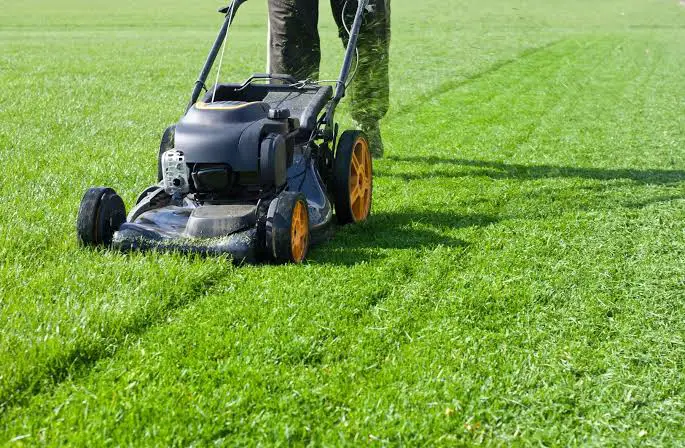
By afternoon the frame was up. By evening, most of the panels were in. I walked out with a mug of coffee going cold in my hand and stood at what I had always understood to be the line between our two lots, and something looked wrong. The angle was off. My mower had been cutting a straight path along that boundary for eleven years, ever since I bought the house from the Reynolds family, and now there was a brand-new fence sitting well inside where that path should have been.
I didn’t say anything that first night. I told myself I was imagining it, that fences always look strange when they’re new, that maybe the shadows were playing tricks on me in the fading light. I went back inside and told myself I’d look again in the morning.
In the morning it looked worse.
I walked the length of it with a tape measure I kept in the garage, more out of curiosity than suspicion, and by the third measurement I stopped pretending I didn’t already know. The fence wasn’t just a little off. It was eight feet into what I was almost certain was my land, running the entire depth of the property, swallowing a strip of lawn I’d mowed, edged, and fertilized for over a decade.
I found Tyler out back a little after nine, drinking coffee on his new deck like he already owned the ground beneath it.
“Morning,” I said, trying to sound easier than I felt. “Fence looks good. Fast work.”
“Contractor’s efficient,” he said. “Wanted it done before the pool guys start digging.”
“About that,” I said. “I think it might be a little further onto my side than the old line.”
He didn’t even blink. That’s what got me, looking back. There was no surprise on his face at all, no confusion, none of the things you’d expect from a man who’d genuinely made an honest mistake.
“I don’t think so,” he said. “But even if it is, moving it now would cost a fortune. Contractor’s already broken down the equipment.”
“I haven’t even confirmed anything yet,” I said. “I just think we should check before you go any further with the pool.”
He smiled at me then. It was a smile I’d come to know very well over the following year, the kind of smile a man gives you when he thinks the conversation is already over and he’s just waiting for you to realize it.
“You’ve got plenty of yard, Jason,” he said. “I don’t think eight feet is going to change your life.”
I want to be honest about something. In that moment, standing there with my coffee going cold for the second morning in a row, some tired, conflict-avoidant part of me almost agreed with him. Almost. I’m the kind of man who lets things go. I don’t send back a wrong order at a restaurant unless it’s genuinely inedible. I’ve paid for parking tickets I didn’t deserve because arguing felt like more trouble than it was worth. If Tyler had asked me first, I probably would have said yes to some smaller accommodation just to keep the peace. That was exactly the kind of neighbor I’d always tried to be.
But he hadn’t asked. He’d built first and smiled second, and something about the certainty in his voice — that easy, practiced confidence that I would simply decide it wasn’t worth the trouble — was the thing that finally made me stop being agreeable.
“I’m going to have it surveyed,” I told him. “Just to be sure.”
The smile flickered, just slightly, before it came back. “Sure. Do what you need to do.”
I called Carl Whitfield that same afternoon. He’d surveyed a property for a friend of mine a few years back and had a reputation in the county for being meticulous almost to a fault, the kind of man who would remeasure a corner three times before he’d put his stamp on a drawing. It took him ten days to get out to the property, and those were ten long days of watching Tyler’s contractors dig footings for a pergola on the strip of land in question, watching a delivery truck drop off pavers, watching a small army of landscapers plant ornamental grasses along what I was becoming more and more certain was my property line.
Carl arrived on a Tuesday morning with a tripod, a robotic total station, and an assistant who didn’t say much. He walked the boundary twice, checked it against the recorded plat, cross-referenced it with the county’s monument records, and by early afternoon he was driving a series of orange survey flags into the ground in a straight line that ran, unmistakably, six inches inside Tyler’s actual fence.
“You were right to call,” Carl told me, packing up his equipment. “This isn’t a case of a few inches here or there. He’s got a structure and landscaping sitting almost entirely on your parcel.”
I remember standing there staring at that thin orange flag, feeling something shift in my chest. Not triumph, not yet. Just a kind of stunned clarity, the recognition that what I’d suspected for two weeks was now a documented fact, stamped and signed by a licensed professional, sitting in a folder that no amount of charm or confidence could talk its way out of.
I called Tyler that evening and asked if we could talk. He came over with the same easy posture he always carried, hands in his pockets, like a man doing me a favor by showing up.
I laid the survey out on my kitchen table.
He looked at it for maybe three seconds.
“Surveys are wrong all the time,” he said.
“This one has your permit application attached to it,” I said. “The one you filed with the county. It shows the fence six inches inside your line. What’s standing in your yard right now is eight feet further than that.”
For the first time, something in his expression cracked, just slightly, like a man realizing the room he’d walked into wasn’t the one he expected.
“The contractor probably made an error staking it out,” he said.
“Then you’ll want to fix that,” I said. “Before you finish the pergola. Before the pool goes in. It’ll only get more expensive the longer you wait.”
He picked up the survey, studied it a moment longer, and set it back down.
“Let me think about it,” he said, and left.
He did not think about it. Or rather, he thought about it and decided, apparently, that the smart move was to keep building as fast as possible and let the concrete cure before I could do anything meaningful about it. Two days later, a crew poured footings for the pergola. A week after that, the pool excavation began, right up to the very edge of the disputed strip.
I sent him a certified letter. I have never in my life sent a certified letter to a neighbor, and there was something almost surreal about standing at the post office counter, watching the clerk print out the tracking number, knowing that somewhere down the road that green receipt might end up being the only proof I had that I’d tried to handle this the reasonable way before anything got worse.
He signed for it. He never responded.
I hired Rachel Adler, a property attorney a coworker had used during a messy commercial lease dispute, and within a month we had filed a formal complaint. Tyler retained an attorney of his own, a heavyset man named Martin Shaw who specialized, as far as I could tell, in making expensive problems sound smaller than they were. The county, once alerted, opened its own inquiry into the permit discrepancy, and for a few weeks it felt like the whole dispute existed on paper, in filings and emails and phone calls, far away from the actual dirt sitting between our two houses.
Then the judge ordered us into mediation, and that was when I finally sat across a table from Tyler and watched, for the first time, some of the truth come out on its own.
The room went silent.
We were sitting in a conference room at Rachel’s office because the judge had ordered us into mediation before the property case moved any further. Tyler’s attorney, Martin Shaw, slowly reached for the contractor’s estimate. Ashley didn’t let him take it. She kept reading the handwritten sentence at the bottom of the page, the one that had come from Tyler’s own contractor’s file, the one Rachel’s paralegal had pulled during discovery.
OWNER REQUESTS FENCE SHIFTED WEST APPROX. 8 FT TO INCREASE USABLE YARD.
She looked at Tyler.
“You told me the contractor made a mistake.”
Tyler’s face hardened. “Ashley, this isn’t the place.”
“It’s exactly the place.”
He glanced at Martin. His attorney looked like a man who had just received information he would have preferred to hear privately, in an office, with time to prepare a response instead of watching it detonate live in front of a mediator.
Martin asked, carefully, “Did you instruct the contractor to move the fence away from the permitted location?”
Tyler rubbed his jaw. “It wasn’t like that.”
Rachel leaned back in her chair. “What was it like?”
Tyler looked at me. That familiar half smile tried to return. It didn’t quite make it.
“The old mowing line looked arbitrary,” he said.
Carl, my surveyor, was sitting beside Rachel as a technical consultant. “It wasn’t arbitrary.”
Tyler ignored him. “The previous owners had always treated that strip like part of their yard.”
I almost laughed. “I bought my house from those previous owners.”
He stopped.
The previous owner, Mr. Reynolds, had walked the property with me before closing, eleven years earlier. I could still picture him, an older man with a bad hip who insisted on hobbling the entire perimeter with me before we signed anything, pointing out the survey monuments buried in the grass with the toe of his boot. “People forget where these things are,” he’d told me. “Buried metal, easy to lose. Good idea to know where yours are.” I still had the original boundary disclosure from that sale in a folder in my office.
Rachel placed it on the table. Tyler stared at the signature. Then she added county aerial photographs dating back more than a decade, one from nearly every year, showing the same unbroken line of grass, the same edging, the same maintenance pattern running straight through what was now his backyard.
My grass. My edging. My maintenance. My use. The line never changed. Only Tyler’s fence did.
The mediator, a retired judge named Ellen Price, folded her hands on the table. “Mr. Bennett, I want to make sure I understand your position. You obtained a permit showing one fence location, instructed your contractor to move the fence approximately eight feet onto the neighboring parcel, received a certified survey identifying the encroachment, and then declined to relocate the structure.”
Tyler shifted in his seat. “I believed the usable boundary was different from the legal boundary.”
Judge Price stared at him for a long moment. “That sentence is not helping you.”
Ashley closed her eyes. I almost felt sorry for her. Almost. Unlike Tyler, she seemed to be learning several facts for the first time — the permit, the contractor’s note, the pool setback, even the pergola footings that had gone in before the survey came back. Tyler had apparently told her, at one point, that the county was harassing them because I supposedly knew someone in inspections. The truth was less dramatic. The county simply had documents. And documents do not care whose version of a story sounds more confident.
The mediator asked what I wanted. Tyler answered for me.
“He wants money.”
“No,” I said.
He looked surprised.
“I want my land back.”
Rachel listed the terms. The fence relocated entirely onto Tyler’s parcel. The pergola footing removed from my property. Any landscaping installed on my strip removed or abandoned at my option. Damaged sod restored. Survey, legal, and filing costs reimbursed. A recorded boundary acknowledgment to prevent future disputes. And no interference with my access to the strip in the meantime.
Tyler laughed, an ugly, disbelieving sound. “You want me to tear up my whole backyard.”
“No,” I said. “I want you to move your backyard off mine.”
He looked toward the mediator like he expected her to intervene on his behalf. “This is insane.”
Judge Price shook her head slowly. “No. This is property law.”
Negotiations lasted three hours. Tyler offered money for the strip. First five thousand dollars, said almost casually, like he was tossing out a number just to see how I’d react. I refused. Then ten thousand. I refused again. Then eighteen thousand, and I watched Ashley’s face when he said it, watched her do some private math in her head about where that money might come from.
I refused a third time. Not because the land was priceless. Everything has a number, if you go high enough. But that eight-foot strip controlled the spacing between my house and any future structure next door. Selling it could affect drainage. Privacy. Resale value. Future improvements I hadn’t even thought of yet. And after the way Tyler had behaved, I had no interest in rearranging my own property simply to make his unauthorized construction convenient for him.
Then he offered something that surprised everyone in the room.
“Twenty-five thousand.”
Ashley stared at him. “Where are we getting twenty-five thousand dollars?”
He ignored her.
I shook my head. “No.”
Tyler slammed his hand onto the table hard enough to make the water glasses jump. “Then what do you want from me?”
“The same thing I asked for in the first email.”
“Move the fence.”
“Yes.”
His face reddened. “Do you have any idea what that costs now? The pool’s half dug. The pergola’s already in the ground.”
“More than it did before you built the pergola,” I said.
That ended mediation.
Two weeks later, the case went before a superior court judge. It was less dramatic than television. No shouting matches, no surprise witnesses bursting through the doors at the last second. Just exhibits. Surveys. Permits. Emails. Photographs. The contractor’s handwritten note, blown up and mounted on foam board like it was Exhibit A in a much bigger case than a fence dispute deserved to be.
The judge, a soft-spoken man named Harold Denny who looked like he’d rather be anywhere else on a Tuesday morning, asked Tyler why he had not stopped after receiving Carl’s certified survey.
Tyler said he believed the survey was disputed.
The judge asked whether he had hired his own surveyor to challenge it.
No.
Whether he had filed a formal boundary challenge with the county.
No.
Whether he had any deed, plat, easement, or title record placing the boundary where his fence actually stood.
No.
Then came the question that seemed to collapse the last of his argument entirely.
“Mr. Bennett, on what legal basis did you continue excluding Mr. Miller from land identified by the recorded survey as belonging to Mr. Miller?”
Tyler looked at his attorney. Martin could not answer for him.
“There had been a fence there before,” Tyler said, quietly.
That was false. My photographs, going back years before Tyler ever moved in, showed nothing but open lawn along that line, mowed in the same straight path every single week of every summer for eleven years.
The judge issued an order confirming the surveyed boundary and requiring Tyler to remove the encroaching fence and structures within forty-five days. He was also ordered to stop interfering with my access to the disputed land in the meantime. The court reserved the question of some legal fees until the removal was complete, but the core ruling was as clean and unambiguous as anything I’d ever seen on paper: the land was mine, it had always been mine, and Tyler had built on it knowing that, or at the very least, refusing to find out otherwise when it would have cost him nothing but a little pride to check.
Tyler walked out of the courtroom without looking at me.
Ashley stayed behind. She approached Rachel and me near the elevators, arms wrapped around herself like she was cold, even though the hallway was warm.
“I’m sorry,” she said.
I wasn’t sure what to say to that. She looked exhausted, the kind of exhausted that comes from realizing you’ve been standing beside a story that wasn’t true.
“I really didn’t know,” she said.
“I believe you,” I told her, and I meant it.
Her eyes filled slightly. “He told me the extra yard was part of the lot.”
That made a certain kind of sense. When they’d bought the property, the strip had looked open, indistinguishable from the rest of the yard. Without a fence, suburban lots often blend visually, one lawn running into the next with nothing but an invisible line and a shared understanding to mark where one ends and the other begins. But Tyler had known better once the permit showed the actual line, and he’d built anyway, betting that I wouldn’t fight for something so small.
Ashley looked toward the courtroom doors, like she half expected him to come back through them. “I told him to move it when the survey came.”
That surprised me.
“He said you’d back down,” she said.
I nodded slowly. “He miscalculated.”
She gave a short, humorless laugh. “He does that.”
The next month was miserable for everyone involved, in different ways. The pool project remained frozen, a half-dug pit sitting in Tyler’s backyard collecting rainwater. The pergola came down, board by board, the same crew that had built it now dismantling it under the terms of the court order. Three young Japanese maples that Ashley had planted along the disputed strip were carefully transplanted elsewhere in their yard, their root balls wrapped in burlap like patients being moved between hospitals. The decorative stone edging came out next, one paver at a time, stacked into a pile that sat by their side gate for weeks.
Then, on a gray Tuesday morning, the same fence contractor who’d started this whole thing returned to finish it properly. I stood in my yard while the crew pulled cedar panels from posts that had stood there barely eight months, watching years of careful mowing and edging get overwritten and then, finally, restored. Tyler watched from his deck the entire time, arms crossed, saying nothing.
At one point, one of the crew members uncovered the orange survey flag Tyler had kicked over during the very first argument we’d had about the fence, back before any of this had lawyers or court dates attached to it. It was still lying beneath a layer of mulch, faded from months in the sun. The worker picked it up and handed it, almost ceremoniously, to Carl, who had come back out to verify the new installation matched the survey to the inch.
Carl drove it into the ground again. Same spot it had always belonged.
The new fence went up six inches inside Tyler’s actual parcel, exactly where his original permit had required it to be in the first place, before he’d decided the line looked better eight feet somewhere else. When the final panel was installed and the crew packed up their trailer, my yard looked strangely wide, almost unfamiliar. Eight feet doesn’t sound like much until someone takes it. Then eight feet feels enormous.
Emma came over that weekend. She was seventeen by then and spent more time with her friends than with her father, which was appropriate and still somehow managed to feel a little bit offensive every time I noticed it. She stood near the restored property line, hands on her hips, surveying the bare dirt and torn-up sod like an inspector.
“So this is the famous war zone?” she said.
“No war.”
“Mom says you spent thousands fighting over grass.”
“Your mother enjoys simplifying things.”
Emma smiled, that particular half-smile she’d inherited from somewhere in the family that always made her look like she knew something you didn’t. “Was it worth it?”
I looked at the strip. The sod was damaged in patches. The soil was uneven where equipment had rolled back and forth over it for weeks. Several spots were bare where Tyler’s landscaping had been ripped out and never replaced.
“Ask me in a year,” I said.
She walked toward the far end of the reclaimed strip, kicking at a clump of dirt with the toe of her sneaker. “What are you going to do with it?”
That question had followed me throughout the entire case. Neighbors asked. Coworkers asked, usually right after asking how much the whole thing had cost me in legal fees. Even Judge Price had joked during mediation, almost gently, that if I ever reclaimed the strip I should at least plant something attractive on it, so the whole ordeal hadn’t been fought over nothing but weeds.
At first, I thought I’d simply restore the lawn and be done with it, mow the strip back into anonymity and let the whole thing fade into the rest of the yard the way it always had before Tyler moved in. Then I had a better idea.
My father had grown blueberries. Six enormous bushes behind the house where I grew up, planted along a fence line not so different from this one. Every July, Emma and I used to visit him and fill plastic bowls until Emma, who was maybe six or seven at the time, ate more berries than she ever actually collected, her mouth stained purple by the time we drove home. He died five years earlier, quietly, in his sleep, the kind of death that leaves you with a strange guilt for how uneventful it was compared to how much the person had meant to you. I had always planned to plant some of my own. Never got around to it. There was always something else — work, Emma’s school schedule, the hundred small excuses that let you put off the things that actually matter.
So Emma and I spent a Saturday building a narrow garden along the reclaimed boundary. Blueberries, six bushes, spaced the way my father used to space his. Hydrangeas along the fence line for color. A small red maple near the corner, barely taller than Emma when we planted it, its root ball wrapped the same way Ashley’s maples had been wrapped when they were dug up and moved away.
Nothing spiteful. Nothing aimed at Tyler. No giant wall, no ugly shed, nothing built purely to be an eyesore from his deck. I didn’t want revenge sitting outside my kitchen window for the next twenty years, something I’d have to look at every morning and feel small about. I wanted my property to become something worth having defended, something that justified the year of stress and legal fees and certified letters, not because it settled a score, but because it turned an abstract legal victory into something living.
By late summer, the pool construction resumed on Tyler’s side, though the design had to be altered. Smaller pool. Different orientation. More excavation than originally planned, since the usable footprint had shrunk considerably once the fence went back where it belonged. Tyler reportedly paid a substantial amount in redesign fees and contractor delay costs, on top of everything he’d already spent on the case itself.
I didn’t celebrate any of it. His mistake was expensive because he made it expensive. That wasn’t my victory. My victory was quieter than that — the recorded boundary, a clean title, a fence in the correct place, a folder full of paperwork that meant no future buyer of either property could ever claim confusion about where one yard ended and the other began.
The story might have ended there. It almost did. Then Tyler did something I did not expect.
He knocked on my door.
It was almost a year after he first built the fence, a cool morning in early fall, the kind of morning where the light comes in low and orange through the kitchen windows. I opened the door but stayed inside the frame, one hand still on the edge of it, not quite ready to invite him in.
He looked older. Maybe he was only tired. There was a grayness to his face I hadn’t noticed in the courtroom, or maybe I simply hadn’t been looking for it then.
“Ashley and I are selling,” he said.
I nodded. “I saw the sign.”
He looked past me, toward the side yard, where the blueberry bushes had begun producing their first real fruit, small green berries just starting to blush toward blue. “My agent says we have to disclose the boundary dispute.”
“Yes.”
“She says buyers keep asking about it.”
“That’s what disclosures are for,” I said.
He laughed, a short, bitter sound with no real humor in it. “You really got everything you wanted.”
“No,” I said.
That seemed to genuinely surprise him. “What didn’t you get?”
I thought about it for a moment before I answered, because it deserved an honest answer, not a clever one. “A neighbor I could trust.”
He looked down at his shoes. For once, there was no smug smile waiting to reappear, no easy confidence trying to talk its way past the moment.
“I screwed up,” he said.
I waited. I’d learned, over the past year, that silence was often more effective than anything I could say.
“I thought if I finished the fence fast enough, you wouldn’t spend the money fighting it,” he said. “I figured you’d take one look at the legal fees and decide it wasn’t worth it.”
There it was. The truth, finally, a year late and unprompted.
“You were counting on me deciding it wasn’t worth the trouble,” I said.
“Yes.”
“Why?”
He shrugged, an oddly boyish gesture for a man who’d just spent a year and tens of thousands of dollars proving how wrong that assumption had been. “I wanted the bigger yard.”
“That’s it?”
He looked embarrassed, maybe for the first time in this entire saga. “The pool design looked better with the extra space. My guy showed me a rendering. It looked incredible.”
Five hundred square feet of someone else’s property. Months of attorneys. A court order. Thousands of dollars in construction delays and redesign fees. Because the pool looked better in a rendering.
I shook my head slowly. “You know what bothered me most through all of this?”
“The fence?”
“No.”
“Then what?”
“When I first showed you the survey, standing right here in my kitchen, you told me I had plenty of yard.”
He remembered. I could see it land on his face. “I shouldn’t have said that.”
“It wasn’t your decision how much of my property was enough for me,” I said.
Tyler nodded slowly, and for a long moment neither of us said anything. Somewhere behind him, a lawnmower started up a few houses down, an ordinary Saturday sound that felt strange against the weight of the conversation.
“No,” he finally said. “It wasn’t.”
That was the closest thing to an apology I ever got from him, and I’ve come to believe it was the closest thing to an apology he was capable of giving. Some people don’t have a bigger one in them. You either accept what’s offered or you carry the disappointment of expecting more.
They sold two months later. A family named the Carters moved in, a husband and wife with two young kids and a golden retriever that spent its first week barking at literally everything, including the mail truck, a low-flying goose, and, memorably, its own reflection in the sliding glass door.
The first Saturday after closing, the husband, Ben, found me trimming the blueberry bushes along the boundary line. He walked over, hands in his pockets, wearing the careful, slightly hesitant expression of a new homeowner who has clearly heard a story about his property from a real estate agent and isn’t quite sure how much of it to believe.
“Jason?” he said.
“Yeah.”
“Our survey says the fence is about six inches inside our property.”
“That’s right.”
“I just wanted to make sure we agreed on that before we did anything back here. Landscaping, a shed, anything like that.”
I nearly laughed, thinking about how simple that sentence was, how it had taken Tyler a year and a superior court judge to arrive at roughly the same understanding.
“We agree,” I said.
He nodded toward the garden, the blueberry bushes heavy with fruit by then, the little red maple finally starting to look like an actual tree instead of a stick with leaves. “Those yours?”
“Every inch.”
He smiled, an easy, uncomplicated smile that had nothing calculated behind it. “Good-looking berries.”
“Help yourself when they’re ripe.”
That was how normal neighbors handled boundaries. They checked. They asked. They respected the answer, even when it wasn’t the answer they might have preferred. No lawyers. No county inspector driving out with a clipboard. No certified letters sitting in a drawer as proof of good faith. A five-minute conversation over a fence accomplished, without any friction at all, what Tyler had turned into a year-long battle involving two attorneys, a mediator, and a superior court judge.
Emma came home from college the following summer, taller somehow, more sure of herself in the particular way that first year away from home tends to do to people. We picked blueberries together on a warm evening in July, the same kind of evening I remembered from my father’s yard decades earlier, the sun low and gold, the air thick with the smell of cut grass from somewhere down the street.
She stood beside the fence with a bowl balanced on one hip, popping berries into her mouth faster than she was dropping them into the bowl, exactly the way she used to as a little girl.
“Remember when I asked if it was worth it?” she said. “Back when the strip was just torn-up dirt?”
“Yes.”
“It was.”
I smiled. “Because of the berries?”
“Obviously,” she said, like it was the only possible answer.
We sat beneath the red maple afterward, which had finally grown tall enough to throw a little real shade across the grass, its leaves just beginning to turn at the edges the way they do in late summer before the real color arrives in fall. Looking out across the yard from that spot, I could barely find the place where Tyler’s stolen fence had once stood. The line had disappeared into the ordinary shape of the property, exactly the way a boundary is supposed to disappear once everyone agrees on where it belongs.
But I remembered the lesson, even if the ground itself had stopped showing it.
Property disputes sound petty until someone decides your rights depend on whether defending them is convenient for you. Eight feet becomes four. Four becomes two. Then years pass, records get messy, owners change, memories fade, and the person who refused to speak up discovers, usually too late, that silence has consequences of its own.
I had almost stayed quiet, that very first Saturday, watching those workers unload cedar panels from a crooked trailer. I hate conflict. Most people do. That is exactly what people like Tyler sometimes depend on. They don’t need to prove they’re right. They only need the other person to decide that being right costs too much to bother with.
But boundaries are strange things. A painted line. A survey pin buried six inches under the grass. A fence. A single word like “no,” said plainly and held to. They look insignificant right up until the moment someone crosses them. Then, suddenly, they define everything.
I never tore Tyler’s fence down myself. I never drove equipment into his yard in some late-night fit of anger, never destroyed his half-built pool, never planted something ugly and spiteful along the line just to irritate him every time he looked out his own kitchen window. I did something that frustrated him far more than any of that ever could have.
I documented. I waited. I used the survey, the permit, the deed, the court. And eventually, because the facts never changed no matter how many times he tried to talk his way around them, the fence moved instead.
Years later, when the blueberry bushes had filled out enough to hide most of the fence boards behind their leaves, Ben Carter asked me why the garden followed such an unusually straight, deliberate line, almost like it had been drawn with a ruler.
I told him the short version, standing there with a bowl of berries between us on a Saturday afternoon much like the one that had started this whole thing years earlier.
He laughed when I finished. “So Tyler really said the land was his because he built a fence around it?”
“Pretty much.”
Ben shook his head, genuinely baffled by the logic of it, the way anyone reasonable would be. “That’s not how property works.”
“No,” I said. “It never was.”
I picked another blueberry, rolled it between my fingers for a second before eating it.
“That’s what the survey was trying to tell him the whole time,” I said. “He just didn’t want to listen.”
The orange flags are gone now, retired along with the rest of the paperwork into a folder I still keep, out of habit more than necessity. The mower once again follows the same line it followed for eleven years before Tyler ever arrived with his contractors and his renderings and his confident, easy smile. My daughter still steals berries before they’re fully ripe, exactly the way she did as a little girl in her grandfather’s yard. And every spring, the little red maple grows another few inches over the strip of lawn that a man once stood in my kitchen and told me I had no real right to defend.
He had been right about one thing, in the end. Someone was going to learn what the survey said.
It just wasn’t me.

Adrian Hawthorne is a celebrated author and dedicated archivist who finds inspiration in the hidden stories of the past. Educated at Oxford, he now works at the National Archives, where preserving history fuels his evocative writing. Balancing archival precision with creative storytelling, Adrian founded the Hawthorne Institute of Literary Arts to mentor emerging writers and honor the timeless art of narrative.