I thought I was ready for just about anything the night I finally agreed to a fancy first date. I thought that at my age I had seen enough of the world to spot a train wreck before it reached me. But when my match ordered the single most expensive thing on the menu and then, with a small pleased smile, refused to pay for any of it, I found myself standing at a fork I had not expected, one that tested my patience and my pride at the same time and ended up teaching me something I had needed to learn for a very long time about what actually matters and what I was and was not willing to accept.
At thirty-four, I really did believe I could see a disaster coming from a comfortable distance. I would like very much to tell you that I saw this one coming, that I read the signs and walked in clear-eyed. But the truth, which I have made my peace with, is that I wanted the evening to go well so badly, so desperately, that I talked myself out of noticing every early warning the universe was kind enough to send me.
I had been off the dating scene for a good while by then. My last real relationship had ended not with a fight or a betrayal or any of the dramatic things that at least give you a story to tell, but quietly, the way a candle burns down to nothing in an empty room, no one there to notice the exact moment the flame goes out. We had simply run out of whatever it is that keeps two people turning toward each other instead of away, and one day we looked up and there was nothing left to turn toward, and we were kind about it, and we divided the furniture, and that was that.
The months that followed were not lonely, exactly. I want to be accurate about it, because loneliness is a specific and sharp-edged thing, and what I had was something adjacent to it but softer and duller, easier to live inside and therefore, I think now, more dangerous. They were muted. That is the only word that has ever fit. My whole life in that stretch narrowed down to a small handful of things done on repeat. Work during the day, the same commute, the same desk, the same problems solved in the same ways. Evenings spent rewatching shows I had already seen two or three times, specifically because I had already seen them, because a show you know cannot surprise you or ask anything of you, and I did not have anything left over to give to being surprised. And a circle of friends who texted less and less as the months went on, not out of any unkindness, simply because everyone was busy now, or married now, or both, or had drifted into the deep private gravity of their own lives the way people quietly do in their thirties, until the group chat that used to fire twenty times a day would go dark for a week at a stretch and nobody noticed.
Nothing was wrong. That was almost the whole problem, and it took me a long time to see it as a problem at all, because how can you complain about a life in which nothing is wrong. But nothing was right either. Nothing was anything. The days went by in a comfortable gray blur, one indistinguishable from the next, and I could feel myself, somewhere below the level of conscious decision, slowly agreeing to a smaller and smaller and smaller life, shrinking by degrees, saying no to things by simply never saying yes, and calling it being tired, being busy, being a grown-up. I had not chosen it. That was the strange part. No one ever chooses it. You just wake up one gray morning and realize you have been living inside a held breath for a year and cannot remember deciding to hold it.
My sister, Renata, was the one who finally pushed me off the ledge, and I mean that in the kindest possible way, because I was never going to jump on my own. She is three years younger than me and she has never once in her entire life encountered a situation she did not have a fully formed and loudly held opinion about, and she had watched my muted year with a growing and undisguised alarm that she was too smart to express directly, because she knew that if she came at me head-on I would simply reassure her that I was fine and retreat further into the gray. So instead she came at me sideways. One rainy Thursday she simply showed up at my apartment unannounced, with a bag of takeout and a bottle of wine, and she planted herself at my kitchen counter, and somewhere around the second glass she pulled out her phone and announced that we were going to fix my life tonight, right now, and that I did not get a vote.
I protested, of course. I told her I was fine. I told her I was just taking a break, recharging, being intentional, all the words people use to make a rut sound like a decision. She listened to all of it with the patient expression of a person who has heard it before and is not buying a word, and when I finished she just looked at me and said the thing that got through, the thing that stayed with me long after.
“You’re too decent a person to be sitting here alone rewatching the same six episodes for the rest of your life, Owen,” she said. “That’s the thing that actually kills me about it. It’s not even that you’re sad. It’s that you’re too good to be wasting yourself like this, and you can’t see it, and it’s making me insane. Get back out there. It is not the end of the world. It’s a dinner. You have a dinner, and either it’s nice or it’s a story, and both of those are better than another night of television you’ve already seen.”
And I did not have a good answer to that, because she was right, and we both knew she was right, and being seen that clearly by someone who loves you is a hard thing to argue with. So she made me download the dating apps right there at the counter, watched me do it over my shoulder to make sure I actually did it and did not just tap around and claim I had, and then the two of us sat there for the better part of two hours, shoulder to shoulder on the kitchen stools, swiping and judging and laughing until my stomach genuinely hurt, until I remembered, dimly, that this was a thing I used to be, a person who laughed until his stomach hurt, and that I had not been him in a while. She narrated the whole thing like a sports commentator. She had strong feelings about everyone.
“Wow,” she said, at one point, holding my phone at arm’s length. “These women are confident, Owen. This is a confident generation of women. I respect it. Look at this one. She lists deadlifting and emotional availability in the same sentence. She’d eat you alive.”
“And you want me to actually message one of these people,” I said, somewhere between amused and genuinely afraid.
“I want you to get back out there. It is not the apocalypse. Worst case, you have a bad dinner and a good story. You could use a story. You’ve told me the same three stories for two years.”
That was how it started. And I want to hold onto that beginning, the rainy afternoon and my sister laughing and the low warm feeling of being pushed back toward the world by someone who loved me, because everything that came after was going to test whether I had actually learned anything at all in the muted year I’d spent hiding.
When I matched with Vanessa, she stood out to me immediately, and I think she stood out to just about everyone, which should perhaps have been my first real clue, though I did not read it as one at the time. She was confident in a way that came right through the screen, quick, pretty, always ready with something a little wittier than whatever I had just sent her, so that I found myself working harder at my own messages, wanting to keep up, wanting to be worthy of the volley. She teased me about my profile picture almost immediately. It was a photo Renata had chosen, of me holding up a fish I’d caught on a lake trip the summer before, and in it I am looking far too serious about the fish, gripping it like it might contain state secrets.
Big catch, she wrote, or midlife crisis?
Why can’t it be both, I wrote back, and she sent a laughing emoji, and something in my chest that had been shut and latched for a year opened up about half an inch, just enough to let a little light in, and that was that. I was in it. I had gone from a man being dragged reluctantly to the apps by his sister to a man checking his phone at red lights, and it had happened in the space of about three text messages, which tells you something about how starved I was, though I would not have admitted to being starved of anything if you’d asked me. I would have told you I was fine. I had a whole speech about being fine.
But I was, God help me, hopeful. And hope, after a long muted year, is a powerful and slightly reckless drug. It does something to your judgment. It makes you generous with the benefit of the doubt in a way that is lovely when it is repaid and dangerous when it is not. Every warm and witty message from Vanessa was a little more of the drug, and I took every dose, and I did not once stop to ask myself whether a person who was that quick and that polished with that many people might have gotten quick and polished through a great deal of practice. I did not want to ask that. Asking that would have threatened the hope, and I had not felt the hope in so long that I would have protected it from almost anything, including, as it turned out, the truth.
We messaged back and forth for a few days, the easy fast rhythm of two people who are enjoying each other, and then Vanessa suggested we get dinner.
Let’s do something a little special, she wrote. Life’s short. We should actually enjoy it while we’re here.
I remember pausing before I answered that one. I remember the small cool prickle of caution underneath the warm hope. Because I had been on dates before, in the years before my last relationship, where a little special had turned quietly into a game of chicken with the check, where the plates got more and more expensive and my date’s wallet got more and more mysteriously distant, and once, memorably, where a woman had excused herself to the restroom somewhere around the arrival of a forty-dollar cocktail and simply never come back, leaving me to understand, slowly, over about fifteen minutes, that I had been dined and dashed upon.
So this time, I decided, I was going to be an adult about it. I was going to say the slightly awkward thing up front rather than discover the expensive thing later. I needed to know, before I ironed a shirt and got my hopes any higher, that my time and my energy and, yes, my money were not about to be casually wasted by someone who had already decided how the evening would go.
Hey, I wrote, just so we’re on the same page, I usually like to split the bill on a first date. Makes it simple, no weirdness, and we both know where we stand.
She replied in under a minute.
That’s totally fair! No worries at all.
Seven words and an exclamation point, sent back in under a minute, and I let out a breath I had not known I was holding, and I felt all my careful hard-won caution dissolve back down into the warm hope, and I told myself, sitting there on my couch with my phone glowing in my hand, Okay, Owen. All right. Maybe. Maybe this is a good one after all. Maybe you actually got lucky on the very first real try, and all that dread was for nothing.
I have thought a great deal since about how easily seven words in a text message can undo a lifetime’s worth of hard-won caution. That’s totally fair, no worries at all. I read it as a promise. It was, I understand now, simply the cheapest possible thing for her to say in the moment to keep me interested, costing her nothing, meaning nothing, a door held open just wide enough to walk me through.
Vanessa picked the restaurant. It was a sleek seafood place downtown, the kind of establishment with dim golden lighting and soft live jazz drifting from a corner and a menu on which the prices are printed so small and so pale that you have to actually tilt the card toward the candle to read them, which is, I have since learned, a design choice and not an accident. It is the kind of place that is built, from the lighting to the typeface, to make you feel that mentioning money would be gauche.
That evening I ironed a shirt I had not worn since the previous Christmas, and I stood in my bathroom and practiced small talk at my own reflection like a lunatic, and I had to keep reminding myself, out loud, You are going to go meet a person. That is all. You are not auditioning for anything. You are not on trial. It is a dinner. People survive dinners every day. Renata’s words, coming back to steady me.
I got to the restaurant early, because I am constitutionally incapable of being late, and the hostess at the front gave me a warm professional smile.
“Table for two?” she asked.
“Yes, please. Table for two. The reservation should be under Owen, I made it a few days ago.”
She found it, and told me my table was not quite ready, and I drifted over to the bar to wait, where I picked up the wine list and pretended to study it with great seriousness, understanding perhaps one word in five. Every time the front door opened I glanced up, half expecting Vanessa, my nerves winding a little tighter each time it turned out to be a stranger.
The bartender, a broad easy-looking guy who had clearly seen every kind of person come through those doors, caught my eye as he wiped down a glass.
“Waiting on somebody, my friend?” he asked.
I nodded. “First date, actually.”
He grinned. “And you met her online.”
“Is it that obvious?”
“Only because you’ve checked your phone about six times since you sat down,” he said, not unkindly, chuckling. “Relax. You look like a good guy. She’d be lucky.”
I opened my mouth to thank him, this kind stranger polishing glasses who had decided to be gentle with a nervous man on a first date, and before I could get the words out, a voice cut brightly across the room.
“Owen?”
I turned on my stool, and there she was, and I understood in a single instant why she had stood out to me on the screen and why the bartender’s easy smile shifted, just slightly, into something more careful as he looked past me at her. Long dark hair falling loose over one shoulder, a deep red dress, and a smile that was wide and bright and, I genuinely believed in that moment, warm. I have since revised warm to something closer to practiced, the smile of a person who has learned exactly what a smile like that can get her and deploys it like a tool, but I did not know that yet, and in that first moment it landed on me like sunshine. It felt, for a second, as though the whole restaurant had paused to notice her arrive, as though she had brought a spotlight in with her, and some foolish part of me, the vain and lonely and half-starved part that had spent a year alone on a couch, felt a hot little flush of pride that all of that had walked in the door and it was here, apparently, for me. That flush of pride was doing me no favors at all. It was, in fact, the exact thing she was counting on.
I stood up too fast and nearly took my barstool down with me. “Hey. Vanessa. You found the place all right?”
“It wasn’t hard,” she said, her eyes already sweeping the room, taking inventory of it, the crystal and the candlelight and the well-dressed couples. “Wow. This place is gorgeous. Look at it.”
“All credit to you,” I said. “You picked it.”
She laughed and slipped her arm through mine as the hostess came to lead us in. “That’s true. I do have a knack for finding the nice places.”
We followed the hostess through the dining room, weaving between tables, Vanessa’s heels clicking confidently on the floor, and I noticed the way she moved through the space, like she belonged in it, like it had been arranged for her. At the table she sat down first and glanced around again, and I had the odd fleeting impression that she was memorizing the layout, though I dismissed it at the time as nothing.
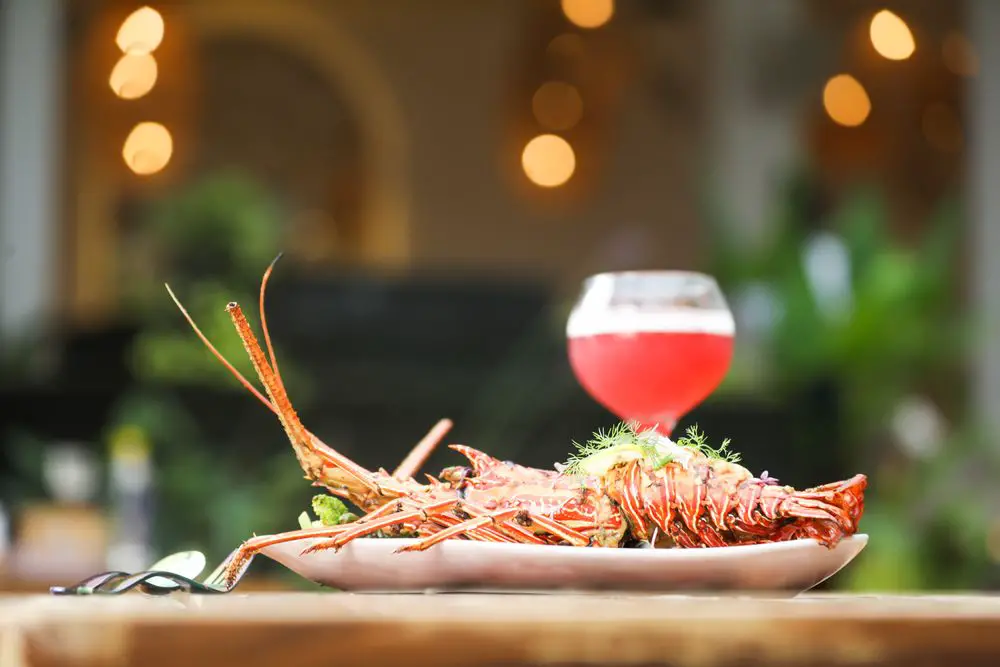
“Nice, right?” she said. “They have lobster here. I adore lobster. God, I hope you’re not allergic, that would be tragic.” She said it teasing, lightly.
“No allergies,” I said. “Though I will admit to a mild but genuine menu anxiety in places where the prices hide from you in the dark.”
She grinned. “Trust me. You’ll love it. Just relax and let me guide you.”
Our waitress came over then, a young woman with a calm steady presence, her nametag reading Marisol. She handed us each a menu, and Vanessa barely so much as glanced at hers before she set it back down.
“I already know exactly what I want,” Vanessa said. “I’ll have the lobster. The butter sauce, please, and could I get extra of that on the side as well.”
“Excellent choice,” Marisol said, writing it down without a flicker. “And for you, sir?”
“I’ll have the salmon, please,” I said, after actually reading the menu, tilting it toward the candle to make out the prices. “And just water is fine for me, thank you. Tap is great.”
Vanessa leaned back and folded her hands as Marisol moved off. “So,” she said. “First app date in a while, you said?”
“First in a good while,” I admitted. “I took a long break. What about you? Do you do a lot of this?”
She gave a little shrug. “Here and there. A few. Honestly, most guys turn out to be a letdown. Too nervous. Too boring. They just sort of sit there.” A small smirk, sharpening. “Or too cheap. That’s the real killer, the cheap ones. You would not believe how cheap some men are.” She looked at me over the rim of her water glass, and there was something appraising in it, something that in retrospect was not flirtation at all but assessment, a card player reading a mark. “But you,” she said. “You seem relaxed. Generous, I bet. I like that. It’s rare.”
I heard the word cheap land twice in the space of a minute and some small quiet instrument in the back of my mind registered it, the way you register a single wrong note in a song, not enough to stop the music but enough to file away. I did not stop the music. I laughed, a little nervously, and I told her the truth, which was that I had spent an hour before this standing in my own bathroom practicing small talk at the mirror like a man preparing for a hostage negotiation, and she laughed at that, a real laugh, and for a while, I have to be fair to the evening, it was genuinely nice. The conversation flowed and did not stall. She was quick and funny, and more than that she made me feel quick and funny in return, which is a real and specific and slightly dangerous gift that some people have, the ability to make you feel like the most interesting version of yourself, and I have learned since to be a little careful of people who have it, because it can be a form of generosity and it can also be a form of fishing. Her wine arrived, and then a second glass later, and my water sat there free and clear, and I noticed the growing asymmetry of the tab building on her side of the table and filed that away too, alongside the word cheap, without yet understanding why I was keeping these small notes or what they would add up to.
She pulled out her phone at one point. “You don’t mind, do you? I like to document my food. It’s a whole thing.”
“Go right ahead. My salmon has never looked better in its life.”
She took a photo of her lobster when it arrived, angling the plate this way and that toward the candlelight with the fluent ease of long practice, the ease of someone who has photographed a great many expensive plates in a great many dim restaurants, and then she leaned across the table and held the phone out and took one of the two of us together, cheek pressed to cheek. “Smile,” she said. “My friends are going to demand photographic proof that you’re a real live human being and not some bot I invented.”
“Tell them I made it through the first round,” I said.
“Oh,” she said, winking, setting the phone down, “it’s early yet.”
And we clinked our glasses together, hers wine and mine plain water, and the whole warm room hummed pleasantly around us, the jazz and the low talk and the clink of good silverware, and for a genuine stretch of that dinner I thought I might have misjudged the little flickers of something-off I’d felt. I thought maybe she was simply bold, confident, a woman who knew what she wanted, and that I, after a year of muted evenings, had forgotten how to tell the difference between confidence and something colder. I wanted her to be the good one so badly. That wanting was doing a great deal of quiet work on my judgment, and I did not feel it happening at all.
We finished eating. Marisol came and cleared the plates with the same unhurried competence, and I felt, honestly, almost relaxed, almost proud of myself for getting back out there, for surviving the dinner Renata had promised I would survive.
And then the check arrived, in a small leather folder, and Marisol set it down in the exact middle of the table, equidistant from both of us, and moved away.
Vanessa did not reach for it.
I let a couple of seconds go by. She did not reach for it. She had, in fact, picked her phone back up and was scrolling through something, her attention drifting off somewhere over my shoulder, as though the folder in the center of the table were a small piece of furniture that had nothing to do with her.
I reached over and opened it and glanced at the total, and I did the quick math I did not really need to do, because I already knew the shape of it. Her lobster alone had been a hundred and fifty dollars. Add her two glasses of wine, and the dessert she’d ordered, and the extra butter, and her half of the evening was well north of two hundred dollars, considerably more than my salmon and water. But a deal was a deal, and we had a deal, and I was not going to be small about the exact arithmetic.
I took out my card. “Alright,” I said, easily, friendly. “We’ll just split it like we talked about, yeah?”
Vanessa leaned back in her chair and smiled at me. It was a strange smile, a knowing one, the smile of someone who is in on a joke you have not been told.
“Oh, I’m not paying,” she said.
I stared at her. I actually waited, for a second, for the laugh, for the just kidding, because surely. “I’m sorry,” I said. “What?”
She gave a little shrug, comfortable, unbothered. “You’re the man. Men pay. That’s how it works. That’s how I’ve always done it.”
I felt my ears go hot. “But,” I said, “you agreed to split. In writing. Two days ago. I asked specifically and you said it was fair.”
She picked up her phone again and scrolled, not even looking at me now. “Yeah, I mean, I said that,” she said. “But I didn’t think you actually meant it. Guys always say that. They never mean it. It’s like a thing guys say.”
A silence opened up between us across that beautiful candlelit table, and into that silence rose something old and deeply, deeply familiar, a thing I had felt many times over the course of my life and had spent years slowly learning to recognize and name. It was the specific and stomach-turning sensation of being made to feel small for expecting fairness. Of watching my own perfectly reasonable expectation get picked up and turned around, through no move of my own, into the unreasonable thing, the awkward thing, the thing that was somehow now my fault, the thing I was being invited to apologize for. It is a particular kind of sleight of hand, and some people are masters of it, and Vanessa was clearly a master of it. In the space of thirty seconds she had made asking her to honor her own written agreement feel like an act of aggression on my part.
And I knew that feeling in my body, deep down in it, older than this evening. Because I had spent a long stretch of my life, especially in my twenties, being the person who smoothed everything over. The one who ate the cost rather than make anyone uncomfortable. The one who decided, every single time, that the confrontation was not worth it, that his own fair treatment was a small enough thing to sacrifice on the altar of not being seen as difficult. I had paid so many bills I did not owe, done so many favors that were never returned, swallowed so many small slights, all to keep the peace, all so that no one would ever be able to call me difficult. And that old accommodating self rose up in me now, right on cue, warm and reasonable and persuasive, and it put its hand on my arm and it said, gently, come on, just pay it, it’s only money, let it go, don’t make a scene, it isn’t worth it, you’ll feel better once you’re out of here. That voice had run my life for years. I knew it intimately. And for the first time in a long time, I heard it clearly for what it was, and I did not do what it said.
But I kept my voice level, and I did not stand that old self back up.
“I meant it,” I said quietly.
Vanessa rolled her eyes, her lips curling into a half-smile that had real contempt underneath it. “Are you seriously going to embarrass yourself over a dinner bill, Owen? In front of all these people? Really?”
“I don’t see why I’d be the one embarrassed,” I said, “for expecting the thing we both agreed to.”
She let out a light, almost pitying little laugh, and shook her head like I was a slow child. “God. You are really stubborn, aren’t you.”
“We agreed to split,” I said again, and I set the leather folder down flat, and I kept my hands still on the table, and I did not raise my voice, and I did not look away from her. “That’s all. That’s the whole thing. I’m not asking for anything except what you already said was fair.”
Her eyes moved past me, sweeping the room again, but this time not to admire it. This time she was looking for an exit and not finding one, and I watched her realize there wasn’t one.
“Well,” she said finally, a little edge creeping in under the smoothness. “Maybe I changed my mind. People are allowed to change their minds.”
It was right then that Marisol came back to the table, a stack of cleared plates balanced along one arm, and she had the particular alertness of a good server who has felt the temperature drop at one of her tables from across the room and has come to see what’s what.
“Everything all right over here?” she asked, pleasantly, her eyes moving between the two of us.
Vanessa flashed her a quick bright smile, the same one that had lit up the room an hour before. “Oh, we’re totally fine,” she said smoothly. “Just a little miscommunication about the bill, that’s all. It’s nothing.”
I looked up and met Marisol’s eyes. I decided, in that half second, that I was done being the one who smoothed it over. “We agreed to split the check,” I said, evenly. “Ahead of time. In writing. And now she’s saying she won’t pay her half.”
Vanessa huffed and turned toward Marisol, appealing to her woman to woman, sisterly, aggrieved. “Honestly, he’s making an enormous deal out of nothing. Men pay for dates. That is just how it is, everyone knows that. He’s being weird about it.”
And Marisol paused. She looked at Vanessa, and she looked a beat longer than a server usually looks at a customer, a small line appearing between her brows, and then something cleared in her face, some recognition arriving.
“Wait,” she said. “I think I recognize you. Weren’t you in here about two weeks ago? Right around this same time? This same table, actually, or the one right next to it. Different fellow, though.”
Vanessa went very still. “What? No,” she said, and her voice, for the first time all evening, dropped out of its confident register. “That wasn’t me. You’ve got me confused with someone.”
But Marisol did not so much as blink. She had the calm certainty of a person who is simply telling the truth and knows it. “No, it was you. You ordered the lobster then too, extra butter on the side, same as tonight. And there was a very similar conversation about the check at the end of the meal. I remember, because that night your date paid his half and left, and you sat here, and you didn’t pay yours. We ended up eating it. I remember the whole thing.”
The tables nearest to us had gone quiet. I could feel it, the way a room’s attention gathers, the way people stop pretending not to listen and just listen. A couple two tables over had stopped talking entirely.
I watched Vanessa’s whole practiced bravado begin to come apart at the seams, right there in front of me. “Maybe you’re thinking of somebody else,” she said, but it came out thin now, uncertain.
Marisol shook her head, unhurried, not cruel about it, not enjoying it, simply certain, which was somehow worse for Vanessa than cruelty would have been, because there was nothing to push back against. “I’m really not mistaken,” she said. “I remember faces. It’s most of the job, honestly, remembering people. And I remember yours, and I remember that lobster, and I remember how that night ended.” She paused, and then she said, gently, almost kindly, which made it land all the harder, “Just give me one moment, please. I’m going to go and get my manager, and we’ll sort this all out.”
Vanessa straightened up in her chair, and I watched her reach for the confident voice she’d swept in with and find that it would not quite come. “That’s not necessary,” she said. “Really. That is completely unnecessary. This is a misunderstanding and we can just, I can just, there’s no need to involve anyone.”
“I think there is,” Marisol said, still perfectly, maddeningly calm. “And just so you know, we do keep the security footage, if it should come to that. From tonight and from before. So.” She let the so hang there, soft and complete, and it was more effective than any threat delivered with heat could ever have been, and Vanessa heard it, and something in her face gave way.
A man in a black shirt came over a moment later, unhurried, the manager, with the smooth diplomatic manner of someone who has defused a hundred versions of this exact situation. “Good evening,” he said, glancing between the three of us. “What seems to be the trouble?”
Marisol spoke to him quietly, off to the side, but not so quietly that I couldn’t hear. “She’s been in before. Two weeks ago. Same situation exactly. Walked out on her half.”
The manager nodded slowly, absorbing it, and then he turned to Vanessa, and his tone stayed courteous but there was no give in it at all. “Ma’am. I’m going to need you to settle your portion of tonight’s bill before you leave. And I’m afraid we’ll also need to address the outstanding balance from your previous visit while you’re here.”
Vanessa’s face lost its color. “That is ridiculous,” she said. “That’s absurd. You can’t just, that’s not, I never.”
The manager did not react to any of it. “You’re absolutely welcome to dispute it,” he said, evenly. “But it will need to be resolved tonight, before you leave the restaurant. One way or another.”
And I felt, sitting there, an enormous wave of relief go through me, relief and something even better than relief, which was the quiet clean feeling of not having abandoned myself. “I’d like to pay for my portion individually, please,” I said to the manager. “Just mine. And I’d like to leave a tip for Marisol, separately, if that’s all right.”
Vanessa let out a tight, disbelieving laugh. “You’re seriously doing this. Right now. In front of everyone.”
Nobody at the table answered her, which I think landed harder than any answer could have.
Marisol’s voice was soft but steady. “I just want to make sure everybody’s treated fairly here,” she said. “That’s all this is. I’ll be right back with two separate checks.”
She walked off, and Vanessa started rummaging in her purse, her movements jerky now, all the smooth confidence gone out of them. “You could have just covered it, Owen,” she said, low and sharp. “You know that? You could have just paid and none of this would be happening. This is so awkward now. You made it awkward.”
I shook my head slowly. “It was never about the money, Vanessa,” I said, and I realized as I said it that it was completely true. “I would have happily bought you dinner if you’d been honest with me. It’s the lie. You looked me in the eye and agreed to something you had already decided you weren’t going to do. That’s the part. That’s the only part.”
She fell silent at that, and stared down at her phone in her lap as though she could will herself out of the restaurant and into another life, and she did not say anything else for a while.
When Marisol came back with the two checks, I slid my card into the folder for mine without hesitation. Vanessa handed hers over with her jaw set tight, not looking at anyone.
There was a pause. Marisol came back, and she said, quietly and not unkindly, “I’m sorry. That card’s been declined.”
The manager, who had not gone far, stepped back over. “You’ll need to provide another form of payment, ma’am.”
Vanessa’s face went from pale to something close to gray. She dug back into her purse, her movements gone frantic and clumsy, muttering, “It’s just a bank thing, it’s a glitch, my bank does this all the time, it’s so annoying,” and she came out with a second card and pushed it at Marisol, and her hands were shaking now, genuinely shaking, so that the card trembled between her fingers, and all the poise and polish she had swept into that room with an hour before was simply gone, evaporated, leaving behind a person I almost felt sorry for and did not, quite. She would not look at me. She could not look at me. She tried the second card, and there was another long awful pause while it processed, the whole surrounding section of the restaurant now openly watching, no one even pretending anymore, and then it went through, and the relief that flooded her face was a terrible thing to witness, naked and total, the relief of someone who had come genuinely close to a disaster she could not talk her way out of. But the damage, by then, was long and thoroughly done. Every table around us had watched the entire performance from the first raised voice to the second declined card, and there was no version of the evening she could smile her way back into.
I watched her fumble her cards back into her purse, and then I looked up and caught Marisol’s eye, and Marisol gave me a small nod. It was a quiet thing, one human being to another, a little unspoken bit of solidarity, and I had not realized until that exact moment how much I had needed someone, anyone, to look at me and confirm that I was not the crazy one, that I had not made a scene over nothing, that expecting to be dealt with honestly was a normal thing to expect.
“Hey,” Marisol said to me, low. “Don’t let this one put you off dating, okay? They’re not all like this. Most of them aren’t. This is just a bad one.”
I found I was grinning, genuinely, for the first time in what felt like the whole evening. “Thank you,” I said. “Really. For everything. I mean it.”
The manager, gathering up the folders, glanced at Vanessa one last time, and said, mild as milk, with the faintest ghost of dry humor, “For future reference, ma’am, if there’s ever an evening you find you can’t cover your bill, we can always use help back in the dish pit. Couple of weeks of that usually settles a balance. Though I’ll warn you, it’s hard on the hands.” He nodded once, politely, and walked away, and Vanessa made a small furious sound in her throat and gathered her things and left without another word to me, her heels no longer clicking with quite the same confidence across that floor.
And I sat there for a moment by myself at the table, in the golden light, with the jazz still playing softly in the corner, and I did not feel humiliated, which was the thing I would have predicted I’d feel. I felt, of all things, light.
Outside, the air had turned cold and clean and it smelled faintly of rain that had just stopped, and the city lights were shimmering in long wavering streaks across the wet black pavement, red and gold and white, and I stood there on the sidewalk in front of that fancy restaurant for a long moment just breathing it in, filling my lungs, feeling the cold on my face, letting the whole strange evening settle in me. And then, instead of turning toward home and my familiar couch and my familiar reheated evening, I found myself walking the other way, toward Renata’s apartment across town, because I did not want to be alone with this yet, I wanted to tell somebody, and there was only one person in the world I wanted to tell.
I called her from the corner. She picked up on the second ring.
“Hey,” I said. “You busy?”
“You sound weird,” she said immediately, because she is my sister and she can read the weather of my voice in three words. “Was it that bad? Oh no. It was that bad.”
“It wasn’t bad, exactly,” I said. “It’s more of a story. Can I come up? I’m about ten minutes away.”
Her voice went soft and warm. “Of course you can come up. Get over here. I have ice cream and I have questions.”
Ten minutes later I was perched on a stool at her kitchen counter while she dug through her freezer, and she came up with a pint and a bottle of chocolate sauce and thumped them down in front of me like exhibits in a trial.
“Okay. Talk,” she said. “Start at the beginning. First of all, did she look like her pictures, or were we dealing with a full catfish?”
“She looked like her pictures,” I said. “That’s the thing. She looked great. I actually thought, for a while there, that it might be a good night.”
Renata scooped ice cream into two bowls and loaded mine with chocolate sauce and a fistful of chopped strawberries she pulled from the fridge, because she has been feeding me feelings since we were children. “You’re saying that,” she said, handing me the bowl, “with a face that tells me there’s a but coming the size of a bus.”
I laughed, and I told her the whole thing, start to finish, the text agreement and the lobster and the extra butter and the phone scrolling and the you’re the man, men pay, and I watched my sister’s expression travel from amusement to outrage to something like delight.
“You didn’t pay for her,” she said, narrowing her eyes at me. “Owen. Tell me you did not pay for her.”
“I did not pay for her,” I said, and took a cold spoonful of ice cream, and felt the chill and the relief hit at the same time, together, like they were the same sensation. “I paid for my salmon and my water and a tip for the waitress, and that was all. Because the waitress, Renata, the waitress recognized her. Apparently she pulls this exact stunt on the regular. Same restaurant, same lobster, different guy every couple of weeks.”
Renata’s mouth fell open. “Wait. Wait. She’s a serial. She’s a repeat offender. She’s a serial lobster grifter.”
“Something like that,” I said, snorting into my bowl. “Her card even got declined at the end. Twice. I have never in my life been so grateful for a long awkward silence.”
Renata shook her head slowly, and then she reached over and nudged my arm with her knuckles, and when she spoke again her voice had changed, the teasing drained out of it, replaced by something quieter and steadier and truer. “I’m proud of you, Owen,” she said. “I want you to actually hear that. Not in a joking way. Genuinely. Because a year ago? Two years ago? You’d have paid it. You know you would have. You’d have paid the whole bill, the lobster and the wine and all of it, and you’d have smiled while you did it so she wouldn’t feel bad, and then you’d have driven home alone, and you’d never have told a single living soul, not even me, and you’d have carried it around like a stone in your chest for a week, and somewhere in there you’d have quietly decided that the problem was you. That you’d done something wrong. That you were too much, or not enough, or bad at this. That’s what you used to do with everything. You’d take the hit and then blame yourself for getting hit.”
She was right. She was so exactly, precisely right that it stopped me with the spoon halfway to my mouth. That was word for word what the old me would have done, the whole grim sequence of it, and we both knew it, and something in my throat pulled tight at hearing my own oldest pattern named out loud so plainly and so kindly by the one person who had watched me live it my whole life. It is a strange thing to be known that well. It is uncomfortable and it is one of the great gifts of having a sister who refuses to let you hide.
“It’s strange,” I said, after a second, turning my spoon over in the melting ice cream. “For the first time in a really long time, I feel kind of, I don’t know. Respected. Even though the date was a disaster. Respected by me. Like I finally didn’t leave myself behind to keep somebody else comfortable.”
Renata clinked her spoon against mine, a little toast, over the ice cream, in her small warm kitchen with the rain starting up again soft against the window. “That,” she said, “is the only part that matters. Not the date. Not the lobster. That. Now finish your sundae before it turns into soup.”
And we both laughed, the good kind, the kind that settles down deep in your chest and makes the whole world feel a few pounds lighter, and I sat there in my sister’s kitchen at eleven o’clock at night eating ice cream I had not earned and feeling better than I had felt after any date that had actually gone well.
I want to tell you the rest of it, because the disaster date is the funny part, the part you tell at parties, but the rest of it is the part that actually changed something.
I went home that night, and I did not immediately open the app and start swiping again, the way the old restless muted version of me might have, chasing the next thing to fill the quiet. Instead I sat on my own couch in my ironed Christmas shirt and I thought, for a long time, about the moment at the table. The specific moment. Not the moment Marisol recognized her, which was the lucky moment, the moment the universe intervened on my behalf, but the moment just before that, when it was still just Vanessa and me and a leather folder in the middle of the table, and no help was coming, and I did not yet know that any help was coming, and I said, quietly, I meant it.
Because that was the moment that actually mattered, the whole hinge of the night, and it had happened before I had any idea that I was about to be rescued. This is the part I keep coming back to. If Marisol had never recognized her, if the manager had never been called, if there had been no security footage and no previous visit and no lucky intervention at all, the story would still have needed an ending, and I would have been the one to write it. Vanessa would have kept refusing, flatly, contemptuously, and I would have been left holding a choice. And the choice was a simple and stark one. I could abandon what I knew to be fair, quietly, in order to avoid the scene, the way I had abandoned myself a hundred times before in a hundred smaller and quieter ways all through my life. Or I could hold the line, calmly, and pay only my honest share, and let her be as angry and as loud and as contemptuous as she wanted to be, and walk out with my self-respect intact and her opinion of me in tatters.
And I knew, sitting on my own couch late that night in my ironed shirt, replaying it, that I would have held the line. Not that I might have. That I would have. Because I had already held it. I had held it in the stretch of time before Marisol ever came back to the table, when it was still just the two of us and a leather folder and no help anywhere on the horizon, when I said I meant it in a quiet even voice and set the folder down flat and kept my hands still. I had done the hard thing before I knew there was a net beneath me, which is the only time doing the hard thing actually counts. That was the thing I had really carried home from that restaurant. Not the funny story about the serial lobster grifter, though I did have that too, and have gotten a great deal of mileage out of it since. What I carried home was the quiet astonishing knowledge that somewhere down in my muted gray year, without my noticing, without any announcement, I had grown a spine, and I had not found out it was there until the precise moment it was tested.
Because here is the thing I understood, finally, turning it all over on my couch that night. My whole life, right up until fairly recently, I had confused being decent with being a doormat. I had let the two things become one thing in my mind, and it had quietly wrecked a great deal for me. I had believed, deep down, without ever once putting it into actual words where I could examine it, that a good man was simply a man who never made anyone uncomfortable. Who absorbed the cost, whatever the cost was. Who smoothed every situation over. Who paid the bill and swallowed the slight and drove home in the dark and told himself it was fine, that it was the mature thing, the kind thing, because making it not-fine, saying the true awkward sentence out loud, would have been unkind, and I could not bear to be unkind. I had genuinely thought that was decency. I had worn it like a virtue.
And it had cost me, over the years, an amount I could not fully calculate. It had cost me money, of course, the obvious and least important part, all the dinners I bought and the favors I did and the loans that everyone including me understood from the start were never really loans. But far, far more than any money, it had cost me my own self-respect, siphoned off drop by drop, quietly, over years, every single time I chose someone else’s momentary comfort over my own fair treatment and then dressed the choice up and called it kindness. Because it was not kindness. Real kindness does not require you to disappear. What I had been calling kindness was mostly fear wearing kindness like a coat, the fear of being disliked, the fear of being called difficult, the fear of taking up space enough to say, plainly, that is not fair to me and I will not accept it. I had been afraid my whole life, and I had called the fear being nice, and it had slowly emptied me out.
Vanessa, in her way, had done me a favor, though she certainly did not mean to. She had shown me, in the cleanest, most cartoonishly obvious way possible, the exact dynamic I had spent my life falling into, and she had done it so blatantly, you’re the man, men pay, that there was no way to mistake it for anything else, no way to talk myself out of seeing it. She had held up a mirror I could not look away from. And in that mirror I had seen, for once, not the old accommodating man who would have quietly paid, but a new one, who set the folder down flat and kept his voice even and said, I meant it, and did not move.
I texted Renata before I went to sleep, lying in the dark with the rain finally quieting outside. Thank you, I wrote. For making me download the apps. For the ice cream and the strawberries. For being right about all of it, which I hate.
Anytime, she wrote back. Told you so. Bad dinner, good story, just like I promised. And then, a second later: proud of you, Ev, and I mean it. And then, a second after that, a photo of the empty ice cream carton sitting in her kitchen trash with a little tombstone emoji underneath it, a burial at sea for a pint of rocky road, and I laughed out loud alone in my dark apartment, a real laugh, the second real one of the night, and I plugged in my phone and I went to sleep lighter than I had gone to sleep in a very long year.
I did go back on the apps, eventually, a couple of weeks later, but I went back different. I was not chasing anything anymore, not trying to fill a quiet, not so hungry for the evening to go well that I would ignore every sign that it wouldn’t. I had learned, from a lobster and a declined credit card, that the thing I most needed to bring on a date was not a good shirt or good small talk practiced at the mirror, but the simple unshakable willingness to be treated fairly, and to walk away, calmly, without drama, without a scene, from anyone who could not manage it. That turned out to be the whole game. Not finding the perfect person. Becoming a person who would not abandon himself to keep the wrong one comfortable.
I met someone, some months after all of this, at a bookstore of all places, no app involved at all, the two of us reaching for the same book on a low shelf like something out of a movie neither of us would have admitted to liking. And it was slow, and it was easy, and it was unremarkable in the very best possible way. There were no fireworks. No room ever turned to notice her arrive, and I mean that as the highest compliment I know how to give, because I had learned by then to be wary of the kind of person a whole room turns to notice. There was just the two of us, being consistently and quietly and unglamorously kind to each other, week after week, in a way that never once felt like a performance or a negotiation or a game of chicken.
And on our first real dinner out together, at a small unfussy place with the prices printed plainly on the menu where anyone could read them, when the check came, she reached for it at the exact same instant I did, both our hands landing on the little folder at once, and we did the small laughing dance of two people each genuinely trying to pay, and then we split it straight down the middle without anyone having to have a single word of conversation about it beforehand, without any agreement negotiated over text, without any test being administered by either side. It was simply what both of us assumed, because it was fair, and we were both the kind of person who assumed fair. And I remember sitting there thinking, with something close to wonder, that is it. That is the entire thing. That is what it is supposed to feel like, all along, and I had forgotten, or maybe never fully known. Easy. Fair. Two people, and nobody keeping a secret score under the table, because nobody is trying to get away with anything, because there is nothing to get away with when you are simply being honest with each other.
I never saw Vanessa again, and I never wanted to. I like to imagine, a little uncharitably, that she is still out there somewhere, in some other dim golden restaurant, ordering the lobster with extra butter on the side across a candlelit table from some nervous hopeful man who has not yet learned the thing that she, of all people, taught me, and I hope, for his sake, that his waitress has as good a memory as mine did. But the truth is that mostly I do not think about her at all, and when I do it is without any heat, without even much dislike. She was, in the end, just the weather that happened to be passing through on the night I finally found out what I was made of. She was not, in the end, the important person in the story, though she thought she was the star of it, arm linked through mine, the whole room turning to look. The important people were Renata, who pushed me back out into the world and had ice cream ready when the world was unkind, and Marisol, who remembered a face and quietly refused to let an honest man get taken, and, I suppose, if I am being fair to myself for once, me. The version of me that set the folder down flat and said I meant it before I knew anyone was coming to help.
Respect, I finally understood, sitting in my sister’s warm kitchen with a bowl of ice cream melting slowly into soup in front of me, and understood more and more deeply with every month that passed after, is never, ever too much to ask for. Not from a date. Not from a friend. Not from family, not from a stranger, not from the world. It is the baseline, not the prize. And the first place you have to be willing to ask for it, the place it always, always actually starts, long before anyone else is involved, is from yourself. You have to be willing to extend it to yourself first. To refuse, flatly, to trade it away for the sake of someone else’s momentary comfort, before you can ever honestly expect to receive it from anybody else in the world. You teach people how to treat you by showing them how you treat yourself, and for years I had been teaching everyone that my own fair treatment was negotiable, the first thing on the table to be given away, and so, reliably, people had taken me up on the offer.
I had spent a long muted gray year believing that I had lost something important when that candle burned quietly down to nothing in an empty room, when the last relationship ended without a sound. I had gone looking, half-heartedly, pushed by my sister, for someone who might give back to me whatever I thought I had lost. But it turned out that the thing I had actually been missing all along was not out there in the world to be found in another person at all. It had been in me the whole time, waiting, folded up small and quiet, and it did not take another relationship to recover it. It took a fancy restaurant, and a hundred-and-fifty-dollar lobster with extra butter on the side, and a leather folder set down in the exact center of a candlelit table, and a woman looking me in the eye and telling me that men pay, and one simple decision, made in a quiet even voice with no help anywhere in sight, not to leave myself behind. That was the whole of it. That was everything. I walked into that restaurant hoping to find a person, and I walked out having found the only one who could actually give me back what I’d lost, which was, all along, me.

Specialty: Legal & Financial Drama
Michael Carter covers stories where money, power, and personal history collide. His writing often explores courtroom battles, business conflicts, and the subtle strategies people use when pushed into a corner. He focuses on grounded, realistic storytelling with attention to detail and believable motivations.