The first time Ethan Caldwell blocked my driveway, I didn’t even know his name yet. I’d been living on Larksburg Court for exactly nine days, still unpacking boxes in a kitchen I hadn’t fully mapped out, still learning which cabinet held the coffee mugs and which held nothing but an old owner’s leftover Tupperware lids. I came out that morning to leave for a doctor’s appointment and found a black SUV parked at an angle that left maybe six inches of clearance between its bumper and my own driveway’s edge — technically on the street, but positioned in a way that made backing out of my garage something closer to a geometry problem than a routine morning task.
I knocked on his door. A young man answered, mid-twenties, gym bag still slung over one shoulder like he’d just gotten back from training, hair still damp.
“Hey,” I said. “Sorry to bother you. Is that your SUV out front? I’m trying to back out and it’s blocking my angle pretty badly.”
He looked past me at the vehicle, then back at me, taking in — I assume — whatever picture I presented at seven-fifteen in the morning. Jeans, an old Army field jacket I still wore around the house out of habit more than anything else, hair pulled back, no makeup.
“It’s on the street,” he said. “Not your property.”
“I understand that. I’m just asking if you could move it a few feet so I can actually get my car out.”
He smiled, not unkindly exactly, but with the particular condescension of someone who has decided, in the span of about four seconds, that the person in front of him isn’t worth taking seriously. “It’s a public street, ma’am. I can park wherever there’s space.”
“There’s space eight feet further down.”
“Then maybe you should back out more carefully.”
I stood there for a second, weighing whether this was worth pushing further. I decided it wasn’t, not that morning, not over a few inches of clearance I could probably navigate if I took it slow. “Okay,” I said. “Have a good one.”
“You too, Army lady.”
I hadn’t told him I’d served. I found out later he’d seen the decal on my back windshield, the one from my old unit that I’d forgotten to peel off after all these years, and had apparently decided it made for a good joke among his friends. Army lady. It followed me around the neighborhood for the next three weeks, tossed out during driveway small talk, muttered just loud enough for me to hear when I walked past his group of friends gathered in his front yard on weekend afternoons.
I want to be honest about something, because it matters for what happened later at that fundraiser. I let it go. Not because I didn’t notice it, and not because it didn’t bother me — it did, in the low, grinding way that small disrespect always does, a little wearing-down that happens so gradually you almost don’t notice how much weight has accumulated until someone finally sets it down in front of you and you feel the difference in your shoulders. I let it go because I was tired of being the new person on the block who made waves, tired of being defined, once again, by a uniform I hadn’t worn in three years, tired of the particular exhaustion of explaining myself to people who’d already decided who I was before I opened my mouth.
Denise was the one bright spot in those first few weeks. She lived two houses down, and she showed up on my fourth day on Larksburg Court while I was hauling a box of kitchen supplies out of my trunk, handed me a paper coffee cup without asking if I wanted one, and talked for ten straight minutes about absolutely nothing important — a leak in her garden hose, a recipe she’d ruined the week before, the terrible acoustics of the community pool — without once asking why I’d moved, whether I’d deployed, or what kind of soldier I’d been. That mattered to me more than she probably ever realized. Trust, I’ve found, usually starts small, in the space where someone simply treats you like a person instead of a story they’re trying to extract.
By the time the veterans fundraiser rolled around, three weeks after I’d moved in, Ethan’s low-grade needling had become part of the neighborhood’s background noise, the kind of thing I’d started absorbing the way you absorb a persistent draft in an old house — annoying, but not worth the effort of a real fight.
The fundraiser was held under a large white tent set up on the community green, folding tables loaded with silent auction items, a dessert table manned by a rotating cast of neighborhood volunteers, and a portable sound system playing something inoffensively upbeat while people mingled in that particular suburban charity-event register, half genuine goodwill and half performance for whoever might be watching.
I hadn’t planned to attend at all, if I’m honest. Denise talked me into it two days beforehand, standing in my kitchen with a flyer in one hand. “It’s for the veterans fund,” she said. “You’re a veteran. It would be weird if you didn’t show up.”
“I don’t need to be at every event that has my demographic in the name.”
“Fine. Come for the desserts, then. I’ve heard Marjorie’s doing her lemon bars again.”
I went for the lemon bars, mostly, and for Denise, and I told myself I’d stay an hour, make an appearance, and leave before anything required more social effort than I had budgeted for the evening.
I hadn’t accounted for Ethan.
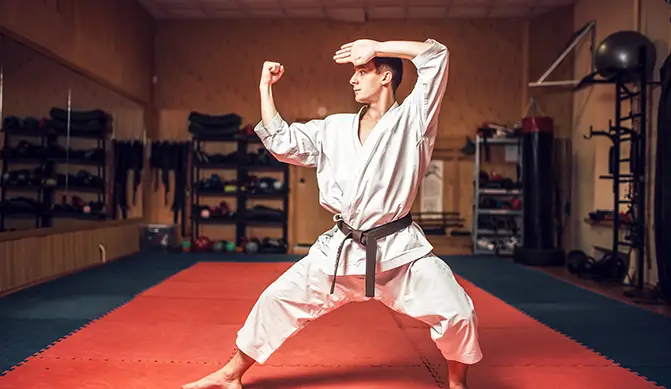
He was there with a cluster of friends near the auction tables, holding court in the easy, confident way he always seemed to hold court, and I noticed, walking in, that he had a blue mat rolled out near the back corner of the tent — apparently part of a planned demonstration, some kind of jiu-jitsu exhibition his gym had arranged as an evening attraction to draw a crowd toward the silent auction items.
I didn’t think much of it at first. I got a plate, found Denise near the dessert table, and settled into the low hum of small talk that fundraisers always produce, half-listening to a conversation about somebody’s kitchen renovation while I ate a lemon bar that was, admittedly, very good.
Then I heard Ethan’s voice rise above the general noise, pitched to carry, the way voices do when someone wants an audience.
“Come on, Army lady,” he said, grinning at me from across the tent. “You served, right? Ten thousand dollars says I couldn’t take you down if we grappled right now.”
The tent went quiet in that particular way a crowd goes quiet when it senses entertainment approaching. A few people laughed, uncertain whether this was a joke or a real proposition. His friends laughed harder, clearly already invested in whatever performance Ethan had decided to put on.
“I’m not a jiu-jitsu practitioner,” I said, keeping my voice level. “I don’t think that’s a fair or interesting bet for anyone.”
“It’s a charity thing,” he said, spreading his hands, playing to the crowd now. “All in good fun. Ten grand to the veterans fund if you can take me down. If you can’t, you owe me nothing, obviously, since you’re a veteran and all, I wouldn’t actually take your money.”
“Very generous,” I said, and meant it as dry as it came out.
He laughed, delighted, clearly reading my dryness as engagement rather than dismissal. “So what do you say?”
I want to explain something about that moment, because I’ve thought about it a great deal since. I could have simply walked away. I’d walked away from plenty over the previous three weeks — the driveway, the nicknames, the little performances of dominance he seemed to specialize in whenever an audience was present. Walking away had felt, each time, like the reasonable choice, the choice that avoided unnecessary conflict in a neighborhood I was still trying to settle into.
But something about the size of the crowd, and the particular way he’d said Army lady in front of all of them, and the white envelope he was now slapping onto the auction table with theatrical confidence, made the calculation feel different this time.
That was when the older man stepped forward. I hadn’t noticed him before, standing near the front row of folding chairs — silver-haired, maybe mid-seventies, with the particular stillness of someone who’d spent a career learning to read a room before speaking in it. He raised a finger toward my left shoulder, toward the small scroll patch still stitched into the collar of my field jacket, the one I’d forgotten I was even wearing.
“That scroll,” he said, “is not something I’d laugh at.”
Ethan’s grin stayed in place, but something in it stopped looking effortless. He glanced at my shoulder, then at the older man, then back at me.
An older man near the auction tables, moving slower than his eyes suggested he wanted to, stepped closer too. “He’s right,” he said.
Richard Caldwell, Ethan’s father, gave a short laugh from beside the dessert table, as though two veterans recognizing a piece of military insignia had somehow become another entertaining segment of the evening. “Come on,” he said. “Ethan isn’t fighting a war. It’s a charity demonstration.”
Carlos Mendes, who I understood to be Ethan’s jiu-jitsu instructor and, apparently, the closest thing to an authority figure willing to actually intervene, didn’t laugh. He looked at me carefully. “You served with a Ranger unit?”
“Yes,” I said. That was all I gave him.
The older stranger nodded once, almost to himself, and several people nearest him lowered their phones just enough to actually look at me instead of their screens.
Ethan rolled one shoulder, still trying to hold onto the performance. “So?” he said. “This is Brazilian jiu-jitsu. Different thing entirely.”
“He’s right,” I said, and I watched that answer land harder than anything the veterans had said, because it wasn’t the defense he’d braced for.
I folded my jacket and handed it to Denise, who was standing beside me with an expression somewhere between alarm and morbid curiosity.
“A Ranger scroll doesn’t make me a jiu-jitsu black belt,” I continued. “You have more time in this sport than I do. That part’s true, and I’m not going to pretend otherwise.”
Ethan’s smile came back, some of his confidence visibly restored. “There we go.”
“But that wasn’t your challenge,” I said. “You said ten thousand dollars says I couldn’t take you down. Then you agreed to Carlos’s controlled rules, whatever those turn out to be. I’m not backing out of a bet you set up in front of this whole tent.”
The smile paused again.
Carlos looked between the two of us. “That’s exactly what he agreed to,” he confirmed.
The tent had changed without becoming quieter. People still whispered. Phones were still recording. A child near the refreshment table tugged at his father’s sleeve while two teenagers who had taken pictures with Ethan earlier that evening moved closer to the mat, suddenly interested in something other than a photo opportunity.
Richard’s confidence remained visible on his face, but I could see it now required a little more effort to maintain than it had a few minutes earlier.
Ethan noticed that too. He stepped onto the blue mat. “Fine,” he said. “Let’s stop talking.”
I stepped out of my shoes at the edge and joined him.
Denise caught my eye once more before I crossed onto the mat, holding my folded jacket over both arms, looking like she genuinely wanted to drag me off it with sheer force of will if that’s what it took. I gave her a small nod. It was the best reassurance I had to offer in the moment.
Carlos brought us to the center. “No striking,” he said. “No reckless cranking. If somebody taps, you release immediately. If I call it, you stop immediately. I do not care who thinks he was winning.”
His eyes stayed on Ethan for that last sentence.
Ethan spread his hands. “You’ve said it three times.”
“I’m saying it once more.” Carlos turned to me. “Understood?”
“Understood.”
He backed away. Ethan offered his hand for the usual start, and I touched it. Then his entire posture changed — the joking disappeared first, his feet lightened, his hands rose, his chin tucked. That was the Ethan I could actually respect, whatever I thought about his behavior everywhere else in his life. Eight years of serious training were visible immediately, the moment the performance dropped away and the actual skill underneath it surfaced.
He didn’t charge at me like some movie bully looking for an easy finish. He tested distance first. He changed levels, made me react twice without committing fully to either movement, reading me the way any well-trained grappler reads an unfamiliar opponent before spending real energy.
I watched his shoulders. I watched his hips. I watched the hand that kept touching forward and disappearing before I could get any real control over it.
Then he came in for real. He moved faster than most people under that tent probably expected from a friendly charity demonstration. He caught my balance, turned the angle, and put me on the mat within seconds. A cheer broke from his friends. Richard clapped once, satisfied.
Ethan settled his weight and leaned close enough that only I could hear him. “Still calm?”
“Yes,” I said, and I meant it, and I watched that irritate him more than any struggle on my part would have.
He tried to advance position quickly, perhaps because he wanted the crowd to see a clean finish instead of a long, technical exchange that might make the evening feel less like entertainment. I framed, moved, and made him reset. Nothing dramatic. Nothing easy either. He was strong, practiced, and very good at making a single small mistake become a genuinely bad position.
I had trained enough grappling through the Army and outside of it, in the years since, to understand that the worst thing I could possibly do was pretend his black belt didn’t matter. So I didn’t pretend that. I gave up space when keeping it would cost too much. I protected what needed protecting. I waited, patiently, the way years of training had taught me to wait even when a crowd wants you to move faster than is wise.
Ethan tried to pull me into another exchange, and I got back to my feet before he could settle me a second time. A few people applauded, not loudly, but the sound bothered him anyway.
“Careful,” Carlos said from the edge of the mat.
Ethan looked at him. “I’m fine.”
“I wasn’t talking about your conditioning.”
Ethan’s jaw tightened. We restarted from standing. This time he pushed the pace immediately, snapping at my head, changing direction, forcing me toward the edge of the mat before I managed to turn us back toward the center. The crowd moved with us. So did the phones. One of Ethan’s friends shouted something encouraging from the sideline. Walt said nothing. The older veteran said nothing. Denise, I noticed, barely seemed to be breathing.
Ethan caught my arm and nearly got behind me. I squared up just before he could secure the position fully. He shoved away, smiling. “There you are.”
I didn’t answer. He came forward again, wanting speed now, wanting certainty, wanting the version of the evening he’d already pictured in his head when he slapped that white envelope onto the auction table with such theatrical confidence twenty minutes earlier.
That was the opening. Not because he was untrained — he wasn’t, not remotely. Not because I was secretly, invisibly unbeatable — I wasn’t that either. Not because a patch on my shoulder somehow changed the physics of a grappling exchange. It was because he had stopped, somewhere in the last few minutes, treating this like training and started treating it like a performance for an audience he was desperate to impress.
He overcommitted while trying to force another takedown. I turned with him instead of fighting straight backward, caught his balance, and we hit the mat almost together. This time I landed on top.
The reaction under the tent came all at once. Someone yelled. Someone else laughed from pure surprise. Carlos moved closer immediately.
Ethan exploded into motion beneath me, which was smart — he created space, recovered part of his position, and nearly reversed me before I managed to settle again. For several seconds, neither of us had anything clean to work with. Then Ethan shoved hard to make room for himself, and his arm separated from his body just enough. I caught it. The position changed fast.
He knew what had happened before anyone else in that tent did. His face told me. I controlled the arm without forcing it any further than the hold required.
Carlos dropped lower beside us. “Ethan.”
Ethan tried to turn. I followed the movement and kept the lock contained, not tightening it, just holding.
“Ethan,” Carlos said again, sharper this time.
“I’m getting out.”
“Stop.”
Ethan kept moving anyway. Carlos slapped the mat with an open palm, the universal sound of a match ending. “Stop. Match over.”
I released immediately. Ethan rolled away and came up on one knee. “What?”
Carlos stood between us before Ethan could close the distance again. “I called it.”
“I didn’t tap.”
“You didn’t need to.”
“I was moving.”
“I called it.”
The two men stared at each other, neither backing down. Carlos did not raise his voice. “You agreed before we started that my call ended it. Your arm was trapped, you were trying to power through the position, and I was not letting a fundraiser turn into an injury because you were embarrassed.”
Ethan got to his feet, his face red from exertion and something else underneath it. “That’s ridiculous.”
“No,” Carlos said. “That’s controlled grappling.”
Nobody cheered after that. That mattered, I think, more than anything else that happened on that mat. The victory, if anyone still wanted to call it that, suddenly felt less like a sporting upset and more like a plain demonstration of the exact difference Ethan had refused to understand all evening.
The older veteran looked at me, then at Carlos. “That’s why I spoke up,” he said.
Ethan turned toward him. “You spoke up because of a patch.”
“I spoke up because I recognized it.” The man’s voice stayed level, unhurried. “I didn’t say she was invincible. I said you ought to understand who you were trying to embarrass before you turned this into a show.”
Walt finally stepped beside him. “And she told you to keep your money.”
Richard moved away from the dessert table, clearly trying to salvage something of the evening’s tone. “All right,” he said. “Everybody’s had their fun. Ethan made a stupid challenge. It’s over.”
I looked toward the white envelope still sitting on the auction table where Ethan had left it. “No,” I said. “The challenge is over. The agreement isn’t.”
Richard stopped walking. His expression changed only slightly. “We’re talking about ten thousand dollars.”
“I know.”
“For a stunt.”
“For the veterans fund,” I said. “That was the condition Ethan accepted, in front of this entire tent.”
Richard looked at his son. For the first time all evening, Ethan did not immediately look back at his father for guidance on how to handle this.
Carlos stepped off the mat. Denise came toward me with my jacket, but neither of us put it on right away. Every phone that had been recording the match was now recording the Caldwells instead. That was exactly the kind of public pressure I usually hated, if I’m honest. I didn’t want Ethan humiliated in front of a crowd that had, twenty minutes earlier, been laughing along with his jokes at my expense. Humiliation had never been the point, not for me. I wanted the line to hold. I wanted it clear, once and for all, that skill was supposed to make a room safer, not smaller for the person standing outside its particular hierarchy.
Richard lowered his voice. “Ethan, pick up the envelope.”
Ethan stared at it. His friends had gone completely still behind him. One of the teenage boys who had asked him for a photo earlier that evening stood near the mat with his arms folded across his chest, watching now with an expression that had shifted somewhere between the beginning of the match and the end of it.
Ethan noticed him. He noticed Carlos too. Then he looked at me. “You knew exactly what would happen.”
“No.”
“You knew you could beat me.”
“No.” That answer seemed to genuinely confuse him. I slipped one arm into my jacket while I finished it. “I knew you were good. I also knew I didn’t need to be certain of winning before I told you to stop using me for entertainment.”
He looked down at the mat, at nothing in particular.
Richard spoke again. “Ethan.”
This time Ethan walked toward the auction table. Richard relaxed slightly, clearly assuming his son was simply obeying him. Ethan picked up the white envelope. Then he turned away from his father entirely.
The fundraiser organizer, a woman I’d only met briefly at the entrance, stood several feet away, unsure whether to approach the unfolding scene. Ethan crossed the space himself and placed the envelope directly into her hands.
“For the veterans fund,” he said.
Richard’s face hardened. “Seriously?”
Ethan looked at him. “I said ten.”
It was the first thing he’d done all evening that made Carlos smile — not a victory smile, just recognition, the particular expression of an instructor watching a student finally do the one right thing available to him in a bad situation.
The organizer thanked Ethan quietly and moved the envelope away from the edge of the table. Nobody applauded. I was glad. Applause would have turned it right back into the same kind of spectacle that had started the entire problem in the first place.
Ethan rubbed the back of his neck. His breathing was finally slowing down. Then he looked at me. “So what, I’m supposed to apologize now?”
“You don’t have to do anything because people are watching.”
That landed differently than I expected it to. Carlos glanced toward him but stayed out of it, letting the moment be Ethan’s to figure out on his own. Ethan looked around the tent as though he’d only just realized how many faces were still turned in his direction. The same crowd that had laughed along when he called me Army lady twenty minutes earlier had watched him lose control of the evening long before he lost control of the actual match.
He walked away from the mat. His father followed him. For about twenty feet, they said nothing to each other. Then Richard caught Ethan’s elbow. Ethan pulled his arm free and kept walking. They continued toward the far side of the tent without another visible argument, at least not one anyone else could hear.
Denise exhaled beside me. “I’m going to need you to explain several things.”
“Not tonight.”
“Fine.” She handed me the rest of my jacket. “Tomorrow?”
“Probably not.”
She stared at me for a long moment. I almost smiled. “Coffee?” I offered.
“That is not an explanation.”
“It’s coffee.”
“Fine. Coffee.”
The older veteran approached once the crowd began breaking apart into smaller, quieter conversations. Up close, he seemed less imposing than he had from the first row of folding chairs. His hands showed his age, and he moved with the careful stiffness of someone who had learned to negotiate old pain instead of complaining about it out loud.
“I hope I didn’t put you on the spot,” he said.
“You did.”
His eyebrows rose slightly. I let him sit with that for a second before I continued.
“But Ethan had already done that.”
He nodded. “Fair enough.” His eyes moved briefly to the scroll on my collar again. “I recognized what I was looking at. That’s all.”
“That was enough.”
Walt joined us then, carrying a fresh paper cup. “I recognized it too,” he said.
“I noticed.”
“You never told me.”
“You never asked.”
Walt gave a dry laugh. “That may be why we get along.”
The three of us stood beside the mat while volunteers began returning folding chairs to straight rows and collecting abandoned cups from beneath the auction tables. The confrontation was already becoming cleanup, the tent slowly reverting to its ordinary evening rhythm. That felt right, somehow. Real life rarely gives you music after a turning point. Usually somebody just starts stacking chairs, and you help them, because there’s nothing left to say that hasn’t already been said out loud in front of everyone who needed to hear it.
I helped. Denise protested that I’d done enough for one evening, but I carried one end of a folding table anyway while she carried the other. Across the tent, Carlos was talking privately with Ethan, low and steady, the kind of conversation an instructor has with a student who’s just learned something the hard way. Richard stood several yards away with his arms crossed, watching but not intervening. I couldn’t hear what Carlos and Ethan were saying to each other. I didn’t need to. Ethan listened more than he spoke. That, at least, was new.
By the time I left the fundraiser that night, the blue mats had been rolled halfway up. The white envelope was gone from the auction table, safely in the hands of whoever was managing the fund’s actual bookkeeping. The wineglasses Ethan had rattled when he first dropped that envelope onto the table had been cleared too. Only the faint indentation from the display remained pressed into the tablecloth, a small, quiet mark of everything that had happened around it.
On Monday morning, I opened my garage at six-twenty and found Ethan’s SUV parked on the street. Completely on the street. Not one inch of it blocking my driveway.
I thought that would be the end of things. It wasn’t.
As I walked toward my car, Ethan came down his driveway wearing sweatpants, a faded hoodie, and the tired expression of someone who had spent an entire weekend replaying a bad decision in his head from every possible angle. No friends followed him. No phone was in his hand. Richard was nowhere in sight.
Ethan stopped near the property line, the invisible boundary between our two driveways that had caused so much trouble three weeks earlier. “Victoria.”
I waited.
He shoved both hands into his hoodie pocket. “Carlos made me watch the video.”
I said nothing.
“All of it.”
Still nothing.
“The stuff before the match too.”
He looked toward my driveway, the same one he’d once blocked with such casual disregard. “I looked like an idiot.”
“You looked like someone who thought being good at one thing gave him permission to decide everybody else’s place.”
He winced. “That’s worse.”
“Yes.”
For a moment he almost smiled, but there was no arrogance left in it, none of the performance that had colored everything he’d said to me over the previous three weeks.
Then he pulled one hand from his pocket. “I was out of line.”
I waited again.
“With the driveway. The comments. The Army jokes. Saturday.” He swallowed. “All of it.”
“Okay.”
He blinked, clearly having expected more from me than that single word. “That’s it?”
“What did you want?”
“I don’t know.”
“A speech?”
“No.”
“Good.”
He rubbed his palms together against the morning chill, the early autumn air still holding onto the last of summer’s warmth but only just barely. “The donation went through.”
“I assumed it would.”
“My dad wanted me to pull it.”
“That’s between you and your dad.”
“I know.” This time he looked directly at me, holding my eyes in a way he hadn’t managed to do once during the entire exchange three weeks earlier. “I didn’t.”
That mattered more than anything else he could have added, standing there in that quiet, unremarkable morning light. Not because ten thousand dollars erased three weeks of behavior — it didn’t, and I wasn’t foolish enough to pretend it had. Not because losing a single match had transformed him overnight into someone entirely different — it hadn’t, and people rarely change that fast regardless of how dramatic the circumstances. Not because I suddenly trusted him — I didn’t, not yet, maybe not for a long while. But he had made one decision without an audience watching him make it. That was, at the very least, a beginning.
Ethan shifted his weight toward his house. “Carlos says I owe you a real apology and about six months of learning how not to be an ass.”
“That sounds like Carlos.”
“He also says if I ever challenge another neighbor at a fundraiser, he’s changing the locks at the gym.”
I laughed before I meant to. Ethan did too. It lasted about two seconds, and then the awkwardness returned between us, which was probably healthier than either of us pretending it had fully dissolved.
He stepped backward toward his own driveway. “I’ll stay out of yours.”
“That would be a good start.”
He nodded and walked home. I got into my car and looked once, before pulling out, toward the empty stretch of concrete behind me. Three weeks earlier, that same space had been the first place Ethan tested whether I would let a small act of disrespect become normal, become simply the shape of how our two households related to each other on Larksburg Court. I had asked him to move his SUV. He had mocked me for asking. I had stayed calm, the way I’d learned to stay calm through years of training and years of service, and he had misunderstood that calm as surrender, the way plenty of people do when they’ve never had to develop that particular skill themselves.
Saturday had finally corrected that misunderstanding, but not in the way most of the neighborhood would probably end up telling the story to each other over the following weeks. The Ranger scroll had not won the match. The older veteran had not rescued me. Carlos had not handed me some tidy victory. And Ethan’s black belt had never once been fake — he was legitimately, seriously skilled, and that was part of what made the whole lesson matter in the end. The difference had never been about skill at all. It was about what each of us believed that skill was actually for.
He had walked onto that mat expecting it to confirm his position above someone else, one more small performance in a string of small performances he’d been putting on since the day I moved in. I had walked onto it because, after three weeks of quietly walking away, I had finally decided that leaving peacefully and being publicly pushed aside were not, in fact, the same thing, no matter how much easier it had been to treat them that way.
The next fundraiser notice appeared in our mailboxes a few weeks later. There were no challenges attached to it this time. No bets. No public dares scrawled across the flyer in anyone’s imagination. The veterans fund total from the previous event was listed alongside the other donations, including Ethan’s ten thousand dollars, without any story explaining how it had actually gotten there. I preferred it that way. Some things don’t need an audience to matter.
Denise came over that evening with two paper coffee cups and the notice folded under one arm. She held it up as I opened the door.
“You still owe me an explanation.”
“I gave you coffee.”
“You gave me coffee and approximately twelve percent of an explanation.”
“That sounds generous.”
She pushed one cup into my hand and walked past me toward the kitchen like she’d lived next door for years instead of weeks, already comfortable enough in my space to make herself at home without asking.
Outside, through the front window, an SUV rolled slowly down Larksburg Court and turned into the Caldwell driveway without touching mine, not even close, a wide and deliberate berth that hadn’t existed three weeks earlier.
Denise saw it too. “So,” she said, settling onto one of my kitchen stools, “was it worth it?”
I looked down at the coffee in my hand, then out the window at the ordinary, clear strip of driveway sitting between our two houses.
“Yes,” I said.
Not because everybody on that street finally knew what the scroll on my shoulder actually meant, or what it had cost me to earn it, or what it still meant to me most days when I put on that old field jacket out of habit. Because one neighbor had finally learned what my first answer should have meant, all the way back on that very first morning, standing at his front door with a gym bag over his shoulder and a joke already halfway out of his mouth.
No.
And this time, at last, he respected it.
Specialty: Legal & Financial Drama
Michael Carter covers stories where money, power, and personal history collide. His writing often explores courtroom battles, business conflicts, and the subtle strategies people use when pushed into a corner. He focuses on grounded, realistic storytelling with attention to detail and believable motivations.