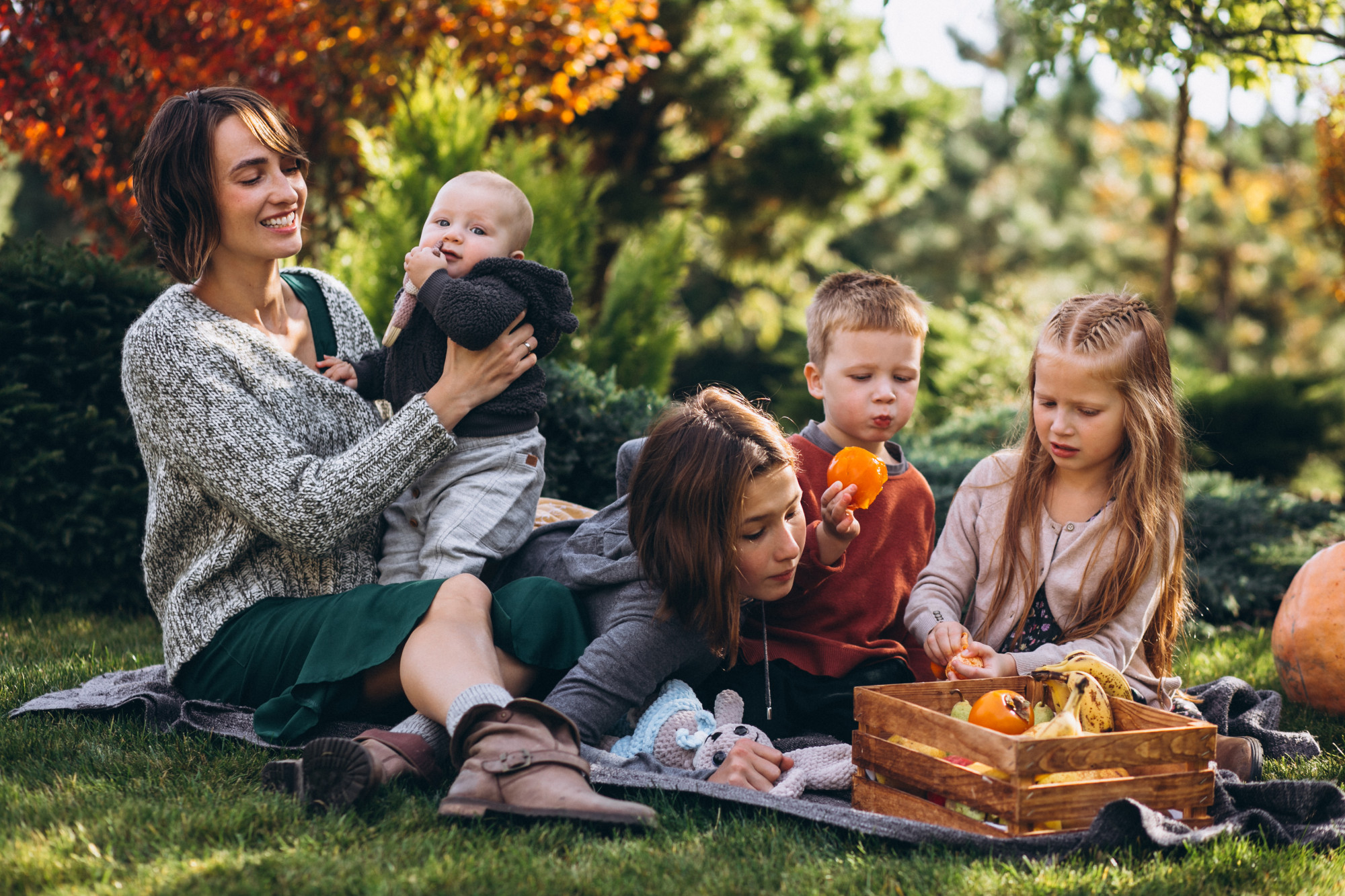
Say That Again
I want to start with what Noah was wearing.
He had chosen the dinosaur shirt himself that morning, which he always did for family events because he believed, in the way that eight-year-olds believe things, that the right clothing communicated something important about you. The dinosaur shirt was navy blue with a Triceratops on the chest, and he had explained to me once that Triceratops were actually the misunderstood ones: everyone talked about T. Rex but Triceratops had three horns and a frill and were actually quite formidable if you thought about it carefully.
I think about that sometimes now.
He wore the shirt to my father’s seventy-first birthday picnic because it was his best shirt and he wanted to make a good impression. He had reminded me three times on the drive over to park in the driveway instead of on the street because the walk from the street went past the section of the yard where Mrs. Patterson’s dog sometimes got through the fence, and he was not afraid of dogs, he explained, he just preferred to have some warning.
He had prepared for the picnic the way he prepared for everything: systematically, carefully, with a plan.
He is a child who thinks through how things will go and what he can do to make them go well. His therapist, a warm and precise woman named Dr. Anita Ramos, describes this as advanced situational awareness combined with a strong preference for predictable environments, and she says it will be one of his most significant strengths when he is older, and I believe her, but on the afternoon of my father’s picnic it manifested as a seven-year-old sitting carefully on a wooden bench because he had noticed ants in the grass and had decided the bench was the safer option.
He had been trying to be perfect since the moment we arrived.
The lemonade incident happened within the first twenty minutes.
My brother David’s golden retriever, Murphy, came bounding around the corner of the house and hit Noah from behind before either of them had a chance to react, and Noah’s lemonade went across the table in a wide arc that caught the edge of my aunt Carol’s sleeve and the corner of the paper tablecloth.
Noah apologized immediately.
He apologized to Murphy, which was perhaps the most Noah response possible to a dog knocking him down, and then he apologized to my aunt Carol, and then he looked for something to clean the table with and found the roll of paper towels by the grill and began mopping up the mess with the methodical focus of someone who has decided that a problem requires a solution rather than a complaint.
Everyone else laughed.
It was a dog, they said. Murphy, come here. Marissa, your kid is fine, stop making a face. David called Murphy back to the other side of the yard and someone refilled Noah’s cup and that was that.
Noah did not stop cleaning the table until it was dry.
He helped even though nobody had asked him to help.
He helped even though it wasn’t his mess.
He helped because he wanted them to see that he could be useful and that he was not a disruption and that having him there was acceptable.
I watched him do this and I felt the specific grief of a mother who knows her child is auditioning for acceptance from people who should simply give it.
My family is not cruel. I want to be clear about this because cruelty would be simpler to explain. Cruelty has a clean origin and a definable shape. What my family had, specifically what my mother had, was something more diffuse and more complicated: a way of organizing her love that left certain people outside its warmth and then calling the arrangement practical.
She loved, but she ranked.
Children who were easy got warmth. Children who required adjustment got management. Adults who complicated gatherings got quiet exclusion. She had been doing this for so long that the people around her had learned to adapt rather than confront, because confrontation with my mother required a specific appetite for the specific discomfort she could produce when challenged.
She was seventy-one years old when she said it.
She was sitting across from Noah at the folding table, and she had her paper plate in front of her with the half-eaten burger and the potato salad she always made for family events and that everyone complimented because it was genuinely excellent. She had a napkin in her hand. She had been watching Noah eat for perhaps five minutes in the way she watched him at gatherings: not with hostility exactly, but with the specific attention of someone cataloguing evidence for a conclusion they have already reached.
She said: next time, don’t bring the kid.
She did not lower her voice.
She did not wait until Noah had gone to the other side of the yard or taken himself to the bathroom or otherwise created a conversational window in which the remark could be discussed without him present. She said it at full volume in the middle of the family picnic with my father and brothers and aunts and cousins all within earshot, and she said it the way she said everything she meant to say: plainly, with the confidence of someone who has decided that what they are saying is obvious and it is the other people who are being obtuse.
Noah had a plastic fork halfway to his mouth.
He set it down.
He did it slowly, carefully, with the specific deliberateness of someone who has learned that reducing the noise they make reduces the attention they draw. He set the fork down on the plate and he looked at the Triceratops on his shirt.
I said: what did you just say?
She wiped her mouth.
She shrugged.
She said: I said what everyone’s thinking. He ruins the mood.
In seventeen years of being this woman’s daughter, I had become a reasonably skilled interpreter of her language. I said what everyone’s thinking was her construction for assertions she understood were objectionable but wanted the cover of consensus for. He ruins the mood was the summary verdict of months of watching Noah at gatherings and filing observations under a conclusion she had reached long before she announced it.
She was not wrong that Noah was different at gatherings.
She was wrong about what different meant.
Noah finds large group gatherings effortful in ways that neurotypical children do not. The noise and the movement and the number of social calculations required to navigate a family picnic take a specific kind of energy from him that they do not take from his cousins. He appears, sometimes, to be working hard in contexts where other children appear to be simply having fun, because he is working hard: he is tracking multiple conversations and monitoring his own behavior and trying to read the social cues of twelve people simultaneously while also managing the ambient sensory input of a summer afternoon outdoors.
He was not ruining the mood.
He was trying to participate in it at a cost that nobody around that table understood or acknowledged.
I stared at her.
Noah’s cousins, who were nine and eleven and had the instinctive social intelligence of children who understand when something serious is happening, went very still.
My sister turned to her phone.
My brother David became interested in the grill.
My father cleared his throat once, the throat-clearing that I had been listening to my whole life and that meant he was aware a situation was developing and was deciding not to engage with it.
Nobody defended Noah.
Not one person at that table said anything.
I opened my mouth.
The chair beside me scraped hard against the patio pavement.
Lily stood up.
I should tell you about Lily.
She was seventeen and she was the kind of seventeen that is easy to underestimate because it does not announce itself. She was quiet in groups, preferring the edges of conversations to the centers, and she chose her words with the careful patience of someone who has learned that the right word matters more than the fast one. She was not someone people expected to push back. She was the thoughtful one, the one who waited, the one who absorbed the family’s conversational currents and moved through them without creating friction.
She was also the person who had been watching her little brother try to belong at family gatherings for eight years.
She planted both hands on the folding table.
She looked directly at her grandmother.
She said: say that again.
My mother blinked.
She said: excuse me?
Lily did not move.
She said: say it again. Look at Noah and tell him he doesn’t belong at family events because he makes you uncomfortable.
My aunt Carol said, softly: Lily.
Lily said: no. Her voice shook but she held her grandmother’s gaze and she did not look away. She said: everyone keeps pretending she doesn’t mean these things. Noah knows she means them. He always knows.
Noah was looking at the Triceratops on his shirt.
Under the table, I reached for his hand.
His fingers closed around mine with a strength I had not been prepared for.
My mother leaned back in her chair.
She said: you’re seventeen. Stay out of adult conversations.
Lily said: this stopped being an adult conversation when you humiliated an eight-year-old in front of the whole family.
The grill crackled.
Somewhere near the driveway a cooler lid dropped.
Nobody moved.
Then Lily reached for the backpack hanging from her chair.
Something changed in my mother’s expression when she saw the backpack coming forward. It was not fear. It was the specific shift of someone recognizing a situation they had thought they controlled.
Lily pulled out her phone.
She unlocked it.
She placed it in the center of the table.
The screen showed an audio file with a date from three nights earlier.
My mother looked at the phone.
Lily rested one finger above the play button.
She said: you told me I was old enough to understand why Noah shouldn’t come anymore.
My mother’s napkin fell from her hand.
The audio file on Lily’s phone was four minutes and twenty-three seconds long.
I knew this because I had listened to it twice the night before, sitting in my kitchen after Noah was asleep, with my earphones in and my phone on the table, listening to my mother’s voice describe my son with the specific clarity of someone who has been thinking these things for a long time and has found, in a private conversation with her granddaughter, a person she believes is old enough to understand her reasoning.
Lily had called me after the conversation.
She had called me from her room, whispering, and she had said: Mom. I need to tell you something. Grandma called me and she said something about Noah and I recorded it. I didn’t know if I should tell you but I think I have to.
She had played it for me over the phone.
I had listened.
I had sat at the kitchen table and listened to my mother explain to my seventeen-year-old daughter that Noah’s presence at family events was a disruption and that Lily was old enough to understand that some children simply do not fit certain environments and that it would be better for everyone, including Noah, if Marissa found other arrangements for him when the family gathered.
She said: you love your brother, of course. But you can see what I mean. He’s different.
Lily’s voice, on the recording, was careful and steady.
She said: what do you mean by different?
My mother said: you know what I mean.
Lily said: I’d like you to say it.
My mother said: he makes gatherings difficult. He’s overly sensitive. He creates situations.
Lily said: he had lemonade spilled on him by Murphy and he apologized for it.
My mother said: he has to be managed. You can see it every time we get together. Your mother exhausts herself trying to make sure he doesn’t have an episode.
Lily said: do you mean a meltdown?
My mother said: whatever they’re calling it now.
Lily said: Grandma. Can I ask you something?
My mother said: of course, sweetheart.
Lily said: do you love Noah?
A pause.
My mother said: of course I love him. I love all my grandchildren.
Lily said: but you think he shouldn’t come to family events.
My mother said: I think it would be easier for everyone.
Lily said: including him?
My mother said: children sense when they’re out of place.
Lily said: yes. They do.
The recording stopped there.
Lily had ended the call shortly after that exchange, citing homework, and had recorded four minutes and twenty-three seconds of her grandmother explaining why her eight-year-old brother was a problem to be managed rather than a grandchild to be loved.
She had not told me what she was going to do with the recording.
I had known she was going to do something with it.
At the picnic table, with the phone in the center and Lily’s finger above the play button, my mother sat very still.
She said: where did you get that.
Lily said: from our phone call, Grandma. Three nights ago. You called me specifically to have this conversation.
My father said: Margaret.
My mother said nothing.
My father said: what is on that phone.
Lily said: a conversation where Grandma explains that Noah shouldn’t come to family events anymore because he makes gatherings difficult.
The word difficult was precise. It was Lily’s precision: she was not going to use language that gave my mother room to reinterpret or re-characterize. She was going to use my mother’s own word, from my mother’s own mouth, at the correct volume.
My father turned to my mother.
He said: is that true?
My mother said: I was speaking privately to my granddaughter.
He said: that didn’t answer my question.
She said: Robert.
He said: Margaret. Is that what you said?
The silence that followed was the longest silence I had experienced at a family gathering. The cousins had stopped moving. My brother had put down the spatula. My sister had put down her phone.
Noah was still looking at his shirt.
He had not looked up since Lily stood.
I rubbed my thumb across his knuckles.
My mother said: I said what I believe is true. Noah is a difficult child and these gatherings are stressful for everyone when he’s here. I was trying to have an honest conversation with Lily because Lily is old enough to hear it.
My father said: he’s eight years old.
She said: I know how old he is.
My father said: he’s eight years old and he’s sitting right there.
She said: children need to learn that the world doesn’t—
My father said: Margaret. Stop.
He had not used that particular voice with her in forty-seven years of marriage in my hearing. It was not loud. It was the absolute bottom register of a patient man who has arrived at the end of patience.
She stopped.
My father looked at Noah.
He looked at his grandson across the folding table, in the dinosaur shirt, with his fork set carefully on his plate and his fingers wrapped around his mother’s hand.
He said: Noah.
Noah looked up.
He had his mother’s eyes, which means he had my eyes, which means he had the Callahan eyes that my father had given me and that I had passed to my children.
My father said: you belong here. Do you understand me?
Noah said, very quietly: yes, sir.
My father said: I’m sorry for what you heard.
Noah said: it’s okay.
My father said: it’s not okay. I want you to know that.
Noah looked at him.
He said: okay. Thank you, Grandpa.
He said it with the specific formality of a child who has not yet learned to receive certain kinds of repair, who is absorbing the information and filing it carefully for later processing.
My father looked at my mother for a long moment.
Then he got up from the table.
He walked across the yard.
He went inside the house.
We heard the screen door close.
The picnic did not resume exactly. Some people began quietly gathering plates. My brother David took the spatula and removed the remaining burgers from the grill and put them on a platter and covered them with foil. My aunt Carol refilled the lemonade pitcher and set it on the table and then stood by the pitcher and looked at the yard.
Noah said: Mom.
I said: yes, sweetheart.
He said: can I be excused?
I said: of course.
He got up from the bench, carefully, avoiding the section of the grass where he had seen the ants.
He walked to the edge of the yard where there was a large oak tree with roots that had grown into interesting shapes, and he sat against the trunk and looked at the roots, which was what he did when he needed to process something: he found an interesting visual object and he looked at it and let his mind do what it needed to do.
Lily had remained at the table.
She was looking at her grandmother.
My mother was looking at the phone in the center of the table.
Lily reached out and picked it up.
She locked the screen.
She put it in her backpack.
She said: I’m not going to play it. I thought about it but I’m not going to play it.
She said: I needed you to know I have it. I needed you to know I heard it and I’m not going to pretend I didn’t hear it. And I needed everyone at this table to know what the conversation was, because this family has a pattern of not knowing what conversations have been happening.
She said: but I’m not going to play it because Noah is twenty feet away. And the conversation on that recording is not his to hear.
She picked up her plate.
She said: I’m going to sit with Noah.
She walked across the yard and sat against the oak tree beside her brother, who looked at her when she arrived and then went back to looking at the roots.
They sat together under the tree.
My mother had not moved.
Her napkin was still on the ground.
She looked at the space where Lily had been sitting.
I said: I need you to understand something.
She looked at me.
I said: I have been managing your feelings about Noah for three years. I have been preparing him before gatherings by telling him that Grandma is sometimes difficult and we just have to be patient. I have been apologizing to you for the ways he is different as though his differences are something I have done to you. I am not going to do that anymore.
She said: Marissa.
I said: he is eight years old and he is trying harder than any child I have ever watched try. He tries so hard at these gatherings that it costs him for days afterward. He comes home exhausted in a way that other children don’t. He does this because he loves this family and he wants to be here.
She said: I know he tries.
I said: then act like you know it.
I said: the next time we come to a family gathering, which will not be until I am certain that what happened today has been addressed, I expect you to be someone my son is glad to see. I expect you to look at him and find something to appreciate rather than something to manage. I expect you to be his grandmother.
She said: of course I’m his grandmother.
I said: then be it.
I picked up Noah’s plate and my own and I walked across the yard to the oak tree.
I sat down on the other side of Noah from Lily, and the three of us sat against the tree while the adults around the folding tables talked quietly and nobody looked at us.
Noah said: Mom.
I said: yes.
He said: I have a question.
I said: ask it.
He said: is Grandma right? Do I ruin the mood?
I looked at my son.
I thought about the lemonade he had mopped up without being asked. I thought about the way he had sat carefully on the bench because of the ants. I thought about the three times on the drive over that he had reminded me to park in the driveway. I thought about the Triceratops shirt and the reason he had chosen it.
I said: no. Grandma is not right.
He said: then why did she say it?
I said: because she’s wrong about some things and she hasn’t understood that yet.
He thought about this.
He said: she’s wrong specifically about me.
I said: yes.
He said: does she know she’s wrong?
I said: not yet.
He said: will she figure it out?
I said: I don’t know. I hope so.
He looked at the roots of the oak tree.
He said: Triceratops were also misunderstood.
I said: I know.
He said: everyone thought they were just big because they were big. But their horns were actually for communication. Like how the frill could move. They were communicating all the time and people just didn’t notice.
I said: yes.
He said: it’s hard when you’re communicating and people don’t notice.
I said: it is very hard.
He said: but some people notice.
He looked at Lily.
She was looking at the roots of the tree and she reached over without looking at him and bumped his shoulder with her shoulder, the way siblings do, the way people do when they have been doing it since one of them was very small.
He bumped her back.
I drove home with my children at five o’clock.
My father had not come back outside. My mother had moved to a chair near the edge of the patio where she sat alone for the last hour of the picnic. My brother and sister and aunts had conducted the kind of politely resumed gathering that families conduct when the real conversation has occurred and everyone is waiting for the ambient emotion to metabolize before they can address it directly.
Three days later, my father called.
He called my phone, not my mother’s, which was itself significant.
He said: Marissa.
I said: hi, Dad.
He said: I need to tell you something.
I waited.
He said: I have known for some time that your mother says things about Noah. I have not handled it correctly. I have been clearing my throat and not speaking and I have been telling myself it was a smaller problem than it was.
I said: yes.
He said: I was wrong.
I said: yes.
He said: I want to repair this.
I said: I’m glad to hear that.
He said: your mother and I have had some difficult conversations this week.
I said: okay.
He said: she is not going to change overnight. I want to be honest with you about that. She has opinions about things that are very settled and disturbing settled opinions is slow work.
I said: I know.
He said: but she has agreed to something.
I said: what?
He said: she has agreed to speak to someone. A counselor. Someone who works with families. I made an appointment for us together.
I let this information settle.
I said: that’s more than I expected.
He said: she was very upset by the recording.
I said: I know.
He said: not by being recorded. Or not only by that. She was upset by hearing herself. By hearing what she sounded like when she was speaking that way.
I said: what did she say about it?
He said: she said she sounded mean. That was her word. She listened to what she had said and she said I sound mean.
I said: she was.
He said: yes. And she knows it. I’m not asking you to forgive her yet. I’m asking you to let me work on this.
I said: Dad.
He said: yes?
I said: the question isn’t whether I forgive her. The question is whether Noah is safe at family gatherings. That’s the standard.
He said: I understand.
I said: when I’m confident that he’s safe, we’ll come back.
He said: what would safe look like?
I said: it would look like Grandma being glad to see him. It would look like her making him feel welcome rather than managed. It would look like her saying something to him, something genuine, that acknowledges who he is rather than what she finds inconvenient about him.
My father was quiet for a moment.
He said: those are reasonable things to ask for.
I said: yes.
He said: I’ll work on them.
I said: good.
He said: Marissa.
I said: yes?
He said: Lily. She was very brave.
I said: yes.
He said: she also planned it. The recording. The way she placed the phone. She thought about how to do it.
I said: yes.
He said: she’s a remarkable young woman.
I said: she is.
He said: she gets it from you.
I said: she gets it from watching me not do it for too long. She got tired of watching.
He was quiet.
He said: fair.
I said: Dad, I need to ask you something.
He said: ask it.
I said: why did you go inside?
He said: when?
I said: at the picnic. After you spoke to Noah. You went inside and you didn’t come back out.
He was quiet for a long moment.
He said: because I needed to think without people watching me think. And because if I had stayed at the table I would have said things to your mother that weren’t productive.
I said: were you angry?
He said: I was furious.
I said: at her?
He said: at her. And at myself.
I said: for not stopping it sooner.
He said: yes.
I said: I know that feeling.
He said: yes. I imagine you do.
We talked for another twenty minutes about logistics and about the counseling appointment and about when I thought we might be ready to bring Noah back to a family gathering. We arrived at a tentative understanding: I would give it two months. My father would work with my mother in the counseling. At the two-month mark we would talk again and assess.
I told Noah about the call that evening.
He was at the kitchen table working on a model of the solar system for school, placing each planet at the correct proportional distance from the sun with the specific attention to accuracy that characterized everything he did.
I said: I talked to Grandpa today.
He said: yes?
I said: Grandpa and Grandma are going to talk to a counselor. Someone who helps families understand each other better.
He placed Neptune on the paper.
He said: is Grandma going to understand me better?
I said: that’s what we’re working toward.
He said: she said I ruin the mood.
I said: I know.
He said: do you think she actually believes that?
I said: I think she has misunderstood some things about you. And I think she’s going to have the opportunity to understand them better.
He looked at Neptune.
He said: it would help if she knew about the Triceratops thing.
I said: what do you mean?
He said: that communicating in a way that people don’t recognize isn’t the same as not communicating. That some things that look like problems are actually just different kinds of information. That if you don’t know how to read the frill, you miss the whole conversation.
I looked at my son.
Eight years old.
Working on a solar system.
Explaining sensory communication through the example of a Cretaceous dinosaur he had spent months reading about.
I said: you could tell her that yourself, sometime.
He said: could I?
I said: yes.
He said: would she listen?
I said: I hope so. That’s what we’re working on.
He placed Jupiter on the paper.
He said: Mom.
I said: yes?
He said: Lily is very brave.
I said: yes.
He said: she planned the whole thing.
I said: I know.
He said: she thought about it and she knew what to do and she did it at exactly the right moment.
I said: yes.
He said: that’s like situational awareness. Dr. Ramos talks about it.
I said: it is.
He said: she gets that from observing. From noticing things.
I said: yes.
He said: I notice things too.
I said: you do.
He said: maybe someday I’ll know when the right moment is.
I said: you already do, sometimes.
He looked at me.
He said: when?
I said: you knew not to make noise with the fork. You knew to hold my hand quietly. You knew that the right thing was to go sit by the tree and let people process.
He considered this.
He said: those were just the obvious things.
I said: obvious things are often the hardest to do when you’re frightened.
He said: that’s what you said to Maya in the vacation story.
I said: I said it again because it’s still true.
He almost smiled.
He placed Earth on the paper.
He placed it at exactly the right distance from the sun.
Lily called Noah that night from her room, even though they were in the same house, because she knew he would find a phone call less overwhelming than a door knock when he was processing something.
He told me about it in the morning.
He said: Lily called me.
I said: what did she say?
He said: she said she was proud of me for how I handled the picnic.
I said: what did you say?
He said: I said I was proud of her for the recording thing. She said she was scared that she was going to get in trouble. I said I thought it was worth it.
I said: what did she say to that?
He said: she said yes. She thought so too.
He said: then she said something else.
I said: what?
He said: she said she has been watching Grandma say things about me for a long time. She said she kept waiting for someone else to say something first and nobody did and she got tired of waiting.
He looked at the solar system on the table, which he had put away carefully the night before and had brought back out to look at.
He said: Mom.
I said: yes?
He said: why did everyone else wait?
I sat down across from him.
I said: because confronting someone like Grandma is uncomfortable, and people avoid discomfort, and when they keep avoiding it long enough it starts to feel like the situation is just how things are.
He said: but it wasn’t how things should be.
I said: no.
He said: so avoiding it made it worse.
I said: yes.
He said: that’s a systems problem.
I said: what do you mean?
He said: if the system rewards avoiding the problem, people avoid the problem, and the problem persists. The system has to change so that speaking up is easier than staying quiet.
I looked at my son.
Dr. Ramos had told me, at our last session, that Noah had a gift for pattern recognition that was unusual for his age, that he saw the structure of situations in a way that most children did not develop until adolescence. She said it was one of the ways his brain worked that was neither a deficit nor a simple strength but a difference, a different way of processing information that had costs in some contexts and significant advantages in others.
I said: that’s exactly right. That’s the systems problem.
He said: Lily changed the system.
I said: yes.
He said: the recording was the thing that made speaking up easier than staying quiet, for everyone watching.
I said: yes.
He said: she’s very smart.
I said: very smart.
He said: and she was scared.
I said: yes.
He said: being scared and doing it anyway is the best kind of brave.
I said: yes.
He placed Pluto on the paper.
He placed it at the far edge, in its correct eccentric orbit, slightly off-plane from the rest.
He said: is Pluto still a planet?
I said: the classification changed.
He said: but it’s still there. It didn’t go anywhere.
I said: no. It’s still there.
He said: the classification just doesn’t capture it properly.
I said: that’s one way to look at it.
He looked at the small circle at the edge of his solar system.
He said: I think about Pluto a lot.
I said: I know you do.
He said: it fits the system imperfectly and everyone made it into a problem, but the problem is with the classification, not with Pluto.
I said: yes.
He said: Dr. Ramos says that too.
I said: she’s right.
He looked at the whole solar system spread across the kitchen table.
He said: Mom.
I said: yes?
He said: I want to go back.
I said: to Grandpa and Grandma’s?
He said: eventually. When it’s ready. I want to try again.
I said: why?
He said: because I want to belong there. I know I belong here. I know I belong at school and with Dr. Ramos and with my friends. But I want to belong there too.
He said: and I think maybe if Grandma understands the frill thing, she might be able to learn how to read it.
I said: maybe.
He said: and even if she can’t, I want Grandpa to know I tried.
I looked at my son at the kitchen table with his solar system and his Pluto at the edge of the orbit.
I said: I’m going to tell you something.
He said: okay.
I said: the bravest thing I have seen in a long time was your sister standing up and saying say that again.
He said: I know.
I said: the second bravest thing was you going to sit under the tree and processing it the way you process things, without making it worse for anyone.
He said: I didn’t do anything.
I said: you did the right thing. You did the right thing when you apologized for the lemonade even though it wasn’t your fault. You did the right thing when you helped clean the table. You did the right thing when you sat carefully on the bench. You were trying to belong and you belong.
He said: Grandma doesn’t think so.
I said: Grandma is wrong about some things and she is working on understanding that.
He said: do you believe her?
I said: I believe your grandfather. And your grandfather believes she can change.
He thought about this.
He said: Grandpa is good at being right about things.
I said: yes. He is.
He said: okay.
He began gathering the planets carefully from the table to put them in the storage box, each one in its labeled compartment, each one handled with the attention of someone for whom the correct placement of things matters.
He picked up Pluto last.
He held it for a moment.
He put it in its compartment.
He closed the box.
The counseling went for eight weeks.
I know this because my father called at the two-month mark, as promised, and told me that they had met with the family counselor six times and that my mother had said something, in the fifth session, that had shifted things.
He said: she said she was afraid of him.
I said: afraid of Noah?
He said: afraid of what she didn’t understand. She said she had spent so long not understanding him that the not-understanding had become fear, and the fear had come out as unkindness.
I said: that doesn’t excuse it.
He said: no. She knows that. She didn’t offer it as an excuse. She offered it as an explanation. The counselor helped her separate those two things.
I said: what changed?
He said: she watched a video. The counselor gave her a documentary about autism and sensory processing. Your mother watched it and she called me into the room afterward and she said I’ve been reading the frill wrong.
I stopped.
I said: she said that.
He said: those words, yes.
I said: how did she know that phrase?
He said: I told her. I told her about Noah’s Triceratops explanation. She asked me to explain it and I did.
He said: she said she wanted to meet with Noah. Just him and her. With me there, if you thought that was appropriate. She said she wanted to try to read the frill correctly.
I said: I’ll talk to Noah.
I talked to Noah.
I explained what Grandpa had said. I explained what Grandma had said in the counseling session. I explained the frill comment.
Noah was quiet for a long time.
He said: she knows about the frill.
I said: Grandpa told her.
He said: she wants to meet with me.
I said: yes.
He said: does she know I might need the visit to be shorter than a full gathering?
I said: I’ll tell her.
He said: and I might need a quiet space available.
I said: I’ll tell her that too.
He said: and I’d like Lily to be there. Not between us. Just present.
I said: okay.
He looked at his hands.
He said: I want to tell her about the Triceratops myself. About what the horns were for.
I said: okay.
He said: is that okay?
I said: it’s perfect.
The meeting happened on a Saturday in October.
We went to my parents’ house at two in the afternoon, which Noah had noted was a good time because it was not too early and not too late and there would be less chance of him being hungry or tired, which were variables he liked to control when he could.
My mother was in the kitchen when we arrived.
She had made lemonade.
She had made it from scratch, which I knew because she had called and asked whether Noah preferred it sweet or slightly tart, and Noah had said slightly tart with a little less sugar than the recipe says, and she had said I’ll do that.
The kitchen smelled of lemons.
Noah went in first.
He looked at the lemonade on the counter.
He said: you made the lemonade.
My mother said: I did. I hope I got the sweetness right.
He said: you can add more sugar if you want.
She said: let me know after you taste it.
He tasted it.
He said: it’s exactly right.
My mother’s shoulders moved in a way that was not quite a breath of relief but was adjacent to one.
She said: Noah. I want to say something.
He looked at her.
She said: I said something at Grandpa’s birthday that was wrong and unkind and I’m sorry. I’m especially sorry because you were trying so hard that afternoon and I made it harder and that was the opposite of what a grandmother should do.
She said it looking at him, not at me, not at the floor.
He held his lemonade.
He said: Grandpa told me about the counseling.
She said: yes.
He said: the counselor helped you understand something?
She said: she helped me understand that I was afraid of what I didn’t understand. And that the fear was showing up as unkindness.
He said: that makes sense.
She blinked.
She said: it does?
He said: yes. Fear produces avoidance behavior. And when you can’t avoid, it produces defensive behavior. Unkindness is a form of defensive behavior.
She said: that’s exactly what the counselor said.
He said: I want to tell you about Triceratops.
She said: your grandfather told me you had something to explain.
He sat down at the kitchen table.
She sat across from him.
I sat at the end.
Lily sat near the door.
My father stood by the counter with his coffee.
Noah explained Triceratops.
He explained the horns and the frill and the way that the frill was used for communication in ways that people had overlooked for years because they were looking for the obvious signals and not the structural ones. He explained that Triceratops had been communicating all along and the problem was not the communication but the reader’s ability to interpret it.
He explained what he meant by that.
He said: I communicate all the time. At the picnic I was communicating that I was trying hard and that I wanted to belong and that I was managing a lot of input and doing my best. But the way I communicate those things doesn’t always look like the way most people communicate them. And if you don’t know the frill, you miss it.
He looked at her.
He said: I’m not broken. I’m differently configured.
She said: I know that now.
He said: do you?
She said: I’m learning it.
He said: that’s the honest answer.
She said: yes.
He said: I can work with that.
She said: can you?
He said: yes. As long as you keep learning.
She said: I will.
He said: okay.
He drank his lemonade.
She watched him.
She said: Noah.
He said: yes?
She said: what should I have said at the picnic? If I could go back. What would the right thing have been?
He thought about this with the care he brought to everything.
He said: when Murphy knocked over my lemonade, you could have said nice save, the way you say it when someone recovers quickly from something. Because I recovered quickly. I found the paper towels and I cleaned the table.
She said: you did. I didn’t say that.
He said: you could have said something to make me feel like what I did was good rather than like I was still a problem that needed managing.
She said: yes. I should have.
He said: and when Grandpa made his toast, you could have included me in it. He said all the grandchildren but you looked at the others. I noticed.
She said: I know. I’m sorry.
He said: and if you were worried about the gathering being too much for me, you could have asked me. I know my own limits. I could have told you what I needed.
She said: I didn’t think to ask.
He said: people often don’t.
He said: but that’s what you can do differently. Ask.
She said: all right.
He said: all right.
He finished his lemonade.
He said: I’d like to come back for Thanksgiving.
She said: you’re welcome here.
He said: I’ll need a quiet room available. Somewhere I can go for fifteen minutes when things get loud.
She said: I’ll set up the reading room.
He said: is it quiet in there?
She said: it has double walls. Your grandfather and I used to go there when the children were small and we needed a moment.
He said: that’ll work.
She said: anything else?
He said: if Murphy comes, could you put him in the backyard during dinner?
She said: I’ll ask David.
He said: that’s all I need.
She looked at him.
She said: Noah.
He said: yes?
She said: you’re quite something, you know.
He said: Triceratops were quite something too. It just took people a while to see it properly.
My mother laughed.
It was a real laugh, the full one, the one she could produce when something caught her genuinely off guard.
Noah looked at her.
He had not often heard her laugh because of something he said.
He looked uncertain.
She said: that was a very good line.
He said: I wasn’t trying to be funny.
She said: I know. That’s what made it funny.
He considered this.
He said: oh. I see.
He said: is that the frill?
She said: I think it might be.
He said: so you can read it a little.
She said: I’m trying.
He said: okay. That’s enough to start.
We stayed for two hours.
We stayed for two hours and Noah showed my father his solar system on his tablet and explained the eccentric orbit of Pluto and why he thought the reclassification was premature, and my father listened carefully and asked the kind of question that tells you someone is actually paying attention rather than waiting to speak.
Lily and I sat with my mother in the kitchen for most of it.
She asked Lily about the recording.
She said: you planned that.
Lily said: yes.
She said: you were scared.
Lily said: very scared.
She said: but you did it anyway.
Lily said: yes.
My mother said: I want you to know something. I was angry at first. At being recorded.
Lily said: I know.
My mother said: and then I listened to the recording and I was angrier at myself.
Lily said: I’m sorry it was hard.
My mother said: don’t be sorry for showing me something true.
She said: I have been wrong about your brother for a long time. I have been unkind in ways that I told myself were practical and realistic, and I listened to myself say those things and I understood, finally, that the problem was not with my assessment of the situation. The problem was what I chose to do with the assessment.
Lily said: yes.
My mother said: I understand now that there’s a difference between finding something difficult and treating a child as though he’s the source of the difficulty.
Lily said: that’s the difference.
My mother said: yes.
She said: you knew that at seventeen.
Lily said: I knew it because I watched Noah figure out how to handle things that would level most adults. And I got tired of watching people not see it.
My mother looked at her hands.
She said: I didn’t see it.
Lily said: you’re seeing it now.
She said: I am.
She said: Lily.
Lily said: yes?
She said: thank you for making it impossible for me to look away.
Lily was quiet for a moment.
She said: you’re welcome, Grandma.
We drove home at four-thirty.
The October light was low and golden in the way of late fall afternoons, and the trees along my parents’ street were doing the thing they do in October, going from green to orange and red and yellow over the space of a few days, becoming briefly the most vivid version of themselves.
Noah was looking out the window.
He said: Mom.
I said: yes?
He said: I think that went well.
I said: I think so too.
He said: the lemonade was exactly right.
I said: she worked on it.
He said: I know. I could taste that she worked on it.
He was quiet for a moment.
He said: she’s learning the frill.
I said: she’s trying to.
He said: that’s enough to start.
He went back to looking at the trees.
In the rearview mirror I could see Lily behind him, looking at her phone, with the small private smile she wore when things had gone the way she had hoped they would go.
She had planned the picnic moment carefully.
She had placed the phone on the table.
She had said say that again.
She had not played the recording.
She had gone to sit with Noah under the tree.
She had known, at every step, what the situation needed.
I thought about what Noah had said about her.
Being scared and doing it anyway is the best kind of brave.
Yes.
Yes, it is.
We drove home in the golden October light.
Noah looked at the trees.
Lily looked at her phone.
I drove, and thought about the picnic, and the recording, and the kitchen table with the lemonade that was exactly right, and a boy in a Triceratops shirt explaining to his grandmother how to read the frill.
I thought about what he had said at the solar system.
The classification just doesn’t capture it properly.
He fits the system imperfectly and everyone made it into a problem, but the problem is with the classification, not with Noah.
He has always known this.
He has always been out there, in his eccentric orbit, communicating, waiting for people to learn how to read the signal.
We are learning.
We are trying.
That is enough to start.

Specialty: Quiet Comebacks & Personal Justice
David Reynolds focuses on stories where underestimated individuals regain control of their lives. His writing centers on measured decisions rather than dramatic outbursts — emphasizing preparation, patience, and the long game. His characters don’t shout; they act.