Half a Haircut
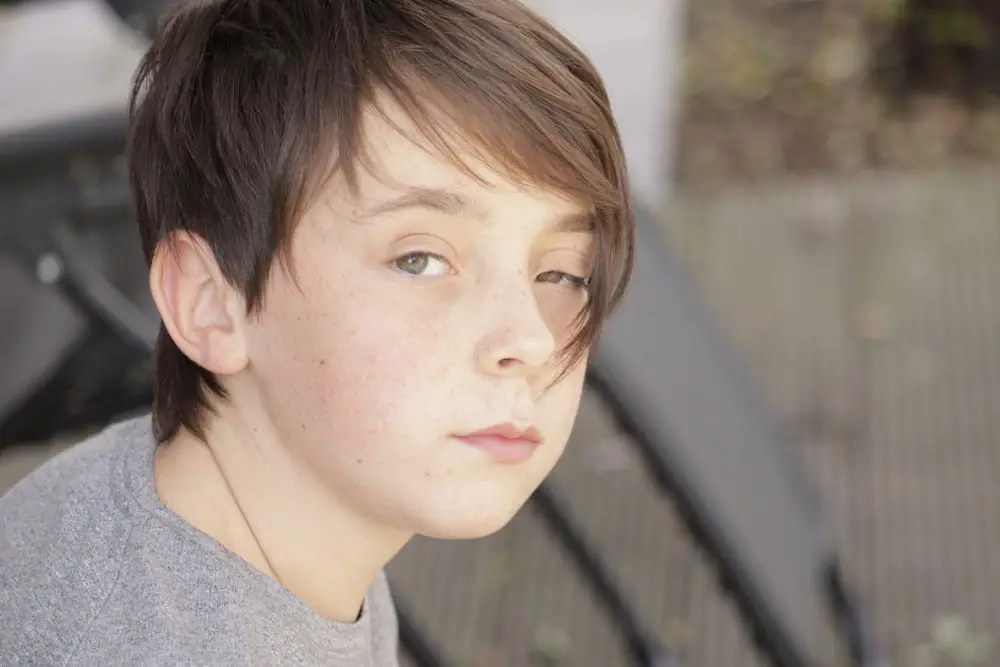
My son came home from the barber with only half his hair cut.
The right side was neatly trimmed, tapered clean above his ear with the careful precision that was Mr. Lewis’s signature, the work of a man who had been cutting hair in the same shop for thirty years and believed that the craft deserved the same attention whether the head in the chair belonged to a judge or an eight-year-old boy who liked grape lollipops. The left side hung exactly as it had when Tyler left the house forty-five minutes earlier, long and loose and untouched, as though whatever had happened in that barbershop had stopped in the middle and could not be resumed.
He appeared in the kitchen doorway and would not meet my eyes.
I had been drinking my second cup of coffee, watching the maple in the backyard, thinking about nothing in particular. That was still possible then, thinking about nothing in particular, though it would not be possible for much longer.
“Tyler, honey,” I said slowly. “What happened to your hair?”
He looked at his sneakers. “Mr. Lewis stopped.”
“Stopped. Why?”
One shoulder rose and fell. The jacket he wore had been his grandfather’s favorite color, a red that was almost orange, something my father had picked out one afternoon at a department store because he said Tyler needed something that would be easy to spot at a distance. My father had been the kind of man who thought about things like that, quietly and without announcing them.
My father had been dead for three years.
“Tyler.”
“I don’t know,” he said. “He just stopped.”
An hour earlier, Tyler had been sitting by the front door lacing his sneakers, humming something from a cartoon I could not identify. He had a particular quality of contentment on Saturday mornings, a settled happiness that I had noticed since he was very small, as though Saturdays arrived already belonging to him in a way that other days did not.
“Mom,” he had said, without looking up from his sneaker. “Can I have two dollars for a lollipop?”
“Mr. Lewis gives you those for free, sweetheart.”
“I know. But I want to buy him one this time.”
I had looked at him for a moment, this eight-year-old boy with his careful logic and his instinct for reciprocity, and thought that his heart was larger than his understanding of the world, which is the most useful starting condition a person can have.
“You gonna walk carefully?”
“Mom. I’ve done it a hundred times.”
“Humor your old mother.”
He rolled his eyes with the theatrical patience of a child who has had this same conversation before and has accepted that it will continue to occur.
Tyler had been going to Mr. Lewis’s barbershop three blocks away since he was four years old. Mr. Lewis knew Tyler liked the Cardinals and kept grape lollipops behind the counter specifically for him and let him choose the music when the shop was not too busy. He had the particular gift of making children feel taken seriously, of asking them questions about their lives and waiting for the full answers rather than accepting the shortened versions children offer when they suspect adults are not genuinely listening.
I had watched Tyler disappear around the corner and then gone back inside and checked the front lock twice.
I always checked things twice. My mother used to say I could turn worrying into a profession, and she said it with the affection of a woman who understood the impulse perfectly because she shared it. After my parents died, the winter Tyler turned five, I had moved us back into their house because selling it felt like a decision I was not equipped to make yet. Three years later, I was still not equipped to make it. Their coats still hung by the back door. I had told myself this was practical, that winter coats were winter coats regardless of whose they were, but I knew it was not practical. I knew what it was.
Twenty minutes passed.
Then thirty.
Tyler’s haircuts never took more than twenty-five.
At forty-five minutes, I heard the front door and then his footsteps moving through the hallway with the slow, reluctant quality of someone carrying something they do not know how to put down.
He appeared in the kitchen doorway and I saw his hair and nearly dropped my coffee mug.
I called Mr. Lewis expecting a simple explanation. Something had happened in the shop, a customer had come in, a phone call, some ordinary interruption that had caused a break in the routine. What I got was the sound of a man crying.
“I couldn’t finish,” he said. “After what Tyler brought in.”
“Mr. Lewis, what happened?”
“Please come with him. He brought something here you need to see.”
He would not say anything further.
I looked at Tyler, who had dropped his eyes to the floor the moment Mr. Lewis said the word brought.
I grabbed my purse.
The three-block walk was the longest three blocks I had covered since the afternoon I drove to my parents’ house and found the ambulance in the driveway. I tried everything I could think of to get Tyler to talk. He was not angry or frightened, which was the thing that troubled me most. He was quiet in the way of someone who has understood something and is waiting for the adults to catch up.
“Tyler. What did you bring to Mr. Lewis?”
He walked.
“Tyler, look at me.”
He looked at me with eyes that were calm and careful and eight years old and said, “You’ll see when we get there, Mom.”
I had not thought of myself as a person who scared easily. I had raised a child alone, managed a household, dealt with the paperwork of my parents’ deaths while still in the first weeks of grief. But something about my son’s composure on that walk frightened me in a way I could not have articulated.
When we arrived, Mr. Lewis was waiting at the back of the shop near his chair. The late afternoon light came through the window behind him and caught the chrome of his clippers and the mirror and the small collection of photographs he kept on the shelf above his station: his mother, a former client who had become a friend, a baseball game he had attended twenty years ago.
He did not say anything when we came in. He simply led me to the chair and pointed.
Lying on the counter beside his clippers was a photograph. Old in the way that photographs from a specific era are old: slightly faded at the edges, the colors shifted toward warm, the paper thicker than modern prints. A young man, perhaps twenty, looked directly into the camera with the direct, serious expression that people wore for photographs in an era before everyone understood that smiling was an option. Above his right eye, dark and unmistakable, was a large birthmark.
“Why did you stop in the middle of his haircut?” I asked.
Mr. Lewis looked at Tyler.
“Tyler,” he said. “Buddy. The man who walked you home from the ballfield sometimes. How long have you known him?”
Tyler looked at his sneakers. “I don’t know. Maybe five times.”
I turned to my son.
“What man?”
He was quiet for a moment. “Just a friend. He’s old. And he’s nice.”
“A friend from where?”
“He sits by the ballfield sometimes. We talk about baseball.”
The word friend landed in my chest in a way that took a moment to fully register. An adult man. Meeting my eight-year-old son. Repeatedly. At the park.
“An adult man has been meeting you at the ballfield?”
“He’s nice, Mom. He knows a lot about old baseball.”
I looked at Mr. Lewis.
He had picked up the photograph and was looking at it with an expression I could not read at first, and then could: recognition. Not certain recognition. Something more careful than that, the expression of someone who has seen a face that resembles another face and is trying to determine whether the resemblance is significant.
“Who is he?” I asked.
“I think I might know,” Mr. Lewis said. “The birthmark. I’ve seen it before.” He set the photograph down. “But I need to be sure.”
“Sure about what? Mr. Lewis, you’re frightening me.”
“Rachel.” He looked at me steadily. “How much do you remember from when you were five?”
Something about the question made my throat tighten in a way I did not understand. “What does my age have to do with anything?”
“Do you have baby photographs? Of yourself?”
“What does that have to do with Tyler?”
He paused. “That man didn’t choose Tyler by accident.”
The shop was very quiet. Outside, a car passed. Inside, the refrigerator that held the sodas hummed.
“Then tell me who he is,” I said.
“I can’t. Not until I’m certain.” He looked at me with the expression of someone about to say something they have been carrying for a long time. “Did your parents ever tell you about anything that happened before you started school? Before you have memory?”
“Stop.”
“Did they ever keep anything from you? About where you came from?”
“You’re scaring me.”
He stepped forward. “Go home, Rachel. Check your parents’ papers. Look for anything about the year you turned five.”
I took Tyler’s hand.
“You’re crazy,” I said. “Don’t call us.”
“Look for that year,” he called after me as I pushed through the door. “You need to know before that man comes to your door.”
I did not turn around.
Back home, I sat Tyler on a kitchen stool and evened out the uncut side of his hair with kitchen scissors, trying to keep my hands steady. He watched himself in the small mirror on the counter with the patience of a boy who has decided to let the adult world proceed without demanding explanations.
“Did that man ever tell you his name?”
He shook his head.
“Did he ever ask where we live?”
Tyler was quiet for a moment.
“No,” he said. “He already knew.”
My scissors stopped.
I put them down.
I did not ask anything else.
I put on a movie and Tyler curled against my side on the couch with the automatic trust of a child who still fits comfortably under his mother’s arm. I stared at the screen without processing a single frame.
He already knew.
After Tyler was asleep, I carried him to his room, pulled the blanket up, kissed his forehead, and stood in the doorway for a moment just watching him breathe.
Then I went to the basement.
My parents had been organized in the particular way of people who grew up without much and therefore learned to keep careful track of what they had. The filing system was in two bankers boxes on the metal shelf beside the water heater. My father’s handwriting on the labels, the same neat print he had used for everything.
I sat on the basement floor and went through the first box methodically, the way my father had taught me to approach any task too large to think about whole: one thing at a time, in order, without skipping.
Insurance records. Tax returns going back twenty-five years. My mother’s medical files. The deed to the house. The title to the car they had been driving when the accident happened, which I had never been able to bring myself to throw away because throwing it away felt like the final acknowledgment of something I was not ready to finally acknowledge.
I found the envelope in the second box, near the bottom, behind a folder of receipts my father had kept for appliances that were no longer in the house. My name was written on the front in my mother’s handwriting, the rounded, careful letters she used for anything she considered important.
I sat at the kitchen table and opened it.
The certificate was on cream-colored stock with an official seal in the corner, the kind of document designed to communicate permanence. My name. My parents’ names. A date of finalization.
And an age.
Five years old.
I read it three times.
I whispered no. And then again. I said no, no, no into the quiet kitchen the way you say things when you are hoping the repetition will somehow alter the facts, and it did not alter anything, and the document remained exactly what it was.
I thought about my mother’s face when I was nine, asking why there were no baby photographs of me. The soft, careful smile she had produced. We lost a lot of things in the move. You know how your father is with boxes.
I thought about my father at the dinner table when I was twelve, cutting my pancakes out of habit even though I had been cutting my own for years. I had asked him about my birthday and he had stumbled, said five when he meant five pounds and then caught himself, and I had laughed at his confusion and forgotten it within the hour because I was twelve and my father was infallible and there was no framework available to me for interpreting what he had actually said.
For the last twenty-three years, they had protected me from my own history.
I understood why. I understood it completely, sitting at their kitchen table with my mother’s handwriting on the envelope and their coats by the back door, because they had loved me the way people love things they are afraid of losing, by holding on too tightly and never quite letting go enough to say the thing that needed saying. I understood it and I was furious and I was also, underneath the fury, already grieving the version of my parents I would have to revise.
A sound from outside.
A soft crunch on the gravel path that ran along the side of the house.
I went still in my chair.
A neighbor’s dog, I told myself. The wind pushing something. The ordinary sounds a house makes at night when you are the only person awake in it.
Then a shadow crossed the kitchen window, moving along the porch.
I picked up my phone and walked to the back door.
“Who’s there?” My voice was steadier than I expected.
Silence.
“I’m calling 911.”
I opened the door two inches.
The porch was empty. But at the edge of the front yard, near the mailbox, an elderly man stood in a dark coat with his hands folded in front of him, positioned under the streetlight as though he had been standing there for some time. As though he had been standing there for years and had only now allowed himself to be seen.
He took one step forward. The light caught the birthmark above his right eye: large and dark, exactly as it appeared in the photograph that had been lying beside Mr. Lewis’s clippers.
“I’m sorry to come at this hour,” he said. His voice was soft and carried the particular quality of a man who has rehearsed something so many times that the rehearsal has finally exhausted itself. “I needed to see you.”
I held my phone up with my thumb on the call button.
“Get away from my house.”
He took one more step, slow and careful, the step of someone who understands that he does not have the right to close the distance and is doing it anyway.
“Please,” he said. “Just hear why I came.”
“I’m calling the police right now.”
Then footsteps on the driveway behind me: quick and heavy, someone who had been running. I turned.
Mr. Lewis, in his work shirt with a jacket thrown over it, breathing hard, like he had run three blocks without stopping.
“Rachel, wait,” he said. He was looking past me at the old man. He was looking at the birthmark.
I watched the color leave Mr. Lewis’s face in a slow, visible drain, the way color leaves a face when recognition arrives at a terrible speed.
“Dad?” he said.
He said it the way a child says it. The word came out cracked, stripped of all the adult composure he normally carried, as though fifty years of being a grown man had simply dropped away in an instant.
The old man’s knees buckled slightly. He caught himself on the porch railing with one hand. “So I wasn’t wrong,” he whispered.
I looked between them, the adoption certificate still in my hand, and the porch shifted under my feet the way it shifts in dreams when the ground stops being reliable.
“Somebody tell me what is happening,” I said. “Right now.”
Mr. Lewis turned to me. He moved like someone afraid of startling an animal that might run.
“How old were you when they adopted you?” he asked. “Rachel. How old?”
“Five,” I said. The word came out before I could stop it. “I found out tonight. I just found out.”
He closed his eyes.
“I had a sister,” he said. “She was five when they took us to the orphanage. I was thirteen. They placed her within a month.” He opened his eyes. “I never saw her again.”
I pressed my hand over my mouth.
The old man spoke from the edge of the yard. His voice was old and thin but it carried clearly in the night air.
“Your mother died,” he said. “I couldn’t feed you. I couldn’t keep the lights on. I told myself they would take you both, together, to the same family. They only took her.”
“Don’t,” Mr. Lewis said, sharply, more sharply than I had ever heard him speak. “Don’t stand on her porch and make it sound gentle.”
“I’m dying,” the old man said. “The doctors have given me months. I found Rachel six weeks ago. I had your address. I drove past. I couldn’t make myself knock.”
I stared at him. “So you went through my son.”
He flinched. “I talked to him. I never took him anywhere. I never touched him. I needed to know something about the family I—” He stopped. “I needed to know something. That’s all.”
“He is eight years old.”
“I know.”
“He is eight years old and you let him think of you as a friend without telling him who you were or why you were there. You let him carry something he did not understand.”
“I know,” he said. “That was wrong. I know that.”
Behind me, the screen door creaked.
“Mom?”
Tyler was in the doorway in his pajamas, rubbing one eye with his fist, his half-evened hair sticking up on one side.
“Hey,” he said, taking in the scene with the calm curiosity of a child who has woken to find something unusual and has not yet decided whether it requires alarm. Then he saw the old man and his expression changed into something simple and uncomplicated. “Oh. That’s my friend from the ballfield.”
Three adults turned toward him at once.
Something in me made a decision before I had consciously reached it. I crossed the porch and knelt in front of my son and took his face in my hands.
“Come on, baby,” I said. “Back to bed. We’ll talk about everything in the morning.”
He looked at the old man over my shoulder.
“Is he okay? He looks like he’s been standing there a long time.”
“I know,” I said. “Come on.”
I walked him back to his room. I tucked the blanket under his chin and smoothed his hair and sat on the edge of his bed until his breathing slowed and deepened.
When I came back to the kitchen, the old man had not come inside. Mr. Lewis was sitting at the table. I left the back door open and stood in the kitchen doorway.
“You can come in,” I said to the old man.
He came up the porch steps slowly and sat at the far end of the table.
Nobody spoke for a moment.
“Thirty years,” I finally said.
“More than that,” the old man said.
“You have had more than thirty years to find a way to do this that didn’t involve an eight-year-old child.”
“Yes.”
“And you chose the child.”
“I was afraid,” he said. “I know that doesn’t make it right.”
“No,” I said. “Being afraid is an explanation. It isn’t a reason. Those are different things.”
He nodded.
“You don’t get,” I said, “thirty years of silence and then a daughter. That’s not how this works. You don’t get to decide when you’re ready and then appear on a porch and expect the person who grew up not knowing you existed to simply receive you.”
He looked at his hands.
“And you especially don’t get to use my child to work your way toward me because knocking on the door was too hard.”
“I understand,” he said.
“I don’t think you do yet,” I said. “But I’m telling you anyway, so it’s clear.”
I turned to Mr. Lewis.
“And you,” I said. “All these years. Tyler in your chair every few weeks. Me coming in. And you never said anything.”
He met my eyes. “I didn’t know,” he said. “I promise you, Rachel. I saw something familiar in the two of you, something I couldn’t name. I kept telling myself I was seeing what I wanted to see.” He paused. “Because hoping you were my sister and being wrong would have meant losing you twice. I couldn’t risk being wrong.”
The kitchen was quiet.
Outside, the maple in the backyard moved slightly in whatever breeze was moving through the neighborhood, a sound I had been hearing since childhood without ever particularly noticing it.
“Tyler kept coming home talking about Mr. Lewis,” I said, mostly to myself. “Every couple of weeks. Mr. Lewis told me this. Mr. Lewis said that. Mr. Lewis let me pick the music.”
Mr. Lewis made a sound that was almost a laugh, quiet and tired.
“Mostly the grape lollipops, if I’m being honest,” he said.
I looked at him across the table, this man who had cut my son’s hair for four years and who I was being told was my brother, and something very strange happened in my chest, something that was not yet acceptance and was not forgiveness and was not grief and was not relief but was some unnamed thing that lived at the intersection of all of them.
“I don’t know what I’m supposed to call you now,” I said.
He smiled. The tired, real smile I recognized from four years of Saturday appointments.
“Lewis still works,” he said.
And that, of all the things that had happened in the last several hours, was the thing that made me laugh. Brief and involuntary and real, the kind of laugh that arrives before you have decided whether you have any right to it.
I sat down at the table.
I looked at the old man at the end of it, this stranger who had given me away and then spent decades not knowing how to find his way back, who had finally worked up the courage by routing it through an eight-year-old boy’s friendship with a man at a ballfield.
“You said the doctors have given you months,” I said.
“Yes.”
“What do you want from me?”
He was quiet for a long moment. “I wanted to know you existed,” he said. “I wanted to know something about who you became. I wanted to say I’m sorry before I ran out of time to say it.” He looked at his hands. “I didn’t expect any more than that.”
“Good,” I said. “Because I don’t know yet how much more there is.”
He nodded.
“Write your number on something,” I said. “Leave it on the table.”
He reached into his coat pocket and produced an envelope. Wrote on the back of it. Slid it across the table.
“If there’s another conversation,” I said, “I’ll start it. You don’t come here. You don’t go to the park. You don’t contact Tyler.”
“I understand,” he said.
“And if I never call?”
He swallowed. “Then I live with that,” he said. “I deserve to live with that.”
He pushed back from the table and stood with the careful movement of a man who has learned to pay attention to his body. He buttoned his coat. He looked at me for a long moment without speaking, the way you look at something you have waited a very long time to see.
“She had your eyes,” he said. “Your mother. You have her eyes.”
He walked to the door and through it and down the porch steps and across the yard to the street, and I sat at the kitchen table and watched him go until the dark took him.
Mr. Lewis had not moved.
I rested my forehead against his shoulder, just briefly, the way you rest against something solid when you have been standing for too long.
He put one hand over mine.
“All this time,” he said quietly. “Tyler in my chair. You dropping him off and picking him up. I thought I was imagining it.”
“You weren’t,” I said.
“No,” he said. “I wasn’t.”
We sat there as the kitchen windows began to lighten, the slow gray-blue arrival of morning that happens while you are still deciding if the night is over. The envelope was on the table between us, the number written on the back in an old man’s careful hand.
I did not promise anything.
I did not promise to call and I did not promise to forgive and I did not promise that any of this would become the kind of story that resolves cleanly into something anyone could be comfortable with. Life had not, in my experience, been that kind of story.
But I left the envelope on the table.
Upstairs, Tyler was still sleeping. In a few hours, he would come down and want breakfast and would have questions, because Tyler always had questions and had learned from somewhere, perhaps from me, that questions deserved real answers.
This time, I was going to give him one.
Not the whole truth at once, not all of it, not the parts he was too young to carry. But something true. Something that honored the fact that he was a person in this story and not just a child who had been moved around in it by adults who were afraid.
I looked at my brother across the table.
“You should stay for coffee,” I said.
He looked surprised.
“If you want to,” I added. “You don’t have to.”
“I want to,” he said.
I got up and filled the kettle.
Outside, the maple caught the first real light of the morning. My parents’ coats were still hanging by the back door. I looked at them for a moment, and then I looked away, and I thought that maybe this week I would finally move them somewhere else, not because my parents were less real or less missed, but because the coat hooks were being asked to hold too much, and some weight needs to be set down before you can figure out what to do with it.
The kettle began to heat.
The morning continued arriving, the way mornings do, indifferent to the difficulty of the night that preceded it.
I had come home the evening before as one person, a woman who knew her own story, and I was standing in my kitchen now as someone still in the process of learning what her story actually was.
That was frightening.
It was also, in some way I could not yet fully name, a beginning.

Specialty: Legal & Financial Drama
Michael Carter covers stories where money, power, and personal history collide. His writing often explores courtroom battles, business conflicts, and the subtle strategies people use when pushed into a corner. He focuses on grounded, realistic storytelling with attention to detail and believable motivations.