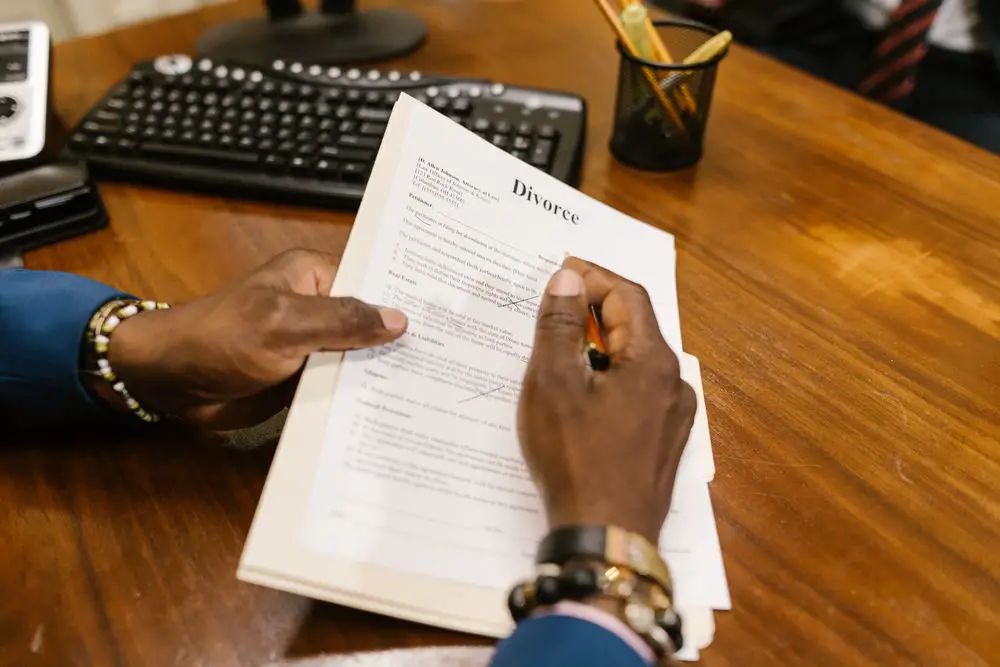
For my thirty-first birthday, my mother-in-law handed me divorce papers in front of my entire unit at the Regimental Ball, and my husband stood ten feet away in his rented tuxedo and filmed the whole thing on his phone, for their entertainment, for a keepsake, for whatever people like that imagine they will do with a recording of a woman’s humiliation. They had planned it for weeks. They had chosen the date, my birthday, on purpose. They had chosen the place, a ballroom full of the officers I served with, on purpose. Every cruel detail had been arranged in advance, because for them the cruelty was not a side effect. It was the entire point.
I signed the paper they put in front of me, calmly, without a single tremor in my hand, while the camera watched. And then I stood up, and I said something that neither of them had prepared for, something that was not in their script, and in the space of one sentence the evening they had staged so carefully to end me became, instead, the beginning of their own long undoing. They had built a stage and invited eighty-seven witnesses and pointed a camera at it, and they had assumed, right up until the doors at the back of the ballroom opened, that they were the ones directing the scene.
Vivienne Hale waited until the band paused between songs, so that the room would fall quiet, so that everyone in it would hear what she had come to say. That was the part I understood only later, turning it over: that she had timed it, that she had stood at the edge of the ballroom watching the musicians, choosing her moment the way a performer waits in the wings for a cue. She had wanted an audience. The cruelty was not incidental to her plan. The cruelty was the plan.
She crossed the ballroom in a floor-length navy sequined gown that caught the chandelier light with every step, unhurried, regal, chin lifted, moving through the tables of officers and their spouses like a woman arriving to bestow a great honor. Heads turned to follow her. And she came to my table, and she set a heavy cream-colored envelope down on the white linen tablecloth beside my plate, squarely, deliberately, and she smiled down at me. It was a warm smile, a generous smile, the smile you give someone when you are handing them a present you are quite certain they will love. That was the worst of it, I think, the smile. She had decided to enjoy this.
“Happy birthday, Simone,” she said. “Grayson felt it was finally time you stopped pretending this marriage was still alive.”
My husband stood about ten feet back from the table, positioned, I realized later, for the best angle, his phone up and level in both hands, recording all of it, framing my face carefully in the shot, waiting with obvious anticipation for the moment my composure would crack and give him what he had come for. Several of the officers seated at my table had gone completely silent, forks halfway to their mouths, caught in the sudden strangeness of it. My battalion commander, seated two places down from me, looked slowly from my face, to Vivienne, to Grayson and his raised phone, and back to me, and I watched her expression cool by the second, watched a professional wariness settle over her features as she began to understand that she was witnessing something staged, something ugly, something that did not belong in this room. The ballroom had gone so quiet, in that pocket around our table, that I could clearly hear the small clean sound of forks touching plates three tables away, people who had not yet noticed that anything was happening, still eating their dinner in the ordinary world.
Grayson laughed, a short, pleased, expectant laugh, the laugh of a man who believes he is about to watch something he has been looking forward to. “Come on,” he said. “Open it. Go on, open it.” He wanted the moment on film, the opening, my face as I read the first page. He was directing me, gently, toward my own humiliation, and he had no idea at all that he was directing me toward his.
So I did. I gave him exactly what he asked for, which turned out, in the end, to be the last thing in the world he should have wanted. I did exactly what he asked. I picked up the envelope, and I slid one finger under the flap, and I drew out the thick sheaf of papers inside, and I read them, unhurried, there at the table, in the ringing silence of a ballroom full of people pretending not to watch, while my husband stood ten feet away and filmed my face and waited for it to crumble.
It was a petition for the dissolution of the marriage. There was a request for temporary sole possession of the house, my house. There was a proposed division of our accounts, weighted heavily and insultingly in his favor. And at the very bottom, in language some lawyer had been paid to write, there was a demand that I reimburse Grayson for the improvements he claimed to have made to a property he described, throughout the document, as belonging to both of us.
That last part almost made me smile, and it cost me real effort to keep it off my face, because I understood that a smile was one of the things they were fishing for, some strange reaction they could film and misread and pass around. But it was difficult, holding it in, because I knew something they did not know that I knew. I knew what that phrase, property belonging to both of us, was standing on. I knew it was standing on nothing at all, on air, on forgery, and that the whole beautiful cruel performance they had staged in this ballroom was built directly on top of the very crime that was, at that moment, already under investigation.
Three weeks earlier, while I had been down at the base preparing my company for a major inspection, running the kind of eighteen-hour days that leave you hollow, that leave you grateful to fall into bed for four hours before the alarm, my bank had called me. I almost did not pick up. I was standing in a motor pool with a clipboard in my hand when the phone buzzed against my hip, and I nearly let it ring through to voicemail, and I have thought many times since about how differently the whole of the rest of my life might have gone if I had just let it ring.
The woman on the phone was from the bank’s loan servicing department, and she was calling, she said, with a routine question about the home-equity transfer that had recently been processed against my property. The one for one hundred and eighty-six thousand dollars.
I remember going very still in that motor pool, the clipboard still in my hand, the ordinary noise of the base going on all around me. The house she was talking about was the house in town, a solid brick two-story with a deep front porch and old oaks in the yard, the house my grandfather had built the better part of his life inside, and had left to me, to me alone, in his will, years before I had ever laid eyes on Grayson Hale, years before there was any marriage at all for anyone to divide. It was the one truly permanent thing in my transient military life, a life of duty stations and rented rooms and boxes never fully unpacked, of moving every two or three years to wherever the Army sent me. That house was the one fixed point on the whole map of my existence, the one address that did not change, the place I would go home to for good when the Army was finally finished with me. My grandfather had built parts of it with his own hands. I had spent childhood summers on that deep porch. When he left it to me, and to me alone, and made very sure the will was airtight about it, he had been giving me more than a building. He had been giving me a place to always be able to stand. That was the thing Grayson and Vivienne had reached out, so casually, to take.
I had never authorized any home-equity loan against it. I had never applied for one, never signed for one, never so much as discussed one with anyone. I said so, carefully, evenly, to the woman on the phone, though my heart had begun to pick up. And there was a pause, and then she said, with the beginning of real concern in her voice, that the application on file carried my signature. And, she added, checking her screen, so did a recently recorded deed, one that transferred a one-half interest in the property to a co-owner. To my husband.
I had said nothing to Grayson. Not one single word. This is the part that people find hardest to understand when I tell it, the part that Grayson himself, I think, never saw coming, because it was so far outside how he imagined I would behave. Every instinct a person has, discovering something like this, is to storm home and confront, to demand an explanation, to have the fight. I did not do that. I went very still, and very quiet, the way you learn to go in the field when the situation has suddenly changed and you do not yet have enough information to move safely. You do not react. You gather. You find out the true shape of the thing before you so much as let it know you have seen it. The Army had taught me that, over twelve years, more thoroughly than it had taught me anything else. Do not move until you understand the ground.
So instead of confronting my husband, I made appointments, quietly, on my own time, telling him nothing. I met with an attorney, a sharp unsentimental woman named Claire Beaumont who specialized in exactly this intersection of family law and financial fraud. I met with the fraud department at the bank, who were, once they understood what they were looking at, deeply alarmed and deeply helpful. And I met with a detective from the county’s financial-crimes unit, who listened to my account with a flat professional calm and then began, methodically, to open doors. Together, over those three careful weeks, while Grayson went about his days believing I knew nothing, believing his plan was proceeding beautifully, we began to pull gently on the loose thread I had been handed. And the entire garment, the whole elaborate scheme, began quietly to come apart in our hands, one row at a time.
We had discovered, first, the mechanism. Years earlier, ahead of a long deployment, I had granted Grayson a power of attorney, a broad one, the kind service members routinely give a spouse so that ordinary life, the mortgage and the car registration and the leaking water heater, can go on being managed while they are on the other side of the world. It is an act of trust. It is supposed to be an act of trust. And two years earlier, when things between us had first begun to go quietly wrong, when I had first felt the ground start to shift, I had formally revoked it. I had signed the revocation in front of a notary. I had a copy. It was done properly and completely, and it terminated his legal authority to act in my name for anything.
Someone, however, had taken an old scanned copy of the original document, the one that still looked valid, and had submitted it to the bank as though nothing had ever changed, as though it still gave Grayson the full authority to borrow against my property on my behalf. And then we had followed the money, which is the thing the detective told me you must always do, always follow the money, because money leaves a trail that people cannot talk their way out of. Of the one hundred and eighty-six thousand dollars borrowed against my grandfather’s house, a large share had gone somewhere very specific. Ninety-four thousand dollars of it, more than half, had been transferred, cleanly and directly, into a personal account belonging to Vivienne Hale. My mother-in-law. The woman who would, three weeks later, cross a ballroom in navy sequins to hand me my own eviction.
We had known, going into that evening, that Grayson intended to serve me at the ball. He had wanted it to reach me in advance, had let it slip to a mutual friend precisely so that it would, so that I would spend the days beforehand sick with dread, so that the public spectacle would be all the more complete. And when Claire and I first learned of it, her instinct was to preempt it, to have me not attend, to serve him first, to take the ambush away from him.
But I had thought about it, and I had made a different choice, and it was mine, and I have never once regretted it. Because I understood, by then, that whatever they did to me in that ballroom, they would be doing it on top of a crime that was already documented, already under investigation, already collapsing. Let them perform. Let them stand up in front of eighty-seven witnesses and my battalion commander and gloat over a house they had stolen. Let them film it. Every cruel word they spoke, every smile, every zoom of that camera, would only add to the record of what they had done, would only make the truth, when it arrived, land harder. So I put on my dress uniform, and I went to the ball, and I sat at my table, and I waited, and I let them believe they were the ones springing the trap.
And now here she stood, over me, in her navy sequins, at the Regimental Ball, in front of my entire unit and my commander and eighty-seven witnesses, waiting for me to break down and weep. She was going to be waiting a long time.
It is worth saying, here, what the marriage had been, because people always want to know how a person ends up at a table like that one. I had married Grayson Hale six years earlier, when I was a young captain and he was charming and attentive and good with his hands, a man who restored old houses for a living, or said he did, and who could make a whole room lean toward him when he wanted to. In the beginning he had seemed to admire the very things about me that he would later come to resent, the discipline, the steadiness, the way I did not rattle. His mother, Vivienne, had never warmed to me. She was a woman for whom appearances were the whole of reality, and I was a daughter-in-law who wore combat boots and deployed to places she could not pronounce and did not, in her estimation, sufficiently orbit her son.
The renovation business had begun to fail somewhere in the third year, quietly at first and then not quietly. Grayson stopped talking to me about money, which is always the first sign. He grew resentful of my steady military paycheck, my pension building in the distance, the house I owned outright and he did not. And Vivienne, I would learn, had been whispering in his ear the whole time, about what was fair, about what he was owed, about the house that ought by rights to be his. Somewhere in there, the two of them had stopped seeing me as a person and started seeing me as an obstacle standing between them and an asset. That is the thing I finally understood, sitting there reading the petition at that white-clothed table. To them, I was not a wife being divorced. I was not even a person, really. I was a lock being picked, an obstacle between them and a house.
I took the pen that had been tucked into the envelope, and I signed. But I want to be precise about what I signed, because it is the whole point of the story. I did not sign the settlement. I did not sign the proposed division of accounts. I did not sign one line of anything that gave away a single square foot of my grandfather’s house or a single dollar of the money they had invented. What I signed, and the only thing I signed, was the acknowledgment of service, the plain single page at the front that confirms exactly one fact and no other, that the papers have been received by the person named. It is a receipt. It says only, these documents reached my hand. Nothing more. Grayson, filming, did not know the difference between that page and the others. He saw his wife signing, and he thought he was watching her surrender.
Grayson stepped in closer, eager, and zoomed his phone in on my hand as I set the pen down, wanting the shot, wanting the moment of the signature for whatever he imagined he would do with it later.
“See?” Vivienne said, loudly, brightly, playing openly to the room now, turning her head so her voice would carry. “That wasn’t so hard, was it, Simone. Now the house can finally stay in the Hale family, where it always should have been. Where it belongs.”
My commander’s expression changed in the instant those words left Vivienne’s mouth, and I saw it happen, watched it move across her face. She was a woman who had spent a career reading rooms and reading people, and she had just heard a civilian in a sequined gown announce, in a ballroom full of officers, her intention to take a soldier’s inherited house and keep it in the family. Whatever she had assumed this scene was when it began, some sad private divorce spilling into public, she now understood it was something else. I saw her file it. I saw her decide.
I placed the papers down neatly beside my plate, and I squared the edges of them with my fingertips, taking my time, and then I stood up, unhurried, to my full height, in my dress uniform, in front of all of them.
“Thank you,” I said.
Grayson lowered his phone a few inches, and I watched the uncertainty arrive on his face, because this was not in the script he had written, not in any version of the evening he had rehearsed in his head. The woman at the table was supposed to be crying, or shouting, or fleeing the room in tears, giving him the footage of a breakdown. She was not supposed to fold the papers, and square the edges, and rise slowly to her feet in her dress uniform, and thank him in a clear, steady, carrying voice. A small confused frown crossed his face. He kept filming, though, out of habit, out of the momentum of his own plan, which meant that he obligingly recorded every word of what I said next.
“Thank you for serving these on me in front of eighty-seven witnesses,” I said, and I let my voice carry, because if they had wanted an audience, I could use an audience too. “Officers, spouses, my battalion commander. Thank you for that. And thank you, Vivienne, most of all, for standing over me just now and recording, on your son’s own phone, your explanation of exactly what the two of you have been planning to do with my house. With the house my grandfather left to me. You have both been very, very helpful tonight, more helpful than you know.”
Grayson’s smile fell off his face completely, all at once, as though a string had been cut. He was beginning, I could see, to feel the first cold edge of the understanding that something had gone wrong, that the ground was not where he had left it, though he did not yet know how far the drop went.
And then the tall ballroom doors at the back of the hall swung open, both of them at once, letting a wedge of brighter corridor light spill across the dim edge of the room.
A woman in a plain gray suit walked in through them, unhurried and unbothered, flanked on either side by a uniformed police officer. She scanned the room once, and then her eyes settled directly on my husband.
“Mr. Hale,” she said, and her voice carried easily across the silent ballroom, calm and clear and entirely unhurried, the voice of a person who has all the time in the world because she already holds all the cards. “I’m going to need you to keep that phone exactly where it is, please. Don’t touch it. Don’t put it away. Just leave it right there in your hands.”
The detective’s name was Alma Reyes, and she was from the county’s financial-crimes unit, and I had sat across a desk from her twice over the preceding three weeks, laying out documents. We had not planned for her to come to the ball. That was not part of any arrangement. But the warrants had come through that afternoon, faster than anyone expected, and she had learned from the bank that Grayson intended to serve me publicly that evening, and she had made a judgment, standing in her office, that there was value in executing them while the phone that had recorded everything was still in his hand and had not yet been wiped.
She crossed that ballroom toward Grayson without so much as a glance in my direction, and I understood, even in the moment, what a mercy that was. Because it meant that to the eighty-seven people watching, to my commander and my fellow officers and all the spouses in their gowns, this was visibly not happening because of me, not something I had brought down on the evening. It was happening because of him. The detective walked past me as though I were any other guest, and went straight to my husband, and in doing so she drew a clean line, for everyone in that room, between the person who had done wrong and the person it had been done to.
She reached Grayson, and she showed him, held up where he could read it, a warrant for the phone still in his hands, and then a second warrant authorizing investigators to collect records and documents from Vivienne’s home. She did it without raising her voice, without any drama, the way you serve a warrant when you already have the case built and are simply completing the paperwork. The bank had already, over the preceding weeks of quiet cooperation, provided her unit with copies of everything, the forged deed, the expired and crudely doctored power of attorney, and the surveillance footage from the branch where the home-equity transfer had actually been processed in person. That footage, like the photograph from the notary’s office, did not show me anywhere in it, for the simple reason that I had been three states away with my company the entire time, a fact the Army could prove to the minute. Everywhere they had needed me to be, to make their story work, I provably had not been. That was the flaw at the dead center of the whole scheme. You cannot forge a soldier’s whereabouts. The Army always knows where its people are.
Grayson stopped smiling entirely.
Vivienne, remarkably, did not. She drew herself up. “This is absolutely ridiculous,” she snapped. “My son put years of his own work into that house. Years.”
“Replacing a set of kitchen cabinets,” said a calm, dry, carrying voice from behind the officers, “does not make a person an owner of a house. It makes them, at most, someone who is owed for cabinets. That is a very different legal category, and a much smaller one.” It was my attorney, Claire Beaumont, rising from her quiet table near the back, straightening her jacket, stepping forward into the light of the chandeliers. Vivienne turned to look at this new voice, this stranger who seemed to know a great deal, and I watched the first flicker of real uncertainty cross my mother-in-law’s face, the first hairline crack in the navy-sequined certainty she had crossed the room with.
That was another thing they had not accounted for, another door they did not know was already closed. Claire had come to the ball that night as my personal guest, in a modest evening dress, seated quietly at a table near the back where no one would think twice about her, because we had known for some days that Grayson intended to serve the divorce papers on me there, in public, in the middle of the event. He had told a mutual friend as much, deliberately, wanting it to travel back to me, wanting me to spend the whole evening sick with dread over what was coming, wanting even my anticipation to belong to him. He had no idea that his cruelty had given us the gift of preparation, that because he wanted me to know, I did know, and had brought my attorney and coordinated with a detective and walked into that ballroom ready.
What we had not anticipated, what not even Claire in all her experience had predicted, was that Vivienne would gild the whole thing. That she would not be content to let Grayson quietly hand me an envelope, but would insist on crossing the entire room in her sequins to do it herself, and then would stand over me and deliver a little speech, on the record, about the Hale family and my house and what belonged to whom, in a carrying voice, in front of a detective who had just walked through the doors, directly into her own son’s camera. They could not have built us a better case if they had sat down and tried. Their vanity did in an evening what our investigation might have taken months more to prove.
Alma explained to the room, plainly, without any drama, in the flat clear voice of a person reciting facts she can prove, what the investigation had already uncovered. She did not raise her voice. She did not need to. The ballroom was so silent by then that a whisper would have carried to the walls.
Of the one hundred and eighty-six thousand dollars that had been borrowed against my inherited house, she said, ninety-four thousand had been transferred directly into the personal account of Vivienne Hale. Another forty-two thousand had gone toward outstanding debts from Grayson’s failing renovation business, debts I had not even known the full size of. Thirty-one thousand had gone to pay down personal credit cards. And the remainder had been withdrawn in cash, in a series of careful increments over several days, structured, she noted, in amounts just small enough to avoid triggering the bank’s automatic reporting, which was, she added, its own separate matter. Every figure landed in that silent room like a stone dropped down a well, and with each one I watched the faces of my fellow officers change, watched the last trace of anyone thinking this might be an overwrought domestic squabble drain away.
Grayson was staring at me now, and his face had gone a strange gray color, the blood gone out of it. “You’ve been investigating me,” he said, and the astonishing thing was that it came out almost as an accusation, as though I were the one who had done something sneaking and dishonorable, as though I had betrayed him by noticing that he had stolen my house.
“No,” I said, and I kept my voice even and quiet, because I had learned that quiet carried further than shouting in that room. “I did not investigate you. I received a phone call from my bank about a loan I never took out, against a house that is mine, carrying a signature that is not mine. And I reported it. That is all I did, Grayson. I reported a crime that was done in my name, without my knowledge, against my property. The investigation is not something I did to you. It is something that exists because of what you did. The rest of this, everything happening in this room right now, you did to yourself, over three weeks, while I said nothing and waited.”
His voice rose, and it cracked at the edges. “I was your husband. I had power of attorney. I had the right.”
“You had a power of attorney,” I said. “Once. It was revoked two years ago. In front of a notary. With a copy kept. You knew that perfectly well, because you knew exactly why I revoked it. I revoked it the moment I understood you were no longer a person I could safely trust with my name. And it turns out I was right to, didn’t I. It turns out that was the single best decision I made in this entire marriage.”
Around us, the members of my unit had begun to quietly rise from their tables and step back, drifting away from the center of the room, without hurry and without fuss, forming a loose ring around the thing that was happening, the way trained people do at the scene of an accident, giving the professionals room to work while keeping their eyes on it. These were soldiers. They knew how to hold a perimeter, even in mess dress, even without being asked. Nobody was laughing anymore. Whatever muffled chuckles Vivienne’s little speech had drawn at the start were long gone. Nobody was even whispering now. The only sounds in that enormous room were Alma Reyes’s steady voice and the small mechanical noises of evidence being handled.
The phone that Grayson had been holding, the one he had used only minutes before to film my public humiliation, meaning to keep it, meaning perhaps to share it, was now being sealed, in front of all of us, in front of him, inside a clear plastic evidence bag, a sticker pressed across the seal, a case number written on it in marker. I watched him watch it disappear into that bag, and I watched him understand that the trophy he had made of my worst moment had just become the state’s exhibit A.
And then Claire stepped forward and opened her own copy of the divorce filing, the very petition Vivienne had handed me.
“Grayson made one serious mistake tonight,” she said. “Well. He made a great many. But he made one that mattered most.”
Attached to the back of the petition, presented as a supporting exhibit, was a postnuptial agreement, a formal contract, supposedly signed by me a full eighteen months earlier. And this was the heart of their whole scheme, the keystone, the document that was supposed to make all the rest of it legal. Because according to the careful language of that agreement, I had, of my own free will, done two things. I had voluntarily converted my separately inherited house, my grandfather’s house, into shared marital property, dissolving the very protection that kept it mine. And I had waived, in advance, any and all claim against debts that Grayson might create during our marriage. Which meant, if the document were real, that I had signed away my house and also agreed to be responsible for the money he had stolen using it. It was, in a single elegant page, a document in which I had supposedly surrendered every protection that was, at that very moment, saving me.
I had never seen it before in my life. I had never signed it, never discussed it, never been in a room where it was discussed. And yet there, at the bottom of the final page, in blue ink, was my signature, or a very good imitation of it, beside a notary’s raised seal and inked stamp, all the marks of a legitimate, witnessed, official document. The notary of record, according to the stamp, was a woman named Marlene Prewitt. I did not, at that moment, know the name Marlene Prewitt. It meant nothing to me at all, just a name on a stamp, the kind of official detail your eye slides past. But Claire did. Claire knew it cold. Claire had done her homework in the preceding three weeks, and Claire knew exactly whose sister Marlene Prewitt was, knew that the notary who had certified my forged signature was Vivienne Hale’s own younger sister, a fact that turned a professional lapse into a family conspiracy, and I saw the small grim satisfaction cross my attorney’s face as she recognized the name on the seal.
Alma reached into her folder and drew out a single photograph, and she laid it down on the white tablecloth in front of us, turning it so that I, and Claire, and the two nearest officers could all see it clearly. It was a still image, slightly grainy, from a security camera mounted above the door of Marlene Prewitt’s office. In the corner of the frame was a time stamp, and a date, and the date was the very day on which the postnuptial agreement claimed that I had walked into that office and signed it in front of that notary.
On that particular day, I had been at a month-long training rotation two thousand miles away, in the desert, a fact documented by the United States Army in something like a dozen separate and unforgeable ways, from the flight manifests to the daily accountability reports to the photographs of me in the field. There was no version of reality in which I had been in that notary’s office. And the photograph confirmed it, because the photograph did not show me. It showed Grayson, my husband, walking in through that office door. And half a step behind him, following him inside, walked Vivienne. And under her arm, held close against her navy blazer, she was carrying a folder, which surely held the very agreement she was about to have her own sister falsely notarize. Two people, a mother and her son, walking calmly into an office to forge a woman’s signature onto a contract that would cost that woman the house her grandfather built, all of it captured forever by a small camera above a door that neither of them had thought for one moment to look for. People who are certain they will never be caught do not look up.
For the first time all evening, for the first time since she had crossed that ballroom in her navy sequins with an envelope and a smile, my mother-in-law looked afraid. Genuinely afraid. The performance drained out of her face all at once, the regal certainty and the society poise, and something small and cornered and much older came into it instead, the look of a person who has just seen, laid flat on a tablecloth, undeniable proof of a thing she was certain no one would ever find. She had walked into the office in that photograph believing, I am sure, that it was the kind of favor that leaves no trace, a mother helping her son, a folder handed across a desk. She had not thought about the camera above the door. People who are certain they will not be caught rarely think about the cameras.
Then Alma turned and looked at me directly. “There’s one more thing,” she said. “You should hear it now, so you understand what we have. The metadata on that forged agreement, the hidden data inside the file itself, shows that the document was created yesterday.”
Claire’s whole expression sharpened into a fine point, because she understood the significance of the date faster than anyone else at that table, faster even than I did. Because yesterday, we all came to understand in the next few seconds, was also the exact day that Grayson had sent an email to his own divorce attorney, in writing, in a record that now existed and could be subpoenaed, claiming that this very postnuptial agreement had been signed a year and a half earlier and had been sitting safely stored away in his files ever since. He had told his lawyer the document was eighteen months old. And the document itself, in its own hidden bones, in the metadata no forger thinks to scrub, recorded that it had been born yesterday afternoon, hours after that email was sent. He had been asked to prove a lie, and rather than admit it, he had simply manufactured the proof, badly, in a hurry, and submitted it, not knowing that the file itself would testify against him.
Alma looked back at Grayson, and she let the moment sit for a beat before she finished it. “Somebody created that file,” she said, “yesterday afternoon. The day after your own attorney sent you an email asking you to produce proof that the agreement existed. You told him it had been safely filed away for eighteen months. And then, the very next day, a document that was supposedly eighteen months old was created on a computer for the first time. You didn’t have it. So somebody made it. And computers, Mr. Hale, remember the day they were born, no matter what date you type onto the page.”
Grayson slowly, heavily, sat back down in his chair, folding down into it, as though his legs had simply stopped agreeing to the work of holding him upright. He put one hand flat on the tablecloth as though the floor had tilted under him. He was, I think, only then fully understanding that there was no version of this evening he was going to talk his way out of, that every door he reached for had already been quietly closed and locked, three weeks ago, while he congratulated himself on how well his plan was going. He had spent those three weeks feeling clever. I had spent them building the case. We had been living, the two of us, in the same house, in two completely different stories, and only one of them was true.
And into that vast silence, in a whisper that she surely believed was quiet, that was not remotely quiet enough, meant only for her son but reaching half the room, Vivienne leaned toward Grayson and said the sentence that ended everything.
“You told me nobody could trace that.”
That single sentence, whispered but not whispered nearly quietly enough, ended the performance completely. It ended everything. And everyone within earshot knew it in the instant it left her lips, the way a room knows when a glass has been dropped, before it even hits the floor. You told me nobody could trace that. There is no innocent way to say those words. There is no context in which they mean anything other than what they plainly mean.
Grayson turned and looked at his mother, and the expression on his face was one I will remember for the rest of my life. It was the look of a man watching someone pull the floor out from beneath his feet, pure and total and stunned betrayal, the betrayal of a co-conspirator, and I might, under very different circumstances, have found it darkly funny, given that the two of them had spent the entire evening, the entire month, cheerfully pulling the floor out from beneath mine. Vivienne’s own hand flew up to cover her mouth, clapping over it, but far too late, hopelessly too late, the words already out and traveling. Three police officers had heard her say it. My attorney had heard her. My battalion commander had heard her. Half the guests at the nearest table had heard her, clearly, in that carrying, cultivated, society voice she was so proud of, the same voice that had wished me a happy birthday twenty minutes before.
The police did not arrest either of them in the ballroom that night. That is not, I learned, how these things actually go, whatever the movies have trained us to expect. There was no dramatic handcuffing between the tables, no reading of rights over the dessert plates, no perp walk past the band. Financial crime is quieter and slower and more paperwork-bound than that. Instead, the officers did their work methodically. They collected the evidence covered by their warrants, the phone still warm from recording me, certain documents from Vivienne’s bag and her home. They took names. And over the following days and weeks, they conducted formal, recorded interviews with the witnesses, of whom there happened to be, thanks to Grayson’s own careful staging, exactly eighty-seven, every one of them a decorated professional trained to observe and remember and testify. In choosing to humiliate me in front of my entire unit, he had assembled, at his own expense, the single most credible pool of witnesses a prosecutor could dream of.
The ball itself ended not long after, in a strange subdued hush. The band did not play again. People gathered their coats and left in low murmurs, and more than one of them stopped at my table on the way out to put a hand briefly on my shoulder and say nothing, which was exactly the right thing to say.
The investigation itself lasted a little over four months, start to finish. And once the investigators knew exactly where to look, which the events of that one evening had made abundantly, generously clear, the digital trail turned out to be almost painfully easy to follow. These were not careful criminals. They were greedy people who had assumed no one would ever check.
Grayson, it emerged, had kept a copy of my old deployment power of attorney saved on his laptop for years, in a folder among his ordinary files. After I revoked it, rather than deleting the now-useless document, he had done something far stupider. He had opened the scanned image in a common photo-editing program and simply altered it, painting out the termination language, adjusting a date, so that the document appeared to still be in full force. The edits were crude. Any expert could see them, once they knew to look, the pixels disturbed around the changed text like footprints in snow. Vivienne had then walked into the bank in person, carrying that doctored document, and used it to authorize the home-equity loan against my house, explaining smoothly to the loan officer that I was unavailable, deployed overseas, unreachable for the foreseeable future, which was why my devoted mother-in-law was handling my affairs.
The forged deed, the one transferring a half interest in my grandfather’s house to Grayson, had been generated using one of those cheap online legal-document services, the kind that asks no questions and verifies nothing and leaves, it turns out, a detailed digital record of exactly which account created which document at which minute. And Vivienne’s own sister, Marlene Prewitt, a licensed notary public, had applied her official seal and signature to the postnuptial agreement, formally attesting under the authority of the state that she had personally watched me sign it, on a day when I was two thousand miles away in a desert and had never in my life seen the document. A notary’s entire purpose, her one job, is to be the trustworthy witness who confirms a signature is real. She had sold that trust to her sister for a share of a stolen house.
The ninety-four thousand dollars that had flowed into Vivienne’s account had gone, we learned, to pay off the remaining balance on her mortgage and to help her purchase a new SUV, which she had been driving around town for weeks while I prepared for my inspection, oblivious. Grayson had apparently assumed, with a confidence that still astonishes me, that I would not discover any of it until well after the divorce was finalized, until it was too late to unwind, until the house was gone and the money was spent and the story was set.
Instead, the whole elaborate thing had first begun to come undone because of one single alert bank employee, and I will be grateful to her for the rest of my life. A woman at the branch, processing the loan application before the funds were fully released, had done the small careful thing that her training told her to do and that busy people so often skip. She had pulled up the signature card on file for my personal account, the one I had actually signed with my own hand years before when I first opened the account, and she had held it beside the signature on the loan paperwork, and she had looked. And with the trained eye of a person who examines signatures all day, every day, she had seen that they did not quite match. The loops were wrong. The pressure was wrong. The little unconscious habits that make a signature yours and no one else’s were absent. It was a good forgery. It was not good enough for her.
She flagged it. That one careful, unhurried, conscientious woman, whose name I later learned and wrote down and will never forget, very probably saved my grandfather’s house all by herself, before I even knew there was anything to save. Her flag caused the lender to freeze the remainder of the transaction before the entire sum could be dispersed and vanish, which is the single reason that investigators were later able to recover nearly a hundred and twenty thousand dollars of it, clawed back out of Vivienne’s account and out of the wreckage of Grayson’s business. The rest, the portion already spent, already turned into a paid-off mortgage and a new SUV and cash withdrawn in careful increments and gone, became part of a formal restitution order that will follow the two of them for years, a monthly reminder, arriving in the mail, of the birthday they tried to make my last as a whole person.
Grayson eventually pleaded guilty. He had no other real option, once the metadata and the forgeries and the eighty-seven witnesses were laid out for him. He pleaded to forgery, to identity theft, and to obtaining money through fraudulent documents. He received a sentence of eighteen months to be served, followed by a period of supervised release, and he was ordered to repay the full outstanding balance of everything he had taken, an obligation that will shadow him long after the release ends. I did not go to the sentencing. I had thought I would want to, and when the day came, I found that I did not, that I had nothing left to say to him and no need to watch.
Vivienne pleaded guilty as well, to her role in the fraudulent transfer of the money. Because she cooperated in the end, once cooperation was the only card left in her hand, and because she returned the SUV and had no prior criminal record and could afford a very good lawyer, she received probation, a substantial number of community service hours, and her own restitution obligation. She did not go to prison. I made my peace with that. The navy sequins, I understood, had never been the real crime, only its costume. And her sister Marlene lost her notary commission permanently, and faced her own separate professional and legal penalties, for the seal she had sold, a thirty-year career ended by one stamp on one page she never watched anyone sign.
Compared to all of that, the criminal case and the four-month investigation and the sentencing, the divorce itself was almost anticlimactic, a quiet piece of ordinary paperwork after the storm had already passed through. Grayson’s divorce attorney, a different lawyer from the one handling the criminal matter, moved with visible speed to distance himself once the metadata came out, and he quietly withdrew the forged postnuptial agreement from the filing altogether. He had no choice. To leave it in, to continue to rely on a document he now knew to be fabricated, would have been to knowingly submit fraud to a court, and no attorney’s license or career survives that discovery. So the keystone document simply vanished from the case, withdrawn without comment, and with it went the entire legal basis for their claim on my house.
The court then confirmed, formally and finally, in dry unremarkable language, what had always been true from the beginning, what my grandfather had put beyond question when he wrote his will. The house in town remained my separate, inherited property. Mine alone. Not marital property, not shared, not subject to division, not the Hale family’s to keep. Mine, exactly as an old man had intended when he left the house he built to the granddaughter he trusted with it.
I did not get everything I wanted, in the end. That is not how these things work, and anyone who tells you that justice arrives clean and total and satisfying has never actually been through it. Grayson did not walk away with nothing. We divided the legitimate marital accounts and the genuine shared personal property according to the ordinary, unglamorous laws of the state, fairly, the same way any ordinary divorcing couple does, because underneath the fraud there had still been a real marriage with some real shared property in it, and the law does not punish that part.
But he did not get my house. That was the thing that mattered, and he did not get it. Not one square foot of my grandfather’s brick two-story, not one board of the deep front porch. He did not get a single dollar of the money that had been conjured out of forgery, because you cannot keep what was never yours to steal. And, perhaps most important of all to me, in the end, he did not get to rewrite what had actually happened. He did not get to be the aggrieved, long-suffering husband gently ending a marriage that had died. He did not get to control the story. The record was entered, and it was clear, and it was permanent, and above all it was true, and no amount of navy sequins or raised phones or society whispers could ever make it say anything else.
The video from the Regimental Ball, the one Grayson had shot himself, meaning for it to be a trophy, became a piece of evidence in the case. I watched it exactly once, all the way through, sitting in Claire’s office on a gray afternoon, because she felt, gently but firmly, that I should know exactly what was in it before it was entered into the record and shown in open court. She sat with me while it played. It was strange, watching myself from the outside, watching a woman who looked like me sit at a table and read her own eviction while a room full of people waited. Vivienne, smiling down at me in her navy sequins. Grayson, pointing his phone at my face, waiting. And my own hand, calmly, steadily, signing the acknowledgment of service, while eighty-seven people held their breath and waited for me to fall apart.
For months after, I hated that image of myself. I could not, at first, say exactly why. There was something about my own calm on that recording that unsettled me deeply, that looked, when I watched it from the outside as a stranger might, almost like acceptance, almost like defeat. A woman sitting quietly at a table while a gown-clad woman looms over her and a man films her face, and she just, takes it. She just signs. I would think about it late at night, unable to sleep, and I would second-guess the whole thing. I would wonder whether I should have stood up and shouted. Whether I should have thrown the papers in his face, swept the glasses off the table, made a scene equal to and louder than the scene they had made of me. Whether my stillness had been strength or had simply been one more way of making myself small, of taking what was handed to me.
And then, slowly, over those four long months of the investigation, I came to understand the image completely differently, and once I understood it that way, I could never see it the old way again. I had not stayed calm that night because I felt nothing. That was the mistake I had been making, watching it. I had felt everything. My heart had been slamming against my ribs the entire time, so hard I was half surprised the microphone did not pick it up. Under the table, my hand had wanted to shake, and I had not let it. I had stayed calm not because I was empty but because I already knew, sitting there with their cameras trained on my face, waiting, that their entire performance, however cruel, however public, however carefully staged, could not touch the truth. Could not reach it. Could not erase one word of what I already knew and had already, quietly, three weeks earlier, documented and reported and locked in place. They believed they were ending me in front of my unit. I knew, sitting perfectly still, that they were doing nothing of the kind. They were filming their own confession, and handing me the evidence, and calling it my defeat. My calm was not surrender. It never had been. It was the particular stillness of a person who is holding the winning hand at the table and does not yet need to lay it down.
On my thirty-second birthday, there was no ballroom. There was no formal dress uniform, no band, no chandeliers, no navy sequined gown crossing a marble floor toward me with a cream envelope and a smile. There was none of it, and I did not miss a single piece of it. I sat in my own kitchen, in my grandfather’s house, the house that was still mine and would always be mine, that I had kept, that no forgery had been able to take from me, with four good friends from my unit crowded around the table. We ate a grocery-store sheet cake, the kind with too-sweet frosting and a plastic film over the top, straight off of paper plates with plastic forks, and there were no speeches from anyone in sequins, and it was, without any competition at all, the best birthday I could remember having in more years than I wanted to count. And the strange thing, the thing I kept turning over as I looked around that small table at four tired kind faces lit by the overhead light, was that it was better precisely because it was so small. There was nothing to perform here. There was no one to manage, no gown to admire, no camera. There was just cake, and my friends, and my house, and me.
My commander, the same colonel who had sat two seats down from me at that long table and watched the entire thing unfold, who had seen the exact moment my husband raised his phone and the exact moment the detective walked through the doors, lifted a red plastic cup of grocery-store soda into the air.
“To Simone,” she said, and the kitchen went quiet, and she looked around at the small gathered faces. “Who taught every one of us, that night, a thing they don’t put in any field manual. Never, ever confuse composure with surrender. The two look alike from the outside. They are opposites.”
Everyone around the table laughed, and lifted their cups, plastic knocking against plastic, and this time, for the first time in a very long time, longer than I could easily say, I laughed along with them. Not the careful managed laugh of the months before, not the laugh of a woman keeping herself together in a hard season. A real one, free, all the way up from the bottom, my own laugh, in my own kitchen, in my own house, with my own friends, on my own birthday. It felt like the first fully honest sound I had made in a year.
After they had all gone home, my four friends, with their hugs at the door and their leftover cake wrapped in foil, and the paper plates were in the trash and the plastic forks with them, the house went quiet again. But it was a different quiet than it had been a year before. A year before, the quiet of that house had been the held-breath silence of a woman waiting for the next bad thing, listening for a car in the drive. This quiet was settled, and easy, and entirely mine. It was the quiet of a house that belonged to exactly one person, who was safe in it.
I went to the hall closet and took down the storage box where I kept the last of the paperwork from that whole long closed chapter of my life, meaning finally to file the last few documents away and be done with it. And as I set them into the box, one by one, I came again upon my own signature on the acknowledgment page, the very page that Grayson had zoomed his camera in on across that ballroom, the one that had been meant, in their staging of it, to be the permanent image of my defeat, the moment the difficult daughter-in-law was finally beaten. I held it up in the lamplight and I looked at it for a long moment.
For an entire year, that signature on that page had meant one single thing to me, and it had been a heavy thing to carry. It had reminded me, every time I thought of it, of the night my husband and his mother stood over me in a crowded ballroom, in front of everyone whose respect I had spent twelve years earning, and believed, with total and smiling confidence, that they were publicly ending my life. Erasing me. Taking the last thing my grandfather had left me. And filming it, so that they could watch it again later, for their own amusement. That was what the signature had meant. My lowest moment, preserved in my own hand.
But standing there in my quiet kitchen, in my own house, on the far side of all of it, holding that single page up to the light, I understood at last, all the way through, that it meant something completely different, and that it always had, from the very first, even in the moment I wrote it. Because all I had ever actually signed, that night, with their cameras trained on my face and eighty-seven people holding their breath and waiting for me to shatter, was the acknowledgment of service. A receipt. A single page that says one thing only, that the papers have been received by the hand of the person named. That is all. I had signed to confirm, in law, nothing more than that their papers had reached me.
I had never signed the settlement. I had never signed away my grandfather’s house. I had never agreed to their forged agreement or their invented debts or their version of the story. I had never, for one single second of that entire terrible glittering night, with all of them so certain they were watching me end, signed away one particle of myself. I put the page back in the box, and I closed the lid, and I carried the box up to the closet shelf, and then I came back down to my kitchen, in my house, and I stood in the quiet, and I was, at last, entirely and only my own.

Lila Hart is a dedicated Digital Archivist and Research Specialist with a keen eye for preserving and curating meaningful content. At TheArchivists, she specializes in organizing and managing digital archives, ensuring that valuable stories and historical moments are accessible for generations to come.
Lila earned her degree in History and Archival Studies from the University of Edinburgh, where she cultivated her passion for documenting the past and preserving cultural heritage. Her expertise lies in combining traditional archival techniques with modern digital tools, allowing her to create comprehensive and engaging collections that resonate with audiences worldwide.
At TheArchivists, Lila is known for her meticulous attention to detail and her ability to uncover hidden gems within extensive archives. Her work is praised for its depth, authenticity, and contribution to the preservation of knowledge in the digital age.
Driven by a commitment to preserving stories that matter, Lila is passionate about exploring the intersection of history and technology. Her goal is to ensure that every piece of content she handles reflects the richness of human experiences and remains a source of inspiration for years to come.