“Come on, son. Your stepdad could never compete with this.” Then he held out the keys and waited for me to thank him.
I hadn’t seen my father in fourteen years. He left when I was three, and I don’t remember him leaving, not really, just the shape of his absence that grew alongside me, the way a scar stretches as a kid grows taller. For most of my childhood, it was Mom and me, and money was the thing we talked about most without actually talking about it. I knew when the electric bill was late because Mom stopped buying coffee, switching instead to the free stuff from the break room at her job that she’d bring home in a Ziploc bag, apologizing for the taste like it was somehow her fault. I knew new sneakers meant we weren’t ordering pizza that month. By thirteen, I’d learned to stop asking for things before Mom had to say no, learned to read the tightness around her eyes before she even opened her mouth, and save us both the trouble.
Then she met Ray when I was fifteen. Ray came with his two kids. Danny was eleven. Cara was nine. They stayed with us every other weekend, which meant our tiny house suddenly held five people, three backpacks by the door, and approximately nine thousand dirty cups scattered across every surface. Ray paid child support to his ex-wife. Mom still worked overtime at the hospital billing office. Money didn’t magically get better just because two households had merged into one weekend rotation. But Ray never once made me feel like I was the extra mouth causing the problem, never sighed when I asked for a ride somewhere, never made the math of our combined family feel like a burden he was quietly resenting.
He came to my football games. Every one. Even the season I barely left the bench, sitting on the cold aluminum through entire Friday nights in October while I stood on the sideline in a clean uniform that never got dirty. Once, after a game where I played for maybe four minutes total, mop-up duty in the fourth quarter of a blowout, I found him standing by the fence afterward, hands in his jacket pockets.
“You know I didn’t really play, right?” “I saw.” “You sat there for two hours.” “Yeah.” “Why?” Ray looked genuinely confused by the question, like I’d asked him why the sun came up. “Because you were here.”
That was Ray. No speeches. No promises. He just kept appearing, week after week, in the ordinary, unglamorous way that never made for a good story but somehow added up to something bigger than any single gesture could have been.
When I nearly failed chemistry sophomore year, he sat beside me at the kitchen table until nearly midnight most weeknights, even though he understood the periodic table less than I did, squinting at my textbook and asking questions that were sometimes more confused than my own. At one point I said, half laughing, half frustrated, “You’re literally making this worse.” “Probably.” “Then why are you still here?” “Because parents don’t get to quit before their kids do.”
Parents. He didn’t seem to notice he’d said it. I did. I turned the word over in my head for days afterward, testing its weight, surprised by how naturally it had slipped out of him, like it had already been true for a while before either of us said it out loud.
A few months later, Mom married him. That fall, she told me something I wasn’t supposed to know yet. She and Ray had opened a college account for me. “We can’t put much in,” she said, sitting on the edge of my bed one evening. “Don’t get excited.” “How much?” “Whatever’s left.” Some months, that meant almost nothing. Ray had Danny and Cara to provide for too, on top of his own bills, on top of ours. So I tried not to think about the account much. It felt safer that way, easier not to build hope around a number I knew would be small.
At school, everyone was thinking about something else. Cars. One friend got his aunt’s old Honda, dented but running. Another got a pickup his dad had used for a landscaping business years back. A girl in my English class got a used convertible and complained, unbelievably, that it wasn’t the color she’d wanted. I took the bus. It honestly didn’t bother me much. You get good at not wanting things when you know exactly what they cost, when you’ve spent your whole life doing the quiet math before anyone else has to do it for you.
On the morning I turned seventeen, Ray knocked on my bedroom door at seven. “You’re up.” “You woke me.” “Same thing.” He was holding a rectangular wooden box. It wasn’t perfect. One corner sat slightly higher than the others, and I could see where he’d sanded down a mistake near the latch, the wood a shade lighter there than everywhere else. But the wood was dark and smooth otherwise, and my initials were burned into the lid. J.M.
“You made this?” “In the garage.” “That’s what you’ve been doing out there?” “For about six weeks.” I opened it. Inside was a stack of bank statements tied with a piece of string. My college account. I looked at him. “Mom told me about this.” “Your mother has never successfully kept a secret.”
Then I noticed handwriting on the back of the top statement. Ray’s, cramped and slanted the way he wrote grocery lists. Boots can wait: $40. I turned to the next. Brought lunch all week: $25. Then another. Truck service next month: $60. I looked up. “What is this?” Ray suddenly looked embarrassed, rubbing the back of his neck the way he did whenever a conversation got too close to something real. “Nothing.” “You wrote on all of them?” “I was keeping track.” “Of what?” “I don’t know. Just wanted you to see someday that even when it wasn’t much, we were still getting somewhere.”
I pulled out another statement. Sorry, kid. Tight month: $15. Then one that made me stop entirely. Danny needed new glasses. I’ll make it up next month: $0. The following month’s statement, underneath it: Doubled up this month: $80.
“You didn’t have to do this.” “Yeah.” “Then why did you?” He shrugged, the same shrug he gave when I asked why he still came to games he knew I’d barely play in. “College isn’t cheap.” That wasn’t an answer, not really, and I opened my mouth to tell him so, but before I could, Mom called from downstairs. “Birthday breakfast!” Ray escaped immediately, practically fleeing down the stairs like a man who’d narrowly avoided something.
I stayed on my bed with the box a while longer, going through it properly. Fourteen months since they’d opened it. Some deposits were eighty dollars. Some were twenty. One was five. And one was nothing, just that apology written in Ray’s cramped handwriting, honest about the month things hadn’t worked out. But there wasn’t a single month Ray hadn’t written something, hadn’t taken the time to explain himself to a stack of bank statements a seventeen-year-old might never even read.
At the bottom was a folded piece of paper, not a bank statement, a note. I opened it. Kid, it isn’t enough yet. We’ll keep going. Ray. That was it. A short note carrying more weight than Ray probably realized when he wrote it, probably late at night in the garage after another long shift, probably not expecting me to sit with it as long as I did that morning. It was the best birthday present I’d ever gotten, and I hadn’t even made it downstairs for breakfast yet.
Three hours later, somebody knocked on our front door. Mom answered. I was in the kitchen, rinsing out my cereal bowl, half listening. I heard her say, “What are you doing here?” Then a man’s voice answered. “I came to see my son.” I froze, the bowl still in my hands, water still running.
Ray came out of the garage, wiping his hands on a rag. Mom looked at me before stepping aside, a look I couldn’t quite read, some mixture of warning and helplessness. The man standing on our porch was taller than I expected. Nice jacket, the kind that probably cost more than our whole grocery budget for a month. Expensive watch catching the morning light. Gray beginning at his temples in a way that made him look distinguished rather than simply older. I knew him immediately anyway. There were three old photographs of him in a box in Mom’s closet, photographs I’d looked at maybe a dozen times over the years, trying to find something of myself in a face I couldn’t remember.
He smiled. “Look at you.” I couldn’t move. “Happy birthday, son.” Son. Fourteen years without a birthday card, and suddenly I was son, the word landing strange and unearned in the space between us.
“Why are you here?” His smile faltered, just slightly. “I know I’ve got explaining to do.” “Fourteen years of it.” Mom said my name softly, a warning of her own. But he nodded, seeming to accept it. “You’re right.” Then his smile returned, quicker than I expected. “But I figured today wasn’t the day for excuses. Today’s for you.” He put his hand on my shoulder. I almost pulled away. “Come outside.” “Why?” “You’ll see.”
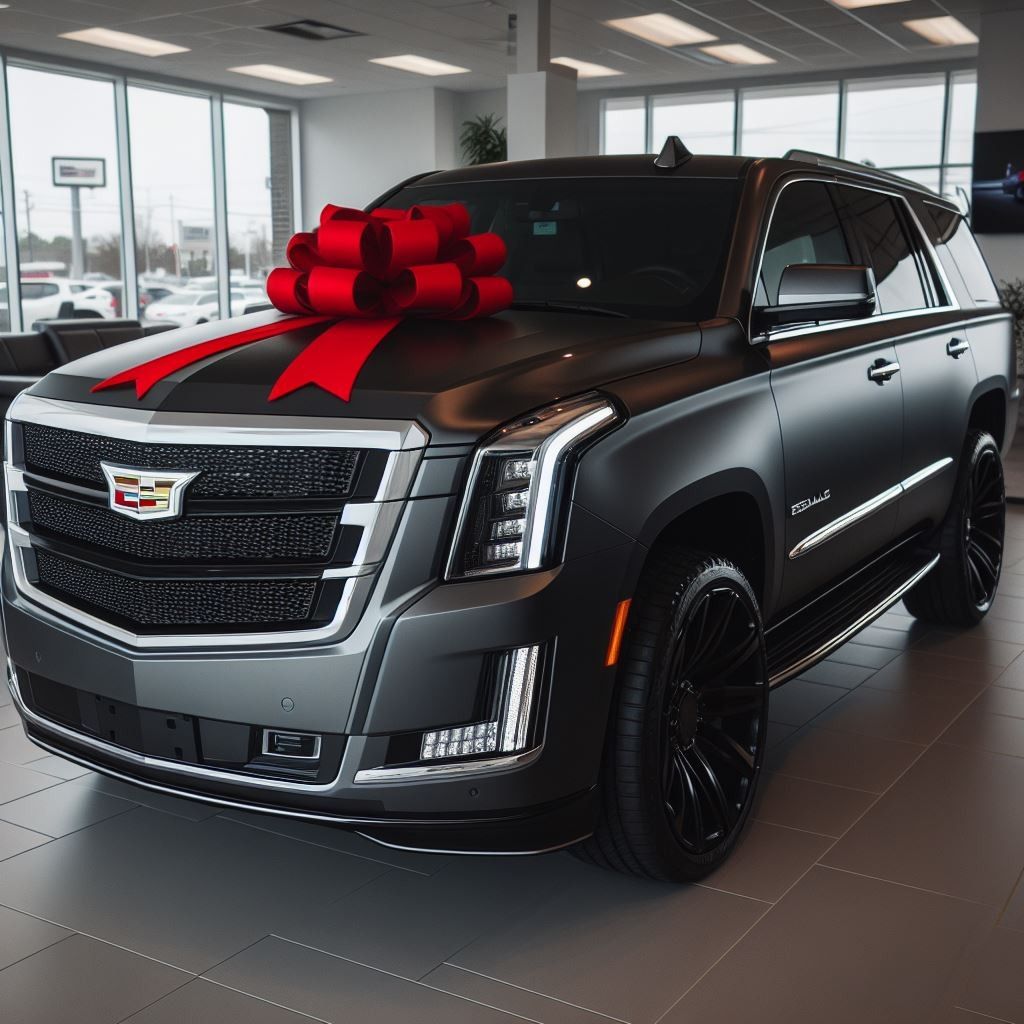
He led me toward the driveway. That’s when I saw the bow. A huge red one. Underneath it was the brand-new black car he’d arrived in, gleaming in the morning sun in a way that made everything else on our street, the cracked driveway, the sagging gutter Ray kept meaning to fix, look small and shabby by comparison. For a second, I genuinely couldn’t understand what I was looking at, my brain refusing to connect the bow, the car, and my father standing there with his hand still on my shoulder.
Then my father lifted a set of keys. “Happy birthday.” I stared at them. “That’s mine?” “Paid for.”
Mom came onto the porch. Ray stayed behind her, his hands disappearing into his pockets. My father noticed him, and something in his expression changed, subtle but unmistakable, like a man recalculating an equation. This wasn’t only a gift. It was an audience. He held the keys higher. “Go ahead.” I still didn’t move. His smile widened. “Come on, son.” Then he looked directly at Ray. “Your stepdad could never compete with this.”
Ray looked down. And through the open front door behind him, I could see the wooden box sitting on our kitchen table, right where I’d left it that morning.
I looked at the car. Then the keys. Then the man who had been at my house for ten minutes after being gone for fourteen years. I walked straight past his open hand.
“Ray.” Ray looked up. “Come here a second.” Ray didn’t move. “This is between you and him,” he said, his voice quiet, careful, the voice of a man trying very hard not to make things worse. My father laughed. “Smart man.” I looked at Ray. “Please.” That brought him off the porch.
My father jingled the keys. “What’s going on? You don’t like the color?” I turned toward him. “I want to ask you something.” “Sure.” “What position do I play?” His smile stayed there for half a second too long. “Football.” “What position?” He looked toward Mom. She said nothing. “Come on. I haven’t exactly had a chance to catch up yet.” “Okay.” I nodded. “What college am I applying to?” His jaw tightened. “Your mother kept me out of your life.” Mom inhaled sharply behind us. I held up my hand. One more. I pointed at Ray. “What subject almost kept me from passing last year?” My father stared at me. “How would I know that?” “You wouldn’t.” Across the street, Mrs. Patterson had stopped watering her flowers, watching us with the hose still running, water pooling around her feet. I didn’t care.
My father held the keys toward me again. “Look, I know I missed things. That’s why I’m here. I’m trying to make up for it.” “With a car?” “It’s a pretty good start.” He glanced at Ray. “Better than anything he got you, I’d bet.” I looked toward the house. “Wait here.” I went inside. The wooden box was still on the kitchen table, exactly where I’d left it. When I carried it outside, Ray’s face changed, something between confusion and dread. “Jake.” I ignored him.
My father looked at the box. “What’s that?” “My birthday present.” He actually laughed. “That’s what he gave you?” Ray’s face went red. I opened the lid. “No.” I lifted out the statements. “This is.” My father frowned. I handed him the first one. He read the deposit. “Forty dollars?” “Turn it over.” He did. “Boots can wait.” I handed him another. “Truck service next month.” Then another. “Brought lunch all week.”
My father’s smile disappeared. “What is this?” “My college account.” “Okay.” “Ray and Mom opened it.” I found the statement I wanted. “Danny needed new glasses. I’ll make it up next month.” Then the next one. “Made up the forty dollars I missed, plus this month: eighty.” I held them out. “Those are Ray’s kids. Danny and Cara.” My father said nothing. “He pays child support. He helps Mom with our bills. And every month, he still puts something away for me.”
Ray finally spoke. “Jake, that’s enough.” “No.” I turned to him. “And you called this nothing this morning.” “It wasn’t supposed to be a big deal.” “You needed work boots.” “My boots were fine.” “One of them has duct tape on it.” “They’re comfortable.” Even Mom laughed at that, though she was crying by then too, wiping her face with the back of her hand.
I looked back at my father. The new car gleamed behind him, catching the sun in a way that felt almost aggressive now, like it was still trying to make its case. It probably cost more than everything Ray had deposited over fourteen months combined. That was the point my father had expected me to understand, the calculation he’d made driving over here, that a bigger number would obviously win. Instead, I finally understood the opposite.
“You bought that car with money you had.” I held up Ray’s statements. “Ray built my future with money he needed.” My father’s face hardened. “You think this guy loves you more than your own father?” I stared at him. “You don’t know what position I play.” “Because I wasn’t allowed to.” “You knew where we lived.” He opened his mouth. “You knew where we lived. You knew my birthday. You found me today. So don’t tell me you couldn’t reach me.” Nothing. “You could’ve sent a card.” His eyes shifted toward Mom. “You don’t know what happened between your mother and me.” “Then tell me.” “This isn’t the place.” “You had fourteen years to find one.”
He looked around at the neighbors, at Mrs. Patterson still frozen with her hose, at another neighbor’s curtain twitching in a front window. For the first time since he’d arrived, he seemed embarrassed. Good.
Then he tried the keys again. “Take the car, Jake.” I looked at them. I had wanted a car. Of course I had. I’d imagined driving to school instead of standing at the bus stop in the rain, my backpack getting soaked, watching the buses of kids with cars pull past me. I’d imagined picking up my friends on weekends, the freedom of it, not having to ask anyone for a ride anywhere ever again. And the car looked incredible. Black paint gleaming in the sun. Brand-new interior visible through the windows. Not somebody’s old hand-me-down, but the kind of car I’d never even let myself imagine owning, the kind other kids at school posted photos of.
For a second, I wanted those keys badly, badly enough that my hand actually twitched toward them. But then all I could see was Ray in old work boots with duct tape holding the sole together. Ray eating packed lunches all week instead of buying something hot from the cafeteria line. Ray postponing repairs on the truck he needed to get to work every single day. Five dollars. Fifteen. Forty. Whatever he had. Again and again, month after month, quietly, without ever once mentioning it to me until a wooden box landed in my hands on a random Tuesday morning.
My father pushed the keys toward me. “You deserve something nice.” I took them. Relief crossed his face. Then I closed his fingers around them. “I’ve wanted a car for two years.” I looked at Ray. “I wanted a dad for fourteen.” Nobody moved.
I looked back at my father. “I’m not waiting anymore.” His face went blank. “You’re choosing him?” “No.” I shook my head. “He chose me.” My father stared at Ray. Ray didn’t look proud. He looked miserable, his shoulders hunched, his eyes on the ground. Because that was Ray. He hadn’t wanted to beat anybody. He hadn’t known there was a competition until somebody showed up and announced one, uninvited, in our driveway on a Saturday morning.
My father pulled his hand away. “You’re seventeen. You don’t understand everything.” He looked at Mom. “You’ve done a hell of a job turning him against me.” Mom stepped forward, her voice shaking but steady. “No. I never kept you away. I spent years making excuses for you.” His face changed. She continued. “Maybe your card got lost. Maybe you didn’t have our number. Then I stopped because he was old enough to know I was lying.” I hadn’t known that, hadn’t known she’d spent years quietly protecting him from the truth of his own father’s absence, cushioning it with excuses I’d half believed as a kid without ever questioning too hard.
Mom wiped her cheek. “Don’t blame me because another man did what you kept choosing not to do.” My father looked at me one last time. “That car will still be here if you change your mind.” “No.” “What?” “It won’t.” I nodded toward it. “You’re taking it with you.”
He did. He ripped the bow off first. I don’t know why that detail stayed with me the way it did, why out of everything that happened that morning it’s the image I still see most clearly. Maybe because it was the first thing he’d done all day that wasn’t for an audience, the first unguarded moment, a small flash of something real underneath all the performance.
He threw it into the back seat, got behind the wheel, and drove away, the engine’s expensive purr fading down our street. The neighbors suddenly became very interested in their own yards, Mrs. Patterson finally turning off her hose, someone else’s curtain falling back into place. Mom went inside without a word.
I turned toward Ray. He was already walking away. “Where are you going?” “Kitchen.” “Why?” “Dishes.” Of course. Ten minutes after my biological father tried to buy his way back into my life, Ray was standing at our sink washing syrup off birthday-breakfast plates, his shoulders still tight, his jaw working like he was chewing on something he didn’t want to say.
I put the wooden box on the counter. “You know we have a dishwasher.” “Don’t trust it.” “You repaired it.” “Exactly. I know who repaired it.” I stood beside him. “Ray.” He kept scrubbing. “What?” “Look at me.” “Busy.” “You’re washing a clean plate.” He looked down, then put it in the rack. “Next plate.” I knew then. He was trying not to cry. So naturally, I made it worse.
“Thank you.” “For what?” “The box.” “Sure.” “And the account.” “Your mom puts money in too.” “I know.” “And we’re not anywhere near paying for college, so don’t go applying to some castle.” “Ray.” He finally stopped, the water still running over his hands. “You didn’t have to do any of that.” “Yeah.” “Then why did you?” For once, he didn’t have a joke ready. He stared into the sink, watching the water swirl around a plate he’d already washed twice. Then he shrugged. “You’re my kid.” That was it. No “son.” No speech. No hand on my shoulder. Just three words from a man who had spent nearly two years acting like they were obvious, like they’d never needed saying out loud until this exact moment.
I hugged him. He froze. We weren’t really a hugging family, not the two of us, not yet at that point. Then his wet hands landed awkwardly against my back, dripping soap suds onto my shirt. “You’re getting dishwater on me.” “You’re the one who started this.” I laughed. So did he, both of us standing there at the sink laughing in the particular way people laugh when they’re actually trying not to cry, the kitchen still smelling like syrup and birthday pancakes.
A month later, Ray finally bought new work boots. I know because I went with him, insisted on it actually, driving him to the hardware store myself even though I still didn’t have a license, having Mom drop us both off instead. When he tried to choose the cheapest pair on the shelf, the same instinct he’d apparently been following for months, I made him get the good ones, standing there in the aisle until he finally gave in.
The college account kept growing. Slowly. Some months there was a hundred dollars in it. Some months twenty. Ray eventually stopped writing what he’d sacrificed on the statements after I told him it made me feel guilty every time I saw his handwriting, every time I imagined him going without something small so a number in an account somewhere could grow by a few more dollars. Instead, he started writing about me. Passed chemistry somehow: $50. Scored a touchdown: $30. Then one month, simply: Proud of you, kid: $100.
I kept that one. I kept the wooden box too, still sitting on a shelf in my room years later, the initials still burned into the lid, that one corner still slightly higher than the others where he’d made his mistake and never quite fixed it.
My biological father did contact me again, eventually. Not right away. And there was no car the next time, no bow, no audience waiting in the driveway. But he never insulted Ray in front of me again. Maybe he finally understood why that particular tactic had failed so completely, why a car, however expensive, however new, could never compete with fourteen months of five and ten and forty dollar deposits, honestly accounted for on the back of a stack of bank statements nobody was ever supposed to see.
The most expensive birthday present anyone had ever offered me disappeared down our street before dinner that day, taillights fading around the corner, gone as quickly and as thoroughly as the man who’d driven it away. The wooden box is still mine.
For years, I’d believed fatherhood was something biology either gave a man or didn’t, something fixed and inherited rather than built. Ray taught me otherwise, one football game and one late-night chemistry session and one duct-taped boot at a time. One man came back wanting me to see what he could give me, showing up with a bow and an audience and a story he needed me to believe about himself. The other had spent nearly two years giving when nobody was looking, when there was no driveway audience, no red bow, nothing but a quiet man at a kitchen sink or a garage workbench, doing the work of loving someone without ever once asking for credit.
A pair of boots that could wait another month. A football game where I never left the bench, two full hours of watching from a cold aluminum seat for four minutes of mop-up duty. Chemistry homework he couldn’t understand any better than I could, sitting beside me anyway until midnight. None of those things looked impressive with a red bow on top. Together, they were worth more to me than any car could ever be.
Because my biological father came back calling me “son” as loudly as he could, needing the whole street to hear it, needing an audience to witness his generosity. Ray never needed to. He just looked down at a sink full of dishes and said the words he’d already been proving every day for two years, quietly, without ceremony, without anyone watching except me.
“You’re my kid.” And by then, I knew I was.

Lila Hart is a dedicated Digital Archivist and Research Specialist with a keen eye for preserving and curating meaningful content. At TheArchivists, she specializes in organizing and managing digital archives, ensuring that valuable stories and historical moments are accessible for generations to come.
Lila earned her degree in History and Archival Studies from the University of Edinburgh, where she cultivated her passion for documenting the past and preserving cultural heritage. Her expertise lies in combining traditional archival techniques with modern digital tools, allowing her to create comprehensive and engaging collections that resonate with audiences worldwide.
At TheArchivists, Lila is known for her meticulous attention to detail and her ability to uncover hidden gems within extensive archives. Her work is praised for its depth, authenticity, and contribution to the preservation of knowledge in the digital age.
Driven by a commitment to preserving stories that matter, Lila is passionate about exploring the intersection of history and technology. Her goal is to ensure that every piece of content she handles reflects the richness of human experiences and remains a source of inspiration for years to come.