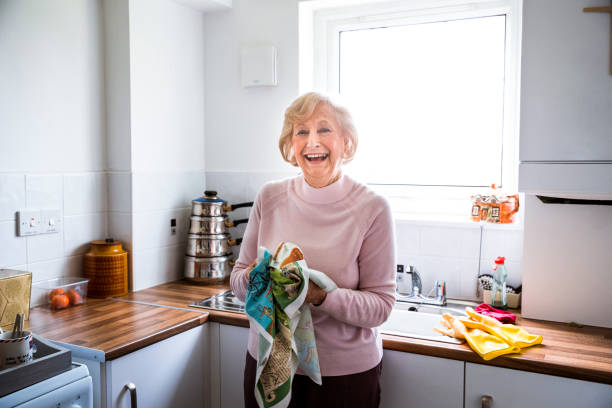
At exactly six o’clock on Christmas Eve morning, Helena Ward woke to a silence that immediately felt wrong. Her house was never this quiet. For the past three years, every morning had begun with some kind of noise. Her son, Caleb, usually stomped through the hallway searching for coffee. His wife, Sloan, talked loudly on the phone before most people had opened their eyes. Their children left toys scattered across the living room, while Sloan’s parents seemed to appear whenever there was free food, free space, or an opportunity to stay somewhere without paying for it. But that morning, Helena heard nothing. No footsteps, no doors, no arguing. She sat up slowly and looked toward the window.
The first thing she noticed was the driveway. Helena frowned. The two vehicles that had been parked there the night before were gone. Caleb’s SUV had disappeared. So had the large rental van Sloan had insisted they needed for the Christmas trip. Then Helena looked toward the front door. The mountain of suitcases, winter coats, ski equipment, and children’s bags that had crowded the entryway the night before had vanished too. For several seconds, she simply sat there. Today was supposed to be the beginning of their family Christmas vacation, a week in a luxury mountain lodge, a trip Helena had spent months organizing and paying for. She grabbed her phone from the nightstand and opened the family group chat.
It wasn’t there. Helena searched again. Nothing. Her eyebrows slowly rose. They hadn’t simply forgotten to wake her. Someone had removed her. Helena took a deep breath, slipped on her robe, and walked downstairs.
The house looked as though a storm had passed through during the night. A few abandoned wrappers lay on the counter. One child’s mitten sat beneath a chair. The coffee maker was still warm. They had left recently, and they had left without her.
Helena tapped Caleb’s number. The phone rang twice. Then Sloan answered.
“Hello?”
Wind roared through the speaker. Helena could hear the dull hum of tires against the highway.
“Good morning, Sloan,” Helena said calmly. “Where is Caleb?”
There was a pause, then a small, uncomfortable laugh.
“Oh, Helena.”
That single hesitation told her everything.
“Where are you?”
“Um, we’re already on the road.”
Helena leaned against the kitchen counter. “On the road to where?”
Another pause.
“The mountains.”
Helena stared through the window at the empty driveway. “The mountains,” she repeated.
“Yeah, things got really hectic this morning. The kids were restless. My parents wanted to leave early and everyone was rushing around. We figured it would just be easier if we got started.”
Helena’s voice remained perfectly steady. “And when were you planning to tell me?”
“Tell you what?”
“That ten people were leaving for a vacation I paid for without me.”
Silence. Then Sloan sighed. “Helena, please don’t make this dramatic.”
Helena almost laughed. Dramatic. Her son, daughter-in-law, grandchildren, and Sloan’s parents had packed their bags, loaded two vehicles, driven away before sunrise, and quietly removed her from the family chat. Yet somehow she was the one creating drama.
Sloan continued. “You’ve been under a lot of stress lately. Maybe this is a good opportunity for you to relax at home, have a peaceful Christmas, watch your shows, enjoy the quiet.”
Helena looked around her own kitchen. For years, Sloan had complained that Helena’s television was too loud. Now she was recommending that Helena sit alone and watch it.
“I see,” Helena said.
“Good. So you’re not upset.”
Helena smiled. “Not at all, really. Oh, Sloan, I hope you all have exactly the Christmas you planned.”
Then Helena ended the call.
She placed her phone gently on the counter. For almost a full minute, she did nothing. Then she walked to her home office.
Three years earlier, after her husband passed away, Helena had allowed Caleb and Sloan to move into the finished lower level of her home. They were supposed to stay for six months while they saved for a house. Six months became one year. One year became three.
Eventually, Sloan stopped acting like a guest. She rearranged Helena’s kitchen, replaced decorations, criticized her furniture, and invited her own parents over whenever she pleased. Caleb never defended his mother. Whenever Helena objected, he always gave the same tired response.
“Mom, please, let’s not turn everything into a problem.”
So Helena had learned to stay quiet. Until now.
She opened her laptop and searched through her email. There it was, the reservation confirmation, the luxury mountain lodge, seven nights, private suites, holiday package, total cost twelve thousand five hundred dollars.
Helena stared at the number. Then she remembered something else. She returned to the kitchen and opened the trash can. Near the top, crumpled beneath a paper towel, was a printed itinerary. Helena pulled it out and smoothed it across the counter. Her eyes moved down the page.
Primary suite: Caleb and Sloan. Guest suite one: Sloan’s parents. Guest suite two: Sloan’s sister and husband. Bunk room: the children.
Helena read it again. Her name wasn’t missing by accident. There had never been a room for her. She had paid for a vacation specifically designed to exclude her.
A strange calm settled over her. Helena walked back to her office. She logged into the reservation portal. Her finger hovered over the cancellation button. Then she smiled.
“Enjoy the mountains,” she whispered.
And with three quiet clicks, she cancelled the reservation. The refund confirmation appeared moments later. Helena leaned back in her chair. For the first time that morning, she felt completely awake.
They had wanted a Christmas without her. Fine. But Helena Ward had finally realized something important. If they didn’t want her, they weren’t entitled to her home, her money, or her patience. And before the day was over, Caleb and Sloan were about to discover that leaving her behind had been the most expensive mistake of their lives.
Helena spent the next several hours doing absolutely nothing, and that was the part she enjoyed most. For three years, there had always been something demanding her attention. A sink full of dishes, children arguing upstairs, Sloan asking where Helena kept something despite having lived in the house long enough to know, Caleb asking his mother for just one more favor. But now the house was silent.
Helena made herself a cup of chamomile tea, carried it into the living room, and opened the novel she had been trying to finish for months. At 2:47 that afternoon, her phone began ringing. Caleb. Helena looked at the screen. She let it ring. It stopped. Then it started again, and again. Within minutes, she had eleven missed calls.
Helena took another sip of tea. On the fifteenth call, she finally answered.
“Hello, Caleb.”
“Mom.” His voice was tight with panic. “Thank God something happened.”
Helena calmly turned a page in her book. “Did you make it to the lodge?”
There was a brief silence. “Yes, but that’s the problem. We’re standing in the lobby and they won’t give us the keys. The manager says the reservation was cancelled this morning.”
Helena said nothing.
“Mom, did your card get declined? Maybe the bank flagged the payment. You need to call them right now.”
In the background, Sloan’s voice exploded. “Tell her to fix it. My parents have been sitting in a car all day.”
Helena leaned deeper into her chair. “My card didn’t decline, Caleb.”
“Then what’s going on?”
“I cancelled the reservation.”
For several seconds, the line went completely silent. When Caleb finally spoke, his voice barely sounded like his own. “You what?”
“I cancelled it.”
“Why would you do that?”
Helena smiled faintly. “Because this morning, your wife explained that I wasn’t part of the vacation.”
“Mom, that’s not—”
“Was my name on the room list?”
Caleb stopped.
Helena continued. “Did you know there was no room assigned to me?”
Another silence. That silence hurt more than any insult could have. He knew. Of course he knew. Caleb had known exactly what they were doing.
“Mom, it was complicated.”
“No,” Helena replied. “It was simple. You planned a vacation without me and expected me to pay for it.”
“You’re seriously leaving us stranded?”
“No, I’m leaving you with the vacation you chose.”
His breathing became heavier. “There are ten of us here.”
“And apparently there was room for all ten of you.”
“Everything is booked because it’s Christmas.”
“That sounds inconvenient.”
“Mom—”
Before Caleb could continue, the phone shifted. “Give me that.” Sloan’s voice came through the speaker. “Helena, you need to call the lodge immediately.”
Helena blinked. “Excuse me?”
“You heard me. Put the reservation back. My parents are exhausted. The kids are miserable and we’re standing here with all our luggage.”
“You should probably find somewhere to sleep.”
“You are unbelievable.”
“And yet, I’m still at home.”
Sloan inhaled sharply. “This is childish.”
Helena’s voice remained calm. “Sloan, leaving a seventy-year-old woman asleep in her own house while driving away on the vacation she paid for was childish. Cancelling a reservation that belongs to me is called making a financial decision.”
“You ruined Christmas.”
“No, I stopped financing yours.”
Helena ended the call. This time, she turned her phone face down. She knew they would keep calling. She didn’t care.
Instead, Helena stood and walked toward the hallway leading to the lower level of the house. Caleb and Sloan’s rooms looked exactly as she expected, like no one cared who owned the property. Clothes covered the floor. Wet towels had been thrown across one of Helena’s antique chairs. Empty cups sat beside the bed. Sloan’s shoes were scattered beneath the dresser.
Helena began collecting towels when a bright light caught her attention. An old tablet was partially hidden beneath a pile of clothes. A notification had appeared on the screen. It was a message from Sloan’s sister, Marissa.
Is Helena really refusing to pay? Tell Caleb to make her fix it.
Helena stared at the screen. Then another message appeared. She’ll give in. She always does.
Something inside Helena became perfectly still. The device wasn’t locked. Against her better judgment, she opened the message thread. The group was called Mountain Escape, Adults Only.
Helena began reading. Sloan had written messages about packing before Helena woke up. Marissa had joked about Helena believing she was actually invited. Sloan’s mother had reminded everyone to make sure Helena’s credit card remained available for unexpected expenses.
Then Helena found Caleb’s message. I feel bad leaving Mom behind. Shouldn’t we at least tell her before we go?
Her heart tightened for one brief second. Helena almost felt relief. At least he had objected. Then she read Sloan’s response. Stop being dramatic. Your mom will survive one Christmas without us. She has the house and the dogs. We deserve a break. And Caleb had replied, Fine, just don’t make a scene when she finds out.
Helena slowly set the tablet down. There it was, the truth. Caleb hadn’t been powerless. He had simply chosen the easiest side. For years, Helena had mistaken his silence for peacekeeping. Now she understood it differently. Silence was also a choice.
She looked around the room. Then she walked to the garage. Three large cardboard boxes became five. Five became ten. Helena began packing.
She wasn’t angry. Anger would have been loud. What she felt was something far more dangerous. Clarity.
She packed Sloan’s clothes carefully. She folded Caleb’s sweaters. She collected the expensive kitchen gadgets Sloan had taken over Helena’s counters with. Nothing was thrown away. Nothing was damaged. Helena simply removed it, one box at a time.
By sunset, the lower level no longer looked like Caleb and Sloan’s permanent home. It looked like a place they had once stayed.
Then Helena opened her phone and accessed the smart home system. First, she deleted Caleb’s door code, then Sloan’s. She changed the garage access number. The Wi-Fi password followed. Finally, Helena found the spare house key attached to Sloan’s forgotten key ring. She removed it and slipped it into her pocket.
At 7:18 that evening, a message arrived from Caleb. We found two rooms at a motel. Cost us almost nine hundred dollars. We’re coming back tomorrow. We need to talk.
Helena read the message once, then placed the phone down. She ordered sushi, poured herself a glass of wine, and watched an old movie without anyone complaining about the volume. For the first time in years, Helena’s house felt peaceful.
The next morning, however, peace would be replaced by pounding fists, furious accusations, and the return of a family that still believed Helena would eventually give in. They were about to discover how wrong they were.
Helena was sitting at the kitchen table with a fresh cup of coffee when her phone buzzed. Motion detected, front driveway. She didn’t need to look at the screen twice. They were back.
A moment later, the sound of vehicles pulling into the driveway rolled through the quiet house. One car door slammed, then another. Sloan was not happy.
Helena calmly took another sip of coffee. Through the narrow windows beside the front door, she watched Caleb walk toward the porch. He looked exhausted, his hair messy, dark circles hanging beneath his eyes. Sloan followed close behind him. Behind her came her parents, Graham and Elise, both wearing the same irritated expressions. They looked like people returning from a failed vacation, which Helena supposed was exactly what they were.
Caleb stepped onto the porch and entered his code. The keypad flashed red. He frowned. He tried again. Red.
“What the hell?” he muttered.
“Try it again,” Sloan snapped.
Caleb punched in the numbers harder. Nothing.
Sloan folded her arms. “Of course she changed it.”
Caleb reached into his pocket and pulled out his key. Helena watched as he inserted it into the main lock. The wooden door opened. Then Caleb stopped. Behind it stood the heavy security door, locked, and through the metal mesh he could see his mother standing quietly in the hallway.
“Mom.”
Helena smiled politely. “Good morning, Caleb.”
He grabbed the handle. “Open the door.”
“I see you decided to come home early.”
“Open the door, Mom.”
Behind him, Sloan pushed forward. “Helena.” She corrected herself sharply after Helena raised an eyebrow. “This isn’t funny. We’ve been driving since dawn.”
“That sounds exhausting.”
“My parents barely slept.”
“Then perhaps they should go home.”
Elise stared at her. “Excuse me?”
Helena looked directly at her. “This is my home. You don’t live here.”
Sloan suddenly glanced past Helena into the hallway. Her expression changed. “Where’s my table? The one by the stairs. Where is it?”
“In the garage.”
Sloan’s face tightened. “My things are in the garage.”
“All of them.”
Caleb slowly looked at his mother. “Mom, what did you do?”
Helena folded her hands. “I gave you what you wanted.”
“What does that mean?”
“You wanted space from me. You wanted a vacation without me. You wanted to enjoy yourselves without having to worry about the woman whose house you lived in or whose money you spent.” Her voice remained quiet. “So I decided to give you space.”
Sloan stepped closer to the security door. “You packed our belongings?”
“Carefully.”
“You can’t do that.”
Helena smiled. “I already did.”
Caleb stared through the screen. “We live here.”
“No,” Helena said. “You stayed here.”
His expression changed, subtle but real. For the first time, he understood this wasn’t an argument about Christmas anymore. Something had changed.
Helena pointed toward the driveway. “The garage code is six three eight one. Everything is packed and labeled.”
Sloan’s mouth fell open. “You expect us to leave?”
“I expect you to make a decision.”
Caleb shook his head. “We don’t have anywhere to go.”
Helena’s face softened for only a second. “You both work. You’ve lived here without paying rent for three years. The savings you should have built during that time belong to you. What you do next is your responsibility.”
Sloan laughed bitterly. “You’re seriously throwing your own son out because we wanted one vacation?”
“No.” Helena’s eyes hardened. “I’m changing the way you treat me, because you believed I would never change it myself.”
Sloan turned toward Caleb. “Tell her she’s insane.” But Caleb didn’t speak.
Helena continued. “You can take your belongings and leave today. Or, if you genuinely want to remain here temporarily, there will be rules.”
Caleb looked up. “What rules?”
“Rent, two thousand dollars every month. Utilities will be your responsibility. You will contribute to the household. And Sloan’s parents will no longer stay in this house.”
Elise gasped. Graham stepped forward. “Now wait a minute.”
Helena looked at him. “No.” He stopped.
For years, Helena had listened to these people explain why she should be more flexible inside her own home. That was over.
Sloan threw her hands into the air. “Two thousand dollars? We’re family.”
“Exactly,” Helena replied. “And family should know better than to secretly leave someone behind on Christmas morning.”
Caleb lowered his head. Sloan turned toward him. “Say something.” He remained silent.
Helena reached through the small opening beside the screen and handed Caleb an envelope. He opened it. Inside was a neatly printed page. “What is this?”
“An accounting.”
Caleb scanned the paper. His face went pale.
Helena explained. “The lodge reservation was refunded to me. However, you used my emergency credit card for the rental van, fuel, and the motel you stayed in last night.”
Caleb looked up. “Mom.”
“The total is one thousand four hundred sixty dollars.”
Sloan’s eyes widened. “You expect us to pay that?”
“Yes.”
“You gave us that card for emergencies and groceries. The motel was an emergency.”
“No,” Helena replied. “The motel was the result of a decision you made.”
Caleb stared at the paper. Helena took a breath. “You have until Friday to repay it.”
“And if we don’t?” Sloan demanded.
Helena looked directly into her eyes. “Then I will report the charges as unauthorized.”
The silence outside became heavy. For several seconds, no one moved. Then Sloan slammed her hand against the metal screen. “You are unbelievable.”
Helena didn’t flinch. “Perhaps.” She closed the inner wooden door. The deadbolt clicked into place.
For the next several minutes, voices rose outside. Sloan shouted. Elise complained. Graham muttered angrily. Caleb said almost nothing.
Helena walked back toward the kitchen window. From there, she watched the garage door rise. The family froze. Boxes covered the floor from one wall to the other. Sloan immediately began opening them, searching through the labels. Caleb stood beside a box marked Caleb, Winter Clothing. His shoulders dropped. The reality was finally beginning to settle in.
Helena turned away from the window. But fifteen minutes later, there was a quiet knock at the side entrance. Not Sloan. Not her parents. Caleb.
Helena walked to the door and opened it only enough for the security chain to hold. “Mom,” he said. His voice had changed. The anger was gone. “We need to talk.”
Helena looked at her son for the first time since Christmas morning. She wondered whether he had finally understood what his silence had cost him.
For a moment, neither of them spoke. Outside, the winter air moved quietly through the trees. From the driveway came the distant sound of cardboard boxes being dragged across concrete. Sloan was still outside with her parents, undoubtedly searching for another reason to blame Helena. But Caleb stood alone.
“Mom,” he finally said. “Please.”
Helena kept one hand on the door. “We can talk.”
His eyes moved toward the security chain. “Can you at least let me inside?”
“No.” The answer came immediately.
Caleb looked hurt. Helena noticed. She also remembered how she had felt standing in her empty kitchen on Christmas morning.
“I am willing to speak with you,” she said. “That doesn’t mean I am ready to pretend nothing happened.”
He lowered his gaze. “We don’t have anywhere to go.”
“You’ve said that already.”
“Our apartment lease ended years ago. We moved in here to save money, but—”
“But you didn’t save enough.”
Caleb rubbed the back of his neck. “We had expenses.”
Helena almost smiled. Of course they did. Everyone always had expenses when someone else was paying for the roof over their heads.
“What happened to the money?” she asked.
Caleb hesitated. That was enough.
“Sloan’s student loans,” he admitted quietly. “Some credit cards. The kids. We kept thinking we’d catch up next month.”
“And while you were catching up, you were living here rent-free.”
“I know.”
“No, Caleb. I don’t think you do.”
His face tightened.
Helena took a slow breath. “For three years, I paid the property taxes, the repairs, the utilities, the insurance, and most of the groceries. I allowed you both to build a life without the pressure of rent. And in return, you allowed your wife to treat me like an inconvenience inside my own home.”
“Mom, Sloan can be difficult.”
Helena stared at him. The words hung between them. Then she asked, “And what did you do about it?”
Caleb had no answer.
“Exactly.” Helena leaned slightly closer. “Do you know what hurt me the most?”
His eyes lifted.
“It wasn’t Sloan.” He frowned. “It wasn’t her sister. It wasn’t her parents. I never expected loyalty from them.” Caleb’s expression slowly changed. “It was you.”
He closed his eyes.
Helena continued. “You knew about the trip. You knew I wasn’t assigned a room. You knew they planned to leave before I woke up.”
“I didn’t know they were going to remove you from the group chat.”
“But you knew enough.”
Caleb’s shoulders sank. “I didn’t want to fight with Sloan.”
“And that was your choice.”
“Mom, no, listen—”
Her voice remained calm, but there was strength behind every word. “Every time you said you didn’t want to fight, someone else paid the price. You stayed quiet when Sloan rearranged my home. You stayed quiet when her parents treated this place like a hotel. You stayed quiet when I paid for things that were never my responsibility. And then you stayed quiet when they planned to leave me behind.”
Caleb looked down. “I just wanted everyone to be happy.”
Helena nodded slowly. “And somehow the person who always had to be unhappy was me.”
That finally reached him. She saw it in his face. The truth was difficult to hear when it had been hidden behind excuses for years.
“I am sorry,” Caleb whispered.
Helena studied him. “I’m sure you are.”
His head lifted quickly. “You don’t believe me?”
“I believe you’re sorry now.”
The distinction hurt him. Good. Helena thought some lessons needed to hurt.
Before Caleb could respond, Sloan’s voice came from the driveway. “Caleb, are you seriously begging her again?”
He turned his head. “Give me a minute.”
Sloan appeared around the corner of the house. She stopped when she saw the security chain. “Unbelievable.”
Helena sighed. “Sloan, please don’t start.”
“Oh, I’ll start wherever I want. This entire situation is ridiculous.”
“Is it?”
“Yes. You cancelled Christmas because your feelings were hurt.”
Helena stared at her. Then she said quietly, “My feelings were not hurt because you left without me.”
Sloan crossed her arms. “Really?”
“They were hurt because you believed you could use me.”
For the first time, Sloan looked uncertain.
Helena continued. “You wanted my money for the lodge, my credit card for expenses, my house whenever you needed somewhere to stay. But you didn’t want me. That’s not fair, is it?”
Caleb turned toward his wife. “Sloan, stop.”
She stared at him. “Excuse me?”
“Just stop.”
Helena watched the surprise spread across Sloan’s face. Perhaps Caleb had finally grown tired of being the man who never chose a side.
Sloan stepped closer. “So now you’re taking her side.”
“No,” Caleb replied. “I’m admitting she has a point.”
Sloan laughed sharply. “After everything we’ve been through, you’re standing here defending your mother?”
Helena interrupted. “This isn’t about sides.”
Both of them looked toward her.
“It’s about consequences.”
She opened the door just enough to hand Caleb another copy of the agreement she had prepared. “If you want to stay here temporarily, these are the conditions. Two thousand dollars a month. Utilities are shared. No guests without permission. Your mother-in-law and father-in-law do not stay here.”
Sloan snatched the paper from Caleb’s hand. She read it, then laughed again. “This is insane.”
“Then don’t accept it.”
“You know we can’t afford that.”
“Then you should find housing within your budget.”
Sloan’s face reddened. “You are doing this to punish us.”
Helena shook her head. “No. If I wanted to punish you, I could have thrown your belongings onto the lawn and changed the locks without giving you a choice.” Sloan looked toward the garage. “Instead, I packed everything carefully. I gave you options. What happens next is entirely up to you.”
Caleb read through the agreement again. Then he asked quietly, “And the fourteen sixty?”
“You repay it by Friday.”
Sloan immediately protested. “We don’t have that kind of money.”
Helena looked directly at her. “Then perhaps you should have considered that before charging a rental van, fuel, and a motel room to my emergency card.”
“We thought you’d pay for it.”
“I know. That was the problem.”
They had expected it. Caleb handed the paper back to his mother. “I’ll transfer the money.”
Sloan spun toward him. “What?”
“I said I’ll pay her back.”
“With what money?”
Caleb’s expression hardened. “Mine.”
Helena noticed the change. Small, but real.
Sloan stared at him as if she barely recognized the man standing beside her. Then she turned toward Helena. “You’ve poisoned him against me.”
Helena almost laughed. “No, Sloan. You just spent three years teaching him that peace was more important than respect.”
Caleb didn’t defend his wife this time. His silence meant something different.
Sloan looked from him to Helena. Then she walked away.
A few minutes later, Caleb’s phone buzzed. He checked the screen.
“What’s wrong?” Helena asked.
He looked embarrassed. “My debit card declined at the gas station.”
Helena nodded. “I removed you from my accounts.”
Caleb stared at her. “Immediately?”
“Immediately.”
“But what if we need something?”
Helena’s expression remained gentle. “Then you’ll use your own money.”
He swallowed. The reality of adulthood had arrived all at once. No shared account. No emergency card. No free home. No automatic rescue.
Caleb looked toward the driveway, where Sloan was arguing with her parents. Then he looked back at his mother. “I should have stopped this before it got here.”
“Yes,” Helena said.
He nodded. “And I should have told you about the trip.”
“Yes.”
His eyes filled with regret. “I don’t know how to fix it.”
Helena loosened her grip on the door slightly. “You don’t fix three years with one apology.” Caleb looked at her. “You start by changing what you do next.”
For several seconds, he stood silently in the cold. Then he nodded. “I understand.”
Helena closed the door. This time, she didn’t feel angry. Outside, the shouting began again. Inside, the house was quiet, and Helena finally understood that sometimes the strongest boundary wasn’t a scream, a threat, or a dramatic goodbye. Sometimes it was simply refusing to rescue people from the consequences of their own choices.
Helena spent the next hour doing something she had not done in years: nothing. She sat in the living room with her coffee, listening to the muffled arguments outside. Every now and then, Sloan’s voice rose above the others. Graham tried to calm her. Elise blamed Helena. Caleb said very little. Eventually, the shouting stopped.
Helena glanced through the front window. Caleb was carrying boxes toward the rental van. Sloan stood beside the garage with her arms crossed.
A knock came from the side door. Helena walked over but did not immediately open it. “Who is it?”
“Caleb.”
She unlocked the door but left the security chain in place. He stood there holding an envelope. “I transferred the money.”
Helena took the envelope through the opening. Inside was a printed confirmation. One thousand four hundred sixty dollars transferred. She looked at him. “Thank you.”
Caleb nodded. For a moment, neither spoke. Then he said, “Sloan wants to leave.”
“That’s her decision.”
“She’s furious.”
“That’s also her decision.”
Caleb gave a tired, humorless laugh. “You really aren’t going to make this easy, are you?”
Helena looked directly at him. “For three years, I made everything easy.”
That ended the conversation. Caleb lowered his eyes. “I know.”
Helena studied her son. There was something different about him now. The confident assumption that she would always rescue him had disappeared. In its place was exhaustion, maybe even shame. But Helena knew better than to confuse guilt with change.
“Where will you go?” she asked.
“One of my friends said we can stay with him for a few days.”
“Good.”
Caleb looked surprised. “Good?”
“Yes. You have somewhere safe to sleep.”
“But you don’t want us to stay here.”
Helena’s expression softened, though not like before. He nodded slowly.
Behind him, Sloan appeared. “Are you done?” Caleb turned. She looked toward Helena. “You know, I hope you’re happy.”
Helena raised an eyebrow. “I am, actually.”
Sloan laughed bitterly. “You’re destroying your son’s life.”
“No, I’m refusing to manage it.”
“Same difference.”
“No, Sloan, it isn’t.”
Sloan stepped closer. “For years, you’ve acted like you did everything for us because you’re such a generous person. But maybe you just liked having control.”
Helena almost admired the accusation. It was bold, especially coming from someone who had rearranged another woman’s house and expected her to finance a holiday she wasn’t invited to attend.
“Perhaps,” Helena said. “But if control was what I wanted, I would have controlled you years ago. I would have charged rent. I would have refused to let your parents stay here. I would have cancelled your access to my accounts the first time you treated my generosity like an obligation.”
Sloan opened her mouth, then closed it.
“The truth,” Helena said, “is that I gave you freedom. You mistook that freedom for ownership.”
Sloan’s face tightened. “Whatever.” She turned away.
Caleb remained. “Mom,” he said quietly.
Helena waited.
“I don’t expect you to forgive me yet.”
That surprised her. “But I am sorry.”
Helena nodded. “I heard you.”
His face fell slightly. That wasn’t forgiveness. Not yet. Maybe it never would be complete, but it was honest.
Caleb walked back toward the garage. Helena closed the door and watched from the kitchen window as the final boxes were loaded. There were more than she expected. Three years of rent-free living had allowed Caleb and Sloan to accumulate furniture, appliances, decorations, clothing, electronics, and countless things they had purchased while paying almost nothing toward the house. Now they had to fit their entire life into a rental van.
Sloan was furious. At one point, she opened a box and began throwing things around the garage. Caleb immediately stopped her. “Don’t.”
She turned toward him. “Don’t what?”
“Don’t destroy anything.”
“Oh, now you care about her things.”
Caleb looked toward the house, then back at his wife. “She packed all of ours without breaking anything.”
Sloan laughed. “Congratulations. She gets a medal.”
“No,” Caleb said. “She gets respect.”
The words seemed to surprise both of them. Sloan stared at him. For once, Caleb didn’t look away.
Helena stepped back from the window. She didn’t need to hear the rest.
An hour later, Graham knocked on the front door. Helena opened it behind the locked screen. “What now?” she asked.
He looked uncomfortable. “Elise wanted me to ask if we could stay one more night.”
Helena stared at him. “No.”
“Helena.”
“No.”
He sighed. “You’re really serious about all this.”
Helena smiled faintly. “That’s what everyone keeps asking. Yes, I am.”
Graham looked toward the driveway. “We’ll leave.”
“Thank you.”
He nodded once and walked away.
By late afternoon, the garage was empty. The rental van was packed. Caleb’s SUV sat behind it, filled with whatever hadn’t fit. Helena stood on the porch as they prepared to leave. No one offered a dramatic farewell. Elise got into the passenger seat. Graham followed. Sloan climbed into the SUV without looking toward the house.
Only Caleb paused. He stood beside the driver’s door. Then he looked at Helena. “I’m going to figure this out.”
Helena nodded. “I hope you do.”
“I’m not asking you for anything.”
“Good.”
A faint smile appeared on his face, still honest. “Always.”
Caleb climbed into the vehicle. Minutes later, the engine started. Helena watched as the rental van backed out first. Then Caleb followed. At the end of the street, his SUV paused briefly. Helena wondered whether he was considering coming back. Then the vehicle turned and disappeared.
The driveway became silent. Helena remained on the porch for several moments. She expected to feel lonely. Instead, she felt lighter inside. The house looked unfamiliar, not because something was missing, but because something had returned. Her home.
That evening, Helena opened the storage closet and pulled out a box containing the vintage curtains Sloan had removed years earlier. She hung them in the living room. Then she moved her family photographs back to the shelves. She cleaned the kitchen slowly, enjoying the absence of complaints and criticism. Every object went exactly where Helena wanted it.
By nightfall, a fire burned in the fireplace. She opened a bottle of wine Sloan’s family had once tried to claim for a holiday dinner. Helena poured herself a glass and settled onto the sofa.
Her phone vibrated. A message from Caleb. We’re staying with a friend for now. Thank you for not calling the police over the credit card. I’m sorry, Mom. I really am.
Helena read it twice. Then she placed the phone face down. An apology was a beginning, nothing more.
Outside, snow began falling softly across the driveway. By morning, it would cover every tire mark left behind. Helena smiled as she watched the snow gather beneath the streetlights.
For years, she had been afraid that setting boundaries would mean losing her family. But now she understood something she should have learned long ago. The people who truly loved her might dislike her boundaries. They might struggle with them. They might even be angry. But the people who only valued what she could provide were the ones who would leave when the benefits disappeared.
Helena lifted her glass. “To a new beginning,” she whispered.
The fire crackled. The house remained quiet. And for the first time in a very long time, Helena knew that whatever happened next, no one would ever again take her place in her own life.
Helena woke early the next morning. For the first time in years, there was no alarm, no children running through the hallway, no television playing in another room, no Sloan complaining about breakfast, the weather, the neighbors, or some imaginary problem that everyone else was expected to solve. There was only silence.
Helena lay in bed for a few moments listening to it. Then she smiled. The silence no longer felt empty. It felt earned.
She got dressed slowly, made fresh coffee, and carried her mug toward the living room. Overnight, the snow had covered the driveway in a clean blanket of white. There were no tire tracks, no rental van, no SUV, no one waiting for her to fix their problems.
Her phone rested on the table. Helena hadn’t replied to Caleb’s message. She still wasn’t ready. An apology was easy to type. Change required time. She had learned that lesson from years of watching Caleb promise that things would improve. Whenever she became upset, he would apologize. Sloan would become temporarily polite, and eventually everything returned to the way it had been. This time, Helena intended to break that cycle.
She spent the morning cleaning, not because the house was dirty, but because she enjoyed deciding what belonged where. She opened the cabinets and removed items she never used. She reorganized the pantry. She threw away old decorations that had been purchased without her permission. She placed her husband’s photographs back on the bookshelf where Sloan had once replaced them with modern decorative pieces.
At noon, Helena opened the windows just enough to let the cold winter air into the house. The rooms felt alive again.
Her phone rang. Caleb. Helena watched his name appear on the screen. After a few seconds, she answered. “Hello.”
“Hi, Mom.” His voice was cautious. “Are you okay?”
Helena looked around the living room. “Yes.”
A pause followed. “I’m glad.”
“How are you?”
“Honestly, not great.”
Helena said nothing.
Caleb continued. “We’re still at my friend’s place. Sloan’s parents went home yesterday. Sloan and I have been looking at apartments.”
“Good.”
He gave a quiet laugh. “You’re not going to rescue us, are you?”
“No.”
“I figured.”
For the first time, there was no anger in his voice. Only acceptance.
Caleb took a breath. “Mom, I’ve been thinking about what you said.”
“Which part?”
“All of it.” He continued. “I always told myself that staying quiet made me the reasonable one. I thought if I didn’t take sides, I was keeping the peace.”
Helena closed her eyes briefly. “And now?”
“Now I realize I was just making sure someone else dealt with the consequences.”
She opened her eyes. “That’s a start.”
“I’m not asking you to forgive me.”
“Good.”
He laughed softly again. “You really don’t make anything easy anymore.”
Helena smiled. “That’s because I spent too many years making everything easy.”
For a moment, they simply listened to each other breathe. Then Caleb said something Helena hadn’t expected. “Sloan is angry at me.”
“I assumed she would be.”
“She says I let you manipulate me.”
“And what do you think?”
Caleb was quiet for several seconds. “I think I let her manipulate me for years, because it was easier than admitting she was wrong.”
Helena didn’t respond immediately. She felt no satisfaction in hearing it, only sadness. Caleb had chosen his path, but perhaps he was finally beginning to understand why.
“I can’t tell you what to do about your marriage,” Helena said.
“I know.”
“That’s your responsibility.”
“I know.”
“But I will tell you this. Never confuse avoiding conflict with being kind. Sometimes avoiding conflict simply means allowing the wrong person to hurt everyone else.”
Caleb was silent. Then he said, “I understand, Mom.”
This time, Helena believed he might actually mean it. Not completely. Not yet. But more than before.
They ended the call a few minutes later. Helena placed her phone on the table and returned to her coffee.
Later that afternoon, she drove into town. She bought herself a small Christmas cake from a local bakery and picked up fresh flowers. She wandered through a bookstore and purchased two novels. For years, every Christmas expense had revolved around everyone else. Gifts for grandchildren, special food for Caleb, something Sloan would like, extra presents for Sloan’s parents. This year, Helena bought what she wanted.
When she returned home, the house felt warm. She lit the fireplace, placed the flowers on the dining table, and opened one of her new books.
As evening approached, her phone buzzed again. This time it was a bank notification. Caleb had transferred another amount of money. Helena opened the message. Five hundred dollars for the utilities. I should have helped pay. Then another message appeared. I know you didn’t ask for this. I’m trying to start doing the right thing.
Helena stared at the screen. For several moments, she didn’t know what to feel. Finally, she typed, Thank you. Actions matter. Keep going.
His reply arrived almost immediately. I will.
Helena set the phone down. That was enough for now. Not forgiveness, not a complete reconciliation. Just one honest step.
As night settled over the neighborhood, snow began falling again. Helena stood beside the window, watching the flakes drift through the darkness. She thought about the mountain lodge, the expensive reservation, the family vacation she had once believed would bring everyone together. In the end, cancelling that trip had given her something far more valuable. It had forced the truth into the open.
Caleb had learned that his mother’s generosity had limits. Sloan had learned that Helena’s kindness was not weakness. And Helena herself had learned the most important lesson of all. She did not have to earn love by giving endlessly. She did not have to pay for a place in her own family. She did not have to tolerate disrespect simply because it came from people she loved. Love without respect eventually became something else, and Helena was finished accepting it.
She returned to the sofa, wrapped herself in a warm blanket, and opened her book. The fireplace crackled softly. Her Christmas tree glowed in the corner. Outside, the snow continued falling over the empty driveway.
Helena lifted her glass of wine and smiled. Months from now, perhaps Caleb would prove that he had changed. Perhaps one day they would share dinner again. Perhaps Sloan would apologize. Or perhaps she wouldn’t. Helena no longer felt responsible for the answer. Everyone was finally free to make their own choices, and Helena was free to live with hers.
She took another sip of wine, then looked around the home she had finally reclaimed. Her home, her peace, her life. And for the first time in many years, Helena didn’t feel abandoned. She felt powerful, because sometimes the happiest ending wasn’t getting people to understand your worth. Sometimes it was understanding your own worth well enough to stop begging anyone else to see it.
The weeks after Christmas passed slowly, the way winter always does in a house that finally belongs to only one person. Helena fell into a rhythm she hadn’t known in years. She woke without an alarm, made coffee exactly the way she liked it, strong, with a splash of cream and nothing else, and sat by the window watching the neighborhood wake up around her.
She heard from Caleb roughly once a week. The calls were short at first, careful on both sides, like two people relearning how to speak a language they had once known fluently but had let go rusty from disuse. He told her about the new apartment he and Sloan had found, a modest two-bedroom on the other side of town, smaller than anything they’d lived in for years, with a landlord who actually expected the rent on the first of the month.
“It’s strange,” he admitted one evening in January. “Paying for everything ourselves. Groceries. The electric bill. I used to complain about how expensive things were, but I never really felt it before. Not like this.”
“That’s what living costs,” Helena said simply. “It always did. You just weren’t the one paying for it.”
He didn’t argue with her. That, more than anything, told her something had genuinely shifted.
Sloan never called. Helena hadn’t expected her to. Occasionally Caleb mentioned her in passing, that she’d picked up extra shifts at work, that she was still frustrated about the whole situation, that things between them were tense but holding. Helena listened without offering advice. She had learned, finally, that her son’s marriage was his to navigate, not hers to manage, in the same way the vacation itself had once been engineered around everyone’s needs but her own.
In February, Caleb asked if he could come by, alone, just to talk. Helena agreed, though this time she left the security chain off the door. He arrived on a Saturday afternoon carrying a small potted plant, an odd, almost formal gift that neither of them commented on directly.
“I don’t really know why I brought this,” he admitted, setting it on the kitchen counter. “I guess I wanted to bring something that wasn’t an apology or a payment. Just something normal.”
Helena almost smiled. “It’s a nice plant.”
They sat at the kitchen table, the same table where Sloan had once wiped away invisible fingerprints like Helena’s presence was an inconvenience to be tidied. Caleb looked around the room, taking in the curtains Helena had rehung, the photographs back on their shelves, the small changes that had quietly restored the house to something that felt like hers again.
“It looks different in here,” he said.
“It looks like my house,” Helena replied. “It always was. I just let it stop feeling that way for a while.”
Caleb nodded slowly, absorbing that. “I think about that morning a lot. Christmas morning. The empty driveway. I keep trying to imagine what it must have felt like, waking up to that.”
“Do you want to know?”
He hesitated, then nodded.
“It felt like finding out, all at once, exactly how much I mattered to the people I’d spent years taking care of,” Helena said. “Which was very little, as it turned out. Not because I’d done anything wrong. Because I’d made it too easy for everyone to assume I always would.”
Caleb’s eyes glistened, but he didn’t look away this time. “I’m never going to be able to fully make up for that.”
“No,” Helena agreed. “You’re not. But you can keep doing what you’ve been doing. Paying your own way. Speaking up instead of staying quiet. Choosing honesty over comfort, even when it’s harder.”
“Is that enough?”
Helena considered the question honestly, the way she considered most things now. “I don’t know yet,” she said. “But it’s the only thing that could ever be enough. Not grand gestures. Not one apology. Just time, and consistency, and proof.”
They talked for another hour, about small things mostly, the new apartment, a promotion he was hoping for at work, whether the kids missed the dog. It was the most ordinary conversation they’d had in years, and Helena found she treasured the ordinariness of it more than any dramatic reconciliation could have offered.
Before he left, Caleb paused at the door. “For what it’s worth,” he said, “I don’t think I ever really saw you before. Not as a person. Just as, I don’t know, the person who handled things.”
“I know,” Helena said. “I let myself become that. It wasn’t only your fault.”
“I’d like to see you differently now. If you’ll let me.”
Helena studied her son for a long moment, searching his face for the easy excuses that had lived there for so many years. She didn’t find them, not this time.
“We’ll see,” she said. “One visit at a time.”
It wasn’t forgiveness, not completely, but it was a door left open rather than one slammed shut, and for now, Helena decided, that was exactly the right amount.
By spring, the snow had melted from the driveway entirely, and Helena had planted new flowers along the front walk, ones she had chosen herself, without anyone’s opinion weighing in on the color or the arrangement. She thought, sometimes, about that Christmas Eve morning, the silence that had first frightened her before it set her free. She no longer needed anyone else to see her worth in order to feel it. She had spent decades pouring herself into a family that mistook her generosity for obligation, and it had taken one cancelled reservation, three quiet clicks, to finally show her the difference between being needed and being valued.
She still loved her son. She suspected she always would. But love, she had learned, could exist alongside boundaries, could survive consequences, could even grow stronger once it was no longer built on one person’s constant, silent sacrifice.
Helena watered her new flowers in the cool morning air, watched the street slowly wake up around her, and felt, for the first time in longer than she could remember, entirely and completely at home in her own life.

Specialty: Emotional Turning Points
Rachel Monroe writes character-driven stories about betrayal, second chances, and unexpected resilience. Her work highlights the emotional side of family conflict — the silences, the misunderstandings, and the moments when someone quietly decides they’ve had enough.