Brooke had learned early that silence could be mistaken for peace. In her family, the person who made the least noise was usually the person expected to carry the most. Her brother Zachary could call at midnight because his rent was short, and their parents would sigh, complain, and then send the money. Her younger sister Alyssa could need new clothes, new lessons, another trip, another rescue from another poor choice, and somehow the money always appeared.
But Brooke learned to count quarters in the laundry room. She learned to stretch gas until the warning light felt like a personal insult. She learned how to read an overdue notice without letting her face move. When she asked for help, even gently, her mother had a way of making the request sound like evidence against her.
“You’re old enough to figure things out,” her mother would say.
And Brooke would nod, because nodding was easier than begging twice. By the time she turned twenty-five, she had built an entire personality out of not needing anyone. It was not strength at first. It was training. It was the kind of skill you didn’t choose so much as absorb, the way you absorb a language just by living inside it long enough.
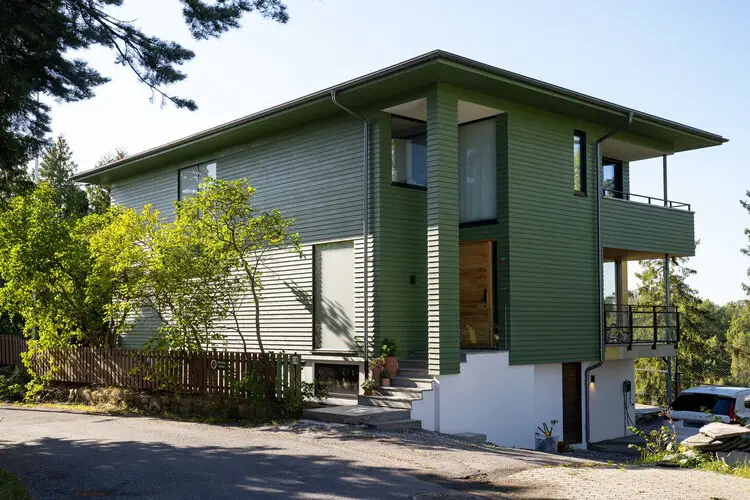
The house was the one exception. It was not huge or fancy. It had a narrow front porch, a mailbox that leaned slightly after a winter storm, a kitchen with blinds that never hung perfectly straight, and an old dresser in the dining room that she had refused to throw away because it had belonged to her grandmother. But it was hers. At least, it was the only place that felt like hers.
She kept a small American flag on the porch because her grandfather had put one there years earlier, and every spring she replaced it when the edges got too faded. She drank coffee at the dining table before work. She paid the utility bills late more often than she admitted. She fixed a loose cabinet handle with a screwdriver she kept in the junk drawer. None of it looked like much to anyone else. To Brooke, it was proof she had survived long enough to make one corner of the world answer to her.
That was why Melissa Greene’s phone call felt strange from the first second.
Melissa was the estate attorney who had handled family paperwork for years. She was not warm, exactly, but she was precise. She said Brooke’s name carefully, asked whether she could come to the office alone, and gave her a time that sounded too specific to be casual.
2:17 p.m.
Brooke spent the rest of that morning distracted, running through every possible reason a lawyer would need to see her alone. She assumed it had something to do with her grandmother’s old will, some overlooked clause, some small technicality that needed a signature. She never imagined it would be the conversation that split her life into before and after.
Brooke arrived with her work bag still over one shoulder and a paper coffee cup she had forgotten to drink from. The office smelled faintly of printer toner, old wood, and peppermint tea. Melissa did not waste time on small talk. She closed the door, sat across from Brooke, and slid a beneficiary notice across the desk. Then a trust statement.
Brooke stared at the papers without understanding them at first. There was her name. There was her date of birth. There were signatures she recognized. There were dates going back years.
Melissa let her read in silence.
That was how Brooke learned that her great-grandmother Dorothy had created equal trusts for every great-grandchild. Zachary had one. Alyssa had one protected until she came of age. And Brooke had one too. It had been sitting there for twenty-five years. Growing quietly. Waiting quietly.
Just over one million dollars.
Brooke read the number three times. The first time, it did not seem real. The second time, it made no sense. The third time, her stomach went cold. Because money like that did not just represent comfort. It represented every night she had lain awake at 3:06 a.m. trying to decide whether food, rent, gas, or another bill deserved to ruin her first. It represented student loans she might never have needed. It represented double shifts. It represented the shame her parents had let her carry while an account with her name on it sat behind their silence.
“Your parents received annual reports after you turned eighteen,” Melissa said.
Brooke looked up. The attorney’s voice was calm, but her face had changed. Not pity. Something sharper.
“They knew?” Brooke asked.
Melissa did not insult her by softening it. “Yes.”
Betrayal is not always loud. Sometimes it comes in black ink, neat dates, old signatures, and a file tab with your name on it.
Brooke thought she might cry. Instead, she became very still. For years, her parents had watched her apologize for needing help. They had watched her pick up extra shifts. They had watched her keep her heat low in winter and pretend she liked wearing sweaters indoors. They had watched her say, “I’m fine,” because saying anything else invited a lecture. And all that time, they knew.
Melissa placed another document in front of her. “You have options,” she said.
That sentence landed harder than the money. Options had never been a word Brooke associated with herself.
She signed what Melissa advised her to sign. She moved the full balance into a protected trust account her parents could not touch. She requested certified copies of the transfer records, trust notices, account statements, deed documents, and every paper trail that had her name on it. Melissa documented the transfer. She logged the request. She sent confirmation through the secure client portal.
By 4:49 p.m., Brooke’s inbox showed the transaction was complete.
Brooke sat in her car outside the law office for almost twenty minutes with both hands on the steering wheel. She thought about calling her mother. She thought about screaming. She thought about driving straight to her parents’ house and putting the papers on their kitchen table one by one, letting them read every line while she watched their faces change.
Instead, she drove home.
That was the first decision that saved her. Rage wanted a stage. Brooke gave it a file folder instead.
For the next week, she went to work, paid bills, answered texts with ordinary words, and waited to see whether her parents would reveal what they had planned. She kept the folder Melissa had given her in the top drawer of the old dresser, and some nights, after work, she would take it out and read through it again, just to remind herself it was real, just to make sure the number hadn’t changed or disappeared while she slept.
They did reveal it, eventually. They arrived on a gray morning with Alyssa behind them.
Brooke had just cleaned the kitchen because she cleaned when she was nervous. The smell of lemon cleaner was still sharp in the air. Her coffee had gone cold beside her elbow. Gray light came through the blinds and landed in thin bars across the dining table.
Her mother sat down like she had every right to occupy that chair. Then she wiped the table once with a napkin, quick and satisfied, like Brooke’s fingerprints had offended her. Alyssa stood in the doorway, swinging a set of new keys from one finger. She was smiling. Not uncomfortable. Not confused. Smiling.
Brooke looked at the keys, then at her mother.
“This house isn’t yours anymore, Brooke,” her mother said. “You have until Friday to leave.”
The sentence was so clean it almost sounded rehearsed.
Her father stood near the old dresser with both hands in his coat pockets. He would not look directly at Brooke. He stared instead at the framed print above her shoulder, as if the wall had asked him a difficult question.
“The house is in Alyssa’s name now,” her mother continued. “We want to help her start building equity. You’ve had plenty of time here.”
Alyssa lifted the keys a little higher. That small movement almost broke Brooke. Not because of the house. Not only because of the money. Because Alyssa looked so certain that Brooke would fold. Because her mother looked so pleased with the efficiency of the cruelty. Because her father still said nothing.
Brooke wrapped both hands around her cold mug so they would not see them shake. Something hot rose in her throat. For one ugly second, she pictured throwing the coffee across the table. She pictured the mug breaking. She pictured her mother finally looking as startled as she deserved to look.
Then Brooke set the mug down carefully.
No screaming. No crying. No scene they could retell later as proof that she was unstable.
“We’ll see about that,” she said.
Her mother’s mouth tightened. Alyssa gave a small laugh. Her father finally looked at her, but only for a second.
Brooke let them leave thinking they had won.
That afternoon, she made one phone call. Melissa answered on the second ring. Brooke told her everything. The keys. The claim about the deed. The Friday deadline. The moving truck her mother had already mentioned as if Brooke were a tenant who had stopped paying rent.
Melissa listened without interrupting. Then she asked for the exact time they planned to come back.
“Nine Friday morning,” Brooke said.
There was a brief pause. Then Melissa said, “Do not open the door before I arrive.”
The days between that phone call and Friday morning stretched out strangely. Brooke went to work as usual, made small talk with coworkers who had no idea her entire family had just tried to steal her house out from under her, and came home each night to sit at the dining table with the folder open in front of her, memorizing the shape of every document, as if familiarity with the paper could somehow steady her for what was coming.
She slept badly the night before. She woke at 3:06 a.m. again, the old hour, the hour when her brain usually sorted fear into bills and consequences. But this time the fear had a different shape. She was not afraid of being poor. She was afraid of finally being believed.
By 8:40 a.m., she was dressed in a blue-gray hoodie and jeans. By 8:51 a.m., she had the folder Melissa had prepared sitting on the small table beside the door. By 8:56 a.m., the street outside was still quiet.
At exactly 9:00 a.m., the moving truck rolled up. Its brakes hissed beside the wet curb. The sound cut through the morning like a warning. Two movers climbed down with clipboards in their hands. They looked bored at first.
Then Brooke’s parents walked up the driveway like they owned the morning. Her mother wore a beige coat and carried herself with that tidy confidence she used when she was about to make someone else uncomfortable. Her father’s jacket was zipped to his throat. Alyssa got out of the SUV wearing sunglasses, though the sky was pale and cloudy. The keys were in her hand.
Brooke stood behind the glass storm door and watched them come. The small flag on the porch stirred once in the cold air. Her mother’s SUV idled behind the truck. The movers started talking to each other near the dolly.
Then Alyssa reached the first step.
Brooke did not move.
Alyssa climbed onto the porch, lifted the keys, and reached toward the lock. Then she stopped.
Melissa Greene stood beside the door in a dark coat buttoned to her throat. A thick folder was tucked under one arm.
Dad recognized her first. The color drained from his face so fast Brooke’s mother turned to look at him. The movers stopped talking. Alyssa’s keys dropped lower in her hand. Her mother’s smile stayed fixed for one more second before it began to crack.
Melissa opened the folder.
“Leonard,” she said calmly, “before anyone touches this door, you need to understand what Brooke owns.”
For the first time in Brooke’s life, her father had no answer.
Melissa turned the first page. “The deed transfer you claimed existed was never recorded.”
Brooke’s mother blinked. Alyssa looked down at the keys as if they had betrayed her personally. Melissa held up the document where everyone could see the county recording stamp.
“Brooke remains the legal owner of this residence,” she said. “Any attempt to enter without her permission would be treated accordingly.”
One mover lowered his clipboard. The other took half a step back from the dolly. A neighbor near the mailbox had gone still, one hand lifted halfway toward her mouth.
Brooke’s mother found her voice first. “This is a family matter.”
Melissa did not blink. “No,” she said. “It became a legal matter when you arrived with a moving truck and a set of keys to a house you do not own.”
Alyssa whispered, “Mom, you said it was done.”
That was the sentence that changed the porch. Until then, Brooke’s mother had been angry. After that, she looked afraid.
Melissa drew out another page. “There is also the matter of Brooke’s trust,” she said.
Dad’s hand twitched. Brooke saw it. So did Melissa. For years, he had survived family conflict by becoming furniture. Present, silent, morally useless. Now the paperwork had dragged him into the light.
Melissa looked directly at him. “Annual account reports were sent after Brooke turned eighteen. We have copies. We have receipt logs. We have the beneficiary notice. We have the transfer confirmation from 4:49 p.m. last week.”
Brooke’s mother snapped, “She was never responsible with money.”
Brooke almost laughed. The sound stayed trapped behind her teeth. She thought of the nights she had eaten toast for dinner. She thought of her mother’s birthday gifts for Alyssa. She thought of Zachary’s rent being paid with a sigh and a lecture Brooke never got the luxury of receiving.
Melissa’s voice stayed even. “Brooke’s trust is now protected. No outside withdrawal, transfer, or interference is authorized.”
Dad looked at Brooke then. Really looked. Not like she was dramatic. Not like she was difficult. Like she was someone he had underestimated so completely that he had forgotten she could stand upright.
Brooke opened the door. The porch went silent. Her mother’s eyes moved past her into the house, as if she still expected ownership to be a matter of confidence.
Brooke stepped outside and shut the door behind her. Alyssa’s keys were still in her hand. Brooke held out her palm. No one moved.
“Those don’t belong to you,” Brooke said.
Alyssa looked at their mother. Their mother did not answer. So Alyssa placed the keys in Brooke’s hand. The metal was cold. It felt heavier than it should have.
Melissa pulled one final envelope from the folder. It had Brooke’s name typed on the front. Beneath it was a copy line addressed to the county clerk’s office. Inside was a notarized statement dated two days earlier, plus a receipt showing the deed review had been filed at 8:12 a.m. that morning.
Her father read enough of it to understand. He put one hand against the porch rail. Not dramatically. Not like a man fainting. Like a man who had finally discovered gravity.
“Brooke,” he said quietly.
She waited. For once, she did not rush to make his discomfort easier.
He swallowed. “I didn’t think it would go this far.”
That was almost worse than a denial. Because it meant he had known exactly what direction they were walking. He just thought she would move out before anyone had to call it what it was.
Brooke closed her fingers around the keys. “You didn’t think I would go this far,” she said.
Her mother’s face hardened again. “After everything we’ve done for you—”
Brooke looked at her. The sentence died. Because everyone on that porch knew there was no version of “everything” that survived the folder in Melissa’s hands.
The movers asked whether they should leave. Melissa answered before anyone else could. “Yes.”
The driver nodded, relieved, and within minutes the dolly was back inside the truck. The engine started. The truck pulled away from the curb without a single box from Brooke’s house inside it.
Her mother watched it go like it had personally betrayed her.
Alyssa stood on the porch steps, suddenly much younger without her certainty. “Where am I supposed to go?” she asked.
Brooke looked at her sister for a long moment. There had been a time when that question would have made Brooke feel responsible. She would have offered a couch. She would have apologized. She would have found a way to bleed so no one else had to feel cold.
Not this time.
“Ask the people who told you my house was yours,” Brooke said.
Alyssa’s eyes filled. Their mother put an arm around her, but the gesture looked less comforting than possessive. Dad did not move.
Melissa handed Brooke the copied documents and lowered her voice. “You have choices now,” she said.
There was that word again. Choices.
Brooke looked at the porch, the wet driveway, the mailbox leaning at the curb, the little flag moving in the morning air. She thought the moment would feel victorious. It did not. It felt clean. Painful, yes. But clean. Like pulling a splinter that had been buried so long the skin had grown around it.
Her parents left without another threat. Alyssa climbed into the SUV with her sunglasses in her lap. Dad looked back once before getting in. Brooke did not wave.
Inside the house, the kitchen still smelled faintly of lemon cleaner. Her cold mug was still on the dining table from the morning her mother had told her to leave. Brooke poured the coffee down the sink. Then she washed the mug, dried it, and put it back in the cabinet.
That was the first ordinary thing she did after getting her life back.
Over the next few weeks, Melissa handled the formal letters. Brooke did not answer her mother’s calls. She did not respond to Zachary’s sudden texts asking what was going on, texts that arrived in a nervous cluster, three or four in a row, each one a little more anxious than the last, as though he could sense the ground shifting under all of them even from a distance. She did not let Alyssa come over to cry in the living room she had tried to claim.
When her father mailed a note, Brooke opened it only because Melissa told her not to ignore anything that arrived in writing. It was not much of an apology. It said he was sorry things had become complicated. Brooke read that line twice. Then she placed the letter in the folder with everything else.
Some families call harm a misunderstanding because the real word would require them to change.
Brooke had spent years being trained not to complain. Now she was learning not to explain.
The weeks turned into a month, and the month turned into two, and slowly the shape of her days began to change. She started sleeping through the night without waking at 3:06 a.m. She stopped flinching when her phone buzzed, because it was rarely her mother anymore, and when it was, she simply didn’t answer. She started keeping the heat at a normal temperature instead of huddling in sweaters to save a few dollars she no longer needed to save. Small things. Ordinary things. Things that had never been available to her before because someone else had always needed the space she might have used for herself.
She met with Melissa again in March to go over the final trust paperwork, and this time the office felt different, lighter somehow, like a place where good news happened instead of hard news. Melissa walked her through the protections in plain language, explained what would happen if anyone in her family tried again to make a claim on the house or the money, and assured her that every door had already been locked from the inside.
“They can’t get to any of it,” Melissa said. “Not the house, not the trust, not one dollar of it, unless you decide otherwise.”
“I won’t decide otherwise,” Brooke said.
Melissa smiled, the first real smile Brooke had seen from her in all their meetings. “I didn’t think you would.”
The trust did not fix everything overnight. Money never gives back the years people stole from you. It does not return the sleep, the shame, the small humiliations, the way your body learns to flinch before asking for help. But it gave Brooke something she had never had in that family. A locked door. A legal name on paper. A choice that did not require anyone’s permission.
She used some of the money to fix the things in the house she’d always meant to fix but never could afford. New blinds that actually hung straight. A repaired mailbox post that no longer leaned. A fresh coat of paint on the porch railing her father had once leaned against like a man discovering gravity. She kept her grandmother’s dresser exactly where it was, because some things deserved to stay.
Months later, she replaced the porch flag again. The old one had faded at the edges. The new one moved lightly in the afternoon air while Brooke stood on the steps with a cup of hot coffee in her hand.
This time, the coffee did not go cold because she was too busy swallowing anger.
This time, the house was quiet because it was peaceful.
Not because Brooke was.
She still thought about her family sometimes, in the ordinary way you think about weather that’s passed, a storm you remember more for how it felt than for what it destroyed. She heard, through a cousin who still spoke to everyone, that Alyssa had moved into a rental across town, that Zachary had stopped calling their parents for money after word got around about what had happened on Brooke’s porch, that her mother told anyone who’d listen a version of the story where Brooke was the villain, cold and calculating, unwilling to help her own family.
Brooke let her tell it. She had learned, finally, that she didn’t need everyone to know the truth in order for it to be true. She only needed to know it herself, standing on her own porch, in her own morning light, with her own name on the deed and her own coffee going warm in her hands instead of cold in her throat.
The flag moved again in the breeze, small and steady, exactly the way it always had, exactly the way it always would, as long as she was the one who got to decide what stayed and what went.
There was one more visit that spring, one Brooke hadn’t expected and almost didn’t allow. Her father showed up alone on a Sunday afternoon, no truck this time, no keys jangling in anyone’s hand, just him standing at the bottom of the porch steps in the same zipped-up jacket, looking smaller than she remembered him being.
She almost didn’t open the door. She stood behind the glass for a long moment, watching him shift his weight from one foot to the other, watching him glance at the flag, at the fresh paint on the railing, at all the small proofs that she had built a life he had no part of anymore.
Finally, she opened the door but didn’t step outside.
“I’m not here to ask for anything,” he said quickly, like he’d rehearsed it in the car. “I just wanted to say it to your face instead of a letter.”
“Say what.”
“That I was wrong. Not just about the house. About all of it. About watching your mother do what she did to you for years and telling myself it wasn’t my place to stop her.” He looked down at his hands. “I told myself that so many times I actually started believing it.”
Brooke didn’t answer right away. She thought about all the years she’d have given almost anything to hear those words, all the birthdays and holidays and quiet nights when an apology like that would have meant everything. It was strange to finally receive it and feel so little movement inside her chest.
“Why now,” she said. “Why not before the moving truck. Why not before twenty-five years of annual reports you signed off on without telling me.”
“Because I’m a coward,” he said simply. “I’ve been one my whole life. I don’t have a better answer than that.”
She studied him for a moment, this man who had stood by her old dresser with his hands in his pockets while her mother handed her sister the keys to her own house, this man who had discovered gravity on her porch railing and finally, finally looked at her like she was someone worth seeing.
“I appreciate you saying it,” Brooke said. “But I don’t think I’m ready to let you back into my kitchen. Maybe not ever. I need you to understand that an apology doesn’t erase what came before it. It just means you’re finally telling the truth.”
He nodded slowly, like he’d expected exactly that answer and had come anyway because it needed saying regardless. “That’s fair,” he said. “I’ll let you have your Sunday.”
He turned and walked back down the driveway, and Brooke watched him go from behind the glass door, the same way she’d watched her family arrive with a moving truck months earlier. This time there was no fear in her chest, no flinch, no old training kicking in to make his discomfort smaller. There was just a quiet, steady sadness, the kind that comes from finally seeing someone clearly after years of not being allowed to.
She didn’t cry after he left. She made herself a fresh cup of coffee instead, sat down at the dining table where her grandmother’s dresser stood against the wall, and let the afternoon light move slowly across the room the way it always did, changing nothing and everything at once.
By summer, the house had become fully hers in every sense that mattered, not just on paper but in the small daily proof of it. She repainted the kitchen a pale yellow she’d always wanted and never dared choose before, afraid it would look foolish, afraid someone would tell her yellow wasn’t practical. She replaced the wobbling blinds. She hung new curtains in the room that used to be a spare bedroom and turned it into something she’d never had before: a space entirely for herself, with a reading chair by the window and a shelf for the books she’d always meant to buy but told herself she couldn’t afford.
Melissa checked in occasionally, mostly by email, mostly just brief notes confirming that nothing new had come in from her family, that the trust remained locked down exactly as designed, that the deed stood recorded and unchallenged at the county office. Each message was short, professional, and somehow still managed to feel like a small act of kindness, proof that someone out there was still quietly making sure the walls Brooke had built stayed standing.
One evening in late June, Brooke sat on her porch step with her coffee, watching the flag move in the warm air, and let herself think, really think, about the version of her life that might have happened if Melissa had never called, if she’d never learned about the trust, if her parents had simply succeeded in handing her house to Alyssa on a gray Friday morning while Brooke packed her grandmother’s dresser into a rented truck of her own.
She didn’t know that version of herself. She was grateful never to have to meet her.
The porch light stayed off that night. She didn’t need it. The house was warm behind her, the coffee was hot in her hands, and for the first time in longer than she could remember, nothing about the quiet felt like something she had to survive.
In August, Brooke ran into an old coworker at the grocery store, someone she hadn’t spoken to in over a year, who asked how everything was going in that easy, offhand way people do when they don’t really expect a complicated answer. Brooke found herself telling a shortened version of the story anyway, standing there in the cereal aisle with a cart half full, watching the woman’s face shift from polite interest to genuine shock as the details came out.
“Your own sister had the keys,” the woman said. “In her hand. On your porch.”
“In her hand,” Brooke confirmed. “On my porch.”
“What did you do?”
“I asked for them back,” Brooke said. “And she gave them to me.”
The woman shook her head slowly, the way people do when a story doesn’t fit neatly into anything they’ve experienced themselves. “I don’t know if I could have stayed that calm,” she said. “I think I would have lost it completely.”
Brooke thought about that for a second, standing there under the fluorescent lights, a bag of coffee in one hand. “I think I used up all my losing it a long time before that morning,” she said. “By the time it actually happened, there wasn’t much left to lose. Just the folder, and Melissa, and the truth finally catching up to everybody standing on that porch.”
The woman didn’t have a response to that, and Brooke didn’t need one. She finished her shopping, drove home, and put the coffee away in the same cabinet where the mug had gone back after that first ordinary afternoon of getting her life back. It occurred to her, sliding the bag onto the shelf, that she told the story differently now than she had those first few weeks. Back then it had come out sharp and defensive, every sentence braced for someone to doubt her. Now it came out steady, almost matter-of-fact, the way you’d describe weather that had already passed through and left the sky clear behind it.
That was, she thought, its own kind of proof. Not the trust balance, not the deed, not even the folder Melissa had carried onto the porch that Friday morning. The proof was in how lightly she could finally hold the whole thing, turning it over in a grocery store aisle without her hands shaking, without her voice catching, without needing anyone to tell her it had really happened the way she remembered.
It had. She didn’t need anyone’s permission to know that anymore, either.

Specialty: Legal & Financial Drama
Michael Carter covers stories where money, power, and personal history collide. His writing often explores courtroom battles, business conflicts, and the subtle strategies people use when pushed into a corner. He focuses on grounded, realistic storytelling with attention to detail and believable motivations.