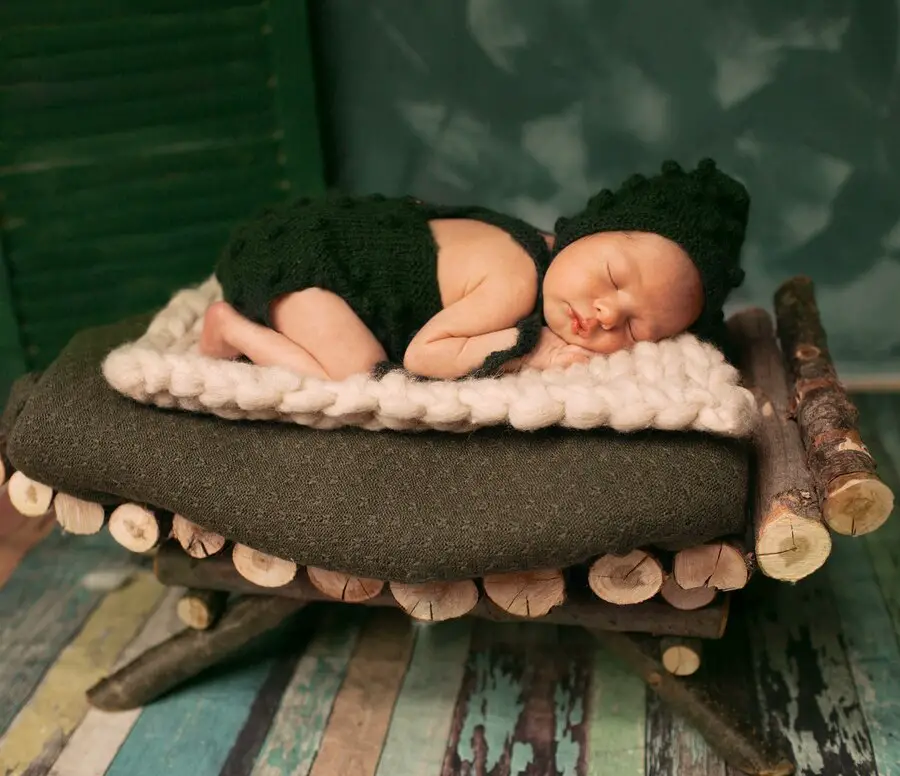
The hospital disappeared in my rearview mirror as Nora slept beside me, finally coming home after thirteen days in the NICU. I thought the worst was behind us.
My daughter had Caleb’s dark curls, his cleft chin, and his eyes, one bright blue, the other nearly black. “Someone in the family must have them too,” the discharge nurse had said, glancing at the mismatched color with polite curiosity.
“Her father,” I’d whispered. I hadn’t said his name out loud in months.
Caleb had disappeared the same night I told him about the pregnancy. No note, no answered calls, nothing. The worst part was that nothing about that night had warned me. When I showed him the test, he had stared at it for several seconds before looking at me.
“Are you okay?”
“I don’t know.”
He took my hand. “Then we’ll figure it out.”
“You’re not scared?”
“Terrified.” I laughed through my tears. He kissed my forehead before he left and told me he’d call in the morning. He didn’t. By noon, my messages were unread. By evening, his phone went straight to voicemail. The next morning, I drove to his apartment. Half his closet was empty.
I stopped waiting sometime around my fifth month, when Grandpa Walter finished sanding the crib in his garage and told me we would be fine, just the three of us. By then, fear had become something worse. Caleb hadn’t gotten overwhelmed and forgotten to call. He had gone somewhere on purpose.
My parents died when I was ten, and Grandpa had raised me ever since. The few things I had left of my mother sat in a cedar box at the back of my closet, old photographs and letters I’d never dared to go through. Grandpa drove me to every prenatal appointment. He cried when the technician said girl.
I turned onto his gravel drive just past four. He was already on the porch, the way he’d been every afternoon for two weeks, waiting. He saw the car and stood up so fast his coffee mug tipped off the arm of the rocking chair and shattered on the boards.
“There are my girls!” he called, coming down the steps two at a time, quick for a man of seventy-three.
I lifted Nora out, and he opened his arms like he’d been holding them open the whole time I was gone. “Say hi to your great-grandpa,” I said, easing her into the crook of his elbow.
I expected him to cry. I didn’t expect him to look afraid.
He looked down at her, and his whole face bloomed. Then he tilted her toward the light. His eyes moved from one mismatched eye to the other, then to the cleft in her chin. The color drained from his face.
“Grandpa?”
His hands began to shake around her. “Emily. Who is her father?”
I laughed once. “You know his name. Caleb.”
Whatever Grandpa had been afraid of, that name confirmed it. The porch beneath us seemed to tilt. He sank into the wicker chair. “Caleb. And his father?”
“William. Grandpa, you’re scaring me.”
He pressed his lips to Nora’s forehead and closed his eyes. When he spoke again, his voice was thin. “I promised your mother I would never tell you. Sarah made me swear, years before the crash.”
“Swear what?”
“That you would grow up without that family in your life.” He looked away. “And after she died, I was glad to keep that promise. After what William did to her, I wanted nothing from that family anywhere near you.”
I lowered myself onto the top step, gripping the railing. “Grandpa. Please. Are you telling me Caleb and I are—” I could not finish it.
“No.” His head snapped up. “No, sweetheart. God, no. You are not related. Not by blood.”
Relief hit me so hard I almost laughed. “Then what?”
He looked at Nora’s small mismatched eyes and his own eyes filled with tears. “Your mother was his nanny.”
“Whose?”
“Caleb’s. When that boy was seven years old, your mother worked for Caleb’s family. She lived in that house. You lived in that house, Emily. You were four, five years old.”
Something stirred inside me. “A big house,” I whispered. “There was a garden. There was a red bicycle.”
“Yes.”
“And a boy. There was a boy who—” I swallowed. “He used to run with me.”
“That was Caleb.”
And suddenly the strangest moments of our relationship didn’t feel strange anymore.
“After Caleb’s mother died, William started pursuing your mother. Sarah refused him, so he fired her and made sure no decent family in the county would hire her again.”
“I remember yelling,” I said. “A man yelling at Mom in a doorway.”
“That was William. I confronted him once. Caleb was there, holding onto the banister and watching us.”
Tears burned my eyes. “I forgot all of this,” I whispered. “I forgot everything.”
“Your mother packed you into the car that week,” Grandpa said. “We never spoke about that family in this house again.”
“But he—Caleb is not William.”
“He is William’s son.” Grandpa’s voice went hard. “After what his father did to your mother, I didn’t care to find out whether Caleb was any different.”
I looked down at Nora. I wanted to argue, but Caleb had made that almost impossible.
Grandpa followed my gaze. “Then he disappeared the second you told him about the baby.” His voice softened. “Emily, sweetheart, I thought that proved me right.”
I stared at my daughter in my grandfather’s arms. “Grandpa. If he was just cruel, why did he stay two years?”
He did not answer.
I stood up slowly. My knees ached from the hospital chairs, from the long weeks of leaning over an incubator. “I need to see for myself. Not through you. Not through what William did to Mom. I need to know what Caleb actually did to me.”
Grandpa closed his eyes. I took Nora back into my arms and walked to my car, already knowing where I would look first.
That night, after Nora was asleep, I pulled my mother’s cedar box from the closet. If Grandpa had hidden that family from me, I needed to know what else was inside. I was looking for proof that Grandpa was wrong about Caleb. What I found was proof that Caleb had been lying to me too.
Beneath the scarves was a photograph of me at four, sitting on a red bicycle. Beside me stood a dark-haired boy with mismatched eyes. Under it lay a bundle of letters. The earliest was written in a child’s careful print.
Dear Sarah, where did the little girl go? Did she take her bicycle? Please write back. Caleb.
He hadn’t forgotten me. Not even then. I opened another, then another. A teenage hand, folded bills tucked inside. I saved this from my allowance. Please use it for her. Please tell me she is okay.
A later letter was written in an older, less careful hand. Grandfather says he’s leaving something for me when I’m old enough. Dad says I’ll never touch any of it without him. Maybe someday I’ll finally be able to help you myself.
He had known. On the back of the last letter, in my mother’s slanted script, were five words: He isn’t like his father.
My mother had trusted Caleb before I was old enough to remember him. Now I needed to know whether I’d been a fool to do the same.
My mouth went dry. I remembered a night on Caleb’s couch, months before I knew I was pregnant, when he had asked me, almost too casually, if I ever had a red bicycle as a child. I had laughed and said yes, my mom bought it secondhand. He had smiled at the ceiling like a man who had just answered a question he had been carrying for twenty years.
I remembered the bookstore event where we’d first met, and how he had walked in during the Q&A and afterward said my name like he already knew it. I remembered complaining to him about the rich family my mother used to work for, how she came home with nothing, how she died still ashamed. He had listened, and he had said nothing.
He had known.
At sunrise I strapped Nora into the car seat and drove to the address on the oldest envelope. The house was smaller than my memory had made it. The garden was the same. An older man opened the door, thinner than I had imagined, but the eyes told me everything.
“You look exactly like your mother,” William said.
I held Nora tighter. “I need to speak with Caleb.”
“Caleb isn’t available.”
“Then tell me why he left.”
William glanced at Nora. For one brief second, something flickered across his face, recognition. Then it was gone. His jaw tightened, and when he looked at me again, his expression was perfectly controlled. “Come inside. We can talk about this like adults.”
“I want an answer.”
“He knew about the pregnancy. He chose to leave.” His voice was calm now. “That is the answer you drove all this way for. Take your daughter and go home.”
“I don’t believe you.”
“That is not my concern. Please get off my porch.”
I stepped back into the garden, and something folded open inside me. A woman crying at a door. My mother’s hand wrapped tightly around mine. A man’s voice following us down these same steps. Don’t come back. Then another image surfaced. A little boy running barefoot after us. Mismatched eyes. Caleb. He was crying too. And suddenly I remembered something else: his hand gripping the back of my red bicycle while I screamed at him not to let go. I won’t. Keep going.
I made it halfway to the car before I stopped. Nora shifted against my chest. William wanted me to believe that boy had grown into a man who could abandon his own daughter without looking back. Maybe he had. But I wasn’t going to take William’s word for it.
I turned back. “William.”
“You are being hysterical.”
“I am being clear. I am not leaving until Caleb himself stands in front of me and tells me he does not want his daughter.”
Behind him, a voice from somewhere deeper in the house said, “Dad, move.”
Footsteps came down the hallway. William’s hand tightened on the frame, then fell. The door opened wider. And Caleb stepped out onto the porch, looking exhausted, like he hadn’t slept in days.
For months, I’d imagined what I would say if I ever saw him again. None of it survived the sight of him standing in his father’s doorway.
I faced Caleb on the gravel drive, Nora warm against my chest. “How long did you know?”
He didn’t pretend to understand. “From the bookstore.”
“So you found me on purpose.”
“I recognized your name. Then I saw you and—”
“The red bicycle,” I cut in. “All those questions about my childhood. You knew exactly who I was.”
His eyes dropped. “I wanted to tell you.”
“For two years?”
“Emily—”
“You listened while I talked about the family my mother worked for. You knew exactly who I was talking about. You let me fall in love with you without telling me you were part of it.”
“I was afraid you’d look at me and see him.”
I glanced toward William. “And when I told you I was pregnant, you disappeared anyway.”
Caleb took a step toward me. “Not because I didn’t want Nora.”
“Then why?”
His hesitation scared me more than any answer could have. “The night you told me, I drove straight here. I made him tell me what he’d done to your mother. He confessed.”
William gave a bitter laugh. “Don’t make it sound like I volunteered.”
Caleb shot him a look. “Then he offered me a deal. Stay away from you until the baby was born, and he’d finally release the family trust, one point six million my grandfather left me, money he’s controlled since I was nineteen.”
“And you agreed?”
“I agreed. I told myself that once the baby was born and the trust was legally mine, he couldn’t control me with it anymore. Then I’d come back, tell you everything, and we’d build a life he couldn’t touch.”
“And Nora was born almost two weeks ago,” I cut in. “So why are you still here?”
“The transfer cleared three days ago,” Caleb added. “I was packing to leave when Dad told me Nora was still in the NICU. I didn’t even know which hospital you were in.”
“So you disappeared and decided I’d understand later.”
His eyes dropped to Nora. “I told myself losing those months with you was better than letting him control the rest of our lives.”
“And you never thought I should get a say in that?”
He went still. That was my answer.
I looked at him, then past him at the house. Every man who had ever loved a woman in my family had decided what she was allowed to know. “William decided for my mother. Grandpa decided what pieces of my own childhood I could hold. You decided when I deserved the truth. You let him choose what I got to know, Caleb. That’s exactly what he did to her.”
He looked down at Nora. His eyes filled with tears. “She has my eyes.”
“Don’t promise me. Show me.”
“I won’t disappear again. I promise.”
“Don’t promise me. Show me. Can I know her?” he asked, and it was the first thing he’d said all morning that sounded like a question rather than an explanation.
Three months earlier, I would have answered for the woman who loved him. Now I had to answer as Nora’s mother. “Yes. You can be her father. But I’m not taking you back.”
This time, I believed him, though I wasn’t yet sure why. Maybe it was the exhaustion in his face, the way he hadn’t rehearsed a single thing he’d said on that gravel drive. Maybe it was simply that I was tired of deciding things about my own life based on what men in this family had decided for me first.
I handed him the diaper bag and told him he could see her the following Saturday, supervised, at my house, for two hours. He agreed without negotiating, which surprised me more than anything else he’d done that morning.
The weeks that followed were slow and deliberate in a way that felt, at the time, almost unbearable. Caleb showed up early for every visit. He learned how to hold Nora’s head properly the first time, adjusting his grip without being told, the way a person does when they’ve spent months imagining exactly this moment and refused to let themselves get it wrong once it finally arrived.
He also, without my asking, hired a lawyer of his own, not to fight me, but to formalize a custody arrangement that put in writing everything he’d promised on that gravel drive. When I saw the draft, I understood something about him I hadn’t fully believed until then: that he wanted the structure as much as I did, that he was as frightened of becoming his father as I was frightened of losing another man to a decision made without me.
“I want it in writing,” he told me, sitting across from me at my kitchen table with the papers between us. “Not because I don’t trust myself. Because I don’t trust what I might convince myself was reasonable, three years from now, if there’s nothing holding me to it.”
I read that sentence twice before I signed anything.
William did not go quietly. He called Caleb repeatedly in those first weeks, alternating between fury and a kind of wounded bewilderment, as though the son he’d spent two decades controlling through the promise and withholding of money had simply refused, for the first time, to be controlled. Caleb stopped answering most of the calls. The ones he did answer, he took outside, out of Nora’s hearing, and came back inside afterward looking older, though never once did he ask me to comfort him for it.
“He thinks I owe him gratitude,” Caleb said once, after a particularly long call. “For finally, after nineteen years, giving me what was already mine.”
“Do you feel gratitude?”
He considered the question honestly, the way I was learning he considered most things now. “I feel relief that I don’t have to ask him for anything anymore. That’s different from gratitude.”
I thought that was probably the most honest thing anyone in that family had said to me since I’d turned onto their gravel drive with Nora in my arms.
Grandpa took longer to come around, which I understood completely. He had spent seventeen years building a version of safety for me that depended on William’s family staying entirely outside the borders of our lives, and watching that border dissolve, even for good reason, even because the man crossing it turned out to be different from his father, cost Grandpa something he wasn’t quick to name.
I brought him the cedar box one evening, the letters spread across his kitchen table the way I’d once spread them across my own. He read each one slowly, his reading glasses pushed low on his nose, and when he reached the last one, the one with my mother’s five words written on the back, he set it down and pressed both hands flat against the table like he needed something solid to hold onto.
“She never told me she kept these,” he said.
“I don’t think she wanted you to have to decide what to do with them.”
“She trusted that boy.”
“She did.”
Grandpa was quiet for a long time, turning his coffee mug slowly between his palms. “I thought keeping that family away was protecting you,” he finally said, wiping his eyes with the back of his hand. “I never gave Caleb a chance to prove he wasn’t his father. I gave your mother’s promise more weight than I gave the truth sitting right there in that box the whole time.”
“You didn’t know the letters existed.”
“I should have looked harder. I should have trusted that your mother, God rest her, might have left you more than just a warning.”
I didn’t tell him it was all right, because I wasn’t sure yet that it entirely was. But I told him I understood why he’d made the choice he made, and that felt like enough for both of us that evening.
Caleb moved out of William’s house within the month, into a small apartment two miles from mine, close enough for the visitation schedule to work without either of us driving more than fifteen minutes, far enough that Nora would never grow up in the house where her grandfather had once yelled at her own grandmother in a doorway. He furnished it slowly, mostly secondhand, and I noticed, on one visit to drop off a forgotten diaper bag, a framed photograph on his bookshelf: the same one I’d found in my mother’s cedar box, me at four years old on a red bicycle, Caleb standing beside me with his mismatched eyes squinting against the sun.
“Where did you get a copy of that?”
“I’ve had it since I was nine,” he said. “My mother took it the week before your family left. I kept it in a box under my bed for years, and then in a drawer, and then, eventually, somewhere I could actually see it every day.”
I didn’t know what to say to that, so I didn’t say anything. I just looked at the photograph for a long moment, two children who had no idea, on that ordinary afternoon in a garden neither of them would fully remember, how much they would eventually lose and then, improbably, find their way back to.
By the time Nora turned one, the custody arrangement had settled into something that felt less like a legal document and more like an actual life. Caleb picked her up every Saturday morning and brought her home exactly when he said he would. He learned her routines, her particular way of refusing peas but accepting them disguised inside anything orange, the specific stuffed rabbit that had to be within reach before she’d nap. He never once, in that entire year, gave me reason to check the clock and wonder where he actually was.
Grandpa came to Nora’s first birthday party, and so, cautiously, did Caleb, the two of them occupying opposite ends of my small backyard for most of the afternoon before Grandpa, watching Caleb crouch down to help Nora blow out a single candle without singeing her fingers, finally crossed the yard and sat down beside him.
I didn’t hear what they said to each other. I watched from the kitchen window instead, the way Grandpa had once watched Caleb through a doorway in a house neither of them wanted to remember, except this time nobody was yelling, and nobody was being sent away.
That evening, after the guests had gone and Nora was asleep, I sat on my own porch with a cup of tea and thought about the five words my mother had written on the back of that last letter. He isn’t like his father. She had believed that about a teenage boy she’d never see grow up, based on nothing but years of careful, quiet correspondence and whatever instinct mothers develop about the character of children they’ve helped raise, even briefly, even under difficult circumstances.
She had been right. It had simply taken all of us considerably longer than it should have to let ourselves believe it too.
I thought about the pattern Grandpa’s silence and William’s manipulation and even Caleb’s own fear had built around me, generation after generation of men deciding, on my behalf and on my mother’s behalf before me, what truths were safe enough to hand over and which ones needed protecting from. I understood, finally and completely, that the actual danger had never been the truth itself. It had been the habit of withholding it, dressed up, every single time, as an act of love.
I was the first woman in my family to hear the whole story and decide for myself who got to stay. Nora, I intended to make sure, would never have to fight that hard for the same thing. She would simply grow up knowing, from the very beginning, that the people who loved her told her the truth, and that if they ever failed to, she had every right to demand it back.
Two years passed, and the shape of our small, patched-together family became less remarkable to me with each ordinary season. Caleb’s visits stopped feeling like events and started feeling like Tuesdays and Saturdays, the unremarkable rhythm of a life that had, against everything I once believed possible, actually worked itself into something stable. He never missed a pickup. He never, not once, asked to renegotiate the terms we’d written down together at my kitchen table.
William tried, periodically, to reinsert himself. A birthday gift sent to my house instead of Caleb’s, expensive and impersonal, the kind of present that announces itself rather than actually considering the child receiving it. A lawyer’s letter, early in Nora’s second year, requesting grandparent visitation rights that Caleb refused to support and that quietly disappeared once it became clear neither of us intended to make it easy. I never told Nora, as she grew old enough to ask questions, that her great-grandfather on her father’s side was a bad man. I simply told her the truth in pieces she could hold: that some people in families make choices that hurt the people who trust them, and that love, real love, shows itself through what a person actually does, not what they claim, and not what they’re owed by blood alone.
Grandpa Walter became, in those years, something he’d never quite been before: not just my protector, but Caleb’s occasional confidant too, the two of them developing an unlikely friendship built on fixing things around my house together, a leaking gutter, a warped porch step, small practical projects that gave two men who’d once regarded each other with deep suspicion a reason to stand shoulder to shoulder without needing to discuss anything difficult at all.
“He asks good questions,” Grandpa told me once, watching Caleb help Nora plant tomato seedlings in the side yard. “About the business. About the trust. About what it actually means to have money and not let it decide who you are.”
“You like him.”
Grandpa considered this with his usual caution. “I respect what he’s done with a bad start. That’s different from liking someone. But I suppose it’s a start of its own.”
I laughed, because it was, almost word for word, the same distinction Caleb had once drawn for me about gratitude and relief. Perhaps that particular caution, the refusal to call something more than it had earned the right to be called, was simply how the men in my life had learned, eventually, to tell the truth.
On Nora’s third birthday, we held the party in Grandpa’s backyard instead of mine, under the same oak tree where he’d once sanded her crib in the garage nearby. William was not invited, and no one asked why. Caleb brought a bicycle, small enough for a toddler just beginning to master her balance, red, though he swore afterward it hadn’t been intentional, that he’d simply liked the color in the store.
I didn’t fully believe him. I didn’t need to. Some things, once a family has survived enough truth-telling to trust each other again, don’t require explanation. They simply arrive, exactly the right color, exactly on time, carried by someone who finally, after everything, showed up the way he’d promised he would.
That night, after the party wound down and Grandpa had fallen asleep in his porch chair with Nora’s discarded party hat still in his lap, Caleb and I sat on the back steps together, watching the last of the daylight fade over the garden.
“I keep thinking about that first letter,” he said. “The one where I asked your mother where you’d gone. I was seven. I didn’t understand any of it. I just knew you’d disappeared, and nobody would tell me why.”
“You kept writing anyway.”
“I didn’t know what else to do with it. The not knowing.” He turned the empty juice cup in his hands. “I think some part of me spent my whole life trying not to be a person who left questions unanswered. And then the one time it actually mattered, I did exactly that to you.”
“You came back.”
“Eventually.”
“Eventually still counts,” I said, “as long as it doesn’t happen again.”
“It won’t.”
I believed him, the way I’d learned to believe things now, not because of what he said, but because of the small, unglamorous consistency of everything he’d done since. Two years of Saturdays. Two years of a bicycle that arrived exactly the right color, exactly on time. Two years of a man finally choosing, over and over, not to let anyone else decide what I was allowed to know.
We sat there a while longer, the porch light catching the edge of Nora’s new bicycle where Caleb had left it leaning against the fence, red paint gleaming faintly in the dark, waiting for morning.

Specialty: Quiet Comebacks & Personal Justice
David Reynolds focuses on stories where underestimated individuals regain control of their lives. His writing centers on measured decisions rather than dramatic outbursts — emphasizing preparation, patience, and the long game. His characters don’t shout; they act.