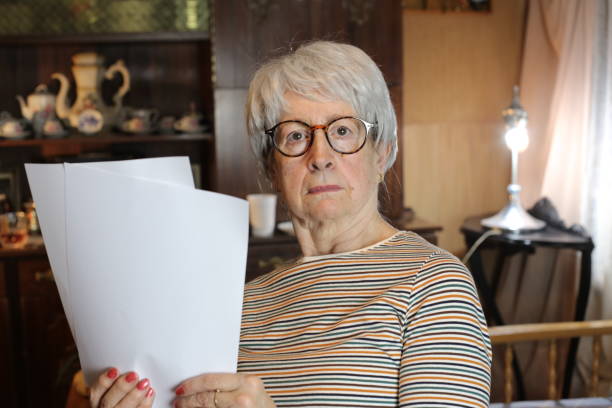
The dining room still smelled of rosemary, beef stew, warm bread, and candle wax when Linda made her announcement. Until that moment, I had been trying to convince myself that the evening could still be saved.
The stew was warm. The bread was fresh. The table looked almost exactly the way it had on the holidays when Anthony was alive, except his chair had remained empty for years. Dylan’s spoon stopped halfway to his mouth. Sarah’s nervous laugh vanished before it had fully escaped. My son, Edward, stared down at the plate I had filled for him, studying the gravy as though the answer to everything might be hiding beneath a piece of potato.
Linda pointed toward the back door as if she were dismissing a server who had lingered too long beside her table. “Take your plate outside and eat with your friend.”
She did not sound embarrassed. She did not sound uncertain. She spoke with the confidence of someone who believed every person in the room had already accepted her authority.
I was sixty-eight years old, standing inside the Chicago brick house my late husband, Anthony, and I had bought on two teacher salaries. That house had never been handed to us. Anthony and I had clipped coupons at the kitchen counter and planned our grocery lists around whatever was on sale. We skipped vacations when the furnace needed repairs. We drove the same rattling used car through four winters longer than we should have because replacing it would have meant postponing another mortgage payment. Some months, we sat at that same dining table after Edward had gone to bed and moved numbers from one side of a notebook to the other, trying to make a teacher’s paycheck cover a family’s needs. We did not complain in front of our son. We simply made it work.
When the mortgage was finally paid off, Anthony brought home a small cake from the grocery store. There had been no party and no grand speech. He had set the receipt beside my plate, tapped it with one finger, and smiled. “We did it,” he said. That was how we celebrated most things, quietly, gratefully, and together.
The property tax bills still came in my name. The deed had never belonged to Edward. It certainly did not belong to Linda. But I had opened my door because my son called at 10:42 on a Tuesday and told me he had lost his job. I remembered the exact time because the kitchen clock had been ticking behind me while he struggled to say the words.
Edward had always hated admitting when he was frightened. Even as a boy, he would insist he was fine while I cleaned dirt from his scraped knees. That Tuesday, his voice sounded smaller than it had in years. He told me the job was gone. He told me they needed somewhere to stay. He told me it would only be temporary.
I did not ask him how much money he had saved. I did not ask whether Linda had agreed to cut back on anything. I did not remind him about the warnings I had offered over the years whenever he tried to solve financial problems by pretending they were temporary inconveniences. He was my son, and he needed help. So I gave him the entry code. I cleared the guest room. I moved boxes from the upstairs closet and folded clean towels at the foot of the bed. I stocked Dylan’s favorite snacks because I did not want the child to feel as if he were being dragged into a crisis he had not created. I told Edward not to worry about rent until he could breathe again. I meant it.
I did not expect gratitude every morning. I did not expect anyone to treat me like a hero. I expected basic respect inside the home I was sharing with them.
That first evening, I cooked the beef stew Edward used to beg for after soccer practice. When he was a teenager, he would come through the door with wet hair, muddy socks, and a hunger that seemed impossible to satisfy. Anthony would tell him to leave his cleats by the door. I would pretend to be annoyed while reaching for a second bowl. Years later, after Anthony was gone and Edward had built a family of his own, I still remembered how much rosemary to use and exactly how thick he liked the broth.
I sliced warm bread. I lit two candles. I set the table with the good china Anthony and I had received as a wedding gift. The plates had thin gold edges and tiny blue flowers that had faded slightly after decades of careful use. I brought them out because I wanted the first night to feel less like a financial emergency and more like family coming home.
By midafternoon, however, Linda had already started measuring my generosity as if it were square footage she could claim. The guest room was too small. The upstairs bathroom had terrible lighting. The closet space was unacceptable. She walked through each room with her arms folded, pointing out problems I had lived with comfortably for years. She did not ask where she could put their things. She told me where she intended to put them.
Then she announced that she and Edward should have my bedroom because it “made the most sense.”
My bedroom was larger than the guest room. It also held the last pieces of the life Anthony and I had shared. His old book remained on the nightstand because I had never been able to move it. His side of the closet was mostly empty, but I still kept one of his sweaters folded on the shelf. There were mornings when sunlight crossed the floor in the same narrow strip it had crossed while he was alive, and for a second the room did not feel quite so lonely.
Linda knew none of that because she had never asked. She simply decided that the largest room should belong to her.
I said no. I did not shout. I did not offer an explanation she could challenge or dismiss. I said one word and continued arranging the towels.
Linda smiled as though she had heard, “Not yet.” That smile stayed with me for the rest of the afternoon. It was not friendly. It was patient. She seemed convinced that resistance was merely the first stage of negotiation.
At dinner, Linda waited until everyone was seated before resting both hands beside her plate. Edward had taken the chair closest to the window. Dylan sat across from him. Sarah was near the end of the table, already watching Linda with the tense expression of someone who sensed an argument before the first raised voice.
I had barely lowered myself into my chair when Linda looked around the room. “I’m the one in charge of this house now,” she said. She spoke calmly, which somehow made the words worse. A cruel statement delivered in anger can sometimes be blamed on temper. Linda wanted every person at that table to understand that she had considered what she was saying.
Edward shifted in his chair but did not look at me. That small movement hurt more than Linda’s words. He knew the history of that house. He knew how many evenings Anthony and I had sat at the kitchen table calculating bills after Edward went to sleep. He knew I had opened the door because he had called me in fear. He knew his wife had no right to speak to me that way. Still, he kept his eyes down.
Then Linda pointed toward the back door. “Take your plate outside and eat with your friend.”
The insult landed in the middle of the table beside the bread basket and the serving spoon. No one reached for anything. Dylan looked from Linda to me, his face tight with confusion. Sarah pressed her lips together. Edward remained silent.
The insult hurt, but my son’s silence hurt more. For years, I had mistaken keeping the peace for protecting my family. I swallowed rude comments at holidays because I did not want Edward to feel forced to choose sides. I changed plans when Linda complained because it seemed easier than turning every gathering into a battle. When she criticized the food, the timing, the gifts, or the way I spoke, I told myself she was stressed. When she interrupted me, I let her finish. When she made decisions that affected everyone, I convinced myself that arguing would only make Edward uncomfortable. I apologized first because it was easier than watching him stand between us.
Each compromise seemed small when I made it. One changed dinner plan did not feel important. One swallowed insult did not seem worth a family fight. One holiday spent walking carefully around Linda’s moods felt survivable. But small surrenders do not always remain small. Sometimes they teach another person exactly how far they can push.
That night, as Edward lowered his eyes while his wife tried to remove me from my own table, I finally understood the difference between peace and surrender. Peace requires respect from both sides. Surrender requires only one person to remain silent.
I looked at my son and waited. Part of me still hoped he would raise his head. I hoped he would tell Linda she had gone too far. I hoped he would remember that less than a day earlier he had needed my home, my groceries, my guest room, and my reassurance. He said nothing.
I did not raise my voice. I did not list every sacrifice I had made for Edward. I did not remind him who had packed his lunches, signed forgotten permission slips, or driven back to school when he left an assignment on the kitchen counter. I did not describe the rain-soaked soccer games where I sat under an umbrella that turned inside out while Anthony worked late. I did not tell him about the nights I had stayed awake when he was sick, or the mornings I had gone to work tired because he needed me more than I needed sleep. Those things were part of being his mother. They were not debts I intended to collect. But being his mother did not require me to disappear inside my own home.
I simply smiled.
Linda mistook that smile for defeat. Her shoulders loosened. She leaned back slightly in her chair, satisfied that the scene had ended exactly as she planned. She apparently believed I would pick up my plate, walk out the back door, and prove to everyone that she had become the authority in the room.
At exactly 6:48 p.m., I pushed back my chair. The legs moved across the hardwood floor with a soft scrape. I left my plate where it was. Then I walked toward the wall phone in the kitchen. Anthony had always wanted to replace that phone with something newer. I had kept it because it worked, because I knew every button by touch, and because there was comfort in hearing its familiar ring travel through the house.
Linda watched me cross the room. She leaned against her chair, looking pleased. She apparently thought I was calling a neighbor to ask whether I could finish my dinner somewhere else. Perhaps she imagined I would apologize before leaving. Perhaps she expected me to explain her behavior in the gentle language I had used for years. Linda is under pressure. Linda did not mean it that way. Linda is trying to keep the family together. I had made excuses for her so often that she may have started believing I always would.
Edward finally lifted his head. “Mom,” he said, “who are you calling?”
It was the first time he had spoken since Linda declared herself in charge. There was worry in his voice now. Not enough courage to defend me, but enough awareness to understand that something had changed.
I lifted the receiver. I dialed a number I had kept for years. My fingers did not shake. Behind me, no one returned to eating. The stew remained untouched in their bowls. The candles burned steadily between the plates. The china Anthony and I had once unwrapped together sat beneath the hands of people who had forgotten they were guests.
Gabriella answered on the second ring. She said my name immediately.
I kept my eyes on Linda. Linda’s pleased expression had not disappeared, but it had tightened around the edges. For the first time that evening, she looked uncertain.
“Gabriella,” I said quietly, “it’s time.”
The words were not dramatic. They did not need to be. Linda’s fingers curled against the back of her chair. Edward stared at the phone. He knew the name. That was clear from the way his posture changed before Gabriella said anything else.
Gabriella Reyes had been my attorney since Anthony’s estate was settled, a careful, unhurried woman who had helped me update my will, refinance the house after Anthony’s medical bills, and, three years earlier, quietly draft a document I had hoped I would never actually need: a formal notice of occupancy terms, spelling out that any family member staying in the house did so as a guest, not a tenant, with no claim to the property and no right to alter its terms of residence without my written consent.
I had asked Gabriella to draft it not because I distrusted Edward, but because I had watched enough friends lose control of their own homes, quietly and gradually, to understand that goodwill alone does not always protect an aging woman living alone. Gabriella had told me, handing over the signed original, that most clients never needed to use documents like this one. I had filed it away in the same drawer as Anthony’s old insurance papers and hoped she was right.
She asked me one question through the receiver. Are you certain, Eleanor?
I looked at the dining room I had prepared as a welcome. I looked at the candles, the warm bread, the stew Edward had loved since childhood, and the empty chair that had belonged to Anthony. I looked at Linda standing inside my home as if generosity had transferred ownership to her. Finally, I looked at my son. He had called me because he needed somewhere safe to land. I had given him that safety without conditions. Now he was watching his wife try to drive me from my own table.
Gabriella repeated the question. I answered yes.
Edward pushed away from the table so quickly that his chair scraped sharply across the hardwood floor. “Mom, wait. What are you doing?”
I covered the receiver with my hand. “I’m protecting my home, Edward. Something I should have done more plainly a long time ago.”
“Is that a lawyer?”
“Yes.”
Linda’s composure finally cracked. “You’re calling a lawyer over dinner conversation?”
I looked at her steadily. “You told me to take my plate outside and eat with a friend, in my own dining room, at my own table, in the house I paid for with thirty years of coupon-clipping and careful budgeting while you have lived here rent-free for six weeks. That is not dinner conversation, Linda. That is an eviction attempt aimed at the wrong person.”
Gabriella, still on the line, asked whether I wanted her to proceed with drafting the formal notice that evening or wait until morning. I told her morning would be fine. There was no reason to rush something that had already, in every way that mattered, been decided the moment Linda pointed at my back door.
I hung up the phone and returned to the table. My plate was still there, the stew slightly cooled but otherwise untouched. I sat down, picked up my spoon, and began to eat as though nothing unusual had happened, though of course everything had.
“Mom,” Edward said again, quieter this time, “what did you just do?”
“I called my attorney to formalize the terms of your family’s stay here. Going forward, you and Linda and Dylan are welcome as my guests, under my roof, on my terms, for as long as you need. That has not changed. What has changed is that Linda no longer gets to decide those terms for me.”
Linda’s face had gone pale, the confident authority of twenty minutes earlier draining out of her all at once. “You can’t just threaten to throw us out because I made one comment.”
“I’m not threatening anything,” I said. “I’m clarifying something you apparently misunderstood. This house belongs to me. It will continue to belong to me. Every kindness I extend here is a choice I make freely, which means it is also a choice I can withdraw if the person receiving it treats me without basic respect.”
Sarah, who had said almost nothing throughout the entire exchange, finally spoke. “Grandma’s right, Mom.” She looked at Linda with an expression I hadn’t expected from a teenager caught in the middle of an adult argument. “You can’t talk to her like that. This is her house.”
Linda turned toward her daughter, stunned, and for a moment no one at the table moved.
Dylan, younger and less equipped to navigate the tension, simply asked if he could still have more bread. I passed him the basket, grateful for a question I actually knew how to answer.
The rest of that dinner passed in a strange, subdued quiet, everyone eating slowly, no one quite willing to be the first to speak again. When it ended, Linda retreated upstairs without a word. Edward lingered in the kitchen while I washed the good china by hand, the way I always had, the thin gold edges too delicate for the dishwasher.
“I should have said something,” he finally told me, drying a plate I handed him without either of us discussing whether he’d stay to help.
“Yes,” I said. “You should have.”
“I don’t know why I didn’t.”
“I think you do. I think it’s easier to stay quiet when someone else is doing the difficult work of setting a boundary you’re too afraid to set yourself.”
He absorbed that without arguing, which told me more about how much he already understood than any explanation could have. “What happens now?”
“Now you and Linda decide whether you can live in my house according to my terms, with respect, or whether you need to find somewhere else to land. Either way, that decision belongs to the two of you. I’ve made mine already.”
He nodded slowly, setting down the last plate. “I’m sorry, Mom. For the silence. For all of it.”
“I know,” I said. “I’d like to see it mean something, though, beyond tonight.”
Gabriella sent the formal occupancy agreement two days later, a clear, unambiguous document establishing exactly what I had told Linda across the dinner table: that Edward, Linda, and Dylan were welcome to stay as guests, that I retained full authority over the property, and that any material change to the household, whether it involved bedrooms, finances, or basic conduct, required my consent. Edward signed without hesitation. Linda signed three days later, after a conversation with Edward I was not present for and never asked about.
Something shifted in the house after that, not dramatically, but steadily, the way a room feels different once everyone in it understands exactly where the walls actually are. Linda stopped rearranging closets without asking. She stopped announcing decisions as though they had already been finalized somewhere I hadn’t been consulted. She was not warm, not in those early weeks, but she was careful, and careful was more than I had been offered in longer than I wanted to admit.
Edward found a new position within two months, smaller than his previous role, humbler in salary, but steady, and the first thing he did with his first paycheck was hand me an envelope containing rent for the month, calculated fairly, without my having to ask.
“You don’t have to do that,” I told him, though I took the envelope anyway.
“I do,” he said. “Not because you’re charging me. Because I need to remember what it actually costs to live somewhere, instead of assuming it’s owed to me.”
I thought that was, in its own quiet way, the truest thing my son had said to me in years.
They moved into their own apartment eight months later, once Edward’s job had stabilized enough to support it, and the goodbye at my front door was warmer than I expected, Dylan hugging me around the waist and asking if he could still come for beef stew on Sundays, Linda thanking me, genuinely I believed, for the roof and the patience both.
“I’m sorry about that first night,” she said, standing on my porch with a box of kitchen supplies balanced on her hip. “I don’t think I understood, until you made that call, that generosity isn’t the same thing as ownership.”
“No,” I agreed. “It isn’t. I’m glad you understand that now, rather than later.”
After they left, I walked back through the quiet house, past the dining room where the good china had been packed carefully back into its cabinet, past the guest room stripped down to its bare furniture, up to my own bedroom where Anthony’s sweater still sat folded on its shelf and his book still rested on the nightstand exactly where I’d left it.
I sat on the edge of my bed and thought about that Tuesday morning at 10:42, my son’s frightened voice on the other end of the phone, and how easily I could have let one moment of fear turn into a permanent surrender of everything Anthony and I had spent thirty careful years building. I thought about Linda’s smile that first afternoon, the confidence with which she’d assumed my silence would last forever simply because it always had before.
It hadn’t lasted. That, I understood now, sitting alone in a house that was once again entirely, unmistakably mine, had made all the difference.
Dylan still comes for beef stew on Sundays, just as he asked. Edward comes with him most weeks, sometimes alone when Linda has other plans, and we’ve settled into an easier rhythm than I ever expected to find with my son again after that difficult year. Linda and I are not close, not in the way mothers and daughters-in-law sometimes become, but we are civil, and increasingly, something that resembles respectful.
I kept the wall phone. Anthony would have laughed at that, I think, at how much weight one old rotary handset had ended up carrying on a single Tuesday evening. But I like knowing it’s there, working exactly as it always has, ready if I ever need it again.
I don’t expect to. But it’s a comfort, all the same, knowing that the woman who finally picked up that receiver and made the call is not going anywhere.
Gabriella and I still talk occasionally, long after the occupancy agreement had done its work and been quietly filed away with the rest of Anthony’s old papers. She told me once, over coffee at the little diner near her office, that she’d drafted dozens of documents like that one over the years for clients who never ended up needing to invoke them, and a smaller number for clients who did.
“Most people wait too long,” she said. “They keep hoping the situation will resolve itself before they have to use the leverage they’ve already built. By the time they finally act, they’ve usually absorbed months, sometimes years, of treatment they never should have tolerated in the first place.”
“I nearly did the same thing,” I admitted. “If Edward had looked up from his plate that night, if he’d said even one word in my defense, I probably would have let it go. Made excuses for Linda the way I always had. Told myself it was an isolated moment, stress from the move, nothing worth escalating.”
“But he didn’t look up.”
“No. And something about watching my own son stay silent while his wife tried to send me out my own back door made the whole pattern suddenly visible in a way it hadn’t been before. I’d spent years mistaking his silence for neutrality. That night, I finally understood it was a choice, the same as speaking would have been.”
Gabriella nodded slowly, the way she always did when a client’s realization matched something she’d watched play out many times before. “The document didn’t actually change anything legally that evening,” she said. “You already owned the house outright. Linda never had a real claim to any of it. What changed was that you stopped waiting for someone else to defend the boundary and simply enforced it yourself.”
I thought about that conversation often in the months that followed, turning it over the way you turn over any truth that arrives a little later than you wish it had. The house had always been mine. The authority had always been mine. What I had surrendered, gradually and without quite noticing, was the willingness to actually use it.
I don’t surrender that anymore. Not to Linda, not to well-meaning suggestions from friends who think I should simply let small things go for the sake of peace, not to the quiet, persistent pressure that comes with being a widow of a certain age that people sometimes assume will fold rather than push back. I fold when folding is genuinely the kinder choice. I no longer fold simply because someone expects that I will.
Anthony used to say that the mortgage payments were never really about the house. They were about proving, month after month, year after year, that two people could build something solid out of very little, as long as neither of them gave up on it halfway through. I think about that most Sundays now, watching Dylan chase the last piece of bread around his bowl, Edward laughing at something across the table, the good china back in its cabinet but occasionally, on the right kind of evening, brought back out again, because some things are worth using rather than simply preserving.
The house is still mine. It always was. But it took one dinner, one phone call, and one very patient attorney to remind everyone at that table, myself included, exactly what that had meant all along.
Some evenings, after everyone has gone home and the kitchen is quiet again, I stand by that old wall phone and think about how close I came to never making that call at all. How easy it would have been to pick up my plate, walk out the back door as instructed, and eat alone in the yard while my son’s wife redecorated the life I’d spent thirty years building. I think about how many women, in that same moment, might have done exactly that, might still be doing it somewhere tonight, mistaking their own silence for love.
It never was love. It was just silence, dressed up carefully enough to pass for peace. I’m glad, every single day since, that I finally learned the difference.

Specialty: Quiet Comebacks & Personal Justice
David Reynolds focuses on stories where underestimated individuals regain control of their lives. His writing centers on measured decisions rather than dramatic outbursts — emphasizing preparation, patience, and the long game. His characters don’t shout; they act.