The office folder sat unopened on the desk, but Michael Carter already knew his life had changed before he touched it. His wedding ring was still in his pocket, the same ring he had picked up from the kitchen counter after finding it beside Claire’s note. The message had been simple, but it had followed him all day: she knew more than he thought she did.
Hours earlier, Michael believed he was walking into a normal night at home. He had spent another evening away with Vanessa, convinced Claire would be asleep before he returned. He expected the usual quiet house, the familiar nursery, and a wife who had grown used to waiting for him.
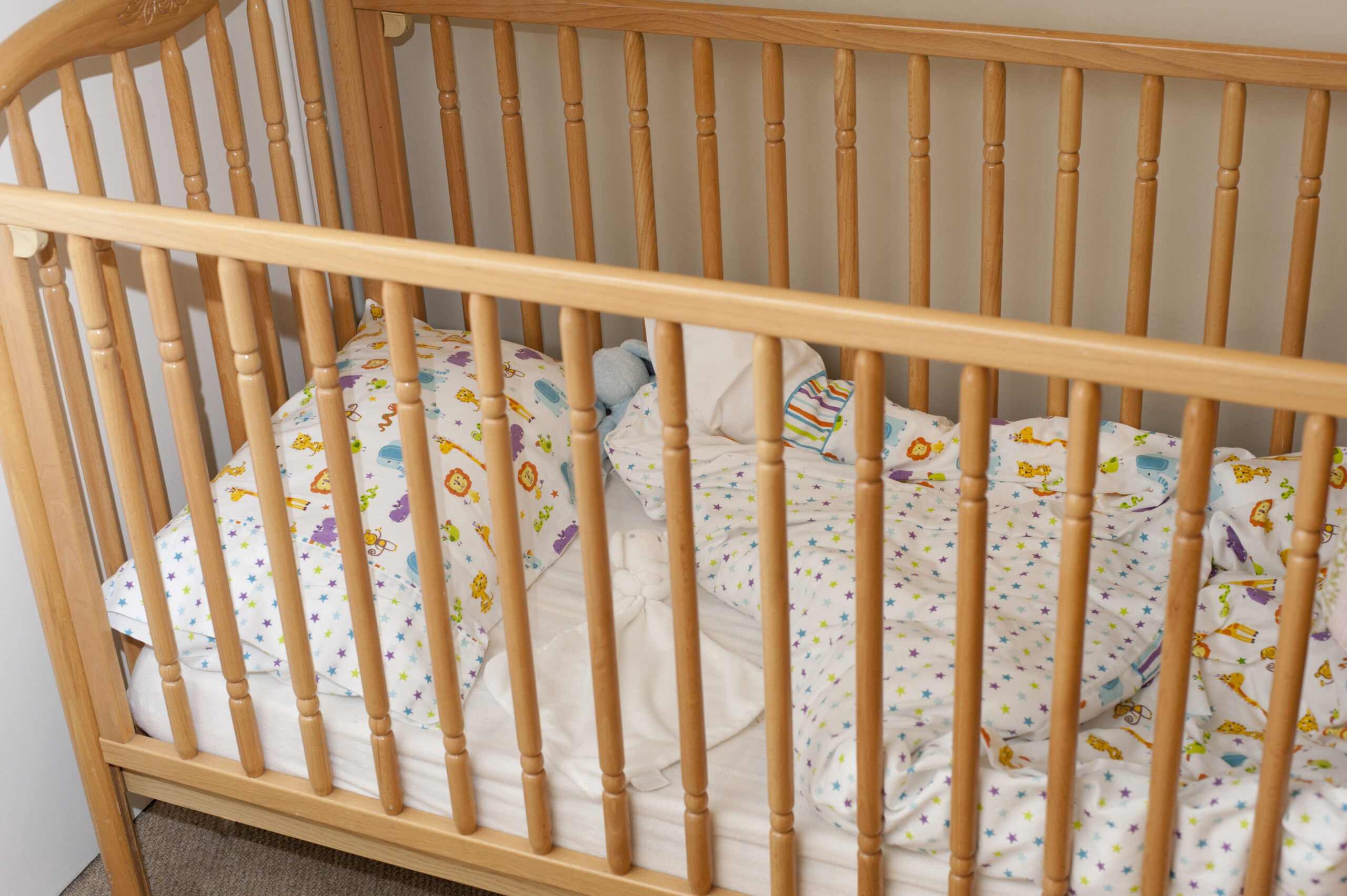
Instead, he opened the nursery door and found an empty crib.
The room looked different immediately. Noah’s blankets were gone. The diapers were missing. The bottles, clothes, and small blue teddy bear that had been part of their baby’s routine had disappeared too.
Michael’s first thought was panic. Where was his son?
He searched the house, calling Claire’s name, but there was no answer. Then he saw what she had left behind on the kitchen island. Her wedding ring. Next to it was a folded note.
Don’t search for what you never bothered to protect.
Michael stared at those words, trying to convince himself Claire had simply reacted in anger. He told himself she had taken Noah to her mother’s house. He told himself this was temporary. He told himself he could fix it once she calmed down.
But every call went unanswered.
When he finally reached Claire’s mother, Linda, he expected support. Instead, he heard a truth he had spent months avoiding. Linda reminded him that Claire had been exhausted, caring for a newborn while he found excuses to stay away. She reminded him that Claire had worked until late in her pregnancy and had carried responsibilities he rarely noticed.
Michael wanted to argue that he only wanted to find his son. But Linda asked the question he did not want to face. What did Claire want from him?
The answer was not complicated. She wanted a husband who acted like one.
Michael did what many people do when they are cornered by their own choices. He focused on the part where he felt hurt. He called his attorney and demanded an emergency custody order.
But before his attorney moved forward, he asked one question. “Where were you last night?”
Michael answered quickly. “Boston. Investor meetings.”
The lie came naturally because he had practiced hiding the truth for months. It did not survive the afternoon.
A private investigator contacted him with details that erased every excuse. Bank records showed a luxury hotel suite. There was a dinner for two, champagne service, and overnight valet charges. Then came the surveillance footage. Michael entering the hotel with Vanessa Cole.
The affair had lasted six months. While Claire was home caring for their newborn, Michael had been spending money on another woman, buying gifts, planning dinners, and pretending his marriage could wait until he was ready to return to it.
But Claire had not been waiting. She had been preparing.
The investigator explained that she had spent weeks collecting information. The financial questions Michael dismissed. The account statements she requested. The conversations she ended when he walked into the room. Those moments had not been random. Claire was not gathering proof because she hoped he would change. She was gathering proof because she had already seen who he was choosing to be.
That realization hit harder than the affair being exposed. Michael had spent the day thinking Claire abandoned him. Now he had to consider that Claire had been protecting herself and their child from a situation she believed would never improve.
Then his phone buzzed. It was his attorney. The message was short. Claire knows about Vanessa. But that isn’t the worst thing she found.
For the first time, Michael stopped searching for a way to defend himself. He returned to the kitchen island and picked up Claire’s ring again. The weight of it felt different now. It was no longer just a symbol of a marriage falling apart. It was a reminder that something much bigger had been happening while he was busy believing he was in control.
He drove straight to his attorney’s office. The meeting was not what he expected. There was no casual greeting, no small talk, no attempt to make the situation feel ordinary. His attorney placed a folder on the desk but kept one hand resting on top of it.
“Before you see what’s inside,” he said, “you need to understand something.”
Michael looked at the folder.
“Claire didn’t just document Vanessa.”
The room felt smaller. “What else did she document?” Michael asked.
His attorney did not answer immediately. He simply pushed the folder across the desk. Michael reached for it, opened the cover, and stared at the first page.
The evidence inside was not about one mistake. It was about a pattern. And for the first time, Michael realized Claire’s silence had never meant she was unaware. She had been watching. She had been remembering. And she had been preparing for the moment when he could no longer explain away what he had done.
The first document was a spreadsheet, printed in Claire’s neat, methodical hand, dates running down the left column back nearly two years. Not just the six months with Vanessa. Michael’s stomach dropped as he recognized names he had almost forgotten himself: a coworker from a conference in Chicago. A woman he’d met at his brother’s wedding the year before Noah was born. A string of late nights that Claire had apparently cross-referenced against his credit card statements, his calendar, his phone records pulled from a shared family plan he’d never thought to change.
“She’s had access to everything,” his attorney said quietly. “Your accounts. Your calendar. Because you never bothered to separate anything from her, and she never told you she’d started looking.”
Michael flipped another page. A printed email thread between Claire and a family law attorney, dated eight months earlier, nearly a year before he’d ever laid eyes on Vanessa Cole. Claire had begun consulting a lawyer of her own long before the affair that had finally broken things. She had been asking about custody law in their state, about how infidelity affected asset division, about what documentation courts typically required to establish a pattern of neglect or financial concealment.
“She started this before Vanessa,” Michael said, his voice thin.
“She started this,” his attorney corrected, “because of everything before Vanessa. Vanessa was just the last straw she was waiting to see.”
Michael sat back, the folder now open fully across his lap. There were photographs, printed and dated, of receipts he didn’t remember Claire ever seeing: a jewelry purchase he’d told her was for his mother’s birthday, later confirmed by delivery records to have gone to an apartment three states away. A withdrawal of eleven thousand dollars from a joint investment account, made six weeks after Noah’s birth, that Michael had told Claire was for a business opportunity. The investigator’s notes indicated no such business ever existed.
“She knew about the withdrawal?”
“She knew about all of it,” his attorney said. “She just never confronted you with any of it until she was ready to leave with proof strong enough that you couldn’t spin a different story.”
Michael thought about every conversation over the past year where Claire had gone quiet mid-argument, had simply stopped pushing, had let him walk away thinking he’d won. He had mistaken her silence for defeat. It had never been defeat. It had been evidence collection.
“What does she want?” Michael finally asked, though some part of him already suspected the answer would not be generous.
His attorney slid one more document across the desk. A formal filing, already prepared, already signed by Claire’s own lawyer, requesting full physical custody of Noah, a restraining order preventing unsupervised contact pending a psychological evaluation, and a forensic accounting of the marital estate going back three years.
“She’s not asking for anything,” his attorney said. “She’s telling the court what happened. The asking part is what you’re about to have to do.”
Michael did not sleep that night. He sat in the guest bedroom of a house that no longer felt like his, surrounded by nursery furniture assembled for a child who was somewhere he could not find, replaying eighteen months of small, careless choices that had each seemed forgivable in isolation and now, laid end to end in Claire’s meticulous documentation, formed something he barely recognized as his own life.
Three days later, Claire’s attorney contacted his with a location for a supervised video call, the first contact Michael had been permitted since Claire disappeared. When her face appeared on the screen, she looked different than he expected. Not broken. Not triumphant. Simply steady, the way a person looks when they have already finished grieving something before anyone else realized it was gone.
“You found the folder,” she said. It wasn’t a question.
“Claire, I—”
“I need you to listen before you say anything else,” she said, her voice calm in a way that unsettled him more than shouting would have. “I am not doing this to punish you. I documented everything because I knew that if I ever tried to leave with just my word against yours, you would make me sound unstable. You’re good at that. You always have been.”
Michael opened his mouth, then closed it. He had, in fact, already rehearsed exactly that argument with his attorney the previous afternoon.
“I’m not hiding Noah from you forever,” Claire continued. “I’m not trying to erase you from his life, even though there were nights I wanted to. But I am done pretending that showing up occasionally and apologizing convincingly is the same thing as being a father, or a husband. You get to decide what kind of relationship you want with your son going forward. I can’t decide that for you anymore. I spent two years trying, and it nearly broke me.”
“Where’s Noah?” Michael asked, and even he could hear how small the question sounded compared to everything Claire had just said.
“Safe. With people who love him. That’s all you need to know until the court sorts out the details.” She paused. “I want to be clear about something, Michael. I’m not asking you to disappear. I’m asking you to actually show up, consistently, honestly, for the first time since he was born. If you can do that, there’s a version of this where you still get to be his father in every way that matters. If you can’t, the documentation exists to make sure he’s protected either way.”
The call ended shortly after that, and Michael sat alone in his attorney’s conference room for a long time, staring at his own reflection in the darkened window, trying to reconcile the man he’d believed himself to be with the pattern Claire’s folder had laid out so plainly.
The custody proceedings that followed were neither fast nor dramatic in the way Michael had once imagined divorces playing out in movies. There were mediation sessions. There was a forensic accountant who spent weeks tracing withdrawals Michael had genuinely forgotten making. There was a court-appointed evaluator who interviewed both of them separately, and then together, and who ultimately recommended supervised visitation for the first six months, contingent on Michael completing both individual therapy and a parenting course neither of which he had ever imagined himself needing.
He completed both. Not, at first, because he had transformed into a different man overnight, but because the alternative was losing any relationship with Noah entirely, and even at his lowest, most defensive moments, that consequence terrified him more than his own wounded pride.
Vanessa Cole did not last much longer in his life once the financial details of the affair became part of the public record in family court. She had believed, she later admitted to a mutual friend, that Michael’s marriage was already effectively over, exactly as he had told her. When she learned about the eleven-thousand-dollar withdrawal, the jewelry sent under his mother’s name, the pattern that predated her by more than a year, she ended things within the week. She had not, she said, wanted to become one more line item in someone else’s spreadsheet of betrayal.
Claire’s supervised visitation arrangement began that autumn, in a family services building with fluorescent lighting and a room full of secondhand toys. Michael sat cross-legged on a worn carpet, watching Noah, nearly eight months old by then, study his father’s face with the open, unguarded curiosity of a baby meeting someone for what felt, to him, like the first time.
“He doesn’t know you the way he should,” the supervisor said gently, not unkindly, simply stating a fact. “That’s going to take time and consistency to build.”
Michael nodded, understanding for the first time that the folder Claire had built was never really about revenge. It had been a form of protection, constructed with the same careful attention she’d once devoted to keeping their household running while he was elsewhere. She had simply, eventually, redirected that attention toward protecting herself and their son instead of protecting his comfort.
Two years later, the custody arrangement had evolved into unsupervised weekend visits, then into something resembling genuine shared parenting, built slowly and without shortcuts. Michael and Claire were never friends again in the way people sometimes managed after a divorce, but they developed something more durable than friendship: a working respect, forged through hundreds of small, honest exchanges about pediatrician appointments and preschool applications and the particular way Noah liked his sandwiches cut.
Claire remarried eventually, a quiet, steady man named David who taught high school science and had never once given her reason to start a spreadsheet. Michael attended their wedding, at Claire’s own invitation, standing near the back with Noah’s hand in his, and felt something he hadn’t expected to feel that day: relief, uncomplicated and real, that his son would grow up watching what a marriage built on honesty actually looked like, even if it hadn’t been the marriage Michael himself had once promised to provide.
He kept a copy of Claire’s original note in his desk drawer for years afterward, the one that had waited for him beside her wedding ring on the kitchen island the night his old life ended. Don’t search for what you never bothered to protect. He read it occasionally, not out of self-punishment, but as a kind of anchor, a reminder of exactly how far a person’s carelessness could travel before someone finally, quietly, decided to stop absorbing the cost of it alone.
Noah grew up knowing both his parents, knowing the truth about why they had separated in age-appropriate pieces as he grew old enough to understand each layer of it, and knowing, above all, that his mother had never once asked him to choose sides. Claire made sure of that, the same way she had made sure of everything else: methodically, patiently, and with a clarity that never wavered once she had decided what kind of life she intended to build for her son, with or without the husband who had once assumed her silence meant she wasn’t paying attention.
She had always been paying attention. That, in the end, was the lesson Michael carried longest, long after the folder itself had been packed away in some file cabinet neither of them ever needed to open again. The people who love you quietly are very often the ones watching most closely, and the day they finally speak is rarely the beginning of the story. It is almost always the ending of one they have already, patiently, finished writing on their own.
Linda, Claire’s mother, never fully forgave Michael, though she was civil enough at school events and birthday parties for Noah’s sake. She had watched her daughter shrink herself smaller and smaller over the course of that marriage, watched the bright, confident woman who’d once run a marketing department single-handedly become someone who apologized for asking her own husband where he’d been, and she had promised herself, somewhere in those long months, that if Claire ever needed her, she would be there without hesitation or judgment. When the call finally came, the one where Claire asked if she and Noah could stay with her for a while, Linda hadn’t asked a single question. She’d simply said yes, and started making up the guest room before she’d even hung up the phone.
Michael thought about that conversation often in the years that followed, the version of it Linda eventually told him about over an uneasy but civil Thanksgiving dinner years later, once enough time had passed that such conversations became possible. He thought about how differently things might have gone if he had ever once, in eighteen months of careful concealment, extended Claire the same unconditional readiness her own mother had shown without a second thought.
His therapist, a measured woman named Dr. Alvarez who saw him weekly through the first year of the custody proceedings, helped him understand something he hadn’t wanted to hear at first: that the affair with Vanessa had never really been about Vanessa at all. It had been about a pattern of choosing whatever required the least accountability in any given moment, a pattern that predated his marriage, predated Claire, stretched back into his own childhood watching a father who had done much the same thing to his mother, dressed up in slightly different justifications.
“You’re not doomed to repeat it,” Dr. Alvarez told him more than once, “but you are responsible for noticing when you’re about to.”
He noticed, over time, more often than he didn’t. It became, slowly, something like a discipline, the way some people practice an instrument or train for a marathon: showing up on time, telling the truth even when it cost him something, sitting with discomfort instead of routing around it toward whatever felt easier. He was not, by the end of those two years, a changed man in the dramatic sense stories like to promise. He was simply a more honest one, in the small, unglamorous, daily ways that actually mattered to a five-year-old who was starting to ask harder questions about why Mommy and Daddy didn’t live in the same house.
Noah asked those questions with increasing frequency as he grew, and Claire and Michael had developed, by unspoken agreement, a shared approach to answering them: honestly, but without cruelty, without turning their son into a repository for either parent’s remaining resentment. “Daddy made some choices that hurt Mommy,” Claire told him once, when he was old enough to ask directly. “But he’s working hard to be someone you can trust, and that matters more than the mistakes he made before you were old enough to remember them.”
Michael, hearing about that conversation secondhand, had gone quiet for a long moment before thanking her, genuinely, for the generosity of that framing. It would have been easy, and not entirely unfair, for Claire to tell their son a much harsher version of the truth. She hadn’t. Whatever fire had burned through those first difficult months, whatever cold, methodical resolve had built that folder document by document, evidence by evidence, had settled, over time, into something closer to peace than either of them had expected to find on the other side of such a complete unraveling.
By Noah’s eighth birthday, celebrated in Claire and David’s backyard with both sets of grandparents present and Michael manning the grill beside his son’s stepfather with an ease that would have seemed impossible years earlier, Michael understood something Claire had apparently known all along, long before she ever left that note beside her wedding ring. Love, real love, the kind worth building a life around, was never actually about grand gestures or passionate declarations. It was about consistency. It was about who showed up, reliably, on the ordinary unremarkable days when nobody was watching closely enough to notice whether you did or didn’t.
Claire had shown up for eighteen months of a marriage that was quietly falling apart around her, documenting rather than confronting, protecting rather than accusing, until the moment finally came when protection required leaving instead of staying. Michael had spent those same eighteen months assuming her steadiness meant safety, assuming her silence meant he still had time.
He was still learning, slowly and imperfectly, the difference between those two things. But he was learning it, finally, in the presence of a son who deserved a father capable of the lesson, and a former wife whose quiet, patient vigilance had, in the end, saved them both.
The investigator Claire had hired, a former financial crimes analyst named Renata Ferris, stayed in touch with Claire long after the case concluded, an unlikely friendship born out of months spent poring over bank statements and hotel records together in Claire’s kitchen while Noah slept upstairs. Renata told her once, near the end of the proceedings, that she’d worked dozens of cases like this one over the years, spouses who suspected but couldn’t prove, spouses who knew but didn’t yet have the courage to act on what they knew. What set Claire apart, she said, wasn’t the discovery itself. It was the discipline. Most people, once they found the first thread of a lie, pulled at it immediately, confronted too soon, gave the other person time to construct a counter-narrative before the evidence was strong enough to survive it.
Claire had waited. Not out of fear, though there had certainly been fear mixed in, but out of a clear-eyed understanding that partial proof against a skilled liar often backfires, turning the deceived party into the one who looks unstable, paranoid, unreasonable. She had wanted, when she finally acted, to act from a position too solid to be argued away.
“Most people don’t have that kind of patience,” Renata told her. “Grief usually makes people move too fast.”
“I wasn’t grieving yet,” Claire said. “I think the grieving happened after. While I was documenting, I was just surviving.”
That distinction stayed with Renata long after the case closed, and she found herself repeating it, in modified form, to other clients in similar situations over the following years: survive first, grieve later, and never confront until the truth can stand entirely on its own without your testimony propping it up.
Claire herself rarely spoke about those eighteen months anymore, not because the memory had faded, but because the person she’d been during them felt, increasingly, like someone she used to know rather than someone she still was. The exhausted new mother rocking a colicky infant at three in the morning while quietly cross-referencing credit card statements on her phone had given way, slowly, to a woman who ran her own small marketing consultancy, who had married a man incapable of the kind of concealment Michael had once specialized in, who watched her son grow up secure in the knowledge that both of his parents, however imperfectly, had chosen honesty over comfort in the end.
She kept one thing from that period besides the folder itself: the note she’d left on the kitchen island the night she disappeared with Noah, or rather, the draft of it, the version she’d written and rewritten a dozen times before settling on those eleven words. The early drafts had been longer, angrier, full of accusations and specific dates and dollar amounts. She’d cut all of it down, deliberately, to something almost unbearably simple, because she’d understood, even in the depths of that final devastating night, that the most powerful thing she could leave behind wasn’t a list of grievances. It was a single sentence sharp enough to work its way under every defense he’d ever built.
Don’t search for what you never bothered to protect.
She still had that early, longer draft, folded into the back of an old notebook she rarely opened anymore. Sometimes, on quiet afternoons when Noah was at school and David was teaching and the house held nothing but ordinary silence, she took it out and reread it, not with anger, but with something closer to tenderness for the woman who’d written it, exhausted and frightened and utterly determined, in a kitchen that no longer belonged to her, preparing to walk out the door with everything that actually mattered.
She had been right to leave. She had been right to wait, to document, to build her case with the same careful, unglamorous patience she’d once brought to balancing a household budget nobody else in that marriage had bothered to track. And she had been right, in the years since, to let Michael earn back whatever relationship with his son he was capable of earning, without either rushing his redemption or permanently foreclosing it.
Some stories end with someone finally getting what they deserve. Claire’s ended somewhere quieter than that: with a Tuesday evening barbecue in a backyard that held two functioning families instead of one broken one, with a boy who called two different men Dad without confusion or guilt, and with a woman who had learned, in the hardest possible way, that love without honesty is simply a more elaborate form of waiting to be hurt.
She didn’t wait anymore. That, more than any folder or any note or any custody agreement, was the truest measure of everything she’d built since the night she’d carried her sleeping son out into the dark and finally, completely, stopped protecting a man who had never once thought to protect her back.
On Noah’s tenth birthday, Claire found the old notebook again while cleaning out a closet, that early draft of her note still folded inside it. She read it once more, standing in the quiet of her own house, a house entirely her own in every sense that mattered, and then she did something she hadn’t done in years. She smiled, folded the page back into its familiar creases, and put it away one last time, not because the memory needed hiding, but because it no longer needed revisiting either. It had done its work. She had built an entire life on the other side of it, sturdy enough now that the note itself had become simply a marker of where that life had begun, rather than something she still needed to carry.
Downstairs, she could hear Noah and David arguing cheerfully about how many candles the cake actually required, and she went down to join them, leaving the notebook, and everything it once contained, exactly where it belonged: safely in the past, finished, and finally at peace.
Michael arrived an hour later for the party, as he always did now, on time, with a gift Noah had actually asked for rather than something chosen in haste at an airport gift shop the way it might have gone in another version of this story. He and David shook hands easily, the way two men do when neither one feels threatened by the other’s place in a child’s life, and the three adults spent the afternoon trading the kind of small, unremarkable conversation that families manage once the hard work of rebuilding has actually taken hold.
Claire watched them from across the yard at one point, her son laughing between two fathers who had, in their own separate and imperfect ways, both learned something essential about what he needed from them. She thought, not for the first time, that this was not the life she had imagined for herself on her wedding day, standing in a church full of people who believed Michael Carter was exactly who he claimed to be. But it was, she understood now, a better one. Harder won, more honestly built, and entirely, unmistakably her own.
That was the whole of it, in the end. Not revenge, though there had been a season of quiet documentation that might have looked like it from the outside. Not punishment, though consequences had certainly followed. Just a woman who had finally stopped waiting to be treated the way she deserved, and who had built, out of that decision, a life sturdy enough to hold everyone who mattered, including, eventually and on new terms, the man who had once given her every reason to leave.

Specialty: Emotional Turning Points
Rachel Monroe writes character-driven stories about betrayal, second chances, and unexpected resilience. Her work highlights the emotional side of family conflict — the silences, the misunderstandings, and the moments when someone quietly decides they’ve had enough.