The moment I saw the photograph, every instinct I had spent two years sharpening screamed at once. My father was dead. Or at least, that was the truth I had been forced to live with.
Charles Sterling had disappeared three years before my imprisonment. His private plane had vanished over the Atlantic. The investigation lasted six months before authorities declared him presumed dead. I remembered the funeral. The empty coffin. The endless stream of strangers who came to tell me how sorry they were. I remembered Julian standing beside me, his hand wrapped around mine, pretending to be the grieving son-in-law.
But Julian had never mourned my father. He had calculated. Every tear. Every speech. Every comforting embrace. A performance. Just like everything else.
“Genevieve,” Eleanor said quietly.
I did not answer. The rain continued falling around Sterling Tower, blurring the glass walls of the building where my husband had built his empire using my family name, my family money, and my family company. But now there was another ghost inside. My father.
“I need to see him,” I whispered.
Eleanor grabbed my arm. “No.”
I looked at her. “No?”
Her expression hardened. “You have spent two years preparing a war. Do not walk into the enemy’s castle because someone waved a ghost in front of you.”
“My father is inside.”
“Or someone wants you to believe he is.”
Her words struck harder than I expected, because she was right. Julian was a liar. Victoria was a liar. Everyone around me had worn masks. Why should this be different?
My phone was still connected to Victoria. “Where are you?” I asked.
A shaky breath came through the line. “Genevieve—”
“Where are you?”
“I’m at the old Sterling medical building.”
The name meant nothing at first. Then I remembered. The private clinic Julian used for executives. The same clinic where Victoria claimed she had lost the baby.
My jaw tightened. “You’re there alone?”
“Yes.”
“Stay there.”
“Why?”
“Because if you are finally telling the truth, Victoria, you are the most valuable witness in this entire game.”
She was silent. Then she said something I never expected. “I know.”
I ended the call. Eleanor watched me carefully. “You believe her?”
“No.”
“Good.”
“But I believe fear.”
Eleanor’s eyes narrowed. “What do you mean?”
“People can fake sadness. They can fake innocence. They can fake love.” I looked up at Sterling Tower. “But fear is harder to fake.”
A slow smile appeared on Eleanor’s face. “That is the woman I remember.”
Two years in prison had changed many things. It had not changed my ability to read people.
The penthouse doors opened with my old fingerprint. That was the first mistake Julian made. He thought locking me away meant removing me. He forgot I built the security system.
Eleanor followed behind me as we stepped into the home where I had once believed I would grow old. Everything looked different. The furniture was the same. The paintings were the same. Even the vase on the marble table was the same. But the air had changed. A house remembers betrayal.
“Hello, Genevieve.”
The voice came from the balcony. I froze. For one second, I was twenty-nine years old again. A daughter standing behind her father’s chair. A woman who believed the world was stable.
Charles Sterling turned around. He looked older. Thinner. His hair was completely white. But he was alive. My father was alive. And I hated him immediately. Not because he had returned. Because he had stayed away.
“You watched,” I said.
His expression shifted. “Genevieve—”
“You watched me go to prison.”
“I had no choice.”
“No choice?” My laugh was quiet. Dangerously quiet. “You disappeared. You let your daughter be called a criminal. You let your company be stolen. You let Julian destroy my life.”
Charles stepped forward. “I was trying to protect you.”
“From what?”
He looked toward Eleanor, then back at me. “From Julian.”
The room became silent.
“Explain.”
My father walked toward the window. “Julian never wanted you.” The words were simple, but they hurt. “He wanted Sterling Holdings. Your shares. Your influence. Your father’s legacy.”
“I know that.”
“No. You know part of it.” He turned. “You think Julian created this plan two years ago. He didn’t.”
A cold feeling spread through my chest. “How long?”
Charles looked away. “Since before your wedding.”
The silence that followed felt heavier than any prison wall. My father continued. “Julian approached me when he first met you. He knew exactly who you were. He knew exactly what marrying you would give him.”
My fingers curled. “And you allowed him near me?”
“I tested him.”
I stared at him. “You tested him?”
Charles lowered his eyes. “I wanted to know if he loved you or the company.”
“And when you discovered the answer?”
“I tried to remove him.”
“But failed.”
“Yes.”
The honesty almost made it worse. “Why didn’t you tell me?”
“Because you loved him.”
I had no response. Because that was true. I had defended Julian. I had argued with my father when he questioned Julian’s intentions. I had called my father suspicious. Paranoid. Old-fashioned. I had chosen my husband over the man who raised me.
Charles continued. “When I discovered Julian had been moving company funds through foreign accounts, I confronted him.”
“And?”
“He threatened you.”
My blood went cold. “What did he say?”
Charles looked directly at me. “He said if I interfered, he would destroy your reputation before destroying your life.”
Eleanor stepped forward. “You knew he was capable of framing her?”
“I knew he was dangerous.” My father’s voice broke. “But I underestimated how far he would go.”
I turned away. The worst part was not learning Julian was cruel. I already knew. The worst part was realizing everyone had been playing a game while I was the only person who did not know the rules.
Victoria was waiting inside the abandoned clinic when we arrived. She looked nothing like the woman from the gala photographs. No perfect makeup. No designer dress. No confident smile. Just fear.
When she saw my father, she almost collapsed. “You’re alive.”
Charles looked at her coldly. “You knew?”
Victoria swallowed. “I knew something was wrong.”
“Something?”
She looked at me. “I was never pregnant.”
The words still sounded impossible. But hearing them again made my anger sharpen. “Tell me everything.”
Victoria sat down. Julian had found her after her divorce. He presented himself as a lonely husband trapped in a failing marriage. He promised her everything. A future. A family. A life away from judgment. Then came the plan.
“He told me you were cruel,” she said.
I smiled bitterly. “He always needed a villain.”
“He said you would never give him control of the company. He said you cared more about money than love.”
“And you believed him.”
Victoria looked down. “Yes.”
The honesty surprised me. She continued. “When he told me about the pregnancy story, I thought it was temporary. I thought he was trying to scare you.”
“But he wasn’t.”
“No.” Her hands trembled. “The doctor was paid. The witnesses were paid. The evidence was created.”
“Why confess now?”
Her eyes filled with tears. “Because Julian is going to kill me.”
Everyone became still. Eleanor stepped closer. “Explain.”
Victoria looked toward the door. “Julian doesn’t need me anymore.”
A terrible understanding formed. “He’s cleaning up.”
She nodded. “He knows I know too much.”
My phone suddenly vibrated. A message. Unknown number. I opened it. A video file. No words. Just a timestamp from thirty minutes earlier. I pressed play.
The footage showed Julian inside the penthouse. Speaking with my father. Except the man in the video was not my father. It was a recording. An old recording. Julian had planted it. He wanted me to find it. He wanted me to believe my father was part of the betrayal. A trap inside a trap.
I looked at Eleanor. “He knew we would come here.”
Her face changed. “Genevieve—”
The lights went out. Every screen in the clinic turned black. Then one monitor flickered on. Julian appeared. Smiling. Of course he was smiling.
“Hello, wife.”
My hands tightened. “You always loved dramatic entrances.”
He laughed softly. “I learned from you.”
“Where are you?”
“Somewhere you can’t reach me.”
“That won’t last.”
“No?” His smile widened. “You still think this is about prison.”
The screen changed. A document appeared. My blood froze. It was my father’s signature. A transfer agreement. Giving Julian complete control of Sterling Holdings.
Eleanor stepped closer. “That signature—”
“I know,” I said. It was perfect. Too perfect.
Julian continued. “You spent two years believing you were building a case against me.” The screen showed images. My letters from prison. My legal strategies. My private conversations. “You thought you were hunting me.” His voice became colder. “But Genevieve, you never noticed.”
The image changed. A photograph of me entering court. A photograph of me entering prison. A photograph of Eleanor meeting witnesses. “You were helping me.”
My heart stopped. “What?”
Julian smiled. “Every investigation you conducted. Every account you traced. Every person you contacted.” A pause. “You showed me exactly where my weaknesses were.”
Eleanor went pale. “That’s impossible.”
“No,” Julian said through the speakers. “It’s brilliant.”
The screen went dark. Then one final message appeared. MERGER APPROVED.
My stomach dropped. The merger. The one Julian had spent years preparing. If completed, Sterling Holdings would become untouchable.
Eleanor grabbed her phone. “No.”
“What?”
She stared at the screen. “The board meeting.”
“What about it?”
“It starts in one hour.”
I looked at my father. At Victoria. At the dark monitor. Julian had not been waiting for me to return. He had been waiting for me to discover the truth. Because he believed something I had forgotten. A wounded person is predictable. A betrayed person is emotional. And emotional people make mistakes.
I walked toward the exit.
“Where are you going?” Eleanor asked.
“To the board meeting.”
“Genevieve, he wants you angry.”
“I know.”
“He wants you to attack without thinking.”
“I know.”
“Then what are you doing?”
I opened the door. “Giving him exactly what he wants.”
Eleanor stared. “What?”
I smiled. “An attack.”
Sterling Tower was overflowing with reporters. The moment I entered the lobby, cameras turned. Whispers spread. The imprisoned wife had returned. The woman who supposedly destroyed another woman’s child. The woman everyone thought was finished.
Julian stood at the center of the crowd. Perfect suit. Perfect smile. Perfect monster.
“Genevieve.” His voice carried sympathy. “I’m glad you’re safe.”
The reporters reacted instantly. A caring husband. A forgiving man. A lie.
I walked closer. “You should have practiced a better expression.”
His smile tightened. “What?”
“You look scared.”
For the first time, I saw it. A crack. Small. Almost invisible. But real.
Then he leaned closer. “You have no idea what you walked into.”
I whispered back. “You have no idea what I brought with me.”
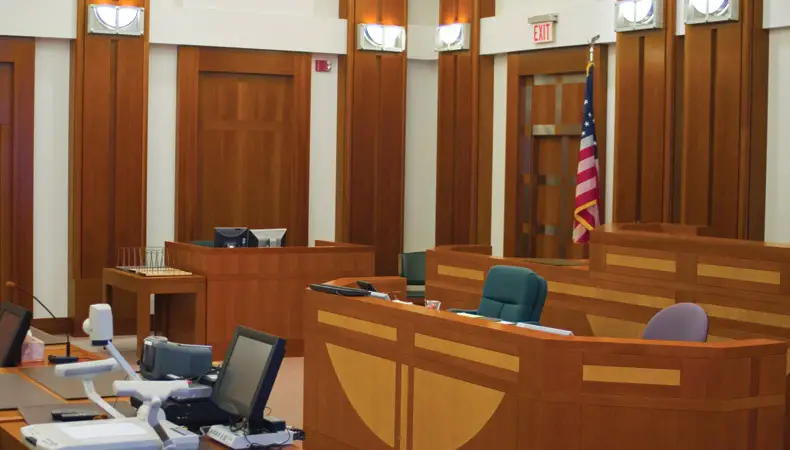
The boardroom doors opened. Everyone entered. Julian took his seat at the head of the table. My old seat. My father’s seat. The seat he stole.
The presentation began. Numbers. Contracts. Investors. Everyone watched Julian announce the future of Sterling Holdings. Then I stood.
“I have a question.”
The room became silent. Julian smiled. “Of course.”
I placed a folder on the table. His expression changed. Only slightly. But enough.
“What is this?” he asked.
“The evidence you thought I would never find.”
I opened the folder. Inside were copies of every illegal transfer. Every forged signature. Every payment. The room erupted. Julian looked at Eleanor. Then at me. And for the first time in years, he looked uncertain.
But uncertainty was not fear. Not yet. Because then he laughed. Quietly. Confidently. “You really should check your evidence before presenting it.”
My smile disappeared. “What?”
He slid a document across the table. A forensic report. My evidence. Declared fabricated. Impossible.
I looked at Eleanor. She shook her head. “No.”
Julian leaned back. “I told you.” His voice became a whisper. “You were never the hunter.”
The boardroom doors opened. A man walked inside. The room froze. Because everyone recognized him. The chief investigator who had sent me to prison. The man who had testified against me. The man who had disappeared after the trial.
He placed a folder on the table. “Mrs. Sterling.”
I stared. “What are you doing here?”
He looked at Julian. Then back at me. “I came to reveal the truth.”
My heartbeat slowed. Because I knew that expression. I knew that hesitation. He was afraid. Not of me. Of what was inside the folder.
He opened it. The first page fell onto the table. And I saw a name. My name. But beneath it was something impossible. A second signature. A signature I had not seen in two years. A signature belonging to someone who was supposed to be dead. My father’s.
Then the investigator spoke. “Genevieve Sterling was not the mastermind behind the fraud.” Everyone held their breath. “She was the target.”
I looked at Julian. His face had finally changed. The smile was gone. Because he knew. The one person who could destroy his entire empire was not me. It was the person he thought he had already buried.
And then my father stood behind him. Alive. Angry. Holding the original documents that proved Julian’s greatest mistake. He had not stolen Sterling Holdings. He had only been keeping it warm. For the rightful owner. Me.
But before anyone could speak, my father whispered four words that made the entire room go silent. “Julian wasn’t working alone.”
The doors closed. And everyone looked at me. Because the next name he was about to reveal was the one person I trusted more than anyone.
“Eleanor,” my father said quietly, “step forward.”
For a moment, no one in the room moved. I felt something cold settle behind my ribs, a dread that had nothing to do with Julian, nothing to do with the forensic report or the merger or the two years I had already lost. Eleanor had been beside me since the trial. She had visited every month. She had smuggled documents, arranged meetings, whispered strategy through prison glass while guards pretended not to listen. She was the one person I had never once doubted.
“That’s not possible,” I said, though even as I said it I heard the hollowness in my own voice, the sound of someone repeating a sentence because saying it aloud might somehow make it true.
My father held up a single page. A wire transfer, dated eighteen months earlier, routed through three shell accounts before landing in a private fund registered under Eleanor’s maiden name. “She was paid to keep you close,” he said. “Close enough to guide your investigation exactly where Julian wanted it to go.”
Eleanor’s face did not crumble the way I expected. It hardened instead, the mask finally dropping into something colder and more familiar. “You don’t understand,” she said.
“Then explain it,” I said, and my voice came out steadier than I felt.
“I was protecting you,” Eleanor said. “Julian would have destroyed you completely if I hadn’t managed what you saw, what you found, when you found it. Every piece of evidence you have was evidence I let you have. I controlled the pace. I controlled the danger.”
“You controlled me.”
“I kept you alive,” she snapped, and for the first time in two years I heard real fear crack through her composure. “Julian doesn’t leave loose ends, Genevieve. Ask Victoria. Ask your father. I made myself useful to him so that I could stay useful to you. Everything I did, I did to keep both of us breathing long enough to finish this.”
Julian, still seated at the head of the table, began to laugh, low and delighted, the sound of a man watching his enemies destroy each other exactly according to plan. “Isn’t it wonderful,” he said, “watching the two of you finally see each other clearly.”
I turned to him. Something in me, some final reserve of restraint I had been rationing since the day the prison doors opened, simply ran out. “You built an empire on other people’s loyalty,” I said. “My father’s trust. My love. Victoria’s loneliness. Eleanor’s fear. And you never once considered that loyalty built on threats collapses the moment the person holding the leash looks away.”
“Careful,” Julian said softly. “This is still my boardroom.”
“No,” I said. “It’s about to become a crime scene, financially speaking.”
I looked at the investigator, still standing near the door with his folder open on the table. “You said I was never the mastermind. That I was the target. If that’s true, then you have more than a signature. You have motive, means, and a paper trail that predates the fraud charge against me. Which means the fabricated forensic report Julian just handed me isn’t the real evidence anymore. It’s a liability. Because now we have two competing sets of documents, and only one of them was created under duress in a federal prison.”
The investigator’s jaw tightened. He looked, for the first time, like a man who understood he had already crossed a line he could not walk back from. “There’s more,” he said, and this time his voice did not waver. “Julian didn’t just orchestrate the fraud that sent you to prison. He orchestrated your father’s disappearance.”
The room went utterly silent.
“The plane,” Charles said quietly, “didn’t crash. I was told my daughter’s life depended on my staying away. Julian’s man delivered the message personally, three days before the flight was scheduled to vanish from radar. I was moved to a private location. I was told if I ever surfaced, if I ever contacted Genevieve, the deal protecting her would be void, and whatever he’d done to frame her would escalate into something with no possible defense.”
I stared at my father, feeling the floor tilt beneath a truth so much larger than anything I had prepared myself to hear. Three years of grief. Three years of believing I had buried him. All of it manufactured, weaponized, used as one more lever to keep two people separated and afraid.
“You let me mourn you,” I said.
“I let you live,” Charles said, and his voice broke completely this time. “I made the only choice that kept you breathing long enough to fight your way back here.”
Julian rose from his chair, and for a moment I thought he might simply walk out, might vanish the way he had vanished so many things, so many people, so many inconvenient truths. Instead he straightened his jacket and looked around the table with something that might have been genuine amusement.
“You’ve built quite a story,” he said. “Forged signatures, fabricated forensics, a kidnapped father, a bribed lawyer. Do you have any idea how this will look to the board? A hysterical woman fresh out of prison, accusing her husband of an elaborate conspiracy with nothing but a shell-shocked old man and a disgraced investigator to back her up.”
“I have something better than a story,” I said, and I reached into my jacket for the final piece I had been saving, the one card I had not yet shown anyone, not even Eleanor. A flash drive, small and unremarkable, that I set on the table between us. “This is everything Eleanor collected for you over the past year and a half. Every account, every wire transfer, every threat you made to keep her compliant. She may have used it to control me, Julian. But she also used it to build the most complete record of your crimes that exists anywhere. Insurance, she called it, in case you decided she was a loose end too.”
Eleanor’s eyes snapped toward me, startled, and I understood in that instant that I had guessed correctly. She had never told me about the drive. But two years of watching her operate had taught me enough about the shape of her caution to know she would never have walked into a game this dangerous without keeping something back for herself.
“Eleanor,” I said quietly, not looking away from Julian, “is this the part where you decide whose side you’re actually on?”
The silence stretched long enough that I thought she might refuse. Then she reached into her bag, withdrew a second copy of the same drive, and set it beside mine.
“I was never on his side,” she said. “I was on the side of staying alive long enough to matter.”
Julian’s composure finally, completely broke. He looked around the table at the board members who had spent the last hour listening in horrified silence, at the investigator now visibly calculating how much of his own exposure he could still contain, at my father standing tall despite three years of forced disappearance, and at me, standing exactly where he had always underestimated I would stand: directly across from him, unafraid.
“This isn’t over,” he said.
“No,” I agreed. “It isn’t. But it’s over for you.”
Security arrived within minutes, summoned by board members who understood, faster than Julian expected, exactly which way their fiduciary interests now pointed. He was escorted from the building he had spent years building into his own personal fortress, past reporters who would have an entirely different story to file by evening, past employees who had spent two years believing whatever version of events he found convenient.
The following months unwound slowly, the way real justice usually does, nothing like the tidy conclusion of a single dramatic afternoon. My conviction was vacated once the forensic evidence proving fabrication was formally entered into the record. The board reinstated me as majority shareholder, a process complicated by lawsuits, countersuits, and Julian’s increasingly desperate attempts to salvage something from the wreckage of his own greed. Victoria testified against him in exchange for immunity, describing in careful, exhausted detail exactly how the false miscarriage had been constructed. The investigator who had once helped convict me became, improbably, one of the prosecution’s key witnesses against the man who had once employed him.
Eleanor and I never fully repaired what had broken between us. Trust, once you understand how thoroughly it can be manufactured and sold, does not simply reset because the manufacturer turns out to have been working, in some warped way, in your favor. But we built something functional in its place, a working alliance built on transparency rather than blind faith, which felt, in its own strange way, more honest than what we’d had before.
My father moved back into Sterling Tower slowly, cautiously, the way a man moves back into a life he thought he’d permanently lost. We did not talk, at first, about the three years of grief he had let me carry alone. Eventually we did, in pieces, late at night, over the kind of silences that only two people who have survived the same catastrophe can share without needing to fill them with words.
Two years after the boardroom confrontation, Julian was sentenced to eighteen years for fraud, conspiracy, witness tampering, and a string of related charges that took the prosecution nearly a full day to read aloud. He looked, throughout the sentencing, exactly as composed as he had at every boardroom meeting I’d ever watched him command. Some masks, I understood by then, never fully come off. They simply stop working.
I stood outside the courthouse afterward, my father beside me, Eleanor a few steps behind, watching the cameras swarm toward vehicles and lawyers and the general chaos that follows any conclusion large enough to matter. Someone asked me, shoving a microphone toward my face, how it felt to finally see justice done.
I thought about the two years I had spent in a cell, calculating, planning, refusing to let bitterness calcify into something that would have made me easier for Julian to predict. I thought about my father’s white hair, about Victoria’s trembling hands, about Eleanor’s flash drive that had, in the end, saved us both.
“It feels,” I said, “like the beginning of an ordinary life. Which is the only kind of victory that actually matters.”
Then I walked back into Sterling Tower, not as the woman Julian had tried to erase, but as the one who had simply, patiently, outlasted him.
The reconstruction of Sterling Holdings took considerably longer than the courtroom drama that had preceded it. Rebuilding a company’s reputation, I learned, is slower and less satisfying than exposing the man who nearly destroyed it. There were institutional investors to reassure, employees who had spent two years unsure whether their paychecks came from a legitimate business or an elaborate fraud, journalists who wanted the scandal long after I wanted only to be done discussing it.
I threw myself into the work anyway, the way I once threw myself into building the security systems Julian had so carelessly underestimated. My father, though technically restored to his position, insisted I remain at the helm. “You survived what I couldn’t have,” he told me one evening, both of us reviewing quarterly reports in an office that had once belonged to Julian and now, stripped of his portraits and his cologne and his careful staging, felt entirely unfamiliar. “The company should belong to the person who actually fought for it.”
I didn’t argue. I had, after all, spent two years in a cell doing exactly that.
Victoria disappeared from public life after her testimony, moving to a small town somewhere in the Midwest where, according to the last update I received from her attorney, she had taken a job at a community college and told almost no one about the life she’d left behind. I never spoke to her again after the trial concluded, though I found myself, more than once, hoping she’d found whatever peace was available to a woman who had allowed herself to become a weapon and then, at the last possible moment, put the weapon down.
Eleanor stayed on as my chief of staff, a title that undersold the complexity of what she actually did, which was equal parts strategy, damage control, and the particular vigilance of someone who understood, better than anyone, how quickly trust could be manufactured and sold. We worked well together, better in some ways than we had during the two years she’d secretly been serving two masters. I never fully forgot what she’d done. I simply learned to work alongside the version of her that had, in the end, chosen my side when it mattered most.
My father spent his newly reclaimed years trying, in his own halting way, to make up for three years of silence he still couldn’t entirely justify, not even to himself. We took Sunday dinners together, something we’d never done consistently even before his disappearance, both of us aware that the ritual was less about the meal than about proving, week after week, that we intended to keep showing up.
“I keep thinking about what I could have done differently,” he told me once, turning a wine glass slowly between his fingers. “Warned you sooner. Fought harder before the wedding. Found some way to protect you that didn’t require disappearing.”
“You made the choice available to you at the time,” I said. “I spent two years in prison being angry about choices I couldn’t undo either. It doesn’t fix anything. It just wastes the time you have left to do something better.”
He looked at me for a long moment, something like pride and grief mixed together in his expression. “When did you get so wise?”
“Prison,” I said. “It’s an excellent teacher, if you survive the tuition.”
Julian, from behind the walls where he would spend the better part of two decades, sent exactly one letter. I read it once, standing in the same penthouse where he’d once staged a grieving husband’s performance for a company full of mourners who never suspected the funeral itself might be a con. The letter was long, articulate, full of the same calculated charm that had once convinced an entire boardroom, an entire company, an entire wife, that he was exactly who he claimed to be.
I did not write back. Some doors, once you understand everything that was hidden behind them, are better left permanently closed.
Three years after the boardroom confrontation, Sterling Holdings posted its strongest quarter in company history, driven not by the aggressive expansion Julian had once promised investors, but by a slower, more deliberate strategy built on transparency and long-term stability, the kind of growth that doesn’t photograph well for magazine covers but tends to survive scrutiny considerably better than the alternative.
I stood at my office window one evening, watching the city lights come up over a skyline that no longer felt like enemy territory, and thought about the woman who had once believed her husband’s every tear, every gesture, every carefully rehearsed expression of grief. That woman had spent two years in a cell reconstructing herself into someone considerably harder to deceive.
She had also, I understood now, spent those same two years learning something Julian never anticipated: that the most dangerous person in any room is rarely the one shouting loudest, making the boldest threats, or holding the most obvious leverage. It is almost always the person everyone else has already decided to underestimate, quietly gathering what she needs, patiently waiting for the moment when the truth, properly assembled, becomes impossible to argue away.
I turned off the office lights and went home, to an apartment that belonged entirely to me, in a life finally, completely, my own.

Specialty: Emotional Turning Points
Rachel Monroe writes character-driven stories about betrayal, second chances, and unexpected resilience. Her work highlights the emotional side of family conflict — the silences, the misunderstandings, and the moments when someone quietly decides they’ve had enough.