What She Carried
My daughter asked her husband for permission to have dessert at my table.
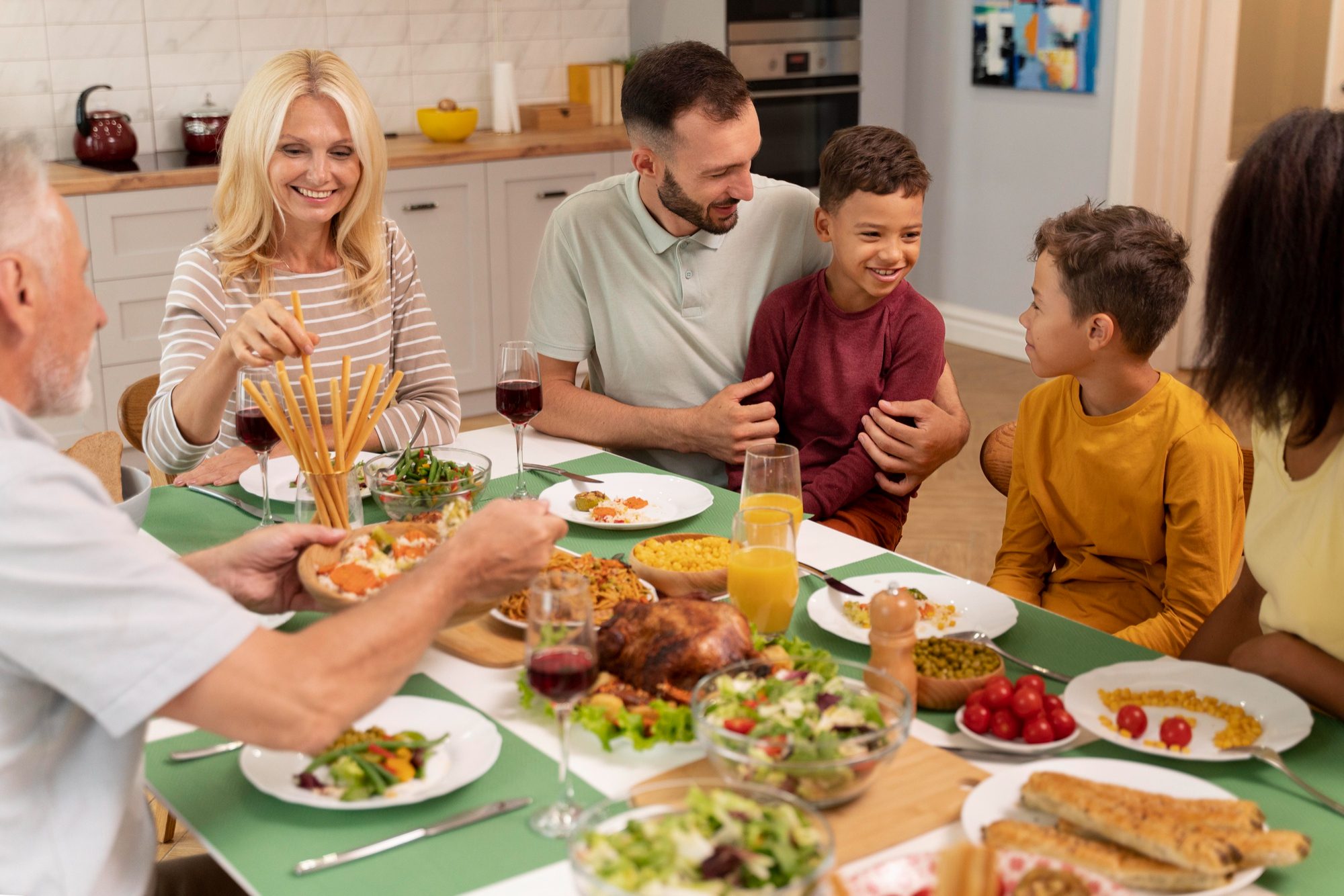
She is thirty one years old. It was my kitchen. The knife was in the lemon cake she has asked for every birthday since she was nine, and I had just sliced through the first piece and was asking who wanted some, and Hannah’s hand came halfway up and stopped, and she looked at Craig.
I want to be honest about what I did in that moment, because I have spent the weeks since going over it with the relentlessness of a woman who is used to solving the solvable and has encountered something that cannot be solved backward.
I stood at my own counter holding the cake knife with the frosting on it and I heard my daughter ask her husband if she could have a piece of her own birthday cake, and I said “there’s plenty” in a voice I did not recognize as mine, a bright hostess voice, a woman-smoothing-things-over voice. I did not say what I should have said. I did not cut the cake and put a piece in front of Hannah without asking anyone’s permission because it was my table and my cake and my daughter, who has loved lemon cake since before she had the words to ask for it.
Craig said she was fine, thanks, Sue.
She’s fine, thanks.
And I sat back down and the conversation moved on the way conversations move when no one is prepared to say the thing that needs to be said, like water closing over a dropped stone, the surface going smooth again as if nothing was underneath it.
My husband Robert gave me the look across the table. The look is not something I can describe except to say that in thirty six years of marriage we have developed a shared language of glances that covers more territory than most people’s spoken conversations, and the look he gave me in that moment was the one that means I see it too and also be careful.
Our son David asked about traffic.
Hannah moved her plate slightly to one side.
To make room for nothing.
I started counting, there at my own table with my family around me, the things I had been not counting all summer.
That she had stopped drinking at our house sometime around May, not with any announcement, just a quiet hand placed over the glass when Robert went to pour. At first I had thought it was a health thing, a detox, the kind of thing women Hannah’s age did in groups and talked about with terms I did not fully understand. Now I thought about it differently.
That she had worn the same loose gray dress to the last four Sunday dinners. This is a woman who has known what she wanted to wear since she was four years old, who has opinions about fabric and fit and color that go far beyond what most people bother with, who has never in her adult life shown up anywhere in something she had not chosen deliberately. The gray dress was shapeless in a way her clothes had never been shapeless.
That she had canceled the beach weekend in July that she and I had been planning since spring, giving a reason about the heat that I had not believed but had accepted because there is a kind of not-believing that is more comfortable than the alternative.
I was counting these things at my table and trying to make them add up to something other than what they added up to, the way you stare at a sum and hope the numbers rearrange themselves if you look long enough.
After dinner, Craig went out to the driveway to take a call. He was out there with his back to the house, and I stayed at the kitchen sink with the plates stacked around me, the warm water running, working through how to ask Hannah something when I did not yet know what exactly I was asking.
She came through the door behind me.
She stopped in the middle of my kitchen with her hands at her sides.
I turned off the water.
I turned around.
She looked the way she looked at seven years old when something had happened at school that she did not know how to tell me, the specific configuration of her face when she was carrying something too heavy for her size and had decided, finally, that she was going to put it down.
I said, “Han. Are you all right? Whatever it is, you can tell me. Do you need help?”
She looked past me at the window over the sink, at the driveway, at Craig standing out there with his phone to his ear and his back turned. She looked at him for a long moment in the particular way you look at someone when you are calculating something about them.
“Mom. Not here.”
She took my wrist. She pulled me out of the kitchen and down the hall into the back room, the room we call the back room because it is at the back of the house, the room where we kept the spare Christmas decorations and the old piano that no one plays anymore and the overstuffed chair Robert refuses to throw out. She shut the door behind us. She turned the lock on the handle.
The lock on that door has never been turned in the entire time we have lived in this house. It exists in the way that door locks exist on interior doors, technically present, never needed.
Hannah stood with her back against the door.
I have not seen my daughter’s face do what it did in that moment since she was seven years old and fell off her bicycle and lay in the grass looking up at the sky for three seconds before she started to cry, that specific suspended look of someone who has just understood something about the world that cannot be unlearned.
I said, “Sit down,” and then I realized I had said sit down when she was the one who had told me to sit down, the instructions reversing themselves because we were both operating past our normal modes.
She said, “Mom, sit down.”
I sat in Robert’s overstuffed chair.
She stayed against the door.
She talked for eleven minutes. I know it was eleven minutes because the clock on the piano has not worked in twelve years and I watched it the whole time, not because I was waiting for it to end but because I needed something to look at that was not her face while she was telling me, and the stopped clock was the right object for that, frozen at 6:47 in the morning or evening of some day twelve years ago, holding the time still.
I am not going to tell you the full contents of those eleven minutes. They are Hannah’s, not mine to detail. What I will tell you is the shape of it, the architecture: that Craig was a person who controlled the things available to Hannah to control, her food and her money and her friendships and the clothes she wore and the plans she made, and who had done this so gradually and so completely over four years of marriage that Hannah had arrived at a place where she could not remember, with certainty, when it had started, because things that happen gradually do not have clear starting points.
She told me about the gray dress.
She told me about the glass she kept her hand over.
She told me about July, about why she had canceled the beach weekend, which was not about the heat.
She told me about the rolls at dinner.
She told me that she had eaten two rolls and that she had known, eating them, that there would be a consequence for the rolls, and that when the cake came she had looked at Craig because the look was, by that point, a reflex, the way you check a stove is off before you leave even when you know it is off because the checking has become the thing you do without thinking.
She told me that she had been trying to leave for eight months.
That she had money in a separate account, small amounts over a long time.
That she had a bag in her car.
She was not asking me to be surprised. She was past the place where surprise was useful. She was asking me, with her back against the locked door in the room with the stopped clock and the old piano, for the specific thing she had come down the hall for.
“I need somewhere to go,” she said. “Just for now. Until I can get the rest of it sorted.”
I stood up.
I am not a woman who uses her body for emphasis very often. I am not a woman who dramatically crosses rooms. But I crossed the room, and I put my arms around my daughter, and I said into her hair: “This is it. This is where you go. You are already here.”
She did not cry, which told me she had been holding this for so long that the crying had been used up along the way, spent in private at times I had not been there for. She stood inside my arms with the stillness of someone who has been needing something specific for a long time and has finally found it.
“Craig is in the driveway,” she said.
“I know,” I said.
“I don’t want to make a scene tonight,” she said. “I just need to know the door is open.”
“The door has always been open,” I said. “I just didn’t know you needed it.”
She pulled back and looked at me.
“I didn’t know how to tell you,” she said. “I thought you’d be upset.”
“I’m not upset with you,” I said.
“I know. I mean I thought you’d be upset and I’d have to manage that, and I was already managing so much.”
I looked at my daughter.
The managing. She had been managing Craig and managing the situation and managing what everyone around her knew and thought and felt, and she had been managing me in advance, anticipating my response and calculating the cost of producing it, the way you calculate costs when your resources are thin.
She had been protecting me from the weight of what she was carrying, so that she would not also have to carry my response to it.
“You don’t have to manage me,” I said.
“I know that now,” she said.
“You could have told me earlier.”
“I know that too,” she said. “But I wasn’t ready, and then I was ready, and the cake was there and the look was there, and I thought: now.”
The now.
She had chosen my kitchen, her birthday cake, the look I gave Craig when he said she was fine, and she had decided that now was the moment. Not because the moment was perfect but because she had run out of reasons to wait for a more perfect one.
We stayed in the back room for a few more minutes, speaking quietly, the way you speak when there is a man in the driveway thirty feet away who does not know what is happening in the room at the back of the house. I told her what I knew about the practical things, which was not very much yet but which I was already beginning to organize in my mind the way I organize the things that need organizing: in order of urgency, with the most immediate first.
She said she was not ready for tonight to become the night. She wanted to go home with Craig, she said, because leaving required specific conditions she had not yet fully assembled, and because doing it in front of everyone, in front of Craig, without the preparation she had been making over eight months, was not how she wanted it to go. She said she needed a few more days.
I said that I would be here.
She said she knew.
She unlocked the door.
We went back to the kitchen, where Robert was finishing the dishes I had left in the water. He looked at Hannah and then at me with the long-calibrated look of a man who can read the specific temperature of a room after thirty six years of practice.
He handed Hannah a dish towel.
“Can you dry?” he said.
She took the towel.
The three of us stood in the kitchen and did the dishes together, and Robert kept up a conversation about nothing with the specific expertise of a man who has learned that sometimes the conversation about nothing is the conversation that is needed, and Hannah dried the plates and the glasses and the silverware and she was still present, still in the room, still in her gray dress at the end of a Thanksgiving in August.
Craig came back in from the driveway and said they should head out.
Hannah put the dish towel down.
She hugged me at the door the way she had not hugged me in a while, fully and with both arms, and she said she would call me this week, and I said I would answer, and she said she knew.
Robert and I stood on the porch and watched their car go down the street and turn the corner and disappear.
I stood there for a moment in the evening air.
Robert put his hand on my back.
I said, “She’s coming home.”
He said, “I know.”
I said, “I didn’t know. I didn’t see it clearly until tonight and I should have seen it sooner.”
He was quiet for a moment.
“You’re seeing it now,” he said.
We went inside.
I sat at the kitchen table with the lemon cake in front of me, the slices taken out of it except for the one I had put aside for Hannah when she came back, whenever she came back, the slice I had covered with the plastic wrap and put to one side and which was sitting there waiting.
Robert sat across from me.
We talked for a long time.
He had seen things too. The rolled-up sleeves in summer when it was too hot for long sleeves. A comment Craig had made at the Fourth of July about Hannah having trouble managing her time, said in the light tone that certain comments use to sound like affection. The way Hannah laughed at Craig’s jokes a beat too late, the laugh that was monitoring the room rather than responding to it.
We had both been seeing and not counting, each of us separately, and then tonight the numbers had come together.
“I kept thinking there was a reason,” I said. “A different reason.”
“I know,” he said.
“Wives should not need a reason to eat their birthday cake,” I said.
“No,” he said. “They shouldn’t.”
I called my friend Margret the next day, a Monday. Margret’s professional life had involved social work for thirty years before she retired, and she has a particular quality of practical knowledge that I trusted more in that moment than any other resource available to me. I told her what Hannah had told me. I told her about the bag in the car and the account and the eight months of preparation.
Margret listened with the complete attention she brought to everything that mattered, and when I finished she said several things in the measured way of someone who has navigated this terrain many times and knows which information comes first.
She told me the most important thing was to follow Hannah’s lead on timing. That Hannah had been managing this situation with intelligence and care for eight months and had survived it, and that the instinct to rush in and fix it immediately was understandable but could disrupt what Hannah had built and could, in certain circumstances, produce danger where there had been managed safety.
She told me to make sure Hannah knew she could call any time and that the response would be immediate.
She told me to identify what we had: the spare room, the car I could drive without being known by Craig’s friends, my presence at home during the day.
She told me to write down nothing on anything that could be found.
She told me to be patient, which was the hardest thing she said.
I thanked her and I sat with everything she had told me and I made a list in my head, the internal list that does not exist on paper but that I have been keeping for fifty years in the organized filing system of a woman who runs a household and raises children and plans things because plans are what stand between you and the chaos that is always available.
Hannah called on Wednesday.
She called from her car, she said, because she was on her lunch break and there was no one around to hear. Her voice was different from Sunday, not afraid exactly but careful, the voice of someone in a situation that requires sustained carefulness and who has been sustaining it for a long time.
She said she was ready to do it properly.
She said she needed the weekend because Craig was going to his brother’s on Friday and would not be home until Saturday afternoon.
She said she had a list of what she needed to get out of the house and she had talked to a woman at the domestic violence hotline who had helped her understand the logistics, the legal ones, the practical ones.
She said she had talked to a lawyer three weeks ago and she had not told me because she had not been ready to make it real to me, and I was the person who would make it real by believing it.
I said I understood.
I said Friday.
She said Friday.
We talked for twenty minutes. Practical things, because practical things were what the moment needed, not the emotional things which were true and which we both knew and which did not need to be said again. We talked about what she would take and where she would put it and who else she had told, which was her friend Kendra from college who had known and who had been sitting with the knowing for months without my daughter’s permission to act on it.
“You can tell Kendra to call me too,” I said.
“She already has your number,” Hannah said.
Of course she did. I had given it to everyone who mattered in Hannah’s life years ago, with the implicit understanding that gave it was that it was available in any circumstance, which is what mothers do when they are paying attention.
Friday came the way days come when you are waiting for them, slowly during the daytime and then very fast at the end. Robert took the day off work. David, our son, knew by Thursday; I had called him Wednesday evening because he is Hannah’s brother and because he would want to know and because there might come a moment where I needed someone to drive a car and Robert was the one who stayed with Hannah.
David came to the house on Thursday night and sat in the kitchen and did not say many words but the words he said were the right ones, which was that he was there and what did we need him to do and he loved his sister and he was going to be fine.
“You don’t have to be fine,” I told him.
“No,” he said. “But it helps Hannah if I am.”
He was right about that.
Hannah arrived at the house on Friday morning at nine. She had Craig’s car, which was her car too, the one the registration had both names on. She had three bags and a box and she had Kendra in the passenger seat, Kendra who had been carrying this alongside her for months, who got out of the car with her hair in a ponytail and said to me, “Hi, Sue,” as if this were a regular Friday, because it needed to feel like a regular Friday for the first ten minutes.
I showed her the room.
The spare room, which is the same room Hannah slept in as a child, because we have not moved, the family that stays in the house where the children grew up. The same room she fell asleep in on Christmas Eve every year, the same room where she had her first phone call with Craig nine years ago, where she had been happy in the ways you are happy when you are twenty two and someone is paying you the kind of attention that looks, from the outside, like love.
She stood in the doorway and looked at it.
“Nothing’s changed,” she said.
“Some things are different,” I said. The bedspread was different and the curtains were different and there were things on the shelves that had not been there when she lived here.
“It still smells the same,” she said.
She put her bags down and sat on the edge of the bed.
Kendra went to help Robert with the coffee in the kitchen.
I stood in the doorway.
Hannah said, “Mom.”
I said, “Yes.”
“I’m scared,” she said.
“I know,” I said.
“Not of him,” she said, quickly, because she needed that to be clear. “Of all the things that come next. The legal things and the money things and the explaining things to people things. Not of him.”
“I know,” I said.
“It’s a lot of things.”
“Yes,” I said. “But not today. Today the only thing is that you are in this room and we are making coffee.”
She looked at her hands.
“I don’t know what I weigh,” she said, which was not a non sequitur. “He managed that too and I stopped keeping track and I don’t know.”
“That’s okay,” I said. “You don’t need to know today.”
She looked up at me.
“I’m hungry,” she said. “I drove here and I realized I was actually hungry and I didn’t do anything about it.”
“What do you want?” I said.
She thought about it.
“Eggs,” she said. “And the good bread.”
“Done,” I said.
I made eggs and toast and we sat at my kitchen table, the four of us, Hannah and Kendra and Robert and me, and Hannah ate the eggs and three pieces of toast with butter on all of them and a second cup of coffee, and nobody said anything about any of it except Robert, who said, “Good bread, isn’t it,” and Hannah said, “Really good bread,” and that was the whole of the conversation about it.
The days that followed were not dramatic in the way that people imagine when they imagine a situation like this. They were ordinary days that contained difficult things, the way ordinary days always do, but the difficulty was the internal kind rather than the external kind, the kind that requires patience and the right kind of attention rather than action.
Craig called on Saturday when he got home and found the closet emptier than it had been. He called her phone and he called the house and Robert answered the house and said that Hannah was here and that she was safe and that she would be in touch with him through her lawyer.
Craig said a number of things.
Robert listened.
Then Robert said, “She’s done now. Goodbye, Craig,” and hung up.
That was the conversation.
Hannah’s lawyer, a woman named Ellen who had an office twenty minutes from our house, filed the necessary papers the following week. Hannah had prepared well, the eight months of preparation had been thorough, and the process had the shape of something organized rather than something improvised, which was what Hannah had needed it to be.
I drove her to every appointment for the first two weeks because she had not driven herself anywhere that mattered in years and needed to remember that she could.
She drove herself on the third week.
Kendra came most days, not all day but for the afternoon, and the two of them sat in the back garden in the late summer afternoons and talked in the way of people who have known each other since they were nineteen and who have been waiting to be able to talk freely.
David came on Sundays. He and Hannah watched old movies they had both seen twenty times and argued about them with the comfortable ease of siblings who learned to argue at the same table. He brought her things: books she had mentioned wanting to read, a plant for the windowsill, a very specific kind of biscuit that she had liked since childhood and that he had gone to three shops to find.
He did not talk about Craig.
He talked about Hannah.
There is a difference, and he understood it.
The lemon cake had been in the refrigerator since Sunday. I had wrapped it properly and it kept. On Hannah’s first Saturday home, I cut her a slice, the one I had set aside at the table the Sunday before, and I put it on the good plate, the one with the blue border, and I set it in front of her at the kitchen table.
She looked at it.
She picked up the fork.
She ate the whole slice and then she looked up at me and said, “Can I have another?”
“Yes,” I said.
I cut her another.
She ate it.
“Good cake,” she said.
“I know,” I said.
Margret came for tea the second week. She and Hannah sat in the living room for two hours while I stayed in the kitchen and made more tea than we needed and eventually went to the garden with Robert to do something with the late summer tomatoes. I did not know what they talked about, and I did not ask, because Margret knows how to be the person Hannah needed in that conversation and I know how to let someone else be that person.
When Margret left she gave me a long look in the hallway that meant it is going to be all right. She has a specific look for this that is different from the look she gives when she is uncertain, and I have known her long enough to know the difference.
I held onto that.
At night, when Robert was asleep and the house was quiet, I sometimes sat at the kitchen table with the light over the sink and thought about the summer. About the rolled sleeves in July and the hand over the glass and the gray dress worn four Sundays in a row. About the beach weekend. About all the times I had chosen not to examine the thing I was seeing because the examination would have required me to know something I did not know how to act on.
This is the thing I want to be honest about, because it is the part I had the hardest time with: I had seen things. Not everything. Not clearly. But I had seen enough to have looked more carefully, asked more directly, and I had not.
I had told myself there was always another explanation.
I had made it easy for myself not to know.
I am not going to call this guilt, because guilt is the wrong word for what is actually a form of grief, the grief of understanding in retrospect what you did not understand in time. What I did instead of looking harder was a failure of nerve that I understand better now than I did while I was committing it, and understanding it is what I have to work with.
I told Hannah this, in October, when things had settled enough that the kinds of conversations that require solid ground beneath them were available.
We were in the garden, pulling up the last of the tomatoes.
I said, “I should have seen it sooner. I saw enough. I let myself not look.”
She was quiet for a moment.
Then she said, “Mom. I was managing what you could see.”
“I know,” I said. “But I also let you manage it. I was comfortable being managed.”
She looked at the tomato in her hands.
“I didn’t know how to not manage it,” she said. “It was what I did with everything.”
“I know,” I said.
“So it’s not your job to have seen through the management. It was your job to do what you did when you did see it. To be here when I needed here.”
I looked at my daughter.
“You’re being very generous,” I said.
“I’m being accurate,” she said. “I’m also a little bit a lawyer now,” she added, which was what she called the process of having spent four months reading legal documents and sitting across from Ellen, and it made us both laugh.
November arrived.
Hannah had been home for two months. She had started working again, remotely, a project she had been in discussion with a former employer about, hours that were hers to set and work that was hers to do and money that was in the account with her name only on it.
She was eating.
She had bought two new sweaters and a pair of boots that she had described to me with the specific enthusiasm of someone reuniting with a former self: this is me, these are my boots, these are the colors I choose.
The divorce would not be finalized until spring. There were things still to be sorted, the legal things and the money things, and Ellen was managing them with the competence of someone who had done it many times and knew which things could wait and which ones could not.
Hannah’s weight was hers to know and to manage and she had started knowing it and managing it in the quiet private way of someone who has reclaimed a piece of their own life and does not require an audience for it.
Craig called once more, in September, on Hannah’s phone. She answered it, which surprised me when she told me. She had answered it because, she said, she had wanted to hear what he would say without the shield of other people around her, to hear it and know it for what it was.
She said it had been useful.
She did not tell me what he said.
She said she would never answer again.
She has not answered again.
On her birthday in November, the real one, I made the lemon cake. Not because it was Sunday dinner but because it was her birthday and the cake was hers. I made it the way I have always made it, with the lemon curd between the layers and the buttercream on top and the small yellow flowers made of frosting that I started doing when she was twelve because she had seen something like it in a magazine and said she wished hers looked like that.
I sliced it and put the first piece on the blue-bordered plate in front of her.
She picked up her fork.
She did not look at anyone.
She ate.
We sat around the table: Hannah and David and Kendra, who was now a regular presence at the table the way good friends become regular presences at tables where they are welcome, and Robert and me. We ate cake and drank tea and David said something that made Hannah laugh until she put her fork down and covered her face with her hands, the laughing that is too big for a normal face.
I watched her laugh.
I thought about the Sunday in August when her hand came halfway up and stopped.
I thought about the eleven minutes with the stopped clock.
I thought about Friday morning with the three bags and the box and Kendra in the passenger seat and Hannah standing in the doorway of her old room saying it still smells the same.
I thought about the rolls, and the cake, and the bright hostess voice I had used and have not forgiven myself for entirely, though I am working on it, the way you work on the things you cannot undo but can carry differently.
I cut myself a second piece.
Across the table, Hannah noticed and smiled, and I smiled back, and the table was loud with the sound of people who were allowed to be exactly as much as they were, without permission from anyone.
Robert poured more tea.
Kendra took the last of the cake without asking.
I said there was more in the kitchen.
There was.
There always would be.
That is the whole of what I can offer, to her and to anyone who comes to my table.
Come in. Sit down. There is always more.
You do not have to ask.
I want to tell you about the things I learned, not because I think my learning is the story, it is not, the story is Hannah’s, but because I am the narrator of this particular account and what I learned is part of what I can honestly offer.
I learned that the signs I had been seeing were real and that my instinct to look for alternative explanations had been a form of self-protection rather than open-mindedness. There is a difference between keeping an open mind and refusing to close it when the evidence is sufficient, and I had been in the second position for longer than I want to admit. I had been protecting myself from a knowledge that would have required me to act, and the acting would have been hard, and so I had kept looking for softer explanations right up until the moment in the back room with the locked door and the stopped clock.
I learned that the first thing is not to panic and not to fix and not to make your own response the thing the other person has to manage. I had been the kind of mother who fixed things, who arrived at a problem with solutions assembled, and what Hannah needed in the back room was not solutions. She had the solutions. She had been building them for eight months. She needed a door. Just the door.
I learned, over the months that followed, to resist the urge to fill every silence with the thing I was feeling, because what I was feeling, the anger and the grief and the retrospective fury at myself for the dinners I had smoothed through and the summers I had explained away, was mine to process and not hers to receive. She had enough. My feelings were real and legitimate and they needed somewhere to go, and I found that somewhere, mostly with Robert and occasionally with Margret, and I was careful not to bring them to Hannah as if they were her responsibility.
She had managed enough people’s feelings for long enough.
I also want to tell you about Craig, because I have been careful not to make him into the monster of a simpler story, not because he does not deserve the description but because the simpler story is less useful than the more accurate one.
He was a man who had done significant harm to my daughter over four years through a sustained pattern of control that had cost her parts of herself she is still in the process of reclaiming. That is true and it is complete and it requires no softening. But he was also, from the outside, for most of those four years, a man who held doors open and brought wine when he came to dinner and asked about Robert’s health with what appeared to be genuine interest. He was not a villain in a recognizable costume. He was a man who had learned to perform consideration while practicing something different in private, and the performance had been good enough to deceive people who were paying attention and who knew Hannah.
This is important because it is the nature of the thing. Not the exception. The nature.
I had expected, before I understood better, that I would have seen it if it were happening. That I would have known from something. That love and attention and proximity would have produced the knowledge in time. And the answer, which Margret helped me understand and which Hannah eventually said to me directly, is that the whole architecture of what Craig did was designed to prevent exactly that. The gradual quality of it. The plausible explanations for each individual thing. The performance of a loving relationship in public and the reality of a different relationship in private. These things are not accidental features. They are the features that make it work.
Knowing this has not fully absolved me of the feeling of having failed to see. But it has made the feeling more accurate, which is what I needed it to be.
Hannah started seeing a therapist in September, a woman whose name I know and whose office I have driven her to twice when Hannah’s car was in for service. She goes weekly and she does not tell me the details of what they discuss, which is appropriate, and I do not ask. What I can see is that the conversations are doing something, that the person who comes home from the Thursday appointments is incrementally clearer than the person who went in, clearer in the sense of having a better picture of herself, of the four years, of the before and the after.
She has been talking about what she wants to do next, professionally. She had a career before the marriage that she had, under Craig’s management, gradually stepped back from, first reducing her hours and then working from home only and then, in the last year, working very little. She had told herself it was her own choice. She is now understanding the specific difference between a choice made freely and a choice made inside a constrained set of options, and she is reclaiming the ability to tell the difference.
She is interested in going back to her original field. The details are hers.
She is interested in the future, which is itself a form of progress, because for most of the summer she had been focused almost entirely on the present, on the next thing to do and then the next thing, and the future had been too large and uncertain to look at directly.
Now she looks at it.
In November, on the Saturday before Thanksgiving, she asked if she could invite Kendra for the holiday dinner.
“Of course,” I said.
“And Kendra’s boyfriend is coming into town,” she said. “Is there room?”
“There’s always room,” I said.
She was quiet for a moment.
“It’s going to be a full table,” she said.
“Good,” I said.
Thanksgiving that year was eleven people at the table, the most we had had since David was in high school and Robert’s family still came for the holiday. Hannah sat at my left and Kendra sat beside her and Kendra’s boyfriend, a pleasant quiet man named Sam who had heard the story in the form Kendra chose to tell it and who was navigating the particular social geometry of meeting a family in its complicated year with visible good will, sat across from David, who drew him into a conversation about the football game that was playing in the background and from which Sam emerged with his dignity intact.
I made the lemon cake for dessert, alongside the pies.
When I brought it to the table, Hannah stood up and helped me carry the plates, which she had been doing since she was eight years old, this specific domestic choreography of the cake appearing and both of us managing the serving.
I cut the first slice.
I looked at Hannah.
She held out her hand for the plate.
I gave it to her.
She took it back to her chair and ate it and then, when she had finished, she looked up at me and said, in front of the eleven people at my Thanksgiving table, “Can I have more?”
“Yes,” I said. “You can always have more.”
She smiled.
She had more.
Kendra and David both had seconds without asking, which is how it should be at a table where everyone knows they are welcome, where the asking is not required because the yes is already understood.
Robert poured more coffee.
Sam turned out to know a great deal about lemons, specifically about the varieties and the differences between them, which produced a twenty minute conversation that meandered through citrus cultivation and eventually arrived at marmalade, and which was one of the more surprising and genuinely enjoyable twenty minutes I had at a Thanksgiving table in a long time.
After dinner, while Robert and David and Sam were managing the dishes and Kendra was in the living room, Hannah sat beside me at the cleared table.
She said, “Mom.”
I said, “Yes.”
She said, “Thank you for the room.”
I knew she meant the room in the house, the spare room where her bags had been for three months and where her boots were in the closet and her books were on the shelf and her plant was on the windowsill. And I knew she also meant the other kind of room, the one you make when you step back and let someone have the space they need, the room to be afraid and to be ready and to arrive at the moment she had described as now.
“Always,” I said.
She put her hand over mine.
We sat at the cleared table in the kitchen that has been my kitchen for thirty one years, the kitchen where I have made the lemon cake every birthday, where I have run the water and thought and stood at the sink and looked out the window at whatever was happening in the driveway, and I thought about the Sunday in August and the knife in the cake and the hand that came halfway up and stopped.
I thought about the back room.
The lock on the door.
The stopped clock.
The years I had spent not looking carefully enough at the thing I was almost seeing, and the moment when looking became unavoidable, and the eleven minutes that changed the shape of everything that followed.
I thought about what I would say to the version of myself who stood at that counter in August holding the knife with the cake on it, who said there’s plenty in the bright voice, who sat back down when Craig said she’s fine, thanks.
I would say: you are about to know something. Let yourself know it.
That is all.
Just let yourself know it.
Some knowledge requires courage, not the heroic kind, but the ordinary daily kind: the courage to look at the thing you are almost seeing and to follow it where it goes, even when following it goes somewhere you would have preferred not to go.
I had followed it.
Not quickly enough.
But I had followed it.
And here was my daughter with her hand over mine at the cleared table, at the end of a Thanksgiving with eleven people in the house and coffee in the pot and lemon cake with seconds and a man talking about citrus in my living room, here was my daughter who had said now in the back room in August and who had arrived on a Friday morning in September with three bags and a box and who had eaten eggs and good bread at my kitchen table and who was still here, four months later, still in the room where the before and the after were both present, still finding her way into the next version of herself.
Here she was.
That is the story.
The whole of it is just this: she came home.
And the door was open.
And we had cake.
That is the whole of it, and it is enough, and I would do every moment of it again without changing a single thing except the ones I failed at, and those I am carrying differently now.
We are all carrying things differently now.
That is what this year made possible.
That is what I will always be grateful for.
One last thing, and then I am done.
The gray dress.
Hannah wore it for the last time in September, on the second Saturday she was home. She washed it and folded it and put it in the bag for the charity shop. She did not explain. She put on a sweater in a color I had not seen her wear in years and came down to breakfast without comment.
I did not comment.
Some things you do not need words for.
Some things you just watch happen and you receive the happening with the quiet gratitude of a person who has been waiting for it without knowing what she was waiting for, and when it arrives you recognize it and you let it be what it is.
The sweater was yellow.
It suited her exactly the way she would have said it suited her, if anyone had asked.
Nobody needed to ask.
We already knew.

Ethan Blake is a skilled Creative Content Specialist with a talent for crafting engaging and thought-provoking narratives. With a strong background in storytelling and digital content creation, Ethan brings a unique perspective to his role at TheArchivists, where he curates and produces captivating content for a global audience.
Ethan holds a degree in Communications from Zurich University, where he developed his expertise in storytelling, media strategy, and audience engagement. Known for his ability to blend creativity with analytical precision, he excels at creating content that not only entertains but also connects deeply with readers.
At TheArchivists, Ethan specializes in uncovering compelling stories that reflect a wide range of human experiences. His work is celebrated for its authenticity, creativity, and ability to spark meaningful conversations, earning him recognition among peers and readers alike.
Passionate about the art of storytelling, Ethan enjoys exploring themes of culture, history, and personal growth, aiming to inspire and inform with every piece he creates. Dedicated to making a lasting impact, Ethan continues to push boundaries in the ever-evolving world of digital content.