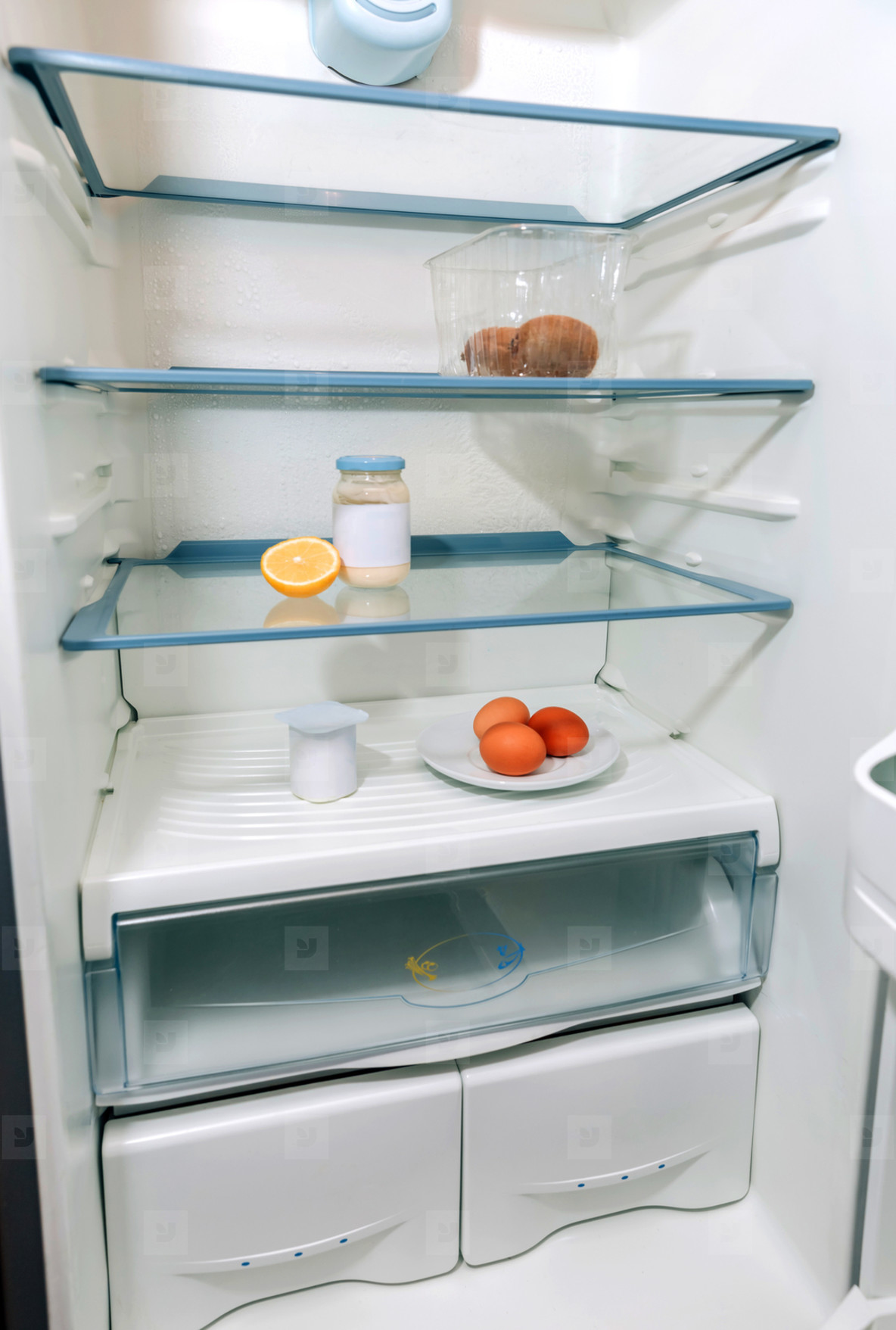
The freezer door of my mother’s old fridge hung half-open when I walked into her kitchen that Saturday. A puddle of melted ice was already creeping across the linoleum.
My mom, Diane, stood beside it with a dish towel in her hand. The motor had given up sometime in the night, and she hadn’t called me because she never called me.
“Mom, this thing is done,” I said, nudging the puddle with my shoe. “Grab your purse. We’ll go pick out a new one this afternoon.”
She shook her head. “Honey, I don’t have my savings at the moment.”
I set the towel down. “What do you mean you don’t have your savings? You’ve been putting money in that envelope for years.”
“I lent it to Lauren.”
The name landed in the kitchen like a dropped plate.
“I thought I was helping her.”
Lauren, my brother Kyle’s wife, called my mother maybe twice a year, usually around the holidays, to ask if she needed anything. She rarely followed up.
“How much, Mom?”
“All of it. Five thousand. She needed it for the car, after that accident.”
Five thousand dollars.
“You gave her five thousand dollars?”
“Not exactly. She sent me the payment details and asked me to pay the repair bills directly. She said it would be easier that way.”
I looked at Lauren’s name on my phone, and something cold moved through me. “And you did?”
Mom looked embarrassed. “I thought I was helping her, Rachel. She promised she’d have it all back by summer.”
Summer had come and gone. It was almost November. That was her emergency fund.
My hand was on my phone before I’d decided to make the call.
Lauren picked up on the third ring, cheerful, as if we’d chatted every day. “Rach, hey.”
“When are you paying my mother back?”
There was a laugh, short and genuinely amused. “Yeah, I borrowed it. I clearly needed it more than your mom did.”
I kept my voice level. My mother was three feet away, pretending to wipe the counter. “That was her emergency fund, Lauren. Her fridge just died.”
“Why does your mom even need that much money? She’s retired and doesn’t need the money anyway. Or what’s she gonna spend it on?”
I closed my eyes for one second. I thought about my divorce years earlier, and how it had made me doubt my judgment of people. But with Lauren, I felt no such doubt. I could see exactly who she was.
I didn’t know yet what I was going to do about Lauren. I only knew I wanted her in front of me, and Kyle, when I did it.
“You know what,” I said, and I even smiled a little, “you’re right. Come to dinner tomorrow night. Family thing. Seven o’clock.”
“Really?”
“Really. Wear something nice.”
She agreed before she thought about it. I was sure she was still laughing even after we hung up.
Then I remembered the photograph on Ethan’s desk. The sliver of a woman’s face. The small mole beneath her eye. Lauren had a similar one. Then again, maybe that was just something all difficult women had in common. That was impossible. But suddenly I needed to know.
My mother looked up from the counter. “Everything okay, sweetheart?”
“It’s going to be, Mom.”
At that moment, dinner was the only part of the plan I had. But to explain why, I have to go back six months, to a hardware-store parking lot.
Six months before, I was loading a box fan into my trunk when a man in a truck started honking and shouting at me to move. My hands began to shake before I could stop them.
“She’s almost done,” a calm voice said. “Give her a second.”
The man beside me didn’t argue or posture. He simply stood there until the driver gave up and left.
“You didn’t have to do that,” I said.
“I know.”
His name was Ethan. When he asked for my number, I gave it to him before I could overthink it. It was the first decision in months I’d made without immediately wondering if I’d gotten it wrong.
We started seeing each other quietly, once or twice a week, mostly at his place or small restaurants far from my neighborhood. I told myself I was protecting something new. My last marriage had become everyone’s business. Too many questions. Too many opinions. Too many family members caught in the middle when it fell apart. This time, I wanted something that belonged only to me for a while. Ethan was my quiet happiness, and I wasn’t ready to bring anyone else into it.
Still, every now and then, an old doubt surfaced. How well do you really know him?
“You’re quiet tonight,” Ethan said one evening in his kitchen.
“I’m just tired.” I stirred my wine. “Tell me something about you instead. Something real.”
“I was engaged once.”
“What happened?”
“She was a monster.” His voice went flat. “Two months before our wedding, she asked me for five thousand dollars. Said she had an old debt she needed to pay. Then the story started changing. I don’t like talking about her.”
“Okay.”
Later that night, while Ethan was in the shower, I noticed an old manila folder on his desk. A photograph had slipped halfway out. I could only see part of the woman’s face, a dark mole just below her left eye.
I reached for it. Then stopped. My ex-husband had spent two years telling me I was paranoid whenever I noticed something that didn’t add up. I pulled my hand back. I wanted to trust Ethan. More than that, I wanted to trust myself again.
Back in my mother’s kitchen, I couldn’t stop seeing that half-hidden photograph. Five thousand dollars. The same amount. And that mole. Maybe I was imagining a connection that wasn’t there. Six months ago, that thought would have been enough to stop me.
Not this time. I grabbed my keys.
Half an hour later, Ethan opened the door in a worn T-shirt, his hair flattened on one side, like I’d pulled him off the couch.
“Rachel?” He blinked at me. “Why didn’t you call? I fell asleep watching TV.”
“Sorry. I know it’s late.”
“Is everything okay?”
“I need to see that photograph.”
He frowned. “What photograph?”
“The one in the folder. Your ex.”
His expression changed. “Why?”
“Because I think I know who she is.”
Ethan stared at me for a moment, then stood and walked to the closet. He pulled down the old manila folder I’d seen six months before.
“You really want to know?”
“Yes.”
He sat beside me and opened the folder. The photograph landed face-up on the coffee table. Younger. Different hair. Softer face. But the same eyes. The same mole. For a second, I couldn’t make sense of what I was seeing. My stomach dropped. I’d been right.
“That’s Lauren.”
Ethan looked at me. “What?”
“Lauren. My brother’s wife.”
His eyes went back to the photograph. “Her name was Laura when I knew her. You have to be kidding me.”
Neither of us spoke for a second.
“Her name came up today because my mother’s fridge died,” I finally said. “Mom couldn’t replace it because she’d given Lauren her entire emergency fund.”
“How much?”
“Five thousand.”
“So did you give it to her?” I asked him, remembering his story about his own engagement.
“Two thousand. I told her I’d give her the rest when she showed me the paperwork.”
“And?”
“The story kept changing. Debt at first. Then something about helping her mother. Every time I asked for proof, there was another reason she couldn’t show me.”
“What happened when you said no?”
“She was gone by the weekend. Took what she could and disappeared.”
I pulled out my phone. “Mom didn’t actually hand her the money. Lauren sent her payment details and told her to pay the repair bills directly.”
Ethan frowned. “So where did the rest go?”
I opened my mother’s banking app. “Twelve hundred went to the body shop.”
“And the other thirty-eight hundred?”
I turned the screen toward him. “Here. M. Alvarez.”
Ethan leaned closer. “What?” Without answering, he grabbed his laptop. A few seconds later, he turned the screen toward me.
“M. Alvarez.”
I looked from his screen to my phone. “You know her?”
“Two years ago, she sent me a Venmo request for two thousand dollars. Said Laura owed her money and asked if I could help.”
I stared at him. The pieces finally clicked into place.
Ethan opened another folder. There were more messages. More names. Different people with versions of the same story.
“How many?” I asked.
“Enough.”
I looked back at my mother’s transfer. “Mom thought she was paying for Lauren’s car.”
Ethan nodded slowly. “But Lauren gave her the payment information for someone she already owed.”
“She’s moving the debt around,” I said. “New money pays old people.”
“Looks that way.”
Six months ago, I might have found a reason to doubt what was right in front of me. Not this time.
“I need to tell Kyle.” I reached for my phone, then stopped. “No.”
“Why?”
“Because Lauren is already coming to dinner tomorrow.” I looked at the photograph, then at the records spread across Ethan’s table. Tomorrow night, Lauren was going to walk into dinner thinking she still controlled the story. “If I call Kyle tonight, Lauren gets hours to invent another story.” I closed the folder. “Tomorrow she can tell it with all of this sitting in front of her.”
Ethan watched me for a moment. “You still want me at that table?”
I looked at the photograph of Laura. “More than ever.”
Before I left, I printed Mom’s transfer records and added them to Ethan’s screenshots. By the time I closed the folder, Lauren’s history and my mother’s money were sitting side by side.
The next day, at seven in the evening, Lauren was already seated when I brought out the coffee, smiling her practiced smile, one hand resting on Kyle’s forearm. Then the doorbell rang.
I took my time getting up. “I’ll get it.”
Ethan stepped inside behind me, folder under his arm.
“What the hell is he doing here?” Lauren’s face drained of color. “Who invited him?”
“Ask your wife.”
I’d never seen her look afraid before.
“Get him out,” she snapped, her voice cracking. “He has no right to be here. Get him out now!”
Ethan set the folder in front of Kyle. Kyle flipped through Mom’s transfers, Ethan’s old screenshots, then stopped at the photograph labeled Laura.
“What is this?”
“Ask your wife,” I said. “Ask her who Mom’s money actually paid after the accident.”
Lauren barely looked at the papers. “Marisol handled part of the repair. Rachel doesn’t know what she’s looking at.”
“Then explain it,” Kyle said.
“There’s nothing to explain. Rachel’s been looking for a reason to hate me for years, and now she conveniently shows up with my ex-boyfriend?”
“Fiancé,” Ethan said quietly.
Lauren’s eyes snapped toward him.
I pulled one of the screenshots from the folder. “Marisol asked Ethan for money two years before your accident. She told him you already owed her.”
Lauren’s face changed, but only for a second. “So? I owed her money. That doesn’t mean—”
“Mom thought she was paying for your car,” I cut in. “You gave her Marisol’s payment information and told her it was part of the repair bill.”
Mom looked at Lauren. “You told me that was for the car.”
“It was complicated.”
“No,” I said. “It was simple. Twelve hundred went to the body shop. The rest went to someone you already owed.”
Kyle stared at her. “Is that true?”
“Rachel set this up,” Lauren said finally. “She’s dating Ethan. How do you know they didn’t put this together?”
I almost laughed. “Because I didn’t even know his ex’s name until last night.”
Ethan slid the old photograph across the table. “And I didn’t know Rachel’s sister-in-law was Laura.”
Kyle picked it up. “Laura?”
Lauren said nothing.
“You told me you covered the SUV yourself,” he said. “You never said a word about Mom’s money. You never said a word about any of this.”
Lauren’s hands tightened around the edge of the table. “Fine. You want to know how it started?”
“Yes,” I said. “Please.”
“My mother was sick for two years before she died. By the end, there were forty-one thousand dollars in medical bills. I was twenty-four, and I had no idea how to pay them.” Her voice caught. “I borrowed from Ethan first. Then when he said no, I borrowed from the next person, and the next. At first, every dollar really was for Mom. But after she died, the debts didn’t disappear. I started lying to survive. Then it worked. So I kept going.”
My mother’s face crumpled. “Sweetheart, if you’d told me—”
“Your mother may be why it started,” I said. “But she isn’t why you lied to mine.”
My mother folded her napkin once, then again, and laid it beside her plate. “I would have given you the money, Lauren. You only ever had to ask.”
Kyle set the photograph down very carefully, as if it might break. When he turned around, his eyes were red.
He reached for a pen from the junk drawer, wrote a check, and set it in front of Mom. “Mom gets every dollar back tonight.” His voice was steady in a way that scared me more than shouting would have. “And tomorrow, I want a list of every person you owe. Every loan, every credit card, every story you’ve told to get money. Everything.”
Lauren’s face went pale. “What are you saying?”
“I’m saying I’m not going home with you tonight.”
“Kyle.”
He picked up his keys from the table. “And you don’t ask my mother for another dollar. Ever.”
For the first time since I’d known her, Lauren had nothing to say.
Kyle slept on our mother’s couch that night. By morning, Lauren had sent him a list of debts he’d never known existed. He didn’t tell me what that meant for their marriage. He didn’t have to.
The next morning, I drove Mom to the appliance store. She picked a white model with a bottom freezer and paid from the envelope Kyle’s check had refilled.
Six months earlier, I’d stood in Ethan’s apartment with my hand inches from a photograph and convinced myself not to look because I was terrified of being wrong again. This time, when something hadn’t made sense, I’d looked closer. I’d asked the questions. And I hadn’t let anyone convince me I was imagining what was right in front of me.
The weeks that followed were quieter than I expected, in the way real life usually settles after a confrontation like that, no dramatic aftershock, just a series of small, practical adjustments that added up to something permanent. Kyle moved into a short-term rental two blocks from Mom’s place, close enough that he stopped by most evenings on his way home from work, sometimes just to sit at her new kitchen table and drink coffee, sometimes to help her figure out the settings on the fridge’s ice maker, which she insisted was more complicated than it needed to be.
He didn’t talk much about Lauren those first few weeks, and I didn’t push him. Mom, for her part, seemed lighter than she had in months, though she’d occasionally catch herself mid-sentence, still reaching for excuses on Lauren’s behalf out of some deeply worn habit of generosity that had never once been reciprocated. “She really was in a hard spot, you know,” she said to me once, unloading groceries into her new freezer. “After her mother passed.”
“That’s true,” I said. “It’s also true she used your fridge money to pay off someone else’s debt and let you believe it went to a body shop.”
Mom sighed and closed the freezer door. “Both things can be true, I suppose.”
“They can. But only one of them means you’re getting your money back.”
She laughed at that, a real laugh, and I realized it was the first time I’d heard her laugh freely since the day I found her standing over that puddle of melted ice.
Lauren’s list of debts, once Kyle finally showed it to me weeks later, was longer and stranger than either of us expected: small loans from coworkers, a payday advance company, two different family friends who’d apparently never mentioned it to anyone because Lauren had asked them, each time, to keep it quiet out of embarrassment. The pattern Ethan had first glimpsed in his own life turned out to be years deep and dozens of names wide, a slow-motion collapse that had been rolling forward since she was twenty-four years old and had never once stopped to let anyone actually help her instead of simply extracting from her.
Kyle filed for divorce in January. He didn’t ask me to testify to anything, didn’t need Ethan’s folder or Mom’s bank statements once the paperwork was underway, because by then Lauren wasn’t contesting much of anything. I think, in her own way, she was almost relieved. Being caught, I came to believe, watching her from a careful distance during the brief, awkward exchanges that divorce still required, had been less frightening to her than continuing to invent the next story.
Ethan and I got married the following autumn, a small ceremony in Mom’s backyard, no manila folders required, just the people who had actually shown up when it mattered. Mom wore a blue dress and cried through most of the ceremony, and afterward, standing near her new white fridge with its temperamental ice maker, she pulled me aside.
“I’m proud of you,” she said. “For not letting it go. The way I always did.”
“You taught me a lot of things, Mom. Just maybe not that one, until now.”
She squeezed my hand, and we went back out to the party, where Kyle was laughing with Ethan over something on the grill, two men who’d started as strangers connected by the same woman’s lies and ended up, somehow, as family.
The following spring, Ethan and I sat down together one Sunday afternoon and did something neither of us had ever quite managed in our previous relationships: we opened a shared spreadsheet, plain and unglamorous, listing every account, every asset, every recurring expense, side by side, with no folder hidden in a closet and no photograph anyone needed to find by accident. It felt almost anticlimactic after everything we’d been through, sitting at the kitchen table with laptops open, comparing our respective retirement contributions like any other ordinary couple building an ordinary life. That was, I came to realize, exactly the point. Ordinary had become the reward.
“You know,” Ethan said, closing his laptop after we’d finished, “I used to think I’d never trust anyone with money again. After Laura.”
“I used to think the same thing about people in general. After my divorce.”
“And now?”
I considered the question the way I’d learned to consider most things since that Saturday in Mom’s kitchen, carefully, without rushing toward the comfortable answer. “Now I think trust isn’t really about assuming the best. It’s about being willing to look closely when something doesn’t add up, instead of talking yourself out of what you’re seeing.”
Ethan reached across the table and took my hand. “That’s a very practical definition of trust.”
“I’m a very practical woman these days.”
He laughed, and outside the window, Mom’s old box fan, the one I’d bought her that day at the hardware store six months before any of this began, hummed quietly in her kitchen window two streets over, still running, still doing exactly what it was supposed to do, the same way, I liked to think, the rest of us finally were too.
Mom kept the receipt from the new fridge taped inside a kitchen drawer for years afterward, a small, strange habit she never fully explained, though I suspected I understood it anyway. It wasn’t really about the appliance. It was proof, tangible and dated, that the money had eventually come back to her, that asking the hard questions had actually worked, that trusting her own instincts, the ones she’d spent decades setting aside in favor of other people’s comfort, had been the right call all along.
Kyle remarried three years later, someone steady and unremarkable in all the best ways, a schoolteacher named Priya who brought casseroles to family dinners without being asked and never once needed anyone to check her financial history before trusting her at the table. Watching them together, I thought sometimes about how close we’d all come to simply accepting Lauren’s version of events indefinitely, how easily an entire family’s finances and loyalties could have kept bending around one person’s carefully maintained fiction, if a fridge hadn’t died on an ordinary Saturday, if I hadn’t happened to notice a mole beneath a photograph six months earlier, if I’d let the old habit of doubting myself win out one more time.
I didn’t let it win. That, more than the money Kyle eventually recovered or the marriage that eventually ended, was the part of the story I found myself returning to on quiet evenings, stirring a pot on the stove while Ethan set the table behind me. Somewhere along the way, without any single dramatic turning point I could point to, I had become a woman who trusted what she actually saw, rather than what she’d been trained to overlook. That, it turned out, was worth considerably more than five thousand dollars, though I was glad, every single time I visited Mom and opened that reliable, ordinary white refrigerator, that she’d gotten her money back too.
Ethan and I ran into Marisol Alvarez once, entirely by accident, at a farmers market two summers after everything had unraveled. She recognized him first, going pale in a way that told me she remembered exactly who he was and exactly what role she’d played in the years before I ever knew either of their names. She didn’t approach us. She simply paid for her tomatoes and left quickly, and Ethan watched her go with an expression I couldn’t quite read, somewhere between old anger and a strange, distant pity.
“Do you ever think about reaching out to her?” I asked. “Asking if she ever got her money back, from whoever came after you?”
“No,” he said, after a moment. “I think some people are only ever going to exist in your life as a lesson you already learned. Going back to ask more questions just gives the lesson more room than it deserves.”
I thought about that for a long time afterward, turning it over the way I’d turned over so many things since that Saturday with the melted ice on Mom’s linoleum floor. There was a difference, I decided, between vigilance and obsession, between staying alert to the patterns that had once cost people I loved so much and letting those patterns consume every quiet moment that came after. Marisol, like Lauren, had become part of a story that was finished now, one whose ending didn’t require any further chapters from either of us.
Mom eventually forgave Lauren, in her own quiet, practical way, though forgiveness for her never looked like reconciliation. She simply stopped being angry, stopped bringing it up at family dinners, treated the entire episode the way she treated most hardships in her life: as something survived, catalogued, and set gently aside so it wouldn’t take up any more space than it had already taken. When I asked her about it once, years later, she shrugged in that particular way of hers that meant she’d already made peace with something long before anyone thought to ask.
“She was drowning,” Mom said simply. “People who are drowning grab onto whatever’s nearest, even when it isn’t theirs to grab. I don’t excuse it. But I understand it now in a way I didn’t back then.”
“And Kyle?”
“Kyle learned what he needed to learn. So did you. So did I.” She closed the fridge door, the same white one with the bottom freezer, still humming along faithfully years later. “I think that’s usually the most any of us can ask a hard year to teach us.”
I didn’t disagree with her. Standing in that kitchen, watching the afternoon light fall across a floor that no longer had any trace of melted ice, I understood that the real inheritance of that whole ordeal hadn’t been the five thousand dollars Kyle eventually wrote a check for, or even the marriage that had finally, mercifully ended. It had been something quieter and more durable: the permission, hard-won and long overdue, to trust my own eyes again, and to keep trusting them, one ordinary Saturday at a time, for the rest of my life.
Priya, once she and Kyle had settled into their own rhythm as a couple, asked me once over dinner how I’d known, really known, to push as hard as I had that night, when everyone else at the table might easily have accepted whatever explanation Lauren offered. I thought about the question for a while before answering, turning my wine glass slowly on the tablecloth.
“I think most of us know sooner than we admit,” I told her. “The signs were there for months before that fridge died. Mom’s vague answers whenever I asked about her savings. Lauren’s habit of calling right before a holiday and never following up. I’d noticed all of it. I just hadn’t let myself add it up, because adding it up meant I’d have to do something about what I found.”
“What changed?”
“A photograph, mostly. And a man who didn’t flinch when I asked to see it.” I glanced across the table at Ethan, who was deep in conversation with Kyle about something entirely unrelated, laughing at some old joke between them. “Sometimes you need one small, undeniable piece of proof before you’re willing to trust everything you already suspected.”
Priya nodded slowly, the way people do when they’re filing something away for their own future use. “I hope I never have a fridge die on me the way yours did.”
“I hope so too,” I said, and meant it, though privately I suspected that everyone eventually gets their own version of that moment, sooner or later, the small mundane crisis that forces open a door they’d been quietly holding shut for years. Mine had come in the shape of melted ice on a linoleum floor. Someone else’s might come differently. But I’d learned, by then, that the shape of the door mattered far less than what you were willing to do once it swung open.
That night, driving home with Ethan beside me, the windows down and the late summer air moving through the car, I thought about how far we’d both come from a hardware-store parking lot and a shouting stranger in a truck. Neither of us, back then, could have guessed that the woman who’d once broken his heart and drained his savings would turn out to be the same woman quietly bleeding his future wife’s family dry, three states and several years removed from where it started. Some stories, I’d come to believe, aren’t really separate stories at all. They’re the same lesson, waiting patiently in different rooms, for whoever is finally ready to walk in and turn on the light.
We got home a little after ten. Ethan went to check the mail while I let myself in, and I found myself standing for a moment in our own kitchen, taking in the ordinary shape of it, the dish rack, the calendar on the fridge, the shared spreadsheet still open on the laptop from that Sunday afternoon months earlier. Nothing hidden. Nothing waiting to be discovered by accident. Just a life, built in the open, exactly the way I’d promised myself, somewhere around the time I first drove to Ethan’s apartment with my keys still warm in my hand and a question I could no longer talk myself out of asking.
I poured two glasses of water, left one on the counter for Ethan, and carried mine out to the back porch to sit for a while before bed. The night was warm and quiet, the kind of ordinary evening that would have meant nothing to me once, before I understood how rare and hard-won ordinary actually was. Somewhere across town, Mom’s white fridge was humming steadily in her kitchen, faithfully doing exactly what it was built to do, no drama, no melted ice, no secrets tucked behind its door.
That, I thought, sipping my water in the dark, was really all any of us had ever wanted. Not vengeance. Not even justice, exactly, though we’d gotten a fair measure of that too. Just the quiet, unremarkable certainty that the people and the things closest to us were exactly what they appeared to be, nothing more complicated hiding underneath, nothing left to discover except more of the same steady, trustworthy ground.

Specialty: Quiet Comebacks & Personal Justice
David Reynolds focuses on stories where underestimated individuals regain control of their lives. His writing centers on measured decisions rather than dramatic outbursts — emphasizing preparation, patience, and the long game. His characters don’t shout; they act.