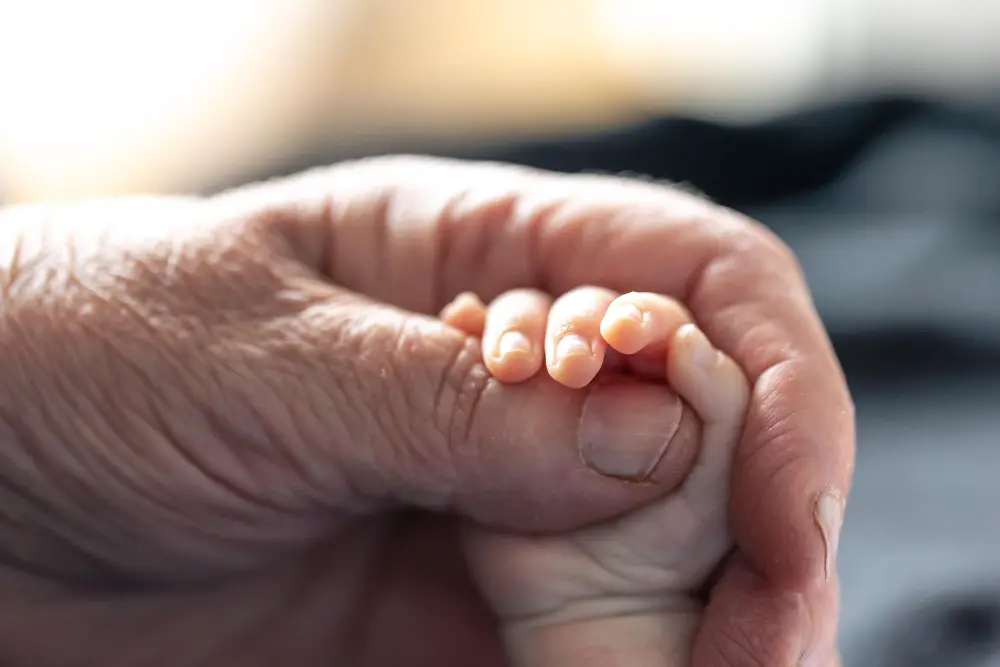
The hospital shrank in my rearview mirror until it was just a pale shape against the winter sky, and beside me, buckled into a car seat that suddenly seemed enormous around her, Nora slept. Thirteen days in the neonatal intensive care unit, thirteen days of leaning over a plastic incubator listening to monitors beep out the rhythm of my daughter’s small stubborn heart, and now she was coming home, and I kept glancing over at her at every red light as if she might vanish if I stopped looking. I had told myself, all those days in the hospital, that the hard part was almost over. That if I could just get her home, get her past the wires and the alarms and the careful hovering of nurses, then the two of us would be fine. I believed that, driving away. I want to remember that I believed it, because it was the last hour I would spend believing my life was a simple thing.
Those thirteen days had emptied me out in every way a person can be emptied. I had slept in a vinyl recliner that squeaked when I shifted, eaten vending machine crackers at three in the morning, learned the first names of every night nurse and the exact meaning of every alarm tone. I had signed forms I barely read and initialed charges I couldn’t think about, watched the invoices for the specialists and the incubator time pile up in a folder I shoved into my bag without opening, because there would be time to be frightened about all of that later, and right now there was only her. She had come three weeks early, small and furious, and she had fought her way up to a weight they would let me take home, and I was so tired that the tiredness had passed through exhaustion into something almost clear, a scoured, transparent kind of alertness. That is the state I was in when I drove her home. Hollowed out and wide open, which is maybe why what came next hit me the way it did.
My daughter had her father’s dark curls, already, a surprising amount of them for a baby born three weeks early. She had his cleft chin, that little dimpled crease that had been one of the first things I noticed about him across a crowded bookstore two years earlier. And she had his eyes. That was the thing everyone remarked on, the nurses and the lactation consultant and the doctor who signed her discharge papers, because Nora’s eyes did not match. One was a bright clear blue, the blue of a gas flame, and the other was so dark a brown it looked nearly black in most light. Heterochromia, the doctor had called it, harmless, just a quirk of pigment, nothing to worry about. But it stopped people. It made them lean in and look twice, and it made my chest ache every single time, because it was his, it was so completely and unmistakably his.
Someone in the family must have those eyes too, the discharge nurse had said, cheerfully, tucking the blanket around Nora one last time. It usually runs in families.
Her father, I had whispered. I hadn’t said his name aloud in months. I had trained myself not to, the way you train yourself not to touch a burn.
Because Caleb had disappeared the same night I told him I was pregnant. Not drifted away, not grown distant over weeks, not picked a fight to give himself an exit. He had vanished, cleanly and completely, in the space of a single night. No note. No answered calls. Nothing. And the worst part, the part that had kept me awake through my entire pregnancy turning it over and over, was that nothing about that night had warned me. There had been no sign. If anything, it had been one of the good nights, one of the ones I would have pointed to if someone had asked me why I loved him.
When I showed him the test, he had stared at it for a long few seconds, the little window with its two pink lines, and then he had looked up at me, and his face was doing something complicated.
Are you okay, he had asked.
I don’t know, I said, because I didn’t.
He took my hand then, both of his wrapping around mine. Then we’ll figure it out, he said.
You’re not scared, I asked him.
Terrified, he said, and I laughed through the tears that had started without my permission, because it was such an honest thing to say, and honesty was what I had always thought we had.
He kissed my forehead before he left that night. He said he had an early thing in the morning and needed to get home, and he told me he would call me first thing. And he didn’t. By noon the next day my messages sat unread, the little markers stubbornly gray. By evening his phone went straight to voicemail without ringing. The next morning I drove to his apartment with my heart going sideways, and I let myself in with the key he had given me a year before, and half his closet was empty. Hangers swinging. Drawers pulled out. The particular ransacked look of a place someone has left in a hurry, taking what mattered and abandoning the rest.
I want to describe what that does to a person, because it is different from being left in the ordinary way. There is no fight to replay, no cruel words to sharpen yourself against, no slow cooling you can trace backward looking for the moment it turned. There is only a warm hand holding yours across a kitchen table one night and an empty closet the next, and the space between those two things becomes a wound that never quite closes because you can’t find its edges. I called his work; he had quit, apparently, given notice weeks earlier that I had known nothing about, which meant the leaving had been planned while he was still kissing my forehead and telling me we’d figure it out. I called the two friends of his whose numbers I had. One didn’t answer. The other said, carefully, that Caleb had asked him not to talk to me, and then he hung up, and that careful voice told me more than an hour of shouting could have. Caleb had not been swept away by circumstance. Somewhere out there, he was choosing, day after day, not to come back.
I stopped waiting for him sometime around my fifth month. That was when the fear curdled into something worse, something colder and more final. Because you can wait for a man who got overwhelmed and panicked and needs time. There is hope in that kind of waiting. But by my fifth month I had stopped being able to pretend that was what had happened. Caleb had not gotten scared and forgotten to call. He had gone somewhere on purpose. He had made a decision, coldly and deliberately, and had executed it in a single night while I lay in bed imagining our future, and that knowledge sat in me heavier than the baby did.
My parents died when I was ten, in a car crash on an icy road, and my grandfather, Walter, had raised me from that day on. He was the one steady thing left in the world, and he became more steady, not less, when Caleb disappeared. He drove me to every prenatal appointment, sitting in the waiting rooms with his cap in his hands, standing up too fast whenever a nurse called my name. He cried openly in the exam room when the ultrasound technician pointed at the screen and said the word girl. He spent weeks out in his garage sanding a crib he was building by hand, running his thumb along every edge to be sure there wasn’t a splinter left anywhere a baby’s hand might find it, and one afternoon he came in with sawdust in the creases of his knuckles and told me that we would be fine, the three of us, that I didn’t need that man or anyone else, and I had believed him, because I needed to believe someone.
He was practical about it too, in the way of men of his generation, which was its own kind of love. He sat me down and helped me sort out what I’d need. He worried about the medical bills before I did, told me not to let the hospital paperwork frighten me, that we’d take it one statement at a time and figure out a payment plan if it came to that. He offered, more than once, to help however he could, and I knew that behind the offer was a modest retirement built out of decades of careful living, and I loved him too much to lean on it more than I had to. He had already given me one whole childhood after losing his own daughter. Now he was rolling up his sleeves to help me build another one. I did not understand, in those months, that he was also carrying a secret so heavy it would nearly buckle him the day he finally saw my daughter’s face.
The few things I still had of my mother lived in a cedar box at the back of my closet. Old photographs, a couple of scarves that had long since lost her smell, and a bundle of letters I had never once dared to go through, because opening them felt like it would let the grief back out of the box along with everything else. For twenty years that box had sat there, closed. I had told myself I would go through it someday, when I was stronger, and someday had never come.
I turned onto Grandpa’s gravel drive just past four o’clock that afternoon with Nora home at last in the back seat. He was already on the porch, in the rocking chair, the way he had been every single afternoon for the two weeks she was in the hospital, waiting for the day I would bring her here. When he saw my car come up the drive he stood so fast that his coffee mug slid off the arm of the chair and shattered on the porch boards, and he didn’t even look down at it.
There are my girls, he called out, coming down the porch steps two at a time, quick and light for a man of seventy-three.
I got out and opened the back door and lifted Nora out of her seat, and Grandpa opened his arms the way he always did, wide, like he’d been holding them open the whole time I was gone.
Say hi to your great-grandpa, I said, and I eased her carefully into the crook of his elbow, into arms that had rocked me through a thousand nights when I was small and frightened and freshly orphaned.
I expected him to cry. I had pictured this moment for months, the two of them meeting, and in every version of it Grandpa wept with joy. What I did not expect, what stopped me cold, was that when he looked down into her face, he looked afraid.
For just a second his whole face bloomed the way I had imagined, love pouring out of it. And then he tilted her gently toward the light coming across the porch, and his eyes moved slowly from one of her mismatched eyes to the other, blue to near-black, and then down to the small cleft in her chin. And the color went out of his face. It just drained, all at once, leaving him gray.
Grandpa, I said.
His hands had begun to tremble around her, a fine shaking that scared me more than anything, because his hands never shook. Emily, he said, and his voice had gone strange and thin. Who is her father?
I laughed, a small confused sound. You know his name, I said. Caleb.
And whatever Grandpa had been afraid of, the name confirmed it. I watched it land. The porch beneath my feet seemed to tilt a few degrees, the way the ground does right before you understand that something is very wrong.
He lowered himself into the wicker chair, holding Nora against his chest as if to protect her from something. Caleb, he repeated. And his father. What is his father’s name.
William, I said. My mouth had gone dry. Grandpa, you’re scaring me. Please. What is it.
He pressed his lips to the top of Nora’s head and closed his eyes and held them shut for a long moment. When he spoke again his voice barely carried across the porch. No, he said. Sweetheart. God, no.
Are you telling me, I said, and I had to lower myself onto the top step and grip the railing to say it, are you telling me that Caleb and I are. And I could not make myself finish the sentence. It was too monstrous to say out loud.
His head snapped up. No, he said sharply, and there was such force in it that I believed him instantly, before he even explained. No, sweetheart. God, no. You are not related. Not by blood. Not in any way like that.
The relief that hit me was so total and so physical that I almost laughed, almost sobbed, sagging against the railing. Then what, I said. Then what is it, Grandpa, because you look like you’ve seen a ghost.
He looked down at Nora’s small unfocused mismatched eyes, and his own eyes filled and spilled over. Your mother, he said, was his nanny.
Whose, I said.
Caleb’s. When that boy was seven years old, your mother worked for his family. She lived in their house. And you lived there too, Emily, do you understand me. You were four, five years old. You lived in that house.
And something moved in me, something buried, a stone turning over in deep water. A big house, I heard myself whisper. There was a garden. There was a red bicycle.
Yes, Grandpa said quietly.
And a boy, I said. My voice didn’t sound like my own. There was a boy who. I swallowed. He used to run with me. He used to hold on to the back of something and run.
That was Caleb, Grandpa said.
And the whole floor of my life dropped out from under me, because all at once the strangest moments of my relationship with Caleb stopped being strange. Two years. Two years since the bookstore reading where he had turned in the aisle and said my name, Emily, softly, like a word he already knew the taste of, before I had ever told it to him. Two years of coffee dates and long aimless drives and evenings in his quiet apartment, and now I understood, sitting on my grandfather’s porch with my newborn daughter, that none of it, not one moment of it, had been chance. I put my hand over my mouth. Nora squirmed against Grandpa’s shoulder and made a soft blind newborn sound, and neither of us moved to soothe her right away.
Tell me, I said finally. Tell me all of it. You’ve kept something from me my whole life, haven’t you. I can see it on your face. Tell me now.
Grandpa was quiet for a long time, rocking Nora slowly, gathering himself. I promised your mother I would never tell you, he said at last. Sarah made me swear it, years before the crash. Long before. She sat me down at my own kitchen table and made me promise.
Promise what, I said.
That you would grow up without that family anywhere in your life. He looked out across the yard, not at me. And after she died, I was glad to keep the promise. After what William did to her, I wanted nothing from those people anywhere near you. Not their name, not their money, not their memory. So I let it all go quiet. I let you forget.
What did William do to her, I asked. My heart was pounding.
Grandpa’s jaw worked. Your mother went to work for that family when Caleb was a little boy, he said. There was money there, old money, a big house, and a wife who was kind, from what your mother said. But the wife got sick. Cancer. And after she died, William started in on your mother. Pursuing her. He was her employer and he would not leave her be. And Sarah refused him, again and again, because she was a decent woman and she saw exactly what kind of man he was. So he fired her. And then, because refusing him had wounded his pride, he made sure that no decent family in the whole county would ever hire her again. He spread things about her. Lies. He made it so she couldn’t work.
Grandpa’s hands had gone still on Nora’s back. She came to me with nothing, he said. Do you understand what that man did. He didn’t just break her heart, he took her living. A single mother with a little girl, and he made her unhireable in her own town out of spite. She had a little put away and it went fast. There were months, Emily, before she got back on her feet somewhere new, months I don’t think she ever told you about because you were too small to know, when I wasn’t sure how she was going to keep the two of you fed. That kind of thing doesn’t leave a person. She carried the shame of it to the day she died, and it was never hers to carry. It was his. Every bit of it was his.
I remember yelling, I said slowly, the memory surfacing whole and sudden. A man yelling at Mom in a doorway. I’m looking up at them. She has my hand.
That was William, Grandpa said. I went there once myself, to confront him, after what he’d done. And that boy was there, Caleb, holding onto the banister at the top of the stairs, watching the two of us shout at each other. He couldn’t have been more than seven. Just watching, with those two different eyes.
Tears were running down my face now and I didn’t bother wiping them. I forgot all of this, I whispered. How did I forget all of this.
You were a baby, Grandpa said gently. Your mother packed you into the car that same week and we left, and we never spoke that family’s name in this house again. I made sure of it. I thought I was protecting you.
But Caleb, I said. Caleb is not William, Grandpa.
His voice went hard, the tenderness closing over. He is William’s son. And after what his father did to your mother, I did not care to find out whether the son was any different. I had one job, which was to keep you safe and keep that poison out of your life, and I did it.
I looked down at my daughter in my grandfather’s trembling arms, and I wanted to argue with him, I wanted to tell him he was wrong about Caleb, that the man I had loved for two years could not possibly be the villain of this story. But Caleb had made that almost impossible. Because there was one fact that sat in the middle of everything, immovable.
Grandpa followed my gaze down to Nora, and his voice softened again. And then he disappeared, he said quietly, the very second you told him about the baby. Emily, sweetheart. When I heard that, I thought it proved me right. I thought, there it is, the father in the son after all.
I stared at Nora. But if that’s true, I said. If he was just cruel, just his father all over again. Then why did he stay two years, Grandpa. Why did he find me and court me and love me for two whole years, and then leave. A cruel man doesn’t do that. A cruel man doesn’t waste two years.
He didn’t answer me. He just held Nora and looked at the wreckage of his shattered coffee mug on the boards, and his silence was its own kind of answer, because he didn’t have one.
I stood up slowly. My knees ached, from the hard hospital chairs, from thirteen days of leaning over an incubator, from all of it. I need to see for myself, I said. Not through you. Not through what William did to my mother twenty-five years ago. I need to know what Caleb actually did to me. I need to know the true thing, and I’m the only one who can go find it.
Grandpa closed his eyes. He didn’t try to stop me. Maybe he knew he couldn’t. I took Nora carefully back into my own arms, and I carried her to the car, and even as I buckled her in I already knew where I would look first.
That night, after I had gotten Nora down to sleep in the hand-sanded crib in the corner of my bedroom, I went to the closet and I pulled out the cedar box. My mother’s box. The one I had never dared to open in twenty years. My hands were not steady. If Grandpa had hidden an entire family from me, an entire chapter of my own early childhood, then I needed to know what else had been hidden, and this box was the only place left to look.
I had built the box up in my mind, over the years, into something almost holy, a reliquary of grief I wasn’t strong enough to open. The truth was more ordinary and somehow harder for it. It was just a box. Cedar, with a brass clasp gone green at the edges, the kind of thing you’d find at any estate sale. Inside it was the small collected evidence of a life cut short, and I had been so afraid of what feeling it might unleash that I had let it sit sealed through my entire adulthood, through college, through the early years with Caleb, through the whole pregnancy. I lifted the lid slowly, half expecting the grief to come roaring out. What came instead was the faint smell of cedar and old paper, and beneath it, so faint I might have imagined it, something that could have been the ghost of my mother’s perfume.
I lifted the lid the rest of the way. The scarves were on top, folded, and beneath them was a photograph, and when I saw it my breath stopped. It was me, at four years old, sitting proudly on a red bicycle with training wheels, squinting into the sun. And standing right beside me, one hand resting on the handlebars, was a dark-haired boy, older, maybe seven, grinning at the camera with two mismatched eyes. Blue and near-black. I knew that face. I had fallen asleep beside that face for two years. It was Caleb, as a child, and I was sitting next to him on a bicycle in a photograph my mother had kept until the day she died.
I went looking that night for proof that Grandpa was wrong about Caleb. Instead I found proof that Caleb had been lying to me too, and I found something else, something more complicated than either, that I am still not sure I have finished understanding.
Underneath the photograph was a bundle of letters, tied with a faded ribbon. I untied it with shaking fingers. The one on top was the oldest, the paper soft with age, and it was written in a child’s careful, laborious print, the letters uneven, some of them backward.
Dear Sarah, it read. Where did the little girl go? Did she take her bicycle with her? Please write back. Caleb.
He hadn’t forgotten me. Not even then. Not even as a seven-year-old boy left behind in that big cold house, he had written to my mother asking where I’d gone. I put my hand to my mouth and I read it three times before I could make myself open the next one.
They spanned years, those letters. The handwriting grew older, steadier, moving from a child’s block print to a teenager’s slanted scrawl. In one of them, folded inside, was a small bundle of bills, worn soft, and the letter said, I saved this from my allowance. Please use it for her. Please tell me she is okay. He had been saving his allowance and mailing it to my mother, for me, a boy sending what little money he had to a woman his father had ruined, asking only to know that I was all right.
I read them in order, the whole bundle, and watched a childhood pass across the paper. There were letters that asked nothing at all, that just told her small things, that he had learned to ride without training wheels, that there was a dog now, that he had gotten in trouble at school. There were letters that went unanswered for what must have been long stretches, because he would begin, I know you probably can’t write back, but. It broke something in me to read them, this steady patient reaching out across years from a boy who had every reason to grow hard and cold in that house and who had, instead, kept writing into a silence, kept saving his dollars, kept asking about a little girl on a red bicycle who had disappeared out of his life when he was seven.
A later one, written in an older hand still, made my chest ache. Grandfather says he’s leaving something for me when I’m old enough, it read. Dad says I’ll never touch any of it without him. Maybe someday I’ll finally be able to help you myself. Maybe someday I’ll be able to do more than send a few dollars in an envelope.
He had known. All along, from the very beginning, he had known who I was and where I’d come from and what his father had done to my family. And on the back of the very last letter in the bundle, in my mother’s own slanted handwriting, the handwriting I would have known anywhere, were five words.
He isn’t like his father.
My mother had written that. My mother, who had every reason in the world to hate that family, who had been ruined by that man, had looked at his young son across all of it and decided, and written it down where she could find it again, that the boy was not the father. She had trusted Caleb before I was even old enough to remember him. And now, twenty years later, I had to decide whether I had been a fool to do the same.
My mouth had gone completely dry. Sitting there on my closet floor surrounded by these letters, other memories began to arrive, small ones, moments I had filed away as sweet or odd and never thought about again. A night on Caleb’s couch, months before I knew I was pregnant, when he had asked me, almost too lightly, whether I had ever had a red bicycle as a child. I had laughed and said yes, that my mom had bought it secondhand, that I’d loved it. And he had smiled up at the ceiling with an expression I hadn’t understood at the time, the look of a man who had just gotten the answer to a question he’d been carrying for twenty years.
The bookstore, too. The way he had walked in during the middle of the author’s Q&A, not browsing, not wandering, but scanning the room until he found me, and then coming straight down my aisle. He had known. He had come there to find me.
And there was the cruelest memory of all, the one that made me press the heels of my hands against my eyes. There had been an evening, early on, when I had complained to him bitterly about the rich family my mother used to work for, back before I remembered any of it, only knowing the shape of the story Grandpa had let slip once. How she had come home from them with nothing. How she had died still carrying the shame of it. And Caleb had listened to me talk about his own family, about his own father, and he had said nothing at all. He had let me pour out my anger at the people who had raised him, and he had held my hand through it, and he had kept his silence.
At sunrise I strapped Nora into her car seat and drove to the address written on the oldest, most faded envelope in the bundle.
The house was smaller than my memory had made it. Memory does that, inflates the places of your childhood into castles, and the reality is always a little shrunken and ordinary. But the garden was the same. I knew the garden the moment I saw it, some deep buried part of me recognizing the shape of the beds, the old stone wall, the crooked path, and my heart began to hammer against Nora’s small warm weight.
An older man opened the door before I even knocked. He was thinner than I had imagined, stooped a little with age, but his eyes told me everything I needed to know, because they were Caleb’s eyes, or Caleb’s were his, the same shape, the same coldness in them now.
You look exactly like your mother, William said.
I held Nora tighter against me. I need to speak with Caleb, I said.
Caleb isn’t available, he said smoothly.
Then tell me why he left, I said.
His gaze dropped, for just a second, to the baby in my arms, and something flickered across his controlled old face. Recognition. He saw the eyes, I’m sure of it, he saw his own family looking back at him out of my daughter’s face. And then, just as fast, it was gone, folded away behind that smooth expression. Come inside, he said. We can talk about this like adults.
I want an answer, I said. Right here.
His jaw tightened. He knew about the pregnancy, William said. He chose to leave. His voice was perfectly calm, perfectly reasonable, and that calm was somehow more chilling than shouting would have been. That is the answer you drove all this way for. Take your daughter and go home.
I don’t believe you, I said.
That is not my concern, he said. Please get off my porch.
And as I stepped back off the porch and into that familiar garden, something folded open inside me, some old sealed room, and the memories came all at once and vivid. A woman crying at this door. My mother. My small hand wrapped tightly in hers, her grip almost too tight, hurting. A man’s voice following us down these very steps, hard and final. Don’t come back.
The memories didn’t come like a story. They came like weather, all at once, out of order, the way a smell can drop you into childhood. The cold of the metal railing under my small hand. The sound my mother made trying not to cry where I could hear it. The particular gray of the sky that day. I had been standing in this exact garden, at this exact height in relation to these steps, twenty-some years ago, and my body had kept it even when my mind let it go.
And then another image rose up behind it, and this one stopped my breath. A little boy, running barefoot after us down the path, across this same garden. Dark curls. Mismatched eyes, blue and near-black, wet with tears. Caleb, seven years old, chasing the car, chasing me, his mouth open, calling something I couldn’t hear through the glass. And behind that, one more, older still, the oldest thing I had: his small hand gripping the back of my red bicycle while I pedaled and screamed at him not to let go, and his voice, breathless, laughing, promising, I won’t, keep going, I won’t let go, keep going.
I made it halfway to the car before I stopped.
Nora shifted against my chest and I looked down at her, at her father’s eyes in her small face, one bright and one dark, the whole inheritance of that house written right there under my chin. William wanted me to believe that the boy who had run barefoot after our car, who had saved his allowance for a little girl he barely remembered, who had held the back of my bicycle and promised not to let go, had grown into a man who could abandon his own daughter without a backward glance. Maybe he was right. People change. Boys become their fathers all the time, and I had the empty closet to prove that Caleb was capable of leaving. But I was not going to take William’s word for it, this man who had ruined my mother and lied to my face on his own porch ninety seconds ago. I had spent my whole life taking men’s words for what I was allowed to know, believing the tidy version handed to me, and I was done. If Caleb had become his father, I would hear it from Caleb.
I turned back around and walked to the foot of the steps. William, I said.
You are being hysterical, he said.
I am being clear, I said. I am not leaving this porch until Caleb himself stands in front of me and tells me to my face that he does not want his daughter. Not you. Him.
Something changed then. William’s hand tightened on the door frame, the knuckles whitening, and from somewhere deeper in the house, back in the dim hallway, a voice said, Dad. Move.
I knew the voice before I saw him. Two years of that voice, on the phone, across pillows, reading aloud from books, and hearing it now come out of the shadows of that house made the whole ground shift under me. William didn’t move at first. His hand held the frame, his jaw set, and for a moment I thought he would refuse, would try to hold the door of his own house against his own son the way he had held everything else. Then the footsteps came down the hall, unhurried and certain, and William’s hand slid off the frame and fell to his side, and he stepped back, and something in the way he stepped back told me that whatever power he had held over that house for so long had just run out.
The door opened wider, and Caleb stepped out onto the porch.
He looked exhausted. Hollowed out, like he hadn’t slept in days, dark circles under those unmistakable eyes. For months I had rehearsed what I would say if I ever saw him again, whole speeches, cold and cutting, and every word of it evaporated the instant I saw him standing there in his father’s doorway.
I faced him on the gravel drive with Nora warm and small against my chest. How long, I said. How long did you know who I was.
He didn’t pretend not to understand the question. From the bookstore, he said. From the first night.
So you found me on purpose, I said.
I recognized your name, he said. On the event listing. Emily. And then I came to see if it was really you, and I saw you, and.
The red bicycle, I cut in. All those questions about my childhood. You knew exactly who I was the entire time.
His eyes dropped to the gravel. I wanted to tell you, he said quietly.
For two years, I said. You wanted to tell me for two years.
Emily, he said.
You listened to me talk about the family my mother worked for, I said, my voice shaking now. You knew it was your family. You knew it was your father I was describing. You let me fall in love with you without ever once telling me you were part of the worst thing that ever happened to my family.
I was afraid, he said, and his voice cracked on it. I was afraid you’d look at me and see him. See my father. That the second you knew, you’d never be able to look at me any other way.
I glanced past him at William, standing rigid in the doorway. And when I told you I was pregnant, I said, turning back to Caleb, you disappeared anyway. So maybe I should have seen him. Maybe he was there all along.
Caleb took a step toward me, urgent. Not because I didn’t want Nora, he said. Emily, listen to me. Not because I didn’t want her. Never that.
Then why, I said.
He hesitated, and the hesitation frightened me more than any answer could have, and then it came out of him all at once. The night you told me, he said, I didn’t panic. I drove straight here, straight to this house, and I made him tell me. I made him tell me everything he’d done to your mother, every last thing, the firing, the lies, all of it. And he confessed. I stood in that hallway and I made my father admit what he’d done.
From the doorway William gave a short bitter laugh. Don’t make it sound noble, he said. Don’t make it sound like I volunteered.
Caleb shot him a look of pure contempt and turned back to me. And then, he said, he offered me a deal. He said if I would stay away from you until the baby was born, completely away, no contact, then he would finally release my grandfather’s trust. One point six million dollars my grandfather left me when he died, money my father has controlled since I was nineteen years old. He’s held it over me my entire adult life. Every time I tried to be my own man he’d remind me he could cut me off, that I’d never see a cent of it without his signature.
And you agreed, I said. My voice had gone flat.
I agreed, Caleb said, and he didn’t flinch from it. I told myself it was strategy. I told myself that once the baby was born and the trust was legally mine, in my name, he could never control me again, never hold anything over us again. I thought, I stay away for a few months, I get the one thing that lets me finally be free of him, and then I come back and I tell you everything and we build a life he can’t touch. A life with no strings. That was the plan. I know how it sounds now. But that was the plan.
You have to understand what that money is, he went on, and he glanced back at his father in the doorway with something raw in his face. It’s not about being rich. My grandfather left it to me because he saw what my father was, and he wanted me to have a way out that didn’t depend on him. But the way the trust was written, my father was the trustee until I turned twenty-five, and then he found a lawyer and had it extended, and he’s used it like a leash my entire adult life. Every apartment I ever wanted to rent, every time I thought about going somewhere he didn’t approve of, there it was. Sign here or you’ll never see it. I’ve spent ten years being a grown man on a leash held by that. And he stood in that hallway the night you told me about Nora and he offered me the key to the leash, and I took it, because I thought it was the only way to ever be free enough to give you and her a real life.
And you agreed, I said again, because I needed to hear how it sat in my own mouth. You let him buy those months. You let him put a price on the beginning of your daughter’s life, and you paid it.
And Nora was born almost two weeks ago, I said. So why are you still here. Why didn’t you come.
The transfer only cleared three days ago, Caleb said. These things take time, lawyers, signatures, he dragged it out as long as he could. I was packing my things to leave, to come find you, when he told me Nora had come early and was still in the NICU. And I didn’t even know which hospital. He wouldn’t tell me. I’ve spent three days trying to find out where you were.
So you disappeared, I said, and decided that I would just understand it all later. That I’d forgive you once you explained the clever plan.
His eyes went to Nora and his throat worked. I told myself, he said, that losing those few months with you was worth it, if it meant he could never control the rest of our lives. That it was a trade worth making.
And you never once thought, I said, that I should get a say in that trade. That it was my life too, and my pregnancy, and my say.
He went still. He didn’t answer, and the not answering was the answer.
I looked at him, and then I looked past him at the house, at his father in the doorway, and I understood something that went back further than Caleb, further than William, back through my whole family. Every man who had ever loved a woman in my family had decided, on his own, what she was allowed to know. William had decided for my mother, had decided she would be ruined for saying no. My grandfather, out of love, real love, had decided which pieces of my own childhood I was permitted to keep, had edited my memory to protect me. And Caleb had decided when I deserved the truth, had made a deal about my life without me in the room, had let his father choose what I got to know and when.
You let him choose what I got to know, Caleb, I said. That is exactly what he did to my mother. You made yourself just another man deciding for me.
He looked down at our daughter, and his eyes filled and overflowed. She has my eyes, he said, barely a whisper.
She does, I said.
Can I know her, he asked. Please. Can I be in her life.
And here is the thing I understood in that moment, standing in the garden where my mother had once cried at a door. Three months earlier, I would have answered that question as the woman who loved him, and I would have said yes out of that love, and I would have folded myself right back into being someone whose life got decided for her. The old me would have run the arithmetic of loneliness, would have weighed the empty apartment and the long nights alone with a newborn against the warmth of his hand, and would have talked herself into forgetting the letters and the deal and the empty closet. But I wasn’t answering as that woman anymore. I was answering as Nora’s mother, which was a different and harder and clearer thing. What I wanted for myself and what I owed my daughter had come apart, and I found, to my own surprise, that I could hold them separately now, one in each hand, and act on the second without being ruled by the first.
Yes, I said. You can be her father. I won’t keep her from you, and I won’t do to her what was done to me, I won’t cut a person out of her story because I’m afraid. You can know her. But I am not taking you back, Caleb. That part is over.
I won’t disappear again, he said quickly. I promise you. I promise.
Don’t promise me, I said. Don’t stand here and promise me anything. Show me. Over time. That’s the only thing I’ll believe now.
And for the first time in a very long time, looking at his exhausted, tear-streaked face, I found that I did believe he would try.
Three months later I stood in my own driveway and watched Caleb wrestle with the buckles of Nora’s car seat, his big hands clumsy with the straps, cursing softly under his breath.
You can ask, you know, I said.
Give me one more second, he said, and then he got it, the buckle clicking home, and he straightened up and looked at me. Six, he said. Right? Back by six?
Six, I said. And if anything changes, if she’s fussy, if you’re running late, anything, you call me. You don’t decide it on your own. You don’t decide for both of us.
I know, he said. And I could tell that he did know, that the words had gone all the way in. I handed him the diaper bag.
He had moved out of his father’s house not long after that day on the porch. The trust was legally his now, free and clear, William unable to touch it or him ever again, but Caleb didn’t talk about the money much, and it didn’t seem to have changed him the way I’d once feared. He rented a small place across town, nothing grand, and he set up a corner of it for Nora before he had really furnished the rest, a crib and a changing table and a shelf of board books, as if to prove where his priorities had landed now that no one was holding a leash. What mattered more than any of that was the other change, the one I’d insisted on. Every decision about Nora, the big ones and the small ones, the doctor she saw and the schedule we kept and the name that would go on her forms, all of it was ours now, made together, out loud, with nothing hidden. He asked before he assumed. He called when he said he would. When he disagreed with me about something, he said so to my face instead of going quiet and deciding privately, and I had come to see that plain daylight disagreement as a kind of gift, the opposite of everything that had been done to me. There were no secrets left for anyone to hold on my behalf.
I had read my mother’s letters to Grandpa, eventually, sitting at his kitchen table, the whole bundle, including the five words on the back of the last one. He had wept, wiping his eyes with the back of his weathered hand. I thought keeping that family away from you was protecting you, he said. I truly did. And maybe it was, for a while. But I never gave that boy a chance to prove he wasn’t his father. Your mother did. She was wiser than me. I should have trusted her.
It was not an easy afternoon, that one. I was angry with him, and I let myself be, for the first time in my life, because he had edited my own childhood and let me forget a boy who had loved me and a house where I had lived. But it is a strange thing to be angry at someone whose only crime was loving you too fearfully. He had lost his daughter on an icy road and been handed a grieving ten-year-old to raise, and everything he had done wrong, he had done trying to keep the one child he had left from being hurt the way her mother was. By the time the light went long across his kitchen table, the anger had worn down into something quieter and sadder and more forgiving. He is a good man who made a mistake out of grief, and I decided I would rather have him, imperfect and sorry, than be right at him. He held Nora for a long time before I left that day, and he whispered something to her I couldn’t hear, and I let him have it, whatever it was.
That night Caleb brought Nora home at six o’clock exactly, and handed her back to me sleepy and warm and smelling of the outdoors, and left when I asked him to, no argument, no lingering, just a quiet goodnight to her and a nod to me.
And later, as I rocked my daughter to sleep in the crib my grandfather had built with his own hands, I understood that something had ended with me, some long inheritance. For three generations the women in my family had been handed carefully edited versions of their own lives by the men who loved them, or claimed to. My mother was ruined for refusing a man his version of events. I was raised inside a silence, my own memories tidied away for my own good. But it stopped here. I was the first woman in my family to hear the whole story, all of it, the ugly and the tender both, and then to stand in a garden and a driveway and decide, entirely for myself, who got to stay in my life and on what terms.
Nora would never have to find a cedar box at the back of a closet. She would grow up knowing everything, and choosing everything, from the start. She would know that her great-grandmother had been a brave woman wronged by a small cruel man, and that her father had once been a little boy who saved his allowance and ran barefoot after a car, and that he had also, as a grown man, made a serious mistake by deciding a thing that was hers to decide, and that her mother had refused, once and for all, to let anyone do that to her again. She would have the whole picture, complicated and true. I did not know yet whether Caleb and I would ever be more than two people raising a daughter across two houses. That door I left where it was, neither open nor shut, because for the first time it was mine to leave that way. What I knew, rocking her in the dark with the letters back in their box and no more secrets in the house, was that the deciding was finally, permanently, mine. And that felt less like winning something than like setting down a weight my mother and her mother before her had been made to carry, and walking out from under it into a quiet room, holding my daughter, free.

Laura Bennett writes about complicated family dynamics, difficult conversations, and the quiet moments that change everything. Her stories focus on real-life tensions — inheritance disputes, strained marriages, loyalty tests — and the strength people find when they finally speak up. She believes the smallest decisions often carry the biggest consequences.