My dad died when my brother Ryan and I were still kids, so when things got serious with Ed, the only people I introduced him to were Ryan and my mom.
They both liked him.
And by the time our wedding day arrived, we had 120 guests there to celebrate with us.
Honestly, everything felt perfect.
Mom was glowing. Ryan looked so proud standing there in his suit. And Ed couldn’t stop grinning.
I remember thinking I couldn’t possibly be happier.
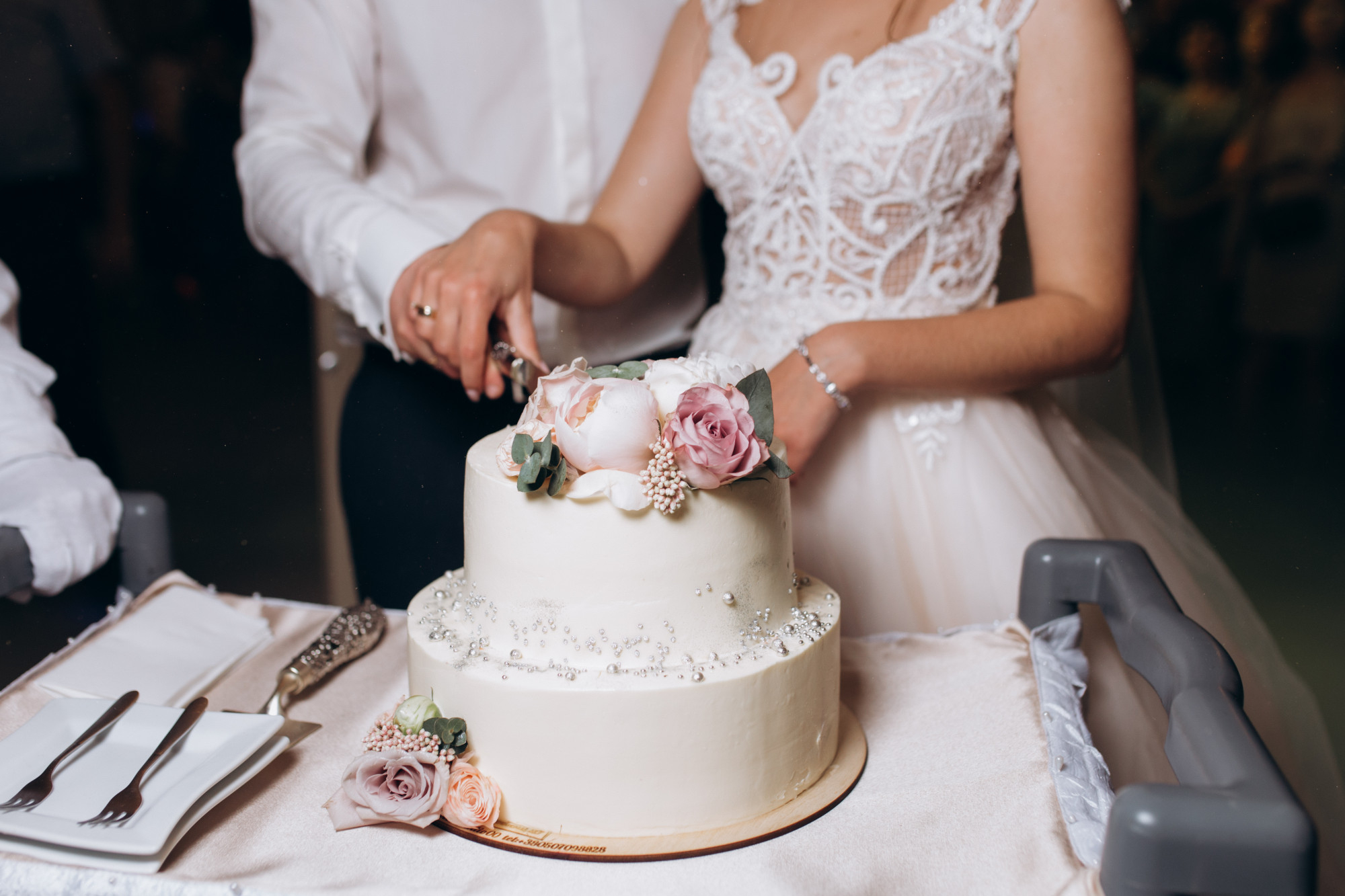
Then it was time to cut the cake.
I’d pictured one of those sweet wedding moments, our hands together on the knife, cutting the first slice and sharing it.
Instead, Ed suddenly grabbed me and smashed my face straight into the cake.
The room gasped.
I just froze.
Frosting covered my face and hair. My makeup was destroyed, my veil was a mess, and there was cake all over my dress.
I was so embarrassed and angry that I could feel tears coming.
A few people laughed awkwardly.
Mom covered her mouth in shock.
But Ed?
He thought it was hilarious.
He wiped frosting from my cheek, tasted it, and said, “Mmm. Sweet.”
That’s when I noticed Ryan.
He shoved his chair back and stood up, his jaw clenched.
I knew that look.
Before I could even react, my brother did something nobody in that room expected.
He walked toward the head table without hurrying, without raising his voice, without so much as glancing at Ed, and he came straight to me. He pulled the handkerchief out of his own breast pocket, the one Mom had insisted he carry that morning because it matched his tie, and he began, very gently, wiping the frosting away from my eyes first, then my cheeks, then working carefully at the mess in my hair, all while the whole room watched in a silence that felt louder than any sound could have been.
“Hey,” he said, quiet enough that it was mostly just for me. “Hey, look at me. You’re okay. I’ve got you.”
I couldn’t speak. I just nodded, my chin trembling, and let him keep working, the cool cloth against my skin, his hands steady even though I could feel, in the tightness of his jaw when it brushed close to my cheek, exactly how furious he actually was underneath that calm.
Then he did something I genuinely did not expect. He picked up the cake server that Ed had dropped on the table after his little performance, cut a small, clean slice, no more than a bite, and he turned to face the room, holding it out toward me on a plate.
“This is how it’s supposed to go,” he said, his voice carrying now, pitched to reach the back tables without ever rising into a shout. “You offer it. You let her taste it first, because it’s her day as much as his. You don’t get to decide, in front of a hundred and twenty people, that humiliating her is the funniest thing you could think to do at her own wedding.”
He held the plate out to me, and I took the small bite he offered, my hands shaking, and I watched him turn, finally, to look at Ed directly.
“Redo it,” Ryan said. “Properly this time. Or don’t. But everyone in this room just watched you decide her dignity was worth less than a laugh, and I want you to think very carefully about what you do in the next thirty seconds, because it’s going to tell all of us exactly who you actually are.”
I want to explain, before describing what happened next, why my brother’s reaction landed the way it did, both for me and for the rest of the room, because I think it would be easy to read that moment as simple, protective anger, and while it was certainly that, it was also considerably more complicated, rooted in things Ryan and I had never fully discussed with each other, not even in the months of wedding planning that had preceded that day.
Ryan is four years older than me, and after our dad died when I was seven and he was eleven, he became, in a lot of quiet, unglamorous ways, the man in our household, not because our mother expected that of him, but because he decided, on his own, at eleven years old, that someone needed to fill certain gaps, and he was the only one available. He walked me to school every morning for two years until Mom could adjust her work schedule. He sat with me during thunderstorms because Dad used to be the one who did that, and I was too young to understand why the house suddenly felt so much bigger and emptier during a storm. He learned to check the oil in Mom’s car because a neighbor mentioned it needed doing and Mom looked overwhelmed at the thought of learning something new on top of everything else grief had already piled onto her.
I don’t think I ever fully appreciated, until I was much older, exactly how much weight an eleven-year-old boy had quietly picked up and carried without ever once being asked to. And I think, watching Ed smash my face into that cake, something in Ryan recognized instantly, with a clarity that came from years of paying close, careful attention to how people treat the people they claim to love, exactly what kind of moment this actually was.
Ed stood there for a long moment, the plate still resting untouched in front of him, his earlier grin faltering into something that looked, for the first time all day, genuinely uncertain. I watched him glance around the room, taking in the faces of a hundred and twenty guests, most of them now watching him rather than me, waiting to see what he would do.
“It was a joke,” he said finally, his voice carrying less confidence than it had a moment earlier. “Come on, everybody does this at weddings. It’s tradition.”
“Some people do a gentle little smudge,” Ryan said. “A little bit on the nose, both people laughing together because they both knew it was coming. You shoved her entire face into that cake hard enough that she’s still got frosting in her ear. There’s a difference, Ed, and I think you know there’s a difference, because I watched your face the second after you did it, and you weren’t checking to see if she was okay. You were checking to see if the room thought it was funny.”
The silence that followed felt different from the shocked silence immediately after the cake smash. This silence had weight to it, the particular weight of a hundred and twenty people simultaneously recalculating something they thought they understood about the man standing at the head of that table.
I found my voice finally, though it came out smaller than I wanted it to. “Ed,” I said, “is that true? Were you checking the room?”
He didn’t answer right away, and that silence told me more than any answer could have.
My mother stood up from her seat at that point, moving toward me with the particular urgency mothers develop when their children are hurting, and I watched her take in the state of my dress, my hair, my ruined makeup, her own eyes filling with tears she was clearly trying to hold back for my sake.
“Sweetheart,” she said, “let’s get you cleaned up. Come with me.”
“In a minute, Mom,” I said, though I appreciated the offer more than I could easily express in that moment. “I need to hear what Ed says first.”
Ed finally spoke, his voice quieter now, though I couldn’t tell whether the quiet came from genuine remorse or simply the discomfort of being so publicly, thoroughly cornered. “I didn’t think about it like that,” he said. “I just thought it would be funny. I didn’t think about how it would actually feel for you, or how it would look to everyone else.”
“You tasted the frosting off my face and said sweet,” I said, the words coming out steadier now, some of my earlier shock giving way to a clarity I hadn’t expected to find so quickly. “In front of everyone. While I was standing there crying. What part of that felt like a joke you and I were sharing together, rather than something you were doing to me for everyone else’s entertainment?”
He didn’t have an answer for that either.
I want to describe what happened in the minutes that followed, because I think it mattered enormously, both for how the rest of that day unfolded and for decisions I made in the weeks after.
My mother took me to the bridal suite attached to the venue, along with my two bridesmaids, and we spent nearly twenty minutes carefully cleaning frosting out of my hair, redoing what makeup could be salvaged, and trying to steam out the worst of the damage to my dress. I cried during most of it, not the quiet, composed crying I had imagined might happen at some point during my wedding day, tears of joy during vows or during my father’s absence being acknowledged during the toasts, but genuine, ragged crying, the kind that comes from humiliation layered on top of shock.
“I don’t know if I can go back out there,” I told my mother, sitting in front of the mirror while she worked a comb carefully through a particularly stubborn tangle of frosting near my temple.
“You don’t have to decide that right this second,” she said. “But sweetheart, I want you to know, whatever you decide, whether you go back out there and finish this reception, or whether you walk out that door right now and never look back, I am completely behind you either way. This is your day. Nobody else gets to decide how it ends, especially not after what he just did.”
I appreciated hearing that, though some part of me, even in my anger and humiliation, still wanted to salvage the day, still wanted to believe that what had happened was an isolated failure of judgment rather than evidence of something deeper and more troubling about the man I had just married.
Ryan came to check on me about ten minutes later, knocking softly on the bridal suite door before my mother let him in.
I want to describe that room in a little more detail, because I remember it so clearly even now. It was small, lit by warm bulbs around a mirror that had, only an hour earlier, reflected back the version of myself I had spent months planning to see on this exact day, hair perfect, makeup flawless, veil arranged just so. Now it reflected someone considerably more disheveled, mascara smudged despite my bridesmaids’ best efforts, my eyes red rimmed, still wearing, from the waist down, the wedding dress I had chosen specifically because my father, in the one conversation we’d had about weddings before he died, had once told me he pictured me someday in something with exactly that kind of lace along the hem.
“How are you doing,” he asked, crouching down beside my chair the way he used to when I was small and upset about something, bringing himself down to my level rather than looming over me.
“I don’t know,” I said honestly. “I don’t know if I’m angry or embarrassed or scared, or all three at once. I don’t know if what he did was actually as bad as it feels right now, or if I’m overreacting because of the shock of it.”
“You’re not overreacting,” Ryan said, his voice carrying a firmness I rarely heard from him, since he had always been, throughout our lives together, the quieter, steadier one, rarely raising his voice, rarely asserting himself so directly. “I want to tell you something, and I need you to actually hear it, not just as your brother trying to protect you, but as someone who’s been watching Ed more carefully than maybe I ever told you.”
I felt my stomach tighten at that. “What do you mean?”
Ryan was quiet for a moment, clearly choosing his words carefully. “There have been a few things, over the past year, little moments I noticed but never said anything about because they seemed small on their own, and because you seemed so happy, and I didn’t want to be the brother who ruins everything by nitpicking your fiancé. But today, watching what he did, and more than that, watching his face right after he did it, I realized I’d been ignoring a pattern instead of just isolated incidents.”
“What kind of moments,” I asked, my voice shaking now for a different reason.
“Remember at your engagement party,” Ryan said, “when he made that joke about your work promotion, the one where he said something like, don’t worry, we’ll still love you even when you’re the boss, in this tone that got a laugh from the room but made you go quiet for the rest of the night? Or the barbecue at Mom’s last summer, when he told that story about you crying during a movie, and made a whole bit out of imitating you crying, while you sat there laughing along because everyone else was laughing, but I watched your eyes, and you weren’t actually finding it funny.”
I felt something cold settle in my chest, remembering both of those moments clearly now that Ryan had named them, moments I had genuinely absorbed and moved past at the time, telling myself I was being too sensitive, that Ed was simply someone who loved a joke and didn’t mean anything hurtful by it.
“I never said anything,” Ryan continued, “because each individual moment seemed small enough to let go, and because I trusted you to tell me if something was genuinely wrong. But watching today happen, watching him do something so much bigger and so much more public, I think I finally understand that this isn’t random. I think Ed has a pattern of getting a laugh at your expense, in front of other people, and I think today was just the biggest, most obvious version of something that’s actually been happening for a while.”
I sat with that for a long moment, feeling my mother’s hand rest gently on my shoulder, feeling my own understanding of the past year of my relationship shifting, reluctantly, into a shape I hadn’t wanted to see clearly before.
“I don’t know what to do,” I said finally.
“You don’t have to decide anything right now,” my mother said again, echoing what she’d told me earlier. “But I think, whatever you decide, you deserve to actually think it through clearly, without the pressure of a hundred and twenty guests waiting outside for you to make everything feel normal again.”
I want to describe what actually happened next, because I think it surprised everyone, including myself.
I went back out to the reception about thirty minutes later, my hair and makeup as restored as they could be, wearing a spare dress my mother had, somewhat presciently, packed as a backup in case of any wedding day emergency, though neither of us had imagined the emergency taking quite this particular shape.
The room quieted as I walked back in, a hundred and twenty faces turning toward me with expressions ranging from concern to curiosity to, in a few cases, the particular discomfort of guests who had laughed along with Ed’s joke and were now recalculating whether that laughter had been appropriate.
Ed stood up as I approached, his expression carrying genuine anxiety now, the earlier grin entirely gone. “I am so sorry,” he said, before I could say anything myself. “I’ve been sitting here for thirty minutes thinking about what Ryan said, and about what you asked me, and I think, I think I need to actually admit something, in front of everyone, since I did what I did in front of everyone.”
I hadn’t expected that, and I watched him take a breath before continuing.
“I have a habit,” he said, “of making myself the center of attention by making jokes at other people’s expense, especially yours. I think I’ve told myself for a long time that it’s harmless, that everyone laughs, that it’s just how I show affection. But watching your face today, watching you cry, and hearing Ryan point out other times I’ve done smaller versions of the same thing, I think I need to actually own that this isn’t harmless. I think I’ve been building a habit of humiliating you for laughs, and I did it at the biggest possible moment today, and I am genuinely sorry.”
I stood there for a long moment, processing that apology, weighing its sincerity against the pattern Ryan had just described to me, wondering whether an apology delivered under the pressure of public humiliation actually represented genuine insight or simply damage control.
“I appreciate you saying that,” I said finally, keeping my voice steady. “But Ed, I need some time to actually think about what this means, for us, for today, for everything. I can’t just pretend the last hour didn’t happen because you apologized in front of everyone.”
“I understand,” he said quietly.
I want to be honest that the rest of that reception did not proceed the way either of us had imagined when we planned it. We did not dance our first dance with the easy joy I had pictured during months of planning. We did not cut a second, redone slice of cake together, since I genuinely could not bring myself to repeat that particular ritual after everything that had happened. Instead, the evening continued in a subdued, careful register, guests offering quiet, sympathetic conversation rather than the loud, celebratory energy that had characterized the earlier part of the day.
I danced with Ryan instead, during what would have been the father-daughter dance, a tradition we had already planned to modify given our father’s absence, and I found myself, holding onto my brother during that dance, crying again, though this time from a complicated mixture of grief for my father, gratitude for my brother, and genuine uncertainty about the marriage I had just entered.
“Whatever you decide,” Ryan told me, during that dance, “in the coming days, weeks, however long you need, I want you to know I’ll support you completely. If you decide this was a single, terrible mistake and you want to work through it with him, I’ll support that. If you decide this reveals something you can’t move past, I’ll support that too. I just needed you to actually see it clearly today, rather than letting it get absorbed into everything else without anyone ever naming it.”
I want to describe what happened over the following weeks, because I think the real story lives there, in the slower, more complicated aftermath of that single dramatic day.
I remember the drive back to my mother’s house that first night, still in the spare dress, my ruined wedding gown folded carefully into a garment bag on the seat beside me, Ryan driving because I genuinely didn’t trust my own hands on a steering wheel yet. Neither of us spoke much during that drive, the radio playing quietly, the events of the day still settling into something I could begin to actually process rather than simply survive moment to moment.
“Do you regret it,” I asked him eventually, somewhere around the halfway point. “Standing up like that, in front of everyone?”
He was quiet for a moment, considering the question seriously rather than offering an automatic reassurance. “No,” he said finally. “I’ve thought about it since we left, actually, whether I should have pulled you aside privately instead of doing it in front of the whole room. But I think, watching his face, watching how quickly he tried to laugh it off and keep going, I don’t think a private conversation would have actually landed the same way. I think he needed to feel exactly what you felt, being confronted in front of everyone, to actually understand the weight of what he’d done.”
I sat with that for the rest of the drive, understanding, even in my exhaustion and grief for the wedding day I’d imagined, that Ryan’s instinct had probably been exactly right.
Ed and I did not immediately separate, though we also did not simply resume our marriage as though nothing had happened. I moved back into my mother’s house for the first week, needing space to think clearly without the daily pressure of navigating a shared home with someone I was no longer certain I fully trusted.
Ed reached out daily during that week, not pushing for immediate resolution, but checking in, asking how I was doing, and eventually, about five days in, asking whether I would be willing to attend a counseling session with him before we made any permanent decisions about our marriage.
I agreed, cautiously, and we began seeing a therapist named Dr. Whitfield, who specialized in newlywed couples navigating significant early conflict, and over the following month, we worked through not just the specific incident at the wedding, but the broader pattern Ryan had identified, moments over the preceding two years where Ed had, in fact, repeatedly made me the subject of jokes at my own expense, always in front of others, always framed as harmless affection rather than what it actually was.
“I think,” Ed said, during one particularly difficult session about three weeks into our counseling, “I grew up in a family where teasing was how we showed love. My dad teased my mom constantly, in front of everyone, and she always laughed along, and I genuinely believed, watching that, that this was simply how affection worked between people who loved each other. I never really examined whether the people being teased actually enjoyed it, or whether they were simply performing enjoyment because objecting would have made them seem like they couldn’t take a joke.”
Dr. Whitfield pressed him on this, asking whether he understood the difference between genuine, mutual teasing and one-sided humiliation dressed up as humor, and I watched Ed struggle, genuinely struggle, with articulating that difference clearly, which told me something important about how deeply unexamined this particular pattern had remained throughout his entire life.
“I think the wedding was different,” I said, during that same session, “not just in scale, but in kind. Smaller jokes, I could tell myself I was being oversensitive, that I should just laugh along the way you clearly expected me to. But smashing my face into a cake, hard enough to hurt, in front of everyone I love, and then tasting the frosting off my own face while I was crying, that wasn’t teasing. That was performance, at my expense, for an audience, and I don’t think I can simply move past that without genuinely understanding whether you’re capable of recognizing the difference going forward.”
We continued counseling for nearly four months, and I want to be honest that it was genuinely difficult work, requiring both of us to examine patterns and assumptions we had carried into the relationship without ever fully naming them. Ed attended individual therapy alongside our couples sessions, working specifically on understanding the roots of his need for public validation through humor, often at someone else’s expense, and gradually, over those months, I watched genuine, if imperfect, change begin to take hold.
I want to describe one particularly difficult session, about two months in, when Dr. Whitfield asked Ed to describe, in detail, exactly what he remembered feeling in the moments right before he smashed my face into the cake.
Ed sat with that question for a long time before answering. “I remember feeling nervous,” he said finally. “Standing up there, everyone watching us, the photographer counting down, and I think some part of me panicked, worried that the moment wouldn’t feel special enough, wouldn’t feel memorable enough, and I reached for the thing I always reach for when I feel that kind of pressure, which is making people laugh. I didn’t think about you at all in that split second, honestly. I thought about the room, and what would get the biggest reaction from the room.”
“That’s a genuinely important thing to admit,” Dr. Whitfield said. “Because it tells us something crucial. This wasn’t really about hurting Sarah specifically. It was about your own anxiety, and a well-worn habit of managing that anxiety by making someone else the source of the room’s entertainment, without any real thought given to how that person might experience it.”
I found that explanation both clarifying and, in its own way, more troubling than if Ed had simply been cruel on purpose, because it suggested a habit so deeply ingrained that it operated almost entirely below the level of conscious choice, at least in moments of pressure or anxiety.
He stopped making jokes about me in front of others entirely for the first several months, an overcorrection Dr. Whitfield actually gently challenged at one point, suggesting that complete avoidance wasn’t necessarily healthier than the original pattern, that the goal was learning to distinguish genuinely mutual, affectionate humor from one-sided humiliation, rather than simply eliminating humor altogether out of fear.
Slowly, carefully, we began rebuilding something that felt more genuinely equal than what we’d had before, Ed learning to check in with me privately before making any joke that touched on something personal, me learning to speak up immediately rather than absorbing discomfort silently and letting it accumulate the way I apparently had for the two years preceding our wedding.
I want to describe a particular moment about six months after the wedding that helped me understand whether this change was actually genuine or simply a temporary correction born from crisis.
We were at a dinner party with several of Ed’s coworkers, people I didn’t know especially well, and one of them made a comment, clearly intended as a lighthearted joke, about how Ed had married someone considerably more organized than himself, teasing him about his notorious tendency to lose his keys and his wallet on a near weekly basis.
Ed laughed along easily, and then, without any prompting from me, turned the joke gently back toward himself rather than deflecting it onto me. “She’s saved me more times than I can count,” he said, “though I should mention, in fairness, she’s also the one who convinced me we needed a key hook by the door, which has genuinely changed my life, so really this is a story about her being right, not about me being hopeless.”
It was a small moment, genuinely small, but I noticed, watching him navigate that exchange, that he had found a way to be funny, to participate genuinely in the easy social banter of a dinner party, without needing me to be the punchline. He had made himself the slightly foolish one, gently, self-deprecatingly, rather than reaching for the easier, more familiar habit of making me the target.
I mentioned this observation to him later that night, and he told me it had actually been something he’d been consciously practicing, a specific strategy Dr. Whitfield had suggested during one of his individual sessions, learning to find humor that didn’t require anyone else’s discomfort as its foundation.
“It’s harder than I expected,” he admitted. “I think I’d built an entire social identity around being the person who made everyone laugh, often at someone else’s expense, and learning a different way of being funny felt, for a while, like learning an entirely new language.”
I appreciated that honesty, understanding it as genuine evidence of sustained effort rather than a single, easily performed correction.
I also want to describe what happened between Ryan and Ed during this period, because I think it mattered considerably to the overall repair of our extended family relationships.
Ed reached out to Ryan directly about two months after the wedding, asking whether they could talk, just the two of them, without me present as an intermediary.
I remember Ed telling me, before that conversation happened, how nervous he felt about it, pacing our living room the evening before, rehearsing what he wanted to say. “I don’t know how to actually thank someone for embarrassing me in front of a hundred and twenty people,” he admitted, half joking, though I could hear the genuine anxiety underneath it. “But I think I need to find a way to say it anyway, because he’s the reason I’m actually doing this work instead of just letting the whole thing get quietly buried.”
Ryan told me about that conversation afterward, describing Ed’s genuine, if uncomfortable, effort to actually thank him for intervening the way he had.
“He told me he’d been furious at me, initially,” Ryan said, “standing there in front of everyone, correcting him so directly. But he said he’d spent the following weeks thinking about it, and he realized that if I hadn’t stepped in the way I did, he might have simply continued the pattern indefinitely, since apparently nobody had ever confronted him about it quite that directly before.”
“How did you respond to that,” I asked.
“I told him I didn’t do it to embarrass him for its own sake,” Ryan said. “I did it because I watched my sister’s face, and I recognized exactly what kind of moment it was, having spent our whole childhood learning to recognize when someone actually needed protecting versus when they just needed space to handle something themselves. I told him I hoped, genuinely, that he’d become the kind of husband who never put me in that position again, because as much as I love you, I don’t actually want a front row seat to more moments like that one.”
I found myself genuinely moved hearing that exchange, understanding it as evidence that the reckoning that dramatic wedding day had provoked extended well beyond simply Ed and me, into a broader, if imperfect, repair of trust between him and the rest of my family.
I want to mention, too, a conversation I had with my mother during this same period, because I think it helped me understand something important about how she’d experienced that day herself.
“I keep thinking about your father,” she told me, one evening while we sat together on her porch, several months after the wedding. “About what he would have done, standing there, watching that happen to you. I think he would have done exactly what Ryan did, honestly. He never had much patience for anyone who made a joke at someone else’s expense, especially not at the expense of someone he loved.”
“Do you think Ryan learned that from him,” I asked, “even though Dad died when he was so young?”
“I think some of it,” my mother said slowly, “is just who Ryan is, something built into him regardless of who taught him what. But I also think, watching him grow up without his father, he absorbed a certain seriousness about protecting the people he loves, maybe because he understood, earlier than most children ever have to, how quickly that protection could be taken away entirely.”
A year after our wedding, we held a small, private gathering to mark the anniversary, just our immediate family, and during that gathering, Ed asked if he could say something.
“I want to acknowledge something,” he said, standing at the head of the table where, a year earlier, he had smashed my face into a cake in front of a hundred and twenty guests. “I know this day carries complicated memories for all of us, not just the joy of the wedding itself, but also what happened afterward. I want to say, clearly, in front of the people who matter most, that I understand now how genuinely hurtful and thoughtless that moment was, and I’m grateful, more than I think I’ve fully expressed, that Ryan cared enough about his sister to say something rather than letting it pass.”
He turned to look directly at Ryan. “I don’t think I would have done the work I’ve done this past year without that moment forcing me to actually confront a pattern I’d never once examined. I know it probably felt strange, defending your sister against your own new brother-in-law on his wedding day. But I want you to know I’m genuinely thankful for it now, even though I wasn’t in the moment.”
Ryan nodded, accepting that acknowledgment with the same quiet steadiness that had characterized his intervention a year earlier. “I just wanted her to have a wedding day that actually reflected how much she deserves to be celebrated,” he said, “not humiliated for a room’s entertainment. I’m glad it turned into something that actually helped, rather than just ending things entirely, though I want you to know, Ed, I would have supported that outcome just as fully if that’s what she’d needed.”
I think about that entire year often, the strange, difficult journey from a single, devastating moment at my own wedding reception to a marriage that, while imperfect and still actively working through patterns neither of us had fully examined before, felt genuinely more honest and more equal than what we’d had before that cake was ever cut.
I’ve talked to a few friends over the years about that day, some of whom were actually there, guests seated at those hundred and twenty tables who witnessed the whole thing unfold. Nearly all of them, when they bring it up, mention Ryan’s response before they mention Ed’s original act, which I think says something important about which moment actually mattered more, in the end. One friend, who had been sitting close enough to the head table to hear most of the exchange clearly, told me, years later, that watching Ryan cut that small, clean slice and offer it to me had been one of the most quietly powerful things she’d ever witnessed at a wedding, more moving, she said, than any toast or vow she’d heard that entire day.
I don’t know if every marriage could survive something like what happened that day. I think, honestly, some marriages shouldn’t survive it, if the pattern it reveals turns out to be unexamined and unchangeable rather than something a person is genuinely willing to confront and work through. I think my own willingness to stay and work through it came, in large part, from watching Ed’s genuine effort in the weeks and months that followed, effort that extended well beyond the immediate crisis of that single day into sustained, difficult, ongoing work.
But I also think, regardless of how any individual marriage navigates a moment like that, the more important lesson is the one my brother taught an entire room of a hundred and twenty wedding guests that afternoon, standing up without hesitation, walking directly to the person who needed him, and refusing to let humiliation be dressed up as celebration simply because it happened during a wedding, simply because everyone else in the room seemed willing to laugh along rather than name what they were actually watching.
I keep that handkerchief, the one Ryan used to wipe frosting from my face that day, in a small box on my dresser now, alongside other keepsakes from our wedding, not because the memory it represents is a happy one exactly, but because it represents something I think matters considerably more than simple happiness, the particular, fierce loyalty of a brother who spent his entire life learning to notice exactly when someone he loved needed protecting, and who never once hesitated, even in a room full of a hundred and twenty watching strangers, to actually provide that protection when it mattered most.
Ed and I are still married, four years later now, and our relationship has continued evolving in ways that feel considerably healthier than the pattern that nearly ended things before they had properly begun. We have our own inside jokes now, ones that make both of us laugh together rather than one of us laughing at the other’s expense, and I find, increasingly, that I trust the humor between us precisely because I know it no longer requires my own humiliation as its foundation.
I think about how different our anniversary celebrations look now compared to that first, difficult one. Last year, on our third anniversary, Ed surprised me with a small, private cake, just the two of us at our kitchen table, and before either of us touched it, he looked at me and said, only half joking, “I want to formally confirm, out loud, that we are cutting this cake like reasonable adults.” I laughed, genuinely laughed, and we did exactly that, hands together on the knife, a small, quiet moment that felt like everything the original moment should have been, minus the audience, minus the performance, just the two of us actually sharing something rather than one of us providing entertainment for a room.
Ryan stood as best man at our vow renewal ceremony last year, a small, quiet gathering we held specifically to mark how far our marriage had traveled since that difficult first anniversary, and during his toast, he raised his glass and said, simply, “I’m glad I got to watch you build something real, the second time around, after everyone got to see what wasn’t real, the first time.”
I think that’s exactly right. Our wedding day showed a hundred and twenty guests something false, a performance of easy affection that actually concealed a genuine pattern of disrespect neither Ed nor I had fully examined. What came after, slower and considerably less photogenic than any wedding reception, showed something true, two people willing to do the difficult, unglamorous work of actually building a marriage worth having, rather than simply performing one for an audience.
I think my father, wherever he is, whatever he might have witnessed of that difficult day, would have been proud of the way Ryan stepped in without hesitation, the way an eleven-year-old boy who once quietly took on the responsibility of protecting his little sister during thunderstorms grew into a man who protected her, just as fiercely, in front of a hundred and twenty wedding guests, refusing to let a single moment of public humiliation pass unnamed and unaddressed.
That protection, more than any single perfect wedding moment, is what I actually remember most clearly now, four years later, whenever I think back on that day. Not the cake, not the humiliation, not even the tears. Just my brother, walking toward me without hesitation, handkerchief in hand, saying the words that changed everything that followed: you’re okay, I’ve got you.

Lila Hart is a dedicated Digital Archivist and Research Specialist with a keen eye for preserving and curating meaningful content. At TheArchivists, she specializes in organizing and managing digital archives, ensuring that valuable stories and historical moments are accessible for generations to come.
Lila earned her degree in History and Archival Studies from the University of Edinburgh, where she cultivated her passion for documenting the past and preserving cultural heritage. Her expertise lies in combining traditional archival techniques with modern digital tools, allowing her to create comprehensive and engaging collections that resonate with audiences worldwide.
At TheArchivists, Lila is known for her meticulous attention to detail and her ability to uncover hidden gems within extensive archives. Her work is praised for its depth, authenticity, and contribution to the preservation of knowledge in the digital age.
Driven by a commitment to preserving stories that matter, Lila is passionate about exploring the intersection of history and technology. Her goal is to ensure that every piece of content she handles reflects the richness of human experiences and remains a source of inspiration for years to come.