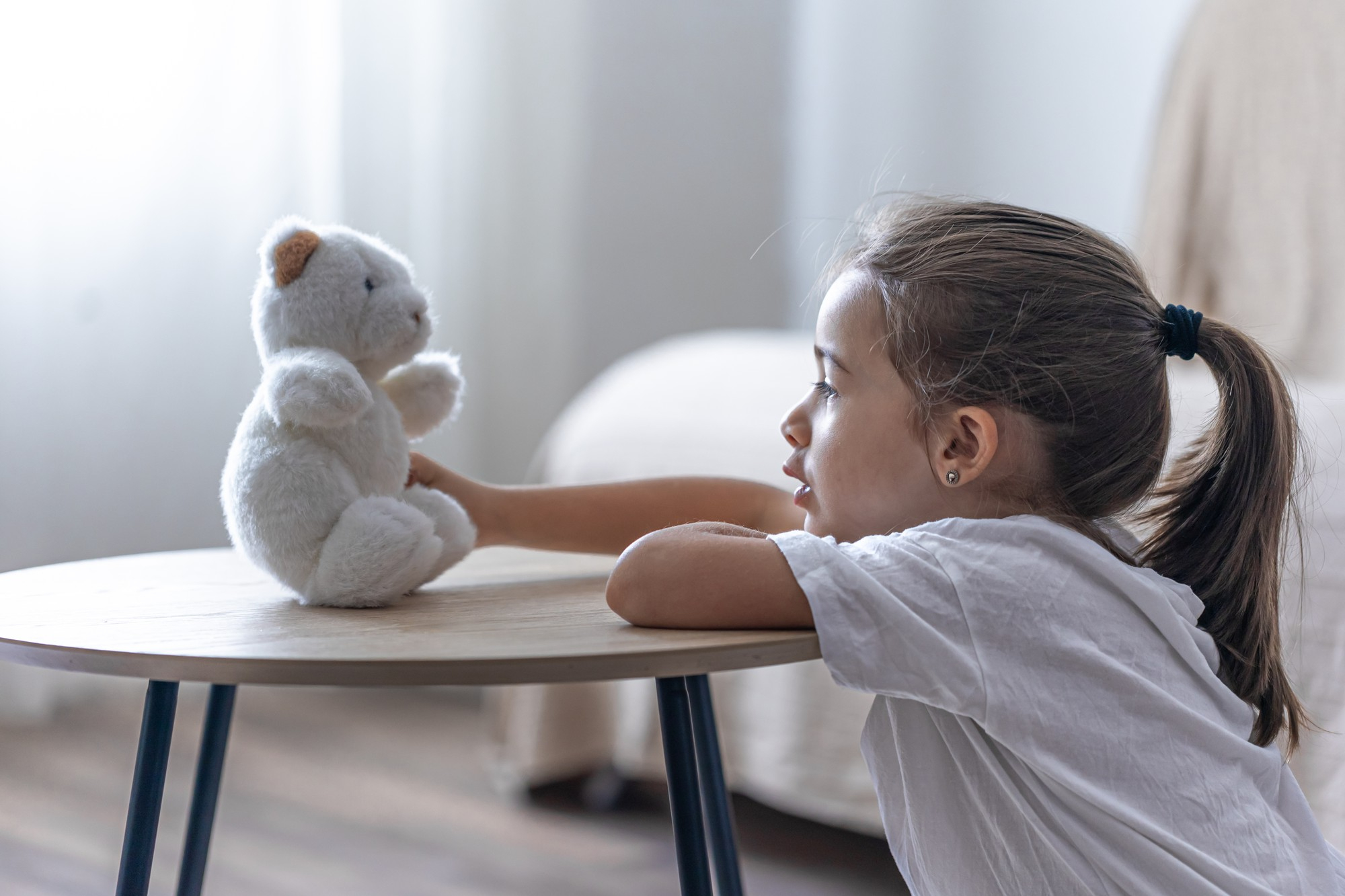
The Table
From the moment I married Daniel, his mother Evelyn made certain I understood one thing above all others: I was not, and would never be, part of her world.
She was too refined to say it outright. That was never her way. Evelyn Ashford did not scream, did not make scenes, did not lower herself to anything so vulgar as open hostility. Her cruelty was a quieter instrument, tuned over decades of practice, and it worked by inches. A glance at my shoes that lingered half a second too long. A compliment delivered with just enough emphasis on the wrong word to reverse its meaning. That dress is very brave of you, dear. A way of introducing me at her parties, this is Daniel’s wife, Claire, with a little pause before the word wife, as though the fact still surprised and mildly disappointed her, as though she were forever hoping to wake up and find the marriage had been a rumor.
I came from nothing, by her measure. My father drove a delivery truck for a beverage distributor for thirty years, and my mother cleaned houses, some of them, I later realized with a private and bitter amusement, houses not so different from Evelyn’s. I put myself through a state college on loans I was still paying down when I met Daniel, and I worked as a physical therapist at a rehabilitation clinic, good honest work that I loved, work that meant nothing at all to Evelyn except as further evidence that her son had married beneath the Ashford name.
The Ashford money was old, or old enough to think of itself that way. Evelyn’s late husband had built a chain of something, medical supply distribution I think, and sold it, and left her an estate outside the city that could have swallowed the entire street I grew up on. A great pale house set back behind iron gates, with grounds a landscaping company tended twice a week, and a woman named Marta who had cooked and kept house for Evelyn for twenty years and who was, I always suspected, the only person on earth Evelyn genuinely could not do without and also could not quite bring herself to be kind to.
Daniel was different from his mother. That was the whole reason I’d been able to marry into that family at all, the reason I’d fallen in love with him in the first place. He’d spent his whole life quietly recoiling from the coldness he was raised in, and he’d built himself into a warm and decent man almost in defiance of it. He saw his mother clearly. He knew what she was. But he also loved her, in the complicated way you love a parent who wounded you, and he’d spent our entire marriage caught in the middle, trying to keep a peace between his wife and his mother that his mother had no interest in keeping.
For years, I let it go. I want to be honest about that, because it’s the part of this story I’ve had to make my own peace with. Every barbed comment, every cool dismissal, every time Evelyn made me feel like a stain on her tablecloth, I swallowed it. I told myself I was being the bigger person. I told myself she was old, set in her ways, that it cost me nothing to absorb her little cruelties, that keeping the peace was worth more than winning any single skirmish. I told myself all the things you tell yourself when you’ve decided that being treated badly is easier than the fight it would take to stop it.
And I believed it, mostly, because for years the cost was only mine to pay. I could absorb it. I’m a grown woman. Evelyn’s disdain couldn’t actually touch the core of me, couldn’t reach the parts of my life that mattered, my marriage, my work, my little daughter.
My little daughter. Lily.
That was the line, though I didn’t know exactly where it was until the day Evelyn crossed it. There’s a difference between what you’ll endure yourself and what you’ll allow to be done to your child, and it’s a difference that lives in the body, in the animal part of a mother that has nothing to do with keeping the peace.
Lily was eight that summer. She was the best of both of us, Daniel’s warmth and my stubbornness, a bright, kind, slightly clumsy child who loved animals and drawing and her cousins with an open uncomplicated heart. She was the kind of clumsy that comes from moving through the world too enthusiastically to watch where your elbows go, always knocking things, always apologizing, always picking them back up. There was nothing careless in it. She was just a child, fully and joyfully a child, and her small collisions with the physical world were part of what made her herself.
Every summer, Evelyn hosted her grandchildren at the estate. A week at Grandmother’s, with the pool and the grounds and the cousins all together. Daniel’s sister had three children, and there were a couple of others from various branches of the family, and the whole loud pack of them descended on that great cold house for a week each August and filled it, however briefly, with something like life.
I was hesitant about Lily going that year. Deeply hesitant. Because I knew Evelyn, and I knew that a week under her roof, unprotected by me, was a week of exposure to exactly the kind of subtle diminishment I’d spent years teaching myself to withstand but that an eight-year-old had no armor against. I worried she’d come back a little smaller, a little more uncertain, having absorbed some of Evelyn’s poison without even understanding what it was.
But Lily wanted to go. She loved her cousins. She’d been talking about it for weeks, the pool, staying up late, all of them in sleeping bags on the floor of the big room. And I couldn’t bring myself to be the one who took that from her out of my own history with her grandmother. Daniel thought it would be fine. His mother might be cold to adults, he said, but she doted on the grandchildren, showed them a warmth she showed no one else, and Lily would be one of a whole pack, safe in the crowd.
So I agreed. Against every instinct, I agreed, and I drove her out to the estate on a bright Saturday morning with her little suitcase and her drawing pad, and I hugged her at the door and told her to have fun and be good and call me if she needed anything, anything at all, day or night. And I drove home with a knot in my stomach that I told myself was just an overprotective mother’s nerves.
Three hours. That’s how long it took. Three hours after I dropped her off, my phone rang, and it was Lily, and she was crying.
“Mommy.” Her voice was small and wet and it went straight into me like a blade. “Mommy, please come get me. Please.”
I was already standing, already reaching for my keys, my whole body flooding cold. “Lily, baby, what’s wrong? What happened? Are you hurt?”
“I accidentally bumped a water glass.” She was gulping air between the words. “At dinner. It spilled a little, I said sorry, I didn’t mean to, and Grandma got mad and she, she moved my plate. She told the staff to move my plate and now I’m eating out here by myself and she said I don’t belong at the table with the guests.”
The floor seemed to tilt under me.
“Where are you, sweetheart?” I made my voice as calm as I could, which was not very calm at all. “Where exactly are you right now?”
“She had them set up a little table for me,” Lily sniffled. “In the garage. The one that’s attached to the house. I’m eating in the garage, Mommy. By myself. Everybody else is inside at the table and I’m out here and I didn’t do anything, I just bumped the glass, it was an accident.”
I had to sit back down. I had to, because my legs stopped working for a moment.
My eight-year-old daughter. Sitting alone at a makeshift table in a garage. Eating her dinner in exile among the cars and the garden tools because she had knocked over a glass of water, the way children do, the way every child who has ever sat at a table has done, and her grandmother had decided that this small ordinary accident was grounds for banishment. Had decided, in front of a room full of guests and cousins, that this little girl did not belong.
And that phrase. You don’t belong at the table. I knew that phrase. I had felt that phrase, in a hundred subtler forms, for a decade. Evelyn had spent years telling me, in her quiet coded way, that I didn’t belong at her table. And now she had said it, aloud and unmistakable, to my daughter. She had taken the exact weapon she’d been using on me for years, and she had turned it on a child.
“I’m coming,” I told Lily. “Right now. I’m getting in the car this second. Do not move, do not let anyone tell you you did anything wrong, because you didn’t. It was an accident and you’re the sweetest girl in the whole world and I am coming to get you right now. Stay on the phone with me if you want. I love you. I’m coming.”
I called Daniel from the car. He was at his office; he’d gone in that Saturday to catch up on some work. I told him, fast, in as few words as I could manage without my voice breaking, what his mother had done.
There was a silence on the line, and then Daniel said, in a voice I had rarely heard from him, a voice with something dangerous underneath its control, “She put my daughter in the garage.”
“Yes.”
“For spilling water.”
“Yes, Daniel.”
“I’m leaving right now. I’ll meet you there.”
We met on the road, both of us pulling up to those iron gates within a minute of each other, and Daniel left his car in the drive and got into mine and his face was white and set, and neither of us said much, because there wasn’t much to say. We drove up the long approach to the great pale house, past the manicured grounds, and we did not go to the front door.
We went straight to the side, to the attached garage, and Daniel hit the button on the exterior keypad, the code he’d known since childhood, and the door rolled up.
And there she was.
My little girl, sitting alone at a folding card table someone had set up between a gleaming luxury sedan and a wall of hanging garden tools. A plate of food in front of her, barely touched. Her drawing pad beside it, unopened. She’d stopped crying at some point, the way children do when they’ve cried themselves out, and she was just sitting there, small and still and quiet, staring at nothing, and that quiet stillness was somehow worse than the crying had been. That was a child who had been made to understand, for the first time in her short life, that she was unwanted.
The moment the door rose and she saw us, her face crumpled again, and she was up and out of the chair and running, and I caught her, I went down on my knees on the concrete and caught her and wrapped her all the way up in my arms, and she pressed her wet face into my neck and I held her and I could feel her whole small body shaking.
“I’ve got you,” I whispered into her hair. “I’ve got you, baby. I’m here. You did nothing wrong. Do you hear me? Nothing. You’re perfect and I love you and this was not your fault.”
Daniel knelt beside us and put his arms around both of us, and for a moment the three of us just stayed there on the garage floor, and I could feel my husband trembling with a fury I could feel matching in my own chest, a cold clean rage that had burned off all the years of swallowing and keeping the peace and being the bigger person.
We got Lily calmed enough to walk. We took her out to the car. Daniel got her buckled into the back seat, and I got her drawing pad, and we put a blanket around her even though it was August, because a child in shock needs the weight of something warm around her, and Daniel got in the front to sit with her, to be with her, to keep her safe and held while I did what I was about to do.
Because I told them both, quietly, that I needed to go back inside. Alone.
Daniel looked at me. And whatever he saw in my face, he didn’t argue. He just nodded, and reached out and squeezed my hand, and said, “Do what you need to do.”
I want to tell you what I felt, walking back across that drive and into that house, because it wasn’t what I expected. I had spent ten years imagining, in my angriest private moments, what I would say to Evelyn if I ever truly let myself. I’d composed speeches. I’d rehearsed devastating lines. I’d imagined finally, finally telling that cold cruel woman exactly what she was, at full volume, in front of everyone.
But walking into that house, I felt none of that heat. What I felt instead was a strange, clear, almost peaceful calm. Because I had realized something, somewhere between the garage and the front door, something that changed everything.
Yelling at Evelyn would give her exactly what she needed. It would let her be the victim. It would let her turn to her guests afterward and shake her head and say, you see, you see what my son married, no breeding, no self-control, screaming in my home like a fishwife. It would let her file the whole thing away as further proof that I didn’t belong, that I’d never belonged, and it would let her feel, underneath her performance of wounded dignity, that she’d won. That she’d finally gotten the ugly scene out of me she’d been waiting a decade for.
I was not going to give her that. I had swallowed her cruelty for ten years to keep a peace that turned out to be worthless, and I was done swallowing, but I was not going to trade it for a screaming match she would enjoy. I was going to do something else. Something quiet, and final, and far more powerful than any speech.
I walked into the dining room.
The scene was exactly as Lily had described it, and worse for being so exactly as I’d pictured. The long table, gleaming, set with Evelyn’s good china. The guests, half a dozen of Evelyn’s set, the same kind of people she always surrounded herself with, drinking wine and laughing at some story. The cousins, Daniel’s sister’s children among them, eating and chattering, and there, at the head of the table, presiding, luminous with the particular pleasure she took in being the center of her own perfect world, was Evelyn.
She was laughing. That was the thing that nearly undid my calm. She was laughing at something one of her guests had said, her head tipped back, her wine glass in her jeweled hand, completely at ease, as though she had not, an hour earlier, banished a crying eight-year-old to eat alone among the automobiles. As though nothing at all had happened. As though it were nothing. Because to her, it was nothing. My daughter’s humiliation had cost her not a single moment’s discomfort.
She saw me in the doorway, and a flicker of something crossed her face, and then she smoothed it into her hostess’s mask.
“Claire,” she said, cool and smooth. “I didn’t realize you were coming by. Is something the matter?”
The whole table had turned to look at me. The guests, curious. The cousins, uncertain, some of them, I saw, wearing the guilty faces of children who know something bad happened to another child and did nothing.
I did not raise my voice. I want that understood. I walked up to Evelyn, at the head of her table, and I smiled at her, politely, warmly even, the exact polished social smile she had taught me by example over a decade of her parties. And I did the one thing I had wanted to do for years, the thing I finally understood was the only move that would actually matter.
I reached into my bag, and I took out my phone, and I set it on the table in front of her, and on the screen was a photograph.
I had taken it in the garage. Before we left. Some cold clear part of me, even in the middle of my rage and my grief for my daughter, had thought to take it. A photograph of Lily, eight years old, sitting alone at a folding card table between a luxury car and a wall of garden tools, her plate in front of her, her small face streaked with tears, exiled from her grandmother’s table.
“I wanted to show you something, Evelyn,” I said, quietly, pleasantly, so that everyone at that silent table could hear every calm word. “This is my daughter. Your granddaughter. This is where you had her eat her dinner tonight, because she knocked over a glass of water. In the garage. Alone. Crying. Because you told her, an eight-year-old child, that she didn’t belong at your table.”
The dining room had gone absolutely silent. The kind of silence that has weight.
I did not stop. I did not shout. I just kept my voice level and let the words fall one at a time into that quiet.
“You’ve been telling me I don’t belong at your table for ten years, Evelyn. In your own quiet way. I always let it go. I told myself it didn’t matter, that I could take it, that keeping the peace was worth more than making you face what you are. And maybe, when it was just me, that was true. But you used the same words on my little girl. You did to a child exactly what you’ve done to me for a decade. And I’m not going to let that go, and I’m not going to keep any peace with it, and I’m certainly not going to keep sending my daughter into this house to be taught by you that she’s less than the other children because her mother wasn’t born to the right kind of family.”
I picked the phone back up.
“So here’s what’s going to happen,” I said. “You won’t be seeing Lily again until you understand what you did tonight. Not on holidays. Not next summer. Not at all. You’ve spent years making sure I knew I wasn’t welcome in your world. Now you can find out what it’s like to be made unwelcome in ours. And I want you to sit here, at your beautiful table, with your guests, and think about the fact that you had a granddaughter who loved you, who was so excited to come see you that she talked about it for weeks, and you threw her away over a spilled glass of water because you couldn’t stand to have anything less than perfect at your table. That’s not me doing that to you, Evelyn. That’s you. You did that. I’m just the one telling you the truth about it, out loud, in front of everyone, for once.”
And I watched it land.
I watched Evelyn Ashford’s face, the face that had looked down on me for ten years with such unshakable composure, go completely pale. The color drained out of it. The wine glass in her hand trembled, just slightly, and she set it down. And for the first time in all the years I’d known her, I watched that perfect mask crack, because she understood, finally, that this was not a skirmish she could win with a barbed comment, that I was not going to give her the screaming scene she could dismiss, that I had simply, quietly, in front of the audience whose good opinion was the only thing on earth she truly valued, told the plain unanswerable truth about what she had done.
Her guests were staring at her. Not at me. At her. And I understood that this, this, was the thing Evelyn could not survive. Not my anger. The judgment of her own kind. She had built her entire life around the good opinion of these people, around being the gracious grand hostess at the head of the perfect table, and I had just set down in the middle of it a photograph of a crying banished child, and there was no smoothing that over, no coded comment that could undo it, no way to make herself the victim of a woman who had never once raised her voice.
One of the guests, an older woman, said into the silence, faintly, “Evelyn. You didn’t. Not the little one. Surely not.”
And Evelyn had no answer. For the first time in her life, Evelyn Ashford had no smooth reply, no elegant deflection. She just sat there, pale and exposed, at the head of her ruined dinner party, caught.
I did not wait for her to find her voice. I had said what I came to say. I turned, and I walked out of that dining room, through that great cold beautiful house, and out the front door into the warm August evening, and I got into my car where my husband sat holding our daughter, and I drove my family home.
Lily fell asleep before we were halfway there, exhausted, the deep sudden sleep of a child who has cried herself empty. Daniel reached across the console and took my hand and held it the whole drive, and neither of us spoke much, but there was a communion in the silence, a sense that some long-standing thing in our marriage had finally been settled, some question about where I stood and where he stood and where our daughter stood that had, until that night, never quite been answered.
At home, we tucked Lily into her own bed, in her own room, surrounded by her own things, her drawings taped to the walls and her stuffed animals piled around her, and we stood in her doorway watching her sleep, and Daniel put his arm around me.
“I should have protected you from her years ago,” he said quietly. “I told myself she was harmless. That her little comments didn’t really hurt anyone. That keeping the peace was the kind thing to do.” He shook his head. “I let her treat you like that for ten years because confronting my own mother was harder than watching my wife absorb it. I’m ashamed of that. And it took her doing it to Lily for me to finally see it clearly. I’m sorry, Claire. I’m so sorry.”
I leaned into him. “We both told ourselves the same story,” I said. “That keeping the peace was worth it. But it was never really peace, was it. It was just me agreeing to be hurt so nobody had to have an uncomfortable conversation. That’s not peace. That’s just a slow surrender that you call peace so you can live with it.”
“No more,” Daniel said.
“No more,” I agreed.
The days that followed were strange and charged. Daniel called his mother the next morning and told her, directly, in words far less gentle than mine had been, that what she’d done was unforgivable, that Lily would not be returning to the estate, that if Evelyn wanted any relationship at all with her granddaughter going forward it would be on entirely new terms, and that those terms started with a genuine apology and a fundamental change in how she treated my daughter and me both. He was shaking when he hung up. He’d never spoken to his mother that way in his life. But he’d done it, and I think it healed something in him to do it, some old wound of his own from being raised by a woman who valued appearances over affection.
Evelyn’s first response was exactly what you’d expect. Wounded dignity. How dare we. She’d done nothing wrong, the child needed to learn manners, we were overreacting, we were poisoning her grandchildren against her. She played every card in the deck she’d been playing her whole life.
And for the first time, those cards didn’t work. Because we simply did not engage. We didn’t argue, didn’t defend, didn’t get drawn into the exhausting swirl of justifications and counter-accusations that Evelyn used to wear people down. We just held the line. Lily was not coming back until things changed. Full stop. There was nothing to argue about.
And here is the thing about people like Evelyn, the thing I learned that summer. Their power depends entirely on your participation. As long as I was willing to swallow her cruelty to keep the peace, she could be as cruel as she liked, because I was absorbing all the cost of it. The moment I stopped absorbing it, the moment I simply, calmly, refused to participate in the fiction that her behavior was acceptable, all her power evaporated. She had no move. She’d spent a lifetime perfecting a weapon that only worked on people who agreed to be wounded by it, and I had stopped agreeing.
The dinner party photograph, I later heard, had done real damage in Evelyn’s social world. Her guests had talked. Of course they had. In her set, a grandmother who exiled a crying eight-year-old to the garage over a spilled glass of water was exactly the kind of story that traveled, and it did not travel in Evelyn’s favor. The very people whose good opinion was the foundation of her entire self had seen, in that photograph, something ugly underneath the gracious surface, and they had not been able to unsee it. For the first time in her life, Evelyn Ashford was the subject of the kind of quiet judgment she had spent decades directing at others.
I take no particular pleasure in that, I want to say. Or, all right, I take a little. I’m human. But mostly what I felt, in the weeks that followed, was not triumph. It was relief. The relief of having finally put down a weight I’d been carrying so long I’d forgotten it wasn’t part of me. The relief of no longer having to manage Evelyn, to brace for her comments, to translate her cruelties into things I could live with. I’d set the weight down, in her own dining room, in front of everyone, and I was never going to pick it back up.
It took Evelyn nearly two months to break. Two months of her usual tactics failing, of us holding the line, of her, I imagine, sitting alone in that great cold house realizing that the granddaughter she’d thrown away was not coming back, and that her son had chosen, unmistakably and permanently, his wife and daughter over her, and that the social world she’d sacrificed everything real for had turned its judgment on her.
And then, one evening in October, she called. Not Daniel. Me.
I almost didn’t answer. But I did.
Her voice was different. Smaller. The polish was still there, it would always be there, but underneath it was something I had never heard from Evelyn in ten years, something that sounded like genuine fear. The fear, I think, of a woman who had spent her whole life keeping everyone at a careful cold distance and had suddenly understood, too late, in her seventies, that she’d succeeded, that she was alone, that the distance she’d cultivated so expertly had become a wall she couldn’t get back over.
“Claire,” she said. “I’d like to apologize. Properly. To you, and to Lily. If you’ll let me.”
I didn’t make it easy. I’d learned that lesson too. I didn’t leap to reassure her, didn’t rush to say it was fine, don’t worry about it, the way the old me would have, the peacekeeper, the swallower. I let a silence sit on the line, and then I said, “I’m listening.”
And she apologized. Haltingly, awkwardly, like a woman using muscles she’d never developed, but she apologized. She said she had been cruel to Lily and that there was no excuse for it. She said, and this cost her visibly, audibly, that she knew she had been cruel to me for years, and that she was sorry for that too, and that she’d been thinking, in the weeks since, about why, about where it came from, and that she suspected it came from her own mother, who had treated her much the same way, who had taught her that love was something you earned by being perfect and withheld the moment you weren’t. She said she’d spent her whole life afraid of anything less than perfect at her table because she’d been raised to believe that imperfection at the table meant you’d be sent away from it. And that she’d done to Lily, without even thinking, the exact thing that had been done to her.
I don’t know if all of that was true, or how much of it was Evelyn performing contrition to get what she wanted. Maybe some of both. People are complicated, and old wounds are real even in cruel people, and sometimes the cruelest people are the ones carrying the oldest wounds. But I could hear that at least some of it was genuine, that some real crack had opened in her, that she had finally, at enormous cost, glimpsed herself clearly.
I told her I appreciated the apology. I told her it was a beginning, not an ending. I told her that whether she ever saw Lily again depended entirely on whether the apology was followed by real and lasting change, and that we would be watching, and that there would be no more chances after this one. I told her that if she ever, ever made my daughter feel unwelcome again, in any way, quiet or loud, she would not see her for the rest of her life, and I meant it, and she knew I meant it.
She said she understood.
The reconciliation, such as it was, came slowly, and carefully, on our terms and not hers. The first time Lily saw her grandmother again, months later, was on neutral ground, a lunch at a restaurant, with me and Daniel present the entire time. Evelyn was different with her. Careful. Warm, even, in a tentative unpracticed way. She’d bought Lily a set of good drawing pencils, having remembered, or asked, that Lily loved to draw, and she gave them to her and told her, in a voice that wobbled slightly, that she’d heard Lily was a wonderful artist and that she’d love to see her drawings sometime. And Lily, who has her father’s open forgiving heart, warmed to her, cautiously, and showed her a drawing, and Evelyn looked at it with what seemed like real attention and real pleasure.
It was never the same as it might have been. There’s no repairing all the way back to a thing that was broken that badly. But it became something. Over the following years, Evelyn built, slowly and effortfully, an actual relationship with her granddaughter, a real one, based on real attention instead of cold approval, and I watched her become, in her old age, a slightly warmer and more human version of herself than she had ever been, as though the catastrophe of that dinner party had finally cracked open something that had been sealed shut in her for seventy years.
And with me, too, things changed. Not into warmth, exactly. Evelyn and I were never going to be close. But into a genuine respect, which was worth more than warmth would have been. Because she understood now, fully, that I was not a person who would absorb her cruelty to keep the peace, that I had a limit and would defend it, and, strangely, that seemed to make her respect me in a way that ten years of my patient swallowing never had. She’d mistaken my patience for weakness, all those years. When she finally saw it wasn’t weakness, that underneath it was a spine of iron that would come out the moment my child was threatened, something in how she saw me shifted permanently.
I’ve thought a great deal, since that summer, about the difference between keeping the peace and having self-respect, and about how long I confused the two. For ten years I thought I was being wise and gracious by swallowing Evelyn’s cruelty. I thought the peace I was keeping was a real thing, a valuable thing, worth the cost of my own dignity. But it wasn’t real peace. It was just my agreement to be treated badly, dressed up in the language of maturity. And the terrible thing about that kind of false peace is that it doesn’t actually contain anything. It just teaches the cruel person that there’s no limit, that they can go further and further, until one day they go so far that they do to your child what they’ve been doing to you, and you finally understand, too late, that all your years of keeping the peace only bought the cruelty more room to grow.
Real peace, I learned, has a spine in it. Real peace can say, this is the line, and mean it. Real peace is not the absence of conflict, it’s the presence of respect, and sometimes the only way to get respect from a person like Evelyn is to be willing, finally, to have the conflict you’ve been avoiding your whole life, calmly, without cruelty of your own, but without flinching either.
I never did raise my voice at Evelyn. Not once, not that night in her dining room, not in any of the hard conversations after. I’m proud of that. I didn’t need to. I’d spent ten years imagining that if I ever let myself confront her it would be an explosion, a screaming release of a decade of swallowed rage. But when the moment came, I found I didn’t want to explode. I wanted to be exactly what she’d never expected me to be, which was calm, and clear, and unanswerable, and completely, quietly, in the right.
I set a photograph on her table. That was all. A single true image of what she had done, placed in front of the audience whose opinion she cared about more than her own granddaughter. And that quiet act did what a decade of my patience never could, and what any amount of screaming never would have. It made her face herself.
Lily is twelve now. She barely remembers that night, which is a mercy. What she remembers instead is that her mother came for her, that her father came for her, that the two of us appeared in that garage doorway and gathered her up and took her home and never once made her feel that her clumsiness, her spilled water, her ordinary childhood imperfection, was anything she needed to apologize for. She remembers being loved fiercely and protected completely. That’s the memory that stuck, and that’s the memory I’d have traded almost anything to give her, and it turned out the only price was my willingness to stop keeping a peace that was never worth keeping.
There’s a table in our own house, nothing grand, an ordinary kitchen table where the three of us eat dinner most nights, and where Lily does her homework and her drawings, and where her friends pile in on the weekends, and where, sometimes now, Evelyn sits when she visits, carefully, gratefully, a guest in a warm house who finally learned, in the winter of her life, the thing she’d had exactly backwards for seventy years.
It was never about who belonged at the table. Everyone belongs at the table. That’s what a table is for. The only person who ever truly didn’t belong was the one who spent her life deciding that other people didn’t, and she learned that lesson, in the end, sitting pale and alone at the head of her own perfect ruined dinner, looking at a photograph of the granddaughter she’d sent away.
We saved a place for her anyway, once she’d earned it. Because that, in the end, is the difference between us and who she used to be. Our table has always had room. It just, at last, has a spine holding it up.

Adrian Hawthorne is a celebrated author and dedicated archivist who finds inspiration in the hidden stories of the past. Educated at Oxford, he now works at the National Archives, where preserving history fuels his evocative writing. Balancing archival precision with creative storytelling, Adrian founded the Hawthorne Institute of Literary Arts to mentor emerging writers and honor the timeless art of narrative.