The first thing I saw when I came around the side of my house was my nine-year-old daughter’s red swimsuit twisted in Beverly Haskins’ fist.
For one full second, my mind refused to let the picture become real. It was the kind of moment where everything keeps moving except you — the pool water still rippling, the sun still hot on the back of your neck, the whole ordinary afternoon still humming along like nothing had shifted, while some part of your brain just sits there, stunned, trying to make the image make sense.
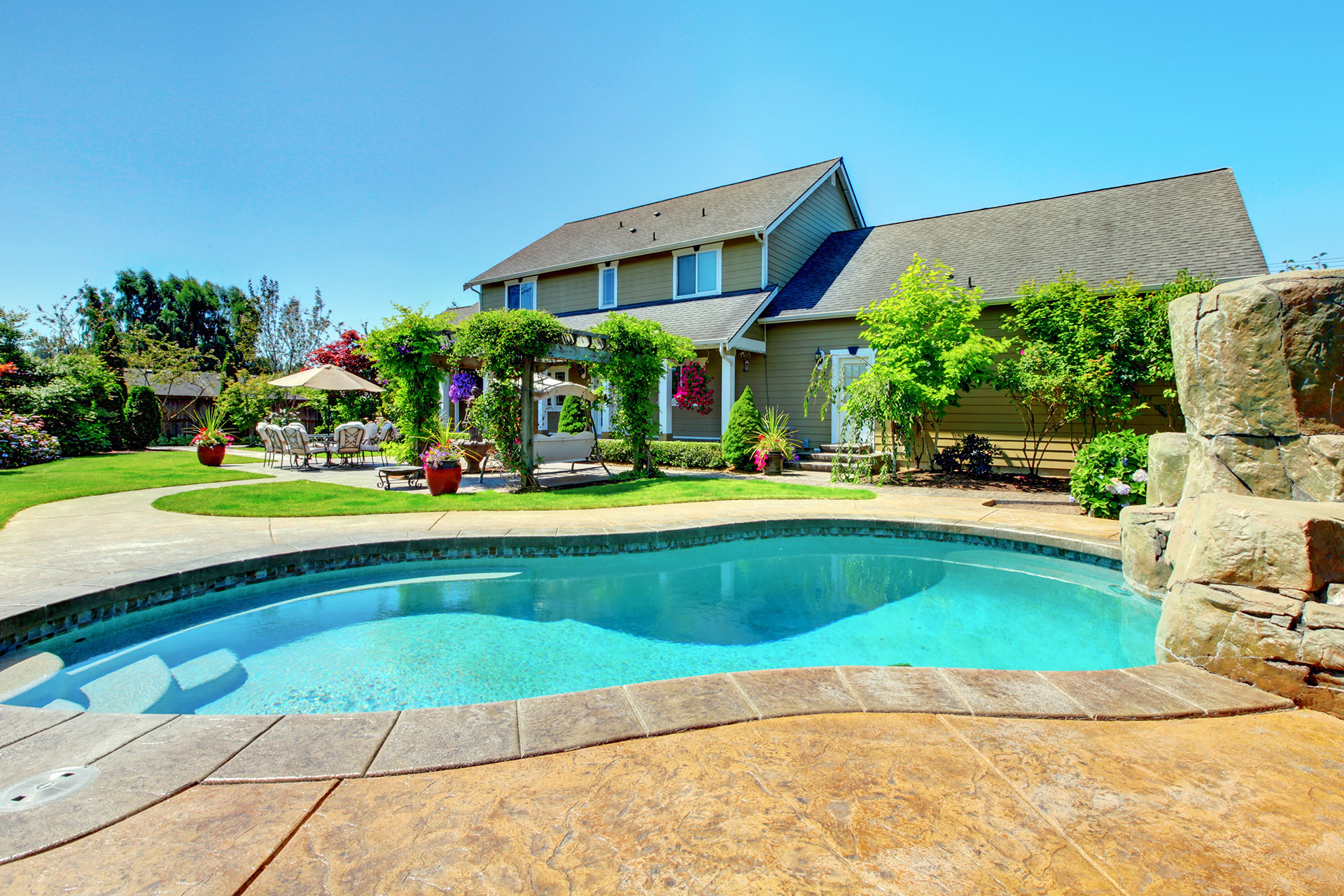
The patio stones burned against my bare feet. I’d kicked my sandals off at the back door twenty minutes earlier, thinking I had time to start the burgers before the kids got hungry, thinking this was just another Saturday. The air smelled like chlorine and sunscreen and the meat patties I’d left thawing on the kitchen counter. The whole backyard looked exactly the way it had looked two minutes before — same blue water, same faded pool noodles, same crooked patio umbrella Daniel kept meaning to replace — except now my daughter was crying, and a sixty-two-year-old woman from the HOA board had her hand wrapped around the fabric of my child’s swimsuit like she had every right in the world to be touching her.
My six-year-old son, Noah, stood frozen in the shallow end, his blue shark goggles knocked crooked across his face. The water lapped softly against the vinyl liner, that same steady, gentle slap it always made, as if the yard hadn’t just turned into a place my children would remember for the rest of their lives.
Beverly Haskins was yelling.
“Get out!” she shouted, leaning through the side gate like she owned the fence, the grass, and the air hanging above the pool. “I said get out of that pool right now!”
Lily’s face had gone the color of chalk. Noah was gripping a pool noodle against his chest so hard his knuckles had gone white. Five minutes earlier, that same noodle had been a sword, and he’d been chasing his sister around the shallow end making what he insisted were pirate noises. Now he looked like he was trying to hide behind it.
“Mom!” Lily cried.
That single word cut through me faster than a conscious thought could travel. I ran.
We’d bought the house on Magnolia Bend the previous September, after years of scraping together every spare dollar, saying no to vacations and new cars and nice restaurants, all so our kids could have a yard of their own to grow up in. It wasn’t a mansion — far from it. Four bedrooms, a fence that Daniel had already patched twice, a mailbox that leaned a few degrees to the left no matter how many times he straightened it, and a backyard pool he’d sworn to keep spotless even though I knew, deep down, he secretly resented the chemical testing and the skimming and the endless maintenance that came with it. To us, that house had felt like a miracle. Something we’d earned through years of quiet sacrifice.
To Beverly Haskins, apparently, it looked like a mistake that needed correcting.
She’d lived three houses down for almost twenty years. She was the HOA board secretary — the kind of woman who kept color-coded binders for every possible neighborhood infraction and called everyone “dear” in a voice so sweet it curdled halfway through the sentence. At meetings, I’d watched her smile at people with her mouth while her eyes did something entirely different, something colder, something that catalogued every flaw and filed it away for later use.
The first week after we moved in, she’d shown up on our doorstep with a lemon loaf wrapped in plastic wrap, asking with polite curiosity where we’d moved from, what Daniel did for work, whether we planned to have “more children eventually.” I’d taken the loaf and thanked her and thought, naively, that we’d found a friendly street.
The second week, she’d caught Daniel in the driveway and asked, with the same saccharine tone, whether we planned to “do anything about the noise.” The noise, it turned out, was our children playing tag in the backyard before dinner — the ordinary, joyful shrieking of two kids running through sprinklers on a summer evening.
The third week, she told me, almost gently, that she hoped we understood Magnolia Bend “had standards.” I assumed she meant the hedges. Everyone on the street trimmed their hedges into these severe, geometric shapes, and ours had gone a little wild that first month while we were still unpacking boxes. I told her we’d get to it.
I was wrong about what she meant. I understand that now.
“What are you doing to my daughter?” I shouted, my voice cracking on the last word.
Beverly turned toward me slowly, the way someone turns when they’ve been interrupted mid-sentence during a board meeting, not caught with her hand fisted in a nine-year-old’s swimsuit strap. She was dressed, as always, immaculately — white linen pants, gold sandals, a sleeveless blouse that probably cost more than my entire week’s grocery budget. Her silver bob, usually set in that perfect helmet shape, had started to come loose around her temples, a few strands sticking to her damp forehead in the afternoon heat.
“These children are trespassing,” she snapped, like the words themselves settled the matter.
I stopped so abruptly my heel scraped hard against the patio stone, a sting I barely registered at the time and would feel later, throbbing, once the adrenaline wore off.
“Trespassing?” I said, my voice climbing. “Beverly, this is my backyard.”
She pointed at Lily and Noah as if they were vandals who’d broken into some private, members-only club rather than two children swimming in their own family’s pool on a hot Saturday afternoon.
“They do not belong in this pool,” she said, each word bitten off and precise.
“My children live here,” I said. “This is our house. This is our pool. What is wrong with you?”
“No,” she said, and something in her voice went hard and absolute, a judge delivering a verdict she’d already decided before the trial began. “This house belongs to the kind of family who understands this neighborhood.”
That was when I saw the gate.
It stood open behind her — the same side gate Daniel had repaired twice already, the same gate I had personally checked and locked that very morning before letting the kids go outside to swim, the way I checked it every single day because I was the kind of mother who double-checked locks, who counted heads at the pool, who never once thought a stranger would simply let herself into our fenced yard uninvited.
Beverly had walked down the narrow side path along our house, worked the latch open with her own hands, stepped into our private, fenced backyard without so much as a knock or a shout of warning, and gone straight for my daughter.
Some people break rules because they genuinely don’t know where the line sits. Beverly knew exactly where that line was. She had simply decided, at some point over the past three weeks of watching our family settle in, that it didn’t apply to her.
“Step away from them,” I said, my voice low now, shaking with the effort of keeping it that way.
Lily tried to shuffle sideways toward the pool ladder, desperate to get away, to get to me. Beverly threw one arm out and physically blocked her path.
“Don’t you dare,” Beverly said. “You stay right there until the police arrive.”
Noah started crying then. It wasn’t loud, not at first — just a tight, frightened little sound pulled from somewhere deep in the back of his throat, the kind of sound a child makes when the adults around him are behaving in ways that don’t match any rule he’s ever been taught about how the world works.
That sound did something dangerous inside me. For one ugly, blistering heartbeat, I pictured myself crossing the patio, grabbing Beverly’s wrist, and hauling her bodily out through the same gate she’d let herself in through. I pictured her gold sandals scraping and skidding against the stones. I pictured the satisfaction of it, brief and hot and completely wrong.
Then I pictured Lily watching me do it. I pictured what that would teach her — that the only way to answer cruelty was to become the thing you were already being accused of being. That stopped me cold.
So I forced my voice down, low and level, even though every part of my body wanted to scream.
“Beverly,” I said, “if you touch either one of my children again, the police will be the very least of your problems.”
Her lips curled into something that wasn’t quite a smile.
“Oh,” she said, “I’m already calling them.”
She lifted her phone with the hand that wasn’t still gripping Lily’s swimsuit strap and pressed the screen with her thumb. Then she used a voice I recognized immediately — the practiced, urgent tone of someone who knew exactly how to make a lie sound like genuine fear.
“Yes, 911? I need officers at 1847 Magnolia Bend immediately,” she said, her words clipped and rehearsed. “There are unsupervised children in a private pool, and I believe they are trespassing. The mother is becoming aggressive.”
The mother is becoming aggressive.
Not the woman who had opened a locked gate without permission. Not the woman who had grabbed hold of a nine-year-old and twisted the fabric of her swimsuit hard enough to leave a mark. Not the woman who had, in the space of ninety seconds, terrified two small children in what should have been the safest place on earth — their own backyard.
Me. Somehow, in Beverly’s version of events, I was the danger.
I glanced up, almost involuntarily, and saw the little black dome camera mounted above the patio door. Daniel had installed it three months earlier, after a rash of package thefts had swept through the neighborhood, after a brand-new pair of sneakers had vanished right off our front step two days after arriving. He’d spent an entire Saturday afternoon up on a ladder, muttering curses at instructions that assumed a level of technical fluency he simply did not possess, while I brought him iced tea and pretended not to laugh at his frustration.
Beverly had mocked that camera at the very next HOA meeting. “What kind of person needs cameras in a friendly neighborhood?” she’d asked the room, and a few people had chuckled along with her, and I’d felt my face go hot with embarrassment, like we’d committed some tacky suburban sin by wanting to protect our own front porch.
Now I looked at that same little black dome like it was the only calm, honest witness left in the entire yard.
“Good,” I said.
Beverly blinked, thrown for just a second. “Excuse me?”
“Call them,” I said. “Please. Call everyone you want.”
She narrowed her eyes at me, studying my face for the crack she expected to find. Maybe she thought I’d panic. Maybe she expected me to start screaming loud enough that the dispatcher would hear it and her manufactured story would gain some shape, some corroborating chaos. Maybe she’d already decided, long before this afternoon, exactly what kind of woman I was, and she was simply waiting for me to perform the role she’d assigned me.
I didn’t give her that.
At 2:14 in the afternoon, I walked to the pool ladder and physically placed my own body between Beverly Haskins and my children.
“Lily, Noah, come here. Now.”
“They need to stay exactly where they are,” Beverly snapped.
I turned to face her slowly, deliberately. “They are not evidence, Beverly. They are children.”
Lily climbed out first, her hands trembling so violently she nearly missed the rung entirely. I wrapped a towel around her thin, shaking shoulders, but her eyes kept darting back toward Beverly’s hand, as though she could still feel the ghost of that grip twisting into the fabric of her swimsuit.
Noah came next, slipping on the wet ladder rung in his hurry, and I caught him hard under both arms before he could fall. He pressed his face into my stomach and held on with both fists.
“Are we going to jail?” he whispered, so quietly I almost missed it.
That question hurt worse than anything Beverly had shouted at us. It hurt worse than the sight of the red marks already beginning to bloom on my daughter’s shoulder.
“No, baby,” I said, smoothing his wet hair back from his forehead with a hand I willed to stay steady. “You are not going anywhere. I promise you that.”
Beverly kept talking to the dispatcher the entire time, her voice pitched to carry, performing for an audience that hadn’t arrived yet.
“Yes, I’m the HOA board secretary,” she said. “I know what belongs here and what doesn’t. No, I do not feel safe. She’s filming me.”
I hadn’t touched my phone. I hadn’t even thought of it yet.
Then Beverly said the sentence that would ultimately end her.
“I want those children removed before this turns into a bigger problem for property values.”
Lily heard it. I watched her small shoulders flinch beneath the towel. Noah heard it too, and his crying hitched up a notch, confusion layering on top of fear. I heard it, standing there with both my children pressed against me. And above us, silent and unblinking, the camera heard it as well.
By 2:18, the first police cruiser turned into our driveway, gravel crunching under the tires.
Beverly straightened her posture immediately, smoothing down the front of her blouse, tucking a loose strand of silver hair behind one ear, as though help had arrived specifically for her, as though this entire ordeal was about to be resolved in her favor the moment uniformed officers stepped onto the scene.
“Thank God,” she said, moving toward them before I could get out a single word. “I’m Beverly Haskins. I called. These children were in a pool that does not belong to them.”
Officer Cole Ramsey got out of the driver’s side first — tall, sunburned across the bridge of his nose, moving with a calm, unhurried steadiness that somehow made the whole chaotic yard feel quieter just by his presence. His sunglasses hung from the collar of his uniform shirt. His partner, Officer Dean Walker, came around from the passenger side and looked immediately, instinctively, toward the children rather than the adults arguing.
Ramsey’s gaze moved from Beverly, to me, to Lily and Noah huddled in damp towels beside the patio chairs, taking in the whole scene in a single sweeping glance before he’d even said a word.
“Ma’am,” he said to Beverly first, his tone even, “whose property are we standing on?”
Beverly pointed straight at me. “That woman claims it’s hers.”
I raised one hand, steadying my own voice by sheer force of will. “Sarah Whitaker. My husband and I bought this house last September. Those are my children, Lily and Noah. This woman entered our fenced backyard without permission and physically grabbed my daughter.”
Beverly let out a single, sharp laugh, ugly and dismissive. “Oh, please,” she said. “I barely touched her.”
Officer Ramsey’s expression shifted then — subtle, but I caught it, a small tightening around his eyes that told me he’d heard exactly what she’d just admitted to.
Officer Walker crouched down slightly, bringing himself closer to Lily’s eye level, his voice gentling.
“Sweetheart,” he said, “did this lady put her hands on you?”
Lily glanced up at me first, checking, the way children do when they’re not sure whether telling the truth is going to be safe. I nodded at her, squeezing her shoulder gently through the towel.
“She pulled my swimsuit,” Lily whispered, her voice barely audible over the hum of the pool filter. “And she said we didn’t belong here.”
Beverly’s mouth pressed into a thin, hard line. “Children exaggerate,” she said.
Noah wiped his nose against the corner of his towel, sniffling, and then pointed one small finger up toward the patio door.
“Daddy’s camera saw it,” he said.
For the first time since I’d rounded the corner of the house, Beverly looked up. For the first time, the color visibly drained from her face.
Officer Ramsey followed Noah’s finger to the small black dome mounted above the door, then turned his gaze back to Beverly, steady and unhurried.
“Mrs. Haskins,” he said, his voice as calm as a locked door, “before anyone says another word here, we’re going to go ahead and watch that footage.”
Beverly’s polished smile froze in place, then cracked at the edges. She opened her mouth to respond, but nothing came out.
Officer Walker asked where the footage was stored, and I explained that Daniel had connected our camera system to an app on his phone, but that I could pull the saved clips up on the kitchen tablet just as easily. My hands stayed steady the whole walk inside — steady until I actually unlocked the screen and saw the file waiting there.
2:12 PM — BACK PATIO MOTION.
The thumbnail alone showed the side gate standing open. I pressed play, and Officer Ramsey leaned in close beside me, his partner watching over my other shoulder.
The footage showed Beverly stepping through the gate into our yard. It showed Lily turning in the water at the sound of the latch. It showed Beverly moving fast — not confused, not hesitant, not behaving like someone genuinely concerned for unsupervised children. Fast, and certain, and purposeful. She pointed at my children, shouted something the camera’s audio caught only in fragments, walked directly to the edge of the pool, and reached down for my daughter.
On the screen, Lily tried to back away in the water. Beverly’s hand closed around the shoulder strap of her swimsuit and pulled, hard, twisting my daughter’s small body with the force of it.
Beside me, in real life, Lily made a tiny, wounded sound and pressed her face harder against my ribs, as if watching it happen again on the tablet screen brought the sensation flooding back into her body.
Officer Walker’s jaw visibly tightened. Officer Ramsey stopped writing in his notepad entirely, just watching, his expression gone flat and serious.
Beverly finally found her voice again. “That does not show context,” she said.
“It shows you opening a closed gate,” Ramsey replied, not looking up from the screen.
“I was concerned for the children’s safety.”
“You told dispatch they were trespassing.”
“They were unsupervised.”
“They were in their own backyard, Mrs. Haskins.”
Beverly’s eyes darted toward the street, where two neighbors had drifted closer to the edges of their own driveways, no longer even pretending to be doing yard work, openly watching now. That seemed to matter to her more than anything else happening in that yard — more than Lily still shaking under a towel, more than Noah still hiccuping through the last of his tears. The audience. She was still, even now, performing for the audience.
Then a second patrol car pulled up along the curb. A female officer stepped out, a small notepad already open in her hand. Ramsey walked over to meet her near the driveway, and the two of them spoke quietly for a moment. I couldn’t make out every word from where I stood, but I caught enough fragments drifting back toward me.
“Dispatcher recording.”
“Property values.”
“Child grabbed on camera.”
Beverly heard the same fragments I did. I watched her confidence begin to peel away in visible layers, like paint blistering off in the heat.
Officer Walker crouched back down beside Lily and asked gently if she was hurt anywhere. She said her shoulder stung. He asked if she wanted her mom to stay right beside her while she answered a few more questions, and she nodded so hard and fast that her whole chin trembled with the motion. I kept my arm locked around her the entire time.
The female officer introduced herself as Officer Priya Nandy and asked if I wanted to file a formal report.
“Yes,” I said, the word leaving my mouth before Beverly could think to interrupt.
Officer Nandy wrote down my name, our address, the time, both children’s names and ages. She asked whether Beverly had permission to be inside our fenced yard.
“No,” I said.
She asked whether the gate had been locked prior to the incident.
“Yes. I checked it myself this morning.”
She asked whether Beverly had made physical contact with Lily.
“Yes. It’s on the camera.”
Each answer felt small on its own, almost insignificant, the way facts sometimes do when you’re standing in the middle of them, shaking, still smelling chlorine and burger grease and fear-sweat on your own skin. But together, laid out in Officer Nandy’s careful handwriting, they became something Beverly Haskins could not smooth over with a string of pearls and an HOA title, no matter how many binders she kept at home.
Officer Ramsey turned back toward Beverly, his tone shifting into something more formal.
“Mrs. Haskins, I need you to step away from the family.”
“I am the one who called,” she said, indignant.
“I understand that, ma’am.”
“They are twisting this entire situation.”
“Step away from the family, please.”
Beverly finally looked at me directly then, and for the first time all afternoon, there was no smile left on her face at all. Just anger — the kind that had clearly always lived underneath the polished, lemon-loaf exterior, waiting for an excuse to surface.
“You have no idea what you’re doing,” she said to me, low and venomous.
I looked down at Lily’s small hand still clutching the hem of my shirt in a white-knuckled grip. I looked over at Noah, still watching every adult face around him like he was trying to memorize the rules of a world that had suddenly stopped making sense.
“Yes,” I said. “I do.”
Ramsey asked Beverly for identification. She refused at first, arguing that this whole thing was an outrageous overreaction, that she’d lived on this street for twenty years, that she knew people. Eventually, with shaking fingers, she handed over her driver’s license.
Officer Nandy spoke quietly into her radio, relaying details back to dispatch. Beverly kept insisting, over and over, that she’d only acted out of genuine concern for two unsupervised children. Officer Walker replayed the footage once more on the tablet, this time with the volume turned all the way up, and the backyard filled with the sound of Beverly’s own recorded voice.
“They do not belong in this pool.”
Then Lily’s frightened cry.
Then my own voice, shaking but firm.
Then Beverly again, on the phone with dispatch.
“The mother is becoming aggressive.”
And finally, the line that made both officers go completely still, the line that hung in the hot afternoon air like something physical.
“I want those children removed before this turns into a bigger problem for property values.”
Nobody spoke for a long moment after that played out. The pool filter hummed steadily in the background. Somewhere near the fence, a cicada started up its droning buzz. The small American flag on our front porch stirred faintly in a weak breeze drifting through the still-open gate.
Officer Ramsey finally closed the tablet’s cover with a soft click.
“Mrs. Haskins,” he said, “turn around and place your hands behind your back.”
Beverly stared at him like he’d spoken in a language she didn’t recognize. “What?”
“You’re being detained while we sort out this trespassing and assault complaint.”
“This is absurd. Absolutely absurd.”
“Turn around, ma’am.”
For all her talk about rules and standards, it turned out Beverly Haskins did not enjoy being on the receiving end of one she actually had to follow. She glanced once more toward the street, where Mr. Alvarez from across the road had stepped fully out onto his driveway now, no longer bothering to pretend he wasn’t watching every second of it unfold.
Something in Beverly’s expression changed the moment she registered him watching. Humiliation accomplished, in that instant, what conscience never had.
Her shoulders sagged. Officer Ramsey cuffed her calmly, without any unnecessary roughness or drama, and guided her by the elbow toward the waiting cruiser.
Noah’s eyes went wide, wide enough that I could see white all around his irises. “Mom,” he whispered, tugging at my shirt, “is she going to jail?”
I didn’t know how to answer that question in a way that wouldn’t frighten him further. Officer Walker crouched down and answered for me, his voice gentle.
“She’s going to come with us and answer some questions,” he said. “That’s all that’s happening right now.”
Beverly twisted her head back toward him as she was led away. “I am on the HOA board,” she said, as though the title itself might somehow reverse the handcuffs.
“Noted,” Ramsey said simply, not slowing his steps.
That single flat word almost broke something loose in me — a laugh, half-hysterical, rose up in my throat before I managed to swallow it back down. This wasn’t funny. Not really. My daughter still had angry red marks blooming across her shoulder where Beverly’s fingers had dug into her skin. My son still believed, somewhere in the small, developing architecture of his understanding of the world, that grown-ups could call the police on children simply for swimming in their own home. An entire ordinary Saturday afternoon had just taught both of my kids that a fence, a gate, a lock — none of it was necessarily enough to keep cruelty from finding its way in.
After the cruiser carrying Beverly pulled out of the driveway, Officer Nandy stayed behind to finish writing up the formal report. She handed me an incident number and explained, in plain, unhurried language, exactly how to request a full copy later.
Trespassing. Unwanted physical contact with a minor. False report concerns. Recorded video evidence.
Words that sounded cold and clinical when you said them out loud in a sunny backyard that still smelled like chlorine and burger patties. But I understood, standing there with a towel-wrapped child under each arm, that cold was sometimes exactly what justice needed to be in order to actually mean something.
Daniel got home twenty-three minutes later, breathless, having abandoned an entire shopping cart in the middle of a hardware store aisle the second I called him. When he came through the front gate, Lily broke away from me and ran straight into his arms. He dropped to one knee right there on the hot patio stones and held both kids so tightly that Noah eventually complained, muffled against his father’s shoulder, that he couldn’t actually breathe.
Then Daniel spotted the angry mark on Lily’s shoulder, still visible above the edge of her towel. His face went completely still. Not angry, exactly — something quieter and far more frightening than anger, a kind of stillness that told me he was holding something enormous behind a very thin wall of composure.
I showed him the footage on the tablet, and he watched it without blinking once, his jaw working silently. When Beverly’s recorded voice hit the line about property values, his hand closed slowly into a fist on the kitchen table, knuckles going pale.
But he didn’t yell. He looked over at Lily and Noah, both of them finally starting to calm now that he was home, and then he looked at me.
“We’re keeping a copy of this,” he said quietly.
“We’re keeping three,” I told him.
That night, Lily insisted on sleeping with the hallway light left on, something she hadn’t needed since she was five years old. Noah asked twice, in a small, uncertain voice, whether the police might come back and take him away too, and no amount of reassurance seemed to fully settle him. Daniel ended up sitting cross-legged on the floor of the hallway between their two bedrooms, half-asleep against the wall, until both kids finally drifted off.
The next morning, I filed my copy of the police report in a folder I labeled, somewhat grimly, “Magnolia Bend.” Daniel downloaded the full camera footage onto a portable drive, emailed a backup copy to himself, and printed out the incident number on a plain sheet of paper that he tucked into the same folder.
By Monday afternoon, the HOA president himself called our house. His voice, when I picked up, sounded careful in a way that immediately put me on edge — too careful, the tone of a man rehearsing his words before he’d even dialed.
He said the board had “become aware of an unfortunate situation” involving Beverly and our family, and that he wanted to personally express how seriously they were taking it.
“It’s not unfortunate,” I told him, my voice flatter than I intended. “It’s documented. There’s police footage. There’s a written report. My daughter has bruising on her shoulder that we photographed for our records.”
There was a long silence on the other end of the line after that.
By the end of the week, Beverly Haskins had resigned from the HOA board entirely. No formal statement was ever released. No one on the board publicly admitted that they’d spent years quietly excusing her behavior as simply “how Beverly was” — the sharp comments at meetings, the passive-aggressive notes left on windshields, the binder full of complaints she kept meticulously updated against half the street. No one apologized, not really, not out loud.
But the neighborhood shifted in small, quiet ways over the following weeks. People who had never done more than offer a distant wave from their driveways started actually stopping by our mailbox to talk. Mrs. Alvarez brought Lily a fresh batch of cookies one afternoon and told her, with real warmth in her voice, that our pool looked beautiful this time of year. Mr. Alvarez spent an entire Sunday helping Daniel install a heavier-duty lock on the side gate, the two of them talking quietly while they worked, and neither of us ever had to explain exactly why the upgrade felt so urgent.
Two houses down, someone left a fresh pack of sidewalk chalk sitting on our front porch one morning, no note attached beyond a small card that simply read: For the kids.
Lily didn’t go back in the pool for almost two weeks after that afternoon. Every time she walked past the sliding glass door and glanced out at the water, I watched something flicker across her face — not quite fear, but its close cousin, caution wearing fear’s old clothes. Noah would only sit on the shallow steps if one of us stood close enough to touch, refusing to venture past where his feet could still reach the bottom.
Then, one Saturday, the weather turned properly hot again, thick and shimmering the way it gets in the deep part of summer, and Lily came downstairs wearing that same red swimsuit — the one that had been twisted in Beverly’s fist two weeks earlier, the one I’d half expected her to refuse to wear ever again.
She stood by the sliding glass door for a long moment, one small hand resting against the frame, just looking out at the water.
“You don’t have to go in if you’re not ready,” I told her gently, coming up beside her.
“I know,” she said.
She kept looking at the pool a while longer. Then, quietly, with a certainty that startled me coming from a nine-year-old, she said, “She doesn’t get to keep it.”
I had to turn away from her for a second, blinking hard, pretending to check something on the kitchen counter. Daniel, out on the patio, suddenly became extremely focused on adjusting the grill dials, though nothing was actually cooking yet. Noah came thundering down the stairs a moment later, already wearing his crooked shark goggles, utterly unbothered, ready to go.
Ten minutes after that, both kids were back in the water — not exactly the way they’d been before, not quite as loud or as careless, but close enough, close enough that it made my chest ache in the good way, the way it aches when you watch something broken start, slowly, to mend itself.
Lily spent that whole afternoon teaching Noah how to hold his breath underwater again, counting out loud from the edge of the pool while he practiced, bursting up gasping and grinning every time. The pool water slapped softly against the vinyl liner, that same steady sound it always made. The patio stones warmed gradually beneath my bare feet as the afternoon wore on. And above the door, quiet and black and unblinking, the camera kept watching, exactly the way it had that first terrible afternoon — except this time, there was nothing for it to record but two children laughing in the sun.
I used to believe that a locked gate was enough to keep our yard safe. I know better now. A gate is just a boundary, a line drawn in wood and metal that only means something if the people on the other side of it choose to respect it. What actually keeps a home safe is what you do the moment someone decides to cross that line anyway — whether you freeze, whether you fold, or whether you stand your ground and let the truth do the rest of the work for you.
That afternoon, when Beverly Haskins picked up her phone and called the police on my children for swimming in their own backyard pool, she believed she was summoning help that would remove them from a place she’d decided they didn’t belong. Instead, without meaning to, she summoned the only witnesses in that yard who couldn’t be charmed, couldn’t be intimidated, and couldn’t be talked out of what they’d actually seen.
The officers. The written report. The steady, unblinking eye of a camera Daniel had installed for an entirely different reason. And, underneath all of it, the plain and simple truth — the one thing Beverly Haskins, for all her binders and board titles and twenty years of carefully cultivated authority, could never quite manage to bully into silence.

Specialty: Quiet Comebacks & Personal Justice
David Reynolds focuses on stories where underestimated individuals regain control of their lives. His writing centers on measured decisions rather than dramatic outbursts — emphasizing preparation, patience, and the long game. His characters don’t shout; they act.