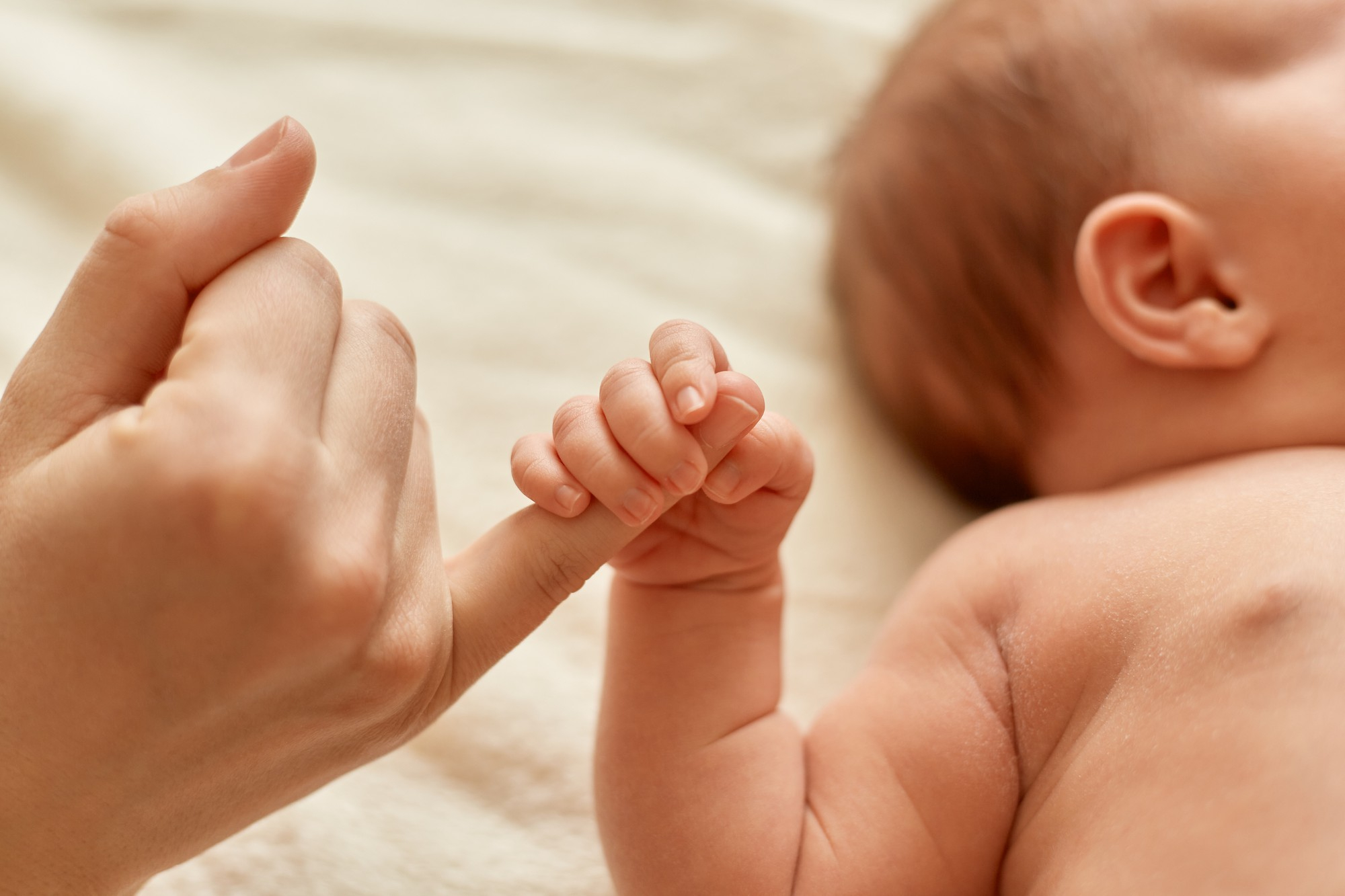
The morning Lily was born, the light came through the hospital window at an angle I will remember for the rest of my life.
It was October light, the specific quality of it, thin and gold and gentle, the kind of light that makes everything it touches look like it has been considered carefully. The bassinet was beside my bed, and Lily was in it, and she was making the small sounds that very new people make, the sounds of someone who has just arrived somewhere and is still deciding what to make of the place.
I had been awake for several minutes before I looked at her.
Those first minutes I lay very still, taking inventory of what my body was doing, the specific aftermath of twenty-one hours of labor followed by an emergency, the exhaustion that was not ordinary exhaustion but something deeper, the exhaustion of a person who has been through something significant and whose body is still processing the significance.
And then I looked at her.
And the exhaustion was still there, and the significance was still there, and underneath all of it was something else, something I had been waiting for without knowing exactly what I was waiting for, which was the specific and complete love of a parent looking at their child for the first time.
I am telling you about this moment because it matters.
I am telling you about it because what came later could only be understood in the context of this, in the context of what it was to hold this child and to know, with the certainty of something that does not require argument or proof, that she was mine.
My name is Claire Weston, and I am thirty-three years old, and four years before Lily was born I had married a man named Ethan who had been my closest friend before he was my husband and who had been my greatest love for five years and who was, I believed with the full force of everything I knew about him, a good and honest person.
I believed this.
I would keep believing it, even after the hospital room.
Even after what he said.
But the believing would require, in the weeks and months after that morning, a new and more complicated shape.
Ethan and I had met in graduate school.
He was studying environmental engineering and I was studying public health and we had both ended up in the same off-campus housing during our second year, the kind of old building that smelled faintly of decades and that had a common room where people left books and magazines and occasionally held parties that everyone attended because the parties were the only social option within walking distance.
He was the person who made the first pot of coffee in the morning.
This is a small detail but it tells you something about him, the specific quality of someone who is awake before most people and who thinks of others before they have asked to be thought of. The coffee was always there when I came down.
We talked.
We talked the way people talk in graduate school, which is the way they talk when they are young enough to have strong opinions about everything and old enough to defend them, and we disagreed about some things and agreed about others and discovered, over the course of a year, that we disagreed well, that the arguing was a form of respect, that neither of us wanted the other to simply capitulate.
He asked me to dinner in January.
I said yes.
We were married two years later, after he had finished his degree and taken a position with an environmental consulting firm, after I had taken a position with the county health department, after we had found an apartment and argued about the couch and agreed on the couch and made the apartment into something that was genuinely ours.
The years of trying for a child.
I want to describe these years accurately because they are part of the foundation, part of what made the pregnancy and the birth and the hospital room morning carry the weight they carried.
We tried for three years.
The specific kind of trying that begins optimistically and gradually accumulates the weight of repeated disappointment, the way hope becomes measured and then becomes cautious and then becomes the kind of quiet thing you carry rather than announce because announcing it exposes it to a world that does not always hold it carefully.
We saw doctors.
The doctors told us things that were medically accurate and clinically delivered and that required us to absorb technical information about our bodies at the specific moment when what we most needed was something that technical information could not provide.
We made decisions together.
We grieved together, in the specific private way of a grief that is legitimate but that does not register in the grief vocabulary of the larger world, that does not come with a condolence period or flowers or the acknowledged support that other losses carry.
We stayed together, through all of it, without the staying becoming effort, which is the thing I think about when I think about what our marriage was before Lily.
And then I was pregnant.
The test was positive on a Tuesday morning in January, and I stood in the bathroom holding it for so long that Ethan knocked on the door to ask if I was all right, and I opened the door and showed him, and the expression on his face was the expression of someone receiving something they had almost stopped believing was coming.
He held me for a long time.
We did not say much.
We did not need to.
The pregnancy was its own season.
Eight months of the specific experience of a person who has wanted something very much and who is now holding it carefully, who is aware of the delicacy of the thing even as it becomes less delicate, even as Lily grew and became more present and more real with each appointment and each image and each small movement I felt.
Ethan was present in the way that I had come to expect from him, which was completely and without drama, the presence of someone who understood that showing up was the whole thing and who showed up reliably and fully.
He read the books.
He attended every appointment.
He built the crib over a weekend in August with the focused attention of someone doing something they understood to be important, measuring twice before every cut, refusing my offer to help not because he wanted to do it alone but because he said he wanted to do this one thing by himself, for her, and I understood what he meant.
He put her name on the wall in the nursery.
Lily.
We had chosen the name together in the second trimester, standing in the kitchen making dinner, and it had arrived in the conversation with the specific rightness of a name that fits, that requires no argument, that simply is.
The delivery was not what we planned.
This is common, I know this, delivery plans are the specific kind of plans that the body and the baby and the circumstance modify without consultation, and I had been told this by my midwife and by books and by friends who had delivered before me and who had all had versions of the same experience, the experience of discovering that birth had its own timeline and its own requirements.
But twenty-one hours is a long time.
And the moment when the monitors began screaming, when the nurse pulled Ethan away from the bed and the doctors came in quickly and in number, when I saw the specific focused urgency of medical professionals who have identified a problem and are addressing it, that moment was its own kind of education.
I was not afraid.
This surprises me when I think back on it, but it is true. I was not afraid in the moment. I was present, I was in the experience, I was doing what the doctors told me to do and I was aware of what was happening around me, and the fear came later, after, when I had the space for it.
The last thing I heard before the anesthesia was Ethan’s voice.
Please save them.
Not save her.
Save them.
I woke up and Lily was beside me and the light was the October light I described and I understood, from the quality of the morning and the stillness of the room and the absence of urgency, that everything was all right.
She was all right.
I was all right.
I held her and she was warm and small and she breathed in the specific rhythm of someone who has decided that breathing is the primary project for now, and I understood, fully and completely, that this was my daughter.
Ethan came in with the other visitors, but he was first, and he was smiling in the way he smiled when he was genuinely happy rather than performing happiness, the smile that reached everything.
He said: this is the happiest day of my life.
He bent over the bassinet.
He looked at Lily.
And the smile stopped.
Not gradually, not in the way a smile fades when something distracts you or when you remember something you had forgotten. It stopped completely and suddenly, the way a light stops when the power goes out, and the flowers he had been holding slipped from his hand, and he was very still.
He looked at her for a long time.
Then he looked at me.
And his eyes had the expression I had never seen from him in nine years of knowing him, which was the expression of someone who is genuinely lost, who has encountered something they do not know how to categorize, who is looking at a situation and finding that none of their available categories apply.
He said: why didn’t you tell me before?
My stomach tightened.
I said: tell you what?
He said: look at this child. Don’t you see it? Don’t you understand what you’ve done?
I pulled Lily against my chest.
She was warm and pink and her breathing was soft and steady and she was, in every way I could assess in the first seconds of this new fear, completely normal.
I said: she’s your daughter. What are you accusing me of?
And then Ethan’s face did something I had not expected.
A tear ran down his cheek.
He dropped into the chair beside my bed with the specific quality of someone whose body has received information it was not prepared to receive, the collapsing not of defeat but of someone whose strength has simply been used up.
He said: there’s something you need to know. I was afraid to tell you, but I can’t hide it anymore.
The door swung open.
Ethan’s mother walked in.
Her name was Judith, and she was sixty-four years old, and she was the kind of woman who had always been precise and composed in a way that I had found admirable and occasionally slightly cold. She had been warm with me, warmer than I had expected, but there had always been a quality of reserve to her, a held-back quality, the specific manner of someone who is careful about what they reveal.
She stopped when she saw Ethan’s face.
She looked at Lily.
Her expression changed.
Not in the dramatic way of revelation, but in the specific way of someone who has been waiting for a moment and has now received it, someone who has known something was coming and has finally arrived at the place where it arrives.
She said: Ethan.
He said: Mom.
She looked at me.
She said: Claire, I’m so sorry. We should have told you much sooner.
I said, holding my daughter tighter: told me what?
And then Ethan, from the chair beside my bed, told me.
He had a half-brother.
This was the first thing, the foundational thing that everything else stood on.
He had a half-brother named Marcus who was twenty-six years old and who had been born to his father’s affair, the affair that had ended Ethan’s parents’ first marriage, that had been the defining rupture of his childhood, that had sent his mother into a period of difficulty that he had described to me only in the general terms of she had a hard time in those years, terms that I had accepted without pressing because some things in families are held quietly and the holding is its own communication.
Marcus had been given up for adoption.
Not because his mother didn’t want him, Ethan’s father’s mistress, but because she was twenty-two and without resources and had made the decision that parents in that position sometimes make, the decision that was not abandonment but was its own form of love, the specific love of someone who understood that what she could provide was not sufficient and who chose differently because of that understanding.
Marcus had been adopted by a family in Ohio.
He had grown up there, had gone to college there, had become a graphic designer there.
He had, at twenty-four, begun the search that many adopted adults begin, the search for the biological connection that is both a fact and a question, the search for the origin story that the adoption had displaced.
He had found Ethan’s father first.
The reunion had been complicated, as reunions with people who have made significant mistakes tend to be complicated, and Ethan had met Marcus twice, briefly, in the two years since the discovery, meetings that were cordial and careful and that had not resolved into anything approaching a relationship.
Ethan had not told me about Marcus because he had not known how to tell me about Marcus, which was also a way of saying he had not told me because telling me would have required telling me about his father’s affair and the dissolution of his parents’ first marriage and the half-brother who existed as evidence of the affair and all of the complicated history that surrounded these facts.
He had not told me because the telling felt too large and because there was never a right moment and because he had told himself, over and over, that it was old history and did not affect our present, that Marcus was a stranger, that the facts of his father’s past were his father’s facts and not his own.
And then he had looked at Lily.
And Marcus had looked back at him.
The physical resemblance.
This was the core of it, the thing that had stopped Ethan cold at the bassinet.
Marcus, who Ethan had met twice and who Ethan had not told me about, had a specific set of physical features that Ethan had noted and that had registered and that had been filed away in the category of interesting and then covered over by everything else.
Marcus had Lily’s eyes.
Not metaphorically. Literally.
The specific shape and color of them, the way they turned up slightly at the outer corners, the unusual gray-green that was not quite either color.
And Marcus had Lily’s nose.
The small retrousse nose that I had thought came from somewhere in my family, from a great-aunt I had seen in photographs, the nose that had made me think of my mother’s side.
Lily had Marcus’s features.
Which meant Lily had the features of someone who shared DNA with Ethan.
Which meant Lily’s features were not strange or inexplicable but were simply the inheritance of a genetic line that Ethan had never told me existed.
When Ethan dropped the flowers and looked at Lily and said why didn’t you tell me, he was not asking about infidelity.
He was asking, in the confused and frightened language of someone seeing a ghost, why I had not told him that I knew about Marcus, about the family history, about the features that he recognized and that he could see and that were looking back at him from the face of his daughter.
He had assumed, in the shock of the moment, that my silence about Marcus meant I had known and kept it from him, the way he had known and kept it from me.
He had assumed we were each keeping the same secret.
We were not.
I was keeping nothing.
I knew nothing.
Judith said, from the doorway where she had stayed: she didn’t know, Ethan.
He looked at his mother.
She said: Claire didn’t know about Marcus. How could she?
He looked at me.
He said: you didn’t know.
I said: I still don’t understand what I’m supposed to know.
So he told me.
All of it.
Sitting in the chair beside the hospital bed, on the morning after our daughter was born, with his mother in the doorway and Lily in my arms, Ethan told me the full history of his family’s secrets, the affair and the dissolution and the adopted brother and the two careful meetings and the features he had recognized in our daughter’s face.
It took a long time.
I listened.
I held Lily.
I thought about the nine years I had known this man and about the specific things he had kept from me and why he had kept them and what the keeping meant.
When he finished, the room was very quiet.
I said: the flowers.
He said: what?
I said: you dropped the flowers.
He said: yes.
I said: because you saw Marcus in her face.
He said: yes.
I said: and you thought I had known about Marcus.
He said: for one terrible minute, yes.
I said: why would you think that?
He said: I don’t know. I wasn’t thinking. I saw those features, the ones I recognized from Marcus, and I couldn’t understand where they had come from unless.
He stopped.
He said: it made no sense. But nothing made sense in that moment.
I said: Ethan.
He said: I know.
I said: you saw your daughter’s face and you accused me of something instead of saying there is something I need to tell you.
He said: I know.
I said: those could have been the first words she heard from her father.
He said: I know.
I looked at Lily.
She was awake now, her eyes open and finding their focus in the gradual way of very new people, the world still assembling itself into something legible.
I said: she has your brother’s nose.
He said: yes.
I said: I thought she had my great-aunt Vera’s nose. I have this photograph.
He said: she might. The features might come from both sides. I don’t know genetics well enough to say.
I said: but she’s ours.
He said: yes. Of course she is.
I said: you know that.
He said: I knew it. I know it. In the moment I was shocked and I said something stupid and hurtful.
I said: yes.
I said: tell me about Marcus.
He looked at his mother.
She came and sat down.
She said: I think it’s time I told this part.
Judith was not a woman who spoke easily about difficulty.
I had understood this about her early in my relationship with Ethan, the specific quality of someone who had survived something painful by becoming very controlled, very measured, very careful about what she allowed herself to express and what she kept private.
She had survived Ethan’s father’s affair.
She had survived the end of that marriage.
She had raised Ethan, from the age of six when the marriage ended, with the specific determination of someone who has had a plan stolen from them and who has sat down and made a new plan from the available materials.
She had not told Ethan everything.
She had told him what she had judged he needed to know and had withheld what she had judged would hurt him without helping him, and the judgment had been made from love and had also been a mistake in the specific way that protective love is sometimes a mistake, when it withholds what someone needs in order to protect them from a pain they need to experience.
She had known about Marcus since his birth.
Not just known that he existed.
Known him.
She had been in contact, sporadically, with the adoptive family over the years.
Not to complicate their family or Marcus’s understanding of himself, but because she was the kind of woman who believed that keeping a record was a form of responsibility, that knowing what had happened was better than not knowing, even when the knowing was painful.
She had sent a card when he graduated high school.
She had not signed it.
When Marcus had reached out to Ethan’s father and the family had been notified, she had been the one who told Ethan, who had arranged the first careful meeting, who had managed the logistics of a reunion that nobody was fully prepared for.
She had not told me.
She said, looking at me directly: I should have told you. Before the wedding, certainly. When Ethan and Marcus first met, definitely. I have been carrying this too long and the carrying has become a habit and habits are hard to break even when you understand they are wrong.
I said: why didn’t you?
She said: because I was ashamed. Not of Marcus. Of the circumstances of his existence. Of what his existence meant about my first marriage and about the years I spent in it not knowing what was happening.
She said: and because I had convinced myself it was old history.
I said: Ethan said the same thing.
She said: yes. I taught him that, without meaning to.
She said: Claire, your daughter has nothing to do with any of this. She is healthy and beautiful and she is exactly who she is. The resemblance to Marcus is not a complication. It is just genetics. It is the way families look alike across distance, across adoption, across the years and the secrets.
I said: I know.
I said: I held her this morning before any of you came in. I held her and I knew she was mine. I knew she was ours.
I said: nothing that happened in this room changed that.
Judith looked at her son.
She said: you have a very good wife.
He said: I know.
She said: you should have told her.
He said: I know.
She stood.
She said: I’m going to let you talk.
She left.
Ethan and I were alone with Lily.
He was still in the chair.
I was still holding her.
I said: come here.
He got up.
He sat on the edge of the bed.
I put Lily in his arms.
He held her with the careful attention of a man who had built her crib over a weekend in August, measuring twice before every cut, who had put her name on the wall in the nursery, who had shouted please save them when the doors closed between us.
He looked at her face.
He said: I’m sorry.
I said: yes.
He said: for what I said. And for not telling you about Marcus.
I said: those are two separate apologies.
He said: I know.
I said: the first one I accept right now, without condition. You were scared and shocked and you said something that came from fear rather than from what you actually believe.
He said: yes.
I said: the second one is going to take longer.
He said: I know.
I said: Ethan. Nine years. We have been together for nine years and you have been carrying this for at least two of them, since Marcus made contact, and probably longer than that in the way you carry your parents’ history without knowing you’re carrying it.
I said: that is a long time to not tell me something.
He said: yes.
I said: why?
He said: I told myself it wasn’t my story to tell. That it was my father’s failing, not mine. That Marcus was essentially a stranger.
He said: but I know that’s not the whole truth.
I said: what is?
He said: I was ashamed. Not of Marcus. Of my family. Of where I come from. I had this picture of the life I was building with you, of who I was with you, and Marcus didn’t fit in that picture. He was evidence of something messy and painful from before us.
He said: I wanted to protect what we had from the messy and painful things.
I said: you can’t protect what we have by keeping things from me. What you have with me is not the absence of difficult things. What we have is the fact that we talk through difficult things together.
He said: I know that now.
I said: you knew it before. It’s how we’ve always operated.
He said: yes. But knowing something and applying it aren’t always the same.
I said: no.
I said: they’re not.
I looked at Lily in his arms.
She had his nose, actually, when I looked carefully, the Weston nose that I had studied in photographs of his grandmother, the slight downward tip at the end.
And she had whatever Marcus had inherited from their shared father, the eyes and the other nose that coexisted somehow in her face, genetics doing the complicated arithmetic of resemblance.
She was all of it.
She was his, and she was mine, and she was the descendant of people I was only now beginning to understand she was descended from.
I said: tell me about Marcus.
Not the history.
The person.
He told me.
Marcus had grown up in Ohio, in a family that had been loving and stable in the ways that mattered, two parents who had wanted a child and who had made the specific commitment of adoption in the full understanding of what that commitment meant. He had had a normal childhood by most measures. He had been athletic in high school, the kind of broad athletic competence that doesn’t specialize, good at several things rather than exceptional at one. He had gone to a state school and had discovered graphic design and had found, in the specific work of it, something that engaged the parts of him that needed engaging.
He was funny, Ethan said.
He had an unexpected sense of humor, the dry kind.
He had been nervous in the meetings.
Ethan had been nervous in the meetings.
They had been two people who were connected by genetics and by the specific history of another person’s failing and who did not know each other at all, trying to find out whether they could know each other.
They had not succeeded, in the two meetings, in becoming anything yet.
But they had also not failed.
They had left the possibility open.
I said: do you want to know him?
He said: I think so. I think I’ve been afraid of what knowing him means.
I said: what does it mean?
He said: it means accepting that my family is more complicated than the story I’ve been telling myself. That there’s a brother I didn’t grow up with because of a decision my father made before I was old enough to understand decisions.
He said: it means that Lily’s extended family includes someone I barely know who has her eyes.
I said: yes.
I said: that’s true whether you accept it or not.
He said: I know.
I said: Ethan.
He said: yes.
I said: I want to meet him.
He looked at me.
I said: not right now. Not while I’m in this hospital bed. But I want to meet him. And I want Lily to know him, as she grows up, if he’s willing. She deserves to know the full shape of where she comes from.
He said: you’re more generous than I deserve.
I said: I’m not being generous. I’m being practical. She’s going to ask questions when she’s older. She’s going to look in the mirror and want to understand what she sees. If Marcus is part of that story, better she knows the story from us than discovers it the way you discovered it, which is by accident and without preparation.
He said: you’re thinking about her already.
I said: I’ve been thinking about her for eight months.
He said: yes.
He held Lily with the careful attention she deserved.
He said: there’s something else.
I said: what?
He said: Marcus has a daughter.
I said: how old?
He said: she’s four. Her name is Elara.
I looked at Lily.
I said: Lily has a cousin.
He said: yes.
I said: does Marcus know about Lily?
He said: not yet.
I said: you should tell him.
He said: I will.
I said: soon.
He said: yes.
The hospital room was quiet in the way of rooms after significant things have been said, the specific quiet of a space that has held a difficult conversation and that is now simply holding the people who had it.
Lily made a small sound.
Ethan made a small sound back.
She seemed to consider this.
I said: I’m angry.
He said: I know.
I said: not at you for having a complicated family. Not at your mother for the decisions she made. Not at circumstances that nobody in this room chose.
I said: I’m angry that you kept it from me. Specifically that. Not because I couldn’t have handled it. Because the keeping told me something about how you see our partnership.
He said: it told you I’m not as honest with you as I thought I was.
I said: yes.
He said: I need to do better.
I said: yes.
He said: I will.
I said: I know.
He said: how do you know?
I said: because you just told me all of it. Not because I found out another way. Not because I confronted you. Because you were sitting in that chair and Lily was born and the weight of keeping it was finally more than you could carry.
I said: you told me.
He said: yes.
I said: that’s worth something.
He said: I’m glad.
I said: it’s not everything. But it’s worth something.
He said: yes.
He gave Lily back to me.
She settled against my chest in the specific way of babies who are finding the right position, who are learning what comfort feels like.
He said: I love you.
I said: I know.
He said: are we all right?
I said: we will be.
He said: that’s not the same as yes.
I said: no. It’s better than yes. It means we’re on the way.
He understood this.
He took my hand.
We sat with Lily between us, the three of us in the October light, the new family that we were just beginning to understand the full shape of.
Three weeks later, Ethan called Marcus.
He told me about the call afterward, sitting at the kitchen table while Lily slept in the nursery under the name on the wall, and the telling was the kind of telling that comes after something important has happened and that has the quality of an accounting, an honest report.
Marcus had received the news of Lily’s birth with the specific warmth of someone who was not sure how to navigate the relationship but who understood that a new person in the world was always something to receive with warmth.
He had said: I’d like to meet her. When it makes sense for you.
Ethan had said: we’d like that.
He had said we.
Not I.
I had told him to say we.
Marcus came in December.
He drove up from where he was living now, in Virginia, which was close enough to make this possible without the complexity of a longer trip, and he brought his wife Anneliese and their daughter Elara, who was four and who had, I noticed immediately and without particular surprise, the same gray-green eyes that Lily had and that I was now understanding came from the biological grandfather neither of them had chosen.
We had coffee in our living room.
Marcus was tall with dark hair and a way of sitting that was contained and careful, the manner of someone who was not sure of the welcome and was trying not to take up more space than was appropriate.
He looked at Lily for a long time.
He said: she’s got the Weston eyes.
Ethan said: yes.
Marcus said: I only knew what to call them recently.
He said: I’ve had them my whole life and didn’t know what they were.
I said: how does that feel? Knowing?
He said: complicated. Good and complicated.
He said: it’s strange to look at someone and see yourself and also see someone you don’t know.
I said: yes.
He looked at me.
He said: thank you for doing this. For being open to it.
I said: she’s going to have questions when she’s older. I’d rather she know the answers.
He said: yes. Elara already has questions.
His wife Anneliese looked at their daughter, who was on the floor with a board book, and then at Lily, who was in the bouncy seat, and then at us, and she said: we were nervous about coming.
I said: we were nervous about having you.
She said: and now?
I said: now we’re having coffee.
She said: yes.
She smiled.
She had a warmth that was direct rather than performed, the specific quality of someone who decided quickly what she thought of a situation and who acted on that decision rather than hedging.
She said: I’m glad Ethan called.
I said: me too.
Ethan and Marcus talked for most of the afternoon.
They talked in the specific way of people who have history but not relationship, who share something significant and who are trying to find out whether the something significant is a foundation for something more. They were careful with each other and also, occasionally, not careful, occasionally allowing themselves the kind of frankness that takes a long time to develop in most relationships and that between them existed as a shortcut, because the shared history of their father’s failing was a kind of intimacy even without the years.
Elara and Lily were not able to play together in any meaningful sense, Lily being three weeks old and Elara being four, but Elara looked at Lily with the focused attention of a child who has been told something important and is trying to understand it, and she said, to her mother, in a clear four-year-old voice: she’s my cousin?
Anneliese said: yes.
Elara looked at Lily.
She said: she’s small.
Anneliese said: she’s brand new.
Elara appeared to consider the implications of brand new.
She said: does she know she’s my cousin?
Anneliese said: she will.
Elara said: okay.
She went back to her book.
They left in the late afternoon.
Marcus hugged Ethan at the door, which surprised Ethan and which, from the way he described it afterward, surprised Marcus too, the hug happening before either of them had decided to have it, the instinct preceding the decision.
Anneliese hugged me.
She said: we’ll do this again.
I said: yes. Soon.
She said: spring?
I said: spring.
After they left, Ethan and I stood in the kitchen.
Lily was asleep.
The house was quiet.
He said: that was something.
I said: yes.
He said: are you glad we did it?
I said: yes.
He said: even with everything that had to happen first?
I said: even with everything.
He said: the hospital room.
I said: the hospital room and the nine years of not knowing and the two meetings you went to without telling me.
He said: yes.
I said: yes. Even with all of that.
He said: why?
I said: because she’s going to know where her eyes come from. She’s going to know that the gray-green is a Weston feature, inherited from a grandfather she may never meet, passed through a half-uncle who grew up in Ohio and who makes her smile when he comes to visit.
I said: she’s going to have a cousin who is four and who will tell her she’s small and then grow into someone she actually knows.
I said: that’s worth the difficult parts.
He said: yes.
He said: Claire.
I said: yes.
He said: I’m going to tell you things now. Difficult things. Things I think aren’t relevant or that I think are too complicated. I’m going to tell them anyway.
I said: yes.
He said: I should have been doing that already.
I said: yes.
He said: but I’m going to start now.
I said: that’s the right time.
He said: the right time was years ago.
I said: you don’t have access to years ago. You have access to now.
He said: yes.
He said: I love you.
I said: I know.
I went to the nursery.
Lily was sleeping the way she slept, which was completely, with the full-body surrender of someone for whom sleep was not a concession but an occupation.
Her name was on the wall above her crib.
I stood and looked at her.
I thought about the October morning and the angle of the light and the first moment I had held her and known, with the full certainty of something that does not require argument, that she was mine.
I thought about the hospital room and the flowers dropping and the question that had been the wrong question, asked from fear by a man who had been carrying something too long and who had found, at the exact wrong moment, that he could not carry it anymore.
I thought about Marcus and Anneliese and Elara with her board book.
I thought about the eyes, the gray-green ones, traveling through genetics like a letter passed from hand to hand, arriving at unexpected destinations.
I thought about what it meant to know where you came from.
Not just the comfortable parts.
All of it.
The affairs and the adoptions and the careful meetings and the phone calls and the coffee in the living room and the hug at the door that surprised everyone including the people having it.
Lily would know where she came from.
She would know the full shape of it.
And when she was old enough to ask the questions, the hard ones about why things had been the way they had been, why some knowledge had come late and some had come through strange paths, I would tell her the truth.
The truth was that people kept things because they were afraid.
And the things they kept grew in the keeping, grew into obstacles rather than facts, grew into the specific barrier that stands between a person and the people they love most.
The truth was that the keeping was not the end of the story.
The telling was.
And the telling, when it finally came, made room for things that the keeping had prevented.
A cousin who was four.
A sister-in-law who would come back in spring.
A half-uncle who had her eyes and who had grown up in Ohio not knowing what to call them.
Lily made a sound.
Small, exploratory, the sound of someone trying out the air.
I said: I’m here.
She settled.
I said: I’m always going to be here.
Outside the nursery window, it was October in the specific way that October was in our neighborhood, the leaves going and the light changing and the year beginning its long tilt toward winter, and in the spring there would be Marcus and Anneliese and Elara with her board book, and there would be Lily older and beginning to understand the world, and there would be the ongoing work of a family finding its shape.
We were finding it.
All of us.
One difficult, necessary conversation at a time.

Adrian Hawthorne is a celebrated author and dedicated archivist who finds inspiration in the hidden stories of the past. Educated at Oxford, he now works at the National Archives, where preserving history fuels his evocative writing. Balancing archival precision with creative storytelling, Adrian founded the Hawthorne Institute of Literary Arts to mentor emerging writers and honor the timeless art of narrative.