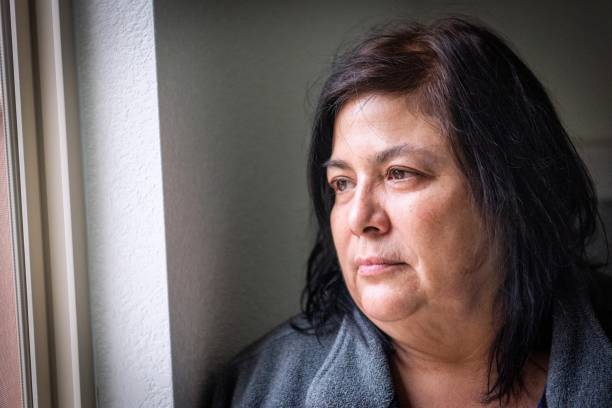
The dizziness hit me around two in the afternoon, right in the middle of a budget meeting. One second I was listening to someone drone on about quarterly numbers, and the next the room tilted sideways and my ears started ringing. I pressed my palm flat against the conference table and tried to breathe through it, but my boss noticed my face had gone white.
“Go home,” she said. “You look like you’re about to pass out.”
I didn’t argue. I grabbed my bag, told the front desk I wasn’t feeling well, and drove home with the windows down, hoping the fresh air would settle my stomach. My head was pounding by the time I pulled into the driveway. All I wanted was my bed, a glass of water, and silence.
The house was quiet when I let myself in through the side door. Too quiet, in a way I couldn’t put my finger on yet. I set my bag down by the entrance and was about to call out for my husband — a habit, more than anything, since he was almost always in the living room this time of day, propped up in his recliner with the television on — when I heard laughter drifting in from the backyard.
Loud laughter. A woman’s laughter.
For a second I thought maybe his physical therapist had stopped by, or maybe a home health aide, though it was strange because we hadn’t scheduled anyone for that afternoon. I walked toward the sliding glass door that led out to the pool, moving quietly without really deciding to be quiet, the way your body sometimes knows something before your mind catches up.
I looked through the glass and the world stopped.
My husband — the man who for three years had told me, told our families, told his doctors, told anyone who would listen that he would never walk unassisted again, the man I had carried on my back financially and emotionally since the accident — was sitting on the edge of the pool. As I watched, he pushed himself up with both hands, rose to his feet without a single wobble, and dove cleanly into the water. No cane. No wheelchair. No one holding his arm. He surfaced laughing, shaking water out of his hair like a man who had never known a day of disability in his life.
Beside him, a young woman in a red bathing suit swam over and looped her arms around his neck. They were both holding drinks — mixed drinks, the kind with little umbrellas, the kind I hadn’t touched with him in years because “his medications didn’t allow alcohol.” I stood frozen behind that glass door with my heart slamming so hard I could feel it in my throat, and I watched my husband pull this stranger close and press his lips to her collarbone.
“While my wife is working hard,” he said, loud enough that I heard every word through the glass, “we can rest peacefully every day.”
The girl threw her head back and laughed.
“She doesn’t suspect anything at all?” she asked.
“Of course not,” he said, grinning. “She’s too trusting.”
Something inside me went cold and very, very still. Not the kind of cold that makes you shake — the kind that makes everything slow down and sharpen at the edges, like the whole world had suddenly come into focus after three years of blur.
I want to explain how I got to that moment, because it didn’t happen overnight. Nothing like this ever does.
Three years earlier, my husband had been in a car accident on the highway coming home from a friend’s house. A truck merged into his lane without checking his mirror, and my husband’s car spun into the guardrail. When I got the call from the hospital, I drove there so fast I don’t even remember most of the trip. He had a fractured pelvis, a shattered ankle, and — according to the first doctors we saw — possible nerve damage that could affect his mobility permanently.
I remember sitting beside his hospital bed holding his hand while he cried, telling me he was scared he’d never walk again, scared he’d be a burden to me, scared our whole life together was about to change. I told him it didn’t matter. I told him I married him for better or worse, and this was the worse, and we’d get through it together. I meant every word.
The first surgery went well. The second one, months later, was harder — more complicated, longer recovery, more uncertainty. By the time he came home from rehab, he was using a wheelchair full time, and the doctors said recovery of full mobility was possible but would take patience, physical therapy, and time.
So I gave him time. I gave him everything.
I went back to work full time within two weeks of his final surgery because someone had to pay the mortgage, and disability payments only covered a fraction of what we needed. Every morning I got up at five to help him with his morning routine before I left for the office — helping him transfer from the bed to the wheelchair, laying out his medications, making sure the house was set up so he could reach what he needed during the day. Every evening I came home with grocery bags hanging off both arms, made dinner, helped him bathe, and fell into bed exhausted, only to do it all again the next morning.
I paid for his physical therapy sessions out of pocket when insurance stopped covering them after the first year. I paid for a specialized shower chair, a stair lift we installed in the hallway, an accessible van with a wheelchair ramp that cost more than I made in four months. I paid for a specialist two hours away who was supposedly the best in the region for spinal and nerve injuries, driving him there myself every six weeks because he said the trip exhausted him too much to drive alone.
I never once complained to his face. Not once. I told myself this was what love looked like when it got hard. I told myself the vows meant something, and this was the moment they were supposed to mean something.
But somewhere around the second year, small things started not adding up.
I’d come home and find dishes in the sink that hadn’t been there that morning — dishes he shouldn’t have been able to reach or wash standing at the counter. When I asked him about it, he’d say our neighbor’s teenage son had come by to help him with something, or that he’d managed it slowly, painfully, holding onto the counter edge. I believed him.
Our neighbor, Mrs. Alvarez, mentioned to me once over the fence that she’d heard music blasting from our backyard in the middle of a Tuesday afternoon, loud enough that she’d almost called to check if everything was okay. When I brought it up to my husband that night, he laughed it off.
“You must be imagining things,” he said. “Or she’s got the wrong house. I was in bed all day, you know that.”
I let it go. I always let it go.
There was a night, about a year and a half in, when I got home and thought I smelled perfume in the living room — something floral and expensive, nothing like anything I owned. I asked him about it, feeling almost embarrassed for asking, like I was accusing him of something ridiculous.
“It’s probably the new laundry detergent,” he said. “I switched brands because the old one was irritating my skin.”
I checked the laundry detergent later that week. It smelled like nothing. Plain, unscented, the same brand we’d used for years. I told myself I must have imagined the perfume smell, that stress from work was making me paranoid, that a man who couldn’t walk to the mailbox without help wasn’t exactly in a position to be entertaining anyone.
Looking back now, I think some quiet part of me already knew. I think I just wasn’t ready to know it yet, because knowing it would mean admitting that three years of my life — three years of exhaustion, of sacrifice, of missed dinners with friends and canceled vacations and a body so tired some mornings I could barely lift my own coffee cup — had been spent propping up a lie.
Which brings me back to that afternoon by the pool.
I stood behind the glass door for what felt like a long time but was probably only thirty seconds. I watched my husband — a man who I had personally lifted out of a wheelchair more times than I could count, whose legs I had massaged every night for the first year because the doctors said it might help circulation, whose medication schedule I had memorized down to the half hour — swim to the shallow end of the pool with the ease of someone who had never spent a single day unable to walk.
I could have screamed. Some part of me wanted to. I could have thrown that glass door open and let three years of exhaustion and betrayal pour out of me in one long, furious, wounded howl, and honestly, nobody would have blamed me.
But that’s not what I did.
Instead, I stepped back from the door, quiet as I’d come, and walked toward the garage.
We had a storage shelf out there where we kept gardening supplies — fertilizer, pesticide, a concentrated weed-and-pest treatment I’d bought the previous spring for the rose bushes along the back fence. It was strong stuff, industrial-grade, the kind that came with a bright orange warning label and instructions to wear gloves and avoid all skin contact. It caused intense irritation and itching on contact with bare skin, sometimes for hours, depending on concentration and exposure.
I found the bucket exactly where I’d left it. I popped the plastic lid off, and the chemical smell hit me immediately, sharp and bitter. I carried it back toward the pool, careful to keep the liquid inside the bucket from splashing onto my own hands.
Neither of them noticed me at first. They were too wrapped up in each other, laughing about something, my husband’s arm draped around her shoulders like he’d never spent a day of his life needing help just to sit upright.
I walked right up to the edge of the pool and poured the entire bucket into the water.
For a second, nothing happened. My husband turned, confused, watching the liquid spread out in a faint cloudy swirl across the surface.
“What are you doing?” he said.
I didn’t answer. I just watched.
It took maybe ten seconds. Then the girl screamed first, high and sharp, clawing at her own arms.
“My skin — oh my God, my whole body is itching!”
My husband started rubbing frantically at his neck and hands, his face twisting with confusion and pain.
“Are you insane?” he shouted at me, scrambling toward the pool ladder with more speed and coordination than he’d shown in three straight years of supposed paralysis. “What did you put in there?”
I stood at the edge of the pool with the empty bucket still in my hand, and for the first time since I’d walked through that sliding door, I let myself speak.
“Don’t worry,” I said, my voice coming out steadier than I expected. “You’ve been playing the disabled man so well for three years. I think you can handle a few hours of itching too.”
Neither of them said another word. They scrambled out of the pool, skin already blotching red, and half-ran, half-limped toward the outdoor shower by the pool house, gasping and cursing, trying to rinse the chemical off before it got worse.
I didn’t wait around to watch. I turned and walked back into the house, and something strange happened on that walk — my hands, which had been perfectly steady while I poured that bucket, started shaking. Not from fear. Not from doubt. I think it was just three years of held-back emotion finally looking for somewhere to go.
I went straight to the study and pulled a folder out of the bottom drawer of the filing cabinet — a folder I had put together myself years ago, back when we bought the house, containing the deed, the mortgage documents, the title to both cars, and the paperwork for our joint and individual bank accounts. Everything, every single asset in that house, was registered in my name. I was the one earning the income for three straight years. I was the one who’d insisted, back when we first got married, that we keep clear financial records “just in case,” a habit from watching my own parents go through a messy, drawn-out divorce when I was a teenager. I’d never imagined I would end up grateful for that habit in quite this way.
I opened our bedroom closet next and started pulling his clothes off the hangers, stuffing them into two large duffel bags we kept in the hall closet for trips we used to take before the accident. I didn’t fold anything. I didn’t try to be gentle about it. Shirts, pants, the expensive watch he kept in his sock drawer that I’d never questioned the cost of, his shoes — all of it went into those bags. I carried them out through the front door and set them down on the porch, right by the front steps, where anyone walking by could see them.
Then I went to the hardware store two streets over, and I bought a new deadbolt.
By the time I finished installing it — a task that took me nearly forty-five minutes because my hands still wouldn’t stop shaking and I kept dropping the little screws into the carpet — I heard footsteps on the front walk. My husband, wrapped in a towel, his skin still blotchy and red from the chemical, stood there staring at the bags.
He tried the door handle. It didn’t turn.
He knocked. Hard.
“Open the door! This is my house!”
I stood on the other side, my hand resting flat against the wood, and answered him calmly.
“No,” I said. “This is a house I paid for. Every mortgage payment. Every renovation. Every bill. In full.”
He pounded again, louder this time, his voice cracking with a mix of fury and disbelief.
“You can’t do this! I’ll call a lawyer! I’ll take you to court!”
I opened the upstairs window that looked out over the front porch and dropped the folder down to him — copies I’d made at the hardware store’s little print counter while I was buying the deadbolt, just photocopies of the deed, the titles, the account statements, everything with his name conspicuously absent.
“Read it carefully,” I called down. “The house isn’t yours. The car isn’t yours. The accounts aren’t yours. None of it ever was.”
He stood there on the porch in his towel, flipping through the pages, and for the first time in three years I watched him go completely, utterly silent. No excuse. No smooth explanation. Just silence, and behind him, still wrapped in a towel of her own, the girl who’d been in my pool an hour earlier stared at him with an expression that had shifted from confusion to something colder.
“You told me everything here was yours,” she said quietly.
He didn’t answer her either.
She looked at him for a long moment, shook her head slowly, and without another word, without even glancing back at the house, she gathered her things from where she’d left them by the pool and walked out through the side gate. She didn’t say goodbye to him. She didn’t look at me. She just left.
My husband stood alone on the porch for a while after that, still holding the folder, still wrapped in that towel, the redness on his skin starting to fade but something else in his face — something like the beginning of real fear — settling in to stay.
I want to be honest about something. Standing on the other side of that door, I wasn’t triumphant. I wasn’t gloating. What I felt, more than anything, was a kind of grief — grief for three years I couldn’t get back, grief for a version of my marriage I had believed in completely, grief for the person I thought I knew. Anger came later, in waves, usually late at night when I couldn’t sleep. But in that first hour, standing behind a locked door I’d just installed with my own hands, mostly what I felt was tired. Bone-deep, exhausted, three-years-of-holding-everything-together tired.
He ended up staying at his brother’s place that night. I heard later, through mutual friends, that he tried calling several people to complain about what I’d done — how his “crazy wife” had attacked him with chemicals, thrown him out of his own home, frozen his access to accounts that, as it turned out, had never included his name in the first place. Most people, once they heard the full story, didn’t have much sympathy left for him.
Over the following days, more of the truth came out, piece by piece, the way these things tend to when the person hiding them no longer has the energy to keep hiding.
I went back through three years of medical files — records I had access to as his wife and primary caregiver, records I had filed and organized and kept meticulously because that’s simply who I am. Buried in a folder from about eighteen months earlier was a follow-up evaluation from the specialist we drove two hours to see every six weeks. I read through it slowly, my stomach twisting tighter with every line.
According to that evaluation, my husband had regained significant mobility more than a year before I found him in that pool. The specialist’s notes described him walking independently during the examination, climbing a short set of stairs without assistance, showing normal reflexes and strength in both legs. The recommendation was to begin transitioning off the wheelchair entirely and start a structured walking program.
He had never told me. He had come home from that appointment, let me help him back into the passenger seat, let me push his wheelchair up the ramp into the house, and never once mentioned that the doctor had just told him he could walk.
I don’t know exactly when he started using that freedom to see other people instead of coming clean with me. I don’t know how long the affair with the woman from the pool had been going on, or if she was the only one. Honestly, by that point, the details almost didn’t matter anymore. The core of it was simple and ugly enough on its own: for at least a year, probably longer, my husband had let me exhaust myself financially and physically caring for a disability that no longer existed, so that he could spend his days doing whatever he wanted while I was at work earning the money that paid for the lie.
I filed for divorce eleven days after that afternoon by the pool. I brought my lawyer everything — the medical records showing his recovery timeline, photographs of the pool scene I’d taken quietly on my phone before I ever poured that bucket, and, most importantly, footage from the security cameras mounted around our courtyard, which I’d installed two years earlier after a string of package thefts in the neighborhood and had honestly forgotten were even still recording. Those cameras had captured everything — him walking normally around the yard on afternoons he claimed to be bedridden, guests coming and going through the side gate on days he swore he’d been alone, and, as it turned out, the entire scene at the pool itself, timestamped and automatically backed up to the cloud the way the system was designed to do.
My husband’s lawyer tried, in the first mediation meeting, to argue that the divorce filing was retaliatory, that I had assaulted him with a hazardous chemical, that the whole situation was somehow more complicated than it looked. My lawyer simply slid the folder of evidence across the table — the specialist’s report, the camera footage, the photographs — and let it speak for itself. There wasn’t much of an argument left to make after that. My husband couldn’t offer a single explanation for why he’d hidden a medical clearance from his own wife for over a year while she continued paying for treatments he no longer needed.
The itching, for what it’s worth, cleared up within about six hours, according to what I later heard. A minor, temporary consequence for both of them, nothing that required a hospital visit, nothing that left any lasting damage. I want to be clear about that, because people sometimes ask, half-joking, half-serious, whether I regret doing it. I don’t. I’ve thought about it more than I probably should, turning the moment over in my mind — the bucket, the sound of that first scream, the strange calm that came over me right before I poured it. I don’t think I planned it, not really, not in any deliberate way. I think three years of swallowed suspicion just finally found an outlet, and it happened to be sitting on a shelf in my garage.
The house is quieter now. I sold it a few months after the divorce was finalized — not because I couldn’t afford to stay, since it had always been mine on paper anyway, but because I didn’t want to keep walking past that pool every morning with my coffee, remembering the sound of that laughter drifting through the glass door. I bought a smaller place across town, nothing fancy, just enough room for me and, eventually, a rescue dog I adopted about six months after everything settled — a scruffy little terrier mix who follows me from room to room like he’s worried I might disappear if he lets me out of his sight.
I still work the same job. My boss, the same one who sent me home sick that afternoon, later told me she’d had no idea sending me home early that day would turn into what it turned into. I told her honestly that I was grateful she had. If I hadn’t gone home when I did, I might have spent who knows how many more months, maybe years, believing a lie I had built my entire life around.
Occasionally I hear updates through the grapevine of mutual acquaintances. My ex-husband, from what I understand, moved in with his brother for several months before finding his own place. The relationship with the woman from the pool didn’t survive the fallout — I’m told she left town not long after, unwilling to stick around and watch him try to rebuild a life that had, quite publicly, come apart at the seams. Whether that’s entirely true or exaggerated in the retelling, I honestly don’t know, and at this point, I find I don’t much care either.
What I do know is this: I spent three years believing that love meant sacrificing everything, carrying everything, doubting my own instincts every time something didn’t quite add up, because I trusted the person across from me more than I trusted myself. I’ve had to relearn, slowly, that trust is supposed to go both ways, that sacrifice without honesty isn’t love, it’s just exploitation wearing love’s clothing.
Some nights I still think about that walk from the glass door to the garage, the weight of that plastic bucket in my hand, the strange steadiness in my own voice when I finally spoke. I don’t know that I’d call what I did graceful, or even particularly wise. But I know it was honest, in its own strange way, in a marriage that had stopped being honest a long time before I ever poured a single drop into that water.
These days, when people ask me how I found the strength to stay so calm in a moment like that, I tell them the truth. I wasn’t calm because I didn’t feel anything. I was calm because I had spent three years learning exactly how to hold myself together no matter what was happening around me. That skill, forced on me by circumstances I never chose, turned out to be exactly what I needed on the one day it mattered most.

Specialty: Emotional Turning Points
Rachel Monroe writes character-driven stories about betrayal, second chances, and unexpected resilience. Her work highlights the emotional side of family conflict — the silences, the misunderstandings, and the moments when someone quietly decides they’ve had enough.