My mother believed that a well-kept yard said something definitive about a person’s character.
Not the expensive kind of yard, not the kind that required a landscape service and seasonal consultations and the specific manicured perfection of a property that was trying to communicate wealth. The honest kind. The yard of someone who understood that the things you grew required attention and that the attention demonstrated something about who you were.
Her yard was that kind of yard.
She had tended it for forty years in the house on Birchwood Lane where I had grown up and where she had lived alone after my father died, when I was twelve, and where she had cultivated a garden that was genuinely beautiful in the specific way of gardens that are tended by someone who loves them without trying to impress anyone.
Roses along the south fence.
A vegetable garden on the east side that produced more tomatoes than she could eat and that she gave away each August.
Perennials that came back reliably every spring.
And the red maple.
She had planted the red maple twenty-seven years ago, in the same year that I married Joe, and I had never connected those two events until I was standing in her backyard at ten at night with a shovel, which is when certain connections you have avoided making finally become visible.
She had planted it herself, she told me at the time, because she wanted something that would grow.
She said it the way she said things that had a second layer, that were true on the surface and meant something more underneath.
I was twenty-six when she planted it.
I was not wise enough then to hear the second layer.
My name is Sarah.
I have been married to Joe Beaumont for twenty-seven years.
He is a good husband in the ways that matter for daily life.
He comes home when he says he will.
He has been employed, reliably, as a finishing carpenter for most of our marriage, the specific kind of skilled trade that produces a comfortable income and that creates the material evidence of a life well maintained.
We have two daughters.
Nora is twenty-four and lives in Portland.
Caitlin is twenty-one and is finishing her last year at a state school three hours from us.
We have a house.
We have a dog named Copper who is nine and who sleeps at the foot of the bed.
We have, by most visible measures, a good marriage.
And for twenty-seven years, my husband and my mother hated each other with a consistency and a depth that I had attributed to personality conflict and class difference and the specific chemistry of two people who occupied incompatible social categories.
I was wrong about the reason.
I was wrong about many things.
I want to tell this story accurately, which means I want to tell the part about my mother first, because to understand what was buried under the red maple you have to understand who planted it and why.
My mother’s name was Margaret Hollis.
She was born in 1944 in a small town in upstate New York, the second of four children, to parents who were not particularly warm but who were functional in the specific Depression-era way of people who understood that function was the whole job.
She married my father in 1965.
He was Douglas Hollis, an accountant, and they had been happy in the specific measured way of two people who are compatible rather than passionate, who have chosen each other carefully rather than impulsively and who are glad, daily, about the care they took.
He died in 1983 of a heart attack at forty-four.
I was twelve.
My mother was thirty-nine.
She was widowed with a twelve-year-old daughter and a house and a small business she had been building for three years, a financial consulting firm that she had started because she was good with numbers and because she understood, watching her husband’s health decline, that she needed something of her own.
She built it alone.
She was not the kind of woman who remarried.
She was the kind of woman who channeled the energy that other women put into relationships into the business and the yard and the maintenance of a life that was self-sufficient and controlled and that did not depend on anyone else’s reliability.
I admired this.
I also, I understand now, learned some of the wrong lessons from it.
I learned that a woman should be able to manage everything herself.
I learned that needing was a vulnerability.
What I did not learn, because she did not teach it, was when to ask for help.
When to tell someone something that was difficult.
When the management of a situation had reached a point that required the involvement of another person.
I had not learned this, and when I met Joe at twenty-three and married him at twenty-six, I had not learned it yet, and neither had she.
The first meeting between Joe and my mother was at a dinner in September of 1996.
I was twenty-five and Joe was twenty-eight.
We had been together for eight months.
I had told her about him in general terms, the way you tell a parent about someone you are seriously seeing when you are not entirely sure how they will respond, which is to manage the information rather than release it fully.
She had responded with the specific controlled warmth of a woman who understood that her reaction would affect her relationship with her daughter and who was therefore deploying the warmth deliberately.
She had cooked dinner.
She had been pleasant.
And Joe had been pleasant.
And underneath the pleasantness of both of them, something had been happening that I had not seen.
Or had not let myself see.
Because I remember, now, from the specific height of twenty-seven more years of knowing both of them, that the dinner had ended differently than it had begun.
It had begun with warmth and ended with restraint.
My mother had become quieter over the course of the meal.
Joe had become louder.
They had not argued.
But they had arrived, by dessert, at the specific arrangement of two people who have understood something about each other and who have decided, independently, not to say it.
I had thought: they are different kinds of people. They will warm up over time.
They did not warm up.
They maintained, for twenty-seven years, the civil hostility of two people who had agreed implicitly to coexist for the sake of someone they both loved.
Once, seven years in, I overheard my mother say to Joe: you know exactly what you did.
Joe had gone silent.
I had been in the next room.
I had made the decision, in that moment, not to go in.
I do not know exactly why.
I think I was afraid of what would be said.
I think I had organized my life around the fiction that the conflict between them was personality-based rather than event-based, and that to hear the event would be to have to do something about it.
So I stayed in the next room.
And I did not ask.
And it became, over time, the thing I did not ask about, the specific unasked question that organized itself into furniture in the room of our family life, that everyone stepped around because everyone had agreed, without saying so, to step around it.
My mother died in March.
She had been diagnosed with pancreatic cancer in November and she had lasted four months, which was longer than they had expected and which she had spent, characteristically, managing her affairs with the specific efficiency of someone who was not going to leave anything unresolved.
She had revised her will.
She had organized her papers.
She had arranged for the house and its contents to be dealt with according to specific instructions she left with her lawyer.
She had said goodbye to Nora and Caitlin in a way that was loving and clear.
She had said goodbye to me in a way that I could not fully decode.
She had held my hand and she had said: you have been the best thing in my life.
She had said: I want you to know the truth.
I had said: what truth?
She had said: I was going to tell you. I wanted to tell you.
And then she had drifted, the specific drifting of someone very close to the end, and she had not finished the sentence, and those were the last words she said to me that made complete sense.
I want you to know the truth.
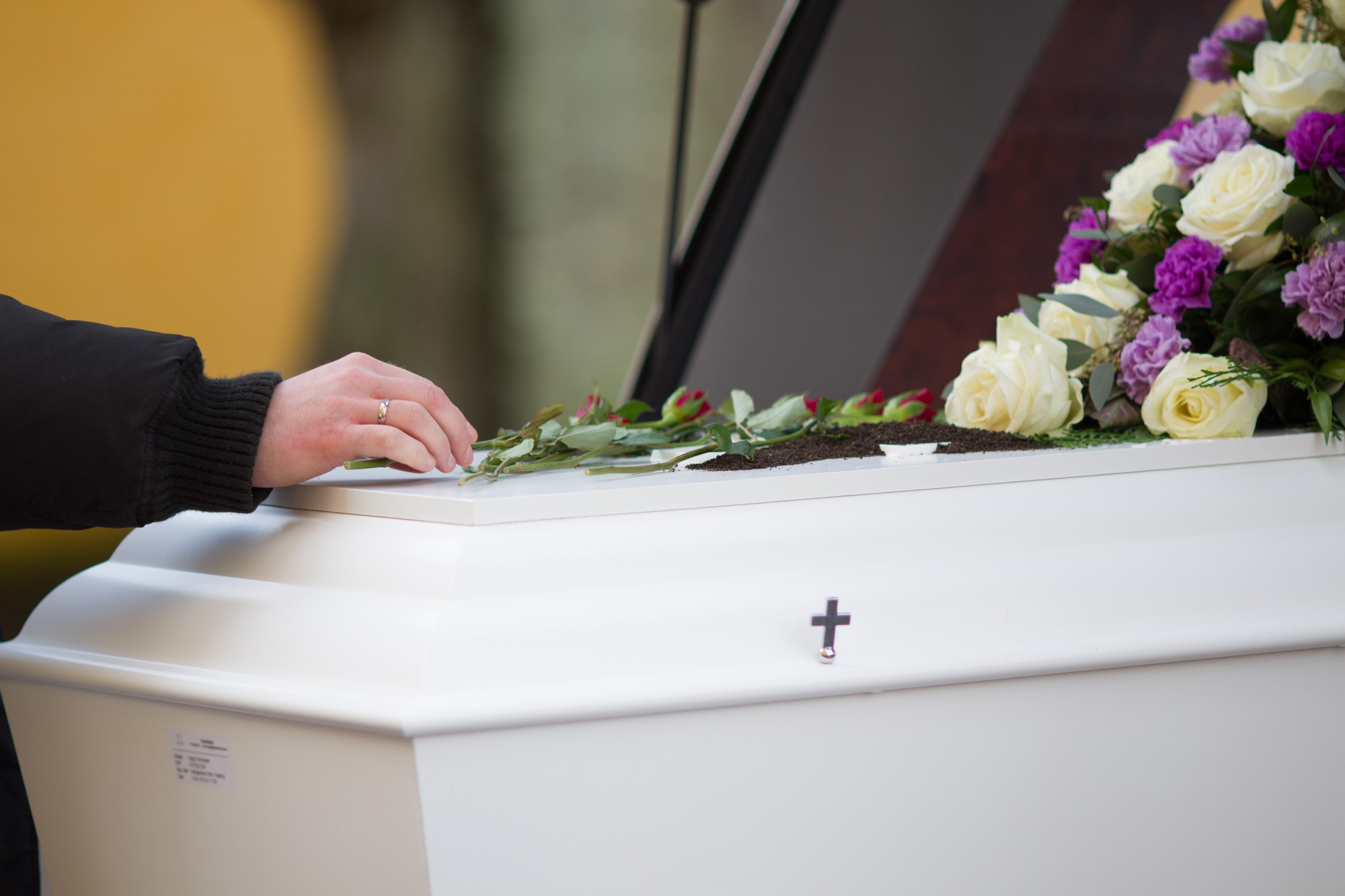
The funeral was on a Saturday in late March.
Joe had stood beside me throughout.
He had held my hand during the service.
He had been present at the reception in exactly the way a good husband is present at such events, attentive and available and not taking up more space than was appropriate.
I had been grateful.
And then I had noticed he was gone.
I went looking for him.
The funeral home had a room off the main reception hall where the open casket had been placed for those who wanted a viewing before the service, and the door was ajar when I came to it.
I heard his voice.
He said: I kept our secret, Margaret.
He said: no one ever found out.
He touched the edge of the coffin.
He said: it’ll stay buried under the red maple in your yard forever.
I stepped back.
I stood in the hallway.
My heart was doing something I could not control.
I stood there until I heard him move toward the door and then I moved away, quickly, the way you move when you need someone not to know you heard something.
I went back to the reception.
I held a cup of tea I did not drink.
I talked to relatives about my mother’s life.
I watched Joe across the room.
He was talking to someone.
He was smiling in the way he smiled at social events, the easy social smile of someone who is comfortable in rooms full of people.
I watched him and I thought about the red maple.
I had always assumed my mother’s attachment to it was sentimental.
She had planted it in a significant year, the year I married, and she had treated it with a protectiveness that I had attributed to the sentimentality of a woman who did not express sentiment in any other form.
She would not let landscapers near it.
She refused to have it removed when the roots cracked part of the walkway, which cost her money to repair and which Joe had commented on once, saying she should just have the tree taken out.
My mother had looked at Joe for a long moment.
She had said: that tree stays where it is.
Joe had not said anything else.
I had attributed this to their general antagonism.
Now I sat in the funeral home with a cup of tea and thought about a woman who planted a tree to mark something she needed to keep buried.
That night I drove to Birchwood Lane.
The house was empty.
I had been there two days before to collect some of my mother’s personal items, and the emptiness had a different quality now, the specific emptiness of a house whose person was not coming back rather than simply out.
The porch light was on because I had left it on.
The maple stood behind the house.
I had looked at it thousands of times.
It was a beautiful tree.
Big, now, after twenty-seven years, with the specific established quality of a tree that has had time.
The canopy was wide.
The trunk was substantial.
It had the look of a tree that had been given something, that had been placed with intention.
I found the shovel in the garage.
I put on the work gloves that were on the shelf beside the shovel.
I went to the tree.
I started digging.
The roots were complex and the soil was compacted from decades of being root-threaded, and for fifteen minutes I moved through just roots and damp soil and thought: maybe I misheard. Maybe he said something else. Maybe I am about to feel ridiculous.
Then the blade hit metal.
The sound was specific and clear and nothing like root or stone.
I dug around it.
I pulled it up.
A metal container, the kind that was made to be buried, that was sealed against moisture, wrapped in layers of plastic bag that had degraded but had done their job.
I carried it to the porch.
My hands were shaking.
I opened it.
Inside was a folder.
And inside the folder were documents.
The first document was a police report.
It was dated August 14, 1996.
Fourteen months before I married Joe.
The name on the report was Joseph Beaumont.
My Joe.
The offense was assault.
I read it.
I read it twice.
The victim was a woman named Clare Ashby.
The report described an incident at a bar, an escalation, a physical confrontation in which Joseph Beaumont had struck Clare Ashby and broken her nose.
Ashby had filed a police report.
The case had not gone to prosecution.
The second document explained why.
It was a letter.
From my mother.
To Clare Ashby.
It was dated September 1996.
I read it.
My mother had found out about the incident.
The letter did not say how.
It said that she was the mother of the woman Joseph Beaumont was currently seeing, and that she had reason to believe he was dangerous, and that she wanted to know whether Clare Ashby would be willing to speak to her before the case resolution.
The third document was a letter back from Clare Ashby.
She had spoken to my mother.
She described the incident.
She described Joseph Beaumont as someone who became violent when he drank, who had been charming before the night in question and who had changed when he felt humiliated in a public setting.
She described being afraid.
She described the decision not to pursue prosecution because she had been told it was unlikely to result in anything and because she did not want to go through it.
She said: please tell your daughter.
The fourth document was a letter from my mother to herself.
Not to anyone.
To herself.
Written in her handwriting, in the specific neat hand she used for everything.
It said: Sarah loves him. If I tell her now, she will not believe me. She will think I am against him for other reasons. She will choose him and lose me and be angry for years before she sees what he is.
It said: if I wait, she will be angry with me for not telling her sooner. But she will already know, by then, what he is, and she will know I tried.
It said: there is no good choice. There is only the choice that hurts her the least in the long run.
It said: I am choosing to wait.
And then it said: but I am keeping the proof.
It said: he came to see me the day after I spoke to Clare Ashby.
It said: he had found out somehow that I knew. I don’t know how. Men like him have ways of knowing when they’ve been discovered.
It said: he came to the house.
It said: he sat across from me at this table.
It said: and he said: you’re going to be a problem, aren’t you, Margaret.
It said: I told him that I had documentation. I told him that if anything happened to Sarah, the documentation would go to the police immediately.
It said: he said: nothing is going to happen to Sarah.
It said: I told him that was correct. That I was going to make sure of it.
It said: we agreed that neither of us would tell Sarah.
It said: I agreed because I believed, at that time, that telling her would push her away and toward him and away from the protection I could offer.
It said: he agreed because he had no choice.
It said: I have not told Sarah.
It said: I am ashamed of this.
It said: every year I do not tell her I am more ashamed. And every year telling her becomes harder because more time has passed and she will ask: why didn’t you tell me sooner?
It said: and I will not have a good answer.
It said: I wanted to protect her.
It said: I hope that is what I did.
It said: I hope he became a better person.
It said: I don’t know if he did.
The letter was undated.
But based on the paper quality and the ink, and based on my knowledge of my mother’s handwriting across decades, it had been written recently.
Within the last few years.
Maybe within the last year.
She had been sitting with this for twenty-seven years.
And in the last years of her life she had been sitting with it differently, with the specific weight of someone who is running out of time to do the thing they have put off.
I sat on my mother’s porch for a long time.
The red maple was visible from where I was sitting.
The hole I had dug was visible at its base.
I thought about twenty-seven years.
I thought about dinners and holidays and the specific civil hostility that had defined my adult family life.
I thought about Joe across the room at the reception, smiling his easy social smile.
I thought about the word buried.
He had said: it’ll stay buried under the red maple forever.
He had not known she had taken the container out at some point.
Or he had not known she had added to it.
He had known about the documents his mother-in-law had kept as leverage.
He had not known about the letter she had written to herself.
He had thought the secret was between two people.
It was between one person and herself.
I called my friend Patricia.
Patricia was a family law attorney who I had known for fifteen years and who I had called once before, eight years ago, in a very different context, and who had the quality of someone who received serious information without performing her reaction.
She answered.
I said: I need your advice.
She said: tell me.
I told her.
She was quiet while I told her.
When I finished she said: do you have the documents with you?
I said: yes.
She said: are you safe?
I said: I’m at my mother’s house. Joe doesn’t know I’m here.
She said: okay.
She said: Sarah. The police report is from 1996. It is not something that can be prosecuted now. The statute of limitations on assault.
I said: I know.
She said: but the documentation itself is significant. Depending on what you decide about your marriage.
I said: I know.
She said: are you thinking about your marriage right now?
I said: I’m thinking about everything right now.
She said: yes.
She said: that’s the right response to what you just told me.
She said: Sarah.
I said: yes.
She said: you do not have to call the police tonight.
She said: there is no crime in the documents that can currently be prosecuted.
She said: there is a record of something that happened twenty-seven years ago that was never properly addressed and that two people agreed to keep secret.
She said: the calling of the police would be about the relationship between those documents and your current situation.
I said: what do you mean?
She said: I mean that if you are trying to establish a pattern of behavior that is relevant to your current safety, or to a divorce proceeding, these documents are relevant.
She said: if you are trying to have something historically addressed, the window has closed.
She said: what are you trying to do?
I sat on my mother’s porch.
I thought about what I was trying to do.
I said: I don’t know yet.
She said: that’s okay.
She said: take the documents home.
She said: keep them somewhere safe.
She said: and call me tomorrow.
I said: Patricia.
She said: yes.
I said: do you think she was right?
She said: your mother?
I said: yes.
I said: to wait. To not tell me.
Patricia was quiet for a moment.
She said: I think she was wrong about the strategy. And I think she was right about the love.
She said: which is about the most complicated combination a person can be.
I said: yes.
She said: go home, Sarah.
She said: call me tomorrow.
I went home.
Joe was asleep.
He was asleep in the bed we had shared for twenty-seven years.
I stood in the doorway of the bedroom.
I looked at him.
He was sleeping the way he always slept, on his back with one arm across his chest, the specific posture of someone who has long since made peace with sleep.
I thought about Clare Ashby.
I thought about a bar in 1996.
I thought about a woman with a broken nose who had decided not to pursue prosecution because she had been told it probably wouldn’t result in anything.
I thought about my mother sitting across from Joe at her kitchen table.
I thought about the specific threat she had extracted from him, the implicit one.
Nothing is going to happen to Sarah.
That was correct. He had said it. And nothing had happened to Sarah. Not the specific kind of thing that had happened to Clare Ashby.
I had not been hurt.
I had not been afraid of him.
In twenty-seven years, there had not been a moment of physical threat.
What there had been was the specific thing that happens when a man has learned, by consequence, to manage his behavior. When the threat of exposure keeps a behavior in check. When the person managing the behavior is not doing so because they have changed but because they have been contained.
I did not know which kind of man Joe was.
I knew he had been violent in 1996.
I knew my mother had found out.
I knew that she had used the knowledge as a cage and that he had spent twenty-seven years living in it.
I did not know what he would have been without the cage.
I lay down on the couch.
I did not sleep.
In the morning Joe came downstairs at seven.
He was surprised to see me.
He said: did you sleep on the couch?
I said: I couldn’t sleep.
He said: where did you go last night? I woke up at eleven and you weren’t here.
I said: I went back to my mother’s.
He said: at night?
I said: I needed to get some things.
He looked at me.
He said: are you okay?
I looked at him.
I said: Joe.
He said: what?
I said: I was at the funeral home. When you were with Mom.
He was very still.
I said: I heard what you said to her.
He said: Sarah.
I said: you said you kept a secret. That it was buried under the red maple.
He said nothing.
I said: I dug it up last night.
He sat down.
He sat down in the kitchen chair the way people sit when their legs have stopped being able to hold them.
He said: she kept them.
I said: yes.
He said: I thought she might have destroyed them. Or given them to you eventually.
He said: I checked once. Three years ago. When she was in the hospital for the hip. I borrowed her key and went to the yard and dug. It was still there.
He said: I was going to take it. But I put it back.
I said: why?
He said: because I thought if I took it, she’d know. And the deal would be off.
I said: the deal.
He said: yes.
I said: that you wouldn’t hurt me in exchange for her silence.
He said: that is not how I would describe it.
I said: how would you describe it?
He said nothing.
I said: she was protecting me.
He said: yes.
He said it simply.
He said: she was.
He said: Sarah, I am not going to pretend I was a good person in 1996. I was not.
He said: I was drinking too much. I got into a situation that I handled badly. Worse than badly.
He said: your mother found out. I don’t know how.
He said: she came to me and she said: you hurt someone. And I cannot let you hurt my daughter.
He said: and I told her I would not.
He said: and I haven’t.
I said: not because you changed. Because she threatened you.
He said: both things can be true.
He said: people change for complicated reasons.
He said: I stopped drinking that year. Not because of your mother. Because of what happened with Clare. Because I did not want to be the kind of person who did that.
He said: I was in therapy for two years.
I said: I didn’t know that.
He said: no.
He said: I didn’t want you to ask why.
I said: you were afraid I would find out.
He said: yes.
He said: Sarah.
I said: yes.
He said: I have been afraid every day for twenty-seven years that you would find out.
He said: not because I was going to hurt you. Because I knew you would wonder whether I might.
He said: and the wondering would be right.
He said: you should wonder.
He said: I did a terrible thing in 1996.
He said: I have not done a terrible thing since.
He said: I don’t know if that is because I changed or because your mother was watching or because I was lucky or because of the therapy or because of you.
He said: probably all of those things.
He said: I know that is not a satisfying answer.
He said: I know there is no satisfying answer.
I sat with this.
I sat with it for a long time.
He did not fill the silence.
He waited.
This was, I realized, one of the things I had always respected about him.
His capacity to wait.
His capacity to be in discomfort without making the discomfort someone else’s problem.
I did not know what to do with that.
I said: my mother sat with this for twenty-seven years.
He said: yes.
I said: she hated you.
He said: yes.
He said: she was right to.
I said: and she loved me enough to wait.
He said: yes.
He said: Sarah. Your mother was the most formidable person I have ever met.
He said: I hated being in the same room as her because she knew what I had done and she never let me forget it.
He said: and I respected her for it.
He said: every year I told myself I would tell you. And every year I couldn’t.
He said: because I was afraid. And because I told myself you were happy. And because I told myself I had changed.
He said: and maybe I had.
He said: or maybe I was lucky.
He said: I genuinely do not know.
I said: that is a terrible thing to not know about yourself.
He said: yes.
He said: it is.
I said: Patricia told me the police report is too old to prosecute.
He said: yes.
He said: I know.
He said: is that what you’re going to do? Call the police?
I said: I called them last night.
He went very still.
I said: not to report the assault. Patricia explained that was not possible.
He said: then why?
I said: because my mother’s letter described a confrontation. Between you and her. In her kitchen.
He said: Sarah.
I said: you went to her house. You said: you’re going to be a problem.
He said: it was twenty-seven years ago.
I said: yes.
He said: what are the police going to do with that?
I said: nothing.
I said: probably nothing.
He said: then why?
I said: because I needed someone official to have the documents.
He said: why?
I said: because my mother kept them. Because she kept them and they mattered to her and she spent twenty-seven years making sure they existed.
He said: I know.
I said: and because if something had ever happened to me, they would have been buried under a tree.
He said: nothing was going to happen to you.
I said: I believe that.
I said: I do believe that.
He said: then why?
I said: because believing it is not enough.
He said: what do you want, Sarah?
I sat at the kitchen table.
I thought about what I wanted.
I thought about my daughters.
I thought about Nora and Caitlin and what they knew about their father, which was not what I now knew.
I thought about twenty-seven years.
I thought about the house we had built and the life we had built and the specific reality of a thing that you have lived inside for a very long time and that you now understand differently.
Not everything differently.
Some things the same.
He had not hurt me.
He had been, in the ways that were daily and constant and that made up the texture of a life, a good husband.
He had also been a man who had hurt someone in 1996 and who had spent twenty-seven years in a cage of that information.
And I had been a woman who had spent twenty-seven years living with a man without knowing this.
I said: I want the truth.
He said: I’ve told you the truth.
I said: all of it.
He said: yes.
I said: Clare Ashby.
He said: yes.
He said: I hit her.
He said: she fell.
He said: her nose broke.
He said: I left.
He said: I did not call to see if she was all right.
He said: I did not return to apologize.
He said: I was twenty-eight years old and I was drunk and ashamed and I ran.
He said: I have thought about it many times.
He said: I do not know whether she is all right.
He said: I have thought about trying to find her.
He said: I never did.
He said: I was afraid of what I would find.
I said: that she was not all right.
He said: yes.
I said: or that she was and would want accountability.
He said: yes.
I said: both of those things are true regardless of whether you find her.
He said: yes.
He said: I know.
I said: Joe.
He said: yes.
I said: I need time.
He said: yes.
He said: I know.
He said: how much time?
I said: I don’t know.
He said: are you asking me to leave?
I said: I’m asking you to give me time to think.
He said: yes.
He said: I can stay elsewhere.
He said: I’ll call my brother.
I said: yes.
He stood up.
He picked up his coffee.
He said: Sarah.
I said: yes.
He said: your mother was right about one thing.
I said: she was right about many things.
He said: yes.
He said: but specifically.
He said: she was right that telling you early would have pushed you toward me and away from her.
He said: I think that’s true.
He said: I think at twenty-six you would have chosen to believe me over her.
He said: I think the twenty-six-year-old you would have thought she was interfering.
I sat with this.
I said: yes.
He said: I’m not saying she was right to wait.
He said: I’m saying I understand why she did.
He said: I have always understood why she did.
He said: she was protecting you in the only way she could figure out.
He said: she was wrong about the method.
He said: she was not wrong about the love.
I said: no.
I said: she was not.
He went upstairs.
He packed a bag.
He came down.
He said: I’ll be at Robert’s.
He said: call me.
He left.
I sat in the kitchen.
The morning was doing what mornings do in late March, the light changing as clouds moved over the sun and the temperature sitting in the ambiguous cold that might become warmth by afternoon or might not.
I thought about Patricia.
I thought about the documents.
I thought about what the police officer had said the previous night, when I had called and explained and he had asked me to come in.
He had been young, the officer, and he had listened with the careful attention of someone who is holding multiple things at once, the historical offense and the current reality and the documents and what exactly they were being asked to do.
He had said: the assault itself is outside our ability to act on. But I want you to understand that if you have any concern about your current safety, we can help.
I had said: I don’t believe I’m in danger.
He had said: based on what you’ve described, that may be accurate. But the documents should be documented.
He had taken copies.
He had given me back the originals.
He had said: I’m sorry about your mother.
He had said it simply.
Not as a formality.
As an acknowledgment.
I had thanked him.
I had driven home.
I was the one who had to decide what happened next.
Not my mother.
She had made her decision twenty-seven years ago and she had lived inside it until she died with it unfinished.
She had wanted to tell me.
In her last days she had said: I want you to know the truth.
She had run out of time to say it.
She had left the documents instead.
She had planted a tree over them and tended the tree for twenty-seven years as if it were another child, because in a way it was.
The truth, tended.
The truth, kept alive.
Waiting for the right moment to be found.
I called Nora.
She answered on the second ring.
She said: Mom. Are you okay?
I said: yes.
I said: I need to tell you some things.
She said: okay.
I said: they’re complicated things.
She said: I can handle complicated.
She said it with the specific quality of her.
She had always been able to handle complicated.
Both of them had.
I had made sure of it.
Whatever else my marriage had or had not been, I had made sure that my daughters could handle complicated.
I said: your father and I are going to take some time.
She said: apart?
I said: apart.
She was quiet.
She said: because of Grandma?
I said: because of something I found out.
She said: are you safe?
I said: yes.
I said: I am safe.
She said: what did you find out?
I said: I’m going to tell you. I’m going to tell you everything.
She said: okay.
I said: it’s going to take a while.
She said: I have time.
I told her.
She was quiet through most of it.
At the end she said: Grandma kept it under the tree.
I said: yes.
She said: for twenty-seven years.
I said: yes.
She said: because she loved you.
I said: yes.
She said: and because she didn’t know what else to do.
I said: yes.
She said: and Dad has been carrying this the whole time.
I said: yes.
She said: and he never told you.
I said: no.
She said: Mom.
I said: yes.
She said: what are you going to do?
I said: I don’t know yet.
I said: I need time.
She said: that’s okay.
She said: that’s the right answer.
I said: is it?
She said: yes.
She said: taking time is not the same as deciding.
She said: it’s just time.
I said: yes.
She said: what can I do?
I said: I’ll let you know.
She said: Mom.
I said: yes.
She said: Grandma.
She said it with the specific weight of someone who is understanding something new about a person they have just lost.
I said: yes.
She said: she was trying to protect you.
I said: yes.
She said: even if she did it wrong.
I said: yes.
She said: that’s. I mean.
She stopped.
She said: I understand now why she was the way she was with him.
She said: I always thought she was just cold toward him.
She said: she wasn’t cold.
She said: she was.
I said: she was watching.
She said: yes.
She said: always watching.
I sat in the kitchen after we hung up.
The morning had become the afternoon.
The light was the specific late-March light that was neither winter nor spring but held both.
I thought about my mother planting the red maple in 1996.
She had planted it in August, two months before the dinner where she had met Joe.
She had already known by August.
She had already spoken to Clare Ashby.
She had already confronted Joe.
She had already made her decision.
And then she had planted the maple.
She had said at the time: I want something that will grow.
I understood now.
She had wanted something to mark it.
To say: this is where I put the thing I could not say.
To say: I was here. I knew. I kept it as long as I could.
And the tree had grown.
For twenty-seven years it had grown, larger every season, its roots spreading wider and deeper into the soil where the container sat.
It had cracked the walkway with its roots.
She had refused to have it removed.
When Caitlin had dug around its trunk with a toy shovel as a small child, my mother had nearly screamed.
I had thought she was sentimental.
She had been watching over the thing she had planted.
She had been keeping her promise.
I want you to know the truth.
She had found a way.
Just not in the way either of us had imagined.
I went to her house one more time that week.
I went in the morning.
I brought a pair of the good garden gloves she kept in the garage.
I went to the red maple.
I looked at it for a long time.
It was a beautiful tree.
That had always been true.
I knelt at the base of it.
I filled in the hole I had dug.
I patted the earth flat with my hands.
I stood up.
I looked at the tree.
I said: thank you.
I said it quietly.
To the tree, or to the woman who had planted it, or to the air between then and now.
I do not know if anything heard.
I know that saying it was necessary.
The truth had been buried under that tree for twenty-seven years.
It had been kept safe.
It had been tended.
And it had been waiting for the right person to dig it up.
I had been that person.
She had known I would be.
She had always known I would find it eventually.
The container had not been locked.
The plastic had degraded enough to be opened easily.
She had put it there to be kept.
She had put it there to be found.
By me, when I was ready.
When I was old enough.
When I knew how to hold it.
She had been right about one thing, even if she had been wrong about the strategy.
She had been right that the twenty-six-year-old me would not have been ready.
I was fifty-three now.
I had raised two daughters who could handle complicated.
I had built a life that was real, whatever its secrets.
I was ready.
The tree stood over me, large and established and beautiful.
Its roots went deep.
They would go on going deep for years.
Some things you plant, and they grow in directions you cannot predict.
And sometimes what they grow over is exactly what needed to be there.

Adrian Hawthorne is a celebrated author and dedicated archivist who finds inspiration in the hidden stories of the past. Educated at Oxford, he now works at the National Archives, where preserving history fuels his evocative writing. Balancing archival precision with creative storytelling, Adrian founded the Hawthorne Institute of Literary Arts to mentor emerging writers and honor the timeless art of narrative.