Nobody Leaves
My eighty-three-year-old mother still insisted on doing her own grocery shopping, and I had long since stopped trying to talk her out of it.
I want you to understand my mother before I tell you what happened that Saturday, because the whole meaning of it rests on who she is, and who she has always been, and the thing she did fifty years ago that not even I fully knew about until a grocery store cashier locked her register and refused to let anyone leave.
Her name is Margaret. She raised me alone, mostly, after my father left when I was small, and she did it on a nurse’s salary in a small town where a single mother in those years was regarded as something slightly scandalous, something to be pitied and gossiped about in equal measure. She worked the night shift at the county hospital for thirty years so she could be home when I woke up and got me off to school before she slept. She never complained. She never once, in my entire childhood, made me feel that I was a burden, though I must have been, though raising a child alone on a nurse’s wages must have been a grinding daily struggle I was too young to see.
She was, and is, the kindest person I have ever known. Not kind in the soft, sentimental way. Kind in the hard way, the way that costs something, the way that keeps showing up. She was the nurse who stayed late with the patients who had no visitors. She was the neighbor who brought food to the family down the street when the father lost his job, quietly, on the porch, never wanting thanks. She had almost nothing, my whole childhood, and she gave away more of it than we could afford, and when I was old enough to ask her why, she told me something I’ve never forgotten. She said, you never know what someone is carrying. You just don’t. So you be kind, and you assume everyone you meet is fighting a hard battle, because most of them are, and the ones who aren’t won’t be hurt by your kindness anyway.
That was my mother. That is my mother. Eighty-three now, a little stooped, her hands trembling with a mild tremor that had gotten worse over the last couple of years, her memory still sharp but her body slowing down the way bodies do. And still, every Saturday, insisting on doing her own grocery shopping, because independence was the one luxury she’d earned and she was not about to surrender it.
I’d taken to going with her, not to do it for her, but to be nearby, to carry the heavy bags, to be a hand to steady her if she needed one. She let me come along on the condition that I understood she was still doing the shopping, I was just keeping her company. I understood. I always understood, with my mother.
That Saturday, the store was packed. It was late morning, the busiest time, every checkout line long, the whole place full of that particular weekend energy of people in a hurry, harried parents and impatient singles and the low collective irritation of too many people wanting the same thing at the same time.
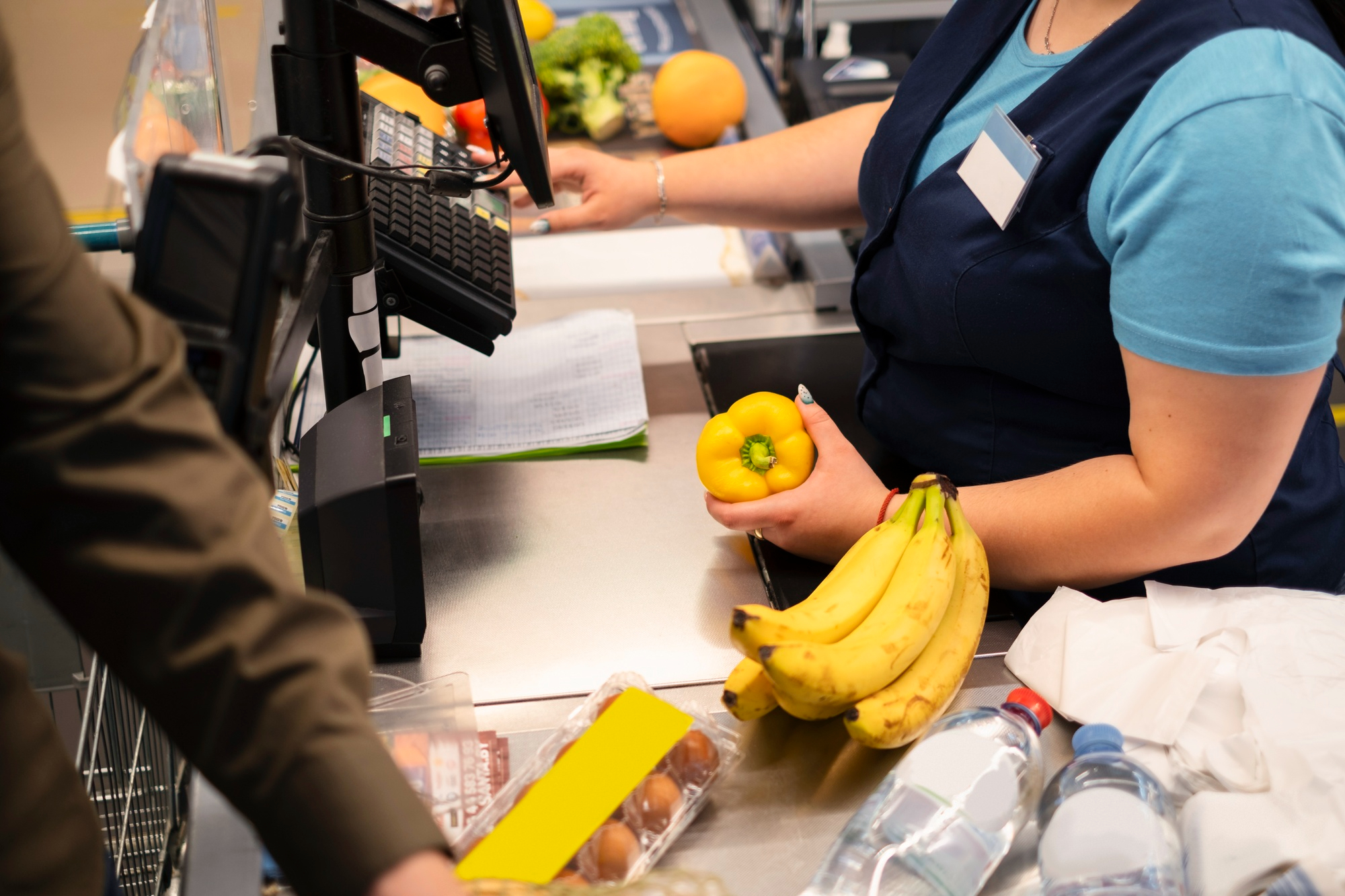
Mom had only six items in her basket. She shopped carefully, deliberately, buying exactly what she needed and no more, a habit from decades of having to. We got in line, and we waited, and eventually it was her turn, and she set her six items on the belt, and then she opened her purse to find her wallet.
And her hands were trembling.
They’d gotten worse, the tremors, and the stress of the crowded store and the line behind her and the sense of people waiting made them worse still, the way anxiety always amplifies these things. She was fumbling in her purse, her fingers not quite obeying her, searching for the wallet that had shifted to the bottom, and it was taking a little longer than it should have, thirty seconds, maybe a minute, the small ordinary delay of an old woman’s hands not working the way they used to.
The woman behind us sighed. Loudly. Theatrically. A sigh designed to be heard.
“Oh, come on,” the woman said.
My mother looked up, flustered, and apologized. That’s the thing that still makes my chest tight when I remember it. My mother, this woman who had given her whole life to caring for others, apologized to a stranger for the crime of being old and having trembling hands. “I’m so sorry,” she said. “I’ve just got to find my wallet, it’s in here somewhere, I’m sorry, just a moment.”
Her hands trembled harder.
The woman behind us was maybe forty-five, well-dressed, with an overflowing cart, the kind of cart that would take ten minutes to ring up, and she pushed that cart forward aggressively, bumping it against the back of my mother’s legs, and she said, in a voice loud enough for the whole line to hear, “If you’re too old to handle shopping, maybe you should just stay home.”
The words hit me like a slap. People turned to look. The checkout lines have a way of becoming little theaters, and suddenly we had an audience, and my mother was standing at the center of it, humiliated, her hands shaking, her face crumpling with embarrassment.
“Excuse me?” I said, turning on the woman. “That’s my mother you’re talking to. She’s finding her wallet. You can wait thirty seconds.”
The woman rolled her eyes at me. “I’m just saying what everyone here is thinking,” she said. “Some of us have places to be. If she can’t manage a simple transaction, she shouldn’t be out holding everyone up.”
My mother finally found her wallet. Her hands were shaking so badly now that she could barely open it, and I wanted to help her, but I also knew that stepping in and doing it for her, in front of this cruel woman, would only complete her humiliation, would confirm the woman’s ugly point, so I stood there, torn, my hand hovering, letting my mother keep her dignity by finding her own card.
She got the card out. She reached to hand it to the cashier.
And the woman behind us laughed. An ugly, derisive laugh. “Unbelievable,” she said. “We’re all standing here waiting for this? For her to hand over one card? This is what’s holding up the entire line?”
That was the moment the cashier looked up.
I hadn’t paid much attention to the cashier until then. She was a woman of maybe fifty, tired-looking, the way people who work registers on busy Saturdays look tired, going through the motions of a long shift. But at the sound of my mother’s voice, at the sight of my mother’s face as she extended the trembling card, something changed in the cashier. She went very still. She was staring at my mother’s face, staring hard, and her own face was doing something strange, some dawning recognition, some enormous emotion rising up behind her eyes.
“What’s your name?” the cashier asked. Her voice was oddly urgent.
My mother, confused by the question, by everything, said, “Margaret. My name is Margaret.”
And the cashier’s hand went beneath the counter.
Click.
Her register locked. The little screen went dark. And she reached over and switched off the conveyor belt, so that it stopped moving, so that nothing else could be rung up, so that the whole line ground to a halt.
“Nobody leaves,” the cashier said.
The rude woman behind us scoffed. “Are you serious? You’re locking the register? Now we’re really going to be here all day. Are you kidding me?”
But the cashier wasn’t even looking at the woman. She wasn’t looking at any of us in the line. She was looking at my mother, at Margaret, and her eyes were filling with tears, and she picked up the phone at her station and called for the store manager, and she said something into the phone, low and quick, that I couldn’t hear.
The whole line was confused now, murmuring, the rude woman loudest of all, complaining about the delay, about the incompetence, about how she was going to speak to someone. But the cashier ignored all of it. She just stood at her locked register, looking at my mother with tears running down her face, and my mother looked back at her, bewildered, having no idea what was happening.
“Do I know you, dear?” my mother asked gently, because even now, even confused and humiliated, her instinct was gentleness.
The cashier opened her mouth to answer, but before she could, the store manager arrived.
He was a younger man, and he came hurrying up the aisle, and he was carrying something. An old cardboard box, worn and soft at the corners, the kind of box that’s been sitting in a back office storeroom for a long time. He set it down on the counter, and he looked at my mother, and he looked at the cashier, and the cashier nodded, and wiped her eyes, and turned to face my mother fully.
“Margaret,” she said. “I need to ask you something, and I need you to think back a long way. About fifty years. Did you used to work as a nurse at the county hospital? The night shift?”
My mother’s eyes widened. “Why, yes,” she said. “For thirty years. How did you—”
“Fifty years ago,” the cashier said, her voice breaking, “in the winter, there was a young woman who came into the emergency room in the middle of the night. She was nineteen years old. She was pregnant, and she was alone, and she had no money and no husband and no family that would help her, and she was terrified, and she was in labor, and she thought her whole life was over.” The cashier had to stop, to gather herself. “There was a nurse on that night. A nurse who was supposed to just process her and hand her off. But the nurse didn’t do that. The nurse stayed with her. All night. Held her hand through the whole labor. Talked to her, calmed her, told her she was going to be okay, that she was strong, that she could do this. And when the baby was born, and the young woman had nothing, no clothes for the baby, no supplies, no way to even get home, that nurse went out and, with her own money, her own money that she clearly didn’t have much of, she bought a bag of things. Baby clothes. Formula. Diapers. Everything a new mother would need. And she gave it to the young woman, and she wrote down her own phone number, and she said, if you ever need anything, you call me. And then, before the young woman could even properly thank her, the nurse’s shift ended and she went home, and the young woman was discharged, and they never saw each other again.”
The whole line had gone silent now. Even the rude woman had stopped complaining.
My mother’s hand had come up to her mouth.
“That young woman,” the cashier said, and now she was weeping openly, “was my mother. And that baby, the one that nurse helped bring into the world, the one she bought clothes for with her own money, was me. My mother told me that story my entire life. Every year on my birthday, she told me about the nurse named Margaret who saved us both, who treated her like a human being when the whole world had thrown her away, who spent money she didn’t have on a stranger’s baby and asked for nothing in return. My mother said that nurse was the reason she found the strength to keep going, to raise me, to build a life. She said if it hadn’t been for one night of kindness from one nurse, she doesn’t know what she would have done. She named me after her. My name is Margaret too.”
The cashier reached into the old cardboard box.
“My mother kept the number that nurse wrote down. She tried to call it, years later, to say thank you, but by then it had been disconnected, you’d moved, and she could never find you. It broke her heart, never getting to thank you. She passed away three years ago. And one of the last things she said to me was that she wished she could have thanked Margaret one more time.” The cashier lifted something out of the box. “She kept this. All these years. The bag you gave her. Well, one thing from it. The little hat. The baby hat you bought me, fifty years ago, with your own money, for a baby you had no reason to care about.”
And she held it up. A tiny knitted baby hat, yellowed with age, soft and worn. And my mother made a sound I had never heard her make, a sound of pure overwhelming recognition, because I think, in that moment, she remembered. Not the specific hat, maybe, but the night, the young frightened girl, the shift that ran long because she couldn’t leave a nineteen-year-old to labor alone and afraid.
“I remember her,” my mother whispered. “I remember that girl. Oh, I’ve thought about her over the years, wondered what became of her, whether she was all right.” She was crying now too. “She was so frightened. So young. I just, I couldn’t leave her like that. Nobody should go through that alone.”
“She was all right,” the cashier, Margaret, said through her tears. “Because of you, she was all right. She raised me. She worked hard and she loved me and she gave me a good life, and she told me every year about the nurse who made it possible. And I have spent fifty years wishing I could meet you, and thank you, and here you are, standing at my register, being treated like you don’t matter, being told you should stay home, and I locked that register because I was not going to let one more second pass with the woman who saved my mother’s life being humiliated in my store. Not one more second.”
She came around the counter, this middle-aged cashier named Margaret, and she took my eighty-three-year-old mother, the original Margaret, into her arms, and the two of them held each other and wept, fifty years and a tiny yellowed baby hat between them, and the entire checkout line stood in absolute silence, and there was not a dry eye anywhere, including mine, including, I noticed, the store manager’s.
The rude woman had gone very quiet. She was standing there with her overflowing cart, and her face had changed completely, the impatience and the contempt drained out of it, replaced by something that looked like shame, the deep uncomfortable shame of a person who has just watched the target of her cruelty revealed as a hero.
Because that was the thing, wasn’t it. She’d looked at my mother and seen only an old woman with trembling hands, holding up the line, a nuisance, someone who should stay home. She’d made her cruel little assumptions and delivered her cruel little verdict. And it turned out that the old woman she’d humiliated had, fifty years ago, saved a frightened girl and her unborn baby with an act of kindness so profound that it had echoed down through half a century to this exact checkout line, where the baby, now grown, now fifty years old, stood weeping in her arms.
You never know what someone is carrying. My mother’s words, from my childhood. You just don’t. The rude woman had looked at Margaret and seen a burden. She had not seen thirty years of night shifts. She had not seen a lifetime of quiet giving. She had not seen the nineteen-year-old girl held through the night, or the baby clothes bought with money that couldn’t be spared, or the phone number pressed into a desperate stranger’s hand. She had seen an inconvenience, and she had been wrong, catastrophically, publicly wrong, and now she had to stand in that line and watch the truth of it unfold.
The store manager, it turned out, knew the story too. Margaret the cashier had worked there for years, and she’d told her coworkers about the nurse who’d saved her mother, the legendary Margaret they’d never been able to find. That was why the manager had come running with the box. Margaret had called him and said, in that quick low voice I couldn’t hear, she’s here, the nurse is here, it’s her, bring the box, and he had known instantly what she meant, and he had gone to the office where Margaret kept the little hat in its box, the box she brought out and showed to anyone who’d listen, and he had brought it to her.
They didn’t let my mother pay for her groceries. The manager insisted. Her six items, and then, when he heard the fuller story, when Margaret told him about the night shifts and the giving and the whole shape of my mother’s life, he had the staff fill a cart, quietly, with good things, and he sent her home with all of it, and no amount of my mother’s protesting would change his mind. “Ma’am,” he said, “you cannot buy groceries in this store today. It’s not possible. Please stop trying.” And my mother, who had spent her whole life giving and never taking, had to learn, at eighty-three, in a crowded grocery store, how to receive.
And the rude woman. I have to tell you about the rude woman, because her part in it matters.
When it was finally over, when my mother and Margaret had exchanged phone numbers, real ones this time, that wouldn’t be disconnected, when the hugging was done and the story had rippled out through the whole store, the rude woman approached my mother.
She was different now. Smaller, somehow. She stood in front of my mother, and she couldn’t quite meet her eyes, and she said, “I owe you an apology. What I said was, it was unforgivable. I don’t have any excuse. I was in a hurry and I was frustrated and I took it out on you, and I had no idea, I had no right, you’re clearly, you’re obviously a wonderful person and I treated you like garbage and I’m so ashamed of myself. I’m so sorry.”
And here is where my mother did the thing that is the whole reason I’m telling you this story, the thing that taught me more than anything else that happened that day.
My mother reached out and took the rude woman’s hand. The hand that had shoved the cart into her legs. And my mother, this woman who had just been publicly humiliated by this stranger, looked at her with complete gentleness and said, “Oh, sweetheart. It’s all right. You must be carrying something heavy today, to have that much anger in you. I’ve been there. When my son was small, and I was so tired, and everything felt like too much, I was short with people I shouldn’t have been. We all have days like that. Don’t carry this one around with you. I forgive you completely. Now go on, and be a little gentler with the next person, and we’ll call it even.”
The woman broke down. She stood in the grocery store and cried, and my mother patted her hand, and I understood, watching, that I was seeing the exact quality that had made my mother stay with a frightened girl fifty years ago. It wasn’t that my mother was nice. Lots of people are nice. It was that my mother genuinely, bone-deep, believed that everyone was fighting a hard battle, and that this belief made her incapable of cruelty even toward people who were cruel to her, because she always, always assumed there was pain underneath. You must be carrying something heavy today. She didn’t say it as a rebuke. She said it as an act of understanding. She met the woman’s cruelty not with justice, which the woman deserved, but with mercy, which changed her.
I found out later, from a mutual acquaintance, that the woman really had been carrying something heavy that day. Her own mother was dying, in hospice, and she’d been on her way there, and she’d been drowning in a grief and a helplessness she didn’t know how to hold, and it had come out as cruelty toward an old woman in a checkout line who reminded her, maybe, of the mother she was about to lose. That doesn’t excuse what she said. But it proves my mother right. You never know what someone is carrying. My mother had assumed the woman was carrying something heavy, and she had been, and my mother’s mercy had reached the real wound in a way that anger never could have.
The two Margarets became friends. Real friends. The cashier started visiting my mother, bringing her groceries so she wouldn’t have to fight the crowds, sitting with her, sharing the fifty years of stories her own mother had told about the nurse named Margaret. She brought photographs of her mother, the frightened girl grown into a woman who’d built a good life, and my mother got to see, at last, what had become of the young woman she’d held through the night, got to see the whole downstream flood of that one act of kindness, the daughter, the grandchildren, the entire family tree that existed because one exhausted nurse on a night shift decided she couldn’t leave a stranger to suffer alone.
My mother passed away last year, at eighty-four, peacefully, in her sleep. And at her funeral, the cashier Margaret spoke. She stood up in front of everyone and she told the story, the whole story, the frightened girl and the night shift and the baby hat kept for fifty years and the day the nurse walked into her checkout line and got humiliated and turned out to be a hero. And she said something I will carry for the rest of my life. She said that my mother had saved two lives with one night of kindness, her mother’s and her own, and that she had never known it, had never once, in fifty years, known the size of what she’d done. That my mother had planted a seed of kindness in the dark and walked away and never seen it grow, and that it had grown into a whole forest, a whole family, a whole life, and my mother had gone about her days for half a century with no idea, giving that same kindness to countless other people, planting seeds she’d never see bloom.
That’s the meaning of it, I think. The thing my mother taught me, and the thing that grocery store taught the whole silent checkout line that Saturday.
We move through the world unaware of the weight and the worth of the people around us. The rude woman looked at my mother and saw a useless old woman holding up the line. She could not have been more wrong. And every day, all of us, we look at the people around us, the slow ones, the struggling ones, the ones who inconvenience us, and we make our snap judgments, and we have no idea, none, who they are or what they’ve done or what they’re carrying or how many lives they’ve quietly saved.
And the kindness we give, or fail to give, echoes. My mother held a frightened girl’s hand for one night fifty years ago and never knew that it rippled down through the decades and would one day, at the very end of her life, come back to her as a locked register and a stranger’s arms and a tiny yellowed hat. She never gave kindness expecting it to return. She gave it because that was simply who she was. And it returned anyway, at exactly the moment she needed it most, when a cruel stranger was trying to convince a whole store that she was worthless.
Nobody leaves, the cashier said, and locked her register, and stopped the whole busy impatient world in its tracks to honor an old woman that world had dismissed.
I think about that phrase all the time now. Nobody leaves. Because it turned out to mean so much more than a locked register. It meant that no act of kindness is ever really over. It meant that the frightened girl from fifty years ago had never really left my mother’s life, had been traveling toward her across five decades the whole time. It meant that what we do for each other doesn’t disappear when we walk away. It waits. It grows. It comes back.
My mother assumed everyone she met was fighting a hard battle, and she was gentle with all of them, and one of them turned out to be a nineteen-year-old girl who would name her daughter Margaret and keep a baby hat for fifty years and lock a register on a busy Saturday to make sure the world knew exactly who my mother was.
You never know what someone is carrying. So be kind. That was my mother’s whole philosophy, and her whole life, and in the end it was the thing that came back to carry her, gently, all the way home.

Specialty: Quiet Comebacks & Personal Justice
David Reynolds focuses on stories where underestimated individuals regain control of their lives. His writing centers on measured decisions rather than dramatic outbursts — emphasizing preparation, patience, and the long game. His characters don’t shout; they act.