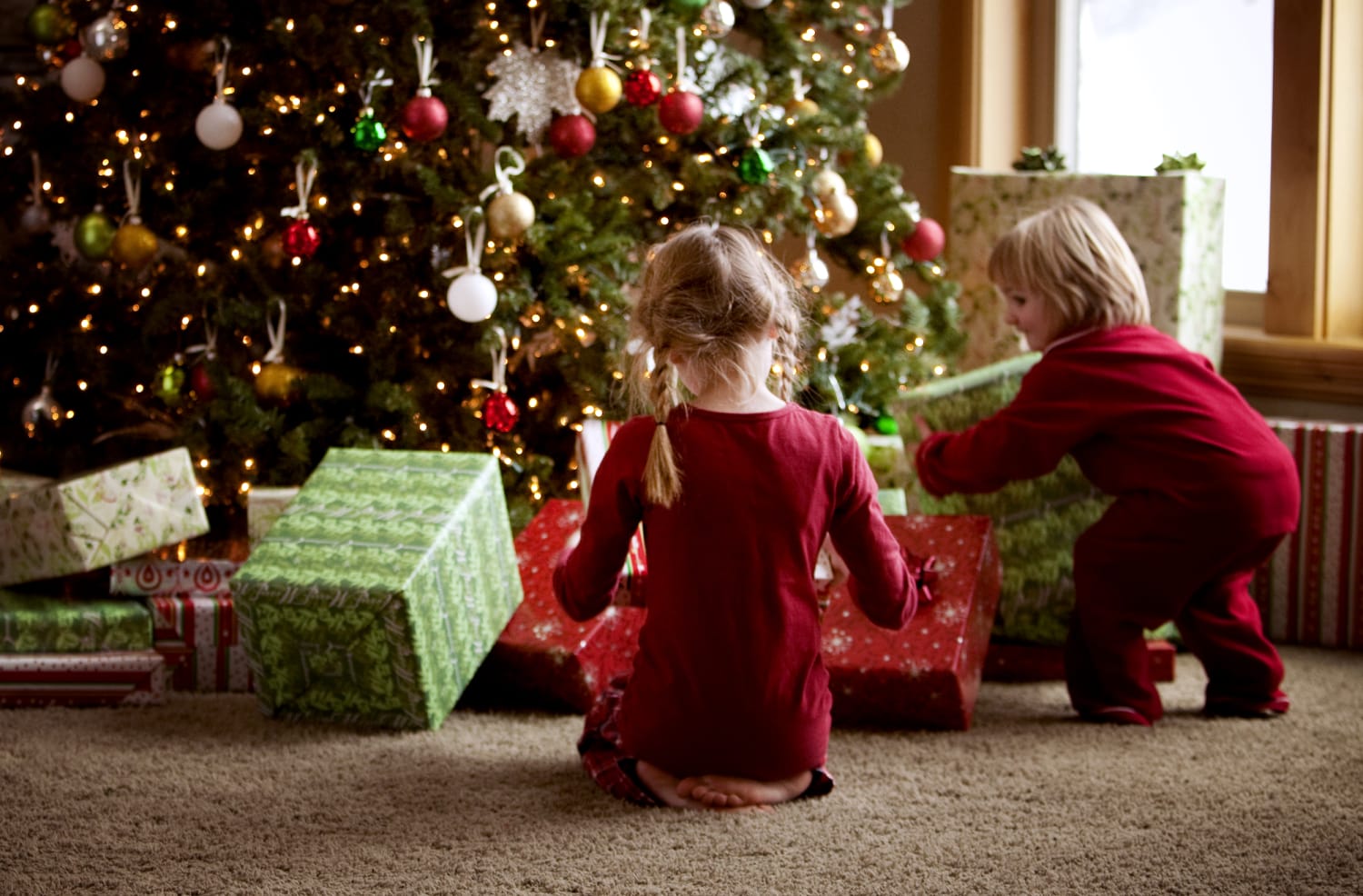
The night my eleven-year-old daughter walked home from Christmas carrying every single gift she’d brought with her, I thought the worst part of the whole ordeal was already behind us. I thought the worst part was watching her stand on that porch in the cold, holding a bag full of presents nobody wanted, listening to my own mother tell her there wasn’t enough room.
I was wrong. The worst part came the next morning, when my phone rang and Grandma Ruth’s voice, usually so warm and unhurried, came through steady and serious, and she said four words that changed everything all over again.
“I found the clause.”
I want to back up, though, because none of this makes sense unless you understand exactly what that house meant, and exactly what my daughter had been carrying up that walkway when the door closed in her face.
My name is Kate. I’m thirty-six, married to a good, steady man named Daniel, and together we have one daughter, Emma, who is eleven going on forty most days, the kind of kid who notices when a waitress seems tired and leaves her own allowance as a tip. My mother, Diane, remarried about six years ago, after nearly a decade on her own following my parents’ divorce, to a kind, quiet man named Robert. I liked Robert from the start. He made my mother laugh in a way I hadn’t heard in years, and he never once tried to insert himself where he wasn’t wanted, never tried to be anyone’s father when we already had one, even a flawed one.
Robert had a grown daughter of his own, Christine, from his first marriage, and Christine had three kids close in age to Emma. When my mother and Robert married, there was a lot of careful, hopeful talk at the wedding reception about blending two families into one, about how there’d be plenty of cousins now, plenty of noise at holidays, plenty of love to go around. I remember Robert’s mother, Grandma Ruth, standing up at that reception with a champagne glass in her weathered hand and saying, in front of everyone, that she wanted this new, combined family to always have a place to gather. A real place. Somewhere nobody ever had to wonder if they belonged.
About a year after the wedding, Ruth made good on that toast in a way none of us fully expected. She owned a large, beautiful house on Birchwood Lane, the same house Robert and his siblings had grown up in, the same house that had hosted forty years of family Thanksgivings and birthday parties and Easter egg hunts across the wide backyard. Ruth was getting older, didn’t want the upkeep anymore, and rather than sell it to strangers, she gave it outright to Robert and my mother. A gift, she called it. Not an inheritance, not something to wait for. A gift, given while she was still alive to watch it be used the way she wanted it used.
I remember my mother crying when she told me about it over the phone, genuinely moved, telling me Ruth had said something during the transfer that stuck with all of us. “This house was never really about the walls,” Ruth told her. “It was about making sure nobody in this family ever has to wonder if there’s room for them.”
For a while, that’s exactly what it was. The first two Christmases in that house were wonderful, genuinely wonderful, full of noise and mismatched chairs dragged in from three different rooms to make sure everyone had a place at the table. Emma and Christine’s kids ran through the halls together like they’d known each other their whole lives. Ruth sat in the good armchair by the fireplace, beaming, watching all of it unfold exactly the way she’d hoped.
I don’t know exactly when things started shifting. Looking back now, I can trace small moments, small slights I’d talked myself out of noticing at the time. My mother started referring to Christine’s kids as “the grandkids” in a way that quietly, subtly excluded Emma from that category, even though Emma was every bit as much her grandchild as any of them. She’d post photos from family gatherings where Christine’s kids were front and center, and Emma would be cropped at the edge, or missing entirely, and I told myself it was nothing, that I was reading too much into ordinary photography choices.
This past Christmas, all of that quiet drift finally became something impossible to explain away.
Daniel had to work a half-day on Christmas Eve, so it was just Emma and me who drove over to Birchwood Lane first, planning to meet him there once he got off. Emma had spent nearly two weeks preparing for that night. She’d picked out gifts for everyone with her own saved allowance money, wrapped them herself in paper she’d chosen specifically because it had little gold stars on it, and made, with what had to have been enormous patience for an eleven-year-old, a hand-painted ornament for Grandma Ruth, her name spelled out in careful gold letters across a wooden star Emma had sanded smooth herself in art class.
I remember her in the car on the drive over, practically vibrating with excitement, going over in her head who she’d give what to first, worrying out loud that maybe she should have wrapped Christine’s youngest daughter’s gift in different paper since he was a boy and might not like stars. That’s the kind of kid she is. Worrying whether a nine-year-old boy would mind star-patterned wrapping paper.
We pulled up to the house a little after five. Every window was lit up gold, and I could see, even from the driveway, the shapes of people moving around inside, hear faint music drifting out. Emma practically bounced up the front walk ahead of me, gift bag in one hand, the little wooden ornament carefully wrapped in tissue paper in the other, cradled against her chest like something fragile.
My mother opened the door. Not all the way. Just enough to stand in the gap, one hand still on the frame, her body angled in a way that, looking back, I understand now was deliberate, a physical barrier disguised as a casual stance.
“Oh,” she said, and there was something in her voice I’d never heard directed at either of us before, something flat and unwelcoming. “I didn’t realize you were coming tonight.”
I remember blinking at her, genuinely confused, because we’d confirmed the time with her two days earlier over text, and I actually pulled my phone halfway out of my pocket before she kept talking.
“It’s just — we’re pretty full up in here tonight, Kate. Christine’s crew is here, and with the table set the way it is, I don’t really think we have room for one more right now.”
For one more. I remember the exact words because I turned them over in my head a dozen times on the drive home afterward, trying to figure out if she meant Emma, meant me, meant both of us, meant the whole idea of us showing up at all. Behind her, through the gap in the doorway, I could see straight into the dining room. I could see Christine’s kids running past the doorway, laughing, one of them holding what looked like a candy cane sword. I could see extra folding chairs already set up along the far wall, clearly anticipating more guests than were currently seated.
“Mom,” I said, keeping my voice as level as I could manage with Emma standing right beside me, “we talked about this. You said six o’clock.”
“I know, I know,” she said, and there was something almost apologetic in her tone now, but not apologetic enough to actually move aside from the door. “It’s just been a lot this year, with everyone. I think it’s better if it’s a smaller gathering tonight. You understand.”
I did not understand. I looked past her again, at Robert now standing a few feet behind her in the hallway, watching this entire exchange with an expression I couldn’t quite read, something between discomfort and resignation, like a man who’d seen this coming and hadn’t found the courage to stop it. He didn’t say anything. He didn’t step forward.
Emma, beside me, had gone very quiet, the kind of quiet that in hindsight I recognize as a child trying very hard to make herself smaller, to take up less space, as though that might somehow fix whatever was happening. She was still holding the gift bag. Still holding the little wrapped ornament against her chest.
“There’s clearly room,” I said, my voice tightening despite my best efforts to stay calm. “I can see the extra chairs from here, Mom.”
My mother’s expression shifted then, something defensive flickering across her face. “Kate, please don’t make this a thing. I just think tonight works better without extra additions to the mix. We can do something with you two another time, just the three of us, without everybody else around.”
Without everybody else around. As though Emma, her own granddaughter, needed to be quarantined away from the rest of the family rather than welcomed into it.
I felt something cold settle in my chest, a specific, awful kind of anger that comes from watching someone you love hurt your child in a way that’s technically deniable, technically explainable, and completely unmistakable at the same time. I looked down at Emma. Her eyes were bright, too bright, the particular brightness of a kid working very hard not to cry in front of people.
“Come on, baby,” I said quietly, reaching for her hand. “Let’s go.”
“Kate—” my mother started.
“We’ll talk later,” I said, and I turned and walked Emma back down the front steps and along the walkway to the car, her small hand gripping mine tighter than usual, the gift bag knocking softly against her leg with every step.
I didn’t fully process what had actually happened until we were both buckled into the car, my mother’s front door already closed behind us, the porch light glowing behind the glass like nothing at all was wrong. I sat there for a moment with my hands on the wheel, not turning the key yet, trying to figure out what I was even supposed to say to my own daughter right then.
Emma spoke first, her voice small in the quiet of the car.
“Did I do something wrong?”
That sentence broke something open in my chest that I don’t think has fully healed even now, weeks later. My eleven-year-old daughter, sitting in her booster seat with a hand-painted ornament clutched against her chest, genuinely believing that she herself was the reason she’d just been turned away from her own family’s Christmas.
“No,” I said, turning to look at her fully. “No, sweetheart. You didn’t do anything wrong. Not one single thing.”
“Then why couldn’t we stay?”
I didn’t have an answer for her that felt honest and also felt safe to say out loud to an eleven-year-old, so I just reached back and squeezed her hand and told her we’d figure it out, and we drove home mostly in silence, the Christmas lights strung along other people’s houses sliding past the windows the whole way.
Daniel got home about forty minutes after we did, having gone straight from work to my mother’s house and found it empty, then called me in confusion until I explained, as evenly as I could manage with my own voice shaking, what had happened. I watched something harden in his face as I talked, the particular quiet fury of a father who wants very badly to drive back over there and say something he’d probably regret, and instead simply came and sat down with us in the living room, one arm around each of us.
That night, I made Emma hot chocolate with the little marshmallows she likes, the good kind, not the mini ones, and wrapped her in the fleece blanket from the back of the couch, and we sat together while she tried, in her careful eleven-year-old way, to process what had happened.
“I ruined Christmas,” she said at one point, staring into her mug.
“You didn’t ruin anything.”
“I shouldn’t have brought so much stuff. Maybe it looked like I was trying too hard.”
I set my own mug down and pulled her closer against my side. “Emma, listen to me. You brought thoughtful gifts because you’re a thoughtful, generous person. That is never, ever the wrong thing to be. What happened tonight had nothing to do with you or what you brought. It had to do with grown-up problems that are not yours to carry.”
She nodded, but I could tell she didn’t fully believe me, the way kids that age often don’t fully believe reassurance even when they desperately want to.
Later that evening, after Daniel had gone to check something in the garage, I found Emma in the kitchen, standing at the counter with her phone propped against the sugar canister, playing what turned out to be a cooking tutorial video, some cheerful chef walking through a simple holiday dinner. She’d pulled out a pan and was attempting, with a seriousness that nearly undid me on the spot, to make a small Christmas dinner of her own. Just for us, she explained, since we’d missed the one at Grandma’s.
“You don’t have to do that, sweetheart,” I said gently, coming to stand beside her.
“I want to,” she said, not looking up from the pan, where something was already beginning to smoke slightly around the edges. “The house shouldn’t feel empty just because they didn’t want us there.”
I stood beside her, one hand resting lightly on her shoulder, and watched my daughter, not an hour after being told there wasn’t room for her at her own family’s table, quietly trying to build a little warmth back into our own kitchen instead of collapsing into the hurt she absolutely had every right to feel. The pan ended up scorched black on one side, the chicken inside it dried out and a little sad-looking, and we ate it anyway, all three of us, at our own kitchen table, laughing despite everything at how badly it had turned out, and it remains, strange as it sounds, one of the more tender memories I have from that entire holiday season.
I didn’t sleep much that night. I kept replaying the moment at the door, my mother’s hand on the frame, the folding chairs visible behind her, Emma’s small voice in the car asking if she’d done something wrong.
The next morning, my phone rang before I’d even finished my first cup of coffee. Grandma Ruth.
I almost didn’t answer at first, half expecting some awkward attempt at smoothing things over on my mother’s behalf, some version of the conversation I really wasn’t ready to have yet. But Ruth had never once been anything but genuinely kind to Emma and to me, so I picked up.
“Kate,” she said, and I could hear immediately that something about her tone was different, more serious than her usual warm, unhurried way of speaking. “I heard what happened last night. Christine called me this morning, very upset. She said the kids saw Emma turn around and leave.”
I felt my throat tighten. “It’s — it was fine, Ruth, really, we don’t need to make a whole thing of it.”
“I think it does need to be a thing, actually,” she said, and there was something firm underneath the gentleness in her voice that I hadn’t heard from her before. “Kate, I need you to give me until this afternoon. There’s something I need to check on, and I want to talk to you again once I have.”
I asked her what she meant, but she only said, “Let me look into something first. I’ll call you back.”
She called back around noon. I was sitting at the kitchen table, the wreckage of Emma’s burnt Christmas dinner attempt still faintly clinging to the air of the kitchen, when my phone buzzed again.
“I found the clause,” Ruth said, her voice steady in a way that told me this wasn’t a small thing.
“What clause?”
“When I gave Robert and your mother the house,” she said, “I didn’t just hand it over without any conditions. I had my attorney draft language into the transfer, something I insisted on at the time, because I wanted to make absolutely sure that house never stopped being what it was supposed to be. I’ve had it filed away for years and honestly forgot the exact wording until this morning, when I went digging through my old file box.”
“What does it say?”
There was a pause on the line, the sound of paper shifting. “It says that the property is conveyed under the express understanding that it will remain accessible as a family gathering place for all descendants and family members by marriage in perpetuity, and that if the property is ever used in a manner that deliberately excludes a family member from a recognized family gathering without cause, the grantor” — she paused again — “that’s me, Kate — retains the right to petition for reversion of the property.”
I sat very still, my coffee going cold in front of me, trying to fully absorb what she’d just said. “You can take the house back.”
“I can petition to take the house back,” she corrected gently. “It would go through an attorney, through a formal process. But yes. I made sure of that when I gave it to them, because I meant every word I said at that wedding reception. That house was never supposed to be a place where anyone got to decide who belonged and who didn’t.”
I sent Ruth a photo of the burnt pan from Emma’s little kitchen project that afternoon, not entirely sure why except that it felt important, somehow, for her to see it — to see what Emma had done with the rejection rather than simply crumbling under it. Ruth was quiet on the phone for a long moment after I described the whole scene to her, and when she finally spoke again, her voice had gone thick.
“She made you Christmas dinner,” Ruth said. “After that.”
“She tried to,” I said. “It didn’t exactly turn out.”
“That’s not the part that matters, Kate.”
We talked for a while longer, and by the end of the call, Ruth had made a decision I hadn’t fully anticipated, though in hindsight I should have. She told me she wasn’t going to simply let this slide with a quiet phone call to Robert asking him to smooth things over. She wanted my mother to fully understand exactly what she’d risked the moment she stood in that doorway and decided there wasn’t room for her own granddaughter.
“I’m going to call Diane myself,” Ruth told me. “I think she needs to hear this from me directly.”
I don’t know exactly what was said in that conversation between Ruth and my mother, because I wasn’t on the call. But less than an hour later, my own phone rang again, and this time it was my mother.
I almost didn’t pick up. Some part of me wanted to let it go to voicemail, wanted one more hour of not having to hear whatever version of an explanation she’d prepared. But I answered, because avoiding it wasn’t going to make any of it less true.
“Kate,” she said, and her voice was different than it had been at the door the night before, all that flat, defensive certainty gone, replaced with something shakier. “Ruth called me.”
“I figured she might.”
“She told me about the clause. Kate, I — I didn’t even remember that was in the original paperwork. I signed so many documents that week, with the wedding and the move and everything, I just—”
“Mom,” I said, cutting her off, “I don’t actually care right now whether you remembered the legal language on a piece of paper. I care about the fact that you looked at your own eleven-year-old granddaughter, standing on your porch with a gift she made you by hand, and told her there wasn’t room for her.”
There was a long silence on the line. I could hear her breathing, uneven, and I genuinely couldn’t tell if she was about to cry or about to get defensive again.
“I didn’t mean it like that,” she finally said. “I just — Christine’s kids were already there, and it felt easier, and I didn’t think it through, and I know that’s not an excuse, I know—”
“Easier for who?” I asked. “Because it certainly wasn’t easier for Emma. She cried herself to sleep last night wondering what she’d done wrong. She’s eleven, Mom. She thought she’d ruined Christmas by bringing too many presents.”
My mother made a small, broken sound on the other end of the phone. “I didn’t know that. I swear to you, Kate, I had no idea she’d think that.”
“What did you think would happen? That she’d just shrug it off? That a little girl gets turned away from her own family’s Christmas and just moves on without any of it landing anywhere?”
She didn’t have an answer for that. I let the silence sit there for a moment, because I wasn’t in any hurry to fill it for her.
“Ruth explained everything else too,” my mother finally said, quieter now. “About the clause. About what could happen with the house.”
“And what do you think about that?”
“I think,” she said slowly, “that I need to fix this. Not because of the house, Kate. I need you to believe that. Because of Emma.”
I wanted to believe her. Some part of me, the part of me that was still her daughter underneath everything else, genuinely wanted to believe her. But I also remembered the flat, dismissive tone in her voice at the door the night before, the way she’d glanced past Emma like she was simply an inconvenience standing between her and closing the door. I wasn’t ready to hand her easy forgiveness just because a piece of paper had suddenly made the stakes real to her.
“I think,” I said carefully, “that you need to figure out what fixing it actually looks like. Not to me. To Emma.”
We talked for a while longer, the conversation moving through some of the same ground more than once, my mother circling back repeatedly to apologies I wasn’t yet ready to fully accept. Eventually we hung up, both of us emotionally exhausted, and I sat at my kitchen table for a long time afterward, staring at the faint scorch mark Emma’s pan had left on the stovetop.
Ruth called me again that evening, wanting to know how the conversation with my mother had gone. I told her honestly — that it felt like a start, but not yet like enough.
“It won’t be enough with words alone,” Ruth said. “Diane needs to actually show your daughter, not just tell her.”
Two days later, Ruth invited our whole family — Robert, my mother, Daniel, Emma, and me — back out to the house on Birchwood Lane, framing it carefully as a chance to properly celebrate Christmas the way it should have happened in the first place. I was hesitant, and Emma, when I told her about it, went very quiet in a way that worried me.
“Do I have to go?” she asked.
“No,” I told her honestly. “Not if you don’t want to. This is entirely up to you.”
She thought about it for a long moment, sitting on the edge of her bed with her knees pulled up to her chest. “Will the mean part happen again?”
“I don’t think it will,” I said, and I meant it, though I understood completely why she needed to ask. “But if it does, even a little bit, we will leave immediately, and I will not ask you to stay for one more second than you want to. That’s a promise.”
She decided, in the end, that she wanted to go, mostly, she told me, because she still had presents for everyone that she’d carried back home in that bag two nights earlier, and she didn’t want them to go to waste.
When we pulled up to the house that second time, the porch light was already on, and the front door opened before we’d even made it up the walkway. My mother stood there, but this time the door was open all the way, and she came down the steps herself, meeting us halfway up the walk, kneeling down slightly to be at Emma’s eye level.
“Emma,” she said, and her voice was trembling in a way I’d genuinely never heard from her before, “I owe you an apology, and I want to give it to you properly, not through your mom, not through anybody else. I made a mistake the other night. A big one. There was always room for you here. There will always be room for you here. I let something silly and small make me forget that, even for one night, and I am so, so sorry.”
Emma looked at her for a long moment, still holding tight to my hand, and I watched my daughter, who has always had a heart far more generous than most adults I know, slowly nod.
“Okay,” she said quietly. Not quite forgiveness yet, not fully, but a door left open rather than closed.
Inside, the house looked different than it had two nights earlier, not because anything about the decorations had changed, but because this time there was a place already set for Emma at the main table, right between Christine’s youngest and my mother’s own seat, no folding chair against the wall, no ambiguity about where she belonged.
Grandma Ruth sat in her usual armchair by the fireplace, watching the whole scene unfold with an expression that struck me as something close to quiet vigilance, as if she intended to personally make sure this particular evening went the way it was always supposed to.
At one point, well into the evening, once dinner had settled and the kids had scattered off to play in the next room, Ruth caught my eye from across the living room and gave me a small nod, and I understood, without either of us needing to say anything out loud, that she’d meant every word of what she’d told me on the phone. This house had never been about walls or square footage. It had been about a promise she’d made a long time ago, one she wasn’t going to let quietly erode just because it became inconvenient for someone to keep.
Later that night, once we were finally home and Emma was tucked into bed, I sat with Daniel in the quiet of our living room, turning the whole strange, difficult week over in my mind.
“Do you think it actually sticks?” he asked. “The apology, all of it?”
I thought about that for a long moment before I answered. “I think it sticks because there’s a piece of paper behind it now that makes it stick. I don’t love that it took a legal clause to get my mother to see what she’d done. But I also don’t think it matters, in the end, what got her there, as long as Emma never has to stand on that porch again wondering if there’s room for her.”
What stays with me most, even now, weeks later, isn’t the clause itself, or the conversation with Ruth, or even my mother’s shaky apology on the front walk. It’s the image of Emma standing at our kitchen counter two nights before any of that happened, a burnt pan smoking gently in front of her, quietly trying to build a little warmth back into a house that had just told her there wasn’t any room for her elsewhere.
Kids remember the small moments, the ones we adults sometimes assume will simply fade. They remember who opened the door and who didn’t. They remember who made room and who didn’t. And sometimes, if we’re very lucky, they remember what to do with the hurt when the room isn’t there — they make their own, however imperfectly, however burnt around the edges, rather than let the absence define them.
That’s the part of this whole story I hope Emma carries forward, long after she’s forgotten the exact details of one difficult Christmas Eve. Not the rejection at the door. Not even the eventual apology. But the fact that when the door closed in front of her, she went home and, in her own small, determined way, built the warmth herself.

Lila Hart is a dedicated Digital Archivist and Research Specialist with a keen eye for preserving and curating meaningful content. At TheArchivists, she specializes in organizing and managing digital archives, ensuring that valuable stories and historical moments are accessible for generations to come.
Lila earned her degree in History and Archival Studies from the University of Edinburgh, where she cultivated her passion for documenting the past and preserving cultural heritage. Her expertise lies in combining traditional archival techniques with modern digital tools, allowing her to create comprehensive and engaging collections that resonate with audiences worldwide.
At TheArchivists, Lila is known for her meticulous attention to detail and her ability to uncover hidden gems within extensive archives. Her work is praised for its depth, authenticity, and contribution to the preservation of knowledge in the digital age.
Driven by a commitment to preserving stories that matter, Lila is passionate about exploring the intersection of history and technology. Her goal is to ensure that every piece of content she handles reflects the richness of human experiences and remains a source of inspiration for years to come.