Family reunion is at your place. 34 people, 5 days. You’re covering food and drink.
That was the exact text my brother sent me, word for word, punctuation and all.
No question mark. No “Hey, would this work for you?” No “We were thinking…” Not even the decorative little courtesy phrase people usually deploy right before asking you to donate a kidney, something like “I hate to ask, but.”
Just a flat declaration, sitting there on my phone screen like an eviction notice served against my own house.
Apparently, sometime in the preceding week, my house had been quietly annexed by the family government. My kitchen had been reclassified as a public cafeteria. And I, without any consultation whatsoever, had been appointed minister of sandwiches for a five-day occupation I hadn’t agreed to host.
I stared at the message for a solid thirty seconds, reading it twice, then a third time, half convinced I’d somehow missed some earlier context that would make it make sense.
Then I typed back: Can’t. I’m renovating.
I was not, in fact, renovating anything. Unless you count changing my gate code, disabling three ancient remotes that half my extended family had somehow acquired over the years, installing two new exterior cameras, and hiring a private security company for eighteen hundred dollars as a form of home renovation, in which case, yes, I renovated the absolute hell out of that place over the following two weeks.
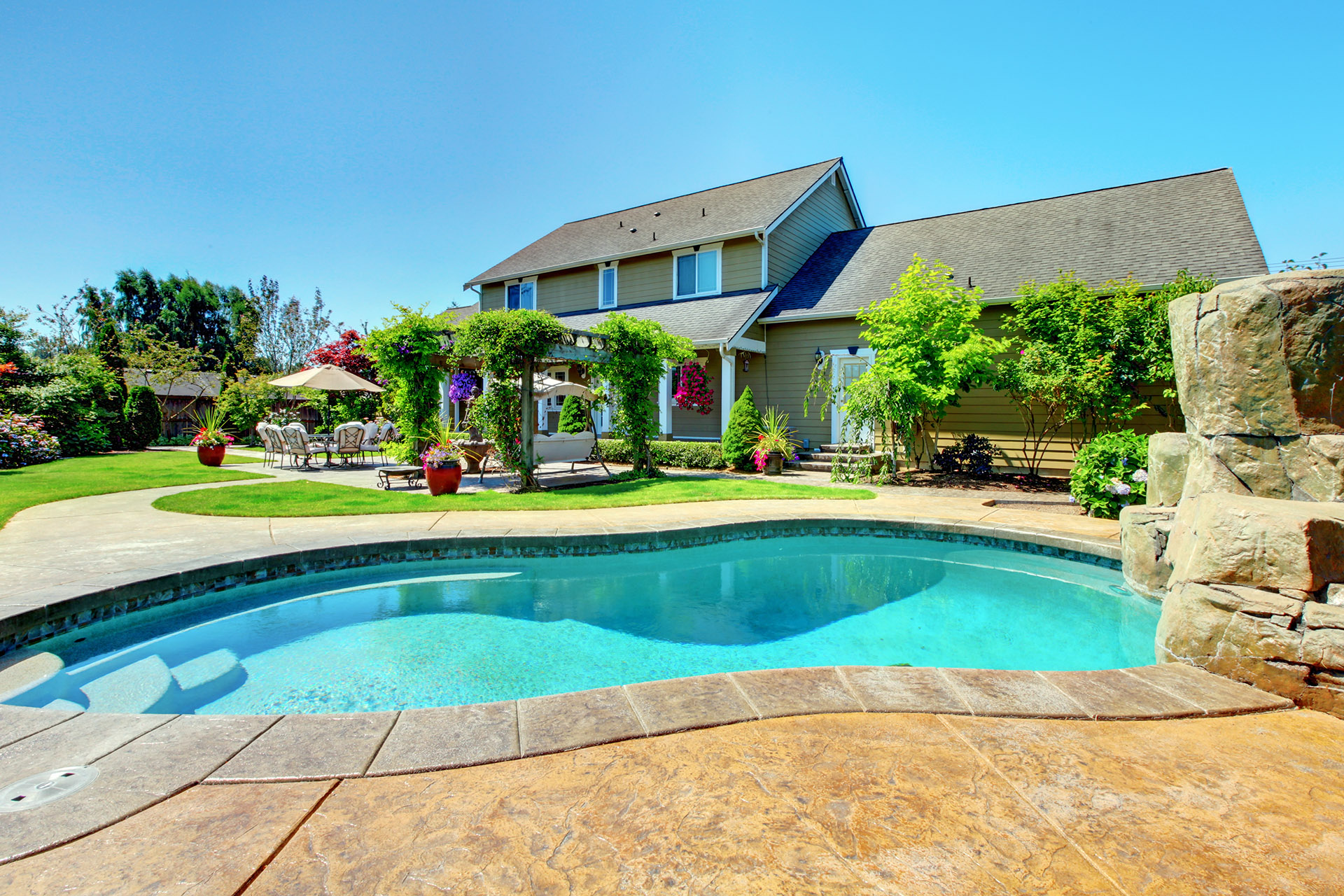
For a little context on the scale of the problem here: I’m thirty-six, and I own a four-bedroom house with a pool, sitting on about an acre and a half just outside town. It is not, by any reasonable definition, a mansion. My family describes it as a mansion regardless, mostly because most of them live in neighborhoods dense enough that you can hand a neighbor a cup of sugar without leaving your own kitchen window.
I have space. That, as it turns out, is the entire problem. In my family, owning any amount of visible space is treated the exact same way medieval kings apparently treated the discovery of an unoccupied island. Congratulations. It belongs to everyone now, effective immediately, and you’re simply the caretaker who happens to hold the deed.
My older brother Nate is forty years old, and he maintains a very particular relationship with other people’s possessions. He doesn’t steal them, exactly — that would require actual secrecy, some element of concealment, and Nate has never once in his life concealed anything about his intentions. Instead, Nate simply develops sudden, deeply held philosophical objections to the entire concept of private property, precisely whenever somebody else happens to own something he finds useful.
If you have a truck, suddenly it’s our truck. If you have a vacation cabin somewhere, it becomes the family cabin, capital letters implied. If you happen to have a Costco membership, congratulations, you have apparently volunteered to become the regional distribution center for roughly forty-seven relatives who have all simultaneously discovered an urgent, unprecedented need for bulk paper towels.
And if you own a house with an actual pool, you have made what amounts to a catastrophic administrative error, one the family will spend years quietly correcting on your behalf, whether you’ve asked them to or not.
For years, I let it happen. Birthdays, cookouts, graduation parties, Easter lunches, various other scheduled family invasions, all hosted at my place, one after another. At first, honestly, I didn’t mind it much. I genuinely like most of my relatives. There are a handful I would only bother rescuing from a burning building if the firefighters on scene looked visibly exhausted and needed the assist, but generally speaking, we get along fine as a family.
The actual problem, every single time, turned out to be Nate specifically.
Every time I hosted anything, he behaved as though he had personally negotiated the Louisiana Purchase on my behalf. He would invite additional people without asking me first. He would volunteer entire rooms of my house to relatives who hadn’t even confirmed they were coming. He would casually tell people to bring their dogs, again, without ever once checking with me.
Once, during my mother’s birthday cookout a couple of years back, I walked into my own living room in the middle of the party and found a man named Keith sound asleep on my couch, shoes still on, one arm dangling off the cushion.
I did not know Keith. I had never met Keith before that exact afternoon. Apparently, Keith worked with my cousin somewhere, and according to Nate, Keith was “basically family” at this point. This was genuinely news to me. It was probably also news to Keith, who I doubt had planned on becoming basically family that particular afternoon either.
The next morning, Keith ate three of my eggs directly out of my refrigerator, made himself comfortable at my kitchen table, and eventually left wearing one of my good bath towels draped around his shoulders like a cape, presumably because he’d used it after a shower he hadn’t asked permission to take.
That was roughly the moment I began developing what a therapist might generously call healthy boundaries, and what Nate, less generously, refers to as me “being weird about stuff.”
Last year, I sat everyone down individually, or at least told each family member directly, that I was done hosting major gatherings at my place for a while. Small dinners, sure, no problem at all. Ten people for a birthday, that’s still perfectly manageable. But thirty-four people for five straight days? That’s not a family gathering anymore. That’s a minor refugee logistics operation, the kind of thing that requires an actual coordinator and probably a spreadsheet, neither of which I had volunteered to become.
Nate knew all of this. He had been present for at least two separate conversations where I laid this exact boundary out clearly. Which brings us directly back to his text.
I called him immediately after reading it.
“You’re joking, right?” I said the second he picked up.
“About what?” he said.
That, right there, is a genuinely dangerous answer to receive from someone. People who authentically don’t understand why you’re upset are almost always about to explain something that’s going to make you considerably more upset.
“Thirty-four people are not staying at my house, Nate.”
He actually laughed. Out loud, genuinely amused. “Nobody said staying,” he said. “Some people might get hotels.”
That sentence had approximately the structural integrity of wet bread. It fell apart the instant you applied any pressure to it at all.
“Some people?”
“Well, obviously Mom and Dad get your guest room. Aunt Linda and Uncle Rob probably take the downstairs room. The kids can just do air mattresses. The younger cousins won’t care about sleeping bags on the floor.”
He had already, without consulting me even once, assigned entire rooms in my house to specific relatives. He had a mental floor plan of my home that I hadn’t given him.
“Nate. No.”
He told me, with total confidence, that everyone had already been invited.
“Then uninvite them,” I said.
“That would be embarrassing.”
“For you.”
There was a long pause on his end. Then he pulled out his favorite sentence, the one he deploys whenever logic has fully abandoned him.
“It’s family.”
Whenever Nate says “it’s family,” what he actually means, translated honestly, is “I would like to transfer the full weight of the consequences of my decision onto you personally.”
“Everyone was excited,” he continued, pressing forward as though I hadn’t spoken at all. “Several people already requested vacation days from work. Two of the cousins are driving in from three states away. And Aunt Linda already bought this giant inflatable flamingo specifically for the pool.”
I genuinely don’t know why he thought that detail would move me emotionally in any direction. If anything, learning that a ceremonial pool bird was already involved in this operation made the entire situation feel considerably worse, not better.
I told him again, plainly, that the reunion was not happening at my house. He told me to sleep on it. I told him I had, in fact, slept extremely well the night before he sent that text, and that my sleep quality had only deteriorated since. Then I hung up.
About twenty minutes later, my mother called.
She said Nate had told her I was “stressed about some renovation timing.” Interesting phrasing, given that no renovation existed yet at that point. I asked her, directly, what exactly he had told everyone in the family.
She hesitated. That hesitation was my very first real indication that we had moved past ordinary family entitlement and into something closer to professional-grade stupidity.
I opened the family group chat, which I normally keep muted, because there are only so many blurry photographs of restaurant meals a single human nervous system can reasonably process in one lifetime. I scrolled back through the history.
Three weeks earlier, apparently, Nate had written: Reunion confirmed at Emma’s, July 17-21. Bring swim stuff.
My name is Emma. Emma had not confirmed anything whatsoever. Emma had, in fact, spent the entire preceding month planning to simply exist peacefully in her own home during that exact window.
Beneath that message came a cascade of others about sleeping arrangements, each one worse than the last. Nate had told our cousin Jake he could bring his camper and park it right beside my garage. He’d told Aunt Linda the pool was heated. It is not, and has never been, heated. He’d told two separate families with young children that Emma had “tons of lawn space” for pitching tents. He’d told our uncle there would be room in the second refrigerator for beer.
I do not own a second refrigerator. Apparently one had simply been invented during the course of these negotiations, conjured into existence purely through Nate’s unshakable confidence.
Then I reached my absolute favorite message in the entire thread. Someone had asked, reasonably, “What should we bring for food?”
Nate had replied: Don’t worry about meals. Emma’s handling food and drinks. Just bring anything special you personally want.
I looked at that message for a while. Then I experienced a strange, settling calmness, the specific kind usually reported by people who have either achieved genuine spiritual enlightenment or have finally, decisively decided to become somebody’s problem.
I took screenshots. All of them, methodically, working back through the entire thread. Then I wrote directly in the family group chat, visible to everyone:
For clarity. I never agreed to host this reunion. I told Nate directly that my home is unavailable July 17-21. Nobody will be staying here or using the property. Please make other arrangements.
Within two minutes, Nate called me. I declined it. He called again. I declined that one too. Then he texted: Why would you post that publicly?
Because, apparently, in his personal moral framework, lying publicly and correcting that same lie publicly are governed by entirely separate ethical systems, with different rules applying to each.
He then told me I had humiliated him.
I replied: You announced thirty-four house guests before ever asking the actual homeowner.
His response: You’re making this much bigger than it needs to be.
At that exact moment, somewhere out in the wider universe, irony itself probably developed a mild migraine.
Over the following two days, relatives started messaging me individually, one at a time. Most of them were entirely reasonable about it once they understood the actual situation. A few were genuinely disappointed. Two people mentioned they’d already booked time off work specifically for this. One cousin had already reserved a rental car for the trip.
Aunt Linda sent me a photograph of the inflatable flamingo. It was enormous, genuinely, comically large, looking less like a pool float and more like something the actual Coast Guard should probably be tracking on radar. She wrote underneath it, simply: Francine is devastated.
The flamingo, it turned out, had a name. Of course it did. I apologized directly to Francine via text, which felt genuinely absurd even as I typed it, but explained clearly that the house still wasn’t available regardless.
Nate, meanwhile, had apparently started telling people that I was simply exaggerating the whole thing because I was annoyed with him personally. According to my cousin Rachel, who relayed this to me, his exact words were: “She’ll calm down once everyone actually gets there.”
And that particular sentence, once I heard it, was the one that ultimately cost me eighteen hundred dollars.
Because now I understood, with total clarity, exactly what he was planning. He genuinely, sincerely believed that if thirty-four relatives physically showed up at my gate all at once, the sheer social pressure would force me to cave and let everyone in. It was, essentially, social siege warfare, conducted with coolers and inflatable pool toys instead of catapults.
His entire theory rested on the assumption that once my own parents were standing there at the gate, once children started crying from exhaustion, once the coolers started sweating and melting in the heat, once Francine the Flamingo was visibly strapped to somebody’s roof rack, I would become too embarrassed by the optics of the situation to keep saying no.
Unfortunately for Nate, embarrassment tends to work considerably better on people who actually feel responsible for creating the awkward situation in the first place. I did not feel remotely responsible for any of it. He had built this entire mess unilaterally, without my input at any stage.
So I called a private security company.
I explained the general shape of the problem to the man who answered. He was quiet for a second, processing. Then he asked, “So you’re expecting approximately thirty-four unwanted guests?”
“Correct.”
“Family members?”
“Correct.”
“Any history of violence?”
“No.”
“Alcohol involved?”
“Almost certainly, at some point.”
“Any special concerns we should be aware of?”
I thought about it seriously for a moment. “There may be a large inflatable flamingo involved.”
Another pause on his end, longer this time. Then: “We can handle that.”
That was the exact moment I knew, with real confidence, that I had chosen the correct professionals for this particular job.
I hired them for the full reunion week. The plan itself was simple and, I thought, entirely reasonable: one guard stationed at the entrance during daytime hours, random patrols after dark, no unauthorized vehicles allowed through under any circumstances, no exceptions unless I personally approved them in advance.
I also changed my gate keypad code away from my birthday, since roughly half my extended family had somehow memorized it over the years. I disabled the old physical remote my parents still had. I added a camera covering the side fence line, just in case anyone got creative. Then I printed out a formal access list for the security team.
Authorized: me. That was the entire list, one line, my own name.
The security supervisor, going over the details with me, asked whether I wanted specific relatives individually named as prohibited guests, for clarity’s sake.
I told him, “Just assume anyone arriving with an air mattress under one arm is hostile.”
July 17th finally arrived. I worked from home that morning, laptop open on the kitchen island, trying and mostly failing to focus on actual work while checking the camera feed every few minutes.
The first vehicle appeared on camera around mid-morning. My parents. They pulled up to the closed gate right on schedule.
The security guard on duty that particular day was a man named Carl. Carl looked, genuinely, like he had been custom-assembled somewhere specifically to stop nonsense in its tracks. Tall, a gray mustache trimmed with real precision, mirrored sunglasses, and a clipboard held with the specific, unbothered confidence of a man who has never once lost an argument he didn’t want to have.
The clipboard mattered enormously here, I should note. A person holding a clipboard carries a level of institutional authority that cannot fully be explained by science. It’s simply understood, culturally, universally.
My father rolled down his window. Carl walked over at an unhurried pace.
“We’re Emma’s parents,” my dad said.
Carl checked the clipboard. I was watching all of this unfold from my office window, feeling something like a wealthy villain monitoring a minor invasion from a fortified tower.
“You’re not on the access list,” Carl said.
My mother called me immediately, her voice tight with confusion. “Emma, there’s a man at your gate.”
“Yes.”
“He says we can’t come in.”
“Yes.”
“Is he security? An actual security guard?”
“Yes.”
There was a long silence on her end. Then: “You really hired security? For your own family?”
“Yes.”
My mother lowered her voice, like she was trying to keep something private even though she was the only one on her end of the call. “Your brother said you were bluffing.”
“Your brother,” I said, “has just learned some genuinely valuable information.”
My parents, to their considerable credit, did not make a huge scene at the gate. I had already explained the full situation to them over the phone a few days earlier, so this wasn’t entirely a surprise. They were annoyed, understandably, but my father mostly seemed quietly impressed by Carl’s whole professional demeanor. He asked whether the security company specifically hired retirees. Carl apparently gave him a business card, unprompted.
Then the convoy started arriving in earnest.
I wish “convoy” were an exaggeration here. It genuinely was not. An SUV. A minivan. A pickup truck. Another pickup truck. A rental van. An actual camper trailer. Two more SUVs. And finally, bringing up the rear, Nate’s own truck rolled up, three coolers stacked in the bed and a giant pink inflatable flamingo tied sideways across the top like some kind of triumphant, ridiculous banner.
Francine had officially entered the battlefield.
By that point, eleven separate vehicles were lined up along the road outside my gate. Children were climbing out, stretching after long car rides. Adults were unloading folding chairs. Someone had brought cornhole boards, apparently planning to set up a game right there on the shoulder of the road if necessary. My cousin Darren was standing there holding a metal bowl of potato salad roughly the size of a small baptismal font.
Carl stood at the gate the entire time, clipboard in hand, completely, professionally calm through all of it.
Nate got out of his truck. I could hear him clearly through the camera’s microphone.
“What’s going on?” he demanded.
“Private property,” Carl said, unhurried. “Authorized access only.”
“This is my sister’s house.”
“Yes, sir.”
“We’re having a family reunion here.”
“Not at this property.”
I had to genuinely respect that particular answer, hearing it through my speakers. Not “I don’t think so.” Not “There may be some kind of misunderstanding here.” Just a clean, administrative execution of a boundary: not at this property. Four words, no ambiguity, no room for negotiation.
Nate called me. I answered.
“Can you tell this guy to just open the gate?”
“No.”
“Emma.”
“No.”
“Everybody is here. Look at this.”
“I can see that.”
“Mom and Dad are sitting out here on the road.”
“Yes.”
“Linda drove eight hours to get here.”
“That sounds genuinely exhausting for her.”
“We have kids out here, Emma.”
“I noticed that too.”
Then he said, his voice climbing slightly: “You can’t seriously leave thirty-four members of your own family standing outside like this.”
“I’m not leaving them outside,” I said. “You brought them outside.”
Silence on his end. Behind him, through the camera feed, I could see Aunt Linda trying to untie Francine from the top of the truck. Apparently, if the house wasn’t opening its gates, the flamingo would at least be present to witness the negotiations firsthand.
Nate lowered his voice. “You’re being insane right now.”
“No,” I said. “I’m renovating.”
Another pause. “You’re not renovating.”
“Correct.”
He had finally, after all this, located the actual mystery at the heart of the situation.
“I renovated the gate code,” I said, and I hung up.
What followed was roughly forty-five minutes of attempted negotiation, conducted entirely at my gate, through Carl. My aunt tried talking to him. My uncle tried. My cousin tried. My father wandered over and started asking Carl detailed questions about security industry licensing requirements, apparently genuinely curious rather than trying to make any particular point. Aunt Linda, meanwhile, inflated Francine fully using an electric pump plugged into her SUV’s cigarette lighter. I still have no idea why, exactly. Maybe morale. At one point, Francine stood fully inflated beside the line of parked vehicles, looking, in her own ridiculous way, like the patron saint of poorly executed planning.
Then something genuinely beautiful happened. A white catering van pulled up and joined the line.
I had ordered no catering whatsoever. The driver got out and approached Carl at the gate. They spoke for a moment. Then Carl called me directly.
“Ma’am, there’s a barbecue company here. They say they have a delivery scheduled for thirty-five people.”
Of course they did.
I asked Carl who had actually placed the order. He checked with the driver.
“Nathan,” he told me.
My brother. Apparently Nate had gone ahead and ordered a full barbecue catering spread for the first day of the reunion — brisket, pulled pork, chicken, beans, mac and cheese, cornbread, dessert, the entire works. Total cost: two thousand six hundred and eighty dollars. And he had selected payment on delivery, to my address specifically, presumably assuming I’d simply pay it once the food actually showed up.
I called Nate immediately. “Did you order catering to my house?”
“It’s lunch,” he said.
That particular answer was so aggressively, confidently stupid that my brain genuinely had to walk a slow lap around it before it could even begin formulating a response.
“Who’s paying for it?”
“We were going to split all the reunion costs later, obviously.”
“We?”
“You know what I mean.”
“No,” I said. “I absolutely, genuinely do not know what you mean.”
The caterer, understandably, refused to unload the food without payment upfront. Nate started arguing with the driver right there on the shoulder of the road. The owner of the barbecue company, who happened to be personally driving the truck that day, turned out to be considerably less emotionally invested in the abstract concept of family unity than Nate apparently expected him to be. Eventually, after about fifteen minutes of roadside economics, Nate paid the full amount himself with his own credit card, visibly frustrated the entire time.
The food got unloaded onto a couple of folding tables set up near the road. Thirty-four people ended up eating the first meal of their planned five-day family reunion approximately eighty feet outside my locked gate, sitting on coolers and tailgates in the July heat.
I made myself a sandwich and watched the whole thing unfold from my kitchen window.
I’m fully aware that makes me sound like a genuine villain in this story. In my own defense, it was an excellent sandwich, and I had absolutely nothing else productive to do with that particular hour.
Eventually they all left. All of them, including Francine, who got strapped back onto the truck for transport. I assumed, at that point, that the crisis was fully over.
This assumption turned out to be wildly optimistic.
Nate lives in a modest three-bedroom house about twenty-five minutes away from mine. Guess where the entire reunion relocated to, effective immediately.
Thirty-four people. Three bedrooms. One and a half bathrooms. No pool anywhere in sight. And, crucially, an HOA in his neighborhood that treats unauthorized street parking with roughly the same enthusiasm a military dictatorship reserves for insurrection.
Fifteen cars ended up parked around his cul-de-sac by that evening. An HOA representative showed up within hours. Apparently, according to my cousin who witnessed it firsthand, they’d already received their very first official warning by sundown.
Somebody, at some point during that first chaotic evening, placed Francine directly in Nate’s front yard, fully inflated, for reasons nobody has ever fully explained to me. I know this happened because my cousin sent me a photograph. Francine was, notably, wearing a pair of sunglasses in the picture.
The next morning, my mother called me, sounding genuinely exhausted.
She said the reunion had “gotten a little crowded” at Nate’s place. Apparently four adults had slept in his living room that first night. Six children had slept somewhere downstairs, arranged like puzzle pieces around whatever floor space remained. Two of the cousins had retreated to sleep in their camper, parked awkwardly at the curb. My own parents had, sensibly, checked into a hotel rather than attempting to squeeze into Nate’s guest situation. Aunt Linda had ended up on an air mattress in his dining room.
Uncle Rob, apparently, had accidentally stepped directly on that air mattress in the middle of the night while navigating to the bathroom in the dark. Aunt Linda had rolled off it in surprise and collided with a dining chair. Nobody was seriously injured, thankfully. Francine, notably, remained entirely unharmed throughout this particular incident, which apparently mattered quite a bit to Linda specifically.
Then my mother added, almost as an afterthought, “Nate thinks you should at least let everyone use your pool during the daytime, even if nobody stays over.”
I actually laughed out loud at that. My mother sighed on the other end. “I told him you’d say exactly that.”
By the third day, the reunion had fully entered the particular stage of decline usually associated with the collapse of empires. People were visibly tired. Children were bored and restless. The local neighborhood pool near Nate’s house had refused entry to a group that large without proper guest passes, which nobody had thought to arrange in advance. Nate had already picked up two separate parking violations from the HOA. His downstairs toilet, under the strain of considerably more traffic than it was designed for, clogged badly. The leftover catering had completely overwhelmed his refrigerator’s actual capacity. My cousin Darren’s enormous potato salad spent one full night sitting in a cooler out on the patio in the summer heat and was quietly, unceremoniously retired from active service the following morning, no formal announcement necessary. There are, I think, some sacrifices no amount of family loyalty should reasonably require of anyone.
Then came dinner on the third night. Nate had apparently told everyone they’d all be going out to a local restaurant, on him. I later learned that wasn’t quite what he actually meant by that. What he meant, functionally, was that he planned to hand over one single credit card at the end of the meal and sort out the resulting financial chaos sometime afterward, presumably by venmo-requesting various relatives, myself included, for their fair share.
Thirty-one people showed up to the restaurant that night. The adults ordered steaks. The teenagers ordered a wide, expensive assortment of appetizers. Several people ordered cocktails. Aunt Linda ordered two separate desserts, explaining to the table that she felt she’d earned it after surviving the air mattress incident the night before.
The final bill, including gratuity, landed just over twenty-one hundred dollars. Nate paid it, visibly wincing as he handed over his card.
That same night, he sent me a Venmo request. Four thousand eight hundred and sixty-three dollars. Description: Your share reunion.
I declined it immediately. Then I sent him a single text: I’m renovating.
He blocked me for about six hours after that. Then he unblocked me, apparently because he needed the ability to keep arguing with me directly, and being blocked interfered with that particular goal.
I genuinely thought the security guard standoff would end up being the main story the family told about all of this, in the years to come. It was not. Francine became the main story instead.
Apparently, on the fourth night, a fairly strong windstorm rolled through. Someone had left the flamingo fully inflated out in Nate’s backyard overnight, and Francine, quite literally, escaped. My cousin Jake found her the next morning wedged awkwardly against a neighbor’s mailbox, three houses down from Nate’s.
There is, notably, doorbell camera footage of the entire incident. The footage shows a genuinely gigantic pink inflatable flamingo rolling steadily down the sidewalk in the pitch darkness, while Jake chases after it wearing gym shorts and, for reasons never fully explained to me, only one shoe. If Michelangelo had ever had access to a Ring doorbell camera, I suspect we would have considerably fewer marble statues and a great deal more footage exactly like this.
The reunion officially ended after four days instead of the originally planned five. Several relatives simply left early rather than push through the final stretch. My parents, who had checked into a hotel after the very first night, stayed there for the remainder of the trip rather than returning to Nate’s increasingly chaotic house. Aunt Linda eventually got her own hotel room too, joining my parents. The cousins with the camper relocated entirely to a proper RV park with actual hookups.
The total cost of Nate’s reunion, from what I’ve been able to piece together afterward, ended up somewhere north of eight thousand dollars once you accounted for the catering, the restaurant bill, extra emergency grocery runs, parking fines, hotel costs for several family members, and various other emergency expenses that cropped up along the way.
He still insists, to this day, that most of this was somehow my fault. His reasoning is that if I had simply allowed everyone into my home as originally planned, everything would have gone off exactly according to schedule.
Which is technically true, I suppose, in roughly the same sense that if a bank simply hands over all its money voluntarily, the robbery in question tends to proceed considerably more smoothly for everyone involved.
A few days after the whole ordeal finally wrapped up, Nate made a Facebook post. It was one of those dramatic, vaguely worded paragraphs people write specifically when they want to publicly announce a personal conflict without technically naming the person they’re actually upset with.
He wrote about how some people forget exactly where they came from. He wrote that success means absolutely nothing if you refuse to share your blessings with the people who love you. He wrote that family should never, under any circumstances, be treated like strangers standing at a locked gate. He wrote that gates can keep people out physically, sure, but that they also reveal something deeper about what kind of person is actually standing on the inside of them.
I will fully admit, that last line was genuinely pretty good writing. It would have landed considerably better, though, if he hadn’t tried to charge me forty-eight hundred and sixty-three dollars roughly twelve hours beforehand.
I didn’t respond publicly to any of it. My cousin Rachel did, on my behalf, without my asking her to. She posted a screenshot of his original message to me — the very first one, no question mark, no room for discussion — right there for the whole family to see again. Underneath it, she simply wrote: For anyone missing context.
The post disappeared within about twenty minutes. Nate called her a traitor over it. Rachel, in response, changed her profile picture to a medieval knight in full armor. The family group chat became functionally unusable for approximately three full days after that.
My favorite part of the entire fallout was my father. He’d said almost nothing throughout the whole public argument, staying carefully neutral. Then, seemingly at random, in the middle of an unrelated thread, he wrote: Security guy was very professional.
Carl had, apparently, gained a genuine fan in my father.
About two weeks after the reunion officially ended, Nate reported me to the county for illegal renovation work.
I genuinely wish I were exaggerating this part. I am not. I got a call from the local building department. They’d received an anonymous complaint alleging that major, unpermitted construction work was actively taking place at my property.
The employee on the phone asked what specific work I was currently doing.
“None,” I told him honestly.
He said the complaint had specifically mentioned structural renovations underway.
I explained, as calmly as I could manage, that someone was apparently angry with me because I had told a small lie about renovating my house, specifically to prevent thirty-four relatives from moving in for five days.
There was a genuine silence on his end. Then he said, slowly, “So there’s no construction happening at all?”
“No.”
“No contractors on site?”
“No.”
“No demolition of any kind?”
“No.”
“I’m going to go ahead and close this complaint.”
“Thank you,” I said. Then I added, unprompted, “I did change my gate code, for what it’s worth.”
He informed me that generally, changing a gate code does not require a county building permit. Good to know, I told him, genuinely.
Nate denied filing the complaint entirely, when confronted about it. Nobody in the family believed his denial for a second, mostly because, according to my mother, he had spent the previous several days repeatedly asking, out loud, to anyone who’d listen, “If she’s really renovating, I’d like to know where the permits are.” He had, essentially, been actively hunting for evidence of a crime I had committed simply by not remodeling my own bathroom.
Our relationship went genuinely cold after that particular episode. Not dramatically, not with any formal blowup or declaration — just minimal contact going forward. I stopped engaging with his nonsense entirely. He, in turn, stopped asking me for things, mostly because my answer had become entirely predictable by that point.
For several months after that, real peace returned to the family. Then Thanksgiving arrived.
My mother hosted that year. Nineteen people total, her house crowded but genuinely manageable at that size. During dessert, my cousin asked, half joking, whether I was still renovating.
“Yes,” I said, straight-faced.
Nate stared at me across the table. My father started laughing so hard he had to physically set down his coffee cup to avoid spilling it. Aunt Linda had brought along a small plastic flamingo, which she placed carefully beside the pie as a kind of tribute. Francine herself, apparently, had suffered a puncture sometime after the reunion ended and was currently undergoing what Linda described, with total seriousness, as “surgery.”
A patch. She meant she was patching a hole in a pool float. But surgery sounded considerably more dignified, apparently, and nobody corrected her.
At some point during dessert, Nate told me, somewhat bitterly, that I had turned the entire situation into a running joke.
“No,” I said. “You turned it into a joke. I just hired security.”
He didn’t speak to me again for the rest of that evening. Genuinely one of the better Thanksgiving gifts I’ve ever received.
This next part might honestly be the funniest development in the whole saga. Sometime the following spring, Nate tried to host another major family event — his daughter’s high school graduation party.
Not at my house this time. He had, apparently, learned at least one concrete lesson from the entire ordeal. He reserved a pavilion at a local park instead. This was, genuinely, a responsible choice on his part. He hired proper catering. Also responsible. He rented folding tables. Good planning, all around.
Then he realized, sometime after locking in the reservation, that the pavilion had a hard maximum capacity of forty people.
He had already invited eighty-two.
There he is, my brother. A man genuinely capable of locating the exact same rake in a completely different yard, and stepping on it again with real enthusiasm.
About a week before the actual party, he called me. We had barely spoken privately in months by that point.
“Can I ask you something without you being difficult about it?” he said.
A promising opening, genuinely.
He wanted to move the graduation party to my property, but just for the afternoon. No overnight guests at all this time. He would personally handle all the food. He would handle all the cleanup afterward. He would even rent portable toilets to keep the strain off my bathrooms.
I asked him, reasonably, why he had invited eighty-two people to a pavilion with a forty-person capacity.
He said several people had brought additional guests along.
I asked whether those guests had, in turn, brought their own additional guests.
He did not appreciate that particular question.
I told him no, plainly, without further discussion.
He said, somewhat wounded, “You’re really going to hold one mistake against me forever?”
One mistake. Thirty-four people, five days, an unauthorized food and drink commitment, a catering bill I never agreed to, unauthorized use of my entire house, a false county complaint filed against me out of spite. One mistake, apparently, now that we were compressing an entire summer’s worth of historical events down into a single retroactive footnote.
I said no again, just as plainly. He told me he hoped I was genuinely happy, sitting alone on a big empty property while the rest of the family had nowhere decent to celebrate.
I looked out my kitchen window at my extremely peaceful, genuinely quite pleasant big empty property.
I was, in fact, pretty happy about it.
Eventually he reduced the guest list down to something more reasonable and held the graduation party at the park as originally planned. It went fine, by all accounts. Nobody died. Civilization, somehow, survived intact.
Most importantly of all, Francine attended. She had been fully repaired by that point. I know this because Aunt Linda sent me a photograph of her floating serenely in a small kiddie pool set up right beside the pavilion. I don’t know why there was a kiddie pool present at a graduation party. Some questions, I’ve learned, only reduce your overall quality of life once you actually get an answer to them.
It’s now been almost a full year since the original reunion disaster. Things with Nate are, at this point, functional. We can sit in the same room together without incident. We can discuss ordinary, unrelated topics without tension.
We cannot, under any circumstances, discuss my gate. We cannot discuss private security companies. And we absolutely, categorically cannot discuss Francine, mostly because the moment her name comes up, everyone else in the room immediately starts laughing, regardless of context.
A handful of family members told me privately, in the months following the reunion, that they’d initially been genuinely angry with me over the whole thing. I understood their perspective completely. They had traveled, some of them from three states away. They had planned an entire week around what they sincerely believed was a fully confirmed family reunion. From their vantage point, they’d simply arrived and discovered my property had unexpectedly transformed into a tiny international border crossing, complete with an armed clipboard.
But after they saw the actual message screenshots and understood, fully, that Nate had never once actually asked me for permission, most of that lingering anger redirected itself in the appropriate direction. Several relatives also admitted, somewhat sheepishly, that they’d simply assumed I had agreed to host the whole thing, because why on earth would anyone announce a five-day gathering at someone else’s private house without securing permission first?
Excellent, genuinely reasonable question. You’d have to ask Nate.
The security company ended up refunding me a modest amount afterward, since I didn’t end up needing quite as many patrol hours once the family fully relocated to Nate’s place. Carl still worked two additional days regardless, just to finish out his scheduled shift. On his final afternoon on the job, my father actually drove over — not to visit me, notably, but specifically to visit Carl. He brought him a coffee. The two of them sat near the gate for a solid twenty minutes, talking about fishing spots.
I paid eighteen hundred dollars to stop my family from invading my house uninvited. And somehow, in the process, my father made a genuine new friend.
Aunt Linda, that following Christmas, sent Carl an actual Christmas card. She included a printed photo of Francine inside it. Carl texted me a picture of the card, along with a single caption: Threat contained.
So that’s roughly where everything currently stands. I still host small gatherings at my place, regularly, without incident. I had my parents over for dinner just last month. Rachel came by recently with her husband for a casual evening. Ten people showed up for my birthday a few weeks back.
Nobody announced additional surprise guests beforehand. Nobody assigned themselves rooms in my house without asking. Nobody ordered twenty-six hundred and eighty dollars’ worth of barbecue delivered to my address without my knowledge.
Growth, apparently, is genuinely possible, even for my family.
Then, yesterday morning, after nearly eleven full months of relative, hard-won peace, my phone buzzed.
Nate.
Christmas is at your place this year. Mom thinks it makes sense. Probably 26 people, just one night.
Still no question mark anywhere in sight.
I stared at the message for a long moment. For one brief, almost hopeful second, I genuinely wondered whether this particular man had learned anything at all from the preceding eleven months.
Then a second message appeared right underneath the first.
We’ll bring food.
Progress, I suppose. Technically.
I walked outside, took a fresh photo of my gate, exactly as it currently stands, and sent it directly back to him. Then I typed a single word: Can’t.
Three dots appeared on his end almost immediately. Before he could finish typing whatever he was working on, I sent one more message.
I’m renovating.
He replied with several words I won’t bother repeating here.
And about ten minutes later, Aunt Linda texted the entire family group chat, completely unprompted: Does anyone know if security allows flamingos?
My father replied first, faster than anyone else in the thread. Carl will handle it.

Ethan Blake is a skilled Creative Content Specialist with a talent for crafting engaging and thought-provoking narratives. With a strong background in storytelling and digital content creation, Ethan brings a unique perspective to his role at TheArchivists, where he curates and produces captivating content for a global audience.
Ethan holds a degree in Communications from Zurich University, where he developed his expertise in storytelling, media strategy, and audience engagement. Known for his ability to blend creativity with analytical precision, he excels at creating content that not only entertains but also connects deeply with readers.
At TheArchivists, Ethan specializes in uncovering compelling stories that reflect a wide range of human experiences. His work is celebrated for its authenticity, creativity, and ability to spark meaningful conversations, earning him recognition among peers and readers alike.
Passionate about the art of storytelling, Ethan enjoys exploring themes of culture, history, and personal growth, aiming to inspire and inform with every piece he creates. Dedicated to making a lasting impact, Ethan continues to push boundaries in the ever-evolving world of digital content.