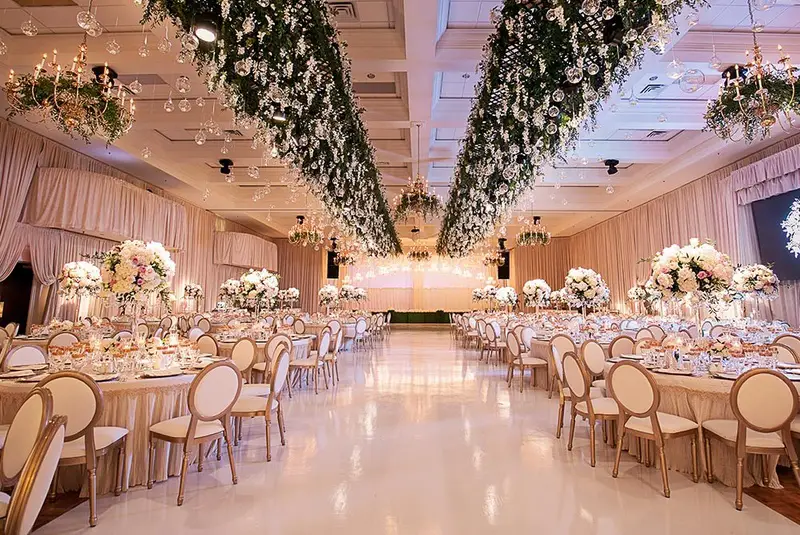
The room went quiet the second I picked up the microphone, and for one full second, standing there in a beige dress my mother had chosen for me because she said it “wouldn’t distract from Melissa,” I almost put it back down.
Almost.
“Hi, everyone,” I said instead. “I’m Amanda, Melissa’s older sister. I wasn’t supposed to speak today. Nobody asked me to. But I thought it was important to share a few things about growing up with Melissa, since so many of you have heard about her incredible life.”
My mother’s face went the color of the tablecloths. She grabbed my father’s arm and whispered something urgent. He just shook his head, confused, the way you look when you haven’t caught up yet to the fact that the ground under you has already started moving.
I hadn’t planned to get here like this. Not really. Not the version of me standing in front of three hundred wedding guests with a microphone in my hand and eight weeks of practiced calm in my chest. If you’d told me a year earlier that I’d be the one to blow up my sister’s wedding, I would have laughed, because for twenty-eight years I had been the quiet one, the reasonable one, the one who said congratulations and hung up the phone and didn’t make things harder for anyone.
But I need to back up, because none of it makes sense unless you understand what it took to get me standing at that microphone.
His name was Brendan. He worked in finance, drove a Tesla, and his family owned a beach house on Kaioa Island that had been in a magazine spread once, something my mother mentioned so often I started hearing it in my sleep. My parents loved him instantly, the way you love a thing that solves a problem you’ve been carrying around for years. And more importantly, at least as far as my mother was concerned, he came from money, which meant Melissa’s wedding could finally become the event she’d been dreaming about since the day Melissa was born, maybe even before that.
I was living in Atlanta by then, three years into my marketing career, sharing a two-bedroom apartment with my roommate Priya, when my mother called to tell me the news.
“We’re so happy,” she gushed, her voice doing that particular bright, breathless thing it only ever did for Melissa. “Brendan’s family is wonderful, Amanda. Wonderful. This is going to be the wedding of the year. You’ll be there. Of course. Of course you’ll be there.”
She didn’t ask if I wanted to be a bridesmaid. She didn’t ask anything, really. She just assumed I’d show up, sit quietly in whatever seat I was assigned, and watch my little sister live the exact life our mother had always wanted for one of us, just never for me.
And for a while, I did exactly that.
The wedding planning started almost immediately, and my mother called me once a month with updates, more updates than she’d ever given me about anything in my own life. The venue was a historic plantation estate outside Charleston, the kind of place with a name and a website and a waiting list. The flowers were imported peonies and garden roses, flown in, apparently, because local flowers “wouldn’t have the right color depth.” The dress was custom Vera Wang. The guest list sat at three hundred people. I listened to all of it, every call, sitting on my couch with the phone against my ear, saying “wow” and “that sounds beautiful” in all the right places, asking polite questions I didn’t really want the answers to.
Then, on one of those calls, she told me the budget.
“Eighty-five thousand dollars,” she said, like it was nothing, like she was reading off a grocery list. “Your father and I are covering everything. Melissa deserves the best.”
I was quiet for a long time on my end of the line. Long enough that she said my name twice, Amanda, Amanda, are you there.
“That’s amazing, Mom,” I finally said.
I didn’t mention that when I’d gotten engaged two years earlier, to a man I’d been with for four years, my parents had offered me three thousand dollars and told me, gently, like they were doing me a favor, that I should probably keep things small. I didn’t mention that I’d called off that engagement six months later, after I found out he’d been cheating for most of the last year of it, texts and hotel receipts and all of it laid out on my kitchen table one terrible Tuesday night. I didn’t mention that when I told my mother, crying, barely able to get the words out, her only response had been, “Well, maybe it’s for the best, honey. You’re not exactly easy to love, Amanda.”
I didn’t mention any of it. I just said congratulations, and I hung up the phone, and I sat on my couch for a long time afterward not really watching whatever was on the television.
That comment, you’re not exactly easy to love, had lived in my chest for two years by the time Melissa got engaged. I’d never said it out loud to anyone, not even Priya, not even my closest friend from college, Jenna, who I talked to nearly every day. I just carried it around, the way you carry around a stone in your shoe that you’ve stopped noticing most of the time, until suddenly you notice it again, all at once, and it’s somehow gotten heavier.
Six months before the wedding, Melissa invited me to her final dress fitting. I drove down from Atlanta on a Saturday morning, four and a half hours with the radio on, trying to talk myself into a good mood the whole way. I told myself it would be nice. I told myself it was a chance to feel included in something, to be part of the excitement instead of just hearing about it secondhand over the phone.
My mother, Melissa, and two of Melissa’s friends were already at the bridal boutique when I arrived, a bottle of champagne open on a little side table, four glasses poured. Nobody offered me one. I noticed it, the way you notice small things when you’ve spent your whole life noticing them, filing them away without meaning to.
Melissa came out of the dressing room in her gown, and I’ll admit, she looked stunning, genuinely stunning, the fabric catching the light in a way that made the whole room go soft. Everyone cried. Everyone took photos. My mother kept pressing her hand to her chest and saying, “My beautiful girl. My perfect, beautiful girl,” over and over, like she needed to say it enough times to make it permanently true.
Then Melissa turned and looked at me, standing off to the side near the mirrors.
“What do you think, Amanda?”
I smiled, and I meant it. “You look gorgeous.”
She tilted her head, considering me the way you’d consider a piece of furniture you were thinking about reupholstering. “You could try, you know. Makeup. A good haircut. Maybe some Botox.” A small, easy laugh. “You’d be surprised what a little effort could do.”
The room went silent for exactly one second.
Then my mother laughed. “Melissa, stop,” she said, but she was smiling when she said it, the kind of smile that meant the opposite of stop. “Amanda knows we’re joking.”
I hadn’t known that, actually. I still don’t know it.
I set my purse down on the chair beside me, calm, almost eerily calm, the way you get when something inside you has quietly finished a long process of deciding something. I walked out of the boutique, got in my car, and drove the four and a half hours back to Atlanta without stopping, without crying, without turning the radio on even once.
Nobody called to apologize. Not that night. Not the next day. Not ever.
I called Jenna the second I got back to my apartment, sat on my kitchen floor with my back against the cabinets, and told her everything, the champagne nobody offered me, the Botox comment, my mother’s laugh.
“Amanda,” Jenna said, quiet and careful, “that’s not a joke. That’s not what a joke sounds like.”
“I know,” I said, and it was the first time I’d said it out loud like that, flat and certain, no hedging.
“Have you ever told them that? How it actually feels?”
“What would be the point,” I said, and I remember how tired my own voice sounded to me in that moment, tired in a way that had nothing to do with the drive.
Jenna didn’t push it that night. She just stayed on the phone with me for almost two hours, mostly talking about nothing, a show we both watched, a work thing she was dealing with, letting me breathe in the ordinary noise of a friend who actually wanted to hear from me. It helped more than she probably knew.
Two months before the wedding, I got a promotion. Senior marketing manager, a thirty percent raise, my own team for the first time in my career. I’d worked toward it for three years, staying late, taking on projects nobody else wanted, learning to speak up in meetings even when my voice shook a little the first dozen times. When the offer came through, I actually cried at my desk, good tears, the kind you don’t get very often.
I called my parents that evening to tell them. My father answered. I told him everything, the title, the raise, the team I’d be managing, how hard I’d worked for it.
“That’s great, Amanda,” he said, and I could hear, even before he finished the sentence, that his attention was already somewhere else entirely. “Listen, can you call back later? We’re in the middle of the final tasting for Melissa’s reception menu.”
He hung up before I could say anything else.
I sat there holding my phone for a long moment, the call screen still showing the seconds ticking, four, five, six, like it hadn’t quite processed that the conversation was over.
That night, I sat alone in my apartment with a bottle of wine and my laptop open on the coffee table, and I did something I hadn’t let myself do in years. I let myself get angry. Not sad. Not disappointed, which was the emotion I’d trained myself into for most of my adult life, some soft, forgiving, understanding version of hurt that never actually demanded anything of anyone. Angry. Real, clean, undiluted anger, sitting in my chest like something finally allowed to take up space.
And somewhere in that anger, I made a decision.
I wasn’t going to beg for their love anymore. I wasn’t going to keep shrinking myself down to a size that made Melissa shine brighter by comparison. I wasn’t going to sit quietly at the edge of her wedding, smiling in photos, pretending any of this was normal.
I was going to tell the truth.
I spent the next eight weeks writing. Not a toast. A speech.
I wrote about every birthday my parents forgot, and there were more than I’d let myself count before that. I wrote about every cruel comment dressed up as a joke, the kind that lands exactly like it’s meant to and then gets defended as humor the second you flinch. I wrote about every single time they chose Melissa over me and then acted baffled that I’d notice, like the pattern itself was something I’d invented out of jealousy instead of something they’d built, deliberately or not, over almost three decades.
I wrote about the BMW versus the Civic. The eighty-five-thousand-dollar wedding versus the three-thousand-dollar offer I never even got to use. The makeup vanity Melissa got for her sixteenth birthday, a whole corner of her room professionally installed, versus the towel rack I got installed in my bathroom for mine, because I’d mentioned once that our old one was falling off the wall.
I called Jenna most nights during those eight weeks, reading pieces of it to her over the phone, and she’d go quiet on her end, and sometimes I’d hear her breathe out slow, and once she said, “Amanda, I didn’t know it was this bad. I knew some of it. I didn’t know all of it added up like this.”
“Neither did I,” I told her. “Not until I started writing it down.”
I edited that speech more than I’ve ever edited anything in my life, more than any marketing deck, any client presentation, any email that mattered. I made it clean. Factual. Undeniable. I stripped out anything that sounded bitter, anything that sounded like an accusation dressed in feeling instead of fact, and I replaced it with dates, numbers, direct quotes I could attribute to a specific moment, a specific room, a specific voice. I wanted it to sound less like a grievance and more like a documentary, something nobody in that room would be able to argue with, because I wasn’t going to give anyone the easy exit of calling it an overreaction.
Jenna came over one Saturday afternoon while I practiced it out loud for the first time, standing in my living room with a wooden spoon as a stand-in microphone, feeling ridiculous and terrified in equal measure.
“You’re allowed to do this,” she said, when I stopped halfway through, hands shaking, and told her I didn’t think I could actually go through with it. “You know that, right? You’re allowed to say true things out loud, even at a wedding. Especially at a wedding, honestly, given what they’ve built this family around.”
“What if it ruins everything?”
Jenna looked at me for a long moment. “Amanda. What exactly do you think there is left to ruin?”
I didn’t have an answer for that. I still don’t, not really, except that the question itself was the thing that finally got me to stop rehearsing in my living room and start rehearsing like I actually meant it.
I practiced that speech close to forty times over those eight weeks, in my apartment, in my car at red lights, once, embarrassingly, in the shower, until I could get through the whole thing without my voice catching, without my hands shaking, without needing to stop and breathe in the middle of a sentence. I wanted it steady. I wanted it to sound like something I believed completely, because I did.
Then I waited.
The wedding day arrived the way big days always do, faster than you expect and somehow also unbearably slow in the final hour before it starts. The wedding was beautiful, genuinely, objectively beautiful. Melissa looked like something out of a magazine, which I suppose had always been the point. The venue, all white columns and manicured lawns rolling down toward the water, was breathtaking in the late afternoon light. The ceremony itself was flawless, not a single detail out of place, exactly the way my mother had planned it down to the minute.
I sat in the fourth row in the beige dress my mother had picked out for me, the one she said “wouldn’t distract from Melissa,” and I smiled for photos when I was asked to, and I clapped when everyone else clapped, and the whole time there was a folded piece of paper sitting in the small clutch bag in my lap, eight weeks of writing reduced down to four typed pages, warm from being held so many times over the course of the afternoon.
At the reception, I was seated at a table near the back with a handful of distant cousins I’d met maybe twice in my life, polite strangers who asked me what I did for work and nodded along without much interest. I didn’t mind. It gave me time to watch the room, to notice things.
Melissa and Brendan had their first dance under string lights that had taken, according to my mother’s monthly updates, an entire team three days to install. My father gave a toast about how proud he was of his perfect daughter, his voice thick with a kind of emotion I don’t think I’d ever once heard directed at me. My mother cried happy tears into a monogrammed handkerchief someone had apparently thought to bring specifically for this purpose.
Then the DJ announced it was time for open toasts, anyone who wanted to say a few words about the happy couple.
My mother stood first. She spoke for almost five minutes about Melissa’s beauty, her grace, her bright and limitless future, the kind of speech that sounds warm until you notice, the way I noticed, sitting very still at my table near the back, that she didn’t mention me once. Not my name. Not my existence as her other daughter. Nothing.
Brendan’s best man went next, a long, funny story about a fishing trip that got most of the room laughing. Then Melissa’s college roommate, something sweet and short about their sophomore year dorm.
Then I stood up.
I felt the room’s attention shift before I even reached the front, that particular ripple that happens when something unexpected starts to unfold. My mother’s face went pale. She leaned over and whispered something urgent to my father, who just shook his head, confused, clearly having no idea what was about to happen any more than anyone else in that room did.
I walked to the front, took the microphone gently from the DJ, who gave me a small, encouraging nod, no idea what he was about to be part of, and I smiled out at three hundred faces.
“Hi, everyone. I’m Amanda, Melissa’s older sister. I wasn’t supposed to speak today. Nobody asked me to. But I thought it was important to share a few things about growing up with Melissa, since so many of you have heard about her incredible life.”
I paused. The room was completely silent, the kind of silence that has weight to it.
“When Melissa turned sixteen, our parents threw her a garden party with a live band and two hundred guests. It cost about twelve thousand dollars. When I turned sixteen, I got a card with fifty dollars in it.”
I heard someone near the front inhale sharply. I kept going.
“When Melissa graduated high school, she got a brand-new BMW. I got a twelve-year-old Honda Civic with a check engine light that stayed on for two years because nobody wanted to pay to fix it.”
My mother’s hand went to her throat.
“When Melissa got engaged, our parents offered to pay for her entire wedding. Eighty-five thousand dollars. When I got engaged, two years earlier, they offered me three thousand dollars and told me to keep it small.”
“Amanda, stop this,” my mother said, half-rising from her seat, her voice cutting across the silence, but I didn’t stop. I’d practiced this part too, the part where someone might try to interrupt me, and I’d promised myself I would keep my voice level no matter what.
“When I was twelve,” I continued, “my mother told a room full of dinner guests that my nose was unfortunate, but fixable, if I ever cared enough about myself to get it done.”
Somewhere behind me, I heard a woman gasp, quiet, involuntary.
“When I got promoted to senior marketing manager two months ago, my father hung up on me because he was in the middle of a menu tasting for Melissa’s reception.”
I looked toward Melissa’s table. She’d gone completely still, her hand frozen halfway to her water glass.
“And two months ago, at her final dress fitting, Melissa told me I should try Botox. That a little effort might help.”
The room had gone somewhere past silent now, into something closer to frozen, three hundred people caught in the exact moment they realized this wasn’t a joke, wasn’t a toast that was about to pivot into something sweet and forgivable.
“I’m not saying any of this to ruin anyone’s day,” I said, my voice steady, steadier than I’d expected it to be after weeks of shaking through rehearsals. “I’m saying it because for twenty-eight years, I’ve been told, in a hundred small ways and a few very large ones, that I’m not enough. That I’m the ugly one. The disappointing one. The one who doesn’t deserve the same attention, or the same love, or even the same basic respect as my sister.”
I looked out at the sea of unfamiliar faces, Brendan’s family, Melissa’s college friends, cousins I barely knew, and then, finally, I looked directly at my parents.
“And for a long time, I believed it. I spent my whole life trying to earn what Melissa got for free, just by being born second in a family that had already decided, before either of us could talk, which one of us mattered more.”
My mother had both hands pressed over her mouth now. My father was staring at the tablecloth like it might offer some kind of explanation.
“But I’m done,” I said. “I’m done apologizing for existing. I’m done pretending any of this was normal. And I’m done letting you treat me like I’m worth less than her.”
I set the microphone down gently on the closest table, not dropped, not thrown, just set down, the way you set something down when you’re finally finished with it.
The room stayed silent for what felt like a very long time.
Then I turned and walked out, past three hundred guests who didn’t know whether to look at me or look away, past the string lights and the imported peonies and the eighty-five thousand dollars’ worth of a day I was never really meant to be more than a footnote in, and I got in my car and drove.
My phone started buzzing before I’d even made it out of the parking lot, and by the time I hit the highway it was practically vibrating off the passenger seat, texts pouring in from cousins, distant relatives, people I hadn’t spoken to in years suddenly very interested in reaching me. Some were supportive, careful, kind messages checking if I was okay. Some were horrified, accusing me of ruining Melissa’s day, of airing family business in the worst possible place.
My mother called fourteen times over the next two hours. I watched the screen light up each time and didn’t answer, driving north through the dark with the radio off, the only sound the hum of the tires on the highway.
My father sent one text, hours later, once he’d apparently found the words.
You’ve embarrassed this family. Don’t contact us.
I read it twice at a gas station somewhere outside the South Carolina border, standing under the fluorescent lights with my hand shaking slightly, and then I blocked both their numbers before I got back in the car.
Melissa sent me an email three days later. It was short, shorter than I expected, given everything.
I didn’t know it was that bad. I’m sorry.
I didn’t respond, not right away. I sat with it for a few days, reading it over more times than I probably needed to, trying to decide what, if anything, it was actually worth.
A week after the wedding, my aunt called me, my father’s younger sister, a woman I’d always liked but rarely spoken to outside of holidays. She was the only person from that side of the family who reached out with what felt like genuine concern instead of judgment.
“I always knew they treated you differently,” she said, her voice quiet over the phone. “I saw little pieces of it over the years, at Christmas, at graduations. I didn’t realize how deep it went, or how cruel some of it actually was, until I heard what you said at that microphone.”
“Most people are calling it an overreaction,” I told her.
“Most people weren’t in that family,” she said. “I’m proud of you for saying something. I don’t think I would have had the nerve at your age. I’m not sure I have it now.”
It was, as far as I could remember, the first time anyone in my family had ever told me they were proud of me. I sat with that sentence for a long time after we hung up, turning it over, surprised by how much weight four small words could carry.
My parents didn’t speak to me for six months after the wedding. Not a call, not a text, nothing, and honestly, in a way I wasn’t proud of but also wasn’t going to pretend away, the silence felt almost like relief. For six months I didn’t have to brace myself every time my phone rang. For six months, nobody compared me to Melissa, or reminded me what I could fix about my face, or hung up on good news because something of hers was happening at the same time.
Melissa reached out twice more during those six months. The second time, she asked if we could meet for coffee, somewhere neutral, just the two of us. I thought about saying no for almost a full day before I finally agreed.
We met at a small cafe near my apartment in Atlanta, the kind of place with mismatched chairs and a chalkboard menu, and she looked tired when she walked in, more tired than I’d ever seen her look, even during wedding planning at its most chaotic.
“I’ve been thinking about what you said,” she started, wrapping both hands around her coffee cup like she needed something to hold onto. “At the reception. I’ve thought about almost nothing else, honestly. And you’re right. They’ve always treated you differently. I think I’ve known that on some level my whole life. I just never let myself really look at it, because looking at it would have meant admitting I benefited from it.”
“You did benefit from it,” I said, not unkindly, just factually, the same way I’d tried to keep the speech itself factual.
She nodded slowly. “I did. And I’m sorry. For the dress fitting. For a hundred other things I probably don’t even fully remember, because they didn’t cost me anything to forget.”
It wasn’t enough. I want to be honest about that. One apology over coffee doesn’t undo twenty-eight years of a family built around an unspoken hierarchy. But it was something, a real something, the first genuine acknowledgment I’d gotten from anyone in that family who wasn’t my aunt.
She told me, stirring her coffee without really drinking it, that after the wedding several guests had quietly confronted our parents. My mother’s longtime bridge club had stopped inviting her to their monthly get-togethers, one by one finding excuses, until the excuses stopped being necessary because everyone understood without saying it. My father’s business partner had made a comment to him, apparently sharp enough that my father had come home upset about it, something about how a man’s treatment of his own family says more about him than any client meeting ever could.
They were humiliated, Melissa said. Genuinely humiliated, in a way our family had never experienced before, because for the first time in as long as anyone could remember, they were the ones being judged instead of quietly, comfortably doing the judging.
I didn’t feel triumphant hearing that. I want to be honest about that too. I mostly just felt tired, the particular exhaustion that comes after carrying something heavy for a very long time and finally setting it down.
I didn’t reconcile with my parents, not fully, not in any way that looked like the reconciliations you see in movies. Eight months after the wedding, my mother sent me a letter, two pages, handwritten in her familiar looping script, mostly defensive in tone. She wrote that I’d misunderstood their intentions, that they had only ever wanted the best for both of us, that I had deeply hurt Melissa on what was supposed to be the happiest day of her life.
She didn’t apologize. Not once, in two full pages.
I read it twice, sitting at my kitchen table, the same table where I’d first let myself get angry all those months earlier, and then I wrote back one sentence, folded onto a single small card.
I didn’t misunderstand. I just finally said it out loud.
I never heard from her again.
Melissa and I talk occasionally now, more than a year later. It’s not close, not the kind of sister relationship you see people describe as their best friend, their person, but it’s civil, and sometimes it’s even warm. She’s trying, in her own limited way, to understand what growing up in that house actually felt like from where I was standing, and I appreciate the effort even when it falls short, because at least it’s effort, which is more than I ever got from our parents.
But I’ve stopped needing her approval to feel like the version of myself I’ve become is a good one. I’ve stopped needing theirs entirely.
I moved into a new apartment about four months after the wedding, a one-bedroom near Piedmont Park that’s genuinely mine in every sense, furnished slowly and deliberately with things I actually like instead of whatever felt safe or invisible enough not to draw comment. Jenna helped me paint the living room a deep, warm green I’d been afraid to commit to for years, the kind of color choice that would have gotten an eyebrow raise from my mother, and I stood back after we finished and realized I didn’t care even a little what she would have thought of it.
At work, my team has grown from four people to nine. I still get nervous walking into big meetings sometimes, some old habit that probably won’t ever fully leave me, but it doesn’t stop me from speaking up anymore, not the way it used to.
Here’s what I’ve learned, in the time since that microphone, since that drive home in the dark, since the six months of silence and the coffee with Melissa and the letter I answered with one sentence.
You can’t make people love you the way you deserve to be loved. You can beg, you can shrink, you can earn every accolade available to you and hand it over hoping it will finally be enough, and sometimes it still won’t be, not because of anything wrong with you, but because of something broken in them that was never actually about you at all.
You can’t fix a family that’s been quietly, carefully unbalanced for decades with one conversation, one speech, one perfectly rehearsed and factually airtight four minutes at a microphone. I know that now. I didn’t fully know it walking off that stage.
And you can’t spend your whole life shrinking yourself down to a size that makes someone else more comfortable, more impressive, more beloved by comparison, without eventually running out of room to actually exist as yourself.
But you can tell the truth, even when your voice shakes through forty rehearsals before it finally stops shaking. You can set boundaries, even when the people on the other side of them insist you’ve misunderstood, insist you’re the one who’s wrong, insist that love was there all along if only you’d looked hard enough. You can walk away, out of a boutique, out of a wedding reception, out of fourteen missed calls and one very short, very final text.
And you can rebuild your life, slowly, deliberately, around people who see your worth without ever once requiring you to beg for it. People like Jenna, sitting on my kitchen floor with me at midnight, listening to every ugly detail without flinching. People like my aunt, who found the courage to say four words nobody else in that family ever had. People, even, like the version of Melissa who’s slowly, imperfectly, trying.
I’m thirty now. I have a career I’m proud of, a home that’s genuinely mine, friends who show up without being asked twice, and a life I built largely out of the wreckage of the one I was handed.
I’m not the ugly one.
I’m not the disappointing one.
I’m just Amanda.
And these days, that’s enough.

Laura Bennett writes about complicated family dynamics, difficult conversations, and the quiet moments that change everything. Her stories focus on real-life tensions — inheritance disputes, strained marriages, loyalty tests — and the strength people find when they finally speak up. She believes the smallest decisions often carry the biggest consequences.