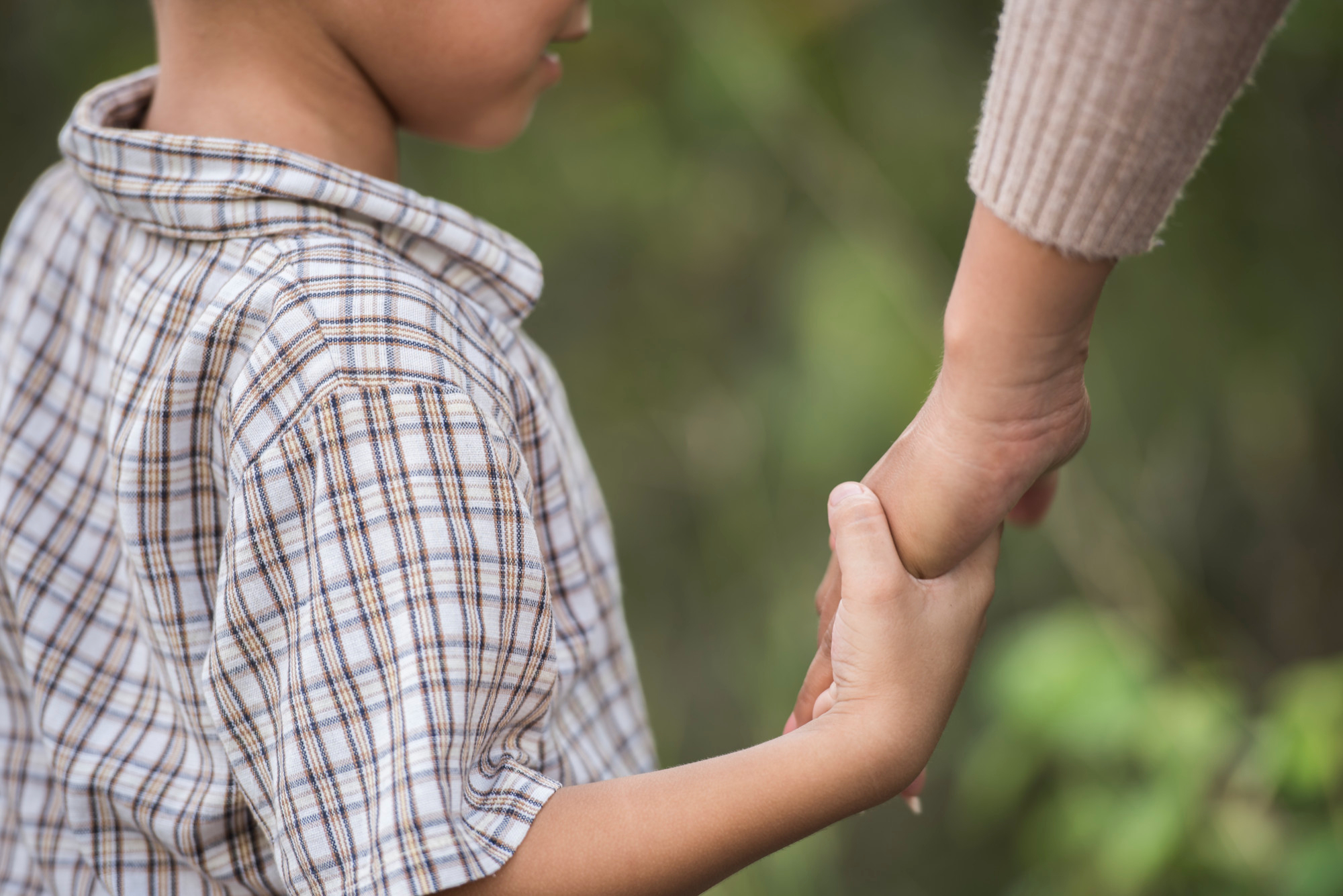
The Head of the Table
A Story About Where the Real Power Sits, and What Happens When a Grandmother Finally Uses It
Let me tell you something about Sunday dinners.
In this family, Sunday dinner is not a meal. It never has been. It is an institution — a weekly referendum on belonging, a ritual as old as the table itself, which my late husband Bernard built in the garage over the course of three weekends forty years ago from a piece of walnut he had been saving since before we were married. The table is too big for a reasonable kitchen, which is why we built the dining room around it rather than the other way around. It seats twelve comfortably and fourteen if everyone is willing to be friendly about the elbows.
Bernard used to say that the table was the most important piece of furniture in a house.
Not the bed, where you sleep. Not the sofa, where you rest. The table, where you feed people. Where you look at each other across food and find out who you actually are.
I have been feeding people at this table for forty years.
My children grew up at it. My children’s friends grew up at it — the ones who needed somewhere to be on Sunday afternoons, the ones whose own homes were quieter or louder or more complicated, the ones who showed up the first time because they were invited and kept showing up because something here held them. Bernard had a saying about the open chair: if there’s food, there’s room.
When Bernard died eight years ago, I kept the Sunday dinners.
Not because I had to. Because they were the continuation of something he and I had built together, and because the people who came to them needed the continuation, and because I am not a woman who dismantles things that work simply because the person who built them with me is gone.
I kept the table. I kept the ritual. I kept the open chair.
Last Sunday, I learned that I had also kept something else.
Something I had not fully understood I possessed until the moment I needed it.
My son Julian is forty-two years old and he has his father’s hands.
I notice this at particular moments — when he’s reaching for something, when he’s carrying something, when he sets down a cup with the particular careful deliberateness of a man who grew up watching his father handle things with respect. Bernard’s hands were the hands of a man who made things and fixed things and held things carefully because he understood that care was not weakness but skill.
Julian has those hands.
He is, in the ways that matter most, his father’s son — generous in the specific quiet way of men who don’t need credit for generosity, who do things because they need doing and not because someone will see. He worked for fifteen years in environmental law, the kind that doesn’t make you rich but makes a difference in the water people drink and the air they breathe in places that don’t have lobbyists. He is the person in a room who notices when someone needs another drink before they’ve asked for one. He is the person who calls to check in, not because it’s an occasion but because he was thinking about you.
He wanted children in the way that some people want things — quietly, constantly, with the particular wanting of someone who knows exactly how they would love a thing if they had it.
He and his first wife tried for three years.
The diagnosis, when it came, was delivered with the clinical compassion of a doctor who has delivered this kind of news before and has learned to be gentle about it. Julian called me from the parking lot of the fertility clinic.
He didn’t say much.
He didn’t need to. I knew the shape of what had happened from the sound of his voice, which was the voice of a man sitting in a car in a parking lot trying to figure out what comes next.
“Come home,” I said.
“Mom—”
“Come for dinner. Just come.”
He came.
We sat at the table — the two of us, the big walnut table Bernard had built, with the chairs where everyone had always sat — and I fed him and let him talk and didn’t say the things that people say in those situations that are meant to be comforting but are actually just the words you reach for when you can’t tolerate someone else’s pain without papering over it.
I didn’t say everything happens for a reason.
I didn’t say there are other ways to have a family.
I just fed him and listened and sat with him inside the thing he was carrying, which is what you do when someone you love is in pain and what they need is not a solution but a presence.
The marriage ended two years later, quietly, without rancor, two people who had held each other through grief and found that grief had changed the shape of what they were to each other. Julian moved into the smaller house two miles from mine that he has lived in ever since.
He was thirty-five when he started the adoption process.
I remember him showing me the first set of forms.
“Are you sure?” I asked. Not because I doubted him — because it was a large thing and large things deserve the question.
“I know how to love a child,” he said. “That’s the part I was sure about. I always had that.”
He was right.
He always had that.
Jude came home on a Tuesday.
He was four years old, which is old enough to understand that something is happening and not old enough to understand what it means. He had brown eyes with the specific quality of attention of a child who has learned to observe before trusting, the watchfulness of someone young who has already had to be careful.
Julian brought him to Sunday dinner the first week.
I had made everything — the full table, all the sides, the kind of meal that takes most of Saturday in preparation and that communicates, without saying so, that this is an occasion. Julian carried him in, and Jude looked at the table and then looked around the room and then looked at me.
I crouched down to his level.
“Hi, Jude,” I said. “I’m Julian’s mom. My name is Ruth.”
He looked at me for a moment.
“Do you have food?” he said.
Julian laughed.
“That’s the first thing you want to know?” he said.
“It’s an important thing,” I said to Jude seriously. “And yes, I have a lot of food. Come see.”
He let me take his hand and show him the kitchen.
He ate three plates of everything and fell asleep on the sofa with his head on Julian’s knee before eight o’clock, and Julian looked down at him with the look I recognized from my own early years of parenthood — the stunned, specific gratitude of someone who has discovered that love can be larger than they had imagined.
By the second Sunday, Jude knew where everything was in my kitchen.
By the fourth Sunday, he was helping me stir things.
By the third month, he called me Nana Ruth, which he decided himself without anyone suggesting it, and which I would put on a very short list of the most important things anyone has ever said to me.
He was, from the beginning, my absolute world.
This is not an exaggeration. It is simply the accurate description of what happened to me when a four-year-old boy with cautious brown eyes let me take his hand on a Tuesday afternoon and asked about food. He reorganized my priorities without trying to, the way children do when they claim you. I had grandmothered in my imagination — had thought about what it might be like, had watched my friends become grandmothers and recognized the specific quality of their love. But imagination and reality are different things, and Jude was a reality I had not been sufficiently prepared for.
He was funny. Not accidentally, the way small children are funny without knowing it, but actually funny — with timing, with the awareness of an audience, with the instinct for a turn of phrase that makes people laugh. He was also serious in equal measure, the way some children are serious when the subject demands it, when you’re explaining something that matters and he wants to understand it correctly.
He was brilliant at school. Not in the way that gets held over a child as a performance — in the way that suggested genuine curiosity, the kind that couldn’t be contained by the subject being taught and kept spilling into related questions and adjacent interests.
He loved dinosaurs with the specific intensity of a seven-year-old for whom dinosaurs are not merely interesting but a complete cosmology.
He called me every Sunday morning before dinner to ask what we were having.
Every single Sunday. For five years.
He was, is, the continuation of something Bernard and I had always been building — the table, the dinners, the open chair, the particular belief that family is the thing you choose and feed and show up for, not only the thing you are born into.
Eleanor appeared in Julian’s life approximately eighteen months ago.
She was thirty-eight, a partner at a law firm in the city, the kind of woman whose competence was evident immediately and whose warmth was evident in the same moment, which is an unusual combination and an appealing one. She was intelligent and funny and attentive, and in the early months she was, as far as I could see, genuinely making Julian happy.
She was also good with Jude.
Or she appeared to be.
I want to be precise about this because the distinction matters. Eleanor in the first months of her relationship with Julian was a woman who understood that Julian came with a child who was nine years old and who was the center of his father’s world, and she responded to this with what looked like, and may in some portion have been, genuine affection.
She asked Jude questions about dinosaurs. She attended his school baseball game in the spring. She brought him a book about paleontology that he carried around for a week. She referred to him in conversation as our guy in the easy way of someone who has accepted the terms of the situation.
Julian fell in love with all of this.
I watched it, and I was happy for him, and I also — and I want to be honest about this — I also watched with a specific quality of attention that I did not fully name even to myself. The attention of a grandmother. The attention of a woman who has been reading people across a dinner table for forty years and knows the difference between warmth that is constitutive and warmth that is performed.
What I saw was mostly the right things.
But occasionally — very occasionally, in the gaps between conversations, when something in the room shifted and Eleanor’s attention moved before her expression did — I saw something that I could not name and did not want to name and filed in the place where I kept things I was hoping not to need to examine.
They married in September.
Small ceremony, beautiful. Julian was happy in the specific way he had not been happy in years — opened up, present, the man he was when his full self was engaged rather than the quieter version who had been managing a private sorrow.
I was glad.
I told myself the thing in the gaps was nothing.
I was wrong.
The mask, as they say, slipped.
Not all at once. These things never happen all at once — they happen in increments, in the small allowances that accumulate, in the moments where someone tests what they can get away with and, finding they can get away with it, tests a little further.
The first thing I noticed was the shift in how Eleanor spoke about Jude when Julian was not in the room.
Not cruel — not at first. Just different. The warmth cooled. The our guy disappeared from her vocabulary. She began to speak of him in the third person even when he was present, which is a particular kind of erasure, the erasure of treating someone as an object of discussion rather than a participant in it.
“He’s very attached to Julian,” she said once, at my kitchen table, in a tone that implied this was a character flaw rather than an ordinary feature of a child’s love for his father.
“Children attach to people who love them,” I said. “That’s how it works.”
She smiled and said nothing.
The second thing was a comment about his background.
I will not repeat it in detail. It was the kind of comment that wears the costume of observation while functioning as diminishment — a remark about where Jude had come from, framed as concern, aimed at the places where his early life had required him to be careful and watchful and adaptive. The implication was that these qualities were deficits rather than what they were, which was the evidence of a child who had survived something and come out of it extraordinary.
“Not in my house, Eleanor,” I said.
She looked at me.
“I was just—”
“I know what you were doing,” I said. “Not in my house.”
She learned, after that, to save certain things for when Julian was not in the room.
This told me more than the comments themselves.
A person who says unkind things when witnessed is one kind of person. A person who says unkind things only when not witnessed is a different kind of person, and the difference is not in the cruelty — it is in the calculation. Eleanor was not impulsive. Eleanor knew exactly what she was doing and had decided that the risk-reward profile of doing it in Julian’s presence was unfavorable.
She was managing her exposure.
Which meant she understood it was wrong.
Which meant the behavior was a choice.
I watched this understanding settle into me over the months like water finding its level, and I made decisions about what to say and what to wait for and what I needed to be prepared for, and I brought Jude to Sunday dinner every week and fed him and let him help me in the kitchen and listened to everything he said about dinosaurs and school and his friends and the play he was going to be in, and I told him, in every way available to me, that he was seen and known and permanent.
Because some things need to be said with more than words.
Some things need to be said with time.
Last Sunday started well.
Jude had arrived early, as he often did — Julian dropped him off while he ran an errand, and Jude spent forty-five minutes in my kitchen helping me with the roast. He was nine now, old enough to do real things, and he had opinions about the seasoning that were not entirely wrong. We argued amiably about garlic quantities and he won, and the roast was better for it, which I would not tell him immediately but planned to concede at the appropriate moment.
He talked about the school play.
It was in three weeks. He had a speaking part — not the lead, but a real role, with actual lines he had been practicing, which he delivered for me in the kitchen with the seriousness of someone taking the work seriously. He was good. He had his father’s ability to be genuinely present in a moment, which translates, on a stage, into the quality of making an audience believe you.
“Is everyone coming?” he asked.
“Your father and I,” I said. “Your Aunt Patricia has it in the calendar.”
“What about Eleanor?”
I was careful with my face.
“Did you ask her?”
He nodded, stirring something I had given him to stir. “She said she’d check her schedule.”
“Then ask her again tonight,” I said. “Directly. People sometimes need to be asked directly.”
He nodded, taking this advice with the gravity he gave all advice, which was one of the things I loved most about him.
Julian arrived with Eleanor at five.
Dinner was fine until it wasn’t.
Julian’s work call came at the worst possible time.
He excused himself after the first course — sorry, I have to take this, it’ll be five minutes — and went through the patio door into the backyard, where I could see him through the glass, phone to his ear, pacing the way he paced when a work call required his full attention.
The table rearranged itself in his absence.
I was at the head, as always.
Eleanor was to my left.
Jude was across from her, swinging his legs the way he did when he was comfortable, a habit he’d had since he first sat in a chair at this table five years ago.
He looked at Eleanor.
“Are you coming to the play?” he asked.
He asked it simply, openly, with the trust of a child who has been told to ask directly and is asking directly.
Eleanor set down her wine glass.
She didn’t look at me.
She looked at Jude.
And she dropped her voice to the register people use when they want to say something without saying it publicly — the harsh whisper that is designed to reach one person while creating the appearance of privacy that does not actually exist.
“I’m busy, Jude,” she said. “And let’s be honest. Julian is just playing charity case. You’re not really part of this family.”
The table did not make a sound.
Outside, through the glass, Julian paced and talked.
Jude’s face crumbled.
I have seen Jude’s face do many things in five years. I have seen it do delight and frustration and concentration and the specific expression of someone who has just understood something they were trying to understand. I have seen it do the careful watchfulness of the child who arrived at this table cautious and unsure and not yet ready to trust.
I had never seen it do what it did in that moment.
It crumbled the way things crumble when the structure beneath them fails without warning — not gradually, not with time to prepare, but all at once. His small shoulders came in. His eyes dropped to his plate. He became suddenly and completely smaller, and the smallness of him was not childlike in the ordinary way but childlike in the specific way of a child who has been told something that touches the place where he has always been most uncertain, the question he carries about whether he is real and permanent and actually here.
Eleanor watched this happen with what I can only describe as satisfaction.
Not guilt. Not regret. Not the automatic human response of a person who has caused a child pain and feels the weight of having done so.
Satisfaction.
That was the moment I understood completely.
Not just what she had said. Not just the pattern of the months. But the whole thing — the calculation, the management of exposure, the waiting for Julian to leave the room, the whisper volume that was designed to land on Jude without witnesses. This was not impulsive. This was not the slip of a person who meant better. This was Eleanor being, when she calculated it was safe to be, exactly who she actually was.
I did not scream.
I did not reach across the table.
I said, very softly: “Jude, sweetheart. Go check on your father outside.”
He looked at me. His eyes were wet.
I held his gaze and I gave him the smile I have given him when things were hard and I needed him to trust me — the smile that says I have this. I see you. Go.
He slid off his chair and went to the patio door and went out.
The door clicked shut.
Eleanor settled back in her chair.
She had the look of someone who has been waiting for this moment and has now arrived at it and finds it satisfying.
“He needed to hear the truth eventually,” she said. She even sighed. The specific sigh of someone who has performed a difficult duty and feels adequately virtuous about having done it.
I did not say a single word in response.
I stood up.
I want to tell you what it feels like to be seventy-one years old and to stand up from the head of a table you have sat at the head of for forty years.
It does not feel like anger, though anger was present.
It does not feel like triumph, though what came next produced something that could be called that.
It feels like the particular clarity of a person who has been waiting, without entirely knowing they were waiting, for the moment when the thing they needed to do was finally simply and undeniably clear.
I stood up.
I walked to the sideboard against the wall, which has stood in this dining room for thirty years, which holds the particular things I keep accessible and meaningful — the serving pieces, the good linens, the items that have been in this family long enough to have become part of what the family is.
I opened the top drawer.
I took out a document.
Eleanor watched me. Her expression was still settled — she had just delivered what she considered the culminating moment, the truth she had decided Jude needed to hear, and she was in the aftermath of it, comfortable in the way people are comfortable when they believe a thing is over.
I walked back to the table.
I set the document in front of her.
She looked at it.
The color left her face.
Not gradually. It left the way color leaves when the body diverts blood from the surface to the places it thinks are under threat — a physiological response to danger, which is what the body does when the mind has just understood that the ground beneath it is different from what it believed.
The document was the adoption paperwork.
But not the original.
What I put in front of Eleanor was the second set — the one that had come two weeks ago, on a Tuesday morning, with a letter from the family attorney named David Chen who has handled my family’s legal matters for twenty years.
The paperwork for the amendment to my will.
I had begun the process three months earlier.
Not in response to any single incident — in response to the accumulation. The comments. The performances. The mask that appeared and disappeared with Julian’s presence. The growing certainty of what Eleanor was and what she intended.
I had called David Chen on a Wednesday morning.
I told him what I needed.
He was quiet for a moment.
“You’re certain,” he said.
“I have been watching this woman across my dinner table for eighteen months,” I said. “I am certain.”
“And Julian?”
“Julian doesn’t know about the amendment yet,” I said. “He will. But I wanted the document in place first.”
David understood. He had known me for twenty years. He had known Bernard. He had been present, in the professional capacity that allows a person to be present at the major structural moments of a family’s life, at enough of ours that he understood how I operated and what it meant when I made a decision quietly.
The amendment had done several things.
It had designated Jude — formally, by name, with the specific legal language that makes things permanent — as my primary heir. Not simply a named beneficiary. My primary heir. The person who, in the event of my death, would inherit the house on Clement Street and the table Bernard built and the sideboard with the drawer and everything else that constituted the material record of this family’s life.
It had also created, effective immediately, an educational trust in Jude’s name. Not contingent on anything. Not held pending. Active, funded, permanent. The specific amount does not need to be stated here, but I will say that Bernard and I had been careful and thrifty for forty years and I had invested well and the amount was sufficient to cover education through any level Jude chose to pursue, with room remaining.
And it had included a provision — again, David Chen’s language, careful and legally sound — specifying that the assets, in the event of my death, were for Julian and Jude specifically, and that their disposition was not subject to any claim that might arise from Julian’s marriage or any subsequent marital changes.
I had, in other words, put into legal language the thing that I needed Eleanor to understand.
Jude was not a charity case.
Jude was not playing at being part of this family.
Jude was this family. He was the heir to it. He was the next keeper of the table Bernard built and the Sunday dinners and the open chair and forty years of the particular belief that the people you feed and show up for are the people you belong to.
And no one — no one who whispered cruelties to a nine-year-old boy while his father was on the patio — was going to take that from him.
Eleanor read the document.
She was a lawyer. She read it with the specific quality of someone trained to read documents — quickly, accurately, with the ability to identify in seconds what the language means and what it does.
I watched her read it.
I saw the moment she understood what it said.
I saw the moment after that, when she understood the full implication — not just the document but the timing of it, the deliberateness of it, the fact that I had put this in front of her in this moment rather than another because this moment was the moment she had chosen to show me who she was completely.
She looked up.
I was still standing.
“This is—” she began.
“Legal,” I said. “Properly filed. David Chen’s office has the originals.”
She was pale in the way I described — the blood going somewhere internal, the face becoming the face of someone who has just walked into a room that was not what they expected and does not yet know how to leave it.
“You’ve been planning this,” she said.
“I’ve been watching,” I said. “There’s a difference.”
She looked at the document again.
I thought she might try to say something about legality, about challenge, about the various mechanisms by which people attempt to dispute things they don’t like. She was a lawyer. She knew those mechanisms.
Instead, she said: “Julian is going to—”
“Julian is going to hear everything,” I said. “Not from you. From me. Tonight.” I paused. “After Jude is home.”
She was very still.
“What Jude is going to hear,” I continued, “is that he is loved. That he is permanent. That this table was here before he arrived and will be his when I’m gone.” I looked at her directly. “What happened tonight is something Julian and I will discuss, and what Julian decides to do with that information is his decision. But Jude will not spend a single night uncertain about whether he belongs to this family.”
The patio door opened.
Julian came back in, Jude at his side, Julian’s hand on the back of Jude’s neck in the easy way of a father who touches his child constantly, the physical language of a man who understands that presence is love made tangible.
He stopped when he saw the room.
He saw Eleanor’s face.
He saw my face.
He saw the document on the table.
He looked at me.
“Mom,” he said. “What’s—”
“Sit down,” I said. “I’ll get the rest of dinner.”
I went to the kitchen.
I gave them five minutes — Julian’s voice low and careful, Eleanor’s answers brief, the specific quality of a conversation that is managing itself while someone is in the other room.
Then I brought out the roast.
I set it on the table.
I sat at the head where I always sat.
I looked at Jude.
He was watching me with the cautious brown eyes that had watched me across this table for five years — the eyes that had arrived watchful and learned, slowly, to relax.
“You helped with the garlic,” I said.
He looked at the roast.
“Is it good?”
“Let’s see,” I said, and began to serve.
The dinner that followed was not comfortable.
I am not going to tell you it was. Julian was quiet in the specific way of a man processing something he does not yet have the full shape of. Eleanor spoke very little. Jude ate his roast and told a story about dinosaurs and did not, I thought, fully register the tension — or registered it and, being nine and knowing me, trusted that I had it.
After dinner, Jude helped me clear the plates.
In the kitchen, he said: “Nana Ruth, is everything okay?”
I looked at him.
“Everything is okay,” I said. “Some things are being figured out. But you are okay. You understand?”
He looked at me.
“Eleanor said—”
“I know what Eleanor said,” I said. “I was there.” I crouched down to his eye level, the way I had crouched down the first time he came to this house when he was four years old and wanted to know about food. “Jude. You are my grandson. You are Julian’s son. You are going to inherit this table when I’m too old to use it, and I expect you to have Sunday dinners here when that happens, and there is nothing anyone can say that changes any of that. Is that clear?”
He looked at me for a long moment.
“The table Grandpa Bernard built?” he said.
“The table Grandpa Bernard built,” I said.
He thought about this.
“It’s a good table,” he said.
“It is,” I said. “And it’s yours.”
He nodded. The nod of someone who has received information they needed and is filing it in the permanent place.
Then he said: “The roast was good. You should’ve put more garlic.”
“I know,” I said. “You were right.”
He smiled.
And he went back out to the dining room.
Eleanor left before dessert.
She said she had a headache, which was the explanation available to her and which Julian received with the specific quality of a man who knows there is more to say but is choosing the time for it carefully. He walked her to the car. He came back in.
Jude was on the sofa with a book about prehistoric oceans. Julian looked at me.
“We need to talk,” he said.
“We do,” I said. “Not tonight. Come for coffee tomorrow. Bring the time to do it properly.”
He looked at Jude on the sofa.
He looked at me.
“Is he—”
“He’s okay,” I said. “He will be completely okay.”
Julian nodded.
He went and sat beside Jude on the sofa and Jude, without looking up from his book, leaned into him, the automatic lean of a child who knows the person beside them is safe.
Julian put his arm around him.
I went to make dessert.
Julian came for coffee the next morning.
We sat at the kitchen table — not the walnut table, the smaller one, the one in the kitchen that is for everyday rather than ceremony. I had made the coffee and there was bread and I let him talk first because Julian talks better when he hasn’t been preempted.
He had spoken with Eleanor.
He told me what she said, which I will not reproduce here. I will say that Eleanor, presented with Julian’s direct questions about what had happened at dinner and what had been said to Jude, had offered an account that reframed the words as concern rather than cruelty, as honesty rather than malice. She was intelligent and she was a lawyer and she knew how to construct a narrative.
Julian had listened to the narrative.
And then he had said: My mother was in the room.
Which meant he knew there was a different account.
Which meant he had come to me not to find out what had happened — he had a good enough sense of that already — but to understand the shape of it. The full shape. The months of it, not just the dinner.
I told him.
Not with rage. With the specific unflinching quality of a woman who has been watching something for eighteen months and has arrived at the moment when the watching is done and the telling is necessary.
I told him about the comments that she hid when he was present.
I told him about the tone she used with Jude when she thought I wasn’t attending carefully enough.
I told him about the night six months ago when she had said something about Jude’s background that I had shut down and she had turned away from with the smile of someone who has been inconvenienced rather than someone who has been corrected.
I told him what she had said last night.
He was very still while I told him.
When I finished, he was quiet for a long time.
“I didn’t see it,” he said.
“I know,” I said. “She made sure of that.”
“I should have—”
“You loved someone,” I said. “And you trusted her because you loved her. That’s not a failure. That’s what love does.”
“And Jude—”
“Jude is okay,” I said. “He is going to be okay. He has you. He has me. He has Patricia and the Sundays and the table and everything that is permanent for him.” I paused. “What I showed Eleanor last night is not something I did to punish her. I did it because Jude needed to know — permanently, legally, in a way that requires no one’s approval — that he is the continuation of this family.”
Julian looked at his coffee.
“The will,” he said.
“The trust,” I said. “Already active. It’s his regardless of what happens.”
He looked at me.
“When did you do this?”
“Three months ago,” I said.
He was quiet.
“You saw it coming,” he said.
“I saw what she was,” I said. “I hoped I was wrong. I waited long enough to be sure I wasn’t.”
Julian was quiet for a long time.
He looked out the kitchen window at the garden, which was the garden he had grown up in, where Bernard had taught him about plants and patience and the particular satisfaction of a thing tended over time.
“What do I do?” he said.
“That’s your question to answer,” I said. “Not mine. She’s your wife. Your marriage is yours. What I can tell you is what I saw and what I know, and what I know is that a woman who whispers to a nine-year-old boy that he isn’t really part of a family is not a woman who made a mistake in that moment. She is a woman who is telling you something true about herself.”
He nodded.
Very slowly.
“I need to talk to her,” he said.
“Yes,” I said. “You do.”
“And then I’ll know what to do.”
“You’ll know,” I said. “You’ve always known what the right thing was. That’s Bernard in you.”
He looked at me.
“He would have done exactly what you did,” he said. “The document. Putting it in front of her.”
I thought about Bernard, who had built the table because he believed in the place where families fed each other. Who had said if there’s food, there’s room and meant it structurally, philosophically, as a description of how he intended to live.
“He would have done it louder,” I said.
Julian laughed.
It was not a happy laugh, exactly. But it was real. And real laughter in the middle of hard things is one of the ways we stay intact.
The play was three weeks later.
Julian sat beside me in the third row. Patricia, my daughter, was on my other side. Julian’s friend Marcus, who had known Jude since he was five, sat in the row behind us.
Eleanor was not there.
I will not tell you what happened between her and Julian in those three weeks, because that is their story and not mine to tell. What I will tell you is that Julian came to Sunday dinner both Sundays in between, and that he came alone, and that he sat at the walnut table and ate and talked and helped me with the dishes afterward the way he had done when he was a teenager.
He did not talk about Eleanor at the dinners.
He asked me about my week. He asked about the garden. He talked about work and about Jude and about a book he was reading.
On the third Sunday he said, very briefly, while we were washing up: “I’m going to be okay.”
“I know,” I said.
“And Jude’s okay.”
“He’s better than okay,” I said. “He’s been practicing his lines for three weeks.”
Julian smiled.
“He’s got Bernard’s instinct for an audience,” he said.
“He does,” I said.
At the play, Jude walked onto the stage.
He found us in the audience immediately — actors always find their people, even before they are supposed to look — and the specific expression that crossed his face was the one I had been watching across a dinner table for five years.
Relief. And more than relief. The expression of someone who has looked for the people who love them and found them exactly where they were supposed to be.
He delivered his lines.
He was, as I had known he would be, good. Not because he performed with technique but because he was genuinely present in it — the quality he had from Julian, from Bernard, from whatever combination of the people who had claimed him had shaped him into the person he was becoming.
When it was over and we were in the lobby and he came running at us — nine years old, still young enough to run at the people he loved without calculating whether it was appropriate — he came to me first.
I caught him.
He was not small anymore. He was a solid, real nine-year-old boy who had grown three inches in a year and who would be taller than Julian by the time he was sixteen, if the trajectory held. But I caught him the way I had always caught the children who ran at me, and I held him.
“Was I good?” he said.
“You were wonderful,” I said.
“The garlic line,” he said. “Did you hear the garlic line?”
There had been a line in the play about garlic. I had heard it. I had, in fact, understood that he had worked the garlic into it somehow, which was his kind of joke, the kind he had been making since he was six.
“I heard it,” I said.
“I put it in,” he said. “It wasn’t in the original script.”
“I know,” I said.
“Mrs. Henderson said it was an improvement.”
“Mrs. Henderson is correct,” I said.
He pulled back and looked at me.
“Nana Ruth,” he said.
“Yes.”
“I’m part of the family,” he said.
He said it simply. Not as a question. As a statement. The statement of a boy who has been told something true and has filed it in the permanent place and is now confirming that it is there.
“You are,” I said. “You always were.”
He nodded.
Then Julian’s arm came around both of us, and Patricia appeared with her phone wanting a photograph, and Marcus produced a balloon from somewhere that no one had known he had, and the lobby was loud with the particular happy noise of people who have gathered to see a child do something and are satisfied with what they saw.
I stood in the middle of it.
At seventy-one years old, in the lobby of a school where my grandson had just delivered his lines and worked in a joke about garlic.
I thought about Bernard.
About the table he had built from saved walnut because he believed in the place where families fed each other. About the open chair. About if there’s food, there’s room.
He had not built the table for himself.
He had built it for this — for the people who would sit at it after him, for the continuation of the particular belief that family is made in the showing up and the feeding and the permanent presence of the people who choose each other.
He had built it for Jude.
He just hadn’t known Jude’s name yet.
Sunday dinners continue.
Jude sits where he has always sat.
He still calls on Sunday mornings to ask what we’re having.
He still has opinions about garlic.
He is, in every way that matters, the head of the table’s future.
The document is in the drawer.
The table is where it has always been.
Bernard built it to last.
It will.

Adrian Hawthorne is a celebrated author and dedicated archivist who finds inspiration in the hidden stories of the past. Educated at Oxford, he now works at the National Archives, where preserving history fuels his evocative writing. Balancing archival precision with creative storytelling, Adrian founded the Hawthorne Institute of Literary Arts to mentor emerging writers and honor the timeless art of narrative.