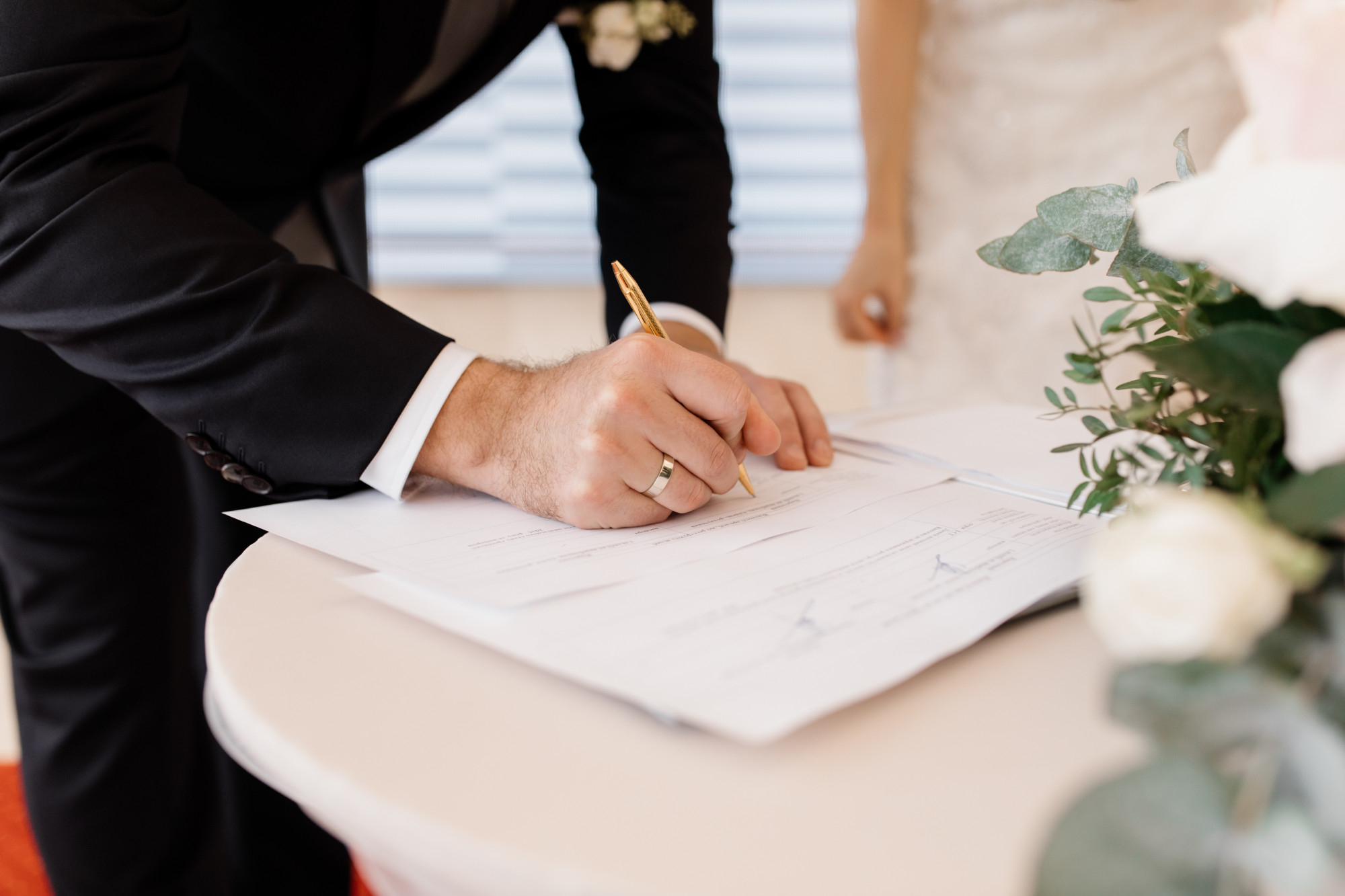
The Gift
A Story About What Gets Left Behind, and What Gets Left Standing
My mother had a laugh that filled rooms.
Not the polite kind — not the contained, socially appropriate laugh of someone performing amusement for an audience. Her laugh was the real kind, the kind that surprised her when it arrived, that started somewhere deep and came out before she had a chance to decide whether it was appropriate. It was the laugh of someone who found the world genuinely funny, who had not yet made the mistake of taking herself too seriously, who understood that joy was not something you rationed.
I know this because I have been listening to that laugh my entire life.
I know this because the specific memory I reach for, when I need her most, is not her face in a photograph or her voice saying something important. It is the laugh. The involuntary, room-filling laugh that announced her presence before she came around the corner, that told you immediately what kind of person she was.
Her name was Donna.
She was fifty-two years old when the diagnosis came, and she was fifty-four when she died, and in the two years between those two facts, she remained — with a stubbornness that I have only recently recognized as the defining quality of her character — herself. She lost the hair to chemotherapy and she lost the weight and she lost the easy physical freedom of a person whose body is doing what bodies are supposed to do, but she did not lose the laugh. She kept the laugh until very near the end, which I have come to understand was not luck or coincidence but a choice, the specific choice of a woman who had decided what she was going to hold onto and had held onto it.
I am my mother’s daughter.
I hold onto things too.
Including the things I learned in a kitchen doorway on an October afternoon, standing behind a wall, listening to the two people I should have been able to trust most in the world plan my mother’s replacement while she was still alive.
But I am getting ahead of myself.
Let me start where it started.
My mother and my Aunt Lisa were two years apart.
Donna was the elder, Lisa the younger, and between them there existed the specific complicated bond of sisters who are close in age and have spent their entire lives in proximity — meaning they knew each other completely, with all the love and friction and history that complete knowledge produces. They had shared rooms and borrowed clothes and fought over things that seem small now and mattered enormously then. They had been in each other’s weddings. They had called each other every Sunday for thirty years.
Or so I believed.
I should tell you what Lisa was like, because the story requires you to understand her as she was presented rather than as she was.
She was charming. That is the first and most accurate word. She had the particular kind of charm that operates on first impressions — quick to smile, quick to compliment, quick to make you feel that she had noticed you specifically, that you were interesting in a way she was genuinely glad to have discovered. She dressed well and spoke well and had opinions about things that she delivered with enough confidence to seem authoritative and enough flexibility to seem open-minded.
She had also, I understood later, spent her life in my mother’s shadow.
Not because my mother tried to cast one. But because Donna was the kind of person who naturally occupies the center of a room — not by demanding it, simply by being there — and Lisa was the kind of person for whom that proximity was both a comfort and a wound. She loved my mother and she resented my mother and I don’t think she was fully conscious of either.
My father, Raymond, I will describe more briefly because some people deserve brevity.
He was a man who had benefited enormously from my mother’s goodness for twenty years and had mistaken benefiting from it for deserving it. He was presentable and sometimes funny and capable of warmth when warmth served him. He was also, as I would discover, a man whose allegiance to any principle lasted exactly as long as the principle was convenient.
They had been married for twenty years.
How could it be any different, I had thought.
Apparently, it could.
I was in my second year of college when the diagnosis came.
I was studying three hours away — far enough to require planning for visits, close enough that planning was manageable. My mother called me herself. She had been at the doctor’s for what everyone had agreed to believe was a routine appointment, and she called from the car in the parking lot while my father was getting the car, and she told me in the voice she used when she had decided to be the one who managed the information so that other people didn’t have to manage their response to the way she said it.
“It’s cancer,” she said. “Breast. We caught it at a stage where we have options. I’m going to need treatment and it’s going to be a rough year but the doctor says there’s reason to be optimistic.”
“Mom—”
“Don’t cry yet,” she said. “Save it for if we need it. Right now I need you to know and I need you to keep studying because that’s the thing that’s going to be useful.”
I want to tell you I was brave about it. I was not. I cried in the bathroom of my dorm room for an hour, and then I washed my face and called her back and said: “What do you need from me?”
“Study,” she said. “And come home when you can. And don’t let your father forget to take me to my appointments.”
That last part, I now understand, contained more information than I recognized at the time.
We established a schedule. Dad and I coordinated my visits home so that there was always someone to help — to drive her to the oncology appointments, to manage the household things that had always run smoothly on her energy and now required deliberate management without it, to cook and clean and simply be present in the way she needed someone present during the long bad days after chemotherapy.
I believed, in those months, that my father was doing his part when I wasn’t there.
He was her husband of twenty years.
He was there full-time.
Of course he was taking care of her.
I came home three weeks earlier than planned in October.
I had a gap in my schedule — a project that finished ahead of deadline, a weekend that opened up unexpectedly — and I decided to surprise my mother. I had learned, over the months of her illness, that the surprise visits were the ones she appreciated most, not because she didn’t want me to come but because the surprise ones carried a different energy. When she wasn’t expecting me, I arrived fresh rather than arrived to a situation she had been preparing for, and the freshness of it seemed to lift something.
I unlocked the front door with my key.
I heard my father’s voice.
I heard another voice that I knew immediately — knew it the way you know things you have known all your life, a voice I had heard at every Christmas and every birthday and every Sunday dinner for twenty-two years.
Lisa.
I thought: she’s helping. Of course she’s helping. She’s my mother’s sister and she’s here helping and this is exactly what family does.
I was about to call out when I heard what she said.
God, honey, I can’t wait for us to finally be together. I want to live with you in this house and finally have our wedding.
I stood behind the wall in the hallway.
My father laughed.
Sweetheart, we’ve already been together for a whole year, and that old woman still has no idea. Just be patient a little longer. The house belongs to her, so I need to make sure I get it. She still has to sign some papers, so for now, I have to keep playing the loving husband.
I do not know how long I stood there.
Time stopped working properly. I was standing in the hallway of the house I had grown up in, behind the wall, listening to my father describe my dying mother as that old woman and say he was playing the loving husband while he waited for the house.
The house that my mother’s parents had left her.
The house she had grown up in.
The house I had grown up in.
The house that — I understood, in that moment, with the terrible clarity of shock — he was planning to take from her while she was still alive, and keep when she was gone.
I left before they saw me.
I don’t remember walking to my car. I don’t remember driving to the coffee shop two miles away where I sat for three hours. I remember the coffee going cold. I remember my hands on the cup. I remember the specific physical sensation of trying to hold something that will not be held — the way the mind goes over and over the same information looking for the version where it means something different.
It didn’t mean something different.
It meant exactly what I had heard.
I did not tell my mother.
This is the decision I have thought about most, in the years since. Whether I was right. Whether she deserved to know. Whether the knowing would have helped or only added to what she was already carrying.
She was in the middle of her second round of chemotherapy. She weighed twenty pounds less than she had weighed at diagnosis. There were days when she could not get out of bed without help. There were days when what she needed, more than anything, was for the people around her to hold the world at a manageable distance while she used everything she had to keep living.
I decided she could not carry one more thing.
I decided this once, on the afternoon in the coffee shop, and I held to it for the months that remained. I went home when I could and I took care of her and I cooked the things she could eat and I sat with her and watched the shows she liked and listened to her talk about the things she was thinking about, which were the things you think about when you know you might be running out of time — memories and people and the specific gratitude you develop when you understand that gratitude has a deadline.
She talked about Lisa sometimes.
Lisa called this morning. She was so good to me when we were little. She used to sneak into my room at night when she had bad dreams and I’d let her sleep in my bed.
I held those conversations inside the specific stillness of a person holding something back.
I did not cry in front of her. I saved the crying for later, for the car, for the three-hour drive back to my campus when the visit was over. I cried on those drives with the particular abandon of someone releasing something that had been compressed all weekend, and then I washed my face and went back to studying because that’s what she had asked me to do.
I was preparing something.
I had time to prepare.
I should tell you what I found out in those months.
Because the overheard conversation was not the end of my research. It was the beginning.
I have always been methodical. It is not the most glamorous quality — it does not make for dramatic stories of impulse and passion — but it is useful. I approach problems the way my mother approached her illness: by understanding what is actually happening before deciding what to do about it.
I talked to a lawyer.
Not dramatically. I made an appointment, drove to the city two hours away where I knew no one, sat across from a family law attorney named Patricia Huang and told her what I had heard and asked what it meant.
She explained the property situation first. The house had been my mother’s before the marriage — inherited from her parents, never transferred to joint ownership, which turned out to be legally significant. What my father had said about needing her to sign papers was, the attorney told me, almost certainly a reference to documents that would transfer ownership or add him to the deed, which would give him claim to the property after my mother’s death.
“Has she signed anything like that?” Patricia asked.
“I don’t know,” I said.
“You should find out.”
I found out.
She hadn’t.
When I asked my mother, in the careful way of someone asking about administrative things, whether she had signed any new documents about the house recently, she said no, Raymond had mentioned something about updating the paperwork but she hadn’t gotten around to it.
“Don’t,” I said.
She looked at me.
“Don’t rush to sign anything until you’ve had your own attorney look at it,” I said. “Just a good habit.”
She studied me for a moment with the quality of attention she had always had, my mother — the particular attention of a woman who has raised a child and knows when that child is telling her part of a truth.
She nodded.
She didn’t sign.
The second thing the attorney told me was about the inheritance more broadly — what my mother’s will said, what would happen to her assets, what my father would be entitled to as a spouse. These were conversations that led to other conversations, and those conversations led to actions that I took over the following months, quietly, carefully, in coordination with my mother without telling her why.
I simply said: I want to make sure things are right. Can we update your will? Can you add me as a signatory on this account? Can we make sure that the things that are yours are documented as yours?
She let me do it.
She asked me once if something was wrong.
“I just want to make sure everything is in order,” I said.
She looked at me for a long time.
“Okay,” she said.
I think she knew.
I think, in the way of people who have spent their lives paying attention, she understood that I was protecting her from something without knowing exactly what. She trusted me enough to let me do it without demanding the explanation I couldn’t give her.
That trust is the thing I carry most carefully.
She died on a Tuesday in January.
Not dramatically — peacefully is a word people use, which is not entirely accurate, because the process of leaving is rarely peaceful, but what I mean is without crisis, without emergency, without the sudden awful call in the middle of the night. She had been declining for several weeks, and hospice had been there, and on a Tuesday evening with the winter outside the window and the lamp on and my hand in hers, she simply stopped.
I had been with her.
My father had stepped out twenty minutes earlier to make a phone call.
I have thought about that a great deal.
I was with her when she died. I was there for the laugh and for the last years of taking care of her and for the moment at the end. I was there.
He was on the phone.
I have made my peace with what this tells me. Or rather, I have not made peace with it and will not, and I have stopped trying to reach a peace that does not exist. What I have instead is the clean knowledge that I was where I was supposed to be, which is its own kind of comfort, and which no one can take from me.
The engagement was announced three weeks after the funeral.
My father called me on a Saturday morning.
He used the voice of a man delivering difficult news with courage — the brave, slightly trembling voice of someone who is confessing something and relying on your compassion for the confession.
“I have something to tell you,” he said. “Something happened — it happened very suddenly, while I was grieving, and I know the timing is difficult, but life is unpredictable, and—”
“You and Lisa,” I said.
A pause.
“I—yes. I know how this must—”
“Congratulations,” I said.
Another pause. Longer.
“We thought — we’ll have a small ceremony. I hope you’ll—”
“Of course,” I said.
I hung up and sat for a moment.
Then I went back to what I had been doing.
Which was preparing their wedding gift.
I want to tell you about the gift.
But first I want to tell you about the months of preparation that produced it, because the gift itself took thirty seconds to open and eight months to make, and the eight months matter more than the thirty seconds.
I had retained Patricia Huang, the attorney, on a proper basis in November. She had helped me do what needed doing regarding the property — ensuring my mother’s ownership was documented and clear, ensuring her will was updated and properly filed, ensuring that the various administrative details of her estate were, as I had told my mother, in order.
She had also been the one to advise me on the other thing.
“If there’s evidence of what you heard,” Patricia said, “it may be relevant to the estate proceedings. Depending on what he tries to claim.”
“There’s evidence,” I said.
There was.
I will not describe in detail how I obtained it, because some of it was not beautiful and all of it was necessary. What I will tell you is that over the months between October and January, I had assembled documentation. Text messages, which I accessed through a family plan account that my mother had set up years ago and which no one had thought to change. A credit card statement on a shared account that showed hotel charges on dates when my father had told my mother he was working. A phone bill that showed the volume and timing of calls between my father and Lisa over the previous eighteen months — calls that began, the records showed, approximately fourteen months before my mother died.
More than a year.
While she was sick.
While she was in chemotherapy.
While she was losing weight and losing hair and fighting as hard as she could to stay alive, her husband and her sister were together, planning the future in her house, waiting.
I had all of this.
I had had it organized, chronologically, with brief explanatory notes, by a woman named Susan who I had hired through Patricia’s referral — a forensic document specialist who made the kind of organized, clear, referenced binders that are admissible in the kinds of legal proceedings that might become relevant.
The binder was thorough.
The binder was approximately forty pages.
The binder was the wedding gift.
I need to tell you about the weeks before the wedding.
My father called several times. He wanted, he said, for us to be able to move forward together. He said that what had happened between him and Lisa had been unexpected and that he hoped I could find a way to be happy for him in time. He was careful and controlled in these conversations, the voice of a man who has decided on a narrative and is sticking to it.
I was pleasant. I said the right things. I said I was still processing and that I hoped we could talk more at the wedding.
He seemed relieved.
Lisa called once. Her voice had a careful quality — warm but watching, the warmth of someone who is not sure what they are walking toward and is performing openness in case it helps.
“I know this is hard,” she said.
“It is,” I said.
“I want you to know that I loved your mother—”
“I know,” I said.
Which was not a lie.
I believe Lisa did love my mother, in the complicated, wounded way of a person who loves someone and also cannot help wanting what that person has. I believe this was, for Lisa, a story she had told herself where love justified the means. I believe she had not thought clearly about what it cost my mother to be betrayed by the two people who were supposed to be closest to her.
I believe this because the alternative — that she was purely calculating, purely cold — is harder to live with, and I have to live with all of it.
“I’ll see you at the wedding,” I said.
It was a Saturday in late April.
The venue was a restaurant they had rented — not enormous, intimate enough, which is the word they probably used when they booked it, intimate, which would have felt aspirational and turned out to be accurate in a way they did not intend. About one hundred guests. People who knew my father from work and from their social life and from the previous two decades of a marriage they believed had simply, recently, ended. People who knew Lisa and thought she was charming and had probably heard some version of the story of how this love had emerged from grief and found them both.
My father looked handsome in his suit.
Lisa looked beautiful in a dress that I noted was not white — ivory, cream, the compromise color of a woman who understood that white was not available to her in this particular situation and had found the most elegant nearby option.
I wore my mother’s favorite color.
Sage green.
I wore it deliberately.
I don’t know if anyone noticed. I don’t know if it meant anything to anyone but me. But I walked into that restaurant in my mother’s color with the gift box under my arm, and I sat in the seat I had been given, and I watched my father and his new wife be congratulated by people who didn’t know what I knew, and I held the weight of what was in the box, and I waited.
The moment came after the ceremony, in the cocktail hour.
They were moving through the room — the circuit that married couples do at their own celebrations, the route from guest to guest that is both performance and genuine joy, depending on the couple. My father was relaxed. Why wouldn’t he be. He had gotten what he wanted, or most of it — the woman he had chosen, the approval of the room, the narrative of sudden love from grief. The house question had been settled in my favor without him realizing I had done anything, which I would address with Patricia at the appropriate time and in the appropriate venue, which was not this one.
Lisa was laughing.
Of course she was laughing. She was in the house of her victory. She had the man and the room and the narrative and a century of friends watching her begin this new chapter.
I approached them.
My father saw me and opened his arms slightly — the gesture of a man who has been managing his anxiety about his daughter at this event and is now relieved to see her approaching, to have it be fine.
“Sweetheart,” he said. “I’m so glad you’re here.”
“I wouldn’t have missed it,” I said. “I brought you something.”
I held out the box.
It was a good box — the kind you get from a stationery store, solid white with a lid, tied with a white ribbon. It looked like a wedding gift. It looked like what it was pretending to be.
My father took it.
He looked at Lisa with the small private smile of people opening gifts at their own celebration.
She smiled back.
They were surrounded by perhaps twenty or twenty-five guests at that moment — the natural clustering that happens at cocktail hours, people moving in groups, conversations overlapping. The people nearest to us had not specifically gathered for this. They were simply there.
My father lifted the lid.
He looked inside.
The binder was on top.
It had a cover page, because of course it did — Susan had made it professional, had given it the aesthetic of a well-organized report, because everything that was in it needed to be immediately legible to someone who had not been expecting to encounter it. The cover page said, in clean plain font:
Documentation: November 2022 — January 2024
My father stared at it.
He recognized immediately what he was looking at. I know this because his face changed in the specific way faces change when the brain has received information that conflicts catastrophically with what it expected — not slowly, not gradually, but all at once, the expression of someone who has walked through a door expecting one room and found a completely different one.
Lisa leaned in.
She looked at the cover page.
She turned to the first page.
The first page was a phone records summary. The dates and times and duration of calls between her number and my father’s number, beginning fourteen months before my mother’s death. Annotated in Susan’s clean, professional notation.
Lisa screamed.
I mean this literally. She made a sound that was not the theatrical shriek of a person making a scene for effect but the involuntary, high, genuine sound of someone who has been struck by something they were not braced for. It rose in the quiet of the cocktail hour and stopped every conversation in the room.
My father went red.
Not the embarrassed red of a person who has been caught in something minor. The deep, total red of a person whose body is responding to something it cannot contain — the particular red of exposure, of the moment when what you have been managing privately is suddenly, irreversibly public.
He looked at me.
I looked back at him.
I did not smile. I want to be honest about that — I had imagined smiling, in the months of preparation, had imagined the satisfaction of standing in this room watching his face at this moment, and when the moment arrived, what I actually felt was not satisfaction. It was something quieter and colder. The feeling of a door being closed rather than a door being opened.
The feeling of something being finished.
“What is this,” he said. It was not a question. It was the statement of a man who already knew.
“A wedding gift,” I said. “There’s more in the box. Susan organized it very clearly. The credit card statements are on page eighteen.”
People were watching.
I did not say the next part loudly. I said it at a normal conversational volume, which, in a room that had gone almost entirely silent, was enough.
“I want you to know,” I said, “that the house is not coming to you. The will is filed. The property documentation is current. Patricia Huang — her card is in the back of the binder — is available if you have questions.”
My father’s red face went, at this, to something else. Something that looked, if I am reading it correctly, like the specific pallor of a man who has just understood that the object he spent two years positioning to acquire is no longer available to him.
Lisa was not making sound anymore.
She was standing very still with the binder open in her hands, staring at a page that I knew — because I had read every page of that binder many times — was the hotel receipts. The dates circled. The corresponding dates on the family calendar, also included, showing my mother’s chemotherapy appointments.
She closed the binder.
She put it back in the box.
“We should—” she started.
“I’m going to go,” I said. “I just wanted to deliver that personally.”
I looked at my father.
“She deserved better,” I said. “I need you to know that I know that. And that everyone in this room is going to know it too. Not because I’m going to tell them—” I gestured slightly at the surrounding guests, who were watching with the stunned silence of people who have stumbled into someone else’s reckoning “—but because you brought a box into the middle of your wedding and opened it and this is what happened.”
I picked up my bag from the chair at the table where I had been sitting.
I walked to the exit.
I cried in the parking lot.
I want to be honest about this, because the story is not a triumphant one in the clean way that stories of justice are sometimes told. It is not the story of a daughter who found out, planned her response, executed it perfectly, and felt satisfied. It is the story of a woman who loved her mother and lost her and spent the following year finding out the full shape of the betrayal and doing what she could to protect what her mother had left behind.
The crying in the parking lot was not grief, or not only grief. It was the release of eight months of holding something very heavy and now being able to set it down.
My mother was dead.
Nothing I had done in that room brought her back. Nothing I could do would give her back the two years in which the two people closest to her had been waiting for her to finish dying so they could begin their real lives. Nothing could undo what had been done.
What I had done was smaller than that and more specific.
I had made sure the house — her house, the house her parents had left her, the house she had grown up in — was not going to be part of his inheritance. I had made sure that the legal record of what had happened existed in a form that would be relevant if he tried to contest anything. And I had made sure that the story he had been planning to tell — the sudden love, the grief that found them, the romantic trajectory of two people united by loss — was not going to be the only story in the room.
The full story was now in the room.
Whether people believed it or what they did with it was not something I could control. But I had put it there.
I drove home.
Patricia Huang called me the following Monday.
My father had contacted her office, through his own attorney, about the estate. The conversation had been, Patricia said, brief and concluding — there was nothing to contest, the documents were clear, and his attorney had apparently advised him that proceeding further would require him to argue in open court that the documentation in the binder was inaccurate, which was not a strong position.
He did not proceed further.
The house remained my mother’s estate.
By the terms of the will, which she had updated in December, it came to me.
I did not move into the house immediately.
I finished my degree. I took the job I had been offered in the city. I lived in an apartment for two years and I went to the house on weekends, and on the weekends I spent there I did what needed doing — maintenance, the things that houses need when they are not quite inhabited but need to be kept in order.
And I kept the Sunday dinners.
Not every week. I was not in the city often enough for every week. But when I was there, on Sunday afternoons, I cooked in my mother’s kitchen.
The first time was hard.
I stood at her stove and I heard the laugh — the involuntary, room-filling laugh that announced her presence before she came around the corner — and I stood at the stove for a long time before I could move.
Then I cooked.
I made the things she made. Her recipes, which I had learned by watching and by asking and which were in a binder of their own — a different binder, handwritten, with her notes in the margins — in the kitchen drawer where she had always kept it. I made the food and I ate at the table in the kitchen and I was alone in the house with the ghost of everything it had been.
I cried.
Then I washed up and I went home.
The second time was easier.
The third time I invited a friend.
Eventually the Sunday dinners were a regular thing — four or five people, sometimes more, whoever was around and wanted to come. My college friends, who had known me through the two hardest years. A neighbor of my mother’s, a woman named Gloria who was in her seventies and had known my mother for twenty years and who told me, the first time she came to dinner, that she had known something was wrong in those last months, that she had sometimes seen Lisa’s car when my mother didn’t mention her sister visiting.
“I didn’t want to presume,” Gloria said.
“You couldn’t have known,” I said.
“No,” she said. “But I wondered.”
Gloria has been to every Sunday dinner since.
I moved into the house when I was twenty-six.
It needed some work — the kitchen updated, the bathroom fixtures replaced, a few years of deferred maintenance addressed. I did most of it myself, which surprised people who knew me as the methodical, organized person, the person who made binders. But I had grown up in this house watching my mother fix things, and I knew where the tools were, and there was something specific and necessary about doing the work with my hands.
I repainted the living room.
Not a different color. The same color my mother had chosen, which was a warm off-white that she had described as the color of a Sunday morning when she had chosen it. I asked Gloria what she remembered about the color and Gloria described it perfectly, and I took the description to the paint store and the man there found the closest match and I painted the room on a Saturday in May with the windows open and the spring coming in.
It looked like a Sunday morning.
I kept her photographs on the walls.
Not all of them — not the photographs that included Lisa, which I put in a box in the attic, not because I needed to pretend she hadn’t existed but because I needed the walls of this house to hold the right things for a while. I kept the photographs of my mother at different ages — young, in her twenties, in the specific unselfconscious way of someone who has not yet learned to manage how she appears in photographs; middle-aged, the years of raising me, with the laugh documented in image after image by people who could not help photographing her because her joy was contagious; the last years, thinner, changed, but recognizably herself.
I kept the laugh.
The photographs kept the laugh for me when I couldn’t hear it.
I want to tell you what I know about what happened to my father and Lisa.
They are married. They are still married, as far as I know, which is not very far — I have had no contact with either of them since the wedding and I do not intend to change that. I know they found an apartment, and then a house, and that they have built some version of the life they planned while my mother was dying.
I do not know if they are happy.
I have thought about whether I want them to be, and the honest answer is that I have stopped asking myself that question because it is not a useful question. What I want has nothing to do with them anymore. They are not in the part of my life I am building.
My mother is.
There is something I have learned in the years since, which is this: the things people do in secret always have weight.
Not moral weight — I mean literal weight, the weight of what must be carried. My father and Lisa carried, for the years of my mother’s illness, the weight of what they were doing. They carried it in the management of exposure, in the careful performance of the appropriate faces in the appropriate rooms, in the whispered conversation I stood behind a wall and heard. They carried it while they planned and waited and told themselves whatever people tell themselves when they are doing what they did.
And I carried mine.
What I carried was different — what I carried was the knowledge I could not share and the preparation I was making and the grief of watching my mother die without being able to give her the truth and without knowing whether that choice was right. I carried the months of pretending not to know. I carried the binder, metaphorically and then literally.
What I know now is that the weights are not equivalent.
Not because the suffering of the guilty is less real than the suffering of the innocent — pain is pain, and I will not claim to know what my father or Lisa carries. But because the weight I carried was in the service of something. It was in the service of my mother, of her house, of the Sunday dinners that continue in her kitchen. It was weight carried toward something.
Theirs was weight carried away from something.
The difference, I think, is the difference.
My mother’s birthday is in March.
Every year, on the Saturday nearest to it, I have the Sunday dinner a day early. I make her recipes. I set the table the way she set it. I put her photograph — the one with the laugh, the one that catches it before she knew someone was photographing her — in the center of the table.
Gloria always comes.
Last year we had twelve people.
Some of them never met my mother. Friends of mine who came into my life after she was gone, who know her only through me — through the things I say and the recipes I make and the laugh I have described so many times that people who never heard it seem to know what it sounded like.
That is the thing about the real kind of laugh.
It stays.
It stays in the people who loved it, and they carry it forward, and it arrives in rooms that never contained the original, and the people in those rooms feel something they can’t quite name, which is the specific warmth of a joy that was real enough to outlive the person it came from.
My mother’s laugh fills rooms she never stood in.
I am my mother’s daughter.
I hold onto things.
Including that.
The house on Clement Street has a garden now.
I planted it the second spring.
My mother always said she meant to plant a garden.
She never had time.
I have time.
The sage is doing particularly well.
Which seems right.

Lila Hart is a dedicated Digital Archivist and Research Specialist with a keen eye for preserving and curating meaningful content. At TheArchivists, she specializes in organizing and managing digital archives, ensuring that valuable stories and historical moments are accessible for generations to come.
Lila earned her degree in History and Archival Studies from the University of Edinburgh, where she cultivated her passion for documenting the past and preserving cultural heritage. Her expertise lies in combining traditional archival techniques with modern digital tools, allowing her to create comprehensive and engaging collections that resonate with audiences worldwide.
At TheArchivists, Lila is known for her meticulous attention to detail and her ability to uncover hidden gems within extensive archives. Her work is praised for its depth, authenticity, and contribution to the preservation of knowledge in the digital age.
Driven by a commitment to preserving stories that matter, Lila is passionate about exploring the intersection of history and technology. Her goal is to ensure that every piece of content she handles reflects the richness of human experiences and remains a source of inspiration for years to come.