Ninety-Six
A Story About What Gets Ruined on Purpose, and What Gets Built in Its Place
There is a particular kind of woman who destroys things quietly.
Not the kind who throws plates or raises her voice or makes a scene that everyone can point to afterward. The other kind. The kind who bumps a table. The kind who mishaps. The kind who stands in your kitchen beside a bucket of gray water with your ruined wedding invitations floating inside it and looks at you with her mouth slightly tight and says, don’t panic, honey, it was just a mistake.
I had spent three evenings on those invitations.
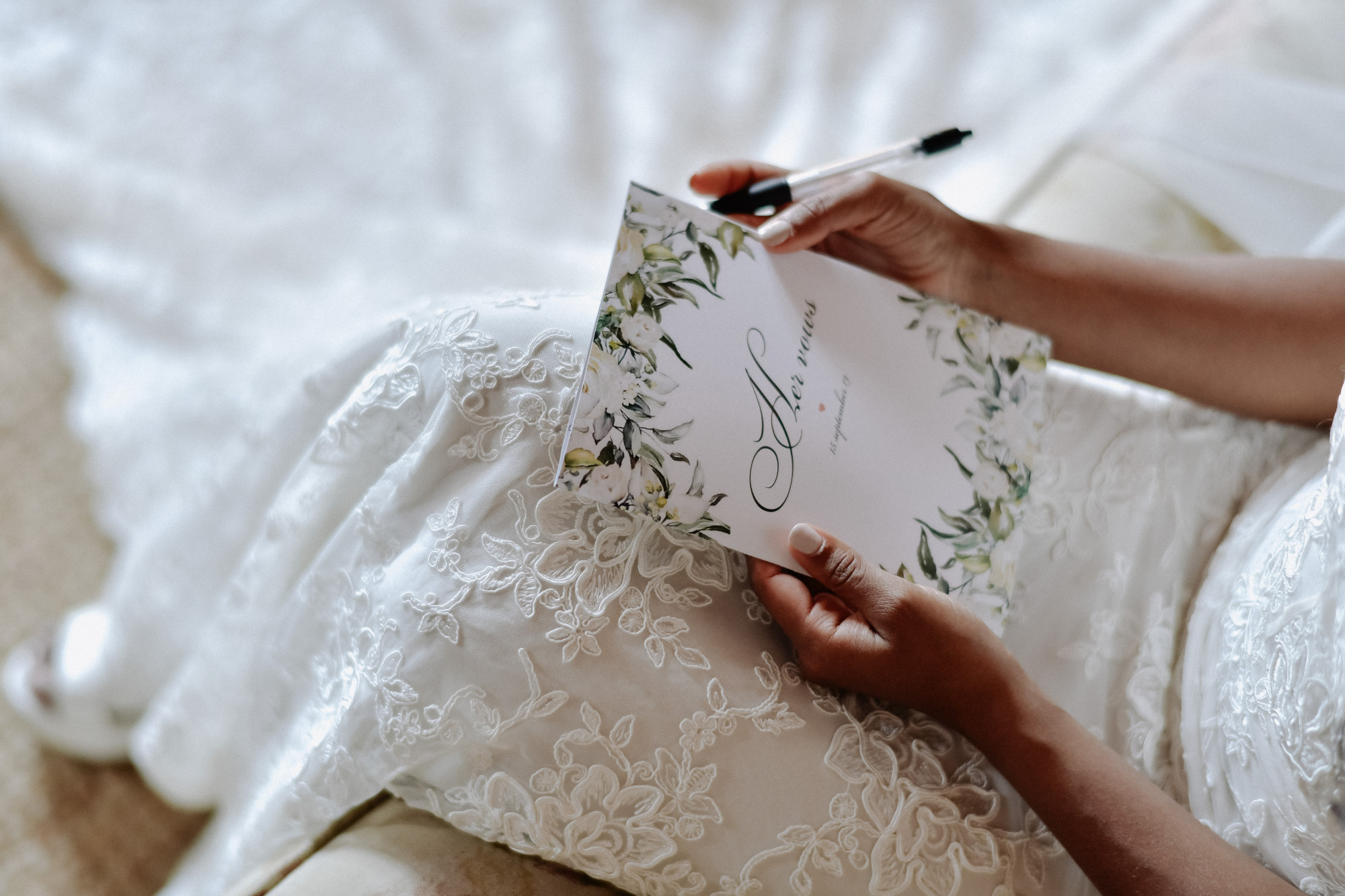
Three evenings addressing, labeling, stamping, checking, stacking. Ninety-six envelopes that represented ninety-six people we wanted to celebrate our marriage with — the people who had made Ryan who he was, the people who had made me who I was, assembled onto a guest list that had itself taken weeks to negotiate. The list Ryan had finally closed by saying, to his mother’s face, no more additions, this is our wedding.
Those three evenings were the last part of a process that had started months earlier.
And Mavis had been there for all of it, fighting every decision from the venue to the flowers to the number of people she felt should be included in a wedding that was not hers.
She put my invitations in a bucket of dirty water and called it an accident.
I need you to understand the full shape of what that was before I can tell you what Ryan did next.
My name is Sarah.
Ryan and I met four years ago at a friend’s birthday dinner, the kind of gathering where you know most people and are placed next to someone you don’t know yet and either talk until the food is cold or exchange polite nothings and part ways. We talked until the food was cold. Then we stayed after the food was cleared and talked some more, and I drove home at midnight thinking about his laugh and the way he had actually listened when I talked, not the performed listening of someone waiting for their turn but the real kind, the rare kind that makes you feel that the specific contents of your mind are worth someone’s attention.
He called the next day.
We were engaged two years later.
Ryan is, in the ways that count, an exceptional man. He is funny without requiring an audience for it. He is kind in the specific way of people who don’t need to announce their kindness, who simply act and move on. He is honest in the way that costs him sometimes — the way that makes him say hard things rather than comfortable ones, because he has decided that comfort at the expense of honesty is too expensive in the long run.
He loves his mother.
This is important. I want you to understand this before I describe Mavis, because the story of a difficult mother-in-law is only interesting if the person caught between two women has actual feelings for both of them, actual competing loyalties, actual difficulty navigating the space between what his mother wants and what is right. Ryan had all of that. The fact that he ultimately did what he did is not the easy triumph of a man who didn’t care about his mother’s feelings. It cost him. I watched it cost him.
But I am getting ahead of myself.
Mavis first.
Mavis Calloway is sixty-three years old and she is, in certain ways, a woman worth knowing.
She is intelligent in the formidable, slightly combative way of people who taught themselves to be smart rather than having it handed to them. She raised Ryan and his sister Jenna largely on her own after their father’s illness required him to step back from work when the children were young, and she did it with the specific fierceness of a woman who has decided that her children’s futures are worth any sacrifice she can make. Ryan has told me this and I believe it. I have seen evidence of it in who he is — in the man who calls his mother every Sunday, who remembers her preferences, who has never, in four years of knowing him, spoken about her without love.
She is also a woman who has decided, somewhere in the transition from Ryan’s childhood to his adulthood, that her role in his life has not changed.
She has opinions about where he lives. About what he eats. About his friendships and his job and the way he handles money. She offers these opinions with the breezy certainty of someone who considers the offering itself a form of love and does not distinguish between what is asked for and what is given.
When I arrived in Ryan’s life, I became a new surface for opinion.
I want to be fair about this. In the beginning, Mavis was welcoming in the way of a woman who has assessed a situation and decided to accept it, which is not warmth but is also not hostility and I was willing to work with it. We had pleasant dinners. She complimented my cooking with the specific, evaluating quality of a woman who considers cooking her domain but will acknowledge a credible rival. She asked me questions about my family and my job and my life that were sometimes genuine and sometimes the questions of a woman collecting information.
The engagement changed things.
Specifically, it made the wedding real, and the wedding made everything that had been theoretical into a practical dispute about specific decisions that she felt she should be making and we felt we should be making, and the gap between those two positions produced every argument of the following eight months.
The venue was too small. She had a list of larger spaces.
The menu was too casual. She felt a formal sit-down dinner was appropriate for a wedding of this significance.
The guest list needed to expand. She had family, extended family, people who had known Ryan as a child, who would be insulted not to receive an invitation.
Ryan handled each of these with the patience of a man who has been navigating his mother’s opinions for thirty-five years and has developed an effective system. He listened. He acknowledged her perspective. He explained our reasoning. And in the cases where her reasoning conflicted directly with our wishes for our own wedding, he said, clearly and without cruelty, that we had made our decision and it would stand.
The guest list was the worst.
We had the venue, which had a capacity, and we had the people we wanted, and the numbers worked. Mavis submitted a list of additions. Ryan looked at the additions — eighteen names, relatives he had not seen in years, people he had no real relationship with — and said, Mom. No. This is our wedding and our list is final.
She did not speak to him for four days.
Then she called as though nothing had happened, and life resumed, and we believed — I believed — that the guest list fight had settled something, had drawn a line that she would not cross again.
I was wrong about this.
I spent three evenings on the invitations.
This sounds like a small thing. I need you to understand that it was not a small thing.
Each invitation required the right envelope from the right box. The handwritten address labels — I had found a calligrapher’s template online and practiced for two weeks before committing to the actual envelopes — each took time to position correctly, to smooth down without air bubbles, to check against the master list. The stamps I had selected, because even the stamps mattered, because Ryan had laughed when I showed him three options and said you’re serious about this and I had said of course I’m serious about this, these are going to people’s houses, they’re going to pick them up and look at them and he had kissed me and ordered the ones I liked.
Ninety-six people.
Ninety-six addressed, labeled, stamped envelopes.
On the third evening, when the last one was done, I stacked them in the center of the dining table — exactly the center, I measured, because I was tired and slightly giddy and precise in the way you get when you’ve been doing something careful for many hours — and I took a photograph from above. The stacks were perfect. The stamps were all oriented the same direction. The labels caught the light.
I sent the photo to Ryan at work.
FINALLY DONE. Tomorrow they go in the mail!
He sent back a string of celebration emojis and a message that said proud of you, those took so long, love you.
I left them on the table and went to run a quick errand.
I had cleaned the house that morning — thoroughly, the kind of cleaning you do when people are coming for dinner — because Ryan’s parents were visiting that evening. I had mentioned this to Mavis in our last conversation, had complained to her, lightly, about the two hours of vacuuming and mopping, the way you complain to people who are close enough that small complaints are part of the texture of conversation.
She knew the floors were clean.
She knew I had just mopped.
When I came home twenty minutes later, she was standing in my kitchen.
The bucket was gray and full.
The invitations were inside it.
She had been waiting for me to leave.
I understood this while I was still in the doorway. The bucket was the wrong bucket — not my mop bucket, which was a red folding thing in the laundry room, but a large utility bucket from her car, I realized later, the one she kept for who knows what. She was holding a mop that was mine, which she had taken from the laundry room and which was still damp from that morning.
The invitations had been in the center of the table.
Not near the edge. Not within reach of a casual bump. Not in a position where any realistic, accidental trajectory would have put them in the bucket that was on the floor beneath.
She had taken them off the table.
She had put them in the water.
And she was standing in my kitchen with her chin at the angle that said she had made a decision and was committed to it, and she said: Oh, honey, don’t panic. I was washing the floor, bumped the table, and they slid right into the bucket. Just a mishap.
I looked at the table.
I looked at the bucket.
The bucket was not beside the table. It was eighteen inches away, which is eighteen inches further than physics requires to receive an envelope that had slid off the edge from a position where no sliding was physically possible.
You were mopping, I said. I told you I already mopped this morning.
Her mouth tightened.
Well, clearly you missed a spot.
There are moments in a person’s life when they understand something all at once, when a truth that has been assembling itself from small pieces suddenly snaps into final form and cannot be unseen. I had thought, in the months of venue arguments and guest list fights, that what I was dealing with was a difficult personality, a woman with strong opinions and insufficient boundaries who needed time to adjust to her son’s independence.
Standing in my kitchen looking at my ruined invitations, I understood something else.
I was dealing with a woman who was willing to destroy something I had made, something I valued, something that was mine, in order to demonstrate that she could. Not because she needed the invitations destroyed. Because she needed to know that she could do it and call it a mishap and I would have no recourse, because Ryan was not there and I could not prove it and she could stand in front of it all and say don’t panic, honey.
She was showing me where she was willing to go.
I started to separate the wet envelopes with shaking hands.
She watched me.
Twenty minutes later, Ryan walked in.
She spoke first.
Tell her she’s overreacting. It was an accident.
I don’t know what she expected. I think she expected the normal calibration — Ryan, caught between two women, trying to smooth things over, finding some middle position that would allow everyone to exit the room without full confrontation. Ryan was good at finding those positions. He had been doing it his whole life.
I showed him the photo without saying anything.
He looked at it for a long time.
Ninety-six perfect invitations, stacked dead center on the table. The photograph was timestamped from that afternoon. The table was bare of anything else. The invitations were in the middle, exactly in the middle, in a position from which they could not have arrived in a floor-level bucket by accident.
He looked at the bucket.
He looked at his mother.
You’re sure you want to call this a mishap?
She crossed her arms. Because that’s what it was.
Something changed in Ryan in that moment. I watched it happen. He had spent thirty-five years navigating his mother’s certainty with patience and flexibility and the particular resilience of a person who loves someone and accepts the cost of loving them. I watched him look at his mother and look at the bucket and look at the photograph, and I watched him do the calculation that he had been building toward for months, and I watched him arrive at a number.
He nodded once.
He reached for my hand.
Don’t reorder a single invitation, he said.
I stared at him.
He squeezed my hand. He looked at me with the expression he had when he had made a decision and wanted me to trust it.
Mavis’s smile — the tight, confident smile of a woman who believes she has managed a situation — faltered.
Ryan reached into his pocket for his phone.
He opened his contacts.
He called his sister.
Jenna Calloway is thirty-one, three years younger than Ryan, and she is one of my favorite people.
She has her brother’s honesty and her mother’s intelligence and none of Mavis’s particular quality of willful blindness to the consequences of her own actions. She had watched the wedding negotiations from the sideline with the pained expression of someone who could see what was happening and was not in a position to intervene and was very glad she was not.
She answered on the second ring.
Ryan?
Hey. Are you free tonight?
Depends. What happened?
Mom ruined Sarah’s wedding invitations.
A pause.
All of them?
All ninety-six.
How?
Bucket of water. She’s calling it a mishap.
Another pause, longer.
Okay, Jenna said. Tell me what you need.
Ryan looked at me.
I need the box, he said.
There was a moment on Jenna’s end.
Ryan—
She made her choice, Jen. She made it very clearly.
The longest pause of all.
Then Jenna said: I’ll bring it.
Ryan thanked her and hung up.
Mavis was very still.
What box? she said.
Ryan looked at her.
The one you’ve been asking about for four years, he said.
I did not know about the box.
Ryan had not told me about the box, which I later understood was because it had existed in the category of things he was hoping never to need, contingencies you prepare for while hoping the preparation is unnecessary.
He told me about it while we waited for Jenna, sitting at the kitchen table with the bucket still on the floor because neither of us had moved it, and Mavis standing in the corner with her arms crossed and her face doing the thing faces do when they are holding back something they are not sure yet whether to release.
The box was in Jenna’s spare room.
It had been there for three years.
Ryan had put it there after a particular incident — one I had not been present for, early in our relationship, before I understood the full shape of what we were dealing with. His mother had gone through his apartment while he was at work and had thrown away things she considered clutter, which included a box of photographs he had kept since college, the good kind of photographs, printed ones, from the years before everything lived on a phone. She had been cleaning, she said. She hadn’t known they mattered.
You should have said they mattered, she told him.
I thought keeping them was sufficient, he said.
He had not replaced the photographs. You cannot replace printed photographs. But he had made a different kind of decision, quietly, without telling her: he had packed certain things — things that were irreplaceable, things that mattered, things that were not her business — into a box and moved the box to Jenna’s spare room.
Where they would be safe.
Where she could not find them.
Where they would wait, sealed, for the day he hoped would never come.
He told me this while we waited, and I looked at him, and I understood that he had been preparing for Mavis his whole life in small, careful ways that he didn’t talk about because talking about them would have required him to say things about his mother that he was not ready to say.
He was ready now.
When Jenna arrived, she had the box under one arm and the expression of a woman who has known this day was coming and is grieved by its arrival and determined to do what needs to be done.
She set it on the table.
She hugged me first.
Then she looked at her mother.
Mom, she said. You really did it, didn’t you.
Mavis said nothing.
Ninety-six invitations, Jenna said. She spent three evenings on them.
Still nothing.
Jenna sat down at the table and looked at Ryan.
He looked at the box. He looked at me.
Then he opened it.
I need to tell you what was in the box.
Not because the contents are the point — they are not, entirely — but because they tell you something about what Ryan valued and what Mavis had been, over the years, in his life.
Letters. The handwritten kind. Some from college, some from the years after. Friends who had put words on paper for him, which people do less and less and which becomes more valuable the rarer it gets.
Photographs — new ones, the ones he had printed after she threw away the others, of things he wanted to keep. His father at a birthday, looking well, one of the last photographs from before his father’s health became the defining fact of family life. Jenna at graduation. A handful of me, from early in our relationship, printed and kept.
His grandmother’s ring.
Not a family ring, technically — his grandmother on his father’s side, a woman who had died before Mavis entered the family, who had left specific instructions that the ring should go to her oldest grandson on his wedding day. The ring had been in Ryan’s possession for two years, since the estate was finally settled, and he had never told his mother he had it because he had known with the certainty of someone who knows a person completely that if she knew the ring existed, she would want to manage what happened to it.
He had been right.
He took the ring box from the larger box.
He looked at me.
This was always for you, he said. I was going to give it to you at the rehearsal dinner. I didn’t want to wait anymore.
I looked at the ring box.
I looked at him.
He opened it.
His grandmother’s ring was a simple band with a single stone, an old-cut diamond that caught the kitchen light in the way that old-cut diamonds do, differently from modern cuts, with more warmth, with a kind of depth. It had been worn for forty years on the hand of a woman I had never met and who had left it for a grandson who was not yet born.
He slid it onto my right hand.
And that was when Mavis started screaming.
Not screaming from anger, exactly.
From the particular anguish of someone who has suddenly understood the full scope of what they have lost.
She had not known about the ring. She had not known about the box. She had not known about the letters or the photographs or the particular care with which her son had been protecting the things that mattered to him from her management of his life. She had thought, I believe — had believed, for years — that Ryan’s accommodation of her, his patience, his willingness to have the same argument multiple times and always find a way through it, meant that she was winning. That her position was secure. That she could go as far as the bucket of water and call it a mishap and the story would end there.
Instead, the story had ended somewhere else.
Not in a dramatic confrontation. Not in Ryan saying all the things he had not said over years of patient navigation. In a ring from a woman who had never known Mavis, slid onto my finger in our kitchen with Jenna as the only witness and the bucket still on the floor.
That ring was supposed to be discussed, Mavis said. That ring is family. I have a right to be part of—
It was Grandma Eleanor’s, Ryan said. She left it for my wife.
I should have known about it—
I chose not to tell you, Ryan said. Because I knew what would happen if I did.
The specific silence of a truth spoken plainly.
You went through my apartment, he said. You threw away things I had kept for years and told me I should have said they mattered. I didn’t tell you about the ring because I didn’t want to have to say it mattered. It just matters. I shouldn’t have to defend it.
Mavis’s face had passed through several stages and was currently at something that was almost grief.
Everything I’ve done has been because I love you, she said.
I know, Ryan said. I also know that the love doesn’t undo the bucket.
This sentence.
I have thought about this sentence many times in the months since. It is the sentence of someone who has arrived at the end of a very long patience and is delivering his conclusion not with anger but with clarity. The love is real and the bucket is also real and love does not retroactively make the bucket an accident.
You can choose to believe I’m overreacting, he said. You can choose to keep calling it a mishap. But I need you to understand what I’m telling you. We are getting married in four months. Sarah is going to be my wife. And I need to know, before that happens, that she is safe in her own home when I am not there.
Mavis looked at me.
I looked back at her.
There was a long silence.
I’ll redo the invitations, she said, finally. Quietly. With the flat quality of words coming from somewhere deep and complicated.
What? Ryan said.
I’ll redo them, she said. Every one. I’ll address them, I’ll stamp them. I’ll spend three evenings on them if that’s what it takes. And then you’ll know I did them, and she’ll know I did them, and we can decide what that means.
Ryan looked at her.
He looked at me.
I looked at the bucket on the floor.
I thought about three evenings. The practiced calligraphy. The specific stamps. The stack in the center of the table and the photo I had sent Ryan at work.
All ninety-six, I said.
Mavis met my eyes.
All ninety-six, she said.
She came back on a Saturday morning.
Ryan had gone to his parents’ house Friday night, not to fight, but to talk. He had told me this was something he needed to do alone, that there were things he needed to say to his mother that had been building for years and that he owed her the privacy of saying them without me in the room, and I had agreed because he was right and because I trusted him.
He came home at midnight.
He came to bed and put his arm around me without saying anything and I didn’t ask questions.
In the morning he told me they had talked for three hours.
He told me some of what was said and not all of it, and I accepted this because marriages require some territory that belongs to each person separately, and Ryan’s relationship with his mother was one of those territories. What he told me was enough: she had cried. He had not. He had said things clearly and without cruelty, the way he said hard things, and she had received them with the kind of difficulty that means they landed somewhere real.
She came Saturday morning with the materials.
The same envelopes — she had found the same size and weight, had driven to two stationery stores. The same stamps, which must have required some research since they were a specific design. A printed list of addresses, typed from the master list Ryan had emailed her.
And a calligraphy pen.
She sat at our dining table, in the chair I had sat in for three evenings, and she started with the first address.
Ryan made coffee. He brought her a cup. She thanked him without looking up.
I went and sat in the living room where I could see her but was not in the room, and I watched her work.
She was not fast. Her handwriting was not naturally the kind that calligraphy rewards. She practiced on a piece of paper first, then on an envelope she marked as practice, then began the real ones. By the third, she had found a rhythm.
She worked for four hours that Saturday.
She came back Sunday and worked for three more.
On Monday evening she brought the finished stack to our house and set it in the center of the dining table — not as carefully centered as mine had been, but center enough — and she stood back and looked at them.
Then she looked at me.
They’re not as nice as yours, she said.
No, I said.
I know. She was quiet. I know what I did. I’m not going to pretend I don’t.
I looked at the invitations.
I thought about three evenings. I thought about the bucket and the gray water and the split envelopes. I thought about the photograph I had taken from above, the stacks so perfect in the kitchen light, gone by the time I got home.
They’re addressed correctly? I said.
I checked every one three times, she said.
I picked up the top envelope. The address was neat. Not elegant, not the practiced calligraphy of mine, but careful. The kind of careful that comes from a person paying attention.
Okay, I said.
She looked at me.
That’s it?
What else do you want me to say?
She thought about it.
I don’t know, she said. I thought you’d—
What? Scream at you? I set the envelope down. Mavis, I’ve been watching you fight this wedding for months. I have not screamed at you once. That’s not who I am. Ryan chose someone who doesn’t scream at people. I paused. He also chose someone who doesn’t forget things. So we understand each other.
She nodded.
It was not a warm moment. It was not a resolution, exactly, or a reconciliation. It was something more specific than that: two women who were going to be in each other’s lives for a long time, reaching the first honest agreement about what the terms of that would be.
I don’t pretend. You don’t mishap. We understand each other.
I would like to be a good mother-in-law, she said. The sentence came out with the specific difficulty of a declaration that is also an admission.
I know, I said.
I’m not always—
I know that too.
She looked at the invitations on the table.
What happens now? she said.
We mail them, I said. All ninety-six. They go out tomorrow.
She nodded.
And then?
And then we plan a wedding, I said. The one Ryan and I chose. With the venue and the menu and the guest list we finalized. I looked at her directly. And you come, because you’re his mother, and that matters to him more than you sometimes give him credit for.
Her eyes went wet. Just slightly. The kind of wet that a woman who is composed in the way she is composed produces only when she has been caught off guard by something true.
He’s a good man, she said.
Yes, I said. He is. You made him that way, mostly. I think you forget that sometimes.
She looked at me with the expression of someone who has been given something they were not expecting and doesn’t quite know what to do with it.
Thank you, she said.
Don’t mishap anything else, I said.
And she almost laughed.
Not quite. But almost.
We mailed them Tuesday.
Ryan and I stood at the post office drop box and counted them in together, which was his idea — he wanted to be there, wanted to mark the occasion, wanted to have the image of the two of us putting them in together rather than the image of me alone with a bucket of gray water.
Ninety-six, he said, when the last one was in.
Ninety-six, I said.
He put his arm around me.
Your handwriting was better, he said.
Significantly, I agreed.
She knows that.
I know she knows.
He held me for a moment beside the post office drop box on a Tuesday morning with the autumn just beginning to change the light.
I’m sorry it took me so long, he said. To say the things I said to her. I should have—
You said them when you were ready, I said. And you said them right.
The ring—
I love the ring.
I know. I just— He was quiet. I wanted you to have it without it being a statement. I wanted it to just be the ring from my grandmother, not the ring I gave you in a crisis.
I looked at my right hand.
The old-cut diamond catching the October light.
It’s still the ring from your grandmother, I said. The crisis is just the context. In twenty years, when I tell this story, the crisis is going to be the interesting part.
He smiled.
You’re going to tell this story for twenty years?
At minimum, I said. Your sister’s going to be at our golden anniversary telling people about the invitations in the bucket.
He laughed.
The real laugh, the one I had fallen in love with four years ago at a birthday dinner. The one that doesn’t require an audience.
We walked back to the car.
The wedding was in March.
Ninety-six people, the venue we had chosen, the menu we had chosen, the flowers I had chosen with Ryan’s enthusiastic if uninformed support. The guest list we had finalized and not expanded.
Mavis came.
She sat in the second row, which was where Ryan had placed her, and she wore a blue dress that she had asked my opinion on two weeks before the wedding — a first, asking my opinion — and I had said the blue one, absolutely and she had worn it.
She cried during the ceremony.
Not the performed crying of someone making a moment about themselves. The real kind, the quiet kind, with a handkerchief she had brought because she had known she would need it.
Jenna was my maid of honor.
In her toast at the reception, she said: Ryan found someone who is exactly as honest as he is, which I think is terrifying for everyone around them and absolutely right for both of them. I have watched this woman handle things I don’t know that I could have handled, and I have watched my brother become more fully himself in her presence, and I am so glad she exists.
She did not mention the invitations.
She didn’t need to.
The invitations that had been mailed — Mavis’s careful, imperfect handwriting on ninety-six envelopes — had reached their destinations. We had received confirmations and RSVPs and responses on social media and text messages from people who had turned the envelopes over and noted the handwriting was different from what they’d expected and hadn’t thought anything more about it.
No one had noticed.
No one except Ryan and me and Jenna and Mavis.
Which meant it lived in the exact space where it needed to live: not in the public record of our wedding, not in the story people would tell, but in the private understanding between four people about what had happened and what had come of it.
Toward the end of the reception, Mavis found me near the bar.
She was not drunk. She had had one glass of wine and was holding it with the careful dignity of a woman who had decided to be her best self today.
You look beautiful, she said.
Thank you, Mavis.
I wanted to tell you— She stopped. I wanted to tell you that I know I haven’t made this easy. And I know that Ryan— She stopped again.
Take your time, I said.
I know that Ryan and I talked, she said. And I know things need to be different. And I know that I am standing here at this wedding because you said I should be here, because you said that mattered to him. She looked at me. You didn’t have to say that.
No, I said.
Why did you?
I thought about this.
Because he loves you, I said. And that’s real and it’s been real his whole life and I’m not interested in being the reason that changes. I paused. What I’m interested in is what you said that Saturday. That you want to be a good mother-in-law. I’d like to find out if you can be.
She looked at me for a long moment.
So would I, she said.
We did not hug.
We were not there yet, and pretending otherwise would have been the kind of performance neither of us was interested in.
But she extended her hand.
And I took it.
There are things I know about the bucket that I have not said yet.
I know, because Ryan told me in one of those late-night conversations that long relationships are made of, that Mavis had been afraid. Not of me, exactly. Of losing Ryan. Of the particular rearrangement of loyalties that marriage produces, the way a son becomes someone’s husband and that someone becomes his primary person and the mother who has held the center has to find where she fits in the new structure.
She had handled the fear by trying to control the structure.
This is not an excuse. The bucket was not excusable. Calling it a mishap was worse than the bucket, almost, because the bucket was a terrible choice and calling it a mishap was the lie that compounded it.
But fear, I have come to understand, produces terrible choices in otherwise survivable people.
What Ryan did — not the ring, not the box, but the three hours at his parents’ table on a Friday night, saying the things he had not said, clearly and without cruelty — was the thing that actually addressed it. Because he didn’t treat the bucket as evidence that his mother was beyond recovery. He treated it as the crisis that finally made the real conversation unavoidable.
She had to know I would not absorb everything, he told me. She had to know there was a line.
The photographs she threw away didn’t teach her that?
I was too quiet about that one, he said. I moved the box but I didn’t say enough. I thought moving the box was enough.
It wasn’t.
No, he said. The line had to be spoken.
He had spoken it.
And his mother, who was not a monster but was a woman who had been operating without clear limits for a long time, had heard it.
Not perfectly. Not permanently, perhaps — I am not naive enough to believe that one crisis and one Friday night conversation permanently rewires a person. We will likely have difficult moments again. There will likely be things Mavis does that require Ryan to speak clearly, and things I do that require me to speak clearly, and the management of that will be ongoing work.
But she came Saturday morning with the envelopes.
She sat at our dining table and practiced the calligraphy first.
She worked seven hours across two days.
She did not mishap anything.
Ryan’s grandmother’s ring is on my right hand.
I looked at it this morning while I was making coffee, the particular morning light catching the old-cut diamond the way it does, with that warmth, that depth. I thought about Eleanor, who I never knew, who wore this ring for forty years and left it for a grandson who wasn’t born yet with the trust that he would find the right person to give it to.
He did.
He gave it to me in a kitchen with a bucket on the floor and Jenna as the only witness and his mother beginning to understand the cost of what she had done.
Not the rehearsal dinner moment he had planned.
The real moment, which was better.
Most of the real moments are better than the planned ones.
The ninety-six invitations went out in Mavis’s handwriting, imperfect and careful, and ninety-six people responded and came to our wedding and watched Ryan and me make promises to each other in the venue we had chosen and eat the food we had chosen and celebrate with the people we had chosen.
The guest list held at ninety-six.
Not ninety-seven. Not a hundred and fourteen, the number it would have been with Mavis’s additions.
Ninety-six.
The right number.
The number we chose.
We had Jenna over for dinner last month.
She brought wine, the good kind, and we stayed at the table talking until midnight.
Mavis called on Sunday, as she does.
She asked how I was before she asked how Ryan was.
This is new.
The ring catches the light in the mornings.
I never take it off.

Adrian Hawthorne is a celebrated author and dedicated archivist who finds inspiration in the hidden stories of the past. Educated at Oxford, he now works at the National Archives, where preserving history fuels his evocative writing. Balancing archival precision with creative storytelling, Adrian founded the Hawthorne Institute of Literary Arts to mentor emerging writers and honor the timeless art of narrative.