The Necklace
I should have known something was wrong the moment I saw the velvet box.
It was dark blue, the color of a bruise, and Susan was carrying it in both hands like it was something precious. She walked into the back room of Marco’s with her chin up and her lipstick fresh, smiling at everyone, and when she got to me, she held it out.
“Happy birthday, Emily,” she said. “I had this made especially for you.”
Thirty-five years old. A room full of people I loved. Candles on the table, a bottle of red wine already half gone, my husband’s hand resting warm on my back.
And for one stupid, hopeful second, I thought my mother-in-law was finally trying to make peace.
Everyone leaned closer.
I remember my fingers on the little gold clasp. I remember Thomas shifting in his chair. I remember my best friend Tara whispering, “Ooh, jewelry,” and my father-in-law, Matthew, reaching for the bread basket without looking up.
I remember thinking, Maybe this is her way of saying sorry.
Then I opened the lid.
But I need to go back first. Because you can’t understand what happened in that room, what Matthew did, or why Susan screamed the way she did, unless you know what the four years before it looked like.
Thomas and I got married when I was thirty. We waited one year, because we wanted to be “just us” for a little while. We took a trip to Portugal. We painted our tiny house a color called Sea Glass that turned out to look like a hospital hallway, and we laughed about it for months.
Then we started trying.
The first six months, it was fun. Honestly. We’d joke about it. Thomas would text me at work: Ovulation tonight? Should I buy candles? And I’d text back: Buy pizza. Candles are for amateurs.
After a year, it wasn’t funny anymore.
After two, there were tests. Blood work. An ultrasound where a woman with cold hands pressed a wand against my stomach and didn’t say anything for a very long time. Then a doctor’s office with a fake ficus in the corner and a word I had to look up when I got home.
Then there were the injections.
If you’ve never done IVF, I don’t know how to explain it except like this: every night for weeks, Thomas stood in our bathroom with a needle, and I sat on the edge of the tub with my shirt pulled up, and he’d say, “Ready?” and I’d say, “No,” and he’d do it anyway, because we had to.
He never got used to it. His hands shook every single time.
“I hate hurting you,” he said once, capping the needle.
“You’re not hurting me,” I said. “The universe is hurting me. You’re just the delivery guy.”
He laughed. Then he sat down on the bathroom floor and put his head against my knee and didn’t say anything for a long time.
The first round failed. We got the phone call on a Tuesday while I was in the grocery store, standing in front of the cereal. The nurse was very kind. I thanked her. I hung up. I bought the cereal. I drove home. I didn’t cry until I was putting the groceries away and saw that I’d bought the wrong kind.
The second round, we got further. Two weeks further. Long enough to see two pink lines. Long enough for Thomas to buy a tiny knit hat at a craft fair and hide it in his sock drawer, where I found it later.
Long enough to hope.
Then I started bleeding at work, in the bathroom on the fourth floor, and a woman from accounting found me sitting on the floor of the handicapped stall and called Thomas for me because I couldn’t hold my phone steady enough to dial.
The specialist’s name was Dr. Okafor. She had gray braids pulled back into a bun, and she didn’t do the thing some doctors do where they look at the chart instead of your face.
She looked right at me.
“Emily,” she said. “I want to be honest with you, because I think you’d rather have honesty than hope that isn’t real.”
Thomas took my hand under the desk.
She explained it slowly. The scarring. The shape of things inside me that I’d never known were the wrong shape. Words like structural and high-risk and not viable. She drew a little diagram on a notepad. I stared at the diagram. It looked like a bad drawing of a pear.
“So what you’re saying,” Thomas said, “is that it’s hard.”
Dr. Okafor looked at him. Then she looked back at me.
“What I’m saying is that carrying a pregnancy to term is almost impossible for you. Not completely. I never say completely. But almost.”
Almost.
I remember nodding. I remember saying, “Okay.” I remember saying, “Thank you for being straight with us.” I remember shaking her hand at the end, like we’d just finished a job interview.
In the car, Thomas didn’t start the engine. We sat in the parking garage with the concrete walls all around us and the smell of oil and old rain.
“Em,” he said.
“I’m fine.”
“You’re not fine.”
“I’m fine, Thomas. Please just drive.”
He didn’t drive. He reached over and pulled me against him, awkward over the gearshift, and I pressed my face into his jacket, and I made a sound I didn’t know I could make. Something between a scream and a cough. He held on and didn’t say anything, because there was nothing to say.
After a while, I sat up and wiped my face with my sleeve.
“What do we tell people?” I asked.
“Whatever you want.”
“Your mom’s going to have a field day.”
He didn’t laugh. He knew I wasn’t really joking.
I stopped going to baby showers after that.
Not all at once. I tried at first. I went to my cousin Nora’s, and I bought a very expensive stroller off the registry because I thought if I spent enough money it would prove I was okay. I sat in a folding chair in her backyard while women passed around onesies with ducks on them and said, “Oh my God, it’s so tiny,” and I smiled until my face hurt.
Then someone started a game where you guessed how big the mother’s belly was with a piece of string, and I got up and went to the bathroom and sat on the closed toilet lid and counted the tiles on the floor. Eighty-four. I counted them three times.
After that, I sent gifts instead.
Thomas understood. He never once asked why I was “skipping” things. He’d just quietly handle it. “Emily’s got a work thing,” he’d tell people. Or, “She’s not feeling great.” He covered for me like it was nothing.
His mother, Susan, did not understand.
Or maybe she did. Maybe she understood perfectly. That’s the part I still think about.
Susan knew everything. We told her and Matthew the whole story, right after the appointment with Dr. Okafor, because Thomas said, “They’re family. They should hear it from us, not from somebody else.”
We sat in their living room. Matthew in his brown recliner. Susan on the couch with her legs crossed, her reading glasses pushed up on her head.
Thomas did the talking. I just held a glass of water and looked at the carpet.
When he finished, Matthew said, “Oh, kiddo. I’m so sorry.” He got up and hugged me, which he’d never done before. He smelled like sawdust and aftershave. He was a big, quiet man who’d worked as a carpenter for forty years and had hands like baseball mitts.
Susan didn’t get up.
“Well,” she said. “Have you thought about adoption?”
“Mom,” Thomas said.
“What? It’s a reasonable question.”
“We just found out today.”
“I’m only saying there are options.” She took a sip of her tea. “Some women just aren’t built for it. It’s nobody’s fault.”
Some women just aren’t built for it.
I set my water glass down very carefully on the coaster, so it wouldn’t make a sound.
Matthew cleared his throat. “Susan.”
“What? I’m being supportive.”
That was the first one. After that, they never really stopped.
Thomas’s younger sister, Anna, announced her pregnancy the following spring.
She did it at Easter dinner. She stood up and clinked her glass with a fork and held up a little ultrasound picture, and the whole table erupted. Susan jumped up and screamed and hugged her. Matthew wiped his eyes. Anna’s husband, Greg, grinned like he’d personally invented babies.
I clapped. I smiled. I said, “Anna, that’s amazing.” And I meant it. That’s the thing people don’t understand about infertility. You can be happy for someone and still feel like you’ve been punched.
Anna looked at me across the table. Her face got careful. “Em, I wasn’t sure how to tell you. I didn’t want to…”
“Don’t be silly,” I said. “I’m so happy for you.”
Then Susan sat back down, still flushed and glowing, and looked right at me.
“Some women are just luckier than others,” she said.
It got quiet.
Thomas put his fork down. “Mom. Stop.”
“What did I say?”
“You know exactly what you said.”
Susan rolled her eyes and reached for the gravy. “Relax. She knows I don’t mean anything by it. Right, Emily?”
Everyone looked at me.
I could have said something. I could have said, No, Susan, I don’t know that. I could have gotten up and left. Instead, I did what I always did. I smiled and said, “Of course.”
Under the table, Thomas’s knee was pressed against mine so hard it hurt.
In the car on the way home, he was furious.
“Why do you do that?”
“Do what?”
“Say it’s fine. Let her off the hook.”
“Because it’s Easter, Thomas. Because your sister just announced she’s having a baby, and I didn’t want to be the woman who ruined it by crying over the ham.”
“You wouldn’t have ruined it. She ruined it.”
“It doesn’t matter.”
“It matters to me.”
I looked out the window. “What am I supposed to do? She’s your mother.”
“I know she’s my mother,” he said quietly. “That’s why it makes me sick.”
It went on like that for almost two years.
At Anna’s baby shower, which I did go to, because Anna begged me, Susan handed me a stack of plates and said, “Here, you can be on serving duty. You’ll need something to keep you busy.”
When Anna’s son Leo was born, Susan held him up at the hospital and said to the room, “Finally, a grandchild in this family,” and then glanced at me and added, “Well. The first one. We’ll see if there are others.”
At a Fourth of July barbecue, when a neighbor asked me if Thomas and I had kids, Susan answered for me before I could open my mouth. “Oh, no. They have a dog.” She said dog the way you’d say parking ticket.
And every single time, Thomas told her to stop.
And every single time, Susan shrugged. “Relax. She knows I don’t mean anything by it.”
And every single time, Matthew said the same thing.
“That’s just how she is.”
He’d say it to Thomas, quietly, in the kitchen. He’d say it to me once, when he walked me out to the car after the Fourth of July thing and saw my face.
“Don’t take it to heart, kiddo,” he said, standing by the driver’s door with his hands in his pockets. “That’s just how she is. She’s got a sharp tongue. She’s always had one.”
“Does she have a sharp tongue with Anna?” I asked.
He opened his mouth. Then he closed it.
“Does she say things like that to anybody else, Matthew? Or just me?”
He looked down at his shoes. Big, scuffed work boots.
“Drive safe,” he said.
The worst one was Christmas.
Susan and Matthew always hosted. The whole house smelled like cinnamon and pine needles, and there was a train set running around the base of the tree that Matthew had built himself when Thomas was a boy.
That year, Anna was nursing Leo on the couch. Greg was drinking eggnog with too much rum in it. Thomas was on the floor with his old train set, fixing a piece of track that had come loose. And I was in the kitchen, helping Susan with the dishes, because I was always helping Susan with the dishes. It was easier than sitting with everyone else.
Susan poured two glasses of wine and handed me one.
“Here,” she said, and laughed. “At least you never have to give this up for nine months.”
I stood there holding the glass.
She was smiling. It wasn’t even a mean smile. That was the strange part. It was a light smile, easy, like she’d just told a funny little joke about the weather.
I put the wine glass down on the counter. I walked out of the kitchen, got my coat from the hall closet, and went out to the car. It was snowing. I sat in the passenger seat with the door closed and my breath fogging up the windows.
Ten minutes later, Thomas came out. He didn’t have his coat on. There was snow in his hair.
He got in the driver’s seat. He didn’t ask what happened. He’d heard it. Anna had heard it. The whole house had heard it, because Susan never said anything quietly.
“I told her,” he said. His voice was shaking. “I told her if she ever says anything like that to you again, we’re done coming here.”
“What did she say?”
He let out a breath that was almost a laugh. “She said, ‘Relax. She knows I don’t mean anything by it.'”
“And your dad?”
Thomas looked at the house. Through the big front window, we could see the Christmas tree, the lights blinking. Someone was moving around inside. Matthew, maybe.
“He said, ‘That’s just how she is.'”
We drove home in silence. When we got there, Thomas made me tea and sat with me on the couch until two in the morning. Neither of us turned on the TV. We just sat there, listening to the snow hit the windows.
“Why does she hate me?” I asked, finally.
“She doesn’t hate you.”
“Thomas.”
He was quiet for a long time.
“I don’t know,” he said. “I really don’t know. She wasn’t always like this. I mean, she was always sharp. But not… not like this. Not cruel.”
“It’s only about the baby thing,” I said. “Have you noticed that? She’s fine about everything else. My job, my clothes, my cooking. She criticizes all of it, but normally. Like a regular mother-in-law. It’s only the baby thing where she turns into somebody else.”
He didn’t answer. But I could tell he’d noticed too.
So that’s where we were when my thirty-fifth birthday came around.
I didn’t want a party. Thomas talked me into dinner. “Just a small thing,” he said. “People who love you. Good food. You deserve one night that’s about you.”
He booked the back room at Marco’s, the little Italian place where we’d had our first date. He invited Tara and her husband Dev. My mom, who drove up from two hours away. Anna and Greg, who got a babysitter for Leo. And, because he felt like he had to, his parents.
“We could not invite them,” I said, when he told me.
“I thought about it.”
“And?”
“And I thought, if we don’t invite them, Mom wins. She gets to make it about her. She gets to tell everybody we cut her out. I don’t want to give her that.” He rubbed his face. “Besides. Dad asked. He called me himself. He said, ‘I want to be there for Emily’s birthday.’ He’s never asked for anything like that.”
So I said yes.
And for the first hour, it was perfect.
My mom told embarrassing stories about me as a kid. Tara told the story about the time we got lost in Chicago and ended up at a stranger’s bachelorette party. Dev did an impression of our old boss that made Anna laugh so hard she snorted wine up her nose. Thomas kept his arm around the back of my chair the whole time, his thumb moving in small circles on my shoulder.
Susan was quiet. Almost pleasant. She complimented my dress. She asked my mom about her garden. Matthew caught my eye across the table once and gave me a small nod, like he was glad to be there.
When the waiter brought out the tiramisu with a single candle on top, everyone sang. Loud and off-key, especially Dev. I blew out the candle, and they all clapped, and for one moment, I felt so happy I could have cried.
That was when Susan reached into her big leather purse and pulled out the velvet box.
“I have one more gift,” she said.
“I had this made especially for you,” she said.
Everyone leaned closer.
My mom said, “Oh, how thoughtful, Susan.” Tara whispered, “Ooh, jewelry.” Anna tilted her head, curious. Even Matthew looked up from his plate.
I looked at Thomas. He had a strange look on his face. Careful. Watchful. Like a man watching a dog he doesn’t trust.
I opened the lid.
Inside was a necklace.
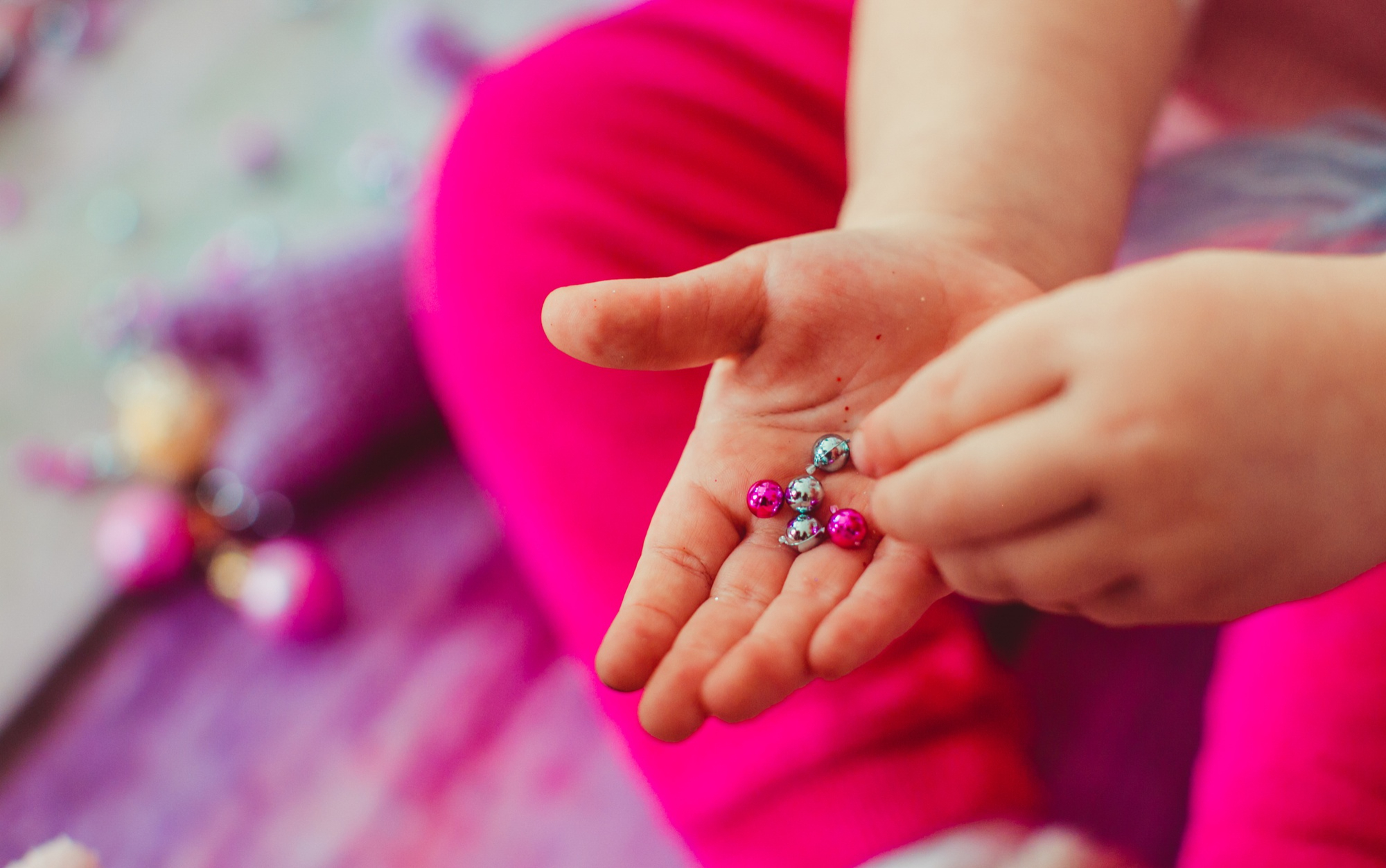
It was strung on thin gold chain. And all along it, one after another, were tiny plastic charms. Pink baby bottles. Blue baby bottles. Little pacifiers in pink and blue and yellow, each one no bigger than a fingernail. The kind of cheap plastic things you’d find in a party-favor bag at a baby shower. Someone had put real work into it. Every charm was attached with a tiny gold ring. They were evenly spaced. It was neat and careful and deliberate.
For a second, I couldn’t breathe.
It was like the air had been sucked out of the room. Like my lungs had forgotten how to work. I just sat there, holding the open box, staring down at those little bottles.
Then Susan laughed.
“Come on! It’s cute.”
Nobody else made a sound.
Not Tara. Not my mom. Not Anna. Not Dev, who always had something to say. The whole room was completely silent. I could hear the kitchen through the swinging door. Someone dropping a pan. A radio playing faintly. The hum of the refrigerators.
Susan reached across the table. She lifted one of the tiny bottles between two fingers, holding it up so everyone could see. It swung a little on the chain.
“Since you’ll never need the real ones,” she said, “I thought you should at least get to wear them.”
Thomas’s chair scraped against the floor.
He was on his feet so fast his napkin fell off his lap. “Mom. What the hell is wrong with you?”
My eyes burned. My throat burned. Everything burned.
But I refused to cry in front of her. I would not give her that. Not tonight. Not on my birthday. I kept my eyes open and fixed on a spot on the tablecloth where someone had spilled a drop of red sauce, and I held on to it like it was the edge of a cliff.
My mom put her hand on my arm. I could feel her fingers shaking.
Susan rolled her eyes. She let go of the little bottle, and it dropped back down against the velvet.
“It’s a joke,” she said. “She’s always so sensitive about this. Honestly, Thomas, sit down. You’re making a scene.”
“I’m making a scene?”
“Everyone’s so serious all the time. It’s exhausting. I thought it would lighten things up.”
“Lighten things up?” Thomas’s voice was getting louder. “She had two failed rounds of IVF. She had a miscarriage. She sat in a doctor’s office and got told she’ll probably never carry a baby. And you had jewelry made about it?”
“Don’t talk to me like that.”
“Somebody has to talk to you like that! Somebody should have done it years ago!”
“Thomas,” Anna said softly. “Sit down. Please.”
“No. I’m done sitting down. I’ve been sitting down for four years while she—”
And that was when my father-in-law quietly put down his fork.
It wasn’t loud. It was just a small click of metal against the plate. But somehow, in that room, it was louder than anything Thomas had said.
Everyone turned to look at him.
For years, Matthew had been the one saying, “That’s just how she is.” He’d said it at Easter. At the Fourth of July. At Christmas, in the kitchen, while I sat alone in the car in the snow. He’d said it so many times that I’d stopped expecting anything else from him. He was a nice man. A gentle man. And he was a man who had never once in thirty-eight years of marriage stood up to his wife in public.
Not this time.
He wiped his mouth with his napkin and folded it and set it beside his plate. Then he stood up. Slowly. He was sixty-four years old, and his knees were bad, and it took him a moment.
He walked around the table to where I was sitting. He didn’t look at me. He looked at the box in my hands.
He picked up the necklace.
He held it up in front of his face. The little bottles and pacifiers dangled from his big, rough carpenter’s fingers. They looked ridiculous there. They looked like something a child would make.
“You had this made?” he asked.
His voice was calm. Very calm.
Susan smiled. She sat up a little straighter. I could see it on her face. She thought he was on her side. She thought he was about to say, See, it’s just a joke, everyone calm down.
“Of course,” she said. “Took me forever to find those little bottles. I had to order them online. The first batch was the wrong size.”
Matthew stared at her.
He turned the necklace slowly in his hand. He looked at every single charm, one by one, like he was counting them.
Then he said, “Good. So you had plenty of time to think about what you were doing.”
Susan’s smile vanished.
“Matthew…”
“You had to find a jeweler,” he said. “You had to explain to someone what you wanted. You had to pick the colors. Wait for the shipping. Send back the wrong ones. Pick up the finished necklace. Buy the box. Wrap it. Carry it in here tonight in your purse. Sit through the whole dinner with it. Sit through the singing.” His voice didn’t rise at all. “That’s weeks, Susan. Weeks you had to think about it. And you did it anyway.”
“It’s a joke, Matthew.”
“No,” he said. “It isn’t.”
He reached for the velvet box. I let him take it. I don’t think I could have held on to it if I’d tried.
Thomas started to speak. “Dad—”
Matthew raised one hand without looking at him.
“No, son,” he said. “Let me handle this.”
He laid the necklace back into the box, carefully, the way you’d put something back that you’d borrowed. He smoothed it flat against the velvet with his fingertip.
Then Matthew did something none of us expected.
He took hold of his wedding ring.
It was a plain gold band, thick and worn and scratched from forty years of hammers and saws and sandpaper. I don’t think I’d ever seen him without it. He twisted it. It didn’t come off at first. It was tight. His knuckles were swollen from years of work. He twisted it harder, and his face tightened with the effort, and then it slid over the knuckle and came free.
He dropped the ring into the velvet box, right on top of the baby bottles.
He closed the lid.
And he slid the box across the table until it stopped in front of Susan’s plate.
Susan screamed.
It wasn’t a word. It was just a sound. High and sharp and terrible. She shot up from her chair so fast that her wine glass tipped over and spilled across the tablecloth, red soaking into white. She stared at the box like it was a snake.
Everyone in the room gasped.
My mom’s hand went to her mouth. Anna said, “Dad!” Greg half stood up. Tara grabbed Dev’s arm.
“What are you doing?” Susan’s voice was shaking. “Matthew, what are you doing? Put it back on. Put it back on right now.”
Matthew didn’t move.
“Everyone is looking,” she hissed. “Put it back on.”
“Now you care who’s looking,” he said.
For a long moment, nobody said anything.
The red wine dripped off the edge of the table onto the floor. Plip. Plip. Plip.
Susan’s face was white. Her lips were pressed so tight they’d almost disappeared. She looked at Anna, and Anna looked away. She looked at Thomas, and Thomas stared back at her with no expression at all. She looked at me.
I don’t know what she saw on my face. I don’t know what was on it.
“This is insane,” she said. “This is completely insane. Over a necklace?”
“It’s not over a necklace,” Matthew said.
“Then what is it over?”
He looked at her for a long time. Then he turned to the rest of us. To the table. To Anna and Greg and Tara and Dev and my mother and Thomas. And finally, to me.
“I’ve been married to this woman for thirty-eight years,” he said. “And I owe Emily an apology. I owe all of you one. But her most.”
“Matthew, don’t,” Susan whispered.
“I’ve been saying ‘That’s just how she is’ for four years.” He shook his head slowly. “It’s not just how she is. I know that better than anybody. I know exactly who she is. And I know why she’s doing this. And I let it happen anyway, because it was easier than dealing with it.”
“Matthew.“
“Sit down, Susan.”
She didn’t sit down. She stood there with her hands gripping the back of her chair.
Matthew looked at Thomas. “Your mother and I tried for six years before we had you.”
Thomas blinked. “What?”
“Six years,” Matthew said. “Before you. And three before Anna. She lost four babies. Four. The last one was at five months. A little boy. We named him David. He’s buried in the Catholic cemetery on Hawthorne Street, in a plot I paid for with money I didn’t have.”
The room was completely silent.
Anna’s hand was over her mouth. Thomas looked like someone had hit him in the chest.
“I didn’t know,” Thomas said. “Mom. You never… I didn’t know.”
Susan wasn’t looking at anyone. She was staring at the velvet box on the table.
“My mother,” Matthew went on, very quietly, “was not a kind woman. She thought Susan wasn’t good enough for me from the day I brought her home. And when the babies didn’t come, she had a lot to say about it. Every Sunday dinner. Every holiday. ‘Some women just aren’t built for it.’ ‘Maybe God knows something we don’t.’ ‘At least you have more time to keep the house clean.’ She said those things in front of me. In front of my brothers. In front of the priest, once.”
I felt something cold go down my spine.
Some women just aren’t built for it.
I’d heard those exact words before. In Susan’s living room. The day we told them.
“And what did you do?” I asked. My voice came out hoarse. It was the first thing I’d said since I opened the box. “When your mother said those things. What did you do?”
Matthew looked at me.
“I said, ‘That’s just how she is,'” he said.
Susan sat down.
Not like a person deciding to sit. Like her legs just stopped holding her. She dropped into her chair, and she put both hands flat on the wine-soaked tablecloth, and she stared at them.
“When Susan was pregnant with Thomas,” Matthew said, “my mother gave her a gift. At the baby shower. A little silver rattle. And she said, in front of everyone, ‘Let’s hope this one sticks.'”
Nobody breathed.
“Susan cried in the bathroom for an hour. I stood outside the door. I told her my mother didn’t mean anything by it.” He closed his eyes for a second. “And Susan came out and looked at me and said, ‘I will never forgive you for not standing up for me.’ And I don’t think she ever did.”
He looked across the table at his wife.
“I didn’t stand up for you then,” he said. “And I’ve regretted it every day of my life. And I’m not going to make the same mistake with my son’s wife. Not again. Not tonight.”
Susan looked up at him. Her eyes were wet. Her mascara was starting to run.
“You think I don’t know what I’m doing?” she said. Her voice was very small. Very different from the voice she’d used all night. “You think I don’t know?”
“I think you know exactly what you’re doing,” Matthew said. “That’s what scares me.”
She stood up. She grabbed her purse. She didn’t take the velvet box. She walked out of the back room without looking at anyone, pushing through the swinging door so hard that it banged against the wall.
We heard her heels on the tile floor of the main restaurant. Fast. Then the front door. Then nothing.
The velvet box sat in the middle of the table in a puddle of red wine.
Matthew stood there for a long time. Then he walked back to his own chair, but he didn’t sit down. He just put his hands on the back of it and leaned his weight there, like he was very tired.
“I’m sorry,” he said to me. “I’m so sorry, Emily. For tonight. For the last four years. For every time I said it didn’t mean anything.”
I nodded. I couldn’t talk.
“Dad,” Anna said quietly. “Should I go after her?”
He shook his head. “Let her go.”
“She’s going to drive home like that?”
“She’ll drive around,” he said. “That’s what she does. She drives for an hour and then she goes home and she goes to bed and she pretends it didn’t happen. She’s been doing it for thirty-eight years.” He looked at his bare hand. At the pale strip of skin where the ring used to be. “I’ve been letting her.”
Thomas walked around the table. For a second, I thought he was going to say something angry. Instead, he put his arms around his father. Awkwardly, because the Keller men were not huggers. Matthew stood stiff for a moment. Then his shoulders dropped, and he put one big hand on the back of his son’s head.
“You never told me,” Thomas said into his father’s shoulder. “About David. About any of it.”
“She didn’t want anyone to know.”
“I had a brother.”
“You had a brother,” Matthew said. “Yes.”
My mother drove me home. Thomas stayed behind to settle the bill and make sure his father was okay.
We didn’t talk much in the car. My mom kept glancing over at me. At a red light, she reached over and tucked a piece of hair behind my ear, the way she used to when I was little.
“You were very brave tonight,” she said.
“I didn’t do anything. I just sat there.”
“That’s what I mean,” she said. “You didn’t give her anything. You just sat there and held on. I don’t know how you did it.”
I looked down at my hands. They were still shaking.
“I wanted to throw it at her,” I said.
“I know.”
“I wanted to throw it in her face and scream. I wanted to tell her she’s a horrible person. I wanted to tell her I hope she chokes on it.”
“I know, honey.”
“I didn’t,” I said. “I just sat there. Like I always do.”
My mom was quiet for a moment.
“There’s a difference,” she said, “between sitting there because you’re afraid, and sitting there because you won’t let someone push you over. Tonight, you weren’t afraid. I could see it. You were just done.”
The light turned green. She drove on.
When we got home, I went upstairs and took off my birthday dress and put on Thomas’s old college sweatshirt and sat on our bed in the dark. Our dog, Biscuit, a fat old beagle with a gray face, jumped up and lay across my feet.
I’d left the velvet box on the table at Marco’s. I never wanted to see it again.
But I couldn’t stop seeing it anyway. Every time I closed my eyes. Those little pink and blue bottles. Those tiny pacifiers. The neat, careful way they’d been spaced along the chain.
Took me forever to find those little bottles.
I lay there and thought about a young woman crying in a bathroom at her own baby shower. About a silver rattle. About a little boy named David, buried on Hawthorne Street.
And I hated that I felt sorry for her.
I hated it so much.
Thomas came home a little after eleven.
He wasn’t alone.
I heard two sets of footsteps on the porch. The front door. Low voices. Then Thomas came upstairs and sat down on the edge of our bed.
“Dad’s downstairs,” he said. “He doesn’t want to go home. I told him he could stay in the guest room. Is that okay?”
“Of course it’s okay.”
“He brought the necklace,” Thomas said. “He said he didn’t want the restaurant to throw it away. I don’t know why. I told him to put it in the trash, but he wouldn’t.”
“And the ring?”
“He left it in the box.”
I sat up. “He’s really not going home?”
Thomas rubbed his face with both hands. “I don’t know, Em. I don’t know what’s happening. I found out tonight I had a brother who died before I was born. I found out my mom’s been… I don’t even know what to call it. Doing to you what was done to her. And my dad just sat me down in the parking lot and said, ‘I should have left thirty years ago, and I didn’t, because I was a coward.'”
“He said that?”
“He said that.” Thomas laughed, but there was nothing funny in it. “My dad. Who never says anything.”
I put my hand on his back. He was shaking.
“I’m sorry your birthday got ruined,” he said.
“My birthday didn’t get ruined.”
He turned and looked at me.
“Thomas,” I said. “Your father stood up in a room full of people and took off his wedding ring for me. Nobody’s ever done anything like that for me in my whole life. I’m not saying it was a good night. But it wasn’t ruined.”
He put his head down on my shoulder. We stayed like that for a long time.
I couldn’t sleep. Around one in the morning, I went downstairs for a glass of water.
Matthew was sitting on the back porch in the dark.
He was still in his dress shirt from dinner, the sleeves rolled up. He had a mug of coffee that had clearly gone cold a long time ago. Biscuit had followed me down, and she went straight to him and put her chin on his knee.
“Can’t sleep?” he said.
“No.”
“Me neither.”
I sat down in the other porch chair. The air was cool. Somewhere down the street, a dog was barking. The velvet box was sitting on the little table between us.
“Why did you bring it?” I asked.
He looked at it. “I don’t know. I didn’t want some busboy tossing my wedding ring in the garbage, I suppose.” He was quiet for a moment. “And I think I wanted you to decide what to do with it. The necklace, I mean. It’s yours. She gave it to you. You should be the one who gets rid of it.”
I didn’t touch the box.
“Can I ask you something?” I said.
“Anything.”
“Why tonight? You’ve watched her do this for four years. You saw what happened at Christmas. You saw Easter. What was different?”
He took a long time to answer.
“When she held up that little bottle,” he said finally, “she had her fingers exactly the way my mother used to hold her teacup. Pinky out. And she tilted her head the same way. And I sat there and I thought, she’s become her. She’s become the woman she hated most in the world. And I let it happen. Because every time she said something cruel, I said, ‘That’s just how she is,’ the same way I used to say it about my mother.” He looked out at the dark yard. “And I thought about Susan, twenty-six years old, crying in that bathroom. And I thought, somebody should have stood up for her. And nobody did. So now there’s no one to stand up for you, either, except Thomas. And he shouldn’t have to do it alone.”
I wiped my eyes.
“She knew,” he said. “When she had that necklace made. Some part of her knew exactly how it would feel. Because somebody did it to her first. That’s what I can’t forgive. Not that she’s hurting. God knows she’s been hurting for forty years. But that she knew. And she did it anyway.”
“Are you going to leave her?” I asked.
He turned his mug around in his hands.
“I don’t know,” he said. “I’ve never not been married to her. I don’t know how to be anything else.” He looked at the box. “But I know I can’t go back to being the man who says ‘That’s just how she is.’ I can’t be him anymore. And if that’s the only man she wants, then maybe I have to go.”
For the next week, Matthew slept in our guest room.
Susan called him eleven times the first day. He didn’t answer. On the second day, she called Thomas. Thomas answered once, listened for about thirty seconds, and then said, “Mom, I’m not doing this over the phone,” and hung up.
On the third day, she called Anna, and Anna came over to our house, furious.
“You need to go home, Dad,” she said, standing in our kitchen with Leo on her hip. “This is ridiculous. You’re sixty-four years old. You’re sleeping in a guest room like some teenager who ran away.”
“I’m not going home yet, Anna.”
“She’s a mess. She hasn’t gotten out of bed. She’s not eating. She keeps crying and saying you humiliated her in front of everyone.”
“I did humiliate her,” Matthew said. “In front of everyone. The way she’s been humiliating Emily in front of everyone for four years.”
Anna’s face tightened. She looked at me. “I know what she did was awful, Em. I know. I’m not defending it. But she’s still my mother.”
“I know,” I said.
“And you’re just going to let him stay here? And not go home to her?”
“Anna.” Thomas stepped between us. “Don’t put this on Emily. Dad’s a grown man. He decides where he sleeps.”
Leo started fussing. Anna bounced him on her hip. She looked tired. She looked like she hadn’t slept either.
“Did you know?” I asked her. “About David?”
She shook her head. “No. I didn’t know about any of it. I didn’t know there were other babies.” Her voice cracked. “I had a whole brother, and nobody ever told me.”
Leo reached out toward me with one fat little hand. He was fifteen months old. He had Thomas’s nose. He grabbed a piece of my hair and pulled, and I let him, and I made a funny face, and he laughed.
Anna watched us for a long moment.
“She was different with Leo,” she said quietly. “When I was pregnant. She was so worried. She called me every single day. She made me promise to tell her if anything felt wrong. I thought she was just being overbearing.” She looked at her son. “Now I think she was terrified.”
That weekend, Thomas and I had a conversation we’d been avoiding for over a year.
We were sitting on the living room floor, surrounded by papers. Bills, mostly. And under them, a thick folder we’d both been pretending didn’t exist. Information from an agency. Adoption. Foster care. Surrogacy options we couldn’t afford.
“I keep thinking about the necklace,” I said.
“Me too.”
“Not because it hurt. I mean, it did. But because of what it said. Since you’ll never need the real ones.” I pulled at a loose thread on the rug. “Like that’s the end of the story. Like if I can’t carry a baby, then I don’t get to be a mother. Period. And I think, part of me believed her. Part of me has been believing that for a year.”
Thomas didn’t say anything. He just waited.
“I don’t want to believe it anymore,” I said.
He reached over and pulled the folder out from under the bills. He set it between us.
“We don’t have to decide anything today,” he said.
“I know.”
“We don’t have to decide anything this year.”
“I know.” I opened the folder. On top was a pamphlet with a picture of a smiling family on it. Two dads and a little girl with pigtails. “But I want to start reading it. Together. Is that okay?”
He smiled. It was the first real smile I’d seen on his face since my birthday.
“Yeah,” he said. “That’s okay.”
Susan came to our house on a Tuesday afternoon, twelve days after my birthday.
I was home alone. Thomas was at work. Matthew had gone to look at a small apartment near the lumber yard where he still worked two days a week, even though he was supposed to be retired. I was in the kitchen, making soup, when the doorbell rang.
I opened the door, and there she was.
She looked terrible. I had never seen Susan look terrible. She always had her hair done and her makeup on, even to go to the grocery store. Now she was wearing an old cardigan and no lipstick, and her hair was flat, and there were dark circles under her eyes.
She was holding the velvet box.
Matthew must have brought it back to her. Or maybe she’d come by to get it while I was out. I didn’t know. I didn’t ask.
“Is he here?” she asked.
“No.”
She nodded. She looked relieved. And then scared.
“Can I come in?” she said. “I won’t stay long. I just… I need to say something. To you. Not to him. To you.”
Every part of me wanted to shut the door.
But I thought about a young woman in a bathroom. I thought about a little boy named David. And I stepped aside.
She sat at my kitchen table. I didn’t offer her coffee. I stood by the stove with my arms crossed.
She put the velvet box on the table in front of her. She didn’t open it.
“I’m not good at this,” she said.
“At what?”
“Apologizing.” She laughed, a small, broken sound. “Matthew would tell you I’ve never done it once in thirty-eight years. He’d be right.”
I waited.
She looked down at her hands. “I don’t know how to start.”
“Why did you do it?” I asked.
She flinched. Then she looked up at me. Her eyes were red.
“Because you have him,” she said.
I didn’t understand. “What?”
“Thomas. You have Thomas.” Her voice was shaking. “Every time I said something, he stood up. Every single time. At Easter. At Christmas. At that stupid barbecue. He stood up and said, ‘Mom, stop.’ He never let one single thing slide. And I would look at you, sitting there, with him right beside you, and I would think, Nobody ever did that for me.“
I stared at her.
“When I was losing babies,” she said, “I had nobody. Matthew’s mother said horrible things to me every week. And Matthew just sat there. And my own mother told me I should pray more. And my friends stopped calling because they didn’t know what to say. I lost David at five months, and three days later, I was back at Sunday dinner, passing the potatoes to a woman who told me maybe God knew something about me that I didn’t.” She wiped her face with her sleeve. “And then you came along. And you were going through the same thing. And you had this man who would walk through fire for you. And I was so…”
She couldn’t finish.
“Jealous,” I said.
“Jealous,” she said. “Of a woman who couldn’t have babies. What kind of person does that make me?”
I didn’t answer.
“I told myself it was just jokes,” she said. “I told myself you were too sensitive. I told myself you had it easier than I did, so you could take it. And every time Thomas stood up for you, I got angrier. Because I wanted somebody to stand up for me. Forty years ago. And nobody did. And it was too late.” She pressed her hands against her eyes. “And then I was in that craft store, looking at baby shower favors for Leo’s birthday party, and I saw those little plastic bottles. And I thought of the silver rattle. And something in me just… I bought them. I went home and I made that necklace myself, at my kitchen table. It took three nights. And the whole time, I knew. I knew exactly what it would do to you. I knew because it was done to me.”
She opened her eyes and looked at me.
“And I did it anyway,” she said. “Matthew’s right. That’s the part I can’t take back.”
The soup on the stove was starting to boil over. I turned it off. My hands were shaking. I held on to the edge of the counter.
“Do you know what the worst part was?” I said. “Not the necklace. Not even what you said at the dinner. It was that I started believing you.”
She looked up.
“Some women just aren’t built for it. I heard that in my head every day for a year. When I was trying to fall asleep. When I saw a pregnant woman at the grocery store. When I went to the bathroom at work and saw the stall where I lost the baby. I heard it in your voice.” My voice cracked. “I’m thirty-five years old, and I’ve been walking around feeling like a broken machine. Like something that didn’t come out right at the factory. And you made that worse. Every time. On purpose.”
“I know,” she whispered.
“You can’t just come here and tell me you had it hard too, and expect that to fix it.”
“I don’t expect anything to fix it,” she said. “I don’t. I just… I didn’t want you to spend another day thinking it was about you. It was never about you. It was about me. It was about her. It was about a bathroom forty years ago.” She put her hand flat on the velvet box. “I’m not asking you to forgive me. I don’t think I would, if I were you.”
We looked at each other across my kitchen. Two women who’d lost babies. Who’d sat in bathrooms and counted floor tiles. Who’d been told we weren’t built right.
The only difference between us was who’d stood beside us when it happened.
“What do you want, Susan?” I asked finally.
She opened the velvet box.
The necklace was there. And on top of it, Matthew’s wedding ring.
She took the ring out first. She held it in her palm for a moment. Then she put it in her cardigan pocket.
Then she reached into her purse and took out a small pair of scissors. The kind people keep in sewing kits.
She picked up the necklace, and she started cutting.
One charm at a time. She cut through each tiny gold ring and let the pieces fall onto my kitchen table. A pink bottle. A blue pacifier. A yellow one. Snip. Snip. Snip. Her hands were shaking. It took her a long time. I didn’t help her. I just watched.
When she was finished, there was a little pile of plastic on the table, and an empty gold chain.
She pushed the pile toward me.
“You decide what to do with them,” she said. “I don’t get to decide anything anymore.”
I gathered them up in my hand. They weighed almost nothing. Fourteen bottles. Twelve pacifiers. I’d never counted before.
I walked over to the trash can under the sink. I opened it. I stood there for a moment with my hand over it.
Then I stopped.
I closed my hand again. I don’t know why. I put them in my pocket instead.
Susan watched me. She didn’t ask.
“There’s a cemetery on Hawthorne Street,” I said.
She went very still.
“Does anyone go there?” I asked. “To see David?”
She shook her head slowly. “Matthew used to. I never could. It’s been… God, I don’t know. Twenty years since I went. Maybe more.”
I thought about it for a long moment.
“I’d go with you,” I said. “If you wanted.”
Her face crumpled. She put both hands over her mouth. She made a sound I recognized. The same sound I’d made in that parking garage, with my face against Thomas’s jacket.
I didn’t hug her. I wasn’t ready for that. But I pulled out a chair and sat down across from her, and I put a box of tissues on the table between us, and I stayed there until she was done.
We went on a Saturday in November. Just the two of us. Thomas offered to come. Matthew offered to drive. I told them both no.
The cemetery on Hawthorne Street was small and old, with an iron gate and a lot of crooked stones. Susan walked straight to it without looking at a map. She knew exactly where it was. She’d always known.
The stone was very small. It was lying flat in the grass, and it was half covered with dead leaves. Susan knelt down in her good slacks and brushed the leaves off with her bare hands.
David Matthew Keller. Our son. Forever held.
There was only one date.
Susan stayed on her knees for a long time. She didn’t cry. She just touched the letters, one by one, with her fingertip, the way Matthew had touched the charms on the necklace at Marco’s.
“I was so angry at him,” she said quietly. “For dying. Isn’t that stupid? He was five months along. He didn’t do anything. But I was so angry at him, and then I was so angry at myself for being angry. And then I just stopped coming. Because it was easier to be angry at everyone else.”
I knelt down next to her. The grass was cold and damp.
I took the little plastic bottles and pacifiers out of my coat pocket.
Susan looked at them. Then at me.
“I don’t want to throw them away,” I said. “I thought about it. But throwing them away feels like saying they’re garbage. Like what they stood for was garbage. And it’s not. Wanting a baby isn’t garbage. Losing one isn’t garbage.”
“Then what do you want to do with them?”
I didn’t answer right away. I dug a little hole in the dirt beside David’s stone with my fingers. It was easy. The ground was soft from the rain.
I put the charms in the hole. All of them. The pink and the blue and the yellow. And I covered them with dirt and pressed it flat with my palm.
“There,” I said. “They can stay with somebody who was wanted.”
Susan made a sound. She put her hand on top of mine, on top of the dirt. Her hand was cold and thin. Neither of us moved for a long time.
“I’m sorry,” she said. “I’m so sorry, Emily.”
It was the first time she’d ever called me by my name without it sounding like an accusation.
“I know,” I said.
I didn’t say I forgave her. I didn’t know yet if I did. But I didn’t take my hand away.
Matthew moved back home in January.
It wasn’t simple. It wasn’t a movie. He didn’t show up at the door with flowers. Susan didn’t run into his arms. Thomas told me later that his father had set rules. Real ones. They were going to see a counselor. Every week. No skipping. And if she ever said anything like that to me again, to anyone again, he was gone for good. No second chances.
“And she agreed?” I asked.
“She agreed,” Thomas said. “Dad said she didn’t even argue. She just said, ‘That’s fair.'”
He put the ring back on the first day they went to counseling. Anna told me that. She said he’d come out of the office and sat in the car and twisted it back on over his swollen knuckle, and it had taken him almost five minutes, and Susan had sat in the passenger seat and watched him do it without saying a word.
“Mom cried the whole way home,” Anna said. “Dad didn’t. He just held her hand at every red light.”
In March, Susan called me.
Not Thomas. Me.
“I don’t want to bother you,” she said. Her voice was careful, the way it had been since November. Like she was walking on ice. “I just wanted to ask. How are things going? With the agency. Thomas mentioned you’d started classes.”
We had. Thomas and I had been going to foster care certification classes every Thursday night for six weeks. We sat in a church basement with eleven other couples and one single woman who was a retired nurse, learning about trauma and attachment and how to fill out forty different forms.
“It’s going okay,” I said. “It’s a lot. But it’s good.”
“Good,” she said. “That’s good.” She was quiet for a moment. “I wanted to ask. And you can say no. I’d understand if you said no. But if you ever need anyone. For babysitting, or emergencies, or rides to appointments. Or just an extra pair of hands. I’d like to be that. If you’d let me.”
I sat on the edge of my bed with the phone against my ear.
“I’d have to think about it,” I said honestly.
“Of course.”
“I’m not saying no.”
“I know.” She cleared her throat. “Thank you, Emily. For thinking about it.”
Our first placement came in July.
Her name was Maya. She was four years old. She came to us with one plastic grocery bag of clothes, a stuffed rabbit missing an ear, and a caseworker who looked like she hadn’t slept in a week.
Maya didn’t talk for the first three days. She sat on the couch with the rabbit in her lap and watched us with big, careful eyes. She flinched when Thomas walked into a room too fast. She hid food in her pillowcase. The first night, she wet the bed and then tried to hide the sheets under the bathroom sink, and when I found them, she started shaking.
I didn’t say anything about the sheets. I just knelt down and said, “Hey. Want to help me put these in the washing machine? It makes a really funny sound.”
She stared at me. Then she nodded.
The washing machine did make a funny sound. It thumped and groaned like it was angry. Maya stood beside it with her hand pressed against the front, feeling it shake. On the fourth day, she laughed at it.
It was the first sound I’d heard her make.
On the fifth day, she climbed into my lap while I was reading on the couch and fell asleep there with the rabbit squashed between us. I didn’t move for two hours. My leg went numb. I didn’t care.
Thomas found us like that when he came home from work. He stood in the doorway for a long time.
“Em,” he whispered.
“I know,” I whispered back. “I know.”
Susan met Maya two weeks later.
I’d thought about it for a long time. I talked to Thomas. I talked to our caseworker. I talked to Matthew, who said, “It’s your call, kiddo. Whatever you decide, I’ll back it.” And finally, I decided yes.
Susan came over on a Sunday afternoon. She didn’t bring a big gift. She’d asked me first what was okay, and I’d said nothing fancy. Nothing that would overwhelm her.
She brought a box of sidewalk chalk.
She sat down on our front walk in her good slacks, the way she’d sat in the grass on Hawthorne Street, and she started drawing. Flowers first. Then a sun. Then a very bad dog.
Maya watched from the porch for a long time, holding my hand.
“That’s Grandma Susan,” I told her. “She’s Thomas’s mom.”
Maya looked up at me. “Is she nice?”
I thought about it. I thought about the velvet box. The red wine on the tablecloth. The scissors. The little hole in the dirt beside a stone with only one date on it.
“She’s trying really hard to be,” I said. “That’s the best any of us can do.”
Maya thought about that. Then she let go of my hand and walked down the steps. She stood beside Susan and looked at the very bad dog.
“That doesn’t look like a dog,” she said.
Susan looked up at her. “No? What does it look like?”
Maya squinted. “A potato.”
Susan laughed. A real laugh. Surprised and loud. And then she held out the box of chalk.
“Show me how you’d draw a dog, then,” she said.
Maya took a piece of blue chalk and knelt down beside her.
I stood on the porch and watched them. Matthew came up beside me. He’d driven Susan over and had been waiting in the car, giving her space. He put his big hand on my shoulder.
“You didn’t have to do this,” he said quietly.
“I know.”
“She doesn’t deserve it.”
“Maybe not,” I said. “But Maya deserves a grandma who draws dogs with her. And I think Susan’s the kind of person who needs to be trusted with something before she can learn how to be trustworthy.” I shrugged. “Or maybe I’m just an idiot.”
“You’re not an idiot,” Matthew said. “You’re the bravest person in this family.”
I didn’t say anything. I just leaned against him a little, and he let me.
On my thirty-sixth birthday, we didn’t go to Marco’s.
We had dinner in our backyard. Tara and Dev. My mom, who drove up with a cake she’d made herself, lopsided and covered in too much frosting. Anna and Greg and Leo, who was two and a half now and running everywhere. Matthew, who grilled burgers and burned them and insisted they were “supposed to be like that.” Susan, who sat at the end of the picnic table and didn’t say anything unkind the entire night.
And Maya. Five years old now. Still with us. Still with the one-eared rabbit, which went everywhere. She’d drawn me a birthday card that afternoon. It was a picture of me, Thomas, Maya, and Biscuit, all standing in front of our house. I had purple hair. Thomas had no neck. Biscuit was bigger than the house.
“It’s perfect,” I told her, and I meant it.
After the cake, Susan came over to me. She was holding a small box. Not velvet. Just plain cardboard, tied with a piece of string.
The whole table got quiet. I saw Thomas stiffen. I saw Matthew put his fork down. I saw Anna glance nervously at her mother.
Susan saw it too. Her face flushed.
“It’s all right,” she said quietly. “I understand. I’d be looking at me that way too.”
She held the box out to me.
I untied the string. I opened it.
Inside was a small silver rattle. Old. Tarnished at the edges. With a tiny dent on one side.
I looked up at her.
“It’s the one,” she said. “From my mother-in-law. From the baby shower. I kept it all these years. I don’t even know why. I hated it. I kept it in the bottom of my jewelry box for thirty-six years, and every time I saw it, I felt sick.” She took a breath. “I don’t want it to mean that anymore. I thought maybe Maya could have it. And it could mean something else. It could mean a child who’s wanted. Just wanted. By people who chose her.”
I held the rattle in my hand. It was cold and heavy.
Maya came up beside me. She looked at it curiously. “What’s that?”
“It’s a rattle,” I said. “For babies.”
“I’m not a baby.”
“I know. But it’s very old. Grandma Susan kept it for a long time. She wanted you to have it.”
Maya took it. She shook it. It made a soft, tinny sound. She shook it again, and grinned.
“It sounds like the washing machine,” she said.
Everyone laughed. Even Susan. Especially Susan.
Maya ran off to show Leo. The table started talking again. Dev started telling a story. Matthew went back to his burned burgers.
Susan stood next to me for a moment longer.
“Thank you,” she said. “For letting me give her that.”
“Thank you,” I said. “For giving it.”
She hesitated. Then, very carefully, like she was afraid I’d pull away, she put her hand on my arm.
I didn’t pull away.
I still think about that night at Marco’s sometimes.
I think about the velvet box, and the little pink and blue bottles, and Susan’s fingers holding one up for everyone to see. I think about the way the room went silent. About Thomas’s chair scraping back. About Matthew twisting that ring off over his swollen knuckle.
For a long time, I thought the story was about what Susan did to me. About the cruelty. About how some people are just like that.
But now I think it’s about something else.
I think it’s about what happens when nobody stands up. How the hurt doesn’t disappear. It just waits. It sits in the bottom of a jewelry box for thirty-six years, getting heavier. And then one day, someone opens that box and hands the hurt to someone new.
Susan didn’t become cruel because she was born that way. She became cruel because she was hurt, and everyone around her said, That’s just how she is. And then she said it too, about herself. For forty years.
It only stopped when one person decided not to say it anymore.
Matthew told me once, on the back porch, that he’d waited his whole life to be brave, and it turned out bravery was just a man taking off a ring at a dinner table. That’s all it was. One small thing, at the right moment, that nobody expected.
I don’t know if I’ll ever carry a baby. Dr. Okafor still says almost. She still won’t say completely.
But I have a five-year-old who draws me with purple hair. I have a husband who stood up every single time. I have a father-in-law who finally stood up too. And I have a mother-in-law who drove to a cemetery with me on a cold Saturday and knelt in the dirt beside a little stone with only one date.
It’s not the family I pictured when I was painting that ugly Sea Glass wall with Thomas, back when we were young and thought everything would be easy.
But it’s mine.
Last week, Maya asked me why the silver rattle had a dent in it.
I thought about how to answer. About Susan crying in a bathroom, forty years ago. About a little boy named David. About a necklace, and a pair of scissors, and a handful of plastic charms buried in the soft November ground.
“Because it’s old,” I said. “And old things get dented sometimes.”
She turned it over in her small hands.
“Is it broken?”
“No,” I said. “It still works. Shake it.”
She shook it. It made its soft, tinny sound.
“See?” I said. “Dented things still work. Sometimes they work better. Because they know what it’s like.”
She looked at me for a long moment, the way she did when she was deciding whether to believe something.
Then she climbed into my lap with the rabbit and the rattle, and I held her, and neither of us said anything for a long time.

Specialty: Quiet Comebacks & Personal Justice
David Reynolds focuses on stories where underestimated individuals regain control of their lives. His writing centers on measured decisions rather than dramatic outbursts — emphasizing preparation, patience, and the long game. His characters don’t shout; they act.