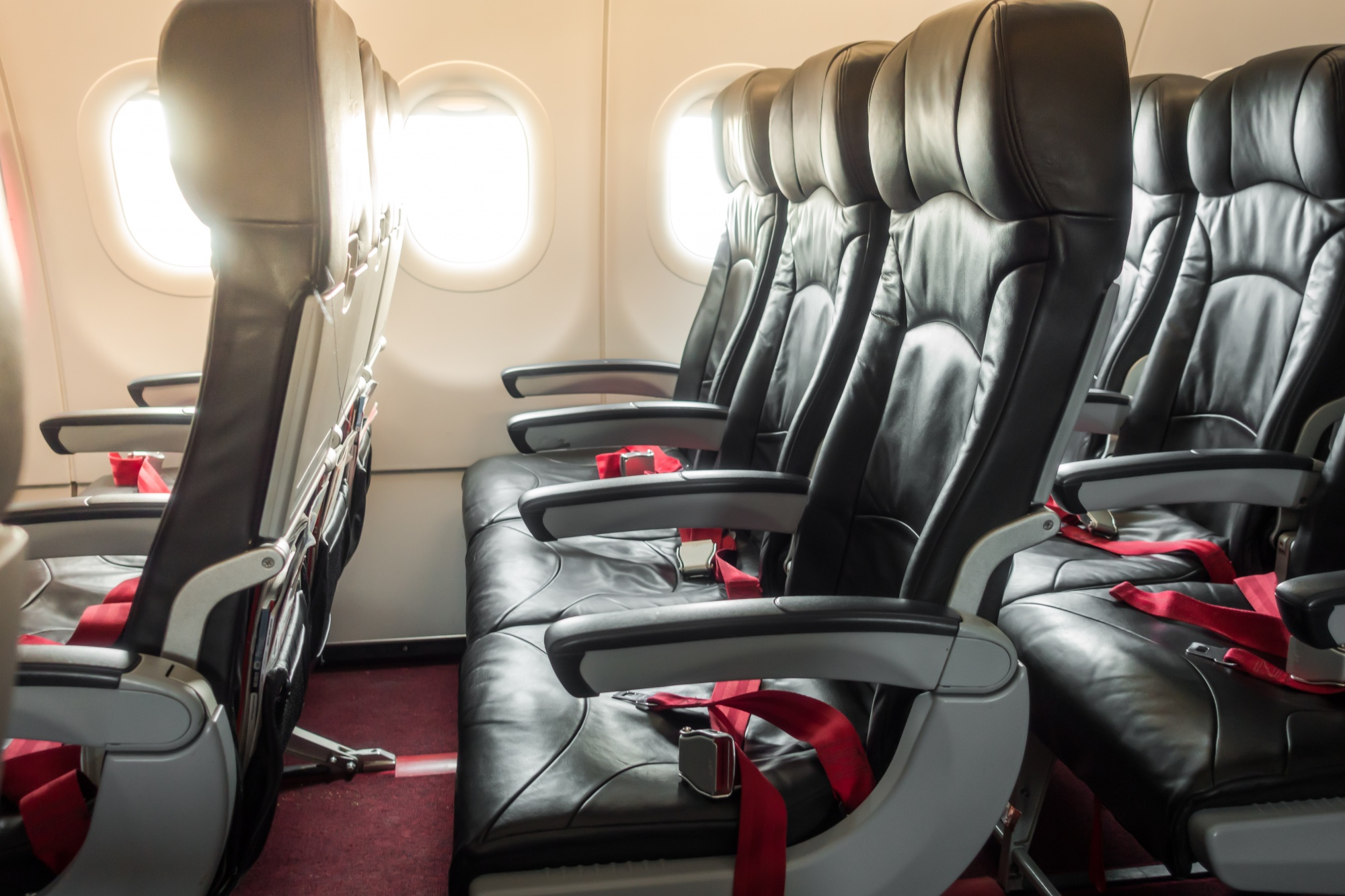
Seat 34A
“I’d like to change my seat, please.”
My grandmother said it very quietly. Politely. The way she says everything. She was standing at the gate counter at Boston Logan with her boarding pass in one hand and her old brown leather purse pressed against her chest with the other.
I was standing right behind her, holding both our carry-ons and a coffee I hadn’t touched. I thought I’d heard her wrong.
The gate agent looked at the boarding pass. Then she looked up at Grandma. Then she looked at me.
“Ma’am,” she said, “this is a first-class ticket. Seat 3A.”
“I know,” Grandma said. “I’d like to move to the back, please. Seat 34A, if it’s open.”
The agent typed something. “It is open. But ma’am, you understand that if you give up this seat—”
“I understand.”
“You won’t get a refund for the difference.”
“That’s fine, dear.”
I stepped forward. “Grandma. Wait. What are you doing?”
She didn’t turn around. She just watched the gate agent type.
“Grandma.”
The printer on the counter buzzed. A new boarding pass came out. The agent handed it across the counter. Grandma took it, looked at it for a long moment, and then slid it very carefully into the side pocket of her purse. Next to something else. Something folded and yellow.
“Thank you,” she said to the agent. “You’ve been very kind.”
Then she turned around and looked at me.
“Grandma,” I said. “That ticket cost me a fortune.”
“I know, sweetheart.”
“Then why would you give it up?”
She reached over and squeezed my hand. Her fingers were cold. Her skin was thin and soft, like old paper.
“I’d rather sit in the back,” she said.
That was all she’d say.
I need to explain about the ticket.
My grandmother, Ruth Walsh, turned eighty that month. She lives alone in a small gray house in Dorchester that she’s lived in for fifty-four years. She still gardens. She still does the crossword in pen. She still calls me every Sunday at exactly six o’clock to ask if I’m eating enough vegetables.
I’m twenty-seven. My name is Sam. I’m a nurse at Mass General. I work three twelve-hour shifts a week and pick up extra ones when I can. I don’t have a lot of money. I have student loans that will probably outlive me.
But I’d been saving for this for almost a year.
Because a year ago, on her seventy-ninth birthday, I’d asked Grandma what she wanted for her eightieth. I was expecting her to say something small. A new garden hose. A sweater. Dinner at the Italian place on Adams Street where she’s been ordering the same chicken parm since the Carter administration.
Instead, she put down her fork and said, “I’d like to go to San Francisco.”
I stared at her. “San Francisco?”
“To see your mother.”
My mom lives in California. She moved out there before I was born, when she married my dad. I grew up in Oakland. I only moved back east for nursing school, and I stayed because of Grandma. Because she was alone, and I didn’t like the idea of her alone.
“Grandma,” I said, “you haven’t flown in…”
“Twenty-seven years,” she said.
“Mom always comes to you.”
“I know.”
“You said you’d never get on a plane again.”
“I know what I said.” She picked her fork back up. “I’d like to go on the fourteenth of next March. On Flight 212. The morning flight. If it still exists.”
I laughed. I thought she was joking. “That’s pretty specific.”
“Yes,” she said. “It is.”
She wasn’t joking.
I looked it up that night. Flight 212 still existed. Boston to San Francisco. It left at 7:40 in the morning. It was on a different kind of plane now, a bigger one, but it was the same number. The same route.
I didn’t ask why. I figured old people get attached to strange things.
I just started saving.
And when I finally booked it, I booked her in first class. Seat 3A. Big leather seat. Real silverware. Warm towels. A seat that turns into a bed if you push the button. It cost more than two months of my rent. I didn’t care. My grandmother was eighty years old and she was finally going to get on a plane again, and I wanted her to be comfortable. I wanted her to be treated like a queen.
I booked myself in 3B, right next to her. Same price. I put it on my credit card and didn’t look at the total.
And now she’d given it away at the gate without even blinking.
“You’re mad,” Grandma said.
We were standing in line to board. She was holding my arm. She walks with a cane now, a wooden one with a brass handle that used to belong to her own mother, but she still likes to hold on to somebody in crowds.
“I’m not mad,” I said.
“You’re a little mad.”
“I’m a little confused.” I shifted the carry-on bags on my shoulder. “I don’t understand. That seat is so much nicer. You’d have legroom. You’d have a real meal. You could sleep. Now you’re going to be squished next to some stranger for six hours.”
“I don’t mind strangers.”
“The seats in the back don’t even recline all the way.”
“I don’t need to recline.”
“Grandma.”
She patted my arm.
“Sam,” she said. “You did something very generous for me. I want you to know I understand that. I know how hard you work. I know how many extra shifts that ticket cost you.” She looked up at me. Her eyes were very blue. Very clear. “I’m grateful. I’m so grateful. It’s the kindest thing anybody’s done for me in years.”
“Then why—”
“Because there are some things,” she said, “that are more important than being comfortable.”
The line moved forward. The gate agent called first class. I stood there holding my boarding pass for 3B.
“Go on,” Grandma said. “Go sit in your nice seat. Have a warm towel. I’ll be fine.”
“I can switch too. I’ll sit with you.”
“No.” She said it firmly. “No, sweetheart. I’d like to sit back there by myself. Please.”
I looked at her.
She’d never asked me for anything. Not once in twenty-seven years. Not money. Not rides. Not help with anything, even when she clearly needed it. She’d shovel her own walk in a snowstorm at seventy-eight years old rather than call me.
And now she was asking me to let her sit by herself in the back of a plane.
“Okay,” I said.
She squeezed my arm again. “Thank you.”
We ended up twelve rows apart. Well, more than that. Thirty-one rows. But it felt farther.
First class was everything the website said it would be.
The seat was huge. Soft gray leather. A little privacy wall. A pillow that was actually a pillow and not a paper bag full of air. A flight attendant named Marcus brought me a glass of orange juice before we even pushed back from the gate. In a real glass.
I sat there holding it and felt terrible.
The seat next to me, 3A, the window seat I’d bought for Grandma, stayed empty until the last minute. Then a businessman in a gray suit sat down in it. He was on his phone. He didn’t look out the window once.
I kept turning around in my seat. Trying to see the back of the plane. I couldn’t. There was a curtain.
The plane pushed back. It taxied. The engines roared. We lifted off, and Boston dropped away beneath us, the harbor and the bridges and the tiny gray houses.
I thought about Grandma back there in 34A. Holding her purse. Looking out the window at the city she’d lived in her whole life, getting smaller and smaller.
I thought about why she hadn’t flown in twenty-seven years.
I didn’t really know. That’s the strange part. I’d never really asked.
Here’s what I knew about my grandfather.
His name was Frank Walsh. He was an aircraft mechanic. He worked for the airline for thirty-four years, at the big maintenance hangar at Logan. He fixed engines. My mom says he could tell what was wrong with a jet engine just by listening to it, the way a doctor listens to your heart.
He died of a heart attack the week I was born. March of 1999. I was born on the thirteenth. He died on the fourteenth.
That’s all anybody ever told me.
When I was little, I’d ask about him sometimes. Grandma would get quiet. My mom would change the subject. There were no pictures of him on the walls of my mom’s house in Oakland. At Grandma’s house, there was only one. In her bedroom, on the dresser. A black-and-white photo of a young man in a sailor’s uniform, laughing, with his hat pushed back on his head.
And there was the pin.
It was a tiny silver pin shaped like a pair of wings. Old. A little tarnished. The kind of wings they used to give to kids on airplanes, back in the day. Junior pilot wings. It was pinned to Grandma’s brown leather purse, right next to the zipper. It had been there my whole life. I used to play with it when I was little, sitting on her lap in church. I’d rub my thumb over the little wings and try to make them fly.
“Where’d you get this, Grandma?” I asked once. I was maybe six.
She was quiet for a long time.
“Your grandfather gave it to me,” she said. “A long time ago.”
“Why?”
“Because I was scared,” she said. “And he wanted me to be brave.”
That was all.
I never asked again. I was six. I forgot about it. The pin was just there. Like her cane. Like her reading glasses on the chain around her neck. It was just part of her.
About two hours into the flight, I couldn’t stand it anymore.
I unbuckled my seatbelt. I walked back through the curtain, past business class, into economy. It was like walking into a different airplane. The seats were narrow and packed together. People were squeezed in with their knees against the seat in front of them. A baby was crying somewhere. It smelled like coffee and somebody’s tuna sandwich.
I walked all the way to the back. Row 34.
Grandma was sitting by the window. She was staring outside. The sky was bright blue. Far below, there was a flat quilt of brown and green farmland. Ohio, maybe. Or Indiana.
She had her purse clutched tightly against her chest with both hands. Her knuckles were white.
Next to her, in the middle seat, 34B, was a little boy. Maybe eight or nine. Skinny. Red hair. Freckles. He had a lanyard around his neck with a plastic badge on it. I recognized it. It was the kind the airlines give to kids flying alone. Unaccompanied Minor. His name was written on it in black marker. Oliver.
He was holding a coloring book. He wasn’t coloring. He was just holding it. His knee was bouncing up and down, fast.
The aisle seat was empty.
“Grandma,” I said. I crouched down in the aisle next to the empty seat. “You okay?”
She turned from the window. For a second, she looked like she didn’t know who I was.
Then she smiled. “Perfectly.”
But she wasn’t.
Her hands were trembling. I could see it. The purse was shaking against her chest. And her eyes were red around the edges, like she’d been crying.
I’m a nurse. I know what people look like when they’re not okay.
“Do you need anything? Water? Are you feeling sick?”
“I’m fine, sweetheart.”
“Your hands are shaking.”
She looked down at them. She seemed surprised. She held the purse tighter.
“I’m just a little nervous,” she said. “It’s been a long time.”
Next to her, the little boy looked up from his coloring book.
“I’m nervous too,” he said.
Grandma turned and looked at him. Her face changed. It got soft. The way it used to get when I was little and fell off my bike.
“Are you?” she said.
He nodded. “It’s my first time flying by myself. My mom put me on in Boston. My dad’s picking me up in San Francisco. They’re divorced.” He said divorced very carefully, like it was a word he’d only recently learned how to say. “I don’t like the bumpy parts.”
“Neither do I,” Grandma said. “Would you like to know a secret?”
He nodded.
She leaned closer to him. “The bumpy parts are just the airplane going over little hills in the sky. Like driving over a bumpy road. The plane is very strong. It was built for bumpy roads.”
“How do you know?”
“My husband used to fix airplanes,” she said. “For thirty-four years. He told me.”
Oliver thought about that. “Did he fix this one?”
Grandma looked out the window for a long moment.
“Maybe,” she said softly. “Maybe he did.”
I crouched there in the aisle and watched them. My grandmother and a scared little red-haired boy, talking about bumpy roads in the sky.
“I’m okay,” Grandma said to me, without looking away from Oliver. “Go back to your seat, Sam. I’m okay. I’ve got company.”
I went back to my seat.
I didn’t drink the champagne they brought me. I just sat there and looked at the curtain.
About twenty minutes later, the cockpit door opened.
I was sitting in 3B, right up front. I had a clear view. The door opened, and one of the pilots stepped out. He was younger than I expected. Maybe thirty-five. Tall. Dark hair cut short. He had a white shirt with gold stripes on the shoulders. Three stripes. First officer, I think.
He didn’t go to the bathroom. He stopped in the little galley by the cockpit door and spoke quietly to a flight attendant. A woman with gray hair in a neat bun. I couldn’t hear what he said. But I saw her face. She looked surprised. Then she nodded. And she pointed.
Toward the back of the plane.
The pilot started walking down the aisle.
He walked slowly. Row by row. He wasn’t looking at the rows like he was checking on things. He was looking at the passengers. Their faces. Their hands. Their laps. Like he was looking for somebody.
He went through the curtain into economy.
I don’t know why I got up. I just did. Something in my chest went tight. I unbuckled my seatbelt and followed him.
He was halfway through economy when I came through the curtain. He was still walking slowly. Still looking. People were turning in their seats to stare at him. You don’t usually see the pilot walking through the cabin in the middle of a flight.
He passed row twenty. Row twenty-five. Row thirty.
At row thirty-four, he stopped.
Grandma was still looking out the window. Oliver was coloring now. A dinosaur. Purple. Grandma had his crayon box open on her lap.
The pilot stood in the aisle beside the empty seat.
Grandma slowly looked up.
And the pilot stared at her like he’d seen a ghost.
I mean it. I’ve worked in an emergency room. I’ve seen people get bad news. I’ve seen people see something they can’t believe. The pilot’s face went completely still. His mouth opened a little. The color drained right out of his cheeks.
He didn’t say anything for a long moment.
Then his eyes dropped.
To her purse.
To the tiny silver pin near the zipper. The wings. The ones I’d rubbed with my thumb in church when I was six.
The pilot crouched down in the aisle. Slowly. Like his knees weren’t working right. He was at eye level with the pin now.
“Where did you get those?” he asked.
His voice was shaking.
Grandma didn’t answer right away. She looked at his face. Really looked at it. For a long time.
Then the pilot looked up at her. He swallowed.
“Mrs. Walsh,” he said. “Why did you choose seat 34A?”
I stopped in the aisle two rows behind them.
Mrs. Walsh.
He knew her name. He’d come looking for her. He’d walked out of the cockpit in the middle of a flight and walked down thirty-four rows of airplane to find my grandmother. And he knew her name.
I looked at Grandma.
I’d assumed she’d just taken whatever economy seat was open. That she’d picked one at random. That 34A was just a seat.
But she looked at the pilot, and her chin started to shake, and she whispered:
“Because that’s where he told me to sit.”
My stomach tightened.
He.
There was only one he in my grandmother’s life. There had only ever been one.
And my grandfather had been dead for twenty-seven years.
The pilot stood up. Fast. He put his hand on the back of the empty aisle seat to steady himself.
“Who told you?” he said. “Who told you to sit here?”
Grandma let go of her purse with one hand. She opened it. Her fingers were shaking so badly she could barely work the zipper. She reached into the side pocket. The one where she’d put her new boarding pass at the gate.
She pulled out the yellow thing I’d seen earlier.
It was an old boarding pass. The old kind. The kind made of thick cardstock, not printed on a phone. It was yellowed and soft and folded in half, and the edges were worn down almost white, like somebody had held it and unfolded it and folded it back up a thousand times.
She held it out to the pilot.
He took it. He unfolded it.
I was close enough now to see it over his shoulder.
FLIGHT 212. BOS — SFO. 14 MAR 1999. SEAT 34A.
And the passenger name, in faded blue ink.
WALSH/FRANK.
The pilot stared at it.
Then he turned it over. There was handwriting on the back. Pencil, faded almost to nothing. I couldn’t read it from where I was standing.
The pilot read it.
His face crumpled.
He turned toward the front of the plane. He called out. His voice cracked in the middle.
“Carol! Get the captain! Tell him he needs to come back here!”
The flight attendant with the gray bun came hurrying down the aisle. She looked at the pilot. At the boarding pass in his hand. At my grandmother.
“Danny?” she said. “What’s wrong? Are you okay?”
“Tell Gene,” the pilot said. “Tell him it’s her. Tell him she’s here. In 34A.”
Carol stared at him. “Her who?”
The pilot held up the boarding pass. Carol looked at it.
Her hand went to her mouth.
“Oh my God,” she whispered.
She turned and practically ran back toward the cockpit.
The pilot, Danny, turned back around. He looked at my grandmother. His eyes were wet.
“I can’t leave him alone up there,” he said. “Only one of us can be out at a time. I have to go back. So he can come.” He crouched down again, next to her seat. “But Mrs. Walsh. I have to tell you. Before I go. I have to tell you something.”
“You were the boy,” Grandma said quietly.
He stared at her.
“You were the boy in 34B,” she said. “Weren’t you? The one who was flying alone.”
He couldn’t answer. He just nodded.
Next to Grandma, Oliver had stopped coloring. He was looking back and forth between them with his mouth open.
The pilot reached into his shirt pocket. Slowly. He took something out and held it in his palm.
It was a pin.
A tiny silver pin shaped like a pair of wings.
Exactly like the one on Grandma’s purse.
“He gave it to me,” Danny said. His voice was barely a whisper. “Your husband. I’ve kept it in my pocket every single day for twenty-seven years. Every flight. Every single one.”
Grandma looked at the pin in his hand.
She reached out with one trembling finger and touched it. Very gently. The way you’d touch a bird’s wing.
“He had two,” she said. “We had two. He gave me one on our very first flight. In 1966. And he kept the other one. He wore it on his work jacket. Every day. For thirty-four years.”
“I know,” Danny said. “He told me.”
“When they sent me his things,” Grandma said, “after, the jacket was there. And the pin was gone. I always wondered. I thought maybe it fell off. At the hospital. I looked everywhere.” She looked up at him. “I looked for twenty-seven years.”
“I’m sorry,” Danny said. His face was wet. “I’m so sorry. I tried to find you. When I got older. I called the airline. I called everybody. They wouldn’t give me your address. Privacy. I didn’t even know your first name. He just called you ‘my girl.'”
Grandma started to cry. Quietly. The way she does everything.
“Carol said you’d want to know,” Danny said. “She saw the wings on your purse when she brought you water. She saw the old boarding pass sticking out. She came up to the cockpit and said, ‘There’s an old lady in 34A with the same pin as yours.’ And Gene and I just looked at each other. Because we’re always on this flight. On this day. Every year.”
“Why?” I heard myself ask.
Everybody looked at me. I was standing in the aisle two rows back. I don’t think any of them had noticed me.
“This is my granddaughter,” Grandma said. “Sam.”
Danny looked at me. He stood up.
“We fly 212 every March fourteenth,” he said. “Gene and me. We bid for it every year. Since I got hired. We’ve never missed one.”
“Why?” I said again.
He looked at Grandma. Then back at me.
“Because this is the day your grandfather died,” he said. “On this flight. In that seat.”
I don’t remember sitting down.
I remember being in the aisle seat of row 34, next to Oliver, with my hands shaking in my lap. I remember Danny going back to the cockpit. I remember Oliver staring at me with huge eyes.
“Your grandpa died on an airplane?” he whispered.
I didn’t answer. I couldn’t.
I looked across Oliver at my grandmother.
“You told me it was a heart attack,” I said. My voice came out strange. “You and Mom. You told me he had a heart attack.”
“He did,” Grandma said. She was still holding the old boarding pass. “On this flight.”
“You never told me he was on a plane.”
“No.”
“Why was he on a plane?”
She looked at me for a long moment. Her eyes were so tired.
“He was coming to meet you,” she said.
The engine hummed. Somewhere up front, the baby had stopped crying.
“You were born on the thirteenth,” Grandma said. “In Oakland. At four in the morning. Your mother called us at seven our time. She was crying. She said, ‘It’s a girl, Mom. It’s a girl.’ And your grandfather took the phone and he said, ‘I’m coming. I’m getting on the first flight tomorrow.'”
She wiped her eyes with the back of her wrist.
“I was supposed to go with him,” she said. “We had two seats. 34A and 34B. But I got sick. A stomach bug. The night before. I was up all night. In the morning, I couldn’t even stand up.” She laughed a little. A broken laugh. “He wanted to stay home with me. I told him no. I told him, ‘Go. Go meet your granddaughter. I’ll come next week when I’m better.’ I made him go.”
She stopped.
“I made him go,” she said again.
“Grandma.”
“He called me from the gate,” she said. “Right before he got on. He said, ‘Ruthie, they gave away your seat to some little kid flying alone. Poor thing looks scared to death.’ And I said, ‘Well, then, you take care of him.’ And he laughed and said, ‘I’ll give him the window. You know how I am.'”
She looked down at the boarding pass in her hands.
“But he didn’t,” she said. “Give him the window. He kept it. He kept 34A. And I didn’t understand why. Not until they sent me his things. And I found this in his jacket pocket.”
She turned the boarding pass over. She held it out to me.
The pencil on the back was so faded I had to tilt it toward the window to read it. The handwriting was big and blocky, like a man who was used to writing on work orders.
Ruthie —
Over the Rockies right now. You should see it. Snow on the peaks, sun coming up behind them. Best view in the world. I’m keeping this seat warm for you. Next time we sit here together. 34A. Promise me.
— F.
I read it three times.
Then I handed it back to Grandma. My hands were shaking so badly I almost dropped it.
“He wrote that on this flight,” I said. “Before…”
“Before,” Grandma said.
“And you kept it. For twenty-seven years.”
“Every day,” she said. “In my purse. Right next to the wings.”
“And you never got on a plane again.”
“I couldn’t,” she said. “Every time I thought about it, I thought about him. Up here. Alone. Dying in a seat I was supposed to be sitting in. I thought, if I’d been here, maybe… Maybe I would have seen something. Maybe I would have noticed he wasn’t feeling well. Maybe…” She stopped. “I used to have dreams about it. For years. That I was sitting next to him, and I couldn’t wake him up.”
“Grandma,” I whispered. “I’m so sorry.”
She shook her head.
“Your mother didn’t want you to know,” she said. “Not when you were little. She was afraid you’d think it was your fault. Because he was coming to see you. She didn’t want you carrying that.” She looked at me. “It wasn’t your fault, Sam. It was never anyone’s fault. It was just his heart.”
“Then why now?” I asked. “Why after twenty-seven years?”
She looked down at the note.
“Because I’m eighty,” she said. “And I’m tired of being afraid. And he asked me to. Right here. In pencil.” She touched the faded words. “Promise me. He said promise me. And I never did. I never kept it.”
She looked out the window.
“I didn’t want to sit in first class,” she said. “I didn’t want a warm towel and a seat that turns into a bed. I wanted to sit where he sat. On the same flight. On the same day. I wanted to see what he saw. The last thing he ever saw.” Her voice broke. “I wanted to keep my promise.”
I didn’t say anything. I couldn’t.
I just reached across Oliver’s lap and took her hand.
Oliver looked down at our hands. Then at me. Then at Grandma.
Very quietly, he put his small hand on top of both of ours.
The cockpit door opened again about ten minutes later.
This time, it was an older man who came out. Maybe sixty-four. Gray hair. Gray mustache. Four gold stripes on his shoulders. He was a big man, broad in the shoulders, and he walked down the aisle slowly, like his back hurt.
Carol, the flight attendant, walked with him.
People were really staring now. Two pilots in one flight, walking to the back of the plane. Somebody across the aisle said, “Is something wrong? Are we okay?”
“We’re fine, folks,” the captain said. His voice was deep and calm. “Everything’s fine. Just visiting an old friend.”
He stopped at row 34.
He looked at my grandmother for a long, long time.
Then he took off his captain’s hat and held it against his chest.
“Mrs. Walsh,” he said. “My name is Gene Holt. I’ve been waiting twenty-seven years to meet you.”
Grandma looked up at him. She didn’t say anything. She just held on to my hand.
“I was the first officer on this flight,” Gene said. “In 1999. I was thirty-seven. It was my third year flying for the company.” He turned his hat around in his hands. “I was the one who came back. When they called for help.”
Grandma’s hand tightened on mine. So tight it hurt.
“Would you…” Gene looked around. At the crowded seats. At the people staring. “May I sit down? Would that be all right?”
I stood up. I gave him the aisle seat. I crouched down in the aisle next to him.
He sat down heavily. He put his hat on his knee.
“I’ve thought about what I would say to you,” he said. “If I ever found you. I’ve practiced it. In the shower. Driving to work. I had it all planned.” He laughed a little. “And now I can’t remember any of it.”
“Tell me what happened,” Grandma said. Her voice was very steady. “Please. Nobody ever told me. The airline sent a letter. Two paragraphs. ‘We regret to inform you.’ That’s all I ever got.”
Gene closed his eyes for a moment.
“Okay,” he said. “Okay.”
“We were over Colorado,” Gene said. “Just coming over the Rockies. It was a beautiful morning. Clear. You could see a hundred miles. And one of the flight attendants called up to the cockpit and said, ‘We have a passenger in 34A who’s not feeling well. His chest.’ And my captain said, ‘Gene, go take a look.'”
He turned his hat around on his knee.
“When I got back here, he was sitting right there.” He pointed at the window seat. Where Grandma was sitting. “He was gray. Sweating. Holding his left arm. And sitting next to him, in 34B, there was this little kid. Maybe eight years old. Skinny little thing with a lanyard around his neck. He was holding your husband’s hand. Squeezing it with both of his. And crying so hard he couldn’t breathe.”
“Danny,” Grandma whispered.
“Danny,” Gene said. “We got your husband out of the seat and onto the floor. Right here. In this aisle.” He looked down at the floor between the seats. The gray carpet. “There was a doctor on board. A dentist, actually, but he knew CPR. We took turns. I called the captain and told him to divert. We turned toward Denver. We were forty minutes out.”
He stopped. He took a breath.
“Your husband was awake for most of it,” Gene said. “At first. He was scared. But he wasn’t scared for himself. That’s what I remember. He kept asking about the boy. ‘Is the kid okay? Somebody look after the kid. He’s flying alone.'”
Grandma made a sound.
“And then he looked up at me,” Gene said. “He grabbed my sleeve. He was so strong. Even then. He said, ‘I’m a mechanic. At Logan. Thirty-four years.’ And I said, ‘Okay, sir. You’re gonna be okay.’ And he said, ‘No, I’m not. Listen to me.’ And he told me your name. Ruthie. He said, ‘Tell Ruthie I’m sorry. Tell her I saved her the window.'”
Grandma put her hand over her mouth.
“Then he reached into his jacket,” Gene said. “He was fumbling. His fingers weren’t working right. He got this little pin off his jacket. The silver wings. And he held it out. Not to me. To the boy. To Danny. Who was sitting in 34B still, with his seatbelt on, because the flight attendants told him to stay put. He was sobbing.”
Gene’s voice was shaking now.
“And your husband said, ‘Here, kid. Take these. You’re gonna be a pilot someday. I can tell. You keep these, and you be brave.’ And Danny took the pin. And your husband closed his hand around it. Around Danny’s hand. He held it there.”
Gene wiped his eyes with his thumb.
“That was the last thing he did,” he said. “Right there. Holding a scared little kid’s hand around a pin.”
Nobody on that plane said anything.
The people in the rows around us had stopped pretending not to listen. A woman across the aisle was crying into a napkin. A big man in a Red Sox cap was staring at his hands.
Oliver was pressed against the back of his seat with his eyes wide and his mouth open.
“We landed in Denver,” Gene said quietly. “Paramedics came on board. But he’d been gone for a while by then. We all knew it.” He turned his hat around on his knee. “I stayed with Danny. At the gate. For six hours, until the airline figured out how to get him to his dad in San Francisco. He wouldn’t let go of the pin. He held it in his fist the whole time. He fell asleep on my lap in the gate area in Denver, holding it.”
“He was eight,” Grandma whispered.
“He was eight,” Gene said. “His mother had just died. Two weeks before. Cancer. He was flying out to live with his father. He’d never met him before. Not really. He was terrified of everything. And then the man next to him died.”
Grandma closed her eyes.
“I called him,” Gene said. “After. Every year. On his birthday. I don’t know why. I just felt like somebody should. When he was sixteen, he told me he wanted to be a pilot. I helped him get his first flying lessons. I wrote his recommendation for the academy. When he got hired by this company eight years ago, I asked for him as my first officer.” Gene looked up at her. “And every March fourteenth since, we fly 212. Together. For your husband.”
He reached out. He put his big hand over Grandma’s small one, on top of the old boarding pass.
“I’m retiring in three months,” he said. “Mandatory retirement. Sixty-five. This was going to be our last one together.” His voice cracked. “I always hoped I’d find you. Before I stopped flying. I always hoped I’d get to tell you. He wasn’t alone, Mrs. Walsh. I promise you. He wasn’t alone. He had a little boy holding his hand.”
Grandma cried then.
Really cried. Not quietly. Not politely. She put her face in her hands and her whole body shook, and she made sounds I had never heard her make in twenty-seven years. Sounds like something breaking open.
Gene put his arm around her. This huge man with his captain’s stripes, sitting in a cramped economy seat with his knees jammed against the tray table, holding my grandmother while she sobbed.
I knelt in the aisle with my hand on her knee.
Oliver sat very still between them, clutching his purple crayon.
After a long time, Grandma lifted her head. Her face was wet and red. She looked at Gene.
“Twenty-seven years,” she said. “I’ve dreamed about him dying alone up here. Every night. For twenty-seven years. I thought about him looking out this window, scared, with nobody. Nobody who knew him. Nobody who loved him.” She wiped her face with the back of her hand. “I thought if I’d only been here. If I hadn’t gotten sick.”
“If you’d been here,” Gene said gently, “you’d have been in 34B. And that little boy would have been sitting somewhere else. Alone. With nobody.”
Grandma stared at him.
“Your husband gave him the only thing he had left,” Gene said. “And that kid grew up and became a pilot. And he’s up there flying this plane right now. Carrying you.” He squeezed her hand. “I don’t think that’s an accident, Mrs. Walsh. I don’t think any of it was an accident.”
Gene had to go back to the cockpit. He stood up slowly. He put his hat back on.
“Mrs. Walsh,” he said. “We’ll be over the Rockies in about twenty minutes. Same as that morning.” He paused. “Would you like me to tell you when?”
Grandma looked out the window. She nodded.
“Yes,” she said. “Please.”
Gene nodded. He turned to go. Then he stopped and looked down at Oliver, who was still staring up at him with his mouth open.
“You flying alone, buddy?” Gene asked.
Oliver nodded.
“First time?”
Oliver nodded again.
Gene reached into his shirt pocket. He pulled out a pin. A plastic one, the kind the airline gives to kids now. Junior pilot wings. Gold plastic.
“These aren’t as nice as the old silver ones,” Gene said. “But they still work.” He pinned them on Oliver’s shirt, right next to the lanyard. “You be brave, okay?”
Oliver looked down at the wings on his chest. He looked back up at Gene. His lip was shaking.
“Okay,” he whispered.
Gene walked back up the aisle. Everyone watched him go.
I didn’t go back to first class.
I sat in the aisle seat of row 34. Oliver sat in the middle. Grandma sat by the window, holding the old boarding pass in her lap, looking out at the sky.
For a while, nobody said anything.
Then Oliver said, very quietly, “Mrs. Walsh?”
“Yes, dear?”
“Can I have the window? When we go over the mountains?”
Grandma turned and looked at him.
I held my breath. I didn’t know what she’d say. I didn’t know if she could give up that seat. Not now. Not after twenty-seven years.
She looked at him for a long moment.
Then she smiled. A real smile. Wet and tired and real.
“I have a better idea,” she said. “How about we share it?”
She unbuckled her seatbelt. She scooted over to the edge of the seat. And she patted the space beside her, right by the window.
Oliver climbed over. He squeezed in next to her. The seat wasn’t really big enough for both of them. He was half on her lap. She put her arm around him.
The two of them sat there, pressed together in seat 34A, looking out the window.
The captain’s voice came over the speaker.
“Ladies and gentlemen, this is Captain Gene Holt.” His voice was a little rough. He cleared his throat. “If you look out the left side of the aircraft, we’re just coming up on the Rocky Mountains. It’s a clear morning. You can see a long way.”
There was a pause.
“Twenty-seven years ago today, a man named Frank Walsh sat in seat 34A on this same flight. He was a mechanic at Logan for thirty-four years. He kept these planes flying. He was on his way to meet his brand-new granddaughter. He didn’t make it. But before he left us, he did something kind for a scared little boy who was flying alone.”
Another pause. I could hear him breathing.
“That little boy is my first officer, Danny Price. He’s flying this airplane right now. And Frank’s wife, Ruth, is on board with us today. In her husband’s seat. For the first time.”
The whole plane was dead silent.
“Mrs. Walsh,” the captain said softly, “this is the view he wrote you about. Snow on the peaks. Sun coming up behind them. He was right. It’s the best view in the world.”
I looked out the window past Grandma and Oliver.
And there they were.
The Rockies. Huge and jagged and white, stretching all the way to the edge of the sky. The sun was high now, not rising, but it was hitting the snow on the peaks and making them glow. Pink and gold and white. Endless. Like the whole world had been carved out of light.
Grandma put her hand flat against the window.
She didn’t say anything. She just looked. For a long, long time. With a little red-haired boy tucked against her side and an old yellow boarding pass in her lap.
“We’re keeping the seat warm for you, Frank,” the captain said quietly. “Just like you asked.”
The speaker clicked off.
Somebody in the front of economy started clapping. Then somebody else. And then the whole plane was clapping. Slowly at first. Then louder. Businessmen and grandmothers and college kids and a man in a Red Sox cap, all clapping, for a man none of them had ever met, who died in that seat twenty-seven years ago.
Grandma didn’t look away from the window.
But she was smiling.
I cried. I’ll admit it. I cried for about twenty minutes straight. The woman across the aisle handed me a whole stack of napkins.
When I could finally talk, I leaned over and put my head on Grandma’s shoulder.
“I’m sorry,” I said.
“For what, sweetheart?”
“For being mad. At the gate. About the ticket.”
She laughed softly.
“You weren’t mad,” she said. “You were a little mad.”
“I thought first class would make you happy. I thought if I spent enough money, you’d be comfortable, and that would be enough.”
She was quiet for a moment. Then she took my hand again.
“You gave me something so much better than a comfortable seat,” she said.
“What?”
“You gave me the ticket,” she said. “Without asking why. You saved for a year. You booked the flight I asked for. On the day I asked for. You didn’t make me explain.” She squeezed my hand. “If you’d asked, I don’t think I could have told you. I don’t think I could have said it out loud. And then I would never have come.”
I didn’t know what to say.
“The first-class seat didn’t matter,” she said. “What mattered was that you got me on the plane.”
After we landed, Carol asked us to wait until everybody else got off.
We sat in row 34 while the plane emptied. People kept stopping as they walked past. Touching Grandma’s shoulder. Saying things. God bless you. I’m so sorry for your loss. Thank you for sharing him with us. The man in the Red Sox cap stopped and shook her hand very solemnly and didn’t say anything at all.
Oliver’s father came down the jet bridge to get him. He was a tall, nervous-looking man with the same red hair. Oliver ran to him. Then he stopped. He turned around. He ran back down the aisle to row 34.
He threw his arms around Grandma’s neck.
“Thank you for sharing the window,” he said into her shoulder.
“Thank you for sharing it with me,” she said.
He pulled back. He pointed at the plastic wings on his shirt.
“I’m gonna be a pilot,” he said. “Maybe. Or a dinosaur doctor. I haven’t decided.”
“Both are very good choices,” Grandma said.
He ran back to his father. At the door, he turned around and waved.
Gene and Danny came out of the cockpit after the plane was empty.
Danny walked slowly down the long aisle. He stopped at row 34. He knelt down in the aisle beside Grandma’s seat. Right about where Gene said they’d laid my grandfather on the floor, twenty-seven years ago.
He held out his hand. The silver wings were in his palm.
“These are yours,” he said. “They were always yours. I just borrowed them.”
Grandma looked at the pin. She looked at him.
Then she reached out and closed his fingers over it. Just like my grandfather had done, on this same floor, in this same aisle.
“No,” she said. “He gave them to you. He told you to be brave. And look.” She looked at the stripes on his shoulders. “You were.”
Danny’s face crumpled.
“He’d be so proud of you,” Grandma said. “He would have loved this. A pilot. A real pilot. With his wings in your pocket.” She smiled. “Frank always wanted to fly. Did you know that? He wanted to be a Navy pilot. His eyes weren’t good enough. So he fixed the planes instead. His whole life. So other people could fly them.”
She reached up and touched the silver wings pinned to her own purse.
“We’ll each keep one,” she said. “Like we always did. You keep his. I’ll keep mine.”
Danny held the pin against his chest. He nodded. He couldn’t talk.
Gene stood behind him in the aisle with his hat in his hands.
“Mrs. Walsh,” he said. “Would you like to see the cockpit? Before you go?”
Grandma laughed. It surprised her. I could tell.
“I’m eighty years old,” she said.
“Your husband would have wanted you to,” Gene said.
She thought about it.
“Yes,” she said. “Yes, I think he would.”
My mother was waiting for us outside baggage claim.
She’d flown out to California twenty-eight years ago and never really come back east. She’s fifty-four now. She looks a lot like Grandma. Same blue eyes. Same way of standing with her arms crossed when she’s nervous.
She saw us coming. She saw Grandma’s face. Red and puffy from crying. But lit up. Glowing, almost.
“Mom?” she said. “What happened? Are you okay? Sam, what happened?”
Grandma walked right up to her. She put down her cane. She put both hands on my mother’s face.
“I sat in his seat,” she said.
My mother went completely still.
“34A,” Grandma said. “On 212. I saw the mountains. The ones he wrote about.” Her voice broke. “Linda, they were there. The pilots. The ones who were with him. The little boy he gave the wings to. He’s a pilot now. He flew us here.”
My mother stared at her.
“He wasn’t alone,” Grandma said. “All these years. We thought he was alone. He wasn’t. He was holding a little boy’s hand.”
My mother made a sound. She put her arms around her mother. And they stood there in the middle of the San Francisco airport, two women who’d been carrying the same wound for twenty-seven years, crying into each other’s shoulders while people rolled their suitcases around them.
I stood a few feet away holding the carry-on bags.
After a while, my mother looked at me over Grandma’s shoulder.
“Did she tell you?” Mom said quietly. “About why he was on that plane?”
“She told me.”
My mother’s face crumpled. “Sam. Honey. I’m sorry. I should have told you. I just didn’t want you to think—”
“That it was my fault,” I said.
She nodded.
I walked over. I put my arms around both of them.
“It wasn’t anybody’s fault,” I said. “Grandma said. It was just his heart.”
“It was just his heart,” Grandma agreed, very softly, into my mother’s shoulder.
We stayed in California for a week.
On the last night, we sat on my mother’s back porch in Oakland with a bottle of wine and a plate of cookies, looking out at the lights of the Bay.
Grandma had the old boarding pass in her lap. She kept unfolding it and reading the back and folding it up again.
“Mom,” my mother said. “Can I ask you something?”
“Of course.”
“Why now? After all this time? What made you decide?”
Grandma was quiet for a while.
“Do you remember what he said when he gave me the wings?” she asked. “The first time. In 1966.”
My mother shook her head. “You never told me.”
“It was my first flight ever,” Grandma said. “I was twenty. I was going to visit my aunt in Chicago. I was so scared I thought I would throw up. I was sitting by the window, and this sailor sat down next to me. Big grin. Hat pushed back on his head.” She smiled. “He saw I was shaking. And he reached into his pocket and took out two little silver wings. The kind they give kids. His father had given them to him when he was a boy.”
She touched the pin on her purse.
“He said, ‘Here. You take one, and I’ll take one. That way, if you get scared, you’ll know somebody else is wearing the same wings. And you won’t be alone.'”
My mother put her hand over her mouth.
“I kept mine for sixty years,” Grandma said. “And he kept his. And when he was dying, he gave his to a scared little boy who was all alone. So that boy wouldn’t be alone either.” She looked out at the lights. “And the boy kept it. For twenty-seven years. In his pocket. Every single flight.”
She was quiet for a long moment.
“I think I’d been waiting,” she said, “for somebody to tell me he wasn’t alone. I didn’t know that’s what I was waiting for. But it was.” She smiled. “And it turns out he never was. Not even for a second.”
We flew home on March twenty-first.
I booked the seats myself. Economy. Row 34. Seats A and B.
When we got to the gate, the agent looked at our boarding passes and smiled.
“You’re the Walshes,” she said. “Captain Holt told us about you. He said if you ever flew with us again, to let him know.” She typed something. “He’s not on this flight. But he asked me to give you this.”
She handed Grandma an envelope.
Inside was a photograph. Two pilots standing in front of a big jet on the tarmac. Gene and Danny, in their uniforms, grinning. Danny was holding up his hand. In his palm, the tiny silver wings caught the sun.
On the back, in blue pen, somebody had written:
Ruth — Keeping the seat warm. Always. — G.H. & D.P.
Grandma held that picture on her lap for the whole flight. Six hours. She didn’t put it down once.
That was a year ago.
Gene retired in June. His last flight was 212, Boston to San Francisco. Grandma and I were on it. Row 34. Danny flew it with him. When they landed, the fire trucks at SFO sprayed two big arcs of water over the plane, the way they do for a pilot’s last flight. The whole plane cheered. Grandma cried. So did I. So did Gene, in the cockpit, over the speaker, when he tried to thank everybody and couldn’t finish the sentence.
Danny is a captain now. He got his fourth stripe in the fall. He sent Grandma a picture. The silver wings were pinned inside his new captain’s hat.
Grandma turned eighty-one last month. She wanted to go to San Francisco again for her birthday.
On March fourteenth. On Flight 212.
I booked it the day she asked. Two seats. Economy. Row 34.
I didn’t even look at first class.
People ask me sometimes why I gave up a first-class ticket I saved a year to buy. They think I’m crazy. They think I wasted all that money.
I tell them I didn’t waste anything.
I bought my grandmother a ticket to the most important seat of her life. It just wasn’t the one I thought.
For twenty-seven years, she’d been sitting in the back of her own life. Afraid to fly. Afraid to look at the mountains. Afraid to find out what happened in that seat.
What she needed wasn’t a warm towel or a seat that turned into a bed. What she needed was someone to get her on the plane. And a promise, written in pencil on the back of an old boarding pass, that somebody was keeping the window warm for her.
I think about my grandfather a lot now. A man I never met. Who died on his way to meet me.
I think about him on that floor in the aisle of row 34, with his heart giving out, reaching into his jacket for a tiny silver pin. Not for himself. For a scared little kid he’d known for three hours.
I think about how that kid grew up with those wings in his pocket and became the kind of pilot who flies the same route every year on the same day, just to remember a stranger.
And I think about my grandmother, in that same seat, twenty-seven years later, scooting over to share the window with another scared little boy flying alone.
The seats on an airplane get assigned. First class, business, economy. Some are wider. Some recline. Some come with real glasses and silverware.
But the best seat on the plane isn’t the one that cost the most.
It’s the one where somebody is holding your hand when you’re scared.
My grandfather knew that. My grandmother knew it.
It just took me thirty-four rows to find out.

Specialty: Quiet Comebacks & Personal Justice
David Reynolds focuses on stories where underestimated individuals regain control of their lives. His writing centers on measured decisions rather than dramatic outbursts — emphasizing preparation, patience, and the long game. His characters don’t shout; they act.