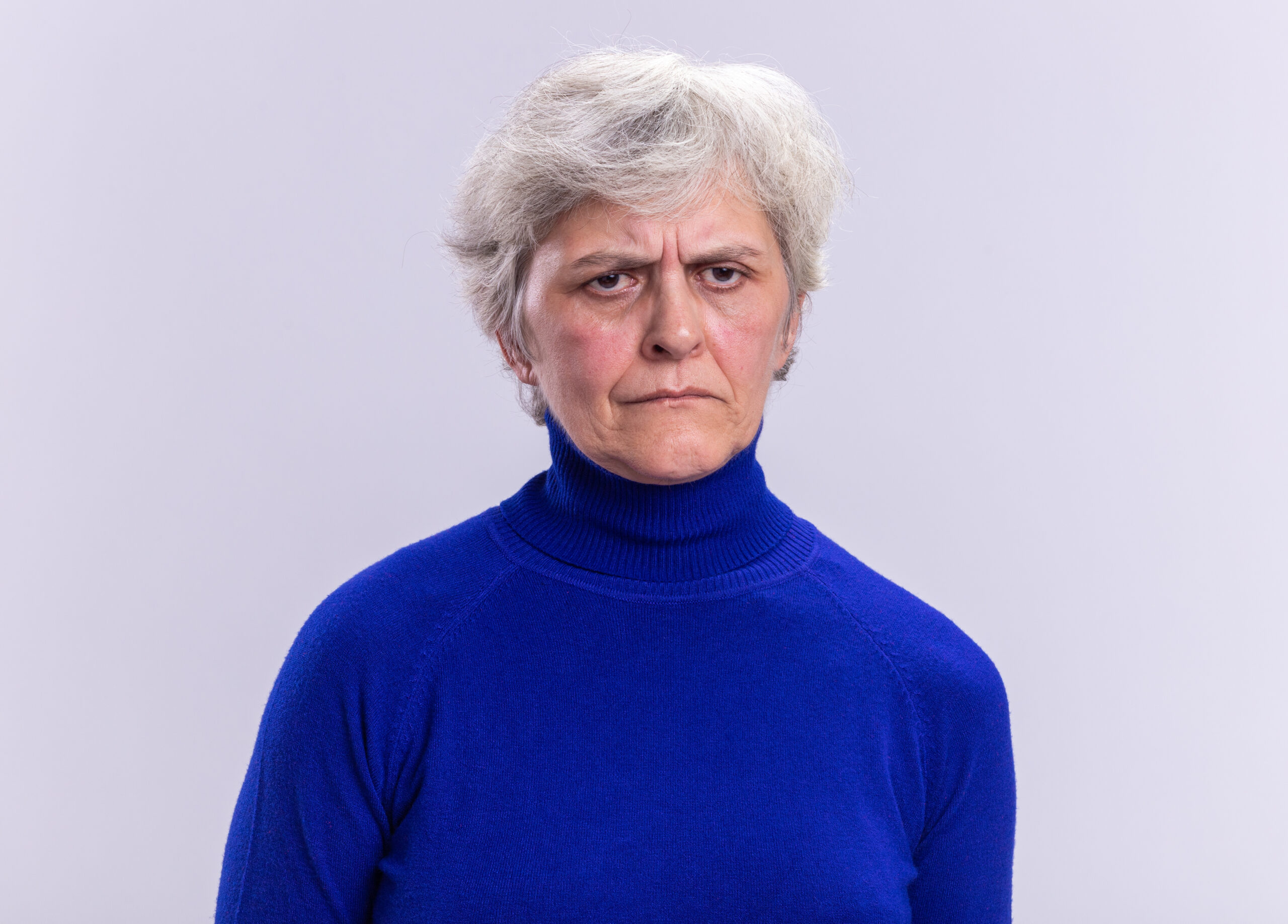
The room was so quiet I could hear the air conditioner humming.
My fiancé, Kevin, stood in the doorway of the bridal suite in his navy wedding suit. He was looking at the veil in my hands. My wedding veil. The one my mother wore when she got married thirty-four years ago.
It was covered in wine corks.
Dozens of them. Tied along the delicate lace edge with thin ivory ribbons, dangling like ugly little ornaments on a Christmas tree.
And standing beside me, still smiling, was Kevin’s mother.
“My little surprise,” Patricia said again. She actually clapped her hands together. “Cute, isn’t it?”
Kevin didn’t answer her.
He walked across the room slowly. He took the veil gently out of my shaking hands and held it up. He turned it over. He looked at every single cork, one by one. Some of them still had the winery names stamped on the side. Napa. Sonoma. A French one I couldn’t pronounce.
Then he looked at the veil. At me. And back at his mother.
“Did you do this?” he asked quietly.
Patricia laughed.
“Obviously. I thought it needed some personality.”
My bridesmaid Jade gasped. My other bridesmaid, Hannah, folded her arms across her chest.
“That’s one word for it,” Hannah said.
Patricia ignored her completely.
Kevin lifted one of the corks between his fingers. “You tied these on yourself?”
“Yes. It took me all morning.”
“Knowing why Nora doesn’t drink?”
Patricia rolled her eyes. “Oh, Kevin, don’t make this into a tragedy. She hasn’t had a drink in ten years! That’s something to celebrate!”
I finally found my voice. It came out small and cracked.
“By sabotaging my wedding veil?”
Patricia looked at me like I was a child throwing a tantrum in a grocery store.
“If you’re truly over that part of your life,” she said, “I don’t understand why this bothers you so much.”
That hurt more than I wanted it to. More than I wanted her to see.
Ten years.
Ten years of meetings in church basements. Ten years of saying no when every cell in my body wanted to say yes. Ten years of rebuilding a whole life out of wreckage, one day at a time.
And Patricia had turned it all into decorations.
For several seconds, nobody spoke. Jade had her hand over her mouth. Hannah looked like she wanted to throw something.
Then Kevin reached into the inside pocket of his jacket.
Patricia smiled. I think she thought he was about to pull out his phone and take a picture.
Instead, he pulled out a small velvet box.
Ten years earlier, I wouldn’t have recognized the woman standing in that bridal suite in a white dress.
Back then, I was twenty-three, and I was barely holding my life together with tape and lies.
My father had walked out when I was twenty. Just packed a suitcase one Saturday morning and left. No note. He called my mother from a motel two states away and told her he wasn’t coming back.
My mother, Linda, was drowning after that. Drowning in debt he’d left behind. Drowning in the mortgage. Drowning in the quiet of a house that used to have three people in it.
I moved back home to help. I worked mornings at a coffee shop, opening at five-thirty. Then evenings at a hotel front desk until midnight. I gave Mom almost every dollar I made.
I told everyone I was fine.
I wasn’t.
Alcohol started as a way to switch my brain off at night. That’s all. Just something to help me sleep after a sixteen-hour day. A glass of wine at the kitchen table after Mom went to bed.
One glass became two.
Two became four.
Four became a whole bottle. Then more than a bottle. Then enough that I stopped counting, because counting meant admitting I couldn’t control it.
The strange thing is, I still showed up. I still went to work. I still paid my share of the bills. I still smiled when customers asked how I was doing.
“Great! Busy, but great!”
That’s how I convinced myself I didn’t have a problem. People with problems don’t show up to work. People with problems don’t pay their bills. I was fine. I was handling it.
Then one morning, I woke up on a couch I didn’t recognize.
I was still in my hotel uniform. The name tag was crooked on my chest. My head was pounding so hard I could barely open my eyes. There was a stranger’s blanket over my legs and a stranger’s cat staring at me from the arm of the couch.
I had no idea how I’d gotten there.
I found my phone wedged between the cushions. The screen was cracked. It was eleven-thirty in the morning.
I had missed half my shift at the coffee shop.
Twelve missed calls.
Three from my manager.
Nine from my mother.
I sat on that stranger’s couch and stared at the screen. My hands were shaking so badly I dropped the phone twice before I could call her back.
She picked up on the first ring.
“Nora,” she said. Her voice was raw, like she’d been crying for hours. “Please tell me where you are. Please.”
I opened my mouth to lie. I had a lie ready. I always had a lie ready.
But nothing came out.
I just started crying. Big, ugly sobs. The kind that come from somewhere so deep you didn’t know it existed.
“Mom,” I said. “Mom, I think I need help.”
That was the beginning.
Sobriety didn’t happen because I made one good decision. That’s what people get wrong about it. They think there’s some big moment where you see the light and everything changes.
It happened because I kept making the same decision. Every single day.
Don’t drink today.
And then, the next morning, do it again.
Don’t drink today.
My mother drove me to my first meeting. It was in the basement of a Methodist church, with folding chairs and bad coffee and a table of stale cookies. I sat in the back row with my arms crossed and didn’t say a word.
I went back the next day. And the next.
On my fourth day, a woman sat down in the chair next to me. She was in her late forties, with short hair that was already going gray and reading glasses pushed up on her head. She was holding two cups of coffee.
She handed me one.
“You look like you haven’t slept in a week,” she said.
“I haven’t.”
“It gets better.” She took a sip of her coffee and made a face. “The coffee doesn’t. But you do.”
Her name was Diane. She became my sponsor.
For the next nine years, Diane was the person I called at two in the morning when my hands were shaking and the liquor store down the street was still open. She was the one who sat with me in her car in a grocery store parking lot for three hours once, while I cried about my father and she didn’t say a single word. She just handed me tissues.
She was there for my first thirty-day chip. She clapped louder than anyone in the room.
She was there for my first year. She brought a cake that said ONE in blue frosting.
She was there for my fifth year. She cried harder than I did.
“You’re my proudest thing,” she told me that night. “Don’t tell my kids.”
I went to meetings. I worked the steps. I apologized to people. My old manager at the coffee shop. My best friend from high school, whose birthday party I’d ruined. My mother, over and over, for years.
Some people forgave me. Others didn’t.
I learned to live with both.
By the time I met Kevin, I’d been sober for seven years.
We met at a friend’s birthday dinner. He was sitting across from me, and when the waiter came around with the wine list, he ordered a Coke. I ordered a sparkling water. We looked at each other across the table.
“Designated driver?” he asked.
“Something like that,” I said.
He smiled. He had a nice smile. Crooked on one side.
He asked me out a week later. We went to a little Italian place with checkered tablecloths. Then a movie. Then a baseball game where it rained so hard we had to run to his car and sat there laughing, soaking wet.
I told him on our fifth date.
We were sitting in his car outside my apartment. I’d rehearsed it in the bathroom mirror for three days. I was so nervous I felt sick.
“There’s something you should know about me,” I said. “Before this goes any further.”
He turned in his seat to face me. “Okay.”
“I’m an alcoholic. I’ve been sober for seven years. I go to meetings every week. I’ll never drink. Not at weddings, not on New Year’s, not ever. And I understand if that’s too much for you. I really do.”
I stared at the dashboard. I waited for the questions. Were you in rehab? Did you get arrested? How bad was it? What did you do?
That’s what people usually asked.
Kevin was quiet for a moment.
Then he said, “Thanks for trusting me.”
That was it.
I looked at him. “That’s it?”
“What else is there?” He shrugged. “You told me something important. I’m glad you did.”
“You don’t have any questions?”
“Probably. Someday. When you want to talk about it.” He reached over and took my hand. “But not because I need to know. Only if you want me to.”
I cried in his car. He didn’t say anything. He just held my hand until I was done.
In three years, he never once treated me like I was fragile. He never hid the wine when his friends came over or made a big deal about it. He never made me feel ashamed.
When we went to parties, he’d quietly get me a sparkling water without asking. When someone offered me a drink and didn’t take no for an answer, he’d step in with a joke and change the subject.
That’s one of the many reasons I love him.
Patricia was different.
Kevin’s mother found out about my sobriety six months before the wedding.
We were having Sunday dinner at her house. A big, beautiful house in the suburbs with white columns and a dining room that could seat twelve. Kevin’s father had passed away four years earlier, and Patricia lived there alone now. She liked to host.
She was going around the table, pouring red wine into everyone’s glasses. Kevin’s aunt. His cousin. His cousin’s husband. Kevin.
She came to me and tilted the bottle toward my glass.
I put my hand over it. “No, thank you.”
Patricia paused. She looked at me with her head tilted.
“You never drink at family dinners, do you?”
“No.”
“Religious?”
“No.”
She laughed lightly. Then her eyes went sharp.
“Pregnant?”
Kevin almost choked on his water. His cousin laughed.
I took a breath. I’d decided a long time ago that I wasn’t going to lie about it anymore. Not to anyone.
“No,” I said. “I’m an alcoholic. I’ve been sober for almost ten years.”
The table went quiet.
Patricia’s expression changed. It flickered through something. Surprise. Then something else. Something I couldn’t read.
“Ten years?” she said. “Well. That’s impressive!”
For half a second, I thought the conversation was over. I relaxed a little.
Then she added, setting the wine bottle down on the table right next to my plate, “Although I suppose you never really know when someone might slip.”
Kevin put down his fork. It clattered against his plate.
“Mom. Stop.”
“What?” She blinked innocently. “I’m complimenting her.”
“No,” Kevin said. “You’re not.”
Patricia laughed and moved on to the next glass. But she left the bottle sitting right next to my plate for the rest of the dinner.
After that night, Patricia made comments. Not all the time. Just enough.
At Christmas, she walked up to me in the kitchen holding a glass of eggnog with rum in it. She held it out toward me with an innocent smile.
“Just checking,” she said.
“No, thank you.”
“Just making sure you’re still strong!” She laughed and walked away.
At our engagement dinner, she stood up to give a toast. She raised her champagne glass and looked right at me.
“To Kevin and Nora! I’m sure the champagne at the wedding will really test her willpower!”
A few people laughed awkwardly. Most didn’t.
Kevin talked to her after that. I heard them in the hallway of the restaurant.
“You need to stop, Mom. I mean it.”
“I was kidding, Kevin.”
“It’s not funny. It’s never been funny.”
“Nora knows I don’t mean anything by it.”
Kevin told her to stop more than once. Four times that I know of. Maybe more.
She always acted confused. “I was only kidding.” Or, “Nora knows I don’t mean anything.” Or, “Everyone’s so sensitive these days.”
I learned to ignore her. I learned to smile and change the subject. I told myself she’d eventually get bored.
“She’s testing you,” Diane told me on the phone one night. “Some people do that. They poke at the thing you’re proudest of to see if it’ll crack.”
“What should I do?”
“Don’t crack,” Diane said simply. “And don’t let her think it’s your job to make her comfortable.”
I thought Patricia would eventually stop.
I was wrong.
On the morning of my wedding, Patricia called me at seven a.m.
“I’m picking up some things from town anyway,” she said, sounding sweet. “Let me grab your veil from the seamstress and bring it to the bridal suite. One less thing for you to worry about.”
I hesitated. Something small in my stomach twisted.
But it was my wedding day. I had my hair appointment at eight and makeup at nine and a hundred other things to think about. And maybe this was her way of trying. Of making peace.
“Okay,” I said. “Thank you, Patricia. That’s really kind.”
“Of course, dear.”
The veil was the most important thing I was wearing that day. More important than the dress.
It had belonged to my mother. Linda had worn it when she married my father. Long and delicate, with a scalloped lace edge that her own mother had sewn by hand.
Their marriage hadn’t lasted. My father walked out on both of us. But when Mom took that veil out of its box in the attic and handed it to me the week I got engaged, she’d cried.
“I want you to have one thing from that day that was good,” she said. “The veil was always good. It was just the man that wasn’t.”
I’d taken it to Rosa, a seamstress in town, to have the lace cleaned and a few loose threads repaired. Rosa had kept it for three weeks and treated it like it was made of glass.
By eleven that morning, I was in the bridal suite at the venue. My hair was done. My makeup was done. I was wearing my dress. Jade and Hannah were running around helping me with the buttons and taking pictures on their phones and playing music from a little speaker.
I kept looking at the clock.
“Where’s Patricia with the veil?” Hannah asked.
“She’ll be here.”
At eleven-twenty, there was a knock. Patricia walked in, grinning, carrying the long white garment bag over her arm.
“I added a little personal touch,” she said.
She laid the bag down on the bed. She unzipped it slowly, like she was presenting a prize on a game show.
She pulled out the veil and unfolded it with a flourish.
My bridesmaids actually gasped.
Dozens of wine corks had been tied along the delicate lace edge with thin ivory ribbons. Real corks. They dangled all the way around the scalloped border, clicking against each other softly as she held it up.
Some still had winery names stamped across the side.
I stared at them. I couldn’t speak. I couldn’t breathe.
Patricia laughed.
“Oh, don’t look so horrified! I thought your veil should tell your story.”
“You knew,” I said finally. My voice was shaking. “You knew what those years did to me.”
“Exactly!” She lifted one cork between her fingers and waggled it. “Ten years sober deserves a souvenir!”
My eyes burned. I could feel the makeup artist’s work threatening to run.
“Take them off,” I said.
Patricia rolled her eyes. “Honestly, Nora. If you’re truly over it, why does this bother you so much?”
Jade quietly slipped out of the room with her phone pressed to her ear. I barely noticed.
I grabbed the veil out of Patricia’s hands. I stood there clutching it against my chest, the corks clicking against my dress.
And that’s when the bridal suite door opened.
Kevin stood there in his navy suit.
He’d come looking for his mother because the photographer needed the family downstairs for pictures.
Then he saw me. Clutching the veil. Crying.
And he saw the corks.
Which brings us back to the velvet box.
Kevin opened it.
Inside, resting on a little bed of blue satin, was a silver coin.
My breath caught. I knew immediately what it was. I’d seen them before. I’d seen them held up in church basements while everyone clapped.
A ten-year sobriety medallion.
Patricia’s smile disappeared.
Kevin looked at me. Only at me.
“I was going to give you this tonight,” he said softly. “Before our first dance.”
I stared at the medallion. My mouth was open. I couldn’t close it.
He smiled a little. “I wanted Diane here too.”
“Diane?”
Kevin nodded toward the hallway. “She’s downstairs.”
I froze.
I hadn’t seen Diane in almost a year. She’d moved two states away to be closer to her grandchildren. We talked on the phone every week, but it wasn’t the same. I’d sent her a wedding invitation, but she’d told me she couldn’t afford the flight. She’d been so sad about it.
“You invited Diane?” I whispered.
Kevin nodded. “I paid for her flight. She flew in yesterday. She’s staying at the hotel down the road.”
I covered my mouth with both hands.
Behind me, Hannah whispered, “Oh my God.”
Patricia was staring at the medallion in Kevin’s hand.
“You invited her sponsor?” she said. “You never told me she was coming.”
“It was supposed to be a surprise,” Kevin said.
Patricia glanced down at the veil in my arms. Something shifted in her face.
Kevin closed the velvet box. He held it up.
“This,” he said to his mother, “is how you honor ten years.”
Then he reached over and lifted the cork-covered veil from my arms. He held it up next to the box. The corks swung and clicked.
“And this is how you make fun of them.”
Patricia’s face went pale.
“I wasn’t making fun of her!”
“You were.”
“I was celebrating!”
Kevin’s voice stayed perfectly calm. That’s what made it so powerful. He didn’t yell. He never yells.
“You’ve been making comments about Nora’s sobriety for six months. You’ve offered her wine at dinner. You offered her spiked eggnog at Christmas. You made a toast at our engagement dinner about her willpower being tested. And every time, she asked you to stop. I asked you to stop.”
Patricia crossed her arms. “I didn’t realize everyone had become so sensitive.”
Kevin nodded once.
“That’s exactly the problem.”
For the first time, I saw it on her face. She was starting to understand how bad this looked. How bad it actually was.
Still, she tried.
“Maybe Diane can appreciate the joke,” she said.
Hannah actually laughed. Out loud. A short, disbelieving snort.
Patricia shot her an offended look.
Kevin stared at his mother for a long moment. Then he reached into his jacket again.
This time, he pulled out a small white card.
Patricia frowned. “What now?”
Kevin handed it to her.
It had Diane’s name written on it in his handwriting. And her phone number underneath.
“You can explain the veil to her,” he said.
His mother blinked. “What?”
“You said it tells Nora’s story. So go downstairs and explain it to Diane. She’s the one who was actually there for the story.”
Patricia’s face tightened. “Kevin, don’t be ridiculous.”
“I’m not.”
He held up the veil again. The corks clicked against each other.
“Go tell Diane why wine corks were the right way to honor the hardest decade of Nora’s life.”
Patricia said nothing.
Kevin waited.
So did everyone else.
The air conditioner hummed. Somewhere downstairs, the string quartet was tuning up. I could hear a violin going up and down a scale.
Finally, Kevin said, quietly, “You don’t want to. Because you know exactly how it sounds.”
Patricia’s eyes dropped to the floor.
That was the first time, in three years, I had ever seen Patricia without an answer.
A few seconds later, she was saved by a knock at the door.
Hannah went and opened it.
Diane was standing in the hallway.
She was fifty-eight now, with short silver hair and the same calm, steady expression she’d always had during every hard conversation we’d ever had. She was wearing a lavender dress. She was holding a cup of coffee from the gas station down the road.
“Nora!”
I burst into tears.
She set the coffee down on the table by the door and crossed the room in three steps and wrapped her arms around me. She smelled exactly the same. Like drugstore lotion and coffee.
For a whole minute, I forgot about the veil. I forgot about Patricia. I just held on to the woman who had held on to me through the worst years of my life.
“I can’t believe you’re here,” I said into her shoulder.
“Kevin is sneaky!”
“I noticed!”
“He called me three months ago. He had the whole thing planned. I almost told you a dozen times.”
Diane pulled back and held my face in her hands. She looked at my makeup. She looked at my dress. Her eyes filled up.
“Look at you,” she said softly. “Just look at you.”
Then her eyes moved past me and landed on the veil in Kevin’s hands.
She stared at the corks.
She was quiet for a long moment.
“Okay,” she said slowly. “I thought I sensed some tension when I walked in. What happened there?”
Nobody answered. Diane looked at Kevin. Then at me. Then at Patricia, who was standing by the window looking like she wanted the floor to open up and swallow her.
So I explained. All of it. The phone call that morning. The garment bag. The corks. What Patricia had said.
Diane listened without interrupting. That’s what she does. She lets you finish.
When I was done, she walked over to Kevin. She lifted one cork between two fingers and studied it.
“Ten years sober,” she said, “and she gave you corks?”
I laughed through my tears. I couldn’t help it.
Diane looked at Kevin. “I would have gone with diamonds.”
Even Hannah laughed. Jade, who had just slipped back into the room behind Diane, laughed too.
And just like that, the tension in the room broke a little. Like a window opening.
Then Diane turned and looked at Patricia.
Not angrily. Diane never looks at anyone angrily. She just looked at her. Calm. Steady. Curious.
“Why?” she asked simply.
Patricia shifted her weight from one foot to the other.
“I… I thought it was funny.”
Diane nodded slowly. “Was Nora supposed to laugh?”
Patricia didn’t answer.
“Because if the person you’re joking about isn’t laughing,” Diane said gently, “you might want to rethink the joke.”
Patricia’s cheeks turned red.
“I… I didn’t mean to upset her.”
“Then apologize for what you did,” Diane said. “Don’t explain what you meant.”
Patricia looked at me. She opened her mouth.
“Nora, I’m sorry if—”
Diane lifted one finger. “No ‘if.'”
Hannah looked down at the carpet so Patricia wouldn’t see her smile.
Patricia took a deep breath. She let it out slowly.
“I’m sorry I added corks to your veil,” she said.
I waited.
She kept going. Her voice got quieter.
“I knew your history. And I should have understood why it would hurt you.”
She paused. Then she added, so softly I almost didn’t hear it:
“I was wrong.”
I nodded. “Thank you.”
I wasn’t ready to forget everything. Six months of comments don’t disappear because of one apology in a bridal suite.
But I believed that last sentence. I believed she meant it.
The veil was still a problem.
Patricia had tied every cork through the lace with tiny, tight knots. Double knots. Some of them were triple knots.
Hannah sat down on the bed and tried to untie one of the ribbons. It just tightened around the lace. I heard a tiny sound, like a thread straining.
“Stop,” I said quickly. “Stop. Please.”
I didn’t want the lace damaged. Not that lace. Not my mother’s veil.
I looked at the clock on the wall. Eleven forty-five. The ceremony was at twelve-thirty.
“We don’t have time to fix this,” I said. My voice was rising. “We don’t have time. What am I going to do? I can’t walk down the aisle without a veil. Mom’s going to be sitting in the front row waiting to see me in it—”
Right then, Jade stepped forward. She was holding a second garment bag that I hadn’t even noticed she was carrying.
“I brought it!” she said.
We all frowned at her.
“Brought what?” I asked.
Jade unzipped the bag and pulled it open.
Inside was another veil.
Almost identical to mine. Same length. Same shape. Same scalloped lace border, not quite as old, not quite as fine, but close. So close.
I stared at it. Then I turned and stared at Kevin.
“You had a backup?”
Kevin held up both hands. He looked nervous.
“I had nothing to do with that. I swear.”
We all turned to Jade.
She shrugged, a little embarrassed. “When I went with you to Rosa’s for the dress fitting, I asked her to make copies. A backup dress in the same pattern. And a backup veil. Just in case.”
“Why?” I asked.
“Because for three months, you kept saying you were scared something was going to happen to your wedding attire. Every single time we talked. ‘What if I spill coffee on it? What if it rips? What if the zipper breaks?'” She smiled. “So I figured I’d make sure you had a plan B.”
“And the dress?” Hannah asked.
“In my car.”
“But how did you know to bring the veil up right now?”
Jade glanced at Patricia, then back at me. “When Patricia called this morning and said she was picking up the veil, I had a feeling. I don’t know why. So I kept it in the car. And when I saw what she’d done, I went down to get it.”
That’s where she’d gone when she slipped out with her phone. She’d been calling the valet to bring her car around.
“That is absurdly sweet,” Hannah said.
I reached out and touched the new veil. The lace was soft.
It wasn’t Mom’s.
But it meant I didn’t have to spend the last hour before my wedding trying to repair something Patricia had ruined. It meant I didn’t have to walk down the aisle with bare hair, or with corks.
Kevin gently laid the cork veil back in its garment bag. “Rosa can fix the original later. She’ll know how to get them off without hurting the lace.”
I looked over at Patricia.
She was standing very still by the window. Her eyes were wet.
“I didn’t know it was Linda’s veil,” she whispered.
“You didn’t ask,” I said.
She nodded slowly. She didn’t argue. She didn’t make an excuse.
She just nodded.
The photographer knocked on the door fifteen minutes later.
“We’re way behind schedule!” she called through the door. “I need the bride in five minutes!”
Diane helped me put the backup veil in my hair. Her hands were steady, pinning each little comb in place, the same way she’d pinned me in place so many times over the years.
Kevin stepped closer and held out the velvet box again.
“Still want to wait for this until tonight?” he asked.
I shook my head.
“Now.”
He smiled.
I opened the box again. I took out the medallion.
It was heavier than I expected. It had a large Roman numeral X in the center, marking the decade. Around the edge, in small letters, were the words: TO THINE OWN SELF BE TRUE.
I ran my thumb over the X.
Diane stood beside me. She put her hand on my shoulder.
“You earned every single day on there,” she said quietly.
I looked at her. Then I looked around the room. At Hannah, who was crying and pretending she wasn’t. At Jade, holding the empty garment bag. At Kevin, in his navy suit, with that crooked smile. And at Patricia, standing alone by the window.
For years, I’d been embarrassed by the part of my life that came before sobriety. The couches I woke up on. The shifts I missed. The lies I told. The people I hurt.
But somewhere along the way, I learned something. I didn’t have to be proud of everything I’d done.
I could be proud of surviving it.
I closed my hand around the coin.
“Okay,” I said. “Let’s get married.”
The ceremony went exactly the way I wanted it to.
Mom sat in the front row. When she saw me at the end of the aisle, she put her hand over her heart. I don’t think she noticed the veil wasn’t hers. Or if she did, she didn’t care.
Kevin cried before I did.
He started the moment he saw me walking toward him. His chin wobbled. His eyes got red. His best man had to hand him a handkerchief before I was even halfway down the aisle.
I planned to remind him of that forever. I still do.
I held the medallion in my hand the whole ceremony, tucked inside my bouquet, pressed against the stems.
At the reception, Kevin had made sure there was sparkling cider at our table instead of champagne. He’d talked to the catering manager weeks before. Every server knew I didn’t drink. Not one person offered me a glass of wine all night.
Diane sat at a table with Patricia.
I watched them from across the room during dinner. At first, Patricia sat very stiffly. Diane talked. Patricia listened. After a while, Patricia started talking too. By dessert, I saw Patricia actually laugh at something Diane said.
I don’t know what they talked about. I’ve never asked either of them.
Before our first dance, Kevin took the microphone from the DJ.
“I was going to make a long speech,” he said, smiling out at the crowd. “But Nora hates long speeches.”
“Correct!” I called from the dance floor.
Everybody laughed.
“So I’ll keep it simple.”
He looked at me.
“Ten years ago, Nora chose a different life. And she’s kept choosing it every single day since. Through hard days. Through days when nobody was watching. Through days when people made it harder than it should’ve been.”
My throat tightened. I didn’t look at Patricia’s table, but I knew he didn’t have to either.
“I’m proud of her,” Kevin said. “Not because she never struggled. Because she did. And she kept moving anyway.”
Then he handed the microphone to Diane.
She stood up from her table, smoothed her lavender dress, and looked at me.
“I’ve known Nora through a lot of things,” she said. “Including some very bad haircuts.”
Everyone laughed.
“That’s confidential!” I yelled.
“It isn’t anymore!” someone called from the back.
Then Diane’s expression softened.
“Recovery isn’t a performance,” she said. “It isn’t something you do for other people to watch. It’s a life. And Nora built hers one day at a time. With her own two hands.”
She raised her glass of sparkling cider.
“To ten years! And to the next ten!”
Everyone in the room raised their glasses.
Even Patricia.
I saw her. Standing at her table, glass lifted, eyes wet.
Later that night, after the cake was cut and the bouquet was thrown and the dance floor was full of Kevin’s cousins doing the Macarena, Patricia found me alone.
I’d stepped out onto the patio to get some air. The night was warm. There were little lights strung in the trees.
She was holding a glass of sparkling water.
“I checked the bottle,” she said. “Twice.”
“Thank you.”
She nodded. She stood next to me at the railing for a moment without saying anything. Then she took a breath.
“I owe you another apology.”
“You already apologized.”
“No.” She shook her head. “I apologized because everyone was standing there in that room waiting for me to. Because Diane made me. That’s not the same.”
At least she was honest. I’ll give her that.
Patricia looked through the glass doors toward the dance floor. Toward Kevin, who was spinning his elderly aunt in circles while she laughed.
“I’ve had a very hard time with him getting married,” she said quietly. “Since his father died, it’s been just the two of us. He calls me every Sunday. He fixes my gutters. He’s been the only person who needs me.”
She paused.
“And then there was you. And I think I kept looking for ways to prove I still had some influence. That I still mattered. That I could still get under someone’s skin.”
That explained more than the corks. It explained the comments. The Christmas eggnog. The toast. The little tests.
“So you picked my sobriety,” I said.
She winced. “Yes.”
“That was a terrible choice.”
“I know,” she said. “I know it was.”
I almost smiled.
“I don’t expect you to trust me right away,” she said.
“Good.”
She laughed once. A small, surprised laugh.
“Fair.”
Then she lifted her glass of sparkling water toward me.
“I’ll work on being less awful.”
“That’s a strong contender for best wedding gift,” I said.
And we both laughed. Really laughed, out there on the patio under the little lights.
Two weeks after the wedding, Rosa called.
“It’s ready,” she said. “Come pick it up.”
She had removed every single cork from my mother’s veil. It had taken her three full days. She’d used a tiny pair of surgical scissors and a magnifying glass.
Not one piece of lace had torn.
When I picked it up, she unfolded it on her counter for me to see. It was perfect. Exactly like it had been before.
Almost exactly.
“There’s one small thing,” Rosa said. “Your husband asked me to add it. I hope you don’t mind.”
She pointed to a spot near the very edge of the lace, down at the bottom, where the scallops curved.
Stitched in tiny silver thread, so small you’d never notice unless you were looking right at it, was a number.
You couldn’t see it when the veil was worn. It would be hidden in the folds. You had to know it was there.
That was perfect. That was exactly right.
I never wanted a parade for my sobriety. I never wanted people to throw me parties or make speeches or tie things to my clothes. I only wanted the people I love to respect what my addiction had cost me. And what it cost me to climb out.
Patricia eventually did.
It didn’t happen overnight. But she stopped making comments. She stopped offering me alcohol. At family dinners, there was always a pitcher of lemonade or a bottle of sparkling cider on the table. She never announced it. She never made a thing of it. It was just there.
Last Thanksgiving, she poured everyone wine and then came to my glass and poured sparkling cider without even asking. She didn’t look at me. She just moved on to the next person.
That mattered more than another apology ever could have.
And every year, on my sobriety anniversary, Kevin still gives me a coin.
He doesn’t make a speech. He doesn’t make a big deal. He just finds me in the kitchen in the morning, puts the coin in my hand, closes my fingers around it, and says two words.
“Another one.”
And every year, I answer the same way.
“Another one.”
Because those ten years weren’t the end of my story.
They were proof that I get to keep writing it.

Sophia Rivers is an experienced News Content Editor with a sharp eye for detail and a passion for delivering accurate and engaging news stories. At TheArchivists, she specializes in curating, editing, and presenting news content that informs and resonates with a global audience.
Sophia holds a degree in Journalism from the University of Toronto, where she developed her skills in news reporting, media ethics, and digital journalism. Her expertise lies in identifying key stories, crafting compelling narratives, and ensuring journalistic integrity in every piece she edits.
Known for her precision and dedication to the truth, Sophia thrives in the fast-paced world of news editing. At TheArchivists, she focuses on producing high-quality news content that keeps readers informed while maintaining a balanced and insightful perspective.
With a commitment to delivering impactful journalism, Sophia is passionate about bringing clarity to complex issues and amplifying voices that matter. Her work reflects her belief in the power of news to shape conversations and inspire change.