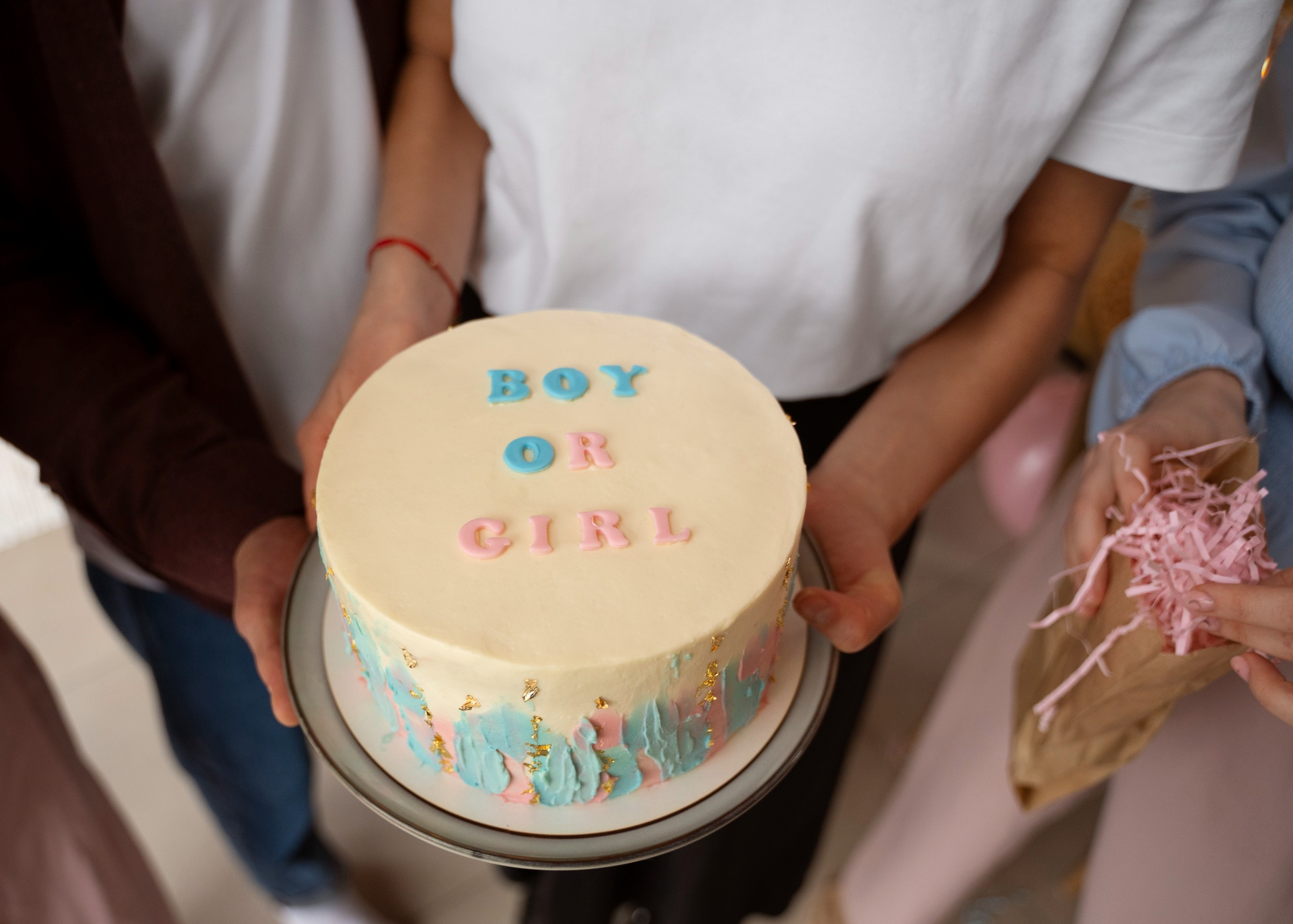
What Was Inside the Balloon
A Story About Secrets, Surprises, and the Thing That Changes Everything
Let me tell you about the kind of person who always needs to know first.
Not the curious kind. Not the person who asks questions because they’re genuinely interested in you and can barely contain themselves waiting for good news. The other kind. The kind for whom information is currency — who you tell, in what order, carries weight and meaning and hierarchy. The kind who measures love by access, who judges the depth of a relationship by whether they were the first to hear something, who interprets an equal reveal as a slight.
That was Sandra.
My mother-in-law for the past four years, and the grandmother of the baby I was carrying, and the woman who, on a Saturday afternoon in early October, picked up our gender reveal balloon and carried it into the garage because she had decided that her need to know outweighed everyone else’s need to experience something together.
I had known this about Sandra from the first time I met her.
My husband, Daniel, had warned me before I met her, which I had initially taken as protectiveness and had later understood as preparation. My mom is — she’s a lot, he had said. She loves very intensely and sometimes that love expresses itself in ways that feel like pressure. He had said this with the specific tenderness of someone describing a thing they have spent a long time accepting and loving in spite of.
I had met Sandra at Thanksgiving, three months into dating Daniel.
She had looked at me the way people look at something they are assessing and want you to know they are assessing, and within the first hour she had asked me four questions that were really one question: are you good enough for my son? She had asked this through the medium of my family background, my career trajectory, my opinion on a topic she had strong opinions about, and my plans for the future.
I had answered honestly and directly, which she had found either impressive or disarming — I could never quite tell which.
She and I had reached a kind of equilibrium over the years. Not warmth, exactly. Something more like the peace of two people who have decided to coexist around their mutual love for the same person. She loved Daniel and I loved Daniel and we both wanted him to be happy and that common ground held us up even when the space between us felt thin.
Then I got pregnant, and the equilibrium shifted.
I should tell you that I understood, abstractly, why pregnancy changed things for Sandra.
She had been waiting for this in the way that mothers of only children sometimes wait — not impatiently, not with the expectation that their timeline should govern anyone else’s, but with the particular quiet intensity of someone who has been holding space for something and is now trying not to rush it into existence through sheer longing.
Daniel was her only child.
She had been a single mother since he was seven, when his father had left in the specific way that leaves marks — suddenly, with someone else, with a finality that allowed no negotiation. She had raised Daniel alone, which had formed between them the bond that forms between parents and only children raised in the aftermath of something hard: strong, close, slightly complicated by the weight it had been asked to carry.
When I got pregnant, I think she experienced it as proof that the hard work had led somewhere good. That the years of raising him had produced a man who would be a father. That she would see what that looked like.
I understood this. I genuinely did.
What I understood less well was why understanding this translated, in practice, into needing to know the gender of the baby before anyone else.
I’m the grandmother, she said. I should know first.
We’re finding out together, Mom, Daniel kept telling her. That’s the point.
But just tell me — I won’t tell anyone. You have my word.
Mom. No.
Daniel—
No.
She called me separately, twice.
Rachel. Just you and me. What are we having?
Sandra, we don’t know yet. We’re finding out at the party.
You don’t have to do it at a party. I’ll throw you a better one after, once we know.
That’s sweet. But we want to find out together.
Whose idea was the balloon?
Ours.
Daniel’s or yours?
I had stared at the phone for a moment. Both of ours.
She had sighed the sigh of a woman who had said what she could and had not been heard and was now composing herself to try another approach at another time.
Daniel and I had talked about it.
She’s not going to let it go, I said.
No, he agreed.
So what do we do?
He had thought about this.
We just — we’re clear with her and we hope she respects it, he said. And if she doesn’t…
He didn’t finish the sentence.
I finished it in my head: then we deal with what happens.
The party was on a Saturday in early October.
Daniel’s mother, my parents, Daniel’s aunt and uncle and their three kids, our close friends, a few neighbors. Thirty people, give or take. We had decorated the living room in black and white — a deliberate neutrality, emphasizing the uncertainty, making the single black balloon in the center of the room into a visual period at the end of a question. Everything pending. Everything about to be answered.
The balloon was enormous.
The woman at the party supply store had been enthusiastic about it in the way of someone who loves their work, who had filled it with either pink or blue confetti and sealed it before our faces, had been careful not to tip her hand, had handed it over with the glee of someone entrusted with a secret they were thoroughly enjoying keeping.
We had not looked.
We had put it in the car and driven home and set it in the living room and felt the particular weight of something known and unknown simultaneously — the answer existed, was in the room, was surrounded by people who would know it in a matter of hours.
I had felt, watching the balloon settle against the ceiling, something close to contentment.
We were doing this right. We were doing it together.
Daniel’s family arrived first, which meant Sandra arrived first.
She came in wearing a yellow cardigan and a look that she had composed into something approaching casual, which I recognized as the look of someone who has decided to appear relaxed and is working at it. She kissed my cheek. She put her hand briefly on my stomach the way she did sometimes, a gesture I had stopped being surprised by. She looked at the balloon.
That’s it? she said.
That’s it.
She looked at it for a long moment.
We’ll all find out together, Daniel said, arriving behind me with someone’s coat.
I know that, Sandra said. I’m not saying anything.
She was not saying anything. She was radiating something, which was doing the work that saying would have done otherwise.
My parents arrived. Daniel’s aunt and uncle. Our friends, in the loose clusters that form at parties — the people who arrive together, who are already talking, who bring the energy that turns a gathering into something with movement and warmth.
We went outside for photographs.
This had been Daniel’s suggestion, a way to create some physical record of the moment before the moment. The afternoon light was good — that specific October gold that makes everything look slightly more significant than it is — and our friend James, who took the photographs, was doing the thing of arranging us and stepping back and asking us to look at each other instead of the camera.
We were outside for twelve minutes.
I know this because I looked at the photos later and the timestamps tell the story.
I saw her through the window.
We were coming back around the side of the house, Daniel ahead of me still talking to James, and I happened to look through the large living room window at exactly the moment Sandra’s hands closed around the ribbon of the balloon.
The balloon was so large she had to hold it at arm’s length.
She was already moving toward the hallway.
I said: Wait.
Not loudly. Not yet a shout — the window was between us and she couldn’t hear me. But loudly enough that the people near me turned. Loudly enough that something in my voice made Daniel stop walking.
He turned. Saw my face. Looked through the window.
Mom— he said, and he was already moving.
We went through the front door. We went through the hallway. We went past the guests who were turning to look at us because the energy had changed, because whatever was happening had the quality of something happening rather than the quality of a party.
I could see the garage door, which was at the end of the hallway, as I came around the corner. It was already shut.
Sandra had closed it.
Daniel’s hand was on the door handle.
Mom. Don’t.
A beat of silence.
And then the sound.
It was not dramatic. It was just a pop, the sound of latex and air and possibility, all at once and then over. One second the answer was held inside something sealed and the next it was not.
The next it was out there, somewhere in the garage, settled in confetti on the floor.
But I didn’t know what color.
I should have run to the garage door then.
What I did instead was stop.
I stopped because the pop had landed inside me like something physical, like a hand reaching into my chest. I was standing in my own hallway with my hand on my stomach and the room around me had gone quiet the way rooms go quiet when something significant has happened and nobody is sure yet what it means.
Mom? Daniel said.
Nothing.
Mom.
And then the garage door flew open.
Sandra stumbled.
That is the only word — she stumbled, as though she had caught herself from falling, as though she had been moving toward us and had lost her footing or the momentum of something had left her and she was working out how to stand without it.
She was white.
Not pale in the ordinary way of someone who has had a shock. The specific white of someone whose face has lost something essential — a color, a composure, a certainty that was holding them up.
She was holding her phone.
I’m calling the police.
The hallway went absolutely still.
Thirty people’s silence has a particular quality. Not the silence of an empty room but the silence of a crowd that has simultaneously decided to listen, all thirty people inhaling and holding and not speaking.
What happened? I asked.
She was already dialing.
I looked at Daniel.
Daniel looked at his mother.
I looked at the garage door.
I pushed past Sandra.
I went into the garage.
What I saw inside the garage was this:
Confetti.
Not pink. Not blue.
Both.
The floor of our garage was covered in confetti, scattered in a radius from the place where the balloon had been. Pink confetti and blue confetti, mixed together, a constellation of two colors that did not make sense to me for a moment — for one long, suspended moment during which I was simply looking at the confetti and not yet understanding what the confetti meant.
And then I understood.
I turned around.
Daniel was in the doorway.
He was looking at the floor.
His face was doing something I had not seen it do before, and I have known this man for seven years, I have catalogued the expressions of his face across the full range of situations that seven years produces, and I had not seen this expression: a collapsing, an opening, the expression of a person who has just been given something enormous and is trying to hold the size of it.
Rachel, he said.
Daniel.
We looked at each other across the confetti.
It’s twins, I said.
And then we were both laughing and crying simultaneously, which produces a sound that is somewhat alarming if you don’t know what’s happening, and which explains, at least in part, the thirty people in the hallway who had now crowded around the garage door to see what was going on.
Behind us, Sandra’s voice:
Yes, hello, I need to report an intruder—
Mom. Daniel’s voice, still thick with whatever the confetti had done to him.
—in the garage of my son’s—
Mom. Stop.
A pause.
I’m sorry, ma’am, I have to call you back. A pause. No, I think — yes. I’ll call back.
I turned around.
Sandra was standing at the garage door with her phone in her hand and an expression that was trying to rearrange itself and not quite succeeding. Around her, framing her, was the crowd of people who had come to our house today to find out whether we were having a girl or a boy.
What, she said, is that?
She was looking at the floor.
Pink and blue, my mother said, from somewhere in the crowd. She had pushed to the front. She was looking at the confetti with the expression of a woman working something out. Pink and blue confetti.
We thought there was only one, my father said.
No, my mother said. That’s not— twins don’t both go in one balloon. You’d need two. Unless—
Unless, Daniel’s aunt said, both colors go in the same balloon.
A beat.
Oh my god, James said.
Oh my god, my mother said.
Daniel, someone said.
And then it was not thirty people being quiet but thirty people not being quiet, which sounded like a wave, like something that starts small and builds, and I was standing in the middle of the garage on my confetti-covered floor being held by Daniel who was crying and laughing and holding me and our two babies and our entire loud beautiful family, and Sandra was standing at the door with her phone still in her hand.
I will tell you what happened with Sandra, because you’re wondering.
She did not actually call the police. She had disconnected the call before the dispatcher could respond, and the dispatcher — as we would learn later, when the dispatcher called back to confirm everything was all right — had been understanding. We get a lot of calls from gender reveals, the dispatcher said, with the specific dry humor of someone who has seen everything. Usually it’s something other than twins.
What had happened, we pieced together over the following hour, was this:
Sandra had gone into the garage with the balloon and had popped it and in the moment of popping had seen the confetti hit the floor and had registered — before her brain had supplied the explanation — that something was wrong. Not wrong in the sense of bad. Wrong in the sense of unexpected. Her immediate, panicked, pre-rational response had been that something had been put in the balloon that should not have been in the balloon. That someone was pranking her. That the confetti was wrong.
She had called for the police before her brain had caught up with what her eyes had seen.
When I explained this to the crowd, there was laughter.
Not unkind laughter — the laughter of people who understood that Sandra had been startled, and that startled brains do startled things, and that the image of a grandmother calling the police on a gender reveal balloon full of twin confetti was objectively funny.
Sandra did not laugh.
She stood at the edge of the garage, holding her phone, while the party reorganized itself around the new information. She looked at the confetti. She looked at Daniel and me. She looked at my parents, who were hugging each other and crying in a way that made them look younger than I usually thought of them.
After a while, she came to stand beside me.
I was watching Daniel crouch down and scoop up handfuls of confetti that he was then letting fall through his fingers like something he couldn’t quite believe was real.
I’m sorry, Sandra said.
I looked at her.
The apology surprised me. Not because she wasn’t capable of them — she had apologized before, in the specific way of people who apologize after they’ve done something, a kind of tax on behavior. But this apology sounded different. It sounded like something she had reached for and found, rather than something she had constructed for the purposes of moving past a moment.
I ruined it, she said.
You didn’t ruin it, I said.
I opened the balloon. I ruined the moment.
I thought about this.
The moment I had imagined had been something specific: Daniel and I, hands joined, needle in hand, the balloon in front of us, the crowd around us, the pop and then the revelation and then whatever followed. I had imagined this moment probably forty times in the weeks leading up to the party.
The moment that had actually happened was: Daniel in the garage doorway, looking at the floor. The laugh-cry that started in my chest and came out of both of us at once. The wave of sound when the crowd understood.
You didn’t ruin it, I said again. You changed it.
She looked at me.
It was better than what I planned, I said. I planned for a specific thing to happen. What happened was something I didn’t plan for and couldn’t have. Two babies. I paused. If you hadn’t opened the balloon, we would have popped it ourselves in an hour and found the same confetti. We would have had our moment. But we wouldn’t have had — this. I gestured at the garage, at the people, at Daniel still sitting in the confetti like it was something to be inside of. All of this happening at once.
Sandra looked at the confetti.
She looked at her son.
Twins, she said. She said it the way people say things when they’re still in the process of understanding them. I’m going to be grandmother of twins.
Yes.
Both colors.
Yes.
So one of each?
Probably. Or both the same, and they just used both colors. I paused. We’ll find out more at the next appointment.
She was quiet for a moment.
I don’t know how to be someone who doesn’t need to know things first, she said. It came out sounding more honest than I think she intended — like something she had not planned to say but had found herself saying because the garage and the confetti and the twins had stripped something away from her.
I know, I said.
I know that I do it. I know it makes things worse. She looked at her hands. It’s not— it’s not that I don’t trust you or Daniel. It’s that knowing things first is the only way I know how to feel like I’m still… relevant. Still part of things.
I stood with this for a moment.
I thought about Sandra raising Daniel alone. I thought about the years after Daniel’s father left, what it must have been like to be the only one, the single person responsible for a small child’s entire world. To have information because you had to have it — because the absence of information meant something could go wrong and you wouldn’t know until it was too late. I thought about what it would be like to raise someone to adulthood and then watch them attach to someone else, to watch the primary relationship in your life become secondary, to watch the person you had built yourself around begin to build themselves around someone new.
The need to know first, I thought, was not about curiosity.
It was about not being left behind.
You’re going to be a grandmother of twins, I said. You are going to be more relevant than you know what to do with.
She looked up at me.
They are going to need you, I said. Daniel and I are going to need you. We are going to call you at strange hours and ask you questions and lean on you in ways that are inconvenient and take more than they give, and I know that doesn’t sound like a gift but I mean it as one. I paused. You don’t have to know things first to be essential. You don’t have to be the grandmother who gets information before everyone else. You can just be — the grandmother who’s there.
She looked at me for a long time.
Something in her face was working through something.
You’re not angry with me, she said.
I am a little angry with you, I said. You took our balloon.
She made a sound that was either a laugh or a sob or both.
But I’m also— I stopped. This is the first of a lot of things they’re going to do that we’re not expecting. It seems important not to start by being furious.
They? She caught the word. Do you know—
I don’t know anything, I said. It’s just a feeling.
She looked at the confetti on the floor.
She walked over to where Daniel was still sitting in it, this man she had raised alone, and she crouched down beside him in her yellow cardigan with her phone still in her hand, and she put her arm around him.
He leaned into her.
They looked at the confetti together for a moment.
Then he said something to her that I could not hear.
And she laughed.
We got the formal confirmation at the next appointment.
Two babies, each in their own sac, each measuring exactly as expected, each with a heartbeat the obstetrician described as excellent. She turned the monitor so we could see both at once — two small shapes, two small flickers of movement, two people who did not yet know they were two.
Do you want to know the sex? the obstetrician asked.
We looked at each other.
Yes, we said.
One of each.
A girl and a boy.
Daniel cried in the car on the way home.
Not the laugh-cry of the garage — something quieter, something that happened when he thought I wasn’t looking and that I let happen because some things need to be felt before they can be held.
I called my mother first.
Then Daniel called Sandra.
I heard the call from the other room — heard his voice, heard the pause, heard the sound Sandra made when she understood what he was telling her.
He came back into the kitchen with the specific look of someone who has just done something that went well.
She asked which one is going to be trouble, he said.
What did you say?
Both of them. He smiled. Clearly.
There is a thing that happened at the party that I didn’t understand until later.
After the garage, after Sandra’s non-police-call, after the thirty people had reorganized themselves around the information of twins, after the catering had resumed and the cake had been brought out and the afternoon had shifted from its original shape into something improvised and better — after all of this, my mother pulled me aside.
She had been wanting to say something since the garage and I had seen it waiting in her face.
Can I tell you something? she said.
We were in the kitchen, away from the party.
When Sandra came out of the garage, my mother said, I was already moving toward you. I thought she had seen something in there — I thought someone had been in the garage. I thought there was actually an intruder.
Because she said—
Because she said she was calling the police, yes. My mother looked at me. And my first thought, before anything else, was: Rachel is pregnant and someone is trying to hurt her. That was my first thought.
I looked at her.
I was across the room in three seconds, she said. I don’t know how. She paused. I have never moved that fast in my life.
Mom—
I’m not telling you this to be dramatic. I’m telling you because— She stopped. I’m telling you because I thought you should know. That when something is wrong, or seems wrong, or might be wrong, I will be there very quickly. That’s just — that’s what it’s going to be.
I looked at my mother.
She was sixty-one years old and she had a bad knee and she had crossed a room in three seconds because she had thought her pregnant daughter might be in danger.
Okay, I said.
Okay, she said.
We stood in the kitchen for a moment.
Two babies, she said.
Two babies.
What are you going to call them?
We don’t know yet.
She nodded.
You should probably start thinking, she said. You have about six months but these things take longer than you think.
This was such a my-mother thing to say that I laughed, and she laughed, and we went back to the party.
Three days after the party, Sandra came over.
She called first, which she had not always done before — the calling first was a new thing, a small deliberate thing, the kind of adjustment that happens when someone has understood something they couldn’t see before.
She brought a casserole.
She set it on the counter and stood in my kitchen looking slightly uncertain, which was not an expression I had often seen on Sandra’s face.
I want to do better, she said.
I hadn’t asked for this. I hadn’t expected it.
I’ve been thinking about what you said. About not needing to be first. She looked at the casserole. About being there instead. She paused. I don’t know if I can change everything overnight. I’m sixty-three years old and I have done things a certain way for a very long time.
I know, I said.
But I want to try. She looked at me. I want to be the grandmother who’s there. Not the grandmother who ruins the gender reveal.
You didn’t ruin it, I said.
I could have.
But you didn’t.
She looked at me steadily.
You keep saying that.
Because it keeps being true.
She was quiet.
I owe you an apology, she said. A real one. Not just for the balloon. For the weeks of asking. For making you feel like your decision about how to do this was somehow negotiable. For acting like my desire to know outweighed your right to experience your own pregnancy the way you wanted to. She paused. That was wrong.
Yes, I said. It was.
I’m sorry.
I know.
You’re not going to make this easy for me.
I’m seven months pregnant with twins, I said. Making things easy for you is not currently in my top priorities.
She almost smiled.
Fair enough, she said.
She stayed for two hours.
We talked about names, which she had opinions about and which she offered carefully, as suggestions rather than requirements. We talked about the nursery, which she offered to help paint if I wanted an extra set of hands. We talked about the two babies growing inside me who would, in a few months, be people in the world who would know her as their grandmother.
What do you think they’re going to be like? she asked.
I have no idea, I said.
That’s exciting.
Terrifying.
Also exciting.
I looked at her.
She was sixty-three years old and she had raised her son alone after her marriage ended and she had spent the past seven years adjusting to the idea of sharing him with me and the past nine months adjusting to the idea of sharing both of us with two new people, and none of this had been easy for her, and she had not handled all of it well, and she was here in my kitchen with a casserole and an apology.
Yes, I said. Also exciting.
The twins were born in late April.
A girl and a boy, as the obstetrician had told us. The girl came first, which surprised us because we had expected the boy to be in the better position — she had other ideas, which Daniel said suggested a character trait that would serve us well to be prepared for.
We named the girl Eloise.
We named the boy Theodore.
They were, in the first hours, the most bewildering and wonderful things I had ever seen.
My mother was at the hospital before the babies were two hours old.
Sandra was there too.
They were in the hallway when we brought the twins out for the first time — both of them, four grandparents in a hospital hallway, the specific electric stillness of people who are about to receive something they have been waiting for.
Sandra looked at Eloise.
She looked at her for a long time.
Oh, she said.
Just that. A word that barely made it out. A sound that was more breath than word.
She held out her arms.
I put Eloise into them.
She held my daughter the way people hold things they can barely believe are real — carefully, with both hands, the specific reverence of someone who understands they are touching something that will matter for the rest of their life.
Hello, she said. I’ve been waiting for you.
Eloise looked up at her.
She had Daniel’s eyes, which had Sandra’s eyes, which went back further than any of us could trace.
Sandra looked at me over the baby’s head.
I’m going to be here, she said. For all of it.
I know, I said.
Even when they do things that ruin the moment.
Especially then, she said.
We looked at each other.
A year ago, I would not have believed we would be here, standing in a hospital hallway with this understanding between us. A year ago, I was steeling myself for the confrontation about the balloon, preparing for a version of Sandra that I had understood as fixed.
People are not fixed.
This was the thing I had been learning, slowly, through the whole of the pregnancy and the gender reveal and the garage and the casserole and the conversations. People are not fixed. They are accumulations of the things they have been through and the things they have decided and the people who have believed they were capable of more than what they have so far managed.
Sandra had been a certain way.
She was trying to be a different way.
That trying mattered.
On Eloise and Theodore’s first birthday, we had a party.
Not a small one.
Sandra arrived early to help set up.
She did not try to open anything in advance.
She helped string the banner and fill the small balloons — ordinary ones, not gender reveal ones, not a significant detail except in the way that detail becomes significant when you know the history — and she arranged the snacks on the table and she did all of this without needing to know what order things would happen in or what information was coming.
She just helped.
When the guests arrived, when the twins were brought in wearing their birthday outfits, when the chaos of a first birthday party with thirty people and two one-year-olds descended on our house, Sandra was in the middle of it.
Not directing it.
Not needing to be first.
Just there.
Eloise discovered, that afternoon, that balloons were something she could bat at and make move. She spent forty minutes doing this with the focused joy of someone who has discovered a technology and intends to explore it fully.
Sandra sat on the floor beside her and batted the balloon back.
Theodore, being held by Daniel’s uncle, watched this and began to shout at the balloon, which was his preferred method of engaging with the world at that stage.
I stood at the edge of the room and looked at my family.
At my parents, who had crossed a room in three seconds.
At Daniel, who was doing the thing fathers do at their children’s birthday parties, which is run a kind of background operation of making sure everyone has what they need without anyone noticing.
At Sandra, on the floor with my daughter, batting a balloon.
At my daughter, who batted it back.
I thought about a garage in October, confetti on the floor, a revelation that doubled everything I thought I was going to have.
I thought about what Sandra had said: I have never moved that fast in my life. I thought about my mother saying it and I thought about how I would say it about these two small people, when the time came, when the moment arrived where something seemed wrong or might be wrong or was wrong and I found myself across the room before I understood I was moving.
How do they grow? Sandra had asked me once, in the early weeks of the twins’ lives. How does it happen so fast?
I don’t know, I had said.
I don’t remember it being this fast with Daniel.
Maybe you were too tired to notice.
Maybe. She had looked at Eloise, who was asleep. Or maybe I know now what to look for.
I had thought about this.
Maybe that was all that changed, when you knew what was coming. Not that time went faster or slower, not that the days were different days, but that you knew what to look for — that you understood the shape of a moment while you were inside it, that you paid the kind of attention that comes from knowing things are temporary in a way you didn’t fully grasp before.
Maybe Sandra, on the floor with my daughter and the balloon, knew what to look for now.
Maybe I was beginning to learn.
Later, when the party was over and the twins were asleep and Daniel and I were doing the final round of cleaning that follows a first birthday party, I found a piece of confetti.
Just one.
On the floor of the hallway, pressed under the edge of the baseboard, having survived the ten months since October in the way that confetti always survives — persisting in corners, appearing in unexpected places, showing up when you weren’t looking.
Pink.
Or blue. I could not quite tell in the light.
I picked it up.
I held it in my palm.
Hey, Daniel said, passing with a trash bag. What’s that?
From the reveal, I said.
He looked at it.
That’s been here for almost a year?
Apparently.
He shook his head.
One piece, he said. From Sandra’s whole garage adventure.
One piece, I agreed.
He held out his hand.
I put the confetti in it.
He looked at it.
Should we keep it? he said.
I thought about this.
About the garage. The pop. The two colors on the floor. The mother-in-law stumbling out white-faced with her phone. The thirty people who had found out in the wrong order and the right order simultaneously, who had been there for something we hadn’t planned and that had turned out to be everything.
No, I said. I don’t think so.
He looked at me.
I don’t need to keep it, I said. I remember it.
He nodded.
He let the confetti fall into the trash bag.
We went back to cleaning.
In the rooms down the hall, two one-year-olds slept the way one-year-olds sleep — fully, without reservation, with the total trust of people who have so far found the world to be exactly as warm as they require.
Tomorrow they would wake up and want things.
Tomorrow Sandra would probably call before we’d had our coffee.
Tomorrow there would be the ordinary accumulation of everything that two children and four grandparents and a marriage and a family and a life involved.
But tonight there was this: the clean smell of a party ended, the quiet of a house that had held something good, the single piece of confetti that had survived almost a year and now was gone.
The answer that had always been inside the balloon.
We had just needed the right moment to find it.
The nursery has two cribs.
Both of them pink and blue.
Obviously.

Lila Hart is a dedicated Digital Archivist and Research Specialist with a keen eye for preserving and curating meaningful content. At TheArchivists, she specializes in organizing and managing digital archives, ensuring that valuable stories and historical moments are accessible for generations to come.
Lila earned her degree in History and Archival Studies from the University of Edinburgh, where she cultivated her passion for documenting the past and preserving cultural heritage. Her expertise lies in combining traditional archival techniques with modern digital tools, allowing her to create comprehensive and engaging collections that resonate with audiences worldwide.
At TheArchivists, Lila is known for her meticulous attention to detail and her ability to uncover hidden gems within extensive archives. Her work is praised for its depth, authenticity, and contribution to the preservation of knowledge in the digital age.
Driven by a commitment to preserving stories that matter, Lila is passionate about exploring the intersection of history and technology. Her goal is to ensure that every piece of content she handles reflects the richness of human experiences and remains a source of inspiration for years to come.