The Man in Flannel
“You have forty-eight hours to leave.”
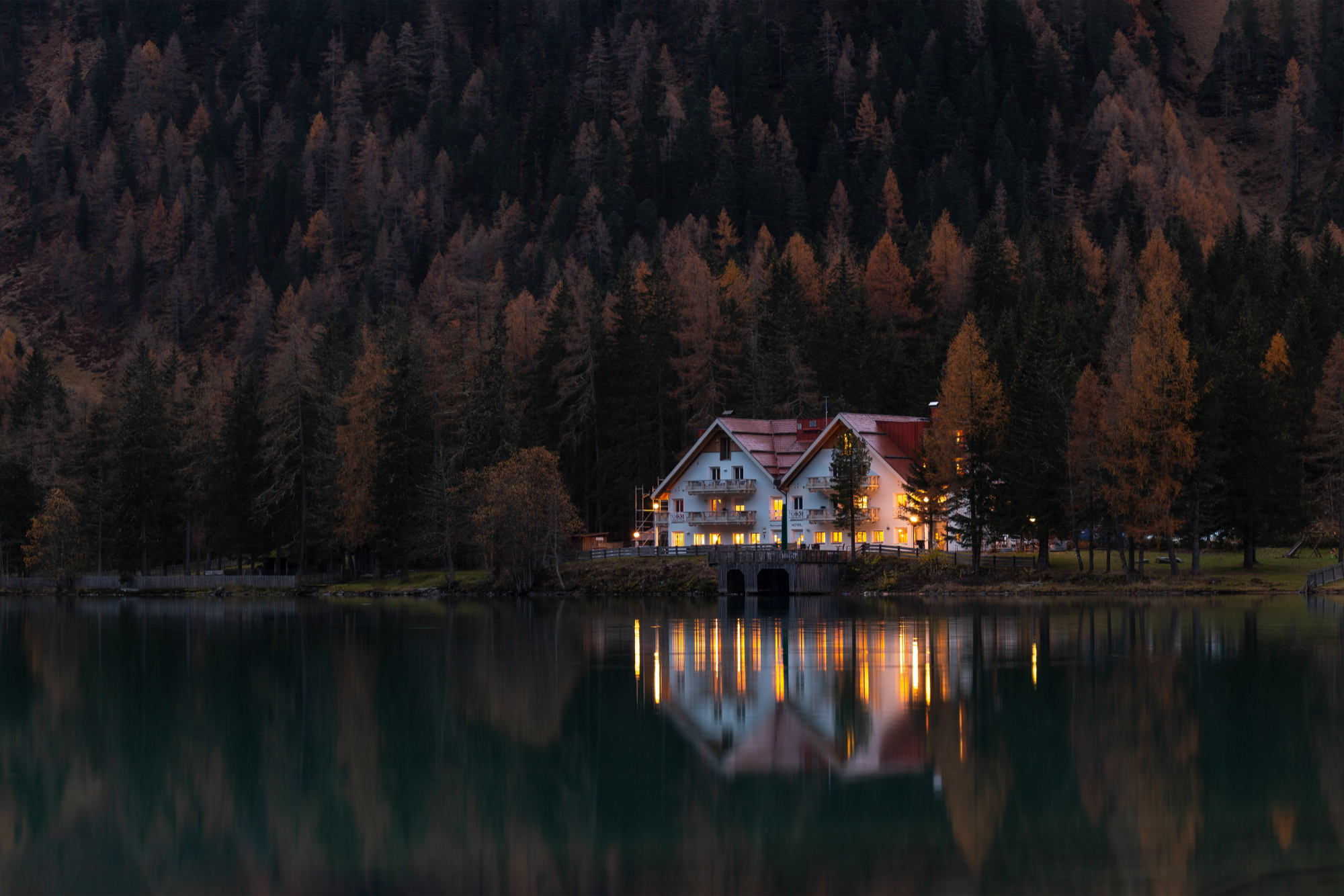
My son’s wife was standing in the middle of my kitchen with her arm stretched out straight, pointing at my front door. The door I hung myself in 1994. The one with the brass knocker shaped like a loon that my wife Patricia found at a flea market in Orillia and made me install even though I told her nobody would ever use it.
Renata’s finger didn’t shake. Her voice didn’t shake. She said it the way you’d tell a contractor the job needed to be done by Friday.
“The first guests arrive on Friday at four,” she said. “A family from Mississauga. They’ve paid in full. The cleaners come Thursday. I need you and your things out before then.”
I was standing at the counter with the coffee pot in my hand. I’d just poured myself a cup. I looked at the coffee. Then I looked at her.
“My things,” I said.
“Your personal items. Clothes. Your tools. Whatever you need.” She waved her hand at the kitchen. “The furniture stays. The guests expect a furnished cottage. I’ve already had it photographed.”
“You’ve had my house photographed.”
“It’s on the listing.” She took out her phone, tapped it twice, and turned the screen toward me like she was showing me a picture of a new car. “Look. Isn’t it beautiful? We’re booked solid through August.”
I looked.
There was my living room. My stone fireplace. My old leather chair by the window. And laid across the back of the couch, perfectly smoothed out for the camera, was the blue-and-white quilt Patricia made the winter before she got sick. The one she stitched by hand, one square a night, sitting in that leather chair while I read the paper.
Under the picture, in bold letters: Charming Lakefront Retreat — Rustic Luxury on Lake Couchiching. Sleeps 8. $495/night.
I set the coffee pot down on the burner.
Renata put her phone back in her purse. “I know this is hard for you, Walter,” she said. She said it softly. The kind of soft that isn’t kind at all. “But you need to be realistic. You’re sixty-three. You’re alone up here. You can’t keep this place up forever. This is the best thing for everybody.”
She smiled at me.
“Forty-eight hours,” she said again.
I looked at her for a long moment. At her good wool coat and her leather boots and her car keys dangling from one finger. At the brass key on the ring. The key to my front door.
Then I nodded.
That’s all I did. I nodded.
She took it the way she’d taken every soft answer I’d ever given her. As a yes.
She walked out my front door without closing it behind her. I stood in my kitchen and listened to her car back out of my gravel driveway. Then I picked up my phone and called my lawyer.
By sunset, her key didn’t work anymore.
But that’s getting ahead of things. I should tell you who I am. And how an old man ended up being told to leave his own home by a woman he’d fed at his table for eight years.
My name is Walter Duncan. I’m sixty-three years old. I’ve learned that people show you who they are fastest when they think you have nothing left to protect.
Renata never liked my flannel shirts.
She never liked my dented Ford pickup, either. It’s a 2009 F-150, dark green, with a crease in the tailgate from when a load of two-by-sixes slid backward on the 400 in 2014. She never liked the way I drank my Tim Hortons out of the same old steel travel mug every morning, sitting on the end of the dock at sunrise with my boots hanging over the water. The mug has a dent in it too. Patricia dropped it off the dock in 2006, and I fished it out with a rake.
Renata looked at all that and saw a tired old man in work boots.
That was convenient for her.
I spent most of my life in construction.
I started at seventeen, hauling shingles up ladders for a roofer in Barrie who paid me five dollars an hour cash and yelled at me in Portuguese. My hands were raw by the end of the first week. I ate peanut butter sandwiches on the tailgate of his truck and slept like a dead man every night.
By twenty-five, I had my own crew. Three guys and a rusted-out van. We did decks, fences, basements. Anything anybody would pay us for. I worked through winters so cold the nails froze to my gloves. I did my own invoices at the kitchen table at midnight with a calculator and a pot of coffee.
By thirty-five, Duncan Contracting had forty employees and a real office with a sign on it. We built houses. Then subdivisions. Then a strip mall in Barrie, a medical clinic in Orillia, a fire station in Innisfil.
I sold the company when I was fifty-eight. Patricia had just gotten her diagnosis. Pancreatic. I wanted to be home.
She had eleven months. We spent all of them here, at the cottage.
Patricia and I never cared for showy money.
We grew up with the same kind of parents. Hers ran a hardware store in Midland. Mine drove a snowplow for the county. Neither of our families ever had much. And both of us learned the same thing growing up: that money, once announced, turns family visits into negotiations.
Patricia’s uncle won a lottery once. Two hundred thousand dollars, back in 1978. Within a year, he didn’t have a single relative left speaking to him. Everybody wanted something. Everybody felt they deserved something. The ones he said no to hated him. The ones he said yes to hated him more, because it wasn’t enough.
“Wealth is safest when it stays quiet,” Patricia used to say.
So we stayed quiet.
We bought the cottage in 1993, when it was a falling-down fishing shack on an acre of rocky shoreline that nobody wanted. I rebuilt it myself over three summers. Every board. Every window. Every shingle. I sanded and sealed the kitchen table from a slab of white oak that came out of a barn we tore down in Coldwater.
We bought a few other things too, over the years. Quietly. When the company was doing well. A small commercial building in Barrie, which I paid off in 2011. A couple of rental houses in Orillia. A duplex in Toronto, back when Toronto duplexes still cost less than a mortgage on the moon.
We never talked about it. We never needed to. I kept driving the F-150. Patricia kept shopping at the No Frills. We kept our money in quiet places and our lives in plain ones.
After she died, I moved up to the cottage full time. I sold the house in Barrie. I kept the flannel.
Marcus, my only son, knew I’d done well.
He wasn’t stupid. He’d grown up watching the company grow. He knew the cottage was mine, free and clear. He knew I paid for his wedding. He knew I helped him with the down payment on his condo in Barrie. He knew I’d quietly opened an education account for my granddaughter, Claire, the week she was born.
He knew enough. He’d just never asked for details. And I’d never offered.
That’s how Patricia and I raised him. You don’t count other people’s money. Not even your parents’.
But Renata?
Renata only saw the truck, the shirt, and the old man who didn’t brag.
Marcus met Renata nine years ago at a charity golf tournament in Collingwood. She was working registration. He was playing badly. She told him so. He married her fourteen months later.
I want to be fair about Renata. That’s important to me. She wasn’t a monster. She was sharp and funny and very pretty, and she could organize anything. She planned their whole wedding in five months. She ran a small interior design business out of a rented storefront in Barrie. She was good at it. Clients loved her.
She was also the kind of person who looked at a room and immediately saw what was wrong with it.
The first time she came up to the cottage, she stood in the middle of my living room and turned in a slow circle.
“It’s so…” She searched for the word. “Authentic.“
Patricia heard what she meant. So did I.
“Thank you,” Patricia said. “Walter built it himself.”
“Oh, I can tell,” Renata said.
For the first few years, it was little things.
She’d bring me new shirts at Christmas. Nice ones. Button-downs from a store in Yorkville. “Just something a little more updated, Walter.” I wore them to church. Once. They were itchy.
She’d look at the F-150 in the driveway and say, “Have you ever thought about something newer? Something more reliable? At your age, you don’t want to break down on the highway.”
She’d see me pour my coffee into the dented steel mug and say, “Walter, I bought you that beautiful ceramic set. Why don’t you ever use it?”
I’d smile and say, “This one keeps it hot.”
She’d sigh. Marcus would change the subject.
I didn’t mind. Not really. She wasn’t the first person to look at me and see less than was there. After forty years in construction, you get used to it. People see a man in work boots and assume he’s never read a book. I’ve read a lot of books. Patricia and I read together every night for thirty-four years.
I just let it slide.
That was my mistake, I suppose. The first one.
After Patricia died, things changed.
Renata started coming up to the cottage more. At first I thought she was being kind. Checking on me. The grieving widower alone on the lake. She’d bring casseroles. She’d bring Claire.
Claire was six then. She’s nine now. She has Patricia’s dark eyes and Patricia’s laugh and absolutely no fear of anything. The first summer after Patricia died, Claire followed me everywhere. Down to the dock. Out to the shed. Into the canoe. She’d sit on the end of the dock next to me at sunrise with her own little mug of hot chocolate, swinging her legs over the water.
“Grandpa,” she’d say. “Do you think Grandma can see the lake from heaven?”
“I think she can see it better than we can.”
“Does she miss it?”
“I think she’s probably telling God how to fix his dock.”
Claire would laugh so hard she’d spill her hot chocolate.
That was the good part. Claire was always the good part.
But I noticed Renata looking around more on those visits. At the stone fireplace. At the view from the big front window. At the three bedrooms upstairs and the bunkie out back that I built for Marcus when he was a teenager.
“This place must be worth a fortune,” she said once. Lightly. Like she was just making conversation.
“I suppose it is,” I said.
“Lakefront. On Couchiching. Do you know what cottages like this go for now?”
“I don’t really pay attention.”
She looked at me like I was a child who’d just told her I didn’t know how to read a clock.
The first time she brought up renting it out, she called it a business opportunity.
It was two years ago. Thanksgiving. We were sitting at the white oak table after dinner. Claire was asleep on the couch under Patricia’s blue-and-white quilt.
“Walter,” Renata said. “I’ve been doing some research.”
She took out her tablet. She had a whole presentation ready. Graphs. Numbers. Screenshots.
She’d already checked short-term rental prices on the lake. She’d already found a management company in Orillia that would handle bookings and cleaning. She’d already done the math on what the cottage could bring in during the summer. She’d already imagined strangers sleeping in the rooms where Patricia’s quilts were still folded neatly in the cedar chest at the foot of every bed.
“You’re only here by yourself,” she said. “Most of the time. This place is just sitting empty. It’s a waste of an asset. You could be making thirty, forty thousand dollars a summer.”
“I don’t need thirty thousand dollars.”
“Everybody needs thirty thousand dollars.”
“I’m not everybody,” I said.
She laughed like I’d made a joke.
“Just think about it,” she said. “That’s all I’m asking. Think about it.”
And I said the thing I’ve said a thousand times in my life, to clients and bankers and building inspectors and my own son. The thing a polite man says when he doesn’t want a fight.
“I’ll think about it.”
Renata heard yes.
That’s how pushy people steal ground from polite people. One soft answer at a time.
For months after that, she sent me things.
Renovation links. Walter, look at this kitchen. Imagine this in the cottage. Guests would pay so much more. Rental estimates. Just ran the numbers again! You’d make even more than I thought! Design ideas. Paint samples. Pictures of cottages on other lakes that had been “updated” with white walls and gray floors and big metal light fixtures that looked like they belonged in a factory.
Contracts I’d never asked for. From the management company. Just so you can see how simple it is. No pressure.
I didn’t answer most of them. When I did, I said the same thing. Thanks. I’ll think about it.
Marcus sat through all of it.
When Renata would bring it up at dinner, he’d get very quiet. He’d look at his plate. He’d cut his food into very small pieces. When I looked at him, he’d look away.
It’s a particular kind of silence. I’ve seen it in a lot of men. The silence of grown children who don’t want to choose between their parent and their spouse. It isn’t agreement. It isn’t disagreement. It’s just a man trying very hard to be invisible at his own table.
I understood it. I’d done it myself, once, with my own father and Patricia. It’s easier to say nothing.
But understanding a thing doesn’t make it hurt less.
Then came March.
It was a Saturday. Marcus and Renata drove up with Claire for the weekend. There was still ice on the lake, but it was getting soft and gray at the edges. You could hear it groaning at night.
After lunch, Claire went down to the dock to look for signs of spring. Renata sat down across from me at the white oak table. The same table I sanded and sealed myself thirty-one years ago.
She opened a leather folder. She took out a document. Four pages, stapled. She slid it across the table toward me.
“I had a lawyer draw this up,” she said. “So everything’s official. So everybody’s protected.”
I picked it up. I put on my reading glasses.
It was called a Property Management and Revenue Sharing Agreement.
According to her little agreement, I would hand over management rights to my own home for three years. Marcus and Renata would handle everything. Bookings, renovations, maintenance, guests. They would collect all the rental income.
And I would get a flat payment of fifteen hundred dollars a month.
Like I was being given a small allowance from the life I built.
I read it twice. Slowly. Every word. There was a clause on page three that said the “Owner agrees to vacate the premises during all booked rental periods.” There was another one on page four that said the “Managers may make such improvements and modifications to the property as they deem necessary to maximize rental value.”
Modifications.
I thought about the white oak table. The stone fireplace. The leather chair. The quilts in the cedar chests.
I set down the document.
Then I set down my coffee.
“No,” I said.
Renata smiled at me. The kind of smile you give an old man who’s gotten confused about what day it is.
“Walter,” she said. “You need to be realistic.”
“I am being realistic.”
“You’re sixty-three. You’re living alone in a cottage an hour from the nearest hospital. What happens when you fall on that icy dock? What happens when you can’t drive anymore?” She leaned forward. “There are some very nice retirement communities near Barrie. Marcus and I have looked at a few. There’s one called Maple Glen. They have a woodworking shop. You’d love it.”
I stared at her.
She’d looked at retirement homes. For me. Without asking me.
I looked at Marcus.
He was sitting at the end of the table. He had his hands around his coffee mug. He was staring at it like it held the answers to every question in the world.
He looked at the table.
That hurt worse than anything she said.
I didn’t sleep that night.
I lay in the bed Patricia and I shared for twenty-two years and listened to the lake. You can hear it in March. The ice shifting. Cracking. Settling. A long, low groan that sounds like the whole lake is breathing.
I thought about Patricia.
I thought about her sitting in the leather chair that last winter, stitching the blue-and-white quilt. She was so weak by then she could only do one square a night. Some nights, not even that. But she kept going. She finished it three weeks before she died.
“For the cottage,” she said when she handed it to me. “So something of me stays here.”
I thought about Claire, asleep down the hall in Marcus’s old room. In the bed I built for him when he was eight. Under a quilt Patricia made for Claire’s first birthday.
And I thought about the kind of man who signs away his own peace just to keep everybody comfortable.
I’d been that man my whole life, in some ways. Patient. Quiet. Polite. The kind of man who says I’ll think about it when he means no. Who lets people assume what they want to assume because correcting them feels like bragging. Who stays in the background.
It had always seemed like the decent way to live.
But lying there listening to the ice, I started to wonder if decency and weakness look the same from the outside. And if they do, whether the difference even matters to the people who take advantage of it.
At eight o’clock the next morning, before anybody else was awake, I went out to the truck with my phone and called Raymond.
Raymond Achebe has been my lawyer for twenty-six years. He has an office on Bay Street in Toronto with a view of the lake and a receptionist who calls everybody “love.” He’s sixty, soft-spoken, and the sharpest man I’ve ever met. He handled the sale of my company. He handled Patricia’s estate. He knows every property and every account I have, down to the penny.
He picked up on the second ring. “Walter. It’s Sunday.”
“I know. I’m sorry.”
“Is everything all right? Are you hurt?”
“No. Nothing like that.” I looked through the windshield at the cottage. At the smoke curling out of the chimney. At the ice on the lake. “Raymond, I think I need some help. With family.”
He was quiet for a moment.
“Tell me,” he said.
I told him. About the rental links. The design ideas. The contracts. The agreement at the kitchen table. Maple Glen.
When I finished, he didn’t say anything for a while.
Then he said, “Send me everything.”
“Everything?”
“The agreement. The emails. The rental paperwork. The texts. Every little message you’ve ignored because you didn’t want to turn family into a file folder.” He paused. “I know you, Walter. I know you’ve kept all of it.”
He was right. I had. I don’t delete things. Patricia used to tease me about it.
“You’ll have it in an hour,” I said.
“And Walter?”
“Yeah?”
“Don’t sign anything. Don’t agree to anything. Don’t say ‘I’ll think about it’ anymore. If she asks, you say ‘Talk to my lawyer.’ That’s all.”
When I went back inside, Renata was in the kitchen making coffee in a French press she’d brought from home.
“Good morning, Walter,” she said brightly. “Did you sleep well?”
“Not really.”
“Well, think about what I said. Take your time. There’s no rush.” She smiled. “We can talk about it next time we’re up.”
I didn’t answer.
Claire came down the stairs in her pajamas, rubbing her eyes. She ran straight to me and wrapped her arms around my waist.
“Grandpa, can we go look for loons today? Can we? The ice is almost gone.”
“Not quite yet, sweetheart. Maybe next month.”
“Will you save me a spot on the dock?”
“I always do.”
Over her head, I saw Marcus standing in the kitchen doorway. He was looking at me. For just a second, he looked like he wanted to say something.
Then Renata said, “Marcus, can you load the car? We should get going before the traffic.”
And he turned around and went out to load the car.
Three weeks later, Renata came back alone.
It was a Tuesday afternoon. I was in the shed, sharpening the blades on the push mower. I heard a car pull into the driveway. I heard the car door. I waited for the knock on the front door. For the brass loon.
There wasn’t one.
I heard the front door open.
I walked back up to the house. When I came into the kitchen, Renata was standing there with her coat still on. She had a leather folder in one hand and a set of keys in the other.
She’d let herself in with Marcus’s key.
That told me the conversation was over before it began.
“Walter,” she said. “Good. You’re here.”
“I’m always here,” I said. “I live here.”
She didn’t seem to hear that. She put the folder down on the white oak table. She opened it. She took out a document.
“I’ve had a new agreement drawn up,” she said. “A cleaner one. More professional. The old one had some language issues. This one’s much simpler.” She slid it across the table. “You’ll see it’s very fair.”
I didn’t pick it up.
I went to the counter. I made coffee. I took my time. I poured it into the dented steel mug.
She talked the whole time. About the rental market. About the management company. About how it was “irresponsible” to let an asset like this sit idle. About how Marcus was “under a lot of pressure” and it would really help the family. About how she’d already done most of the work, and all I needed to do was sign.
She spoke as if the cottage had already moved from my hands into hers. As if all I needed to do was stop being difficult.
When she finished, I turned around.
“I’m not signing this,” I said. “And I need the key back.”
Her face changed.
It was only for a second. A little flicker. Like a light bulb about to burn out. Then she smoothed it over. She smiled.
“Walter,” she said. “You should think about what kind of relationship you want with your son.”
I looked at the key in her hand. The little brass key on her ring.
“I’d like a relationship,” I said, “where people knock before entering my home.”
She stared at me for a long moment.
Then she took the key off her ring. She put it on the table.
And then she did something I didn’t expect.
She pointed at my front door.
“You have forty-eight hours to leave,” she said.
I thought I’d heard her wrong.
“I’m sorry?”
“The first guests arrive on Friday at four,” Renata said. “A family from Mississauga. They’ve paid in full. The cleaners come Thursday.” She pulled out her phone and showed me the listing. The pictures. Patricia’s quilt on the back of the couch. Charming Lakefront Retreat. Sleeps 8. $495/night. “We’re booked solid through August.”
I looked at the screen. Then at her.
“How did you list my cottage?” I asked. Very quietly. “It’s not yours.”
“The management company handled it.”
“The management company needed the owner’s authorization.”
She didn’t answer that. She just put her phone back in her purse.
“I know this is hard for you, Walter,” she said. “But you need to be realistic. This is the best thing for everybody.”
She smiled.
“Forty-eight hours.”
And she walked out of my house without closing the door behind her.
I stood in my kitchen for a long time. The cold March air came in through the open door. I could hear her car backing down the gravel.
Then I nodded.
Not to her. She was gone. I nodded to myself. To the kitchen. To the white oak table. To Patricia’s quilt on the back of the couch.
Then I picked up my phone and called Raymond.
“She did what?” Raymond said.
I told him again.
He was quiet for a long time.
“Walter,” he said. “Short-term rental management companies in Ontario don’t list a property without a signed authorization from the owner. Proof of ownership. A management contract. Did you sign anything?”
“No.”
“Did you authorize anyone to sign on your behalf?”
“No.”
Another long silence.
“Give me an hour,” Raymond said.
He called back in forty minutes.
“I spoke to the management company,” he said. “In Orillia. Lakeside Stays. Nice woman named Deborah. Very upset. She sent me the contract they have on file.” He paused. “It’s signed, Walter. By you. Dated February twenty-eighth. With a copy of your driver’s license attached.”
I sat down at the kitchen table.
“I didn’t sign anything,” I said.
“I know you didn’t. I’m looking at it right now. It’s not your signature. It’s close. Somebody practiced. But I’ve seen your signature on four hundred documents over twenty-six years. It’s not yours.”
“Where did they get my driver’s license?”
“I was hoping you could tell me.”
I thought about it. Then I remembered.
Last Christmas. Renata had offered to help me renew my health card online. “It’s so complicated, Walter, let me do it for you.” She’d taken a picture of my license with her phone. Front and back.
I’d thanked her.
I changed the locks that afternoon.
I didn’t call a locksmith. I’ve been installing door hardware since before Renata was born. I drove to the Canadian Tire in Orillia and bought three new deadbolts and a new keyed knob for the back door. I installed all of them myself. It took me two hours.
By sunset, the locks were changed.
At six-fifteen, I heard a car in the driveway.
I was sitting in the leather chair by the front window. I watched Renata get out of her car. Behind her, a white van pulled in. Two women in blue polo shirts got out, carrying buckets and mops.
The cleaners. A day early.
Renata walked up to my front door. She had a key in her hand. A new one. A copy. Of course she had a copy.
She put it in the lock.
It didn’t turn.
She tried again. She jiggled it. She pulled it out and looked at it. She put it back in.
It didn’t turn.
She looked up and saw me sitting in the window.
For a moment, we just looked at each other through the glass. Her on the porch in her good wool coat. Me in my leather chair in my flannel shirt, holding my dented mug.
Then she knocked. Hard. Not with the brass loon. With her fist.
I got up. I opened the door. I didn’t open the storm door.
“Walter,” she said. Her voice was tight. “What did you do?”
“I changed my locks.”
“The cleaners are here. They need to get in.”
“They’re not coming in.”
“The guests arrive Friday!”
“No,” I said. “They don’t.”
She stared at me.
“I spoke to my lawyer,” I said. “And your management company. Deborah at Lakeside Stays. She’s refunding every booking. Tonight. The listing’s already down.”
Renata’s face went white.
“And she sent my lawyer a copy of the contract they have on file,” I said. “The one with my signature on it.”
She didn’t say anything.
“I didn’t sign it, Renata.”
The two cleaning women behind her looked at each other. Then, very quietly, they walked back to their van and got in and closed the doors.
Renata stood on my porch. She opened her mouth. She closed it.
“Go home,” I said. “Talk to Marcus. My lawyer will be in touch.”
I closed the door.
I didn’t slam it. I’ve never slammed a door in my life. I just closed it, quietly, the way you close a door on a room where somebody’s sleeping.
Then I went back to my leather chair and sat down, and my hands started to shake so badly I spilled my coffee all over my knee.
I drove to Toronto the next morning.
Raymond’s office is on the thirty-first floor. You can see the whole lake from his windows. Lake Ontario, big and gray and endless. His receptionist brought me a coffee and called me “love.” I drank it out of a paper cup. It wasn’t as good as Tim’s.
Raymond had a stack of files on his desk. He’d been up all night.
“Sit down, Walter,” he said.
I sat.
He opened the top folder. The fake contract. The copy of my license. The listing. The bookings. Eleven weeks of reservations. Nearly thirty thousand dollars in deposits, already paid to Lakeside Stays, with the first payout scheduled to go to a bank account on Friday.
“Whose account?” I asked.
Raymond slid a piece of paper across the desk. A bank transfer form. Account holder: R. Duncan Designs.
Renata’s business.
Not a joint account. Not Marcus’s name anywhere on it.
I sat back in my chair.
“Walter,” Raymond said quietly. “What she did is fraud. Forging a signature on a legal contract. Using your identification without permission. Listing your property for rent without authorization. Collecting money under false pretenses. Any one of those is serious. All of them together…”
He didn’t finish.
“You’re telling me she could go to jail.”
“I’m telling you she could be charged. Whether she goes to jail would be up to a judge.” He took off his glasses. “But I’m also telling you that this is your decision. Not mine. I can send this to the police today. Or I can send a letter. Or both.”
I looked out the window at the lake.
“She’s Claire’s mother,” I said.
“I know.”
“And she’s Marcus’s wife.”
“I know that too.”
“If she goes to jail, what happens to Claire?”
Raymond didn’t answer. He didn’t have to.
I sat there for a long time. The coffee got cold in the paper cup.
“There’s something else,” Raymond said finally.
He pulled another file from the bottom of the stack. Thicker. Older. It had a label on the tab in his neat handwriting. Duncan Family Trust — Updated.
“You remember this,” he said. It wasn’t a question.
I remembered.
After Patricia died, Raymond and I had sat in this same office and set up a family trust. All five properties went into it. The cottage. The commercial building in Barrie. The two rental houses in Orillia. The duplex in Toronto. The investment accounts. Everything. Together, it came to a little over four point two million dollars.
I was the trustee. When I died, the trust would pass to Marcus and Claire.
“You asked me to update it last fall,” Raymond said. “You never signed the final version. You said you wanted to think about it.”
I’d said that a lot, it turned out.
“What’s the update?” I asked, even though I knew.
Raymond opened the file. He turned it around so I could read it.
It was one paragraph. On page nine. A clause Patricia had wanted. We’d talked about it together, before she died. She’d said it was just common sense. I’d said I didn’t want to be the kind of man who didn’t trust his own family. She’d said, “Walter, it’s not about trust. It’s about protection. For Claire.”
The clause said that no spouse of any beneficiary would ever have authority over the trust, its properties, or its accounts. Not during my lifetime. Not after. Not through marriage, divorce, or any other means. And any beneficiary or spouse who attempted to encumber, lease, sell, or otherwise interfere with trust property without the trustee’s written consent would be subject to review by an independent co-trustee.
It named that co-trustee.
Raymond Achebe.
“Patricia wanted this,” Raymond said quietly. “She told me herself. The week before she died. She called me from the cottage. She said, ‘Make sure Walter signs it. He won’t want to. He never wants to think badly of anybody.'”
I closed my eyes.
“She knew,” I said.
“She didn’t know,” Raymond said. “She just knew you.”
I opened my eyes. I picked up the pen on his desk.
I signed it.
Raymond drafted the letter that afternoon.
It wasn’t loud. It wasn’t emotional. It was legal.
It was addressed to Marcus and Renata Duncan. It explained, in plain language, that the cottage on Lake Couchiching was held in the Duncan Family Trust, along with four other properties and several investment accounts, with a combined value of approximately four point two million dollars. It attached a schedule listing every property. It explained that Walter Duncan was the sole trustee. It explained the new clause. It named Raymond as independent co-trustee.
Then it explained the rest.
That on February twenty-eighth, a property management contract was submitted to Lakeside Stays of Orillia bearing a forged signature of Walter Duncan and a copy of his identification obtained without consent. That the property was listed for rent without authorization. That deposits in the amount of $29,640 were collected and scheduled for transfer to an account held by R. Duncan Designs.
That all bookings had been cancelled and refunded.
That the matter would not be referred to police at this time, provided that the following conditions were met within forty-eight hours of receipt:
A signed written statement from Renata Duncan admitting to the forgery.
The return of all copies of keys to the property.
Reimbursement of all cancellation fees charged by Lakeside Stays to the trust.
And no further contact from Renata Duncan with Walter Duncan regarding the property, the trust, or any financial matter, except through counsel.
Forty-eight hours.
I didn’t pick that number. Raymond did. He said it was standard.
But I noticed.
Raymond had the letter couriered to Marcus and Renata’s condo in Barrie. Signature required.
It arrived Thursday afternoon.
I was sitting on the end of my dock with my travel mug. The ice was mostly gone now. Just a few thin gray sheets floating out in the middle of the lake. The first loons had come back that week. I’d heard one calling at dawn.
My phone rang at 3:47.
It wasn’t Renata.
It was Marcus.
“Dad,” he said quietly.
His voice sounded like a man who’d just opened a door and found the floor missing.
“Hi, son.”
A long silence.
“Renata didn’t know about the other properties,” he said.
I looked out at the lake. My coffee was going cold in my hand.
“No,” I said. “She didn’t.”
“I didn’t know either. Not really. I mean, I knew you’d done well. I knew about the cottage. But the building in Barrie? The houses in Orillia? The duplex?” He laughed. It wasn’t a real laugh. “Four point two million, Dad.”
“Your mother and I didn’t like to talk about it.”
“I know. I know you didn’t.” He took a breath. “She opened it. The letter. It was addressed to both of us, but she got home first. She opened it at the kitchen counter. I came in, and she was just standing there. Holding it. Her hand was frozen over the envelope. She didn’t even hear me come in.”
I didn’t say anything.
“She showed me the schedule first,” Marcus said. “The properties. I think she thought… I don’t know what she thought. She was just staring at it. And then she turned the page.”
His voice broke.
“Dad,” he said. “Did she really forge your signature?”
I closed my eyes.
“Yes,” I said.
“And she put the money in her business account? Not ours?”
“Yes.”
Marcus made a sound. Like something inside him had torn.
“I didn’t know,” he said. “I swear to God. I didn’t know. She told me you’d agreed to it. She told me you’d signed. She said you’d changed your mind and called her. She said you wanted to go to Maple Glen but you were too proud to say it.”
I sat very still on the end of the dock.
“You believed her,” I said.
“I wanted to,” Marcus said. “Dad, I wanted to so badly. Because if I believed her, I didn’t have to do anything. I didn’t have to pick.”
The loon called out on the lake. A long, low sound. Lonely.
“Marcus,” I said. “I need you to come up here. Tonight. By yourself. We need to talk.”
“She’s in the bedroom,” he said. “She’s been in there for an hour. She won’t come out.”
“Come anyway.”
My phone buzzed a minute after I hung up.
A text from Raymond.
Formal notice delivered. Signed for 3:22 PM by R. Duncan.
And that’s when I knew Renata had finally opened the wrong document.
Marcus got to the cottage at nine that night.
I heard his car in the driveway. I heard his footsteps on the porch.
And then I heard the brass loon.
Knock. Knock. Knock.
For the first time in eight years, somebody used it.
I opened the door. My son was standing on the porch in a hoodie and jeans. His eyes were red. He looked about fifteen years old.
“Can I come in?” he asked.
I stepped back. He came in.
We sat on the dock.
It was cold. April on Lake Couchiching is still cold at night. I brought out two old wool blankets from the cedar chest. Patricia’s. The green ones she knitted the first winter we owned the cottage. We sat on the end of the dock with the blankets around our shoulders and our feet hanging over the black water.
For a long time, neither of us said anything.
Then Marcus said, “We’re drowning, Dad.”
I turned and looked at him.
“Financially,” he said. “We’re drowning. Renata’s business. It’s been failing for two years. She never told me how bad it was. I found out in January. She’s got a line of credit maxed out. Two credit cards maxed out. She’s three months behind on the rent for the storefront. The landlord’s threatening to sue.”
“Why didn’t you tell me?”
“Because she made me promise not to.” He pulled the blanket tighter. “She said if you knew, you’d think she was a failure. She said your family always looked down on her. She said the only way out was the cottage. That the rental money would fix everything. That you’d never even notice.” He laughed a little. “She said you’d probably thank us. For taking care of it. For ‘maximizing the asset.'”
“And you went along.”
“I didn’t go along. I just didn’t…” He stopped. “I didn’t say anything. That’s the same thing, isn’t it?”
I didn’t answer.
“When she brought out that agreement,” Marcus said, “at your table. In March. I wanted to say something. I wanted to say, ‘Renata, stop.’ I wanted to say, ‘This is my dad’s house. My mom’s house. We’re not doing this.'” He was crying now. Quietly. The way his mother used to cry. “But I just sat there. And looked at the table. And I watched your face when she said Maple Glen.”
He wiped his face with his sleeve.
“I’m so sorry, Dad,” he said. “I’m so sorry.”
I looked out at the lake. At the moon on the black water. At the far shore, where a few cottage lights were starting to come on for the season.
“Do you know why I never told you about the other properties?” I asked.
He shook his head.
“Because your mother and I wanted you to build your own life,” I said. “Not wait around for ours. We saw what money did to her uncle. We saw what it did to people. We didn’t want you to grow up thinking there was a pile of gold at the end of the road. We wanted you to work. To be proud of what you built.”
“I know.”
“But I think I made a mistake,” I said. “By staying so quiet. By being so polite. By saying ‘I’ll think about it’ every time somebody pushed. I thought I was being decent. I thought I was keeping the peace.” I shook my head. “I wasn’t keeping the peace. I was just letting other people decide what I meant.”
We sat there for a while.
“Renata thought I was a broke old man,” I said. “She thought my silence meant I had nothing. She thought if she just kept pushing, I’d give up. And the truth is, if I really had been a broke old man, she’d have gotten away with it. I’d have been in Maple Glen by summer, and strangers would be sleeping under your mother’s quilts.”
Marcus flinched.
“That’s the part that keeps me up,” I said. “Not the money. Not the forgery. It’s that she thought I was powerless. And she was going to treat me the way you treat people you think are powerless.”
“I know, Dad.”
“And you let her.”
He put his face in his hands.
“I know,” he said. “I know.”
We talked until two in the morning.
About Renata. About the debt. About Claire, who’d been asking for weeks why Mommy and Daddy were fighting so much. About Patricia, who Marcus hadn’t really talked about since the funeral.
At one point, Marcus said, “What are you going to do? If she doesn’t sign? If she doesn’t meet the conditions?”
“Then Raymond sends it to the police.”
“Would you really do that?”
I thought about it for a long time.
“I don’t want to,” I said honestly. “But I’m done saying ‘I’ll think about it.’ I’ve said it too many times. Every time, somebody took a little more.” I looked at him. “If she signs, and she pays back the fees, and she leaves me alone, I’m willing to let this go. For Claire. Not for her. For Claire.”
Marcus nodded slowly.
“And the debt?” he asked quietly. “The business?”
I looked out at the lake.
“That’s between you and her,” I said. “It’s your marriage. Your decision. But I’ll tell you this. If you need help, you ask me. You. Not her. And you ask me straight. Not with a contract. Not with a presentation. Just, ‘Dad, I need help.’ That’s all it takes. That’s all it ever would have taken.”
He looked at me for a long time.
“Dad,” he said. “I need help.”
Renata came to the cottage on Saturday.
She knocked.
With the brass loon.
I was in the kitchen. I heard it. I stood there for a moment with my hand on the counter.
Then I walked to the door and opened it.
She looked different. No good wool coat. Just jeans and an old gray sweater. No makeup. Her hair was pulled back. Her eyes were swollen.
She was holding an envelope in one hand. And a key in the other. A copy. The one that hadn’t worked.
“I signed it,” she said. Her voice was hoarse. “The statement. Raymond has it. I sent the fees yesterday.” She held out the envelope. “This is a copy. For you.”
I took it.
She held out the key.
I took that too.
We stood there in the doorway. The cold April wind came off the lake.
“Can I come in?” she asked. “Just for a minute? I won’t… I just want to say something. And then I’ll go.”
I looked at her for a long moment.
Then I stepped back.
She sat at the white oak table. I didn’t offer her coffee. She didn’t ask for any.
For a long time, she just looked at the table. Ran her hand over the grain of the wood.
“You built this,” she said finally. “Didn’t you. Marcus told me once. I didn’t listen. I thought it was just an old table.”
“It came out of a barn in Coldwater,” I said. “Built in 1887. Patricia found it.”
Renata nodded slowly.
“My father had a hardware store,” she said. “In Sudbury. When I was a kid.”
I didn’t say anything.
“He lost it when I was twelve. The big box stores came in. He couldn’t compete. He lost the store, then the house. We moved into an apartment above a laundromat. My mother cleaned motel rooms. My father drove a taxi. He drank. He was so ashamed.”
She was twisting her hands together on the table.
“I swore I’d never be poor again,” she said. “Never. I swore I’d never be the one standing in the laundromat watching everybody else’s life go by. I worked so hard. I built my business. I married Marcus. I thought I was safe.” She laughed. It was a broken sound. “And then it all started falling apart. The store. The debt. Everything. And I looked at you, sitting on your dock in your flannel shirt with your beat-up truck, with this beautiful cottage just sitting here…”
She stopped. She pressed her hands against her eyes.
“I thought you were just like my father,” she said. “An old man who didn’t know what he had. Who was going to lose it anyway. Who’d be better off in a home, where somebody would take care of him. I told myself I was helping. I told myself I was saving it.”
“You forged my name, Renata.”
“I know.”
“You took a picture of my driver’s license at Christmas. Pretending to help me.”
“I know.”
“You put the money in your own account. Not Marcus’s. Yours.”
She lowered her hands. She looked at me.
“I know,” she whispered. “I know exactly what I did. I’ve been sitting in my bedroom for two days thinking about it. I can’t undo it. I can never undo it.”
She was crying now. Really crying.
“And the worst part,” she said, “is when I opened that letter. When I saw the schedule. The properties. The four point two million.” She shook her head. “My first thought wasn’t, Oh God, what have I done. My first thought was, All of this. All of this could have been ours.“
She put her face in her hands.
“What kind of person thinks that?” she said. “What kind of person reads that she’s committed fraud against her husband’s father, and the first thing she feels is greed?”
I didn’t answer.
I just sat there across the white oak table and let her cry.
After a long time, she lifted her head.
“Marcus told me,” she said. “What you said on the dock. That all he had to do was ask.”
“That’s true.”
“I never asked,” she said. “Not once. I didn’t know how. In my family, you never asked for anything. You just took what you could before somebody else took it first.” She wiped her face. “I didn’t know there were people who would just… help. If you asked.”
I looked at her.
“Patricia used to say,” I said slowly, “that you find out who people really are by what they do when they think nobody’s watching. And by what they do to people they think can’t fight back.”
Renata flinched.
“You thought I couldn’t fight back,” I said. “You thought I was a tired old man in a flannel shirt. And you decided that made it okay.”
“Yes,” she whispered.
“That’s the mistake you can never undo,” I said. “Not the forgery. Not the money. That’s paper. Paper can be fixed. It’s that you looked at a man you thought had nothing, and you decided to take the little he had left.” I paused. “What if I really had been broke, Renata? What if the cottage was all I had? You’d have done the exact same thing. You’d have put me in Maple Glen and rented out my wife’s quilts. The four point two million doesn’t change what you did. It just changes what you think about what you did.”
She didn’t say anything. She just stared at the table.
“The money was never the point,” I said.
She stood up. Slowly. Like her legs weren’t working right.
“I’m going to go,” she said. “I’ll… I won’t contact you again. Except through Raymond. Like the letter said.”
She walked to the door. She stopped with her hand on the knob.
“Claire’s been asking about you,” she said without turning around. “She wants to come up and look for loons. I told her maybe. I didn’t know if you’d…”
“Claire is always welcome here,” I said. “Always. Marcus can bring her whenever he wants.”
Renata nodded. She opened the door.
“Renata,” I said.
She stopped.
“The debt. The business. Marcus asked me for help.” I watched her shoulders go stiff. “I told him I’d help. Him. Not you. I’ll pay off the storefront lease and the line of credit. I’ll put it in writing, through Raymond. It’ll be a loan to Marcus. No interest. He pays it back when he can.”
She turned around. She stared at me.
“Why?” she whispered.
“Because he asked,” I said. “Straight. No contract. No presentation. He just said, ‘Dad, I need help.'” I paused. “And because Claire shouldn’t grow up above a laundromat.”
Renata’s face crumpled.
She put her hand over her mouth. She stood there in my doorway and cried like I’d never seen a grown woman cry.
Then she walked out and closed the door quietly behind her.
Marcus and Renata separated in June.
It wasn’t dramatic. Nobody screamed. Marcus told me on the phone one night. He said they’d been to a counselor twice, and on the second visit, the counselor asked Renata what she’d learned from all this, and she’d said, “That I’m my father’s daughter.” And then she got up and walked out of the office.
“She needs to figure some things out,” Marcus said. “By herself. Without me. And I need to figure out some things too.”
“Like what?”
“Like how to open my mouth,” he said. “When it matters.”
He moved into one of the rental houses in Orillia. The little yellow one on Mississaga Street. The tenant had just moved out. He wanted to pay rent. I let him. It made him feel better.
Claire splits her time now. Weekdays with Renata in Barrie. Weekends with Marcus in Orillia.
And every other Saturday, she comes to the cottage.
Renata closed the storefront in July. She got a job with a big design firm in Toronto. A salaried job, with benefits. She commutes on the GO train two hours each way. Marcus says she hates it. Marcus says she does it anyway.
She paid back the cancellation fees in full. She sends Raymond a check every month for the legal costs. Nobody asked her to. She just started doing it.
In August, Raymond forwarded me a letter.
It was handwritten. Two pages. On plain white paper.
Walter,
I’m not writing to ask for anything. Raymond said I could write if I didn’t mention the property, so I won’t.
I’ve been seeing a therapist. A real one, not a marriage counselor. She’s making me talk about my father. About the store. About the laundromat. I didn’t know how much of it I was still carrying around.
Last week, she asked me to write down the moment I first knew I’d done something wrong. Not when I got caught. When I first knew.
It was at Christmas. When I took the picture of your driver’s license. You thanked me. You said, “You’re a good girl, Renata. Patricia would’ve liked you.” And I stood there in your kitchen with my phone in my hand and felt sick. For about ten seconds. And then I pushed it down, because I needed the money.
I want you to know I remember those ten seconds. I think about them every day.
I’m not asking you to forgive me. I don’t think I would, if I were you. I just wanted you to know that some part of me knew. Even then. And I’m trying to listen to that part now.
Tell Claire I said hi when she comes up. She talks about the loons all week.
— Renata
I read it twice.
Then I folded it up and put it in the cedar chest at the foot of my bed. With Patricia’s quilts.
In September, Marcus and Claire came up for Labor Day weekend.
On Sunday night, after Claire was asleep, Marcus and I sat on the dock with a couple of beers.
“She asked about you,” Marcus said. “Renata. She asked how you were doing.”
“What did you tell her?”
“I told her you were fine. That you still drink out of that stupid dented mug.” He smiled a little. “She laughed.”
We sat there for a while. The water was calm. The sky was full of stars.
“Dad,” Marcus said. “Can I ask you something?”
“Sure.”
“The trust. The clause about spouses.” He looked at me. “Was that Mom’s idea?”
“Yes.”
“When did she come up with it?”
“About a week before she died,” I said. “She called Raymond from the cottage. She didn’t tell me. I found out later.”
Marcus was quiet for a long time.
“Did she know?” he asked. “About Renata?”
I thought about it.
“No,” I said. “Your mother liked Renata. She thought she was smart. And funny. And a good mother to Claire.” I paused. “But your mother also knew me. She knew I’d never say no to anybody. She knew I’d let people walk all over me before I’d make a scene. She knew that someday, somebody would push. And she knew I wouldn’t push back.”
“So she pushed back for you.”
“She pushed back for Claire,” I said. “Before Claire could even talk.”
Marcus looked out at the lake.
“I want to be like that,” he said. “Like Mom. I want to be the kind of person who sees it coming and does something. Before it’s too late. Before somebody gets hurt.”
“You’re getting there,” I said.
“I sat at your table and looked at my coffee while my wife tried to put you in a home.”
“And then you drove up here at nine o’clock at night,” I said. “And you knocked on the door. With the brass loon. And you said, ‘Dad, I need help.'” I looked at him. “That’s the first step. That’s the hardest one.”
He didn’t say anything. But he leaned his shoulder against mine, the way he used to when he was a little boy.
We sat there until the stars started to fade.
It’s October now. The leaves are turning. Red and orange and gold, all along the shoreline. The loons are getting ready to leave for the winter. You can hear them calling to each other at dawn, gathering up.
This morning, Claire and I sat on the end of the dock at sunrise.
She’s nine. She had her hot chocolate in a mug I gave her for her birthday. Steel. Just like mine. I put a small dent in it with a hammer before I wrapped it, so it would match. She thought it was the funniest thing she’d ever seen.
“Grandpa,” she said. “Mom says you’re rich.”
I almost spilled my coffee.
“Did she?”
“She said you have a lot of houses. And a building. And money in the bank.” Claire swung her legs over the water. “Is that true?”
I thought about how to answer. I thought about Patricia. About quiet money. About how a thing, once announced, turns family into negotiations.
But I also thought about what happens when you stay so quiet that people fill in the silence with whatever story suits them.
“It’s true,” I said. “Grandma and I worked very hard for a long time. And we saved. And we bought some things. And now I have them.”
Claire thought about that.
“Then why do you drive a dented truck?”
“Because it still works.”
“Why do you wear flannel?”
“Because it’s warm.”
“Why do you drink out of a dented mug?”
I held it up. “Because your grandma dropped this in the lake twenty years ago, and I fished it out with a rake. And every time I drink out of it, I remember her laughing so hard she had to sit down on the dock.”
Claire looked at the mug. Then at her own. The one with the dent I’d put in on purpose.
“So being rich doesn’t mean you have to have fancy stuff,” she said slowly.
“No.”
“It just means you get to pick what matters.”
I looked at my granddaughter for a long time.
“That’s exactly what it means,” I said.
She nodded, satisfied, and went back to her hot chocolate.
A few minutes later, she said, “Grandpa?”
“Yeah, sweetheart?”
“Mom says she did something really bad. To you. With the cottage.” Claire didn’t look at me. She looked at the water. “She won’t tell me what. She just says it was bad and she’s sorry and she’s trying to be better.”
I didn’t say anything for a moment.
“Your mom did do something bad,” I said finally. “She made a big mistake. A grown-up mistake. The kind you can’t just take back.”
“Are you still mad at her?”
I thought about it. Honestly.
“Some days,” I said.
“Are you going to forgive her?”
“I don’t know yet,” I said. “Forgiving somebody isn’t like flipping a switch. It’s more like building a house. You do it one board at a time. Some days you get a lot done. Some days it rains and you can’t work at all.”
“Is she helping build it? Or just you?”
I looked at my granddaughter. At Patricia’s dark eyes.
“She’s helping,” I said. “She’s working pretty hard, actually.”
Claire nodded. “Good,” she said. “Because houses are hard to build by yourself.”
The sun came up over the far shore. The whole lake went gold.
Out in the middle of the water, a pair of loons called to each other. That long, low, lonely sound.
Claire leaned against my arm.
“Grandpa,” she said. “Do you think Grandma can see the lake from heaven?”
“I think she can see it better than we can.”
“Do you think she’s proud of you?”
I didn’t answer right away.
I thought about the letter from Raymond. About the new locks I’d installed myself. About the brass loon on the front door that people finally use now. About the day I stopped saying I’ll think about it and started saying what I meant.
“I think,” I said, “she’s probably telling God it took me long enough.”
Claire laughed so hard she spilled her hot chocolate.
People sometimes ask me why I didn’t just tell Renata the truth from the start. About the properties. About the money. They say if she’d known, she’d never have tried it.
Maybe they’re right.
But I think if she’d known, she’d have been nicer to me. More careful. She’d have smiled more and pushed less and waited. She’d have treated me like a man with something to lose.
And I’d never have found out who she really was.
The truth is, the money doesn’t matter. It never did. What matters is how you treat people when you think they have nothing. When you think they can’t fight back. When you think nobody’s watching.
That’s the only test that counts.
Renata failed it. She’s trying to learn from it now. I’ll give her that.
My son failed it too, in his own way. By staying quiet when he should have spoken. He’s learning to open his mouth now. Slowly.
And I failed it, for a long time. Not by being cruel. By being too polite. By saying I’ll think about it when I meant no. By letting people decide what my silence meant.
I’m sixty-three years old. I’m still learning.
But I’ll tell you this. The locks on my front door are new. I installed them myself. And the only people who have keys now are the ones who knock first.

Specialty: Legal & Financial Drama
Michael Carter covers stories where money, power, and personal history collide. His writing often explores courtroom battles, business conflicts, and the subtle strategies people use when pushed into a corner. He focuses on grounded, realistic storytelling with attention to detail and believable motivations.