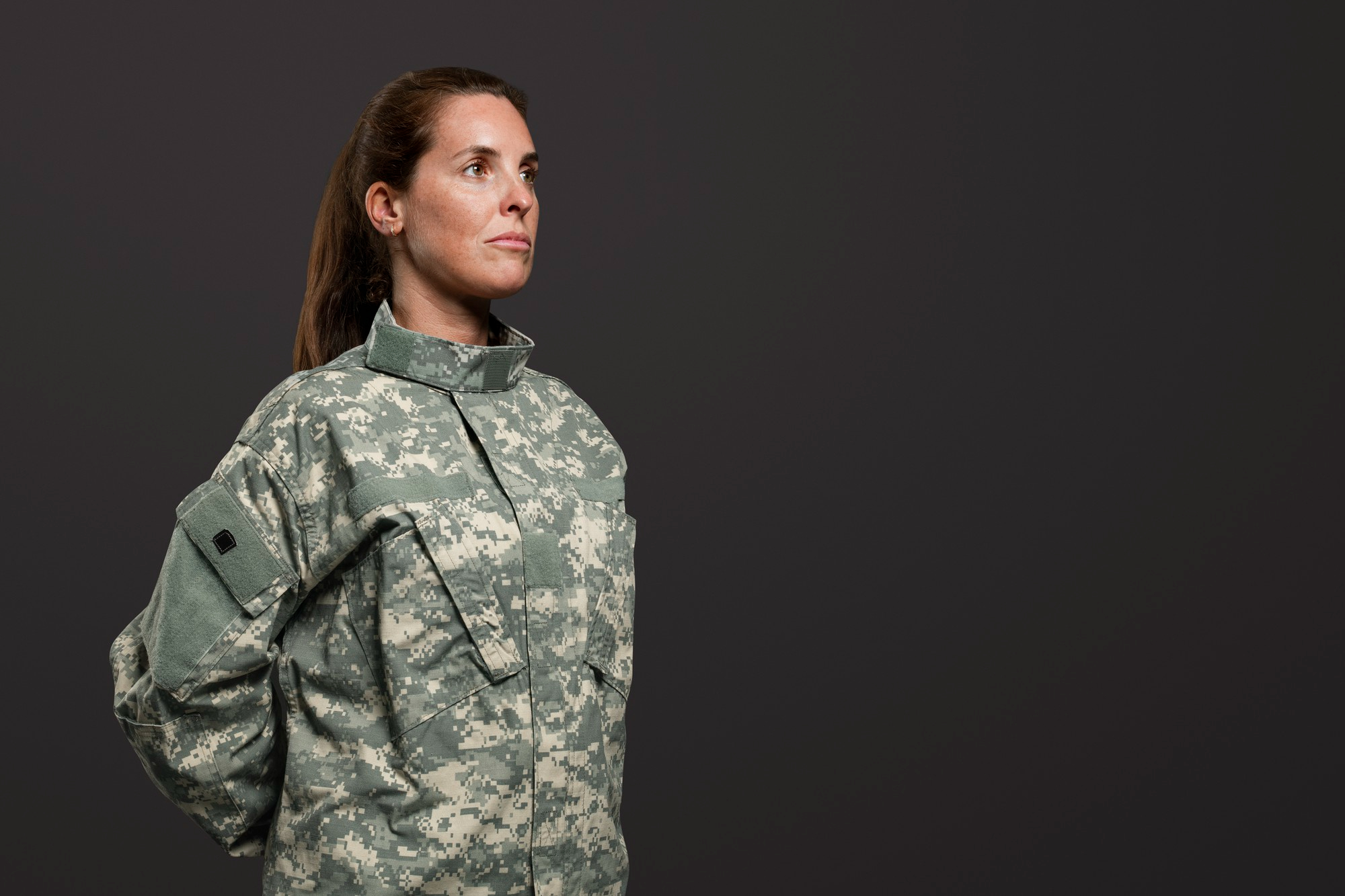
I came home from nine months overseas and found my entire life packed into black trash bags.
Not boxes.
Trash bags.
They were lined up along the wall of the front hallway like somebody had set them out for Tuesday pickup. Eleven of them. I counted. Some were tied tight at the top. Some had split along the sides, and I could see the corner of a textbook poking through one, and the sleeve of a sweatshirt hanging out of another.
I stood there with my duffel bag still on my shoulder and the front door still open behind me.
The house smelled different. Like vanilla candles and somebody else’s laundry soap.
For a second, I honestly thought I’d walked into the wrong house.
Then I saw the dent in the hallway wall, the one I’d made when I was fourteen, carrying a bookshelf up the stairs with my grandfather. He’d laughed so hard he had to sit down on the steps. “Leave it,” he’d said. “Now the house has a story.”
The dent was still there.
So this was my house.
And these were my things.
I set my duffel down on the floor, very carefully, the way you set something down when you’re not sure what’s going to happen next. Then I knelt in front of the nearest bag and untied it.
My combat boots were inside.
Not my spare pair. The pair I’d shipped home ahead of me, in the box I’d mailed from overseas the week before my unit rotated out. The exact pair I’d been wearing on the other side of the world just three days earlier. Somebody had opened that box, taken them out, and dropped them into a garbage bag.
I opened another bag.
My clothes. Hoodies. Jeans. Old PT shirts with the letters worn soft. My running shoes on top, still with dirt in the treads from my last run before I left.
Another one had my books. My framed photos, stacked face-down, glass against glass. My grandfather’s old flannel shirt that I slept in when I couldn’t sleep.
Someone had packed up my whole life while I was gone.
And they’d used trash bags to do it.
Then my mother spoke from behind me.
“You’re back earlier than we expected.”
My name is Kate Hollis. I’m a captain in the United States Army. I’d just spent nine months running logistics for a battalion in a place where the dust got into your teeth and the nights were so dark you could see every star there ever was.
I want to tell you that I’d been looking forward to coming home.
I had. But not because of my family.
I’d been looking forward to the house.
It sat at the end of a quiet street on the west side of Colorado Springs, twenty minutes from Fort Carson. It was a two-story brick house with a wraparound porch and a big backyard that ran right up to a line of old pine trees. My grandfather, Walter Hollis, built half of it with his own hands in the 1970s. He added the porch. He added the workshop in the garage. He planted the pine trees when they were no taller than me.
I spent every summer of my childhood in that house. Every holiday. Every time things got bad at home, which was often.
My grandfather was the only person in my family who ever asked me what I thought about something and then actually waited for the answer.
He died when I was twenty-four. I was at a training course in Georgia. I got the call on a Tuesday and flew home on a Wednesday and stood at his grave on a Friday in my dress uniform, and I didn’t cry until everyone had gone back to the cars.
A year later, a lawyer called me. He said there was paperwork to sign. My grandfather had set up a trust years earlier. When I turned twenty-five, the house passed out of the trust and into my name.
Just mine.
Not my father’s. Not my sister’s. Mine.
My family knew I “had the house.” That’s how they said it. Kate has Grandpa’s house. Like I was borrowing it. Like it was a sweater I was keeping warm until somebody more important needed it.
They never asked how it worked. They never asked to see anything. And I never pushed it, because pushing things in my family never ended well.
For six years, it was my home. When I was stationed at Fort Carson, I lived there. When I deployed, I locked it up and asked a neighbor to watch it, and I came home to it.
This time, before I left, my mother had called me.
“Why don’t you let your father and me keep an eye on the place while you’re gone?” she’d said. “It’s silly to have it sitting empty. We’ll check on it. Water the plants. Get the mail.”
My parents lived forty minutes away, in a rented townhouse they’d been in since my father retired. It seemed like a nice offer. It seemed like the kind of thing a normal mother would do.
I gave her a key.
I gave her the code to the garage.
That was nine months ago.
I turned around.
My mother, Evelyn, was standing at the bottom of the stairs in a cream-colored cardigan I’d never seen before, holding a mug of coffee. She looked at me and then at the open trash bags like I was the one who’d made a mess.
My father, Richard, stood behind her with his arms crossed.
My father was a retired Army lieutenant colonel. Twenty-two years in. After he retired, he took a civilian job at Fort Carson doing contract oversight. He still wore his hair high and tight. He still stood like he was waiting for someone to salute him.
“I told you my return date,” I said.
My mother shrugged a little. “Well. Things changed.”
“What things?”
My father stepped closer. “We needed to make some adjustments while you were gone.”
Adjustments.
That’s what they decided to call it.
I looked past them, toward the living room.
The furniture had been moved. My grandfather’s old leather armchair, the one that sat by the window for forty years, was gone. In its place was a big gray sectional couch. There was a huge TV on the wall where my grandfather’s bookcase used to be. And on the walls, there were framed signs in curly letters. BLESSED. GATHER. HOME IS WHERE OUR STORY BEGINS.
None of it was mine.
“Where’s Chloe?” I asked.
My mother smiled. It was her special smile. The one she only ever used for my sister.
“Oh, she’s upstairs resting.”
“Resting.”
“She’s twenty-two weeks,” my mother said, like I should have known. “The doctor wants her off her feet as much as possible.”
I hadn’t known. Nobody had told me.
My sister was pregnant, and nobody had thought to send one email to the other side of the world.
“And Vance?”
“At work. He’ll be home around six.”
Home.
My sister and her husband weren’t visiting.
They lived here.
They’d moved into my house while I was deployed.
“And my room?” I said.
My mother tipped her head slightly, the way she does when she’s about to explain something she thinks is obvious.
“Well, honey. Chloe needed the master suite. It has its own bathroom. When you’re pregnant, you have to use the bathroom constantly. You’ll understand someday.”
I stared at her.
“So where am I sleeping?”
My father answered for her.
“You’ve got options.”
He said it like it was generous.
“The basement’s dry. We put a cot down there. Or you can go back to the barracks on base. You’re an officer. You can get a room at the lodging. It’s not like you’re used to luxury.”
My mother came closer. She put her hand on my arm. Her voice went soft and reasonable.
“Katie. You’re single. You’re gone half the time. You don’t need all this space. Chloe and Vance are starting a family. They need stability. You understand that, don’t you?”
And then came the sentence.
The one I’d heard, in different words, my entire life.
“Be a good sister for once.”
I need to tell you about that sentence.
I was seven the first time I heard it. Chloe was four. She’d broken my science fair volcano, the one I’d been working on for two weeks, because she wanted to see what was inside. I cried. My mother told me to stop making such a fuss. “She’s little. Be a good sister.”
I was twelve when I got the lead in the school play, and Chloe cried because she didn’t get a part, so my parents didn’t come to opening night. They took her out for ice cream instead. “She’s having a hard time. Be a good sister.”
I was eighteen when I got into West Point. My parents were proud. For about a week. Then Chloe, who was fifteen, said I thought I was better than everyone, and my mother asked me to stop talking about it at dinner. “You know how she gets. Be a good sister.”
I was twenty-six when Chloe got married. I was the maid of honor. I paid for the bachelorette weekend. I paid for the photographer when their deposit bounced. Nobody ever paid me back, and when I brought it up once, gently, my mother said, “It’s a gift, Kate. Be a good sister.”
In my family, being a good sister meant one thing.
It meant getting smaller so Chloe could have more room.
They were all watching me. Waiting.
I knew what they expected. They expected an argument. They expected me to cry, or shout, or storm upstairs and pound on the bedroom door and make a scene. Then my mother would call me dramatic, and my father would tell me to calm down, and somehow, in the end, I would be the problem.
That’s how it always went.
I didn’t do any of it.
I bent down and retied the trash bag with my boots in it. I tied it very neatly.
Then I stood up, walked right past them, through the living room with the gray couch and the BLESSED sign, through the kitchen that smelled like someone else’s cooking, and down the stairs to the basement.
“Kate?” my mother called after me. “Kate, where are you going?”
I didn’t answer.
The basement was unfinished. Cold concrete floor. Exposed beams. A cot in the corner with a thin blanket folded on top of it, like a prison bunk. Next to it, my father had set a folding chair and a lamp with no shade.
That was my room.
In my house.
Behind the cot, against the far wall, was a stack of old plastic storage bins. Christmas decorations. My grandfather’s fishing gear. Tax records from 1998.
I moved the bins one at a time and set them to the side.
Behind them, one section of the floor looked a little different from everything around it. You’d never notice unless you knew. It was a square of gray composite panel set flush with the concrete, same color, same texture, just a hair lighter at the seams.
My grandfather put it in when I was sixteen.
I remember the day. He took me down here and showed me how it worked. He pulled up the panel, and underneath it was a steel safe bolted into the foundation.
“Everybody should have one place nobody knows about,” he said. “Your mother doesn’t know about this. Your father doesn’t know about this. Just you and me.”
“Why me?”
He looked at me for a long time. My grandfather had light blue eyes that always looked a little sad, even when he was laughing.
“Because you’re the one who’ll need it,” he said.
I didn’t understand what he meant back then.
I knelt down and pulled up the panel.
The safe was still there.
No scratches on it. No pry marks around the edges. The dust on top was untouched. I brushed it off with my palm.
That told me something right away.
They hadn’t found it.
They’d gone through every inch of my life. They’d been in my closet, my desk, my dresser drawers, my box from overseas. But they hadn’t found this.
I entered the combination. My grandfather’s birthday, backward.
The door swung open.
Inside, there was a waterproof sleeve. Inside that was a thick manila folder, the edges soft with age.
I opened it.
On top was the deed.
The original. With the county’s raised seal in the corner. I ran my thumb over it. I could feel the bumps.
My father’s name wasn’t on it.
Mine was.
Katherine Anne Hollis. Sole owner.
Upstairs, I heard a door open and close. Then a voice. Chloe’s voice, high and bright, asking if anyone had seen her phone charger. Then my mother answering. Then laughter.
It floated down through the floor. Warm. Happy. Like a family in a house that belonged to them.
They believed this house was theirs.
They believed I was the one who didn’t belong here anymore.
I looked down at the deed in my hands and smiled.
Just a little.
They had no idea what they’d done.
But I’ve learned something in the Army.
You don’t move until you know the whole picture.
So before I did anything else, I sat down on that cot and opened my laptop.
I told myself I was just checking my email. Getting settled. Normal stuff.
The first thing I noticed was that I had eleven unread messages from my bank. They were all from the last seven months. All automatic alerts. All of them with the same subject line.
Large Transaction Notice.
I’d set up the alerts before I left. But overseas, my personal email went to a folder I barely checked. I was working eighteen-hour days. I trusted my accounts were fine. Who would touch them?
I opened the first alert.
Then the second.
Then I logged into my checking account.
My hazardous-duty pay was gone.
So were my deployment bonuses. The money I’d been saving for two years. The money I’d planned to use for a new roof, because my grandfather’s roof was forty years old and I’d promised myself I’d take care of it.
Gone.
I pulled up the transaction history.
Transfers, one after another. Five thousand dollars. Eight thousand. Three thousand. Ten thousand. All going to the same account. An account I didn’t recognize.
My heart was pounding so hard I could feel it in my ears.
I clicked on the account information page. There was a section I never looked at. Authorized Users and Agents.
There was a name there.
Evelyn M. Hollis. Agent under Power of Attorney.
There was a document attached. Uploaded seven months ago. A little PDF icon.
I opened it.
It was a power of attorney. A durable, general power of attorney, giving my mother complete authority over my finances while I was deployed.
At the bottom, there was a signature.
Katherine A. Hollis.
It was my name. It looked almost like my handwriting. The K was right. The loop on the H was almost right.
Except I had never signed it.
I had never seen this document in my life.
I sat there on the cot for a long time, staring at my own name.
I thought about the day before I deployed. My mother standing in my kitchen. “Why don’t you let your father and me keep an eye on the place?”
I thought about how easy I’d made it for them.
I went through the records one more time. Slowly. I wrote every number down on the back of an envelope, the way my grandfather taught me to do the checkbook when I was ten.
Then I added it all up.
The total came to $45,000.
Upstairs, somebody turned on music. I heard my mother laugh.
Even then, I didn’t go up and confront anyone.
Not yet.
Vance came home at six-fifteen.
I heard his truck in the driveway. I heard the front door. I heard Chloe come down the stairs slowly, and my mother say, “Careful, sweetie, careful,” and then the murmur of all their voices in the kitchen.
I came up from the basement.
Everyone stopped talking.
Vance was standing by the refrigerator in his work clothes. He was a tall, heavy-shouldered man with a soft face and a beard he’d grown since the wedding. He worked for a construction company, or he had, the last I’d heard. He looked at me and his face went a little red.
“Hey, Kate,” he said. “Welcome home.”
“Thanks, Vance.”
And then Chloe.
My little sister was sitting at the kitchen island in my grandfather’s old stool, the one he used to sit on to drink his coffee. She had one hand on her belly. She looked tired and pretty and very pregnant.
“Hi,” she said.
“Hi, Chlo.”
“You look thin.”
“It was a long nine months.”
“Yeah.” She didn’t quite look at me. “Mom said you might be upset. About the room.”
“I’m not upset.”
That seemed to surprise her more than anything. She finally looked at me. Our eyes met. For a second, she looked like she was about to say something real.
Then my mother cut in.
“Of course she’s not upset. Kate understands. Don’t you, Kate?”
I looked at my mother.
“I understand a lot of things now,” I said.
My mother’s smile flickered. Just once. Then it came back.
“Well,” she said. “Dinner’s at seven. You’re welcome to join us, of course.”
You’re welcome to join us.
In my own kitchen.
“I’m pretty tired,” I said. “I think I’ll eat downstairs.”
I made myself a peanut butter sandwich at my own counter while my whole family watched me and didn’t say anything, and then I took it down to the basement and ate it sitting on the cot, with the unshaded lamp throwing hard light on the concrete.
It was the best peanut butter sandwich I’ve ever had. Because I was making a plan while I ate it.
That night, I didn’t sleep much.
I lay on the cot looking at the beams and thinking about my grandfather.
I thought about a summer when I was fifteen. My parents had gone on a cruise with Chloe and left me with Grandpa for two weeks. They said it was because I’d get seasick. I found out later it was because the cruise was cheaper for three.
I was sitting on the porch that first night, feeling sorry for myself, when my grandfather came out with two bottles of root beer.
“You know what I noticed about you?” he said, handing me one.
“What?”
“You never ask for anything.”
I didn’t know what to say.
“Your sister asks for everything,” he said. “And she gets most of it. You ask for nothing. And you get about that much.” He tipped his root beer at me. “That’s not fair, Katie. And it’s not your fault. But it’s going to be your problem someday, if you’re not careful.”
“What do you mean?”
“People like your parents,” he said, and then he stopped. He took a long drink. He looked out at his pine trees.
“My son is a good talker,” he finally said. “Always has been. He can make anything sound like it’s for your own good. You remember that. When somebody tells you something’s for your own good, you check their pockets.”
I laughed. I thought he was joking.
He wasn’t.
The next afternoon, my father threw a barbecue.
He’d planned it weeks before, apparently. My mother told me about it at breakfast, like she was letting me in on a secret.
“Your father’s invited some people from post. Colonel Brandt and his wife. The Ashfords. A few others. It’s important for his work, so please. Be pleasant.”
Colonel Brandt was a brigade commander. He was also, as it happened, on the board that would be reviewing my packet for promotion to major that spring.
My father knew that. I found out later that was why he’d invited him.
By three o’clock, my backyard was full of people.
My father stood at my grandfather’s grill in an apron that said GRILL SERGEANT. My mother moved through the guests with a tray of deviled eggs. Chloe sat in a lawn chair in the shade with her feet up on a cooler, and people kept coming over to touch her belly and ask when she was due.
I stood by the fence in jeans and a T-shirt and watched it all.
It was a nice party. I’ll give them that.
It was a nice party at my house, with my grill, on my lawn, with my grandfather’s pine trees throwing long shadows across the grass. And every single person there thought it belonged to my parents.
I heard my mother say it. Twice.
“Oh, we’ve been so lucky with this house. Richard’s father left it to the family.”
The family.
I heard my father say it too. He had Colonel Brandt by the grill, and he was waving his tongs at the back porch.
“My dad built that porch himself. Summer of ’78. I helped him set the posts.”
My father was twelve in 1978. He’d spent that summer at a baseball camp in Denver. I know, because my grandfather told me. “Built the whole thing myself,” he’d said. “Your dad was too busy hitting balls to hold a level.”
Colonel Brandt nodded politely. He glanced over at me. I nodded back.
Around five, my father caught my eye across the yard and jerked his head toward the side of the house.
I followed him around the corner, past the garbage cans, to the narrow strip of gravel between the house and the neighbor’s fence.
He didn’t waste time.
“You need to handle something tomorrow.”
“What kind of something?”
“A transfer. Paperwork. Simple.”
“Transfer of what?”
He looked at me like I was deliberately wasting his time. Like I was a lieutenant who’d forgotten how to read a map.
“The house.”
I didn’t say anything.
“Chloe needs stability,” he went on. “She’s having a baby. Vance’s company cut half their crew in March. They need a place that’s theirs. Not a place they’re borrowing from you. You’re gone all the time. You don’t even use it. There’s no reason for you to keep holding onto it.”
“Holding onto it.”
“You know what I mean.”
“It’s mine, Dad. Grandpa left it to me.”
“Grandpa,” my father said, and something ugly flashed in his face, “was an old man who played favorites. He should have left it to me. Everybody knows that. You got lucky. And now it’s time to do the right thing.”
“And what’s the right thing?”
“There’s a title company in town. Mesa Title. Your mother set it up. The paperwork’s ready. You go in tomorrow at two, you sign a quitclaim deed putting the house in Chloe and Vance’s names, and it’s done. Clean. Simple. Nobody has to make a big deal about it.”
I looked at him for a long moment.
“Why do you need me to sign it?”
“What?”
“If Mom has power of attorney,” I said, very evenly, “why doesn’t she just sign it for me?”
For a second, just a second, my father’s face went completely blank.
Then he recovered.
“The title company wants you in person. Some rule about military and real estate. Whatever. It doesn’t matter. Just go sign it.”
So they’d already tried.
They’d walked into a title company with a forged power of attorney and tried to sign my house away while I was on the other side of the world. And somebody at the title company had stopped them.
“And if I don’t?” I asked.
My father’s tone changed.
It got quiet. Quiet was always worse with my father.
“I still have connections, Kate.”
I waited.
“You’re up for major this spring,” he said. “Brandt’s on your board. I’ve known Tom Brandt for fifteen years. It would be a real shame if something came up. Some financial irregularities. Some questions about your judgment. You know how the Army is about officers with money problems. Security clearances. Background checks.” He shrugged. “It would be a shame if something complicated that process.”
Money problems.
He was threatening to report me for money problems.
Money problems he had created. With money he had stolen.
For several seconds, I just stared at him.
He still thought he was giving me orders.
He still saw me as the daughter who would bend. Who would soak up whatever damage they did and quietly clean up whatever mess they made. The good sister. The one who never asked for anything.
I was holding a plastic cup of lemonade. I raised it and took a slow drink.
Then I smiled.
“I’ll make sure the paperwork is handled exactly as it should be, Dad.”
He watched my face for a moment. Something in him wasn’t sure.
Then he said, “Good,” and walked back around the corner to the grill.
I stood there between the garbage cans for a while, finishing my lemonade.
Then I went down to the basement and got the folder out of the safe.
The next morning, I walked into the Legal Assistance office at Fort Carson at 0800 with the folder tucked under my arm.
I’d called ahead. I’d said it was urgent. I must have sounded like I meant it, because they got me in to see Captain Morales at the start of the day.
Captain Elena Morales was about my age, maybe a little older, with dark hair pulled back tight and a desk so neat it looked like nobody had ever used it. She shook my hand and pointed to the chair across from her.
“Tell me what you’ve got.”
I told her.
I told her about the trash bags. The basement. The cot. I told her about the bank alerts and the transfers and the power of attorney. I told her about the barbecue and the side of the house and “I still have connections.”
She didn’t interrupt. She just wrote.
Then I laid it all out on her desk. The bank statements, printed at the library that morning. The account access records. The power of attorney.
She went through them slowly. Page by page.
When she got to the power of attorney, her pace slowed.
She looked at the signature for a long time.
“That’s not yours.”
“No, ma’am.”
“You’re sure.”
I took a pen off her desk and signed my name on a blank sheet of paper. Katherine A. Hollis. I slid it next to the power of attorney.
She looked from one to the other.
“Your K is completely different,” she said. “And whoever did this was copying something. Look at the pressure. See how it’s heavier here, where they slowed down?”
“I see it.”
She kept reading.
“Forty-five thousand,” she said. “Transferred while you were deployed.”
“Yes, ma’am.”
She leaned back in her chair. She took a breath and let it out slowly.
“All right. This is already bad,” she said. “Forgery. Theft. Probably identity theft. Misuse of a power of attorney against a deployed service member. Your father’s threat about your promotion could be something too, depending on how it plays out. And that’s all before we even get to the house.”
“The house is what I’m most worried about.”
“I know.” She reached for her phone. “Which is why I’m calling somebody who knows real estate better than I do. We work with a civilian attorney for cases like this. Give me five minutes.”
His name was Martin Dalton.
He was maybe sixty, with a gray mustache and a tweed jacket that looked like it had been through a few decades of courtrooms. He came in twenty minutes later carrying a briefcase with a broken latch, shook my hand, and sat down right next to Captain Morales without waiting to be asked.
“Show me,” he said.
He worked through the paperwork even faster than she had. Page after page. Every so often he’d grunt, or tap something with his pen, or say “Mm-hm” in a way that didn’t sound good for somebody.
He went through the bank statements. The power of attorney. Then he picked up the manila folder from my grandfather’s safe.
He took out the deed. He held it up to the light. He ran his thumb over the seal the same way I had.
“Original,” he said. “Good.”
He went through the trust documents. The distribution papers. The recording from the county, when the house passed from the trust to me.
“This is clean,” he said. “Your grandfather knew what he was doing. Or he had somebody who did.” He turned another page. “Your father’s never been on this title. Not once. Not even in the trust. He was never a beneficiary.”
“He thinks he should have been.”
“Lots of people think lots of things,” Dalton said. “The county only cares what’s recorded.”
He kept going. He was almost at the end of the folder.
Then suddenly, he stopped.
“Hold on.”
He turned toward the very back of the folder. There was a pocket there, sewn into the inside of the back cover. I’d never noticed it. The folder had been sitting in that safe for years, and I’d only ever looked at the deed on top.
Dalton reached into the pocket and pulled out an envelope.
A thick, cream-colored envelope. Sealed. Yellowed a little at the corners.
He looked at the front of it. Then he slid it across the desk toward me.
“That yours?”
On the front of the envelope, in my grandfather’s handwriting, in blue ink, were three words.
For Katie. Only if.
My hands started shaking.
I hadn’t seen my grandfather’s handwriting in seven years. It was square and slanted and a little shaky, the way it got near the end. I’d know it anywhere.
“I’ve never seen this before,” I said.
“Well,” said Dalton gently, “I think it’s been waiting for you.”
I looked at Captain Morales. She nodded.
I opened it.
Inside were two things.
The first was a letter. Two pages, folded in thirds. The second was a document, several pages stapled together, with a notary’s stamp on the last page.
I unfolded the letter.
“Katie,
If you’re reading this, something has gone wrong. I told you to only open the safe if you needed it. So you needed it. I’m sorry, sweetheart.
I’m going to guess it’s your father. I hope I’m wrong. I’ve spent a lot of years hoping I was wrong about him.
There’s something I never told you. I never told anybody. In 2011, your father forged my signature on a loan against this house. Sixty thousand dollars. He said later he was going to pay it back before I noticed. He didn’t. I found out when the bank sent a letter about late payments.
I paid it off. Every penny. I didn’t go to the police. He’s my son. I told myself it was a mistake. That he was in trouble and he panicked and he’d learn.
He didn’t learn. Your grandmother always said Richard never learned anything he didn’t want to know.
So I wrote everything down. I went to a lawyer and swore to it. It’s attached here. I’ve never shown it to anyone. I hoped I never would have to.
That’s why the house is yours, Katie. Not because I love you more. I love all of you. It’s because you’re the one who’ll take care of it. And you’re the one who’ll need somewhere to stand when the ground shakes.
Your whole life, they’ve asked you to be a good sister. A good daughter. You’ve been both. Better than they deserved.
Now I’m asking you to be something else.
I’m asking you to be good to yourself.
Don’t let them make you small in my house.
I’ll be on the porch.
Love always,
Grandpa”
I read it twice.
Then I put it down on Captain Morales’s neat desk and put my hand over my mouth.
Nobody said anything for a long time.
Dalton picked up the second document. He read it carefully, his mustache moving a little as he mouthed some of the words.
“This is a sworn affidavit,” he said quietly. “From Walter Hollis. Dated March 2012. Notarized. It details a forged deed of trust—a loan—against the property, signed with his name without his permission, by Richard Hollis. The loan number. The bank. The amount. The date he discovered it. The date he paid it off.” He looked up. “He kept copies of everything. The bank letters. The payoff statement. The forged signature.”
He turned to the last page.
“And there’s this. A photocopy of the forged loan document.” He held it next to the power of attorney with my name on it.
Captain Morales leaned in to look.
Then she let out a low whistle.
It was the same hand. The same heavy pressure where the writer slowed down. The same strange hook at the end of the last letter, like someone who’d practiced the name but never got the finish right.
“Same person,” said Dalton. “Fourteen years apart. Same exact mistakes.”
“He did it before,” I said. My voice sounded far away. “He did the exact same thing to Grandpa.”
“And your grandfather,” Dalton said, “made sure you’d be able to prove it.”
He set the papers down very carefully, like they might break.
“Captain Hollis,” he said. “In thirty-four years of practice, I have never seen a man protect somebody from beyond the grave quite like this.”
After that, everything moved fast.
Captain Morales got on the phone with the Colorado Springs Police Department. Because the theft and forgery were civilian crimes, it was their case. But because my father worked on post, as a Department of the Army civilian, she also called the Criminal Investigation Division.
“Your father made a threat involving a promotion board,” she said. “Using his position. That’s not just family drama anymore. That’s official.”
Dalton called Mesa Title.
He put them on speaker. The woman who answered was named Brenda. She sounded nervous.
“Yes,” she said. “Mrs. Hollis came in back in April with a power of attorney. She wanted to execute a quitclaim deed on the property on behalf of her daughter. The house on Pinecrest.”
“And you didn’t process it,” said Dalton.
“No, sir. Our policy is that we don’t accept a general power of attorney for a real estate transfer when the owner is active military and deployed. It has to be a specific one, with the property named. Also—” She hesitated. “Honestly, something felt off. Mrs. Hollis kept saying her daughter ‘wanted this’ but couldn’t explain why the daughter wasn’t calling us herself. And the husband kept answering questions for her.”
“So you asked for the owner to sign in person.”
“We did. We have an appointment set for today. Two o’clock.”
Dalton looked at me.
I looked at the clock on Captain Morales’s wall. It was 11:40.
“Keep the appointment,” Dalton said into the phone. “But move it. Tell Mrs. Hollis there’s been a change. The signing will take place at the property.”
“At the—”
“At the house,” Dalton said. “The owner would like to be home for it.”
My father thought I was bringing a notary.
That’s what my mother told him, after the title company called. I heard her through the basement ceiling at one o’clock, while I sat on the cot in my uniform with my grandfather’s letter folded in my breast pocket.
“She’s having them come to the house. Isn’t that sweet? I think she wants to make it special. For Chloe.”
My father said something I couldn’t hear.
“Richard, stop worrying. She said she’d handle it. She always handles it.”
She always handles it.
I put on my cover. I checked my uniform in the little mirror by the basement stairs. I’d pressed it that morning, before the sun came up, in the laundry room of my own house, while my family slept upstairs in my bedrooms.
At 1:55, I heard cars in the driveway.
I went upstairs.
My whole family was in the living room. My father in a pressed polo shirt. My mother in her cream cardigan, with a plate of cookies on the coffee table. Chloe on the gray sectional with her feet up. Vance standing behind her, one hand on her shoulder, looking like he’d rather be anywhere else.
They’d put a bottle of champagne on the kitchen counter with a bow on it. Next to it was a card that said CONGRATULATIONS, HOMEOWNERS!
My mother turned around and saw me in uniform.
“Oh, Kate. You didn’t have to dress up.”
“I think I did, Mom.”
The doorbell rang.
My father answered it with his big welcoming smile.
It was Martin Dalton, in his tweed jacket, with his broken briefcase.
Behind him was Captain Morales in uniform.
Behind her were two officers from the Colorado Springs Police Department.
And behind them was a man in a gray suit with a badge clipped to his belt. Special Agent Harlan, Army CID.
My father’s smile didn’t disappear right away.
It just sort of froze on his face and stayed there, like it didn’t know where else to go.
“Richard Hollis?” said one of the police officers. His name tag said SGT. PAYNE.
My father didn’t answer.
“Mr. Hollis, we’d like to speak with you and your wife. May we come in?”
“This is a private family matter,” my father said. “There’s been some kind of mistake—”
“It’s not a mistake,” I said.
Everyone turned to look at me.
I walked to the front door. I stood beside Dalton and faced my family.
“It’s my house,” I said. “And I’m inviting them in.”
My father looked at me. Really looked at me. And for the first time in my whole life, I saw my father not know what to do.
Then he stepped aside.
They came into the living room. There were suddenly too many people. My mother was still holding the plate of cookies. Chloe had put her feet down and was sitting straight up, one hand on her belly, looking from face to face.
“Mom?” she said. “What’s going on?”
“Nothing, sweetie. It’s nothing. Kate’s just—”
“Ma’am,” said Sergeant Payne. “Are you Evelyn Hollis?”
My mother’s voice went up an octave. “Yes.”
“Mrs. Hollis, we’re investigating the use of a power of attorney on the bank accounts of Captain Katherine Hollis. We have reason to believe that document was forged. We also have records showing forty-five thousand dollars was transferred from Captain Hollis’s accounts to an account in your name while she was deployed overseas.”
The plate of cookies tipped a little in my mother’s hands. One slid off and hit the carpet.
“Forty-five thousand dollars?” said Chloe.
Nobody answered her.
“Kate gave us that,” my mother said. “She gave us permission. She signed the paper before she left.”
“No, I didn’t,” I said.
“You did! You don’t remember. You were so busy packing, you signed all kinds of things—”
“Evelyn,” said my father sharply.
My mother stopped talking.
Captain Morales stepped forward with a folder. She opened it and held up the power of attorney. Then, next to it, a copy of the page from my grandfather’s affidavit. The old forged loan. The same heavy hand. The same strange hook at the end.
“Mr. Hollis,” said Special Agent Harlan. He had a quiet voice. The kind that made people lean in to hear it. “In 2011, your father, Walter Hollis, swore under oath that you forged his signature on a sixty-thousand-dollar loan against this property.”
My father’s face went white.
Not pale. White. Like somebody had pulled a plug.
“That’s—” he said. “My father never—he never reported—”
“He didn’t report it,” said Dalton. “He wrote it down. He had it notarized. And he put it in a safe in the basement of this house, with a letter to his granddaughter. Where it stayed until this morning.”
My father turned and looked at me.
“What safe?” he said. “There’s no safe. I’ve been through this whole house.”
“Not the whole house,” I said.
Nobody moved for a long moment.
Then Chloe said, in a small voice, “Dad?”
My father didn’t look at her.
“Dad. Is it true?”
“It’s complicated, sweetheart.”
“Did you take Kate’s money?”
“Chloe, honey, let’s not do this in front of—”
“Did you?”
My mother stepped between them. “Your father was trying to help you. Everything we did, we did for you. You and Vance were drowning. The credit cards. The truck payment. The medical bills. Kate has so much. She doesn’t have a family to take care of. It wasn’t hurting her—”
“It wasn’t hurting her?” Chloe stood up. It took her a second, with the baby. Vance reached out to help her and she shook his hand off. “You told me she offered. You told me Kate wanted us to have the house. You said she was excited about being an aunt and she wanted to give us a gift. You said she’d call when she got back.”
My mother opened her mouth. Closed it.
Chloe turned to me.
Her face was pink and blotchy and she looked about twelve years old.
“You didn’t know,” she said. “About any of this. Did you?”
“No, Chlo,” I said. “I didn’t know you were pregnant until I walked in the door.”
My sister stared at me.
“They told me you knew,” she whispered. “They said you were too busy to call. I thought you didn’t care.”
I didn’t know what to say to that.
We stood there across the living room from each other, my little sister and me, with a whole lifetime of our parents’ stories between us.
Then Vance cleared his throat.
“I knew about the money,” he said.
Everyone turned.
Vance’s face was bright red. He was looking at the floor. His big hands were hanging at his sides.
“Not the forgery. I swear I didn’t know about that. Your mom said Kate had set up a thing. Before she left. To help us. She said we should just use it and not make a big deal, because Kate was private about money.” He swallowed. “But I knew it was Kate’s money. And I knew it was a lot. And I didn’t ask. I didn’t want to ask.” He looked at Chloe. “We were so behind, babe. I didn’t want you to know how bad it was. I just wanted it to stop.”
Chloe looked at him like she’d never seen him before.
Then she sat back down on the gray couch. Slowly. Carefully. She put both hands over her face.
My father tried one more time.
He did it the way he’d done everything my whole life. He stood up straight. He turned to Special Agent Harlan, man to man, and he lowered his voice to that calm, reasonable tone.
“Look. Agent. I’m a retired lieutenant colonel. I served this country for twenty-two years. This is a family matter that got out of hand. My daughter’s under a lot of stress. She just got back from a deployment. You know how it is. I think if we all just sit down—”
“Mr. Hollis,” said Harlan. “Yesterday afternoon, did you threaten to interfere with your daughter’s promotion to major if she didn’t sign over this property?”
My father stopped.
“Colonel Tom Brandt called my office this morning,” Harlan went on, very quietly. “He said that at your barbecue yesterday, you told him your daughter had ‘some financial problems’ and that he should ‘keep an eye on her packet.’ He thought it was strange. He thought it was strange enough to make a call.”
My father’s mouth opened. Nothing came out.
“You have connections, Mr. Hollis,” said Harlan. “That’s true. And it turns out one of them has a conscience.”
They didn’t handcuff my parents in the living room.
I’d wondered if they would. Part of me wanted to see it, I’ll be honest. The part of me that was seven years old with a broken volcano.
But they didn’t. They asked my parents to come down to the station to give statements. My mother cried and said she wanted a lawyer. My father didn’t say anything at all. He walked out of my front door without looking back at me, and got into the back of the patrol car, and stared straight ahead through the window.
At the last second, my mother stopped on the porch.
She turned around. Her face was wet. Her mascara had run.
“How could you do this to your own family?” she said.
I thought about that question.
I thought about eleven trash bags in the hallway. About a cot in the basement. About forty-five thousand dollars that I’d earned sleeping in the dirt, worrying about my soldiers, missing Christmas. About a forged signature at the bottom of a page.
About my grandfather, writing a letter he hoped I’d never have to read.
“I didn’t do this, Mom,” I said. “I just stopped cleaning it up.”
She stared at me.
Then Sergeant Payne gently touched her elbow, and she turned and walked down the porch steps. My grandfather’s porch steps. The ones he built himself in the summer of 1978.
After everyone left, the house was very quiet.
Chloe was still sitting on the gray couch. Vance was standing by the kitchen doorway, like he wasn’t sure he was allowed in any room.
Dalton was packing up his briefcase. Captain Morales shook my hand at the door.
“You did this right,” she said. “Everything by the book. It’s going to matter later.”
“Thank you, ma’am.”
“Don’t thank me. Thank your grandfather.” She glanced toward the living room, at Chloe. “You going to be okay?”
“I don’t know yet.”
“That’s the most honest answer I’ve heard all week,” she said, and left.
Then it was just the three of us.
I walked into the kitchen. I took the bow off the champagne bottle and dropped it in the trash. I picked up the card that said CONGRATULATIONS, HOMEOWNERS! and looked at it for a while.
Then I put it in the drawer instead.
Chloe came into the kitchen.
She stood by the island. She didn’t sit on Grandpa’s stool this time. She just held onto the edge of the counter.
“I’m sorry,” she said.
“I know.”
“No. You don’t.” Her voice was shaking. “I’m not sorry because I got caught. I didn’t even do anything to get caught for. I’m sorry because I believed them. Because it was easy. Because they said you didn’t care about me, and part of me wanted it to be true, because then I didn’t have to feel bad about being in your room.”
I didn’t say anything.
“I was always so jealous of you,” she said. “Did you know that? You were the smart one. The brave one. Grandpa’s favorite. West Point. Captain. I was just Chloe.” She laughed a little, wetly. “And Mom always said it was my turn. That you’d gotten everything. That it was only fair.”
“I didn’t get everything, Chlo.”
“I know that now.” She looked around the kitchen. At the BLESSED sign. At the big TV. “I don’t even like this stuff. Mom picked it all out. She said it would make it feel like ours.”
We stood there for a moment.
“Do you know where Grandpa’s chair is?” I asked.
Chloe winced. “The garage. Mom wanted to get rid of it. Vance put it in the workshop instead.” She glanced at her husband. “He said it felt wrong to throw it out.”
I looked at Vance.
He shrugged, not meeting my eyes. “It’s a good chair. Real leather. They don’t make them like that.”
It wasn’t much. But it was something.
The next few weeks were hard.
I won’t pretend they weren’t.
Chloe and Vance moved out at the end of the month. I didn’t give them a deadline. Dalton told me I could, legally, and I thought about it. But in the end, Chloe was the one who said they’d go.
“It’s your house,” she said. “It was always your house. I need to stop living in things that aren’t mine.”
They found a small two-bedroom apartment on the east side. Vance picked up work with a different construction crew. I helped them move. Nobody asked me to. I just showed up with my truck on a Saturday morning, and Vance looked at me for a long time, and then he said, “Thanks, Kate,” and handed me the other end of their couch.
The police investigation took three months.
My mother was charged with theft and forgery and misuse of a power of attorney. My father was charged with forgery. There was also the CID investigation into his threats about my promotion, which ended with him losing his civilian job on post. Colonel Brandt testified. So did Brenda from Mesa Title. So did my grandfather, in a way, through his affidavit, fourteen years after he signed it.
In the end, they both took plea deals. Probation. A record. And full restitution of the forty-five thousand dollars, paid back in monthly installments.
They had to sell the car to make the first payment.
I didn’t feel happy about that. I thought I would. I didn’t.
My mother didn’t speak to me through any of it. Not a single word. When I saw her in the courthouse hallway, she looked right through me like I was a window.
My father called me once. It was a Sunday night in October, about two weeks after the plea deal. I almost didn’t answer.
“Kate.”
“Dad.”
There was a long silence.
“I read it,” he said. “The affidavit. My lawyer showed it to me.” His voice was rough. “I didn’t know he wrote it down. I thought he just… forgot. I thought he forgave me and forgot.”
“He forgave you,” I said. “He didn’t forget.”
“Why’d he never say anything?”
“Because he hoped you’d change,” I said. “That’s what he wrote. He spent a lot of years hoping he was wrong about you.”
Silence on the line.
“Was he?” my father asked. “Wrong?”
I didn’t answer.
After a while, he said, “Okay,” very quietly, and hung up.
We haven’t spoken since.
The promotion list came out in March.
I was in my office on post when an email came through from my battalion commander. Just one line.
Congratulations, Major Hollis.
I read it three times. Then I closed my office door and sat at my desk for a while.
That afternoon, I got another email. From Colonel Brandt.
Kate — Congratulations. You earned it. I’m sorry about the way some of this came to me last fall. I want you to know your packet was judged on your record and nothing else. It’s a very good record. — TB
I printed that one out. I don’t usually print things. But I printed that one.
On a Saturday in April, I finally unpacked the trash bags.
They’d been sitting in the hallway for seven months. I’d take out what I needed, one thing at a time, and just leave the rest. I couldn’t figure out why. It’s not like I didn’t have the time.
Then I realized. I was waiting to feel like the house was mine again before I put my life back into it.
That morning, I realized I’d been waiting for something that wasn’t coming. I had to decide it was mine. Nobody was going to hand me that feeling.
So I started unpacking.
I carried my clothes back up to my bedroom. The master suite. My grandfather’s old room, and then mine. I’d had it repainted the week after Chloe moved out. Not a fancy color. Just the soft white it used to be.
I hung up my hoodies. My jeans. My old PT shirts with the letters worn soft.
I put my books back on the shelves. I unwrapped my framed photos one at a time and wiped the glass. There was one of me and my grandfather on the porch when I was sixteen, both of us holding root beers, both of us squinting into the sun.
I put that one on my nightstand.
Then I went down to the garage.
My grandfather’s leather armchair was sitting in the corner of the workshop under a canvas tarp. Vance had covered it carefully. He’d even put a piece of cardboard under the feet so they wouldn’t sit on the cold floor.
It took me an hour to get it back into the living room by myself. I bumped it into the doorframe twice. I scraped my knuckles. I said a few words my grandfather wouldn’t have approved of.
When I finally set it down by the window, in the exact spot where it had sat for forty years, I stood back and looked at it.
The big gray sectional was gone. Chloe took it with her. The TV was gone. The BLESSED sign was gone.
It was just the chair, the window, the pine trees outside, and the late afternoon light coming in low and gold across the floor.
It looked like home.
I sat down in it. The leather was cold, then warm.
The last bag in the hallway was the one with my combat boots in it.
I brought it into the living room and untied it and took them out. They were still dusty. There was a little bit of sand in the treads. Sand from the other side of the world.
I set them by the front door, next to the coat hooks. Where they belonged.
In May, Chloe had the baby.
A girl. Seven pounds, two ounces. She came three days early, in the middle of the night, and Vance called me from the hospital at four in the morning.
“She wants you to come,” he said. “If you want to. No pressure.”
I was there in twenty minutes.
Chloe was sitting up in the bed, pale and exhausted and glowing. She was holding a tiny bundle in a pink-and-blue striped blanket.
“Come here,” she said.
I sat down on the edge of the bed. She turned the bundle toward me.
A small, red, wrinkled face. A little tuft of dark hair. Two tiny fists curled up by her chin.
“Her name’s Walter,” Chloe said.
I looked up.
“Well,” Chloe said. “Wren. Her name’s Wren. But her middle name is Walter. Wren Walter. Vance thinks it’s weird.”
“It’s weird,” said Vance from the corner.
“It’s perfect,” I said.
Chloe looked at me. Her eyes were wet.
“Mom wanted to name her Evelyn,” she said quietly. “I said no.”
I didn’t know what to say. I just reached out and touched one of those tiny fists with my finger. It opened and closed around it. Stronger than you’d think.
“Will you hold her?” Chloe asked.
“I don’t know how.”
“Nobody knows how,” Chloe said. “You just do it.”
So I did.
I held my niece in the gray light of a hospital room at five in the morning, and she opened her eyes and looked up at me, dark and serious and brand new.
And I thought: I’m going to be the person for her that Grandpa was for me.
I’m going to be the one who asks her what she thinks, and waits for the answer.
It’s been a little over a year now.
My parents still don’t speak to me. I’ve made my peace with that, most days. On the days I haven’t, I read my grandfather’s letter again. It lives in my nightstand drawer now, next to the photo of us on the porch.
Chloe and I aren’t perfect. We have a lot of years of our parents’ stories to undo. Some days it’s easy. Some days one of us says something the old way, and the other one goes quiet, and we have to start over.
But every Sunday, she and Vance and Wren come to the house for dinner.
We eat at my grandfather’s table. Vance fixed the wobbly leg. He also fixed the porch railing, and the back gate, and last month he and I finally replaced the roof, together, over three long weekends. Vance is a better roofer than I am. I’m a better supervisor. We make a good team.
After dinner, Chloe and I sit on the porch while Vance does the dishes. Wren sleeps in a little bassinet between us.
Last Sunday, Chloe asked me something.
“Do you ever wish you’d yelled?” she said. “That first day. When you came home and saw the bags. Do you ever wish you’d just screamed at all of us?”
I thought about it.
“No,” I said.
“Why not?”
“Because they wanted me to,” I said. “If I’d yelled, it would’ve been about how I reacted. I’d have been the dramatic one. The ungrateful one. And they’d have had a reason to ignore everything else.” I looked out at the pine trees. “Grandpa used to say, when somebody tells you something’s for your own good, check their pockets. So I didn’t yell. I just checked.”
Chloe laughed. Then she was quiet.
“I wish I’d known him better,” she said. “Grandpa.”
“He loved you, Chlo. He said that in the letter. He loved all of us.”
“But he trusted you.”
I didn’t answer that.
She was right. He did. And it took me a long time to understand that being trusted with something isn’t the same as being loved more. It’s just a different kind of weight.
At night, when everyone’s gone home and the house is quiet, I sometimes go down to the basement.
The cot is gone. I gave it to a thrift store. The bare lamp is gone too.
But the safe is still there, under the panel behind the storage bins. The deed is still in it, in its waterproof sleeve.
And now there’s something else.
Last month, I wrote a letter.
It’s addressed to Wren. On the front, in my handwriting, square and slanted like my grandfather’s, it says: For Wren. Only if.
I hope she never has to read it.
But if the ground ever shakes under her, I want her to have somewhere to stand.
I closed the safe, set the panel back in place, and stacked the storage bins in front of it, exactly the way they were.
Then I went upstairs, and turned off the lights, and sat in my grandfather’s chair by the window for a while, looking out at the pine trees he planted when they were no taller than me.
For most of my life, I thought being a good sister meant making myself smaller.
It doesn’t.
Sometimes being good to the people you love means standing all the way up, in your own house, and refusing to be moved.
My boots are by the front door.
My name is on the deed.
And for the first time in a very long time, I’m home.
Specialty: Emotional Turning Points
Rachel Monroe writes character-driven stories about betrayal, second chances, and unexpected resilience. Her work highlights the emotional side of family conflict — the silences, the misunderstandings, and the moments when someone quietly decides they’ve had enough.