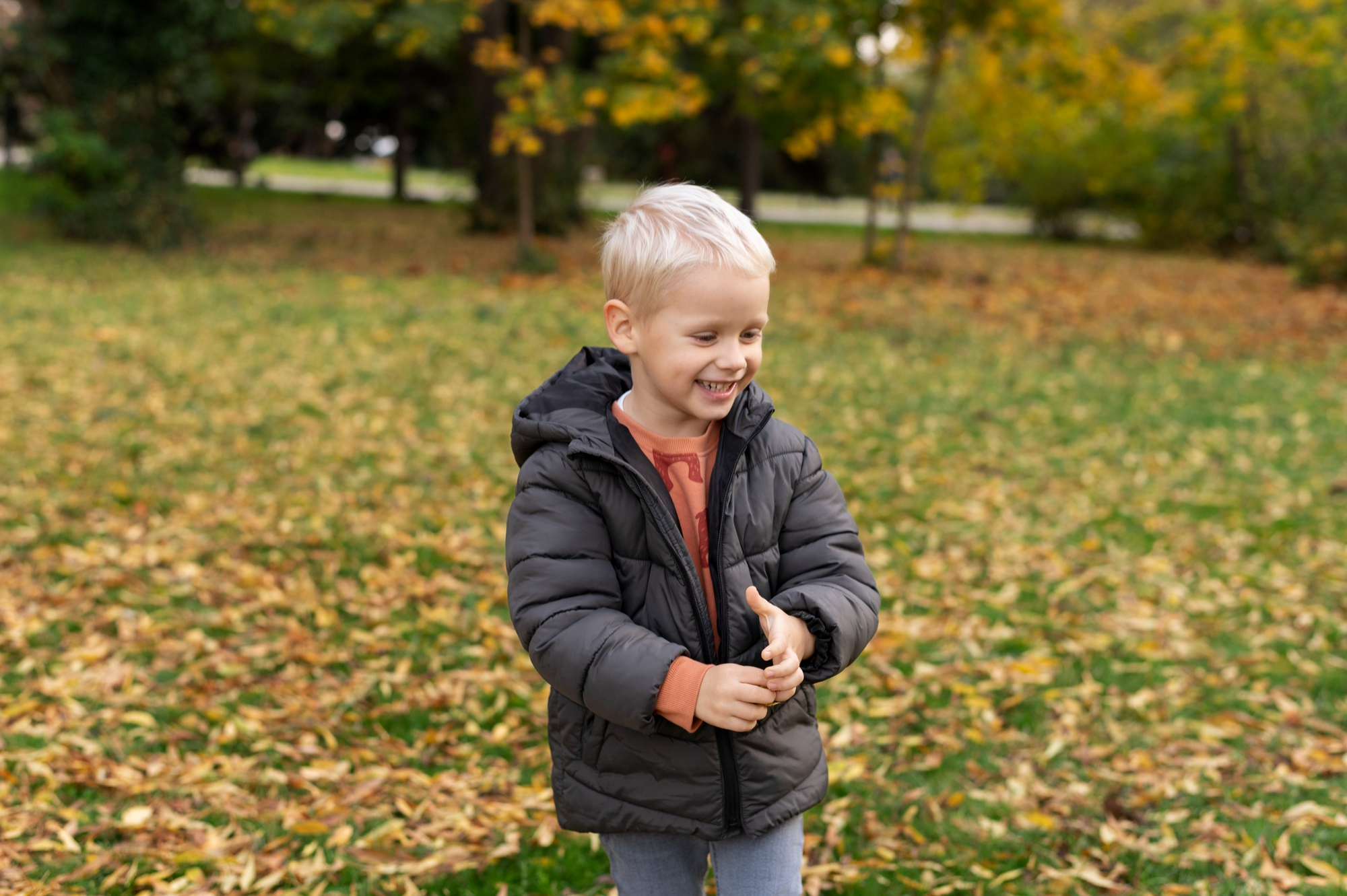
Every Tuesday and Thursday at 2:45, I park my old silver Buick in the pickup line at Maple Grove Elementary and wait for my grandson to come running.
He always runs. I’ve never once seen him walk. Noah is five years old, and he runs everywhere, like there’s something wonderful at the end of every sidewalk and he’s afraid he’ll miss it.
That Thursday in October, I saw him come out of the double doors with his teacher, Miss Patel. He had his dinosaur backpack on, the green one with the plastic spikes down the back. His shoes were untied. His hair was sticking up in the back where somebody had probably put a hat on him at recess and then pulled it off.
Miss Patel pointed at my car. Noah’s face lit up.
He ran.
“GRANDMA!”
He hit the side of my car so hard I felt the whole thing rock. I leaned over and pushed the back door open, and he climbed in and threw himself into his car seat like a sack of potatoes.
“Hi, sweet pea. How was your day?”
“It was SO good. Grandma, guess what. GUESS WHAT.”
“What?”
“Tyler brought a lizard. A real one. In a box. Its name is Kevin.”
“A lizard named Kevin?”
“And it ate a cricket. In front of everybody. Mia cried.”
“Oh, poor Mia.”
“I didn’t cry,” Noah said proudly. “I watched the whole thing.”
I buckled him in. It takes me a while these days. My fingers aren’t what they used to be. Arthritis in both hands, the doctor says. I’m sixty-nine years old and my knuckles look like walnuts. But I’ve been buckling children into car seats for forty-five years, and I’ll keep doing it until they have to pry the straps out of my hands.
I pulled out of the pickup line and onto Maple Avenue.
My daughter, Amy, and her husband, Chris, both work until five-thirty. Amy’s a nurse at the hospital across town. Chris manages a hardware store. On Tuesdays and Thursdays, I pick Noah up and take him back to my house. We have a snack. Usually apple slices and peanut butter. Sometimes cookies, if his mother isn’t going to find out. We play a game or watch a show about trucks. Then his parents come get him around six.
Those rides are some of my favorite moments in the whole week. My husband has been gone seven years now. My house is very quiet. Too quiet. But for twenty minutes every Tuesday and Thursday, my car is full of the loudest, happiest noise in the world.
That little boy can talk. Good Lord, can he talk. Dinosaurs. What Mia brought for lunch. Why the moon follows the car. Whether sharks have tongues. Whether I was alive when the dinosaurs were alive. (I told him no. He didn’t look convinced.)
That afternoon, he talked about Kevin the lizard for six blocks. Then about how Oliver pushed him on the slide, but it was an accident, so he forgave him. Then about the letter M, which they were learning this week.
“M is for Mom,” he said. “And Monster. And Macaroni.”
“Very good.”
“And Mustache. Grandpa had a mustache. Mom showed me a picture.”
I smiled. My husband, Hank, had a mustache for forty years. A big, bushy, gray one. He said it kept his face warm in the winter. I said it made him look like a walrus. He said walruses were very dignified animals.
“He sure did,” I said.
We stopped at a red light on Fifth Street.
And that’s when Noah suddenly got quiet.
I looked at him in the rearview mirror. He was looking out the window. His hands were folded in his lap. He was chewing on his bottom lip, which is what he does when he’s thinking very hard about something.
“Grandma,” he said. His voice was low. Almost a whisper. “I’m going to tell you a secret. Mom and Dad said even the police can’t know.”
I burst out laughing.
I couldn’t help it. He said it so seriously. Like a little spy in a movie. With his dinosaur backpack and his untied shoes.
“Good Lord,” I said. “What are those two up to now?”
Noah didn’t laugh. He looked right at me in the mirror. His face was completely serious.
“It’s in the garage,” he said.
I smiled. “What’s in the garage?”
“I’m not supposed to tell you.” He bit his lip again. “Dad said nobody can know until it’s ready.”
I figured my daughter and son-in-law were hiding some ridiculous surprise. My birthday was coming up. I was turning seventy on Saturday. Amy had been acting strange on the phone for weeks. Asking weird questions. What was my favorite color. What did I want for dinner. Whether I still had Dad’s old photo albums. I figured she was planning a party. Maybe a present. Some project they’d gotten carried away with, the way Chris always does. Last year he built Noah a treehouse that was bigger than my kitchen.
The light turned green. I pulled forward.
“Well,” I said, “if it’s a surprise, you’d better keep it, sweet pea. I don’t want to ruin it.”
“It’s not that kind of surprise,” Noah said.
“What kind is it?”
He was quiet for a moment.
“I saw it yesterday,” he said. “I went in the garage when I wasn’t supposed to. And Mom was in the kitchen with Dad. And Mom said, ‘What are we going to do if she finds out?'”
That got my attention.
“If who finds out?” I asked.
In the mirror, I watched my grandson lift one small finger. He pointed it at the back of my head.
“You,” he said.
My smile went away.
I looked at him in the rearview mirror. His eyes were big and worried. He looked like he was afraid he’d done something wrong.
“Okay, sweet pea,” I said gently. “Tell Grandma what you saw.”
He started talking. And at first, I thought I must have misunderstood him.
“There’s a man in the garage,” Noah said.
My hands tightened on the steering wheel.
“A man?”
“He sleeps there. On a bed. A blow-up bed. Like when we go camping.” Noah was talking faster now, like he’d been holding it in for a long time and it was all coming out at once. “He was really sick when he came. He was shaking and shaking. And he threw up a lot. And he was crying. Mom took care of him. She made him drink water and she took his temperature, like she does at work. And she said I couldn’t go in there because he was sick. But I peeked.”
“Noah,” I said. My voice sounded strange to me. “Who is the man?”
He didn’t answer right away. He looked down at his hands.
“Mom said I’m not allowed to tell you his name,” he said. “Because it would make you sad.”
“Noah. Honey. Please. Grandma needs to know.”
He looked up at me in the mirror.
“He’s fixing Grandpa’s truck,” he said. “The blue one. From the pictures. He said he and Grandpa were supposed to fix it together, but Grandpa died. So now he’s fixing it for you. For your birthday. It’s a surprise.”
I almost drove off the road.
Hank’s truck. The blue 1972 Ford pickup that sat in our garage for thirty years. The truck Hank always said he’d restore someday, when he had time. The truck I sold for four hundred dollars to a man with a scrapyard, four years ago, because I couldn’t stand to look at it anymore.
“And he looks like Grandpa,” Noah said. “In the pictures. When Grandpa was young. He has the same eyes. But no mustache.”
I was pulling over. I didn’t decide to. My hands just turned the wheel. I pulled into the parking lot of a dry cleaner and stopped the car and sat there with the engine running.
“Noah,” I said. I turned around in my seat so I could look at him. “Tell Grandma the man’s name. It’s okay. You won’t be in trouble. I promise.”
He looked at me for a long time. Five years old, with his untied shoes and his dinosaur backpack.
“Uncle Jesse,” he said. “Mom says he’s your boy.”
And the police can’t know, because Dad says if they find him, they’ll take him away. And then he can’t finish the truck.
I asked him to say it again. I thought I must have misunderstood.
He said it again. The same words. Uncle Jesse. The garage. The shaking. The truck.
I sat in the parking lot of that dry cleaner for a long moment with my hand pressed flat over my mouth.
Then I said, out loud, “Oh my God.”
And instead of heading home like usual, I turned the car around.
I need to tell you about my son.
Jesse is my second child. He was born six years after Amy, when we’d almost given up on having another baby. He came out red-faced and screaming, with a full head of dark hair and his father’s brown eyes. Hank held him in the hospital and said, “Well, Joanie, looks like I finally got somebody to help me in the garage.”
And that’s what Jesse did. From the time he could walk.
Hank was a mechanic. He owned a small repair shop on the edge of town for thirty-one years. HANK’S AUTO, the sign said, in red letters that faded to pink over the years. But his real love was the garage behind our house. That’s where he kept his own projects. Old lawnmowers. Motorcycles. And the truck.
The truck was a 1972 Ford F-100. Baby blue. Hank’s father bought it new the year Hank graduated high school. When his father died, the truck came to Hank. By then it didn’t run anymore. Hank parked it in our garage the year we got married, and it sat there, under a canvas tarp, for thirty years.
“Someday,” Hank always said. “Someday I’m gonna get that thing running again. And I’m gonna drive you down to the lake in it, Joanie, just like Dad used to drive Mom.”
Jesse grew up in that garage. When he was three, he’d sit on an overturned bucket and hand Hank wrenches. When he was seven, he could name every part of an engine. When he was twelve, he rebuilt a lawnmower motor by himself. When he was sixteen, he and Hank took the tarp off the truck for the first time in years and made a list. A long list. Everything that needed fixing.
“We’ll do it together,” Hank told him. “Summers. Weekends. By the time you graduate college, she’ll be purring like a kitten.”
They never got past the second page of the list.
Life got in the way. It always does. Jesse didn’t go to college. He went to work as a roofer instead, right out of high school. He was good at it. Strong and fast and fearless. He liked being up high. He said you could see the whole town from up there.
When he was twenty-six, he fell.
It was a two-story house. A loose shingle. He slid down the roof and went over the edge and landed on his back on a stone patio. He broke two vertebrae in his lower back and his left hip.
He was in the hospital for three weeks. He had two surgeries. He was in terrible pain. The doctors gave him pills. Oxycodone. Lots of them. That’s what they did back then. Everyone did.
He took them exactly how they told him to. I know he did. I watched. I sorted them into a little plastic box with the days of the week on it.
But when the prescriptions ran out, the pain didn’t. And neither did the need for them.
I didn’t see it at first. None of us did. He was still living at home, recovering. He was quiet. He slept a lot. He was irritable. I thought it was the pain. I thought it was depression, from not being able to work.
Then money started going missing from my purse.
Then my pain pills, from when I had my gallbladder out, disappeared from the medicine cabinet.
Then Hank found Jesse passed out in the garage one night, slumped against the side of the blue truck, and couldn’t wake him up for almost a minute.
We tried everything. We paid for rehab. Twice. He left the first one after nine days. He finished the second one and stayed clean for four months, and they were the best four months we’d had in years. He and Hank started working on the truck again. They got the engine out. They ordered parts.
Then he relapsed.
And then, when Jesse was twenty-seven, Hank died.
It was a stroke. In his repair shop. On a Wednesday afternoon, bent over the engine of somebody’s minivan. One of his mechanics found him on the floor. He was sixty-two.
Jesse didn’t come to the funeral.
He called me that morning. He said he was on his way. He said he was getting in the car. He never showed. I stood at my husband’s grave with Amy on one side of me and Chris on the other, and I kept looking over my shoulder at the cemetery gate.
He came to the house three days later. He was thin and gray and his hands were shaking. He cried on my kitchen floor. He said he was so sorry. He said he couldn’t face it. He said he’d been using since the day Dad died, trying not to feel anything.
I held him. I let him stay.
A week later, Hank’s watch was gone.
It was a gold watch. Not fancy. A plain gold band with a white face and black numbers. Hank’s father gave it to him when he opened his shop. Hank wore it every single day for thirty-one years. He was wearing it when he died. The hospital gave it back to me in a plastic bag with his wallet and his wedding ring.
I kept it on my nightstand. I looked at it every night before I went to sleep.
And then one morning, it was gone.
I found the pawn slip in the pocket of Jesse’s jacket. Sixty dollars.
Sixty dollars for my husband’s watch. For thirty-one years of him winding it every morning at the kitchen table while the coffee brewed.
I don’t remember deciding to do it. I just remember standing in the kitchen with the pawn slip in my hand, and then I was picking up the phone, and then I was talking to the police.
They came that afternoon. Jesse was asleep on the couch. They woke him up. They put him in handcuffs in my living room.
He looked at me while they walked him out the front door. He didn’t say anything. He just looked at me. Like he couldn’t believe it. Like I’d done the one thing he never thought I’d do.
“I have to, Jesse,” I said. My voice was shaking. “I have to. I can’t keep doing this.”
He was charged with theft. He got probation and mandatory treatment. He went to treatment for three weeks and then disappeared.
Missed his court date. Missed his probation meetings. A warrant went out for his arrest.
That was six years ago.
I didn’t hear from him for six years. Not a phone call. Not a letter. Not a birthday card. Amy tried to find him. She checked shelters. Hospitals. She called old friends of his. Nobody knew where he was. Some of them said he’d gone to another state. Some of them said he was probably dead.
I told myself I didn’t care.
I told everyone I had one child. When people at church asked how my kids were, I talked about Amy. When the lady at the grocery store asked if I had grandchildren, I talked about Noah. When I filled out forms at the doctor’s office and they asked for emergency contacts, I wrote Amy’s name, and left the second line blank.
“I have one child,” I told Amy once, when she tried to bring him up. “I had two. Now I have one.”
She looked at me for a long time.
“You don’t mean that, Mom,” she said.
“I do,” I said. “I have to.”
Four years ago, I sold the truck. The scrapyard man came with a flatbed and hauled it away. I stood in the driveway and watched it go down the street, blue and rusty, with its tires flat, and I didn’t cry. I told myself it was just a truck. I told myself I needed the room in the garage. I told myself it was time to let go of everything.
I never told anyone the real reason.
I sold it because every time I opened the garage door and saw that blue truck under the tarp, I saw my husband and my son standing next to it. Hank with his mustache and Jesse at sixteen, with the long list in his hand. We’ll do it together.
And I couldn’t stand it.
I drove to Amy’s house faster than I’ve driven in thirty years.
It’s about fifteen minutes from my house. A small yellow ranch house on Birch Street with a big maple tree in the front yard and a detached garage out back, at the end of a long gravel driveway. Chris built a workshop in that garage when they first moved in. He does woodworking out there on weekends.
Amy’s car was in the driveway. That surprised me. It was only a little after three. She should have been at work.
I pulled in behind her car and turned off the engine.
Noah was very quiet in the back seat.
“Grandma,” he said. “Am I in trouble?”
I turned around. His eyes were full of tears.
“No, baby,” I said. “You’re not in trouble. You did the right thing, telling me. You did exactly the right thing.”
“But Mom said—”
“I know what Mom said. I’ll talk to Mom. You’re not in trouble. I promise.”
I got out of the car. I unbuckled him. My hands were shaking so badly it took me three tries.
The garage door was closed. But the side door, the little regular door next to the big one, was open a few inches. There was light coming out. And I could hear something.
It was music. Very quiet. An old radio playing country music. Merle Haggard. Hank’s favorite.
And under the music, there was another sound.
A clink. A scrape. The sound of metal on metal. The sound of a wrench.
I stood in my daughter’s driveway, holding my grandson’s hand, and listened to that sound, and for a second, I couldn’t breathe. Because it was the sound I heard every Saturday for forty years. Coming from our garage. My husband, working on something.
The back door of the house opened. Amy came out onto the little back porch. She was wearing sweatpants and a T-shirt, not her scrubs. She had a dish towel in her hand.
She saw me.
She stopped.
She looked at me. She looked at Noah holding my hand. She looked at the garage.
Her face went white.
“Mom,” she said.
“You’re home early,” I said.
“I took the afternoon off.” She came down the porch steps slowly. “Mom, what are you doing here? You were supposed to take Noah to your house.”
“Noah told me a secret,” I said.
Amy closed her eyes.
“Oh, buddy,” she said softly.
Noah started crying. He buried his face in my coat.
“I’m sorry, Mommy. I’m sorry. I didn’t mean to. It just came out.”
Amy knelt down in the gravel and pulled him into her arms. She held him and rocked him and said, “It’s okay, it’s okay, you’re not in trouble, I promise, it’s okay.” Over his head, she looked up at me.
“Mom,” she said. “Please. Let me explain before you go in there.”
“Is he in there?” I asked.
Amy didn’t answer.
“Is my son in that garage, Amy?”
She looked at me for a long time. Then she nodded.
I didn’t wait for her to explain. I should have. I know that now. But I’d been waiting six years.
I walked across the gravel to the garage. My knees were shaking. I put my hand on the side door and pushed it all the way open.
The first thing I saw was the truck.
It was sitting in the middle of the garage, under two bright work lights hanging from the rafters. The hood was up. The tires were new. Somebody had sanded the whole body down to bare metal, and half of it was painted now. Baby blue. The exact shade. Hank’s father’s truck. My husband’s truck. The one I watched get hauled away on a flatbed four years ago.
It was here.
The second thing I saw was the bed.
It was in the corner. An inflatable air mattress on the concrete floor, with a sleeping bag and a pillow on top. Next to it, there was a folding chair, a small cooler, a lamp, a stack of paperback books. A plastic bin with clothes folded neatly inside. A bottle of water. A little orange pill bottle.
And the third thing I saw was the man.
He was lying on his back on a mechanic’s creeper, halfway under the front of the truck. All I could see were his legs, in old jeans with grease stains on the knees, and his work boots. His right boot was tapping along with Merle Haggard.
He heard the door open. The boot stopped tapping.
“Ames?” he said from under the truck. “Is that you? Can you hand me the half-inch socket? It’s on the—”
He rolled out from under the truck on the creeper.
And he saw me.
He was thin. Much too thin. His face was hollow, his cheekbones sticking out, his skin pale and a little yellow under the work lights. His dark hair was cut short, and there was gray in it now. He was thirty-four years old, and there was gray in my son’s hair.
He had grease on his hands and grease on his cheek. He was wearing an old gray T-shirt with HANK’S AUTO on the front in faded red letters. One of his father’s shirts. I don’t know where he got it. I thought I’d given them all away.
He had Hank’s eyes. Brown. Warm. The exact same eyes.
We stared at each other.
Neither of us moved.
Merle Haggard kept singing on the little radio on the workbench.
Jesse sat up slowly on the creeper. He wiped his hands on his jeans. He opened his mouth. He closed it.
“Mom,” he said finally.
His voice was hoarse. Rough. Like he hadn’t used it in a long time.
I didn’t say anything. I couldn’t.
“I’m sorry,” he said. “I’m sorry. I know you don’t want to see me. I know. I’ll go. I’ll get my stuff and go. Just don’t…” He swallowed. “Please don’t call the police. Not yet. Please. Just let me finish the truck.”
And that was when I understood.
Even the police can’t know.
What are we going to do if she finds out?
They weren’t afraid of the police finding him.
They were afraid of me.
Because I was the one who called them last time.
I sat down on an overturned bucket next to the workbench. I didn’t decide to. My legs just stopped holding me up.
Jesse got up off the creeper. He stood there by the truck with his hands at his sides. He looked like he didn’t know whether to come closer or run away.
Amy came into the garage behind me. She’d left Noah in the house with the TV on. She stood by the door with her arms crossed.
“Tell her,” she said to Jesse. “Tell her everything. Or I will.”
Jesse looked at the floor.
“I showed up five weeks ago,” he said. “At Amy’s work. At the hospital. I came into the emergency room.”
My heart stopped.
“I wasn’t sick,” he said quickly. “I mean, I was. But not like that. I just… I didn’t know where else to go. I’d been living in my car. In Ohio, mostly. Working day labor when I could. Using when I couldn’t. And one night I was sitting in my car in a Walmart parking lot, and I had a bag in my lap, and I was going to use it, and I thought…” He stopped. He looked at the truck. “I thought about Dad. I don’t know why. I just thought about him. In the garage. With the list. And I thought, if I use this, I’m going to die in a Walmart parking lot, and I never finished the list.”
He took a shaky breath.
“So I threw the bag out the window. And I drove eleven hours. And I walked into the emergency room where Amy works and I asked for her. And when she came out, I said, I need help. Please. I need my sister.“
Amy’s eyes were wet.
“He was in withdrawal,” she said. “Bad. Shaking. Sweating. Throwing up. I got him seen by one of the doctors. They started him on medication. Buprenorphine. It helps with the withdrawal and the cravings. He’s been going to a clinic twice a week ever since. He sees a counselor. He’s been clean for thirty-six days.”
“Thirty-six days,” I repeated.
“Thirty-six days,” Jesse said. “Thirty-seven tomorrow.”
“And he’s been living in your garage,” I said to Amy.
“Where else was he going to go?” Amy said. “He had nothing, Mom. He had a car with a busted transmission and a garbage bag full of clothes. He couldn’t go to a shelter. He has a warrant. From six years ago. He was scared if he went anywhere official, they’d run his name and arrest him.”
“The warrant,” I said. “From when he ran. After I called the police.”
Jesse flinched.
“Yeah,” he said quietly. “That one.”
“Why didn’t you tell me?” I said to Amy. My voice was rising. “Five weeks. My son has been living fifteen minutes from my house for five weeks, and you didn’t tell me? You let me pick up Noah every Tuesday and Thursday and you didn’t say a word?”
“Because you said you only had one child!” Amy said. It burst out of her. Her eyes were flashing. “You said it to my face, Mom. You said it at church. You said it at the grocery store. You wrote him off. You told me if he ever showed up at your door again, you’d call the police yourself. You said that. I heard you.”
I had said that. I remembered saying it. Standing in my kitchen the week after the watch. If he ever comes back here, I’ll call them again. I swear to God, Amy.
“And you’d already done it once,” Amy said. Her voice cracked. “You did it once. You put him in handcuffs in the living room. So when he showed up at my hospital looking like a skeleton, begging me for help, what was I supposed to do? Call you? And have you call the police again? And have him go to jail in withdrawal? He could have died, Mom. People die from that. Or he’d have run again. He’d have run, and he’d have used, and this time it would have killed him.”
I didn’t say anything.
“So Chris and I decided,” Amy said. “We decided not to tell you. Until he was stronger. Until he had a plan. Until we could figure out how to tell you so you’d actually listen.”
“And the truck?” I asked. My voice came out very small.
Amy looked at Jesse.
Jesse looked at the truck.
“I asked Amy what happened to it,” he said. “The first week. When I could finally think straight. I asked if you still had Dad’s truck in the garage. And she told me you sold it. To the scrapyard. Four years ago.”
I closed my eyes.
“I went and found it,” he said. “The scrapyard guy still had it. Out in the back of his lot, in a field, with weeds growing up through the floorboards. He hadn’t crushed it yet. He said he always kind of liked it. Couldn’t bring himself to do it.” Jesse almost smiled. “He sold it back for six hundred bucks. Chris lent me the money. I’m paying him back. I got a job, Mom. Washing dishes at the diner on Route 9. Nights. Under the table, because of the warrant. But it’s a job.”
“You found the truck,” I said.
“I found the truck. And Chris towed it here. And I started working on it. At night, after the diner. And on the days I’m not at the clinic.” He put his hand on the hood. Gently. The way Hank used to. “It’s been the only thing keeping me going, honestly. Every time I want to use, I come out here and I work on the truck. I have Dad’s list. The one from when I was sixteen. Amy found it in a box of his stuff. I’m doing everything on it. In order. I’m on page four.”
He looked at me.
“Your birthday’s Saturday,” he said. “You’re turning seventy. I wanted to have it done. I wanted to drive it over to your house and honk the horn and have you come out on the porch and see it. And then I was going to…” He stopped.
“Going to what?”
“Turn myself in,” he said. “On Monday. For the warrant. Amy found me a lawyer. A public defender. She said if I go in on my own, with thirty-something days clean, and a job, and I’m in treatment, the judge might go easier. There’s a drug court. They do treatment instead of jail, if you qualify.” He swallowed. “But I wanted to finish the truck first. Before I went in. In case they didn’t go easy. In case I went to jail. I wanted you to have it. I wanted you to have something good from me. After everything.”
He looked down at his greasy hands.
“I know it doesn’t fix the watch,” he said. “I know nothing fixes the watch. But it’s the only thing I know how to do.”
I looked at my son standing next to his father’s truck.
Thirty-four years old. Gray in his hair. Wearing his dead father’s shirt. Thirty-six days clean.
And I thought about the last time I saw him. In my living room. In handcuffs. Looking at me like I’d done the one thing he never thought I’d do.
I had spent six years telling myself I did the right thing. The only thing. That I had to. That tough love was the only love left. That if I’d let him stay, he would have taken everything, the watch and the silverware and the TV and the car, until there was nothing left of me at all. That I had to protect myself.
And maybe that was true. Maybe I did have to.
But I had also spent six years saying I had one child. Six years leaving the second line blank on forms at the doctor’s office. Six years of telling myself I didn’t care whether he was alive.
And every one of those six years, every single night, I lay in bed and wondered if my son was dead.
And he was here. The whole time he was alive. And he was afraid of me.
“Did you think I’d do it again?” I asked. “Call the police?”
Jesse looked at me for a long moment.
“Yes,” he said.
It was the most honest thing anyone had ever said to me. And it hurt more than anything he ever stole.
“Do you still think it?” I asked.
He looked at me. At my face. At my hands in my lap, with their walnut knuckles.
“I don’t know, Mom,” he said quietly. “I’m hoping not. But I don’t know.”
Behind me, I heard the sound of a car in the driveway. A door slamming. Footsteps on the gravel. Chris came in through the side door, still in his red hardware store vest. He looked at me. At Jesse. At Amy.
“Oh,” he said. “Uh. Hi, Joan.”
“Hi, Chris.”
“So Noah told you.”
“Noah told me.”
Chris rubbed the back of his neck. He looked at Amy. “I told you he couldn’t keep it. He’s five. He told the mailman we were getting a new couch.”
Amy laughed. It was a wet, broken laugh. Then she started crying. Chris went over and put his arm around her.
I sat on the overturned bucket and looked at the four of us. My daughter crying in her husband’s arms. My son standing by the truck with grease on his face. And me.
And I thought about Hank.
I thought about what Hank would say, if he walked in that door right now with his mustache and his gold watch. I knew exactly what he’d say. He said it every time I got mad at Jesse when he was a teenager. Every time Jesse broke curfew or dented the car or got a D in history.
He’s a good kid, Joanie. He’s just lost. Lost isn’t the same as bad.
I stood up off the bucket.
My knees cracked. My back hurt. I walked over to the truck. Slowly. I put my hand on the hood, next to Jesse’s.
The metal was cool and smooth. Freshly sanded. I could still see a little rust near the edge of the fender. He hadn’t gotten to that part yet.
“You kept the list,” I said.
“I kept the list.”
“What’s on page four?”
He reached into his back pocket. He pulled out a folded piece of paper. Old and yellow and soft, like fabric. He unfolded it carefully. He held it out to me.
It was Hank’s handwriting. Big blocky letters. The same handwriting from every grocery list and birthday card for forty years.
PAGE 4.
— Carburetor (rebuild or replace?)
— New fuel line
— Fix passenger door handle (sticks)
— Seat covers (ask Joanie, she’ll want blue)
I stared at that last line.
Ask Joanie, she’ll want blue.
I put my hand over my mouth.
“I found some seat covers online,” Jesse said softly. “Blue. The same blue as the paint. They came yesterday. They’re in the box on the workbench. I was going to put them in tomorrow.”
I started crying.
I stood there in my daughter’s garage with my hand on my husband’s truck, and I cried like I hadn’t cried since the day Hank died. Since the day I stood at his grave looking over my shoulder at the cemetery gate, waiting for a son who never came.
And my son came around the front of the truck, slowly, like he wasn’t sure if he was allowed. And he stood in front of me. And he opened his arms.
“Can I?” he asked. “Is that okay?”
I didn’t answer. I just stepped forward.
He held me. He was so thin. I could feel his ribs. He smelled like motor oil and dish soap and the cheap shampoo from the dollar store. He was shaking.
“I’m sorry, Mom,” he said into my hair. “I’m sorry about the watch. I’m sorry about the funeral. I’m sorry about everything. I’m so sorry.”
“I’m sorry too,” I said. “I’m sorry I said I only had one child.”
He pulled back. He looked at me.
“You said that?”
“For six years,” I said. “Every time anybody asked.”
“That’s okay,” he said. His eyes were wet. “I think I’d have said it too. If I were you.”
“It’s not okay,” I said. “It was a lie. I had two children the whole time. I just didn’t want to feel it.”
I didn’t go home that night.
I called and canceled my Friday hair appointment. I sat at Amy’s kitchen table until almost midnight while Chris made grilled cheese sandwiches and Amy made tea and Noah fell asleep on the couch with his head in my lap.
Jesse sat across from me. He didn’t eat much. He told me about the six years. Not everything. I don’t think he could have told me everything. I don’t think I could have heard it.
He told me about sleeping in his car in Ohio and Kentucky and Tennessee. About working construction jobs for cash. About overdosing twice. Once in a gas station bathroom. Once in a motel room, where a stranger in the next room heard him fall and called 911.
“A stranger,” he said. “A guy I never met. He heard me fall through the wall. He called an ambulance. He waited with me. He gave the paramedics my name off my ID. I never even found out his name.”
“I’d like to thank him,” I said.
“Me too,” Jesse said. “I think about him a lot.”
He told me about the Walmart parking lot. The bag in his lap. Throwing it out the window. The eleven-hour drive.
And he told me about the watch.
“I went back for it,” he said. “The next day. After they arrested me. After they let me out. I went back to the pawn shop to try to buy it back. I had forty dollars. It wasn’t enough. And they’d already sold it anyway.” He looked down at his hands on the table. “That’s when I ran. When I found out it was gone. I couldn’t stand it. I couldn’t stand being the person who did that. So I just left. And I kept using so I wouldn’t have to think about it.”
I reached across the table and put my hand on top of his.
“Your father would have forgiven you,” I said. “For the watch. You know that. He would’ve been furious. He would have yelled. He would have made you work at the shop for free for a year to pay it off. But he’d have forgiven you by Tuesday.”
“I know,” Jesse said. “That’s what makes it so much worse.”
At around eleven, Noah woke up on the couch. He sat up and rubbed his eyes. He looked at me. Then at Jesse at the table.
“Grandma,” he said sleepily. “Did I ruin the surprise?”
I went over and sat next to him on the couch. I pulled him into my lap even though he’s getting too big for it.
“No, baby,” I said. “You didn’t ruin anything. But Grandma wants to tell you something important. Okay?”
“Okay.”
“You know how you told me a secret today? Even though Mom and Dad said not to?”
He nodded. His lower lip started to wobble. “I’m sorry.”
“No,” I said. “Don’t be sorry. Listen to me. There are two kinds of secrets. There are happy secrets, like a birthday present. Those, you keep. Those are fun. But then there’s the other kind. The kind that make your tummy feel funny. The kind where grown-ups are worried and whispering. The kind where somebody’s sick, or scared, or in trouble.” I smoothed his hair back from his forehead. “Those kinds of secrets, you tell. You tell a grown-up you trust. Even if somebody said not to. Especially if somebody said not to.”
“Even the police can’t know?”
“Even then,” I said. “Especially then. You did exactly the right thing today, Noah. Because if you hadn’t told me, I wouldn’t have known that Uncle Jesse was here. And I would have missed him. I’ve been missing him for a really long time.”
Noah looked over at Jesse at the kitchen table. Jesse gave him a little wave. Noah waved back.
“Uncle Jesse,” Noah said, “are you still going to finish the truck?”
“Yeah, buddy,” Jesse said. “I’m still going to finish it.”
“Can I help?”
Jesse looked at me. I nodded.
“Yeah,” he said. His voice was thick. “Yeah, you can help. I’ll need somebody to hand me the wrenches.”
The next day was Friday. I called in sick to my volunteer shift at the library. I’ve never called in sick to the library in eleven years.
I spent the whole day in Amy’s garage.
I sat on the overturned bucket and watched my son work. Noah sat on another bucket next to me, handing Jesse wrenches. He got them wrong about half the time. Jesse didn’t care. He’d say, “Close, buddy. Try the one next to it.” And Noah would try the one next to it and beam when he got it right.
Around noon, Jesse opened the box on the workbench. He took out the seat covers. Blue. The same blue as the paint.
“You want to help me put these in?” he asked me.
“I don’t know anything about trucks.”
“You don’t have to. You just have to hold one end.”
So I held one end. I stood inside my husband’s truck with my son, and I held one end of the blue seat cover while he stretched it over the old bench seat and tucked it in. His hands were quick and sure. Hank’s hands. He knew exactly what to do.
When it was done, he climbed out and stood back and looked at it.
“Dad was right,” he said. “You did want blue.”
“He always knew what I wanted,” I said. “Before I knew it.”
Jesse was quiet for a moment.
“Mom,” he said. “Can I ask you something?”
“Of course.”
“On Monday. When I go in. To the courthouse.” He looked at the floor. “Would you come with me? You don’t have to. Amy’s coming. And Chris. And the lawyer. But I…” He stopped. “I’d really like it if you were there. You were there the last time they put me in handcuffs. I’d like you to be there when I walk in on my own.”
I looked at my son.
You were there the last time they put me in handcuffs.
I thought about that day. His face as they walked him out my front door. The way he looked at me.
“I’ll be there,” I said. “I’ll be right there next to you.”
My seventieth birthday was on Saturday.
Amy had planned a party. A small one. Just family, at her house. She made my favorite, pot roast with carrots and potatoes. Chris grilled corn. Noah drew me a card with a picture of a blue truck on it and a stick figure with gray hair and a stick figure with a big mustache standing next to it.
“That’s you,” he said, pointing. “And that’s Grandpa. He’s in heaven. But I put him in anyway.”
“That’s perfect,” I said. “That’s absolutely perfect.”
At four o’clock, Amy said, “Mom, can you come out front for a second?”
I went out onto her front porch.
The garage door at the end of the long gravel driveway was open.
And the truck was sitting in the driveway.
Baby blue. Every inch of it. He must have stayed up all night painting the last part. The rust spot on the fender was gone. The chrome bumpers were polished so bright they flashed in the afternoon sun. The new tires were black and shiny. There was a big red bow on the hood. The kind you see in car commercials at Christmas.
Jesse was standing next to it. He had on a clean shirt. He’d shaved. He was holding the keys.
He walked up the driveway to the bottom of the porch steps.
“Happy birthday, Mom,” he said.
He held out the keys.
I came down the porch steps. I took the keys from him. They were Hank’s keys. The same key ring. A little brass tag shaped like a wrench, with HANK’S AUTO stamped on it. I didn’t know he’d kept those.
“Does it run?” I asked.
“Does it run?” Jesse grinned. It was the first time I’d seen him really grin in six years. It was his father’s grin. “Get in, and we’ll find out.”
I haven’t driven stick shift in forty years. So I got in the passenger side. Jesse got in the driver’s seat. The blue seat covers were smooth and cool under my hands.
He turned the key.
The engine coughed. Sputtered. Coughed again.
And then it caught.
It roared. It rumbled. It settled down into a low, steady growl that I could feel through the seat. It was the loudest, happiest sound I’d ever heard.
Out on the porch, Amy and Chris and Noah were cheering. Noah was jumping up and down, waving both arms over his head.
Jesse put his hand on the dashboard. He closed his eyes.
“We did it, Dad,” he said quietly. “We finally did it.”
Then he looked at me.
“Where do you want to go, Mom?”
I thought about it for only a second.
“The lake,” I said. “Your father always said he’d drive me to the lake in this truck. Just like his dad used to drive his mom.”
Jesse put the truck in gear.
We drove to the lake. It’s about twenty minutes outside of town. We rolled the windows down. The October air was cool and smelled like leaves. The radio in the truck didn’t work yet. That was on page five. So Jesse sang instead. Merle Haggard. He sang badly. His father sang badly too.
We parked at the edge of the water. We sat there with the engine off, looking at the lake. The sun was going down. The whole lake turned orange and gold.
Neither of us said anything for a long time.
“I’m scared about Monday,” Jesse said finally.
“I know.”
“What if they send me to jail?”
“Then they send you to jail,” I said. “And I’ll visit every single week. And when you get out, the truck will be waiting. And so will I.”
He looked at me.
“You mean that?”
“I’ve spent six years not saying what I mean,” I said. “I’m done with that. I mean it.”
He looked back out at the lake.
“I love you, Mom,” he said.
“I love you too,” I said. “I always did. Even when I said I didn’t have a son. Especially then.”
On Monday morning, Jesse walked into the county courthouse on his own two feet.
His lawyer was a young woman named Rosa Jimenez. She was very small and very fierce and she wore bright red lipstick. She had spent the whole weekend putting together a folder. Records from the clinic. A letter from his counselor. A letter from the manager at the diner, saying he’d never missed a shift. A letter from Amy, who is a nurse, explaining his treatment. A letter from Chris, about the loan and the payments.
And a letter from me.
I wrote it on Sunday night, at my own kitchen table, where Hank used to wind his watch every morning while the coffee brewed. It took me three hours. It was two pages long. I won’t tell you everything it said. But I’ll tell you how it ended.
Six years ago, I called the police on my son. I believed at the time that it was the only thing I could do. Maybe it was. I don’t know. But I know that it sent him out into the world believing his own mother would rather see him in handcuffs than at her kitchen table. And I know that he spent six years alone, believing that.
This time, he came back on his own. He came back sick and scared, and he walked into a hospital and asked for help. He did the hardest thing a person can do. He has been clean for forty days. He has a job. He has a family who loves him.
I am asking the court to let him keep doing the hard thing. Not because he doesn’t deserve consequences. He does. He knows he does. But because the consequences he’s already chosen, getting clean, working, facing us, facing you, are harder than any jail cell. And they’re the ones that actually work.
I am his mother. I have two children. I should never have said otherwise.
The judge was an older man with white hair and half-moon reading glasses. He read every page in Rosa’s folder. It took him almost half an hour. The courtroom was silent the whole time.
When he got to my letter, he stopped. He looked up over his glasses at the benches. He found me in the second row, sitting next to Amy and Chris.
“Mrs. Walker?” he said.
“Yes, sir.”
“You wrote this?”
“Yes, sir.”
He looked at me for a long moment. Then he looked at Jesse, standing at the defense table in the only clean shirt he owned.
“Young man,” the judge said. “Your mother says you came back on your own.”
“Yes, Your Honor.”
“Why?”
Jesse was quiet for a moment. Rosa put her hand on his arm.
“Because I was tired of running,” Jesse said. “And because I had a truck to finish.”
The judge raised one eyebrow.
Rosa leaned over and whispered something to him. Something about page four of the folder.
The judge flipped to page four. It was a photo. Rosa had printed it out Saturday night. It was a picture Amy took with her phone, of Jesse and me sitting in the blue truck in the driveway with the red bow on the hood, both of us grinning.
The judge looked at that photo for a long time.
Then he took off his glasses. He rubbed his eyes.
“I lost my brother to this,” he said quietly. “Twenty years ago. He never came back on his own.” He put his glasses back on. “Mr. Walker, I’m going to recommend you for drug court. Eighteen months. Intensive supervision. Weekly check-ins. Random testing. Continued treatment. If you miss a single thing, you go to jail. Do you understand?”
“Yes, Your Honor.”
“And if you finish it,” the judge said, “the charge gets dismissed. Clean record. A fresh start.” He looked at Jesse over his glasses. “Don’t waste it.”
“I won’t,” Jesse said. His voice cracked. “I won’t, sir. I promise.”
The judge banged his gavel.
Jesse turned around at the defense table. He looked at me in the second row.
I stood up. I didn’t care that we were in a courtroom. I didn’t care who saw.
He came to the little gate between the tables and the benches. I met him there. And I held my son in the middle of the county courthouse while he cried into my shoulder.
“You walked in on your own,” I said into his ear. “You walked in on your own, and I was here.”
“You were here,” he said.
“I’ll always be here.”
That was a year ago.
Jesse finished drug court in April. Eighteen months. He didn’t miss a single check-in. He didn’t fail a single test. The judge dismissed the charges on a Tuesday morning, and afterward, Jesse took me out for pancakes at the diner where he used to wash dishes.
He doesn’t wash dishes anymore. He works at HANK’S AUTO.
It isn’t called Hank’s anymore. I sold the shop after Hank died. The man who bought it, a big, quiet mechanic named Luis who worked for Hank for fifteen years, kept the old sign up for a long time before he changed it. When he heard Jesse was back and clean and looking for work, he called me.
“Hank taught that boy everything he knew,” Luis said. “I watched him do it. Send him over.”
Jesse’s been there eight months. Luis says he’s the best mechanic he’s ever hired. He says Jesse can hear what’s wrong with an engine just by listening to it. Just like his father.
He lives in a small apartment above a bakery downtown now. He’s been clean for four hundred and thirteen days. He still goes to his counselor every week. He still goes to meetings. He sponsors a young guy named Tyler, nineteen, who came into the clinic last spring just like Jesse did, sick and shaking and asking for help.
“I tell him about the truck,” Jesse told me. “About how you need something to work on with your hands. Something that’s yours. Something you’re building instead of destroying.”
“Does he have a truck?”
“No,” Jesse said. “He’s got a bicycle. An old ten-speed. We’re rebuilding it together on Sundays.”
The blue truck lives in my garage now. Where it lived for thirty years. Right where Hank parked it the year we got married.
But it doesn’t sit under a tarp anymore.
Every Sunday afternoon, Jesse comes over, and we take it out. Sometimes to the lake. Sometimes just around town. The radio works now. That was page five. And the passenger door handle doesn’t stick anymore. That was on page four. He finished the whole list. Every page. Every line.
Except one.
At the very bottom of the last page, in Hank’s big, blocky handwriting, there’s one more line. Jesse didn’t find it until he’d finished everything else. He brought the list over to my house one night and put it on the kitchen table in front of me and pointed at it.
— Take Joanie to the lake. Every Sunday. For the rest of her life.
I don’t know when Hank wrote that. Maybe when Jesse was sixteen and they were making the list together. Maybe later. Maybe the week before he died.
But Jesse’s been doing it every Sunday since.
Last Thursday, I picked Noah up from kindergarten, like always. Well, first grade now. He’s six. He still runs out of the double doors. His shoes are still untied.
He climbed into his car seat and started talking before I even got the door closed. About a boy named Marcus who could burp the alphabet. About the letter W. About whether worms have eyes.
Then, at the red light on Fifth Street, he got quiet.
“Grandma,” he said. “I have a secret.”
I looked at him in the rearview mirror. My heart jumped a little. It always does now.
“What kind of secret, sweet pea?”
He thought about it very seriously.
“The happy kind,” he said. “The birthday kind. Uncle Jesse and me are building you something. For your birthday. In the garage. It’s a birdhouse. It’s blue. Like the truck.”
I laughed. Relief poured through me.
“Well, that sounds like a good secret,” I said. “You keep that one.”
“I will,” he said. Then he added, “But if it was the other kind, I’d tell you. The tummy kind. I’d tell you even if the police couldn’t know.”
“I know you would,” I said. “You’re a very smart boy.”
“Because you said,” Noah said. “Secrets that make your tummy feel funny, you tell. You tell a grown-up you trust. Even if somebody says not to.”
“That’s right.”
“Especially if somebody says not to,” he said.
“Especially then,” I agreed.
The light turned green. I pulled forward.
I thought about a year ago. About that same red light. About my grandson’s small finger pointing at the back of my head. You.
For six years, I had been the reason my son was afraid to come home. I had been the secret everybody kept. I had been the person they whispered about in the kitchen. What are we going to do if she finds out?
I thought I was protecting myself. I thought I was being strong. I thought that saying I only have one child was the only way to survive losing the other one.
But you don’t survive losing someone by pretending they were never there. You just lose them twice.
It took a five-year-old with untied shoes and a dinosaur backpack to show me that. A little boy who knew, somewhere deep in his tummy, that some secrets aren’t meant to be kept. That some doors are meant to be opened. That sometimes the most important thing you can do is tell the truth to the person everyone is afraid of.
Even when that person is your grandmother.
Even when the police can’t know.
We pulled into my driveway. Noah unbuckled himself, which he can do now, and climbed out of the car.
The garage door was open. The blue truck was sitting inside, polished and shining. Next to it, on the workbench, there was something under a dish towel. Something small and lumpy. Birdhouse-shaped.
Noah ran over and stood in front of it with his arms spread wide.
“Don’t look, Grandma! Don’t look! It’s a secret!”
I covered my eyes with my hand.
“I’m not looking,” I said. “I promise. I won’t look.”
And I stood in my own driveway, with my eyes covered, laughing, while my grandson guarded the happy kind of secret with his whole small body.
It was a good secret. I could tell.
It was the kind you keep.

Adrian Hawthorne is a celebrated author and dedicated archivist who finds inspiration in the hidden stories of the past. Educated at Oxford, he now works at the National Archives, where preserving history fuels his evocative writing. Balancing archival precision with creative storytelling, Adrian founded the Hawthorne Institute of Literary Arts to mentor emerging writers and honor the timeless art of narrative.