“Your sister’s kids eat first. Yours can have whatever’s left.”
My mother said it on Christmas night as casually as if she were explaining where the extra napkins were kept. Then she reached across the table, lifted the full dinner plates from in front of my nine-year-old daughter and my six-year-old son, and placed them in front of my nieces.
Maya still had her fork in her hand. She had been seconds away from taking her first bite of ham. Dean simply stared at the empty space in front of him.
Across the table, my younger sister Kayla laughed into her wineglass. “They’ll survive one night.”
Nobody else laughed. But nobody objected either. My father looked down at his plate. My brother-in-law kept chewing. My aunts shifted in their chairs. Every adult at that table had seen what happened. Every adult chose silence.
Then Dean looked at me. His voice was so small that I almost wished he had screamed instead.
“Mom, did I do something wrong?”
That question changed my life. Not because what my mother had done was new. It wasn’t. For years, my children had been taught to wait while their cousins went first. They got the folding chairs instead of the comfortable ones, smaller portions instead of the best pieces, hand-me-down gifts while their cousins opened new toys. They had learned not to ask why. And I had taught them that lesson without meaning to.
Every time I told them, “It’s okay.” Every time I whispered, “Don’t make a big deal out of it.” Every time I swallowed my anger because I wanted to keep the peace, I was teaching them that being treated as less important was something they were expected to endure politely.
That night, watching Dean search his own six-year-old mind for whatever crime had caused his dinner to disappear, I finally understood something I should have understood years earlier. Keeping the peace was not the same thing as protecting my children. Sometimes peace is just what everyone calls it when the person being mistreated has agreed not to object.
I pushed my chair back. I didn’t yell. I didn’t insult anybody. I didn’t throw a plate or make the speech they probably expected me to make. I walked behind Dean’s chair, picked up his little winter coat, and helped him put it on. His zipper caught halfway up, like it always did. I worked it loose with steady fingers.
Then I helped Maya into hers. She watched me closely. There was something in her face I had never noticed before, something between fear and hope. She was waiting to see what I would do. Whether I would fix what had happened. Or forgive it again.
“We’re leaving, babies,” I said.
My mother immediately sighed. “Oh, Denise, don’t be dramatic. Sit down. It’s Christmas.”
Kayla leaned back in her chair. “She’ll be back by Sunday,” she announced to the room. “She always comes back.”
That was true. For thirty-eight years, I always came back. They had no idea what was leaving with me this time.
My name is Denise Ashford. I was thirty-eight that Christmas, a widow, a mother of two, and a home health nurse. People sometimes mistake patience for softness. In my family, patience was simply the admission price I had been paying since childhood.
I was the oldest daughter, which in our house was less a birth order than a job title. The oldest daughter understood. The oldest daughter waited. The oldest daughter gave things up without being asked twice. The oldest daughter did not need as much attention because she was “strong.”
My mother, Sandra, had said the same thing about me for as long as I could remember. “Denise is fine. She’s the strong one.” For years, I thought that was praise. It wasn’t. It was permission. Permission to overlook me. Permission to hand me burdens and call them compliments. Permission to assume that I could absorb whatever everyone else didn’t want.
The strong one can babysit. The strong one can change her plans. The strong one can drive across town. The strong one can handle disappointment. The strong one doesn’t need anyone checking on her. You can put that role on a child so early that she grows into a woman who carries an entire family and mistakes the weight for love.
My mother was sixty-two and ran her home like a small kingdom. She controlled seating arrangements, serving order, holiday traditions, invitations, grievances, apologies, and which version of any family dispute eventually became official history. She could make cruelty sound practical. “That’s just how we do things.” “You know how your sister is.” “Don’t ruin the day.” “Family is family.” She could excuse almost anything with a sentence that sounded reasonable enough to stop everybody from examining it.
My father, Roy, was sixty-four. For most of my life, I thought of him as the peaceful one. He didn’t start fights. He didn’t insult people. He didn’t decide who deserved less. He just watched. When my mother favored Kayla, he watched. When I was expected to give something up, he watched. When my children were pushed to the little table, he watched.
It took me decades to understand that silence inside an unfair system is not neutral. If someone watches another person being mistreated and says nothing because objecting would be uncomfortable, that silence serves the person doing the mistreating. My father had voted against me hundreds of times without saying a word.
Then there was Kayla. She was thirty-five, three years younger than me, and she had grown up in a completely different family despite living under the same roof. When we were children, if Kayla wanted the last cookie, I was told to be generous. If I wanted the last cookie, I was told not to be selfish. If she cried, somebody asked what happened. If I cried, somebody reminded me that I was older. She learned very early that the world could be persuaded to rearrange itself around her.
Then she married Perry, a man who generally agreed with whoever seemed most confident, and they had two daughters: Sydney, eight, and Piper, five. Their ages were close to Maya’s and Dean’s. That made the favoritism impossible to explain away as age differences. Sydney got the bigger slice. Piper got the first choice. My kids got what remained.
And then there was Nana. Her real name was Beatrice, though nobody had called her that in decades. She was my mother’s mother, eighty-two years old, sharp-minded, stubborn, funny, and the only person in that family who had ever looked at me without seeing a role I was supposed to perform. Nana was the reason I kept going back.
She lived in a small bedroom off the back hallway of my parents’ house. My mother told everyone she cared for her. She told the neighbors. She told her friends at church. She told my aunts Rhonda and Linda, who lived two hours away and mostly knew what Sandra chose to report. “I do everything for Mom,” she would say. Everything. She said it so often that it became family fact.
Except I was the one doing almost all of it. Every Sunday, most Wednesdays, and every day involving a medical appointment, I drove twenty-five minutes to my parents’ house for Nana. I filled her seven-day pill organizer because my mother regularly mixed up her heart medication and blood pressure pills. At eighty-two, that wasn’t a harmless mistake. I took Nana to cardiology appointments. I sat beside her during blood draws. I knew which medication made her dizzy if she took it without food. I knew the name of her cardiologist and the nurse she trusted. I knew the way Nana rubbed the side of her thumb when she was nervous. I knew when she said, “I’m fine,” and meant it, and when she said the same words because she didn’t want to inconvenience anyone.
I kept a spiral notebook in my work bag. Medication doses. Appointment dates. Blood pressure readings. Questions for her doctors. Changes in appetite. Concerns she mentioned during the week. Page after page was in my handwriting. Not one entry belonged to my mother.
Yet on Sandra’s refrigerator hung a ridiculous novelty certificate that said CAREGIVER OF THE YEAR. She had bought it for herself. I used to stand beneath that certificate filling Nana’s pill organizer and say nothing. That was the family arrangement in miniature. I did the work. My mother displayed the title.
There was another reason the arrangement mattered. Money. Nana received Social Security and a small pension from the years she had worked as a school secretary. Together, it came to a little over $2,300 each month. When she moved into my parents’ house after a fall made living alone difficult, my mother arranged for much of that money to help cover household expenses. “Mom lives here,” Sandra explained. “Of course she contributes. That’s fair.” On paper, maybe it was. But over time, contribution became dependency. My father had reduced his working hours. My mother had never maintained steady employment. Their mortgage, utilities, food, and other expenses leaned heavily on Nana’s monthly income. Her money was no longer helping the household. It was supporting it.
That mattered because for almost a year before that Christmas, Nana had been asking to leave. She usually brought it up while I filled the pill box. “I want to come live with you, Denise.” At first, I thought she was having a bad week. Then she said it again. And again. Eventually she stopped dressing it up. “I want to live where the children are. I don’t know how many years I have left. I’m tired of spending them feeling like somebody’s monthly deposit.”
Whenever I brought the subject to my mother, Sandra had an answer ready. “Mom’s confused.” “Moving her would be dangerous.” “She needs stability.” “This is her family home.” “She doesn’t know what she’s asking.” My grandmother knew exactly what she was asking. My mother knew it too. She wasn’t protecting Nana from a move. She was protecting the money from moving with her. And I knew that. Still, I kept coming back. Because Nana mattered more to me than winning another argument with my mother.
Three years before that Christmas, my husband Marcus had died. He was driving home from a late shift when another driver crossed the center line. Marcus did nothing wrong. One evening I had a husband, a partner, a man who knew where Dean’s dinosaur pajamas were kept and how Maya liked her grilled cheese cut. The next day I had two frightened children looking at me to explain a world I didn’t understand myself. Maya was six. Dean was three.
People imagine that when something like that happens, family closes around you. Mine did not. My mother performed grief appropriately at the funeral. She hugged the right people. She cried. She told everyone how worried she was about me. A week later, while drying a dish in my kitchen, she said, “You’re strong. You’ll manage. We’ve got Kayla’s new baby to think about.” Piper had just been born. Apparently grief, like food at Christmas, had a serving order. Mine came after Kayla’s needs.
Only Nana stayed. She was seventy-nine then. She packed a small suitcase, brought that old high-backed chair with her, and moved into my spare room for six weeks. Every night after I put the children to bed, I would come downstairs and find her sitting in that chair with tea waiting. She never told me to be strong. She told me I was allowed not to be. “You don’t have to impress anybody in this house,” she said once when I apologized for crying. That sentence did more for me than every speech about resilience I had ever heard.
Nana had given me six weeks in which I was allowed to be a grieving wife instead of the reliable daughter. So when she later needed help herself, caring for her never felt like a burden. I loved her. The problem was that my family recognized the labor but ignored the love. They treated what I did as a permanent free service.
Christmas was when the arrangement finally broke.
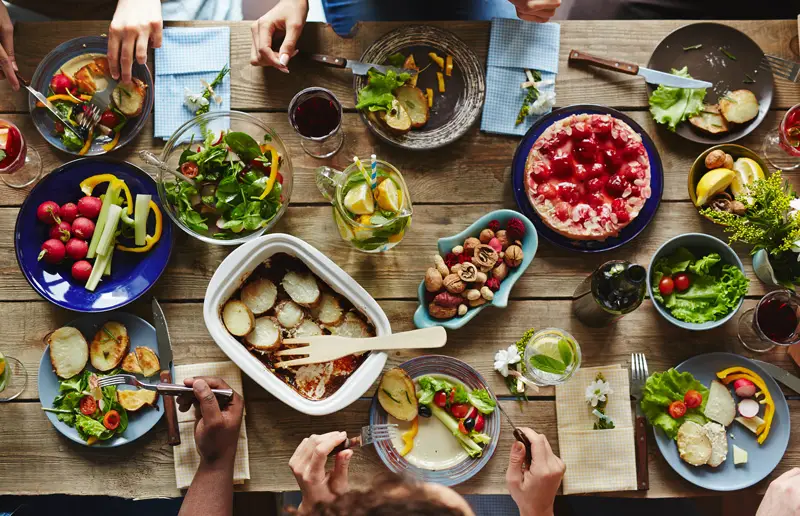
My mother’s holiday dinners were always beautiful from the outside. She cared about appearances. The good dishes came out, white porcelain with a thin gold border. Fourteen places were set. Candles burned on the sideboard. A wreath hung over the fireplace. If you took a photograph from the right angle, we looked like a close, traditional family.
Maya and Dean and I arrived shortly after four carrying tins of cookies we had baked the night before. My mother looked at the cookies before she looked at the children. “Oh, good. You brought those.”
Kayla and her family were already there. Sydney and Piper were sitting in the center of the living room opening gifts my mother “couldn’t wait” to give them. There were no early presents waiting for my kids.
Then Sandra pointed toward the kitchen. “Put the kids at the little table.” The little table was a folding card table set several feet from the main dining room table. Close enough to hear everyone. Far enough away to understand the message. Maya and Dean had eaten there for years. They didn’t even protest anymore. That should have bothered me more than it did.
But before I could say anything, Nana pushed herself out of her high-backed chair by the window. “They sit with me.”
My mother frowned. “Mom, there isn’t room.”
“They sit with me.”
“Nana—”
“I don’t have enough Christmases left to spend this one arguing over chairs.”
For once, Sandra gave in. Maya sat beside Nana. Dean took the other side. For nearly an hour, they belonged at the real table. Nana told them about a Christmas from her childhood when snow had buried the roads and the church bells froze. Dean laughed until he hiccuped. Maya leaned against Nana’s shoulder. For a while, everything felt almost normal.
Then dinner was served. Sydney and Piper first. My mother piled their plates high. The best ham. The crisp potatoes. The softest dinner rolls. Then she served Kayla. Then Perry. Then my father. My children waited. Nana finally took matters into her own hands and passed the dishes to them. She put ham on Dean’s plate herself. She gave Maya potatoes and green beans. For several seconds, both of my children had full plates in front of them.
That was apparently too much equality for my mother. She reached over. Took both plates. And gave them to Sydney and Piper, whose first plates were already half full.
“Your sister’s kids eat first,” she told me. “Yours can have whatever’s left.”
Then Dean asked if he had done something wrong.
I stood. And thirty years ended quietly.
At the door, while everybody suddenly found opinions about my “dramatic behavior,” I looked at Nana. Her hands were folded in her lap. Her face had changed. I knew that expression. She had decided something.
“Take the children,” she said softly enough that only I heard. “I’ll deal with the rest.”
I didn’t understand what she meant. Not yet.
In the car, Dean asked again if he was in trouble. “No,” I said. “You did nothing wrong. Being hungry is never something you need to apologize for.” Maya was silent for nearly ten minutes. Then she said, “You never took us home before.” There was no accusation in it. That made it worse. “I know.” “Why did you this time?” I looked at her in the rearview mirror. “Because I should have done it a long time ago.”
My family assumed I was having a tantrum. A few hours later, my mother sent a message to the family group chat. No apology. No question about the children. No acknowledgment of what had happened. Just this: When you’re done sulking, Mom needs her heart pills filled and a ride to the lab Saturday.
I read the message twice. Then I put my phone face down. That message was almost useful in its cruelty. My mother had just removed food from my children’s plates, and her next thought was the work she expected me to perform. That was how completely I had become a function instead of a person.
Around nine that evening, my phone rang again. Nana. I answered immediately.
“They’ve gone,” she said.
“Who?”
“Your mother and father. They packed bags. They’re spending two days with Kayla’s in-laws for some holiday gathering.”
I stood straighter. “They left you alone?”
Nana gave a humorless laugh. “They said you’d come.”
Of course they had.
“Do you need me there tonight?”
“No. I’m fine. But I need you tomorrow.”
“For the medication?”
“No.” A pause. Then she said, “I packed.”
I didn’t speak.
“My suitcase. My things. I want the chair too.”
“Nana—”
“I’ve asked your mother for a year. Every time, she tells everyone I’m confused. I am not confused, Denise. I have never been confused. I’ve been ignored. There’s a difference.”
I sat down at my kitchen counter. She continued.
“I want to live with you. If you’ll have me.”
“You know I will.”
“I know.” Another silence. “And Denise?”
“Yes?”
“What you did tonight, putting those coats on those babies and walking out… I’ve been waiting thirty years to see you do that.”
I looked toward the hallway where Maya and Dean were sleeping. “For yourself, I wasn’t sure you ever would,” Nana said. “But for them, you finally did. That’s why I know it’s time.”
After we hung up, I cried. Not because I regretted leaving. Because setting down a burden you have carried your whole life can feel strangely like losing your balance.
The next morning, December twenty-seventh, I drove to my parents’ house. Nana was ready. Coat on. Suitcase beside her. Purse in her lap. “Lock the door when we go,” she said. “I won’t need the key again.”
We gathered every medication. Her pill organizer. Insurance cards. Medical paperwork. Clothes. A framed photograph of my grandfather. And finally, the chair. That old high-backed chair had followed Nana through decades of family history. I wrestled it into the back of my vehicle while she watched from the passenger seat.
Before we left, Nana placed a note on the dining room table. Four words. Gone to Denise’s. I’m well. That was all. No accusations. No explanations. No plea for permission.
We drove away.
At my house, Maya and Dean ran outside before I had fully parked. Dean hugged Nana and immediately asked, “Are you living here now?” She smiled at him. “I’m living where I’m wanted.”
We put her chair by the living room window, exactly where it had stood during those six weeks after Marcus died. That night Nana slept twelve hours.
Three days after Christmas, my parents returned home. My father later told me exactly what happened. Sandra entered first and called for her mother. No response. She walked to the bedroom. The bed was made. The closet was partly empty. The medication was gone. The suitcase was gone. Then she noticed the chair was missing. That was when she knew. People leave for an afternoon without their chair. They do not leave permanently without it.
She found the note afterward. My father told me she stood there reading it for nearly a minute. Then she said the first thing that came into her mind. Not, “Is Mom safe?” Not, “Why did she leave?” Not even, “Call Denise.” She said, “The deposit hits in three days.”
Arithmetic. That was her first fear.
The calls began that afternoon. Over the next three days, I counted 143. My mother called. My father called. Kayla called. Perry called, which was remarkable because Perry had probably called me directly twice in fifteen years. My aunts called after my mother told them I had taken advantage of a vulnerable elderly woman.
I answered none of them. They knew where Nana was. The note told them. These were not calls asking where she had gone. They were calls demanding that she return.
The voicemails moved through predictable stages. Anger. Guilt. Threats. Then panic. One of my mother’s messages warned that there were “authorities for situations like this.” Nana laughed when I played that one. “Good,” she said. “Maybe the authorities will ask me what I want. That’ll be new.”
Kayla left the most revealing voicemail. “You can’t just take her,” she said. “Do you understand what this does to Mom and Dad’s bills? Do you know how much of that house Nana’s check covers? You have to bring her back. This isn’t fair to the rest of us.”
I saved that message. She never asked whether Nana was comfortable. Never mentioned what happened to my children. She talked about the house. The bills. The check. The rest of us. Sometimes panic is useful because panic removes the polished version of the truth.
By January second, my parents’ financial shortfall became real. By January third, my mother called the authorities for a welfare check. An officer came to my home. I invited him inside. Nana was sitting in her chair by the window doing a crossword puzzle. He explained politely why he was there. Nana put her pen down.
“Young man,” she said, “I’m eighty-two, not eight. I know what year it is. I know where I am. I know who brought me here, and I know why I asked her to do it.”
He spoke privately with her for several minutes. She told him she had packed her own belongings. She told him she had wanted to move for a year. She told him nobody had kidnapped, coerced, threatened, or manipulated her. When the officer finished, he came back to me looking slightly embarrassed. “She’s competent,” he said. “She’s made her choice.”
Exactly. An elderly woman had done the one thing my family apparently considered unimaginable. She had exercised her own rights.
After the welfare check failed, my mother changed tactics again. She arranged what she called a family intervention. One Saturday in the second week of January, two cars pulled into my driveway. Sandra came first. My father behind her. Kayla and Perry. My aunts Rhonda and Linda.
My mother marched to the door already angry. When I opened it, she didn’t greet me. “Where is she?”
“In the living room.”
“Get her things. This has gone far enough. What you’ve done is kidnapping.” She said the last word loudly enough for the neighbors.
I stepped aside. “Come in. Ask her.”
They entered. Nana was sitting by the window drinking tea. Maya and Dean were coloring on the floor near her feet. She looked better. Everyone noticed.
My mother began immediately. “Mom, get up. We’re taking you home.”
Nana lowered her teacup. “I am home.”
“You’re confused.”
“No, Sandra. I’m irritated. You’ve confused those two conditions for years.”
My aunt Rhonda nearly smiled before catching herself.
Then Nana pointed at the chairs. “Sit down. If everybody drove all this way to discuss me, we’re going to discuss me while I’m in the room.” My mother remained standing. Nana continued anyway.
“You’ve told everyone for years that you take care of me.”
Sandra’s expression tightened. “I do.”
“Who fills my pill organizer?” Silence. “Who takes me to cardiology?” Nobody spoke. “Who knows my cardiologist’s nurse?” My mother stared at her. “Who sat beside me at every blood draw for five years? Who keeps track of my medication changes? Who knows which prescription makes me dizzy?”
Nana looked directly at Sandra. “It wasn’t you.”
Then she turned toward me. “Bring the notebook.”
I went to my bag and retrieved the spiral notebook. Nana opened it on the table. Page after page. Dates. Doses. Appointments. Questions. Observations. My handwriting. Years of it. Not a single entry from my mother.
“You took my check,” Nana said. “You hung a caregiver certificate on the refrigerator. You let everyone think you did the work. Denise did the work.”
My mother looked around the room for support. None came.
Then Aunt Rhonda asked the question Sandra couldn’t escape. “If you were taking such good care of her, why did she pack her own bag to leave?”
My mother looked at my father. That look had controlled him for decades. It said, Fix this. Smooth it over. End the uncomfortable conversation. For the first time in my life, he refused.
“She isn’t confused, Sandra.”
My mother froze.
My father’s voice was quiet. “I watched you tell her no for a year because you didn’t want the deposit to stop.”
“Roy—”
“No.” One word. I had never heard him interrupt her like that.
He looked at me. “I watched a lot of things.” Nobody moved. “I watched Denise do everything for your mother while we took the credit. I watched Kayla get whatever she wanted. I watched Denise’s kids sit at that folding table year after year. I told myself it wasn’t my fight.” His eyes settled on Maya and Dean. “It was my fight.”
Then he reached into his coat. He removed Nana’s small bank book and crossed the room. He put it in her hands. “This is yours. It always was.”
My mother’s face went pale. “Roy, what are you doing?”
“What I should’ve done years ago.”
He looked at Nana. “I’m sorry.” Then at me. “And Denise, I’m sorry I waited until you had children old enough to see what I should’ve stopped when you were their age.”
That was probably the most honest thing my father had ever said. It did not erase thirty years. But it mattered because truth usually matters most when telling it costs something.
Kayla had been unusually quiet. Then she finally spoke. “So what happens to Mom and Dad’s bills?”
Everyone turned toward her. She continued before realizing what she was revealing. “The mortgage. Utilities. Nana’s check covers almost half of everything. If that stops, they can’t—” She stopped. Too late.
I looked at her. “You should ask who covered it before.” Kayla stared at me. “For years, it wasn’t you.”
And that was when everybody finally did the math. My parents’ household had been standing on two supports. One was Nana’s money. The other was my unpaid labor. I handled the medication. Transportation. Appointments. Emergencies. Scheduling. Monitoring. All the little things that allowed my mother to claim Nana could safely remain in that house. Meanwhile, Nana’s income helped keep the mortgage paid.
On Christmas night, in one careless hour, my family managed to insult the children of one support and humiliate the owner of the other. Then they assumed everything would return to normal by Sunday. It didn’t.
The structure didn’t collapse because I attacked it. I simply stopped holding it up. That distinction mattered to me. I didn’t take revenge. I didn’t cancel payments that belonged to them. I didn’t sabotage anything. Nana moved because she wanted to. Her money followed because it belonged to her. I stopped providing free labor because I was no longer willing to accept contempt as the cost of staying connected. The consequences were theirs.
My mother made one last attempt. She turned to Nana, and suddenly her voice softened. “Mom. Come home. We’ll work everything out. Things will be different.”
Nana studied her for a long moment. There was no anger in her face. That would have been easier. What she showed instead was finality.
“They already are different, Sandra.”
“Mom—”
“I asked for a year to live where I wanted. You told everyone I was confused because the truth was inconvenient.”
My mother looked down. Nana continued. “I’m going to spend whatever time I have left in a house where I am a person, not a deposit.” Then she glanced at Maya and Dean. “And at a table where my great-grandchildren don’t have to wonder if they deserve dinner.”
She picked up her tea. “You know the way out.”
They left slowly. My aunts stayed behind for a few minutes. Rhonda touched my arm. “I really didn’t know.” “I believe you.” And I did. Families like ours depend on separate conversations. One person gets one version. Another person gets another. The person telling the story remains powerful because the people holding the different pieces rarely stand in the same room long enough to compare them. That day, everybody finally stood in the same room. The story could no longer survive.
My parents struggled financially afterward. My father eventually picked up more work. They downsized some expenses. My mother blamed me for months. Maybe she still does. I stopped checking.
My relationship with my father changed. Not instantly. One honest afternoon does not rebuild a lifetime. But he started coming by alone. The first time, he brought groceries. Not as an apology. Not as payment. He simply put them on the counter and asked whether I needed help moving a bookshelf. He began spending time with Maya and Dean. Actual time. Not holiday photographs. He learned that Maya loved astronomy and Dean was obsessed with building model airplanes. He apologized to them too. Not in an elaborate adult speech. He simply said, “I should have spoken up when things were unfair. I’m sorry I didn’t.” Dean asked, “Will you next time?” My father said, “Yes.” So far, he has.
Kayla and I barely spoke for several months. When she finally called, the first conversation went badly. She began with, “I know Mom went too far, but—” I stopped her. “No buts.” “You’re really going to throw away our whole relationship over one dinner?” “It wasn’t one dinner.” “That’s how it started.” “No. That’s where I stopped.”
She didn’t understand the difference then. Maybe she does now. I told her she was welcome in my life when she could treat my children with the same basic consideration she expected for hers. Not better. Not first. Equal. I wasn’t asking for worship. I was asking for plates that stayed in front of the children they were served to. She called that dramatic. I called it a low standard.
Months later, she apologized. I accepted the apology. I did not restore the old relationship. That surprised her. People who are used to apologies resetting everything often become frustrated when you tell them trust requires more than words. I needed to see different behavior. Over time. Especially around my children.
Nana stayed with us. We changed the spare room into hers. Her chair remained by the living room window. I transferred her medical records to a clinic closer to my house and updated every emergency contact so nobody could pretend later that arrangements were unclear. Her Social Security and pension went into an account she controlled. She paid me a modest amount toward groceries despite my protests because, as she told me, “There’s a difference between contributing somewhere you’re wanted and being financially trapped somewhere you aren’t.” Fair enough.
More importantly, she became part of our daily life. Not a patient. Not a responsibility. Family. She helped Maya with spelling. She taught Dean gin rummy. She complained about television commercials and criticized every tomato sold in a supermarket. Some evenings I would walk into the living room after work and find all three of them squeezed around that old chair, Nana telling stories while the kids asked questions. Those moments made me understand how much energy I had wasted trying to earn acceptance from people who benefited from withholding it.
My children changed too. Maya changed first. She became less cautious at family gatherings. At home, she stopped asking permission for things children should never need permission to expect. A full portion. A comfortable seat. A turn speaking. Dean recovered faster because six-year-olds are generous when adults finally make the world make sense again.
A few weeks after Nana moved in, he asked me something while we were making pancakes. “Mom?” “Yeah?” “If Grandma ever takes my food again, are we leaving?” I put down the spatula. “Yes.” He nodded. “Okay.” That was all he needed. Not revenge. Not a feud. Certainty.
Children can survive disappointment. What damages them is learning that the adults protecting them may choose comfort over them when something unfair happens. I had done that too many times. I won’t again.
I sometimes think about the exact second everything changed. People might assume it was when my mother took the plates. It wasn’t. I had watched her do crueler things in smaller ways for years. The moment was when Dean looked at me and asked what he had done wrong. Because suddenly I wasn’t looking at my son. I was looking at myself.
I remembered being eight years old and giving Kayla the better Christmas gift because my mother said she wanted it more. I remembered being twelve and surrendering my bedroom during a family visit because Kayla “couldn’t sleep on the couch.” I remembered being sixteen and canceling plans to babysit because everyone had already assumed I would. I remembered every time somebody said, “Denise is fine.”
I had spent my life being fine. And without realizing it, I was raising children who were learning to become fine too. Fine with less. Fine with being overlooked. Fine with watching someone else receive what had been taken directly from them.
That was the inheritance hidden inside those Christmas plates. Not favoritism. Training. And I finally refused to pass it down.
The following Christmas looked nothing like my mother’s. We didn’t have fourteen place settings. We didn’t use expensive dishes. There were no gold rims. Nana’s chair sat by the window with a knitted blanket over one arm. My father came. My aunts drove down. Kayla did not come that year, which was probably best. We ate at one table.
Before dinner, Dean asked who was eating first. I knew why he was asking. I set the serving bowl in the middle. “Everybody.” He smiled. Nana reached across and put an extra dinner roll on his plate. Then another on Maya’s. “You’re spoiling them,” my father said. Nana looked at him. “I’m eighty-three. I’ve earned hobbies.” Everybody laughed. And for once, laughter at a family table didn’t come at somebody else’s expense.
Later that evening, after the children went upstairs, I stood in the kitchen washing dishes. My father dried them. For a while, neither of us spoke. Then he said, “Your mother still thinks you destroyed the family.” I rinsed another plate. “I know.” He waited. “Aren’t you angry?” “I was.” “And now?” I thought about it. “Now I think a family that can be destroyed by one person refusing to be treated badly probably had bigger problems than that person.”
My father nodded slowly. “I should have protected you.” “Yes.” He looked surprised that I didn’t soften the answer. I wasn’t trying to hurt him. I had simply stopped doing other people’s emotional work for them. He deserved the truth. So did I.
“I thought keeping everybody calm was the same as keeping the family together,” he said. “I thought that too.” He looked toward the living room where Nana was asleep in her chair. “We were wrong.” “Yes.” That was enough. No dramatic reconciliation. No promise that the past didn’t matter. Just two people finally naming the same mistake.
Nana lived with us through another birthday, another Easter, another summer, and another Christmas. She got slower. I noticed because that was what I did for a living. I noticed the shorter walks. The longer naps. The way she sometimes needed both hands to stand. But she was happy. That mattered.
One afternoon, nearly a year after she moved in, I came home from work and found her asleep in the chair while Maya read beside her and Dean built something complicated out of cardboard on the floor. The light through the window fell across the three of them. I stood in the doorway longer than I needed to.
Nana opened one eye. “You planning to stand there all day?” “I thought you were asleep.” “I was until somebody started staring at me.” I laughed. Then she looked at me more seriously. “You know what you gave me, don’t you?” “What?” “A choice.” I shook my head. “You made the choice.” “Yes. But you were willing to let me make it.”
That sentence stayed with me. Because that was what love looked like to Nana. Not control. Not sacrifice demanded in somebody else’s name. Choice. Respect. Room to be a person. I had spent decades accepting a different definition. No more.
I don’t know whether my mother will ever fully understand why I left that Christmas. She probably still tells people I overreacted. Maybe in her version, two hungry children became ungrateful grandchildren. Maybe the missing monthly deposit became financial betrayal. Maybe my grandmother became confused again because that version is easier than admitting an eighty-two-year-old woman understood the situation perfectly.
I no longer need to correct every version. That is another freedom I didn’t know existed. For most of my life, I believed belonging required explanation. If someone misunderstood me, I had to fix it. If someone was angry, I had to soothe it. If the family was uncomfortable, I had to return and make myself smaller until everybody relaxed.
Now I know something simpler. People are allowed to misunderstand boundaries they benefited from you not having. Their misunderstanding does not make the boundary wrong.
The door to my house is not permanently closed. My father is welcome. My aunts are welcome. Kayla may someday be welcome in the old, easy way again if her behavior earns that trust. Even my mother is not banned forever. But the rules are different now. My children are not lesser children. Nana is not an income source. I am not the family’s unpaid infrastructure. Nobody receives a permanent place in our lives simply because we share blood. A place at our table comes with the minimum expectation that you respect the people sitting around it.
That may sound obvious. It wasn’t obvious in the house where I grew up. Sometimes the hardest lesson is realizing that the thing you called normal was simply familiar.
These days, our dining table is smaller than my mother’s. There are scratches in the wood. One corner has a marker stain Dean swears was already there. The chairs don’t match because two came from Marcus’s old apartment and one came from a yard sale. Nothing about it belongs in a holiday catalog. But nobody sits at a folding table in the kitchen unless we actually run out of space, and if that happens, the adults move first. Food gets passed around. Nobody counts who deserves the biggest piece. Nobody has to earn the right to be hungry.
And beside the living room window sits Nana’s high-backed chair. Sometimes I look at it and think about the morning I carried it out of my mother’s house. At the time, it felt like furniture. Now I understand what it represented. Nana took the chair because she wasn’t planning to return. I took my children because neither was I.
Three days after Christmas, my mother walked into an empty room and discovered that the people she thought would always stay could leave. The 143 calls didn’t bring us back. The guilt didn’t bring us back. The threats didn’t bring us back. Because for the first time, there was nothing waiting at that house that I was willing to trade my children’s dignity to keep.
My family thought patience meant permanence. They thought because I had endured something for thirty years, I would endure it forever. They were wrong. Patience can end. Roles can end. Family traditions can end.
And sometimes all it takes is one six-year-old looking at his mother across an empty Christmas plate and asking the question she should have asked herself decades earlier.
Did I do something wrong?
No. Neither of us had. And once I finally understood that, leaving became the easiest decision I had ever made.

Laura Bennett writes about complicated family dynamics, difficult conversations, and the quiet moments that change everything. Her stories focus on real-life tensions — inheritance disputes, strained marriages, loyalty tests — and the strength people find when they finally speak up. She believes the smallest decisions often carry the biggest consequences.