The morning of the trip, I found my father’s old fountain pen in the back of my jewelry drawer.
I wasn’t looking for it. I was looking for a pair of pearl earrings Aaron’s mother had given me for our first anniversary. Pearls she said were “more appropriate” than the diamond studs I usually wore. I was trying very hard that week to be appropriate.
Instead, my fingers closed around something long and cool and smooth. I pulled it out.
It was black, with a gold clip and a little gold band around the middle. The ink inside had dried up years ago. On the side, in tiny engraved letters, it said H.V.
Harold Vance. My father.
I sat down on the edge of the bed with the pen in my hand.
He signed everything with that pen. Every contract. Every check. Every birthday card. He said a man should sign his name with something that weighs a little, so he remembers his name means something.
The last thing he ever signed with it was a stack of documents I brought to his hospital room four years ago. He was very sick by then. His hands shook. It took him almost ten minutes to sign all of them.
When he was done, he put the pen down on his blanket and looked at me.
“Alyssa,” he said. “Promise me something.”
“Anything, Daddy.”
“Love him all you want,” he said. “Give him everything you want. But never give him the pen.”
I laughed. I thought he was confused from the medicine.
“I mean it,” he said. He took my hand. His fingers were cold and thin. “There’s a difference between giving someone your heart and giving them your signature. Keep the pen, baby girl. Whatever happens. Keep the pen.”
He died nine days later.
I sat on the bed holding that dried-up pen and thought about what he said. I hadn’t thought about it in a long time.
Then I heard Aaron’s voice from downstairs.
“Alyssa! The car’s here! We’re going to be late!”
I put the pen in my purse. I don’t know why. I just did.
Then I went downstairs, wearing the pearls.
I met Aaron Prescott at MIT when I was twenty-two.
We were both graduate students in computer science. He was a year ahead of me. He was tall and loud and funny, with messy dark hair and a laugh you could hear across the whole engineering building. He wore the same gray hoodie every day. He talked about changing the world the way other people talked about the weather.
I was quiet. I sat in the back of the lab. I wrote code for twelve hours a day and ate granola bars out of my backpack. Nobody knew who my father was. I didn’t tell anyone. I’d learned in high school that when people knew I was Harold Vance’s daughter, they stopped seeing me and started seeing a bank account.
My father built Vance Aviation from one rented hangar in Ohio into one of the biggest private aircraft companies in the world. We had money. A lot of it. More than I could ever spend. But my father raised me like we didn’t. I took the bus to public school. I worked summers at a diner. I paid for my own textbooks.
“Money doesn’t make you anybody,” he told me. “Work makes you somebody. Go find your work.”
I found it in a computer lab at three in the morning.
Aaron found me there one night in October. Everyone else had gone home. I was the only one left, hunched over my laptop, trying to fix a problem with a piece of software that compressed video data.
He stood behind me and watched me type for ten minutes without saying anything.
“That’s brilliant,” he said finally.
I jumped. I hadn’t heard him come in.
“What you just did,” he said. He pointed at my screen. “With the compression. Nobody does it that way. Why does that work?”
So I explained. I explained for an hour. He pulled up a chair and listened to every word, and asked questions, and didn’t once try to explain it back to me like he knew it better.
At the end, he said, “Want to get pancakes?”
We got pancakes at an all-night diner on Massachusetts Avenue. We talked until the sun came up. He told me he wanted to start a company. A company that would make video streaming faster and cheaper for everyone. He said the internet was going to be all video someday, and whoever figured out how to move it fastest would win.
“I don’t know how to do it yet,” he admitted. “But you do. I watched you.”
I fell in love with him over a stack of blueberry pancakes at five in the morning.
That’s the truth. I want to tell it honestly. I loved him. For a long time, I loved him more than anything.
We started the company two years later, in a rented office above a laundromat in Cambridge. Aaron named it Lumen. He was the CEO. He was the face. He was the one who went to meetings and shook hands and gave speeches to investors in his gray hoodie.
I wrote the code.
I wrote almost all of it, for the first three years. The video compression system that made Lumen work was based on the idea I’d been working on in the lab the night Aaron found me. I spent two years turning it into something real. I filed thirteen patents on different pieces of it.
I filed them under my own name. Through a small holding company my father’s lawyer set up for me. Vance Technical Holdings.
Aaron didn’t care at the time. He didn’t understand patents. He said the paperwork was boring. He said, “Babe, it’s all the same. What’s yours is mine and what’s mine is yours.”
My father’s lawyer, Martin Greene, did care.
“Alyssa,” Martin said, sitting across from me in his office in Boston. Martin was sixty-something, with white hair and half-moon glasses and the most patient voice I’d ever heard. “I want you to own these patents personally. And I want you to license them to Lumen. Not give them. License them. For a dollar a year. Renewable every year.”
“Why?”
“Because your father asked me to protect you,” Martin said. “And because I’ve been doing this for thirty-five years. I’ve seen a lot of young founders fall in love with each other. I’ve seen how it ends sometimes.” He looked at me over his glasses. “A license for a dollar a year costs Aaron nothing. But it means the heart of that company stays yours. Just in case.”
“Just in case what?”
“Just in case,” Martin said gently, “he ever forgets where it came from.”
I signed the license. With a cheap ballpoint pen from Martin’s desk. I didn’t think I’d ever need it.
Aaron and I got married the next spring, in a small ceremony on the beach in Maine. My father walked me down the aisle. He was already sick then, though he hadn’t told anybody yet. He was thinner than he should have been. His suit hung loose on his shoulders.
At the reception, he danced with me. And while we danced, he whispered in my ear.
“He’s a good talker, Alyssa.”
“He’s a good man, Daddy.”
“I hope so,” my father said. “I really do. But I’ll tell you what my father told me. You don’t know a man by what he says when he’s winning. You know him by what he does when he thinks he doesn’t need you anymore.”
I laughed and told him he was being dramatic.
He didn’t laugh.
Three years after we got married, Lumen almost died.
We’d grown fast. Too fast. Aaron borrowed a lot of money from investors to build huge data centers across the country. Then a bigger company sued us, claiming we’d stolen their technology. It was a lie. We hadn’t stolen anything. But fighting the lawsuit cost a fortune, and while it dragged on, our investors got scared and pulled out.
By the spring of that year, Lumen had six weeks of cash left. Two thousand employees. Six weeks.
I’ll never forget the night Aaron told me. He came home at two in the morning and sat on the kitchen floor with his back against the dishwasher and put his face in his hands.
“It’s over,” he said. “Everything. It’s all over. I’ve called every investor in the world. Nobody will touch us. We’re going to have to fire everybody. Two thousand people, Alyssa. Two thousand families.”
I sat down on the floor next to him.
My father had died the year before. He’d left me control of the Vance Family Trust. It was very big. I’d never touched it. I didn’t want to. It felt like his, not mine.
But I sat on that kitchen floor next to my husband, who was crying, and I thought about two thousand families. I thought about the engineers I’d hired myself. The ones who’d moved across the country to work with us. The ones with new babies.
“How much do you need?” I asked.
He laughed. It was a broken laugh. “A billion and a half. At least. To get through the lawsuit and pay back the loans.”
“Okay,” I said.
He looked at me. “Okay what?”
“Okay,” I said. “I’ll give it to you.”
He didn’t understand at first. Then he did. He stared at me.
“Your father’s money,” he said.
“It’s my money now,” I said. “And I want to use it to save our company.”
He hugged me so hard I couldn’t breathe. He cried into my hair. He said I was saving his life. He said he’d never forget it. He said he’d pay me back a hundred times over.
The next morning, I called Martin.
Martin was quiet on the phone for a long time after I told him.
“I’ll do it,” he said finally. “It’s your money. It’s your choice. But I’m going to set it up the way your father would have wanted.”
“What does that mean?”
“It means the money doesn’t go to Aaron,” Martin said. “It goes to Lumen. As an investment from the Vance Family Trust. In exchange, the Trust gets a special class of shares. Preferred shares. With voting rights.” He paused. “Fifty-one percent of the voting rights, Alyssa.”
“Martin, I don’t want to control his company—”
“You don’t have to use it,” Martin said. “Ever. You can leave it in a drawer for the rest of your life. Aaron can run the company exactly the way he wants, as long as nobody ever needs to vote against him. But if something ever goes wrong, really wrong, you’ll have a seat at the table that nobody can take away from you.” He sighed. “Your father made me promise, honey. He made me promise I wouldn’t let you give away the pen.”
So I let him set it up that way.
And I made one decision of my own. I asked Martin to keep the whole thing quiet. Inside the company, it would just be listed as an investment from “a family trust.” Only the board and the lawyers would know the details. I didn’t want anyone at Lumen to know the money was mine.
“Why?” Martin asked.
“Because Aaron’s proud,” I said. “He’d hate for people to know his wife saved his company. It’d make him look weak. I don’t want him to look weak.”
Martin didn’t say anything for a while.
“That’s very kind of you,” he said finally. “I hope he deserves it.”
Aaron signed the investment papers in Martin’s office. He didn’t read them. He was too happy. He kept laughing and saying, “You’re amazing, babe, you’re amazing.” He signed every page with a cheap ballpoint pen. He didn’t ask what any of it meant.
He never read them.
He never asked.
And I never told him.
The money saved Lumen. We won the lawsuit. We paid back the loans. The company grew and grew. Within two years, Lumen was one of the most valuable tech companies in the world. Magazines put Aaron on their covers. The Self-Made Billionaire. The Boy From Ohio Who Built the Future of Video.
He was from Ohio. He had built a lot of it. But he hadn’t built it alone, and he hadn’t built it from nothing.
He stopped mentioning me in interviews. At first it was small. My wife has always been supportive. Then it was nothing. Then, once, in a big magazine profile, a reporter asked about me, and Aaron laughed and said, “Alyssa? Oh, she’s got her charities. She keeps busy. She’s not really a tech person.”
I read that article sitting at our kitchen table. The same kitchen where he cried on the floor.
She’s not really a tech person.
I’d written the code that made him a billionaire. I owned the thirteen patents his whole company stood on. I’d given him a billion and a half dollars of my dead father’s money.
And to the world, I was the socialite wife who kept busy with her charities.
I told myself it didn’t matter. I told myself it was just how he talked to reporters. I told myself he was protecting me from the spotlight. I’d always hated the spotlight.
I told myself a lot of things.
His mother moved into the guest house on our property two years ago.
Donna Prescott was a small, sharp woman with silver hair and a tongue like a razor. She’d raised Aaron by herself in a little town outside Dayton after his father left. She worked two jobs. She was proud of her son like nothing else in the world.
And from the first day she met me, she decided I was the problem.
“You know,” she said to me at our first Thanksgiving, “some of us had to work for what we have. Some of us didn’t have rich daddies to pay for everything.”
“My father made me work,” I said. “I paid for my own textbooks.”
She laughed. “Oh, honey. Paying for textbooks isn’t work.”
She called me “the heiress.” Not to my face, at first. Then to my face. She told everyone at Lumen’s holiday parties that I’d never had a real job. She told Aaron’s executives that I spent my days at the spa. She told Aaron I was spoiled and lazy and didn’t support him the way a wife should.
I never corrected her. Not once. I didn’t want to make Aaron choose between his mother and his wife. I didn’t want to tell her about the money, because it would humiliate him. I didn’t want to tell her about the code, because Aaron had built his whole story on being the genius who did it all himself.
So I just smiled. And poured her tea. And let her think whatever she wanted.
My best friend from MIT, a woman named Priya Desai who now ran her own robotics lab in California, called me once after a holiday party where Donna had said something particularly cruel.
“Why do you let them talk to you like that?” she asked.
“It’s not worth the fight,” I said.
“Alyssa,” Priya said, “you’re the smartest person I’ve ever met. You wrote code at twenty-two that people are still trying to copy. And you’re letting a woman who thinks Bluetooth is a dental condition call you lazy at a party.” She was quiet for a second. “When did you get so small?”
I didn’t have an answer.
Jasmine started working for Aaron eight months before the trip.
She was twenty-six. Blond, with big blue eyes and a soft, breathy voice. She’d been a junior marketing assistant before Aaron promoted her to be his executive secretary. She had no experience. Aaron said she had “great instincts.”
She called him Mr. Prescott, even though everyone else at Lumen called him Aaron. She brought him coffee exactly the way he liked it without being asked. She laughed at everything he said.
She started showing up at our house. To drop off papers. To pick up papers. To “go over his schedule.”
She started calling his phone at eleven at night. He’d take the calls out on the back patio, with the door closed.
“Work stuff,” he’d say when he came back in.
Donna loved her.
“Now that,” Donna said to me one evening, watching Jasmine get into her car in our driveway, “is a girl who knows how to support a man.”
I didn’t say anything. I went upstairs.
I’d stopped saying things a long time ago.
The trip was for the IPO.
After six years, Lumen was finally going public. Selling shares on the stock market. Aaron was taking the whole executive team to New York for a week of meetings with bankers, ending with him ringing the opening bell at the stock exchange.
It was the biggest moment of his life. He’d been talking about it for a year.
He’d arranged a private jet. A big one. Room for forty people. He was very proud of it. He’d booked it himself, through a charter service, and he told everyone it was “the best plane in the country.”
He didn’t know who owned it.
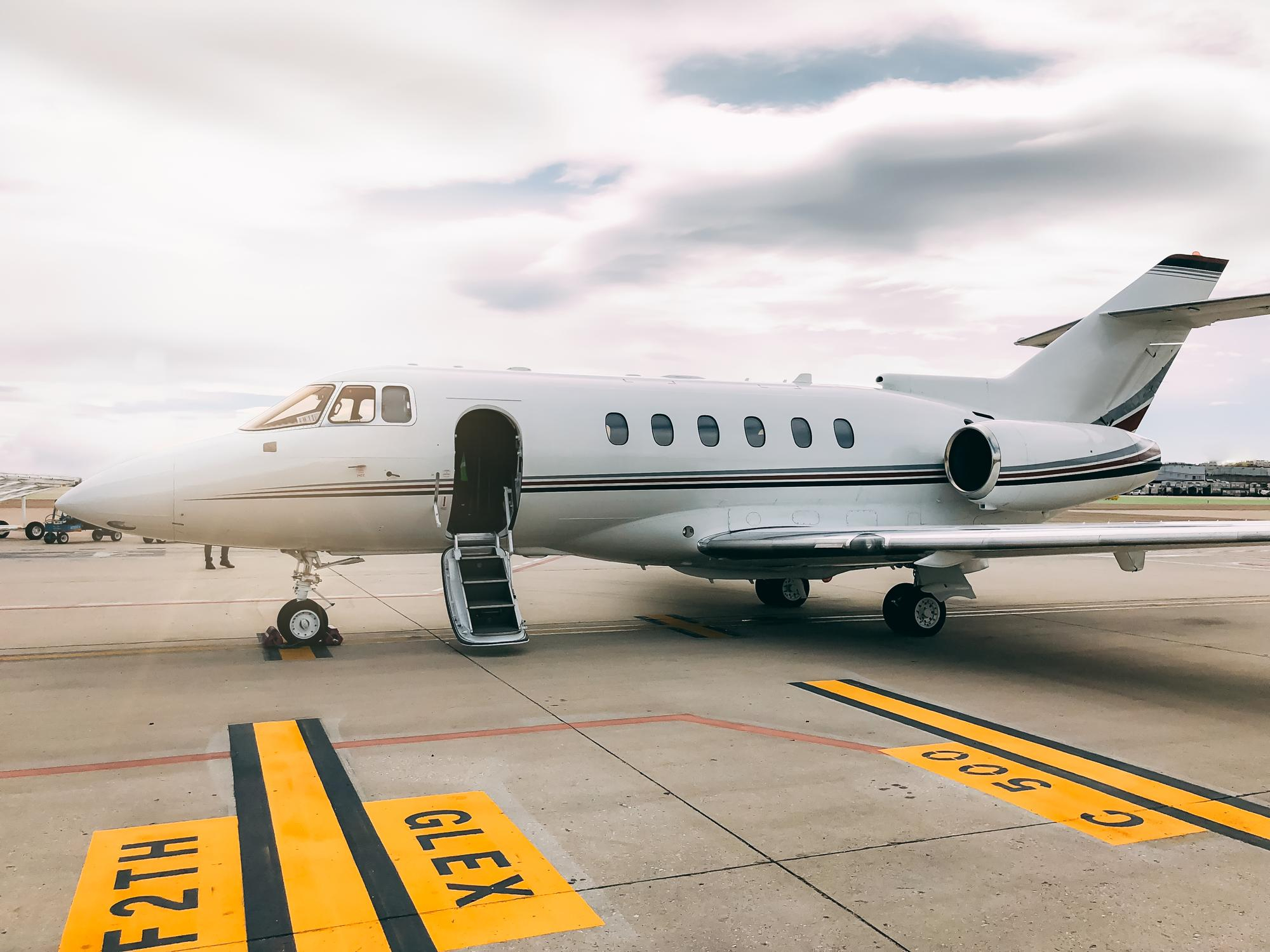
Vance Aviation has a charter division. Aaron’s assistant booked the jet through a third-party agency. The plane was a Gulfstream from our fleet. Tail number VA-001.
My father’s personal plane.
I found out three days before the trip, when the charter division sent me a routine report of upcoming flights. I almost called Aaron to tell him. Then I didn’t. I thought it would be a nice surprise. I thought maybe, on the plane, I’d tell him. I thought maybe he’d laugh and say, Of course. Of course it’s your dad’s plane. You’re always taking care of me.
I thought maybe it would remind him.
The car dropped us at the private terminal at Logan Airport at nine in the morning.
The jet was sitting on the tarmac in the cold October sunshine. White, with a thin blue stripe down the side. Sleek and beautiful. I’d flown on it a hundred times when I was a girl. My father used to let me sit in the cockpit with the pilots before takeoff.
The executive team was already boarding. Twelve vice presidents. The chief financial officer. The general counsel. Three members of the board of directors who were coming along for the bell ringing. Donna was coming too. Aaron said his mother deserved to see it.
Aaron went up the stairs first. He didn’t wait for me. He was on his phone.
I went up after him, carrying my own bag.
At the top of the stairs, the captain was waiting to greet passengers. He was an older man with a gray mustache, in a navy uniform with gold stripes on the sleeves.
He saw me. His eyes widened. He opened his mouth.
I gave him a tiny shake of my head. Not now.
His name was Captain Robert Hale. He’d flown for my father for twenty-two years. He taught me how to read an altimeter when I was nine.
He closed his mouth. He nodded. He said, “Good morning, ma’am,” very formally, and stepped aside.
I walked into the cabin.
The front section of the jet was set up like a first-class lounge. Big leather seats in pairs, facing each other across little tables. My usual seat was the one by the window in the first row, next to Aaron’s. It was always my seat. We’d flown on charter jets a dozen times. I always sat by the window, because I got nervous on takeoff and Aaron used to hold my hand.
I stopped cold.
Jasmine was sitting in my seat.
She was wearing a white silk blouse and a cream cardigan. Her blond hair was curled. She was leaning very close to Aaron. She had an orange in her hand, and she was peeling it slowly, with her perfect pink nails, and feeding him the pieces. One at a time. Into his mouth.
He was letting her. He was smiling.
The whole executive team was watching. I saw it in their faces. Some of them were uncomfortable. Some of them were amused. One of the vice presidents, a man named Kevin who’d always been rude to me at parties, was smirking.
The moment Jasmine noticed me standing in the aisle, she let out a gasp. A big, exaggerated gasp. Like a girl in a movie.
She dropped the orange onto Aaron’s thigh. On purpose. I watched her do it.
Then she started rubbing the spot on his pants with her hand. Slowly. Dramatically.
“Oh!” she said. “Oh, I’m so sorry, Mr. Prescott! I’m so clumsy!”
Aaron didn’t move her hand away.
He didn’t even look at her.
He looked straight at me. With obvious irritation. Like I was a waiter who’d brought the wrong order.
“Why are you just standing there?” he said. “Jasmine gets terrible airsickness. I told her to sit here, by the window. Go back to row five.”
Row five. In the back. Next to the bathroom.
I stood frozen in the aisle in front of his entire executive board.
Behind me, I heard Donna come up the stairs. She stopped right behind me. She looked past me at Jasmine in my seat.
“Alyssa, please,” Donna said. Her voice was dripping with contempt. Loud. So everyone could hear. “That poor girl was working for Aaron until three in the morning. Getting everything ready for this trip. The least you can do is be considerate and give her your seat. It’s not like you’ve done anything to help.”
Somebody in the cabin laughed. I think it was Kevin.
It’s not like you’ve done anything to help.
To everyone on that plane, Aaron was the self-made tech billionaire who built his fortune out of nothing. And I was his spoiled, wealthy wife who had never worked a day in her life and contributed nothing.
They had absolutely no idea.
They didn’t know about the night on the kitchen floor. The billion and a half dollars. The thirteen patents with my name on them. The code I wrote in a lab at three in the morning while Aaron was out shaking hands.
They didn’t know because I’d hidden it. To protect him. To make him look strong.
And this is what he did with it.
“Alyssa,” Aaron said. His voice was cold. Hard. A voice I’d never heard him use with me before. “Do you really have to create a scene in front of my team?”
I hadn’t said a word.
“Remember your place,” he said.
Something inside me broke.
It didn’t break loudly. It wasn’t a shout or a scream or a slap. It was very quiet. Like a single thread snapping.
The last thread. The one that had been holding together four years of swallowing it. Four years of smiling at Donna. Four years of reading magazine articles where I was not really a tech person. Four years of eating dinner alone while he took calls on the patio. Four years of calling it love.
Remember your place.
I took one slow step backward.
And I smiled.
It was a strange smile. Calm. Very calm. I felt it spread across my face, and I didn’t recognize it. It wasn’t the smile I used for Donna’s parties. It wasn’t the smile I used for reporters. It was my father’s smile. The one he used across a negotiating table right before the other side realized they’d lost.
“I know exactly where I belong, Aaron,” I said.
My voice was smooth. Controlled. It carried through the whole cabin.
“And I have absolutely no intention of fighting you over a seat.”
Then I turned around.
Donna was standing in the aisle behind me. She stepped aside to let me pass. She looked pleased. Like she’d won something.
I walked past her toward the door.
I heard someone whisper, “Wow.” I heard Kevin laugh again. I heard Jasmine say, in a little baby voice, “Oh no, did I upset her?”
Everyone watching thought I was leaving because I’d been embarrassed. They thought I was running away. Defeated. Humiliated. Going home to cry.
They were wrong.
I wasn’t just walking off a plane.
I was walking away from the whole life I’d spent building for Aaron.
Captain Hale was standing by the door at the top of the stairs. The flight attendants were standing next to him. Two of them. A young woman named Grace and a man named Luis. They’d both flown with my family for years.
They’d seen everything.
When I reached the door, Captain Hale did something he’d never done before. Not in the twenty-five years I’d known him.
He bowed.
Not a big bow. Just a small, formal bend at the waist. With his hand over his heart. The flight attendants did the same.
“Ma’am,” Captain Hale said. His voice was low but clear. It carried back through the silent cabin. “Should we cancel the flight?”
The whole jet went dead quiet.
I turned around.
Every face in that cabin was staring at me. Twelve vice presidents. The CFO. The general counsel. Three board members. Donna, in the aisle, with her mouth hanging open.
Jasmine, in my seat, with her hand frozen on Aaron’s thigh.
And Aaron.
He was half-standing in his seat. His face had changed. The irritation was gone. He looked confused.
“Cancel the—” he said. “What are you talking about? Captain, what is this? I chartered this plane.”
Captain Hale didn’t look at him. He kept his eyes on me. Waiting.
“Mr. Prescott,” he said politely, without turning his head. “You chartered a flight on this aircraft. Through a third-party agency. That’s correct. But this aircraft is owned by Vance Aviation.” He paused. “Tail number VA-001. It was the late Mr. Harold Vance’s personal jet. It now belongs to his daughter. Who also chairs the board of Vance Aviation.”
He nodded toward me.
“Mrs. Prescott is the owner of this airplane, sir. And company policy is very clear. If the owner of the aircraft is on board and is not comfortable with the conditions of the flight, the flight does not depart.”
Nobody moved.
Nobody breathed.
I watched Aaron’s face. I watched it go from confusion to disbelief to something I’d never seen there before. Fear.
“Alyssa,” he said. “What is he talking about?”
“It’s my father’s plane, Aaron,” I said. “I was going to tell you. I thought it would be a nice surprise.” I tilted my head. “Surprise.”
Donna made a small choking sound.
“Ma’am?” Captain Hale said gently. “Your instructions?”
I looked at my husband. Standing in the front row of my father’s jet, with orange juice on his pants, with his secretary’s hand still on his leg.
Remember your place.
“Yes, Robert,” I said. “Please cancel the flight.”
“Yes, ma’am.”
He reached past me and picked up the cabin intercom. His voice came over the speakers. Calm. Professional.
“Ladies and gentlemen, this is your captain. I’m sorry to inform you that this flight has been canceled at the request of the aircraft’s owner. Please gather your belongings and deplane. Ground staff will be happy to assist you in arranging alternative transportation.”
Nobody moved for a long moment.
Then Aaron came down the aisle fast. He pushed past Donna. He grabbed my arm.
“Alyssa. Stop this. Right now. You’re humiliating me.”
I looked down at his hand on my arm. I looked back up at him.
“Let go of me,” I said.
He didn’t.
Luis, the flight attendant, stepped forward. He’s not a big man. But he put his hand on Aaron’s wrist and said, very politely, “Sir. Please let go of Mrs. Prescott.”
Aaron let go.
“Do you understand what you’re doing?” he hissed. Low, so the cabin couldn’t hear. “We have the IPO meetings tomorrow morning at eight. The bankers. The bell on Friday. Do you know how much is riding on this? Do you know what it’ll look like if I don’t show up?”
“Then charter another plane,” I said. “I’m sure there’s one available. In row five.”
His face went red.
“This is about a seat?” he said. “You’re blowing up the biggest week of my life over a seat?”
“No, Aaron,” I said. “This isn’t about a seat.”
I opened my purse. I took out my phone. And underneath it, my father’s black fountain pen with the gold clip.
Aaron looked at the pen. He didn’t understand.
“Remember your place,” I said quietly. “That’s what you told me. In front of everybody. So I’m going to remember it.” I held up the pen. “My place is the person who wrote the code your company runs on. My place is the person who owns the thirteen patents your company is built on. My place is the person who gave you one and a half billion dollars when you were crying on the kitchen floor with six weeks of cash left.”
His face went white.
Behind him, I heard somebody gasp. I looked past Aaron’s shoulder. The CFO, a woman named Ellen Marsh, was standing in the aisle. She was the only person at Lumen besides Aaron and the board who knew where the money had come from. She’d processed the investment herself. She’d signed the confidentiality agreement.
She’d never said a word in four years.
She was looking at me now with something like relief.
“And my place,” I said, a little louder now, so the people in the front rows could hear, “is the controlling vote in the Vance Family Trust. Which holds fifty-one percent of the voting shares of Lumen.” I looked at Aaron. “You signed those papers in Martin’s office four years ago. You didn’t read them. You said, You’re amazing, babe. Do you remember?”
He didn’t answer. He was staring at me like he’d never seen me before.
Maybe he hadn’t.
The cabin was completely silent. Everyone had heard that.
One of the three board members, an older man named Charles Whitfield, slowly stood up from his seat in row three. He’d been on Lumen’s board since the beginning. He knew about the Trust. He’d voted to accept the money.
He looked at Aaron. Then at me.
“She’s right, Aaron,” he said quietly. “It’s in the bylaws. I’ve wondered for four years if you ever read them.”
Aaron turned around and stared at him.
Donna was still standing in the aisle. Her face was gray.
“That’s not true,” she said. Her voice was shaking. “That’s not true. Aaron built this company. By himself. He told me. From nothing. He…”
“He built a lot of it, Donna,” I said. “He’s very good at what he does. He’s a wonderful salesman. He’s a wonderful speaker.” I looked at Aaron. “But he didn’t do it by himself. And he didn’t do it from nothing. He did it with my code, my patents and my father’s money. And then he let you tell everyone for four years that I was a spoiled heiress who never worked a day in her life.”
Donna looked at her son.
“Is that true?” she whispered.
Aaron didn’t answer her.
That was all the answer she needed.
I walked down the stairs onto the tarmac.
It was cold. The wind off Boston Harbor was sharp. I pulled my coat tighter around me.
Behind me, I heard footsteps. Ellen Marsh, the CFO. She caught up with me at the bottom of the stairs.
“Mrs. Prescott,” she said. “Alyssa. Can I walk with you?”
“Of course.”
We walked across the tarmac toward the terminal together. Behind us, the executive team was starting to come down the stairs. Slowly. Confused. Some of them were on their phones already. I could hear Kevin, the vice president who’d laughed, saying, “What the hell just happened?”
“I’ve wanted to say something to you for four years,” Ellen said quietly. “Every holiday party. Every time Donna said something. Every time I read one of those magazine articles.” She shook her head. “But you asked for confidentiality. And it was your money. Your choice.”
“I know,” I said. “Thank you for keeping it.”
“I want you to know,” Ellen said, “that I wish I hadn’t. I’m sorry. I should have found a way.”
“It wasn’t your job to protect me, Ellen.”
“No,” she said. “But somebody should have.”
At the door to the terminal, I stopped. I turned around.
The jet was sitting on the tarmac. Empty now. Captain Hale was standing at the top of the stairs, watching me. He raised his hand. A small salute.
I raised mine back.
Aaron was standing at the bottom of the stairs. Alone. Jasmine had walked away from him. She was standing by the terminal with her phone pressed to her ear and her back turned.
Donna was standing a few feet from Aaron. She wasn’t looking at him. She was looking at me.
I went inside.
I called Martin from the terminal lounge.
Martin is seventy-two now. He’s mostly retired. But he still answers my calls on the first ring.
“Alyssa,” he said. “Is everything all right?”
“Martin,” I said. “Do you remember what my father said? About the pen?”
There was a long pause on the line.
“I remember,” Martin said. “What happened?”
I told him. All of it. The orange. The seat. Remember your place. Donna. The captain’s bow.
When I was done, Martin was quiet for a moment.
“Your father would have been very proud of you today,” he said. “I want you to know that first.”
“I don’t feel proud,” I said. “I feel sick.”
“That’s how you know you did it right,” Martin said. “The people who feel good when they do this kind of thing are the people who shouldn’t be doing it.” He paused. “What do you want to do next?”
“I don’t know,” I said. “I really don’t. I don’t want to destroy the company. Two thousand families still work there. More now. Five thousand.”
“Then don’t destroy it,” Martin said. “Protect it. That’s different.”
“How?”
“Two things,” Martin said. “First, the patent license. It renews on the first of November. Nine days from now. You can choose not to renew it. Or you can renew it on different terms. That’s entirely up to you.”
“And second?”
“Second,” Martin said, “the IPO. Before Lumen can go public, the board has to approve the final filing. The Trust has the controlling vote. Nothing happens without you.” He paused. “You’ve had that power for four years, Alyssa. You’ve never used it. Maybe it’s time you sat at the table you paid for.”
Aaron came home at ten o’clock that night.
I was in the kitchen. I was sitting at the table where I’d read the magazine article. She’s not really a tech person. I was drinking a cup of tea.
He stood in the kitchen doorway for a long time without saying anything.
He looked terrible. His tie was gone. His shirt was untucked. There was still an orange stain on his pants.
“The bankers called,” he said finally. “They want to postpone the IPO. They said there are ‘governance concerns.’ Somebody on the plane talked.” He rubbed his face. “It’s all over the internet already. Somebody posted a video. Of the captain bowing. Of you saying all that stuff. It has four million views.”
I didn’t say anything.
“Kevin quit,” he said. “Three of the VPs want to have a meeting with the board. Without me. Charles Whitfield won’t return my calls.” He laughed. It wasn’t a real laugh. “My own board won’t return my calls.”
“Where’s Jasmine?” I asked.
He flinched.
“She went home,” he said. “She texted me that she needs some space. She said this whole thing is ‘really toxic’ and she needs to protect her energy.” He sat down heavily in the chair across from me. “She unfollowed me on everything. Two hours after we got off the plane.”
I almost laughed. I didn’t.
“Aaron,” I said. “How long?”
He didn’t pretend not to understand.
“Four months,” he said quietly. He looked at the table. “It started at the Christmas party. I’m sorry. I’m so sorry, Alyssa.”
I nodded. I’d known. I think I’d known for a long time. You don’t take phone calls on the patio at eleven at night for four months because of “work stuff.”
“And your mother?” I asked. “Where’s she?”
“In the guest house,” he said. “She won’t talk to me. She locked the door. I could hear her crying.” He put his face in his hands. “She asked me if I’ve been lying to her for four years. I didn’t know what to say.”
“You could try the truth.”
He looked up at me. His eyes were red.
“Why didn’t you ever tell anyone?” he asked. “The money. The patents. The code. All of it. Why didn’t you just tell people? Why did you let everyone think you were—” He stopped.
“Spoiled?” I said. “Lazy? Not really a tech person?”
He didn’t answer.
“I didn’t tell anyone,” I said, “because I loved you. Because you’re proud. Because you’d built your whole story on being the boy from Ohio who did it all himself. And I thought if people knew the truth, it would make you look weak. So I kept quiet. To protect you.”
I put my teacup down.
“And you took my silence,” I said, “and you used it to make me small. You let your mother call me an heiress who never worked a day in her life. You told a magazine I was busy with my charities. You let your secretary sit in my seat and feed you oranges in front of your whole company. And when I didn’t say anything, you told me to remember my place.”
He was crying now. Quietly.
“I don’t know when it happened,” he said. “I swear to God, Alyssa. I don’t know when I started believing it. That I did it all myself. I told the story so many times. In every interview. Every speech. The boy from Ohio. After a while, I just…” He shook his head. “I forgot. I forgot about the kitchen floor. I forgot about the code. I forgot about you.”
“I know,” I said. “My father warned me. On our wedding day. He said you don’t know a man by what he says when he’s winning. You know him by what he does when he thinks he doesn’t need you anymore.”
Aaron looked at me.
“I need you,” he said. “I need you right now more than I’ve ever needed you.”
“I know you do,” I said. “But you didn’t think you did this morning. And that’s the part I can’t forget.”
The board of directors met two days later in a conference room at Martin’s law firm in downtown Boston.
All seven board members were there. Aaron was there, at the far end of the table, looking like he hadn’t slept. Martin was there, next to me. Ellen Marsh was there, as CFO, with a stack of financial documents.
And I was there. In the chair at the head of the table.
The Trust’s chair. The one I’d never sat in.
Charles Whitfield, the oldest board member, opened the meeting.
“We’re here,” he said, “because of a significant governance issue. Our CEO has publicly humiliated the controlling shareholder of this company. In front of the executive team. In a video now seen by eleven million people. Our IPO has been postponed indefinitely. Our stock value, on the private market, has dropped eighteen percent in forty-eight hours.” He looked at Aaron. “And we’ve learned that our CEO has been in a relationship with his executive secretary, a direct report, for several months. Which is a direct violation of our company’s code of conduct.”
Aaron didn’t say anything. He stared at the table.
Charles turned to me.
“Mrs. Prescott,” he said. “The Vance Family Trust holds the controlling vote. Whatever you decide, the board will follow. What do you want to do?”
The whole room looked at me.
I’d thought about this for two days. I’d thought about it every minute.
I thought about the five thousand people who worked at Lumen. The engineers I’d hired myself, years ago, above the laundromat. Their families. Their kids. Their mortgages.
I thought about Aaron on the kitchen floor, crying. And Aaron on the plane, saying remember your place.
I thought about my father in his hospital bed. Never give him the pen.
I reached into my purse. I took out my father’s black fountain pen with the gold clip. I’d had it refilled the day before, at a little stationery shop in Back Bay. The old man behind the counter had held it up to the light and said, “Somebody took very good care of this.”
I set it down on the table in front of me.
“Here’s what I want,” I said.
“First, I want Aaron to step down as CEO. Effective immediately. Not fired. Stepping down. He can keep his shares. He can keep his seat on the board, if the other members agree. But he can’t run this company anymore. Not after what happened. Not with his secretary. Not with the way he treated the people who trust him.”
Aaron flinched. But he didn’t argue.
“Second,” I said, “I want Ellen Marsh to serve as interim CEO while the board searches for a permanent one. She’s the most qualified person in this room. She’s run the finances of this company for six years. She kept her word to me for four years when it would have been easy to break it. That’s the kind of person I want running Lumen.”
Ellen looked up at me. Her eyes were wet.
“Third,” I said, “I’m renewing the patent license. For another year. Same terms. A dollar. Lumen needs those patents to survive. I’m not going to hurt five thousand families because of one man.”
I paused.
“But there’s a new condition,” I said. “Starting today, every Lumen product, every press release, every investor document, every website, will credit the original inventor of the core technology. By name.”
Martin slid a single sheet of paper across the table to me. I’d written it the night before.
I read it out loud.
“Lumen’s core video compression technology was invented by Alyssa Vance Prescott in 2014, while a graduate student at MIT.”
“That’s all,” I said. “One sentence. That’s all I want.”
Nobody said anything.
Then Charles Whitfield cleared his throat.
“Mrs. Prescott,” he said. “Respectfully. You could have taken the whole company. You have the votes. You could fire Aaron, cancel the license, and walk away with everything.”
“I know,” I said.
“Why don’t you?”
I thought about it.
“Because I’m not trying to take anything from anybody,” I said. “I’m just trying to stop giving myself away.”
I picked up my father’s pen. I uncapped it. I signed the resolution Martin had drafted. Alyssa Vance Prescott, Trustee.
The ink was black and wet and shining. The pen was heavy in my hand. Just heavy enough.
I passed the paper to Charles.
The vote was seven to zero. Aaron voted yes too.
Aaron moved out a week later.
He took an apartment in the Seaport district. Glass and steel. Twenty floors up. He sent me a text the first night. A photo of the view.
It’s very quiet up here, he wrote. I didn’t know quiet could be so loud.
I didn’t reply.
We filed for divorce in December. It was simpler than I expected. My father had insisted on a prenuptial agreement before the wedding. Aaron had laughed and signed it without reading it, just like everything else. The Trust was mine. The patents were mine. The house was mine. The shares he’d earned were his. He kept them. They were still worth a great deal of money. He was still a very rich man.
He just wasn’t the man he used to tell people he was.
Jasmine left Lumen in November. She took a job at a startup in Austin. I heard she’d started dating its founder within a month. I hope he reads his paperwork.
Donna came to see me in January.
I was in the kitchen when she knocked on the back door. She was standing on the porch in a heavy wool coat. She looked smaller than I remembered. Older.
“May I come in?” she asked.
I let her in. I made her a cup of tea. We sat at the kitchen table.
For a long time, she didn’t say anything. She turned her teacup around and around on its saucer.
“I read the papers,” she said finally. “The investment papers. From four years ago. Martin Greene sent them to me. I asked him to.”
I didn’t say anything.
“A billion and a half dollars,” she said. She shook her head. “I worked two jobs for eighteen years to raise that boy. I cleaned offices at night. I thought I knew what it meant to sacrifice for somebody.” She looked up at me. “And I called you a spoiled heiress. To your face. At Thanksgiving. In front of your friends.”
“You did,” I said.
“I told people you’d never worked a day in your life.”
“You did.”
She was quiet for a moment.
“I read about the code, too,” she said. “There was an article. In the Boston Globe. After the video went around. A reporter talked to some of your old professors at MIT. One of them said you were the most gifted student he ever taught. He said he always wondered why you disappeared.” Donna’s voice cracked. “And I realized I knew why. You disappeared into my son. And I helped you do it. I helped make you small.”
She wiped her eyes with a napkin.
“I’m not asking you to forgive me,” she said. “I don’t deserve that. I just wanted you to know I know. I see it now. I should have seen it four years ago.”
I looked at Donna Prescott across my kitchen table. A small, sharp woman who’d worked two jobs for eighteen years, who’d been abandoned by her husband, who’d decided the whole world was against her and her son. Who’d needed someone to blame for everything she didn’t have.
I picked up the teapot. I refilled her cup.
“Your son is a very good salesman, Donna,” I said. “He sold you a story. He sold it to everybody. He even sold it to himself.” I set the teapot down. “I don’t blame you for buying it. I bought it too. For a long time.”
She looked at me for a long moment.
“Will you be all right?” she asked. “Alone in this big house?”
I smiled.
“I’m not going to be alone,” I said. “I’m going back to work.”
Priya Desai called me the day the Globe article came out.
“I saw the video,” she said. “Eleven million views. You’re famous.”
“I’m not famous. The captain is famous. Everybody keeps posting the part where he bows.”
“That’s the best part,” Priya said. “Listen. I’m serious. I’ve got a robotics lab in San Jose with eighty engineers and a vision system that’s about fifty percent as good as it needs to be. I need somebody who understands compression better than anyone alive. I’ve needed that person for six years.” She paused. “Come work with me, Alyssa. Come write code again. Come be you again.”
I thought about it for about four seconds.
“I’ll need a desk by a window,” I said.
Priya laughed. “Honey, you can have any seat you want.”
That was a year and a half ago.
Ellen Marsh is still running Lumen. She was supposed to be interim. The board liked her so much they made her permanent. Under her, Lumen finally went public last spring. Eighteen months late.
She asked me to ring the opening bell at the stock exchange with her.
I said no at first. I said it was her moment.
“It’s not my moment,” Ellen said. “It’s the moment of the person who wrote the code. Please, Alyssa. I’ll stand next to you. But I want you to ring it.”
So I went to New York. I flew commercial, in a regular seat, because I wanted to. I stood on the balcony at the stock exchange in a navy blue suit with Ellen beside me. Below us, the whole trading floor was looking up.
On the big screen behind us, there was the Lumen logo. And under it, in white letters, the one sentence I’d asked for:
Lumen’s core video compression technology was invented by Alyssa Vance Prescott in 2014, while a graduate student at MIT.
I rang the bell.
The whole floor cheered.
Somewhere in the crowd, I saw Martin. He’d flown down from Boston, at seventy-three, to watch. He was clapping with both hands over his head. He was crying.
Aaron wasn’t there. He sent me a text that morning.
Watching on TV. You look like you belong there.
I do, I wrote back. I always did.
He’s doing okay, I hear. Aaron. He started a small consulting firm. He advises young founders. Ellen told me he tells every single one of them the same thing on the first day.
“Read your paperwork. Every page. And remember who was there when you were on the kitchen floor.”
Donna moved back to Ohio. She calls me on my birthday. Every year. She doesn’t say much. Just happy birthday. And then, at the end, every time:
“I see you, Alyssa. I just wanted you to know.”
Last month, I flew to San Jose for a meeting at Priya’s lab.
I flew on VA-001.
My father’s plane. I don’t use it often. It feels too big for one person. But Captain Hale was retiring, and he asked if I would fly with him one last time before he hung up his wings.
When I climbed the stairs, he was waiting at the top. In his navy uniform with the gold stripes.
He didn’t bow this time. He hugged me.
“Your father would be so proud,” he said into my hair. “I want you to know that. He’d be so proud.”
“Thank you, Robert. For everything. For that day.”
“I’ve been flying for thirty-eight years,” he said. “That’s the only time I’ve ever canceled a flight from the top of the stairs.” He smiled. “Best decision I ever made.”
I walked into the cabin.
It was empty. Just me. Forty leather seats.
I went to the first row. To the seat by the window. My seat.
I sat down. I buckled my belt. I looked out the window at the tarmac in the cold sunshine.
On the little table in front of me, Grace, the flight attendant, had left something. A plate with an orange on it. Peeled. Neatly. In perfect sections.
And next to it, a handwritten note.
For the owner. No airsickness required. — G.
I laughed out loud in the empty cabin.
Then I reached into my purse and took out my father’s pen. And a small notebook. I opened it to a blank page.
The engines started. The plane began to move.
I used to get nervous on takeoff. Aaron used to hold my hand.
I didn’t need anyone to hold my hand anymore.
As the jet lifted off the runway and climbed over Boston Harbor, I uncapped the pen. And I started writing code. By hand. Like I used to in the lab at three in the morning, at twenty-two, before anybody knew my name.
My father always said a person should sign their name with something that weighs a little. So they remember their name means something.
I remember now.
I spent four years giving away everything I had to a man who told me to remember my place.
So I did. I remembered.
My place isn’t row five. It isn’t the back of the room at a holiday party. It isn’t the quiet wife who keeps busy with her charities.
My place is in the first row, by the window, with a pen in my hand.
And nobody, ever again, is going to take my seat.

Sophia Rivers is an experienced News Content Editor with a sharp eye for detail and a passion for delivering accurate and engaging news stories. At TheArchivists, she specializes in curating, editing, and presenting news content that informs and resonates with a global audience.
Sophia holds a degree in Journalism from the University of Toronto, where she developed her skills in news reporting, media ethics, and digital journalism. Her expertise lies in identifying key stories, crafting compelling narratives, and ensuring journalistic integrity in every piece she edits.
Known for her precision and dedication to the truth, Sophia thrives in the fast-paced world of news editing. At TheArchivists, she focuses on producing high-quality news content that keeps readers informed while maintaining a balanced and insightful perspective.
With a commitment to delivering impactful journalism, Sophia is passionate about bringing clarity to complex issues and amplifying voices that matter. Her work reflects her belief in the power of news to shape conversations and inspire change.