The sign above my garage door says CRAIG’S AUTO REPAIR in red letters.
My sons painted it.
Rick was seven and Noah was four. I bought a sheet of plywood at the hardware store and two cans of paint, white and red, and laid the plywood across two sawhorses in the empty garage. I drew the letters in pencil. The boys filled them in.
Noah painted the C in CRAIG’S. He went outside the lines on every side. There’s a red smudge in the corner shaped like his whole hand, because he leaned on it before it was dry. Rick did the rest, very carefully, with his tongue sticking out of the corner of his mouth. He spelled REPAIR with the P backward at first and cried when he saw it. I told him we’d fix it. We painted over the P in white and he did it again.
You can still see the ghost of the backward P under the right one, if you stand close.
I could have paid somebody to make a real sign. A metal one, with lights. I didn’t want a real sign. I wanted that one.
Every morning, when I unlock the garage at six-thirty, I look up at it. The smudgy C. The ghost of the backward P. And I remember why I’m doing this.
My name is Craig. I’m thirty-eight. I’ve been fixing cars since I was fourteen, when my uncle let me hang around his shop in Dayton, Ohio, and hand him wrenches.
I met Laura when I was twenty-three. She worked at a coffee shop across the street from the dealership where I was a mechanic. I went in every morning for a large black coffee I didn’t need, just so I could watch her laugh with the customers.
She had a big laugh. Loud. It filled the whole shop. It was the first thing I loved about her.
It took me four months to ask her out. She said yes before I finished the sentence.
We were together eleven years. Married for nine. We had two boys. Rick, who’s eight now, quiet and careful, who builds model cars with me and has to have every decal exactly straight. And Noah, who’s five, loud and wild, who runs everywhere and laughs like his mother.
For a long time, we were happy. I believe that. I’ve thought about it a lot, and I believe it. We had a small house with a big yard. We had Sunday pancakes. We had a dog named Biscuit who ate a whole birthday cake once, off the counter, while we were singing to Rick in the next room.
But Laura always wanted more.
I don’t say that to be mean. She grew up with nothing. Her dad left. Her mom worked two jobs. She told me once that she used to stand outside the windows of the big houses on the north side of town at Christmas and look at the trees. She said she promised herself she’d live in one of those houses someday.
I made decent money at the dealership. Not great money. Decent. We paid our bills. We went to the lake every summer. We had enough.
To Laura, enough was never enough.
“You could be a manager by now,” she’d say. “You could open your own shop. You could do something. You’re so good with cars, Craig, and you just… fix them. For somebody else. For forty-two thousand a year.”
“I like fixing them,” I said.
“That’s not the point.”
I didn’t know what the point was. I still don’t, really.
Brent Harlow was in my class in high school.
He was the kid with the brand-new car at sixteen. A black BMW. His father owned half the car dealerships in the county, including the one where I eventually worked. Brent played lacrosse and wore sunglasses indoors and called everybody “bro.” He wasn’t mean to me in school. He just didn’t notice me. I was the kid in the back of shop class with grease under my fingernails.
After high school, he went to college in Virginia and came back to work for his father. By thirty-five, he was running the whole family business. Six dealerships. A house on the lake with a boat dock. A Mercedes for every day of the week, it seemed like.
Laura met him at the dealership Christmas party three years ago. I brought her. I introduced them.
“Brent was in my class,” I told her. “We go way back.”
Brent laughed and shook my hand. “Craig! Man! You still working here? That’s awesome. Somebody’s got to keep the lights on, right?”
Laura laughed too. At his joke. Not mine.
I didn’t think anything of it.
Eight months later, she told me she was leaving.
We were standing in the kitchen. The boys were asleep. She had her coat on. She had a suitcase by the door. She’d already packed.
“I’m in love with Brent,” she said. “I’ve been seeing him since the spring. I’m sorry. I didn’t want it to happen like this.”
I stood there holding a dish towel. I couldn’t move.
“Laura,” I said. “We have two kids.”
“I know,” she said. “And Brent can give them things you never can. A house on the lake. Good schools. Private schools. Vacations. Real ones. Not a cabin with no air conditioning.”
“They like the cabin.”
“They’re kids, Craig. They don’t know any better.”
She looked at me. Not angry. Almost sorry for me. That was worse.
“You’re going nowhere in life,” she said. “You know that, right? You’ll be fixing other people’s cars for forty-two thousand a year until you’re sixty. You’ll never make decent money. You’ll never be anybody.” She picked up her suitcase. “I can’t live like that. I deserve more.”
She left that night.
I sat on the kitchen floor until the sun came up.
The divorce took a year.
Laura had Brent’s lawyers. They were expensive and very good. I had a lawyer from a strip mall who charged a flat fee and kept forgetting the boys’ names.
Laura got the house. She sold it two months later and moved into Brent’s place on the lake. She got primary custody of Rick and Noah. I got every other weekend and dinner on Wednesday nights.
“It’s standard,” my lawyer said. “Mothers usually get primary. You’re lucky you got Wednesdays.”
I didn’t feel lucky.
And I lost my job.
Brent’s father owned the dealership. Six weeks after Laura moved into the lake house, my manager called me into his office and told me the company was “restructuring the service department.” He said they didn’t need as many senior mechanics. He said it wasn’t personal.
I’d worked there for eleven years. I’d never been late. I’d never had a single complaint.
I knew exactly whose idea it was.
So I sat in my tiny apartment above a pizza place and thought about what Laura said. You’re going nowhere in life. You’ll never make decent money.
And I thought, maybe she’s right.
Then I thought about Rick and Noah. And I thought, no. Not in front of them. I’m not going to be the father who proves her right.
I took every dollar I had left. My half of the house money. My retirement savings. The little bit my uncle left me when he died. I rented an old two-bay garage on the east side of town, on a street called Linden Avenue, between a laundromat and a closed-down video store. It had a leaky roof and a broken hydraulic lift and an office the size of a closet.
I fixed the roof myself. I fixed the lift myself. I bought used tools from a shop that was going out of business.
And on a Saturday in April, I got a sheet of plywood and two cans of paint, and my boys made me a sign.
The first year was the hardest year of my life.
Some weeks I had two customers. Some weeks I had none. I ate peanut butter sandwiches for lunch and dinner. I slept in the office some nights because I couldn’t afford to heat my apartment and the shop.
But slowly, people started to come. Word gets around on the east side. That the guy on Linden Avenue does honest work. That he won’t sell you a new transmission when all you need is a twenty-dollar part. That he’ll let you pay in installments if you’re short this month.
By the second year, I had a waiting list. I hired a kid named Marcus, nineteen, who’d been kicked out of three high schools and had a gift with engines like nothing I’d ever seen. I paid off the broken lift. I bought a second one.
Every dollar mattered. Every single one. I knew exactly how much I had in the bank every day. Most days it wasn’t much.
But I had the shop. And I had my boys every other weekend and every Wednesday night.
Laura knew that was all I had.
And she knew exactly how to use it.
The first time was about eight months after the divorce.
She called me on a Thursday. She needed me to pick up Brent’s dry cleaning on the way to get the boys, because Brent was busy and she had a hair appointment.
“I’m not Brent’s errand boy, Laura.”
“Then I guess I’ll have to cancel your weekend,” she said. “The boys have a lot going on. Maybe they need to stay home.”
I picked up the dry cleaning.
The second time, she needed me to drive Noah to a dentist appointment on a Tuesday afternoon. In the middle of a workday. Because she had a tennis lesson.
“I’ve got three cars on the lift,” I said.
“It would be a shame if the boys didn’t get to see you this weekend,” she said.
I closed the shop for two hours.
The third time, the fourth time, the tenth time. It was always something. Fix the garbage disposal at the lake house. Change the oil in her car for free. Take the dog to the vet. Lend her five hundred dollars until Brent’s next “distribution.”
And every time I said no, she said the same thing. In different words.
It would be a shame if you didn’t get to see them.
I called my lawyer once. The strip mall guy. I asked if she could actually do that. Keep my kids from me.
“Technically, no,” he said. “You have a court order. But if she starts making things up, says you missed pickups, says the boys don’t want to go, it gets messy. And her new husband has a lot of money for lawyers.” He sighed. “My advice? Keep your head down. Don’t give her a reason.”
So I kept my head down.
For two years, I kept my head down.
She showed up at the shop on a Saturday morning in September.
I was under a Ford Explorer with my hands in a transmission. Marcus yelled, “Boss! Somebody’s here for you!”
I rolled out from under the Explorer.
Laura was standing in the open garage door. She was wearing big sunglasses and a white tennis skirt. Behind her, on the back of a flatbed tow truck, there was a black Mercedes.
It was a mess.
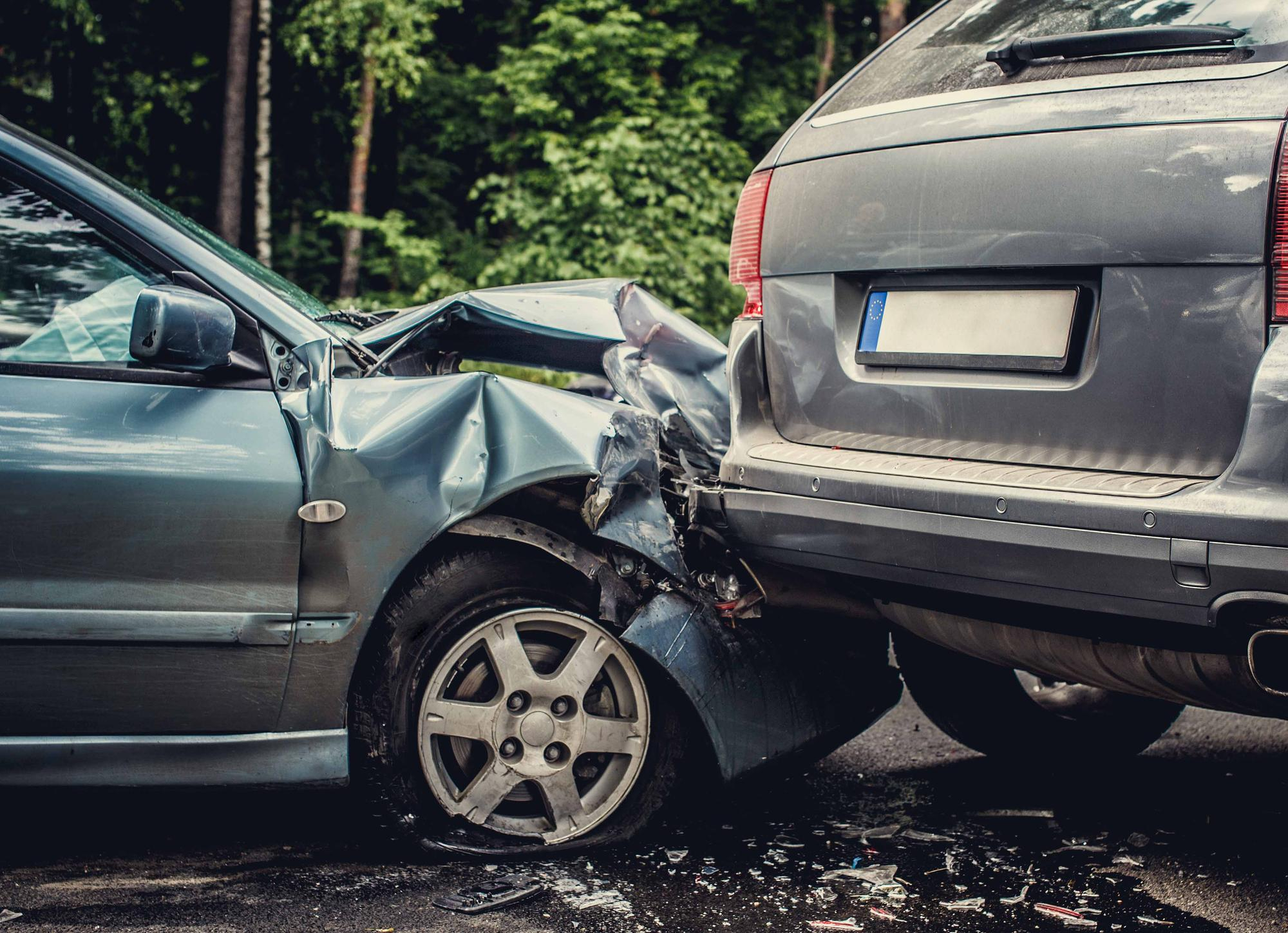
The whole front end was crushed. The hood was folded up like an accordion. The right headlight was hanging by its wires. The front bumper was gone. The right front wheel was bent sideways at an angle wheels are not supposed to bend. The windshield had a crack running all the way across it.
I stood up slowly. I wiped my hands on a rag.
“Laura. What happened?”
“I hit a deer,” she said. She didn’t take off her sunglasses. “On the lake road. Last weekend.”
I looked at the car. I’ve seen a lot of cars that hit deer. That’s not what a car looks like when it hits a deer.
She walked into my little office. She tossed the keys onto my desk.
“I need it by Friday,” she said.
“Laura, this is a week’s work. More. I’ve got jobs lined up. People are waiting.”
“Then cancel them.”
“I can’t cancel them. These are people’s cars. They need them to get to work.”
She took off her sunglasses then. She looked right at me.
“Rick and Noah are supposed to stay with you this weekend,” she said. “It would be a shame if I decided they couldn’t.”
My heart stopped.
“You’d keep my children from me,” I said slowly. “Over a car.”
She stepped closer. Close enough that I could smell her perfume. It was new. Expensive.
“Don’t make me prove it,” she said.
“Why here?” I asked. “Brent owns six dealerships. Every one of them has a body shop. Why bring it to me?”
Something flickered across her face. Just for a second.
“Because you’re cheap,” she said. “And because Brent doesn’t want his guys gossiping about his wife’s car.” She put her sunglasses back on. “Friday, Craig. Five o’clock.”
She walked out. The tow truck driver unloaded the Mercedes into my second bay and drove away.
Marcus came over and stood next to me. He looked at the car for a long time.
“Boss,” he said quietly. “That’s not a deer.”
“I know,” I said.
I worked on that Mercedes for six days.
I called every customer who was waiting and told them I was sorry, I had an emergency, I’d get to them next week. Two of them took their cars somewhere else. I lost the business. I lost the money.
I ordered parts on credit. A new hood. A new bumper. A headlight assembly. A wheel. Control arms. A radiator. The parts alone came to almost four thousand dollars. I didn’t have four thousand dollars. I put them on the shop’s credit card and prayed.
Marcus and I worked until midnight every night. We took the front end apart piece by piece.
And as we took it apart, I started to find things.
The first thing I found was on Monday. When I pulled out the crushed bumper, there was paint stuck in the cracks. Not black, like the Mercedes. Silver. Scraped into the plastic in long streaks.
Deer aren’t silver.
The second thing I found was on Tuesday. When I took the hood off and pulled out the radiator, there was a piece of something wedged behind it. A chunk of reflective plastic. Orange. The kind they put on mailboxes. And a bent piece of a metal post.
On Tuesday night, I opened the back doors to get to the wiring harness that ran under the rear seat.
And I found the booster seat.
It was Noah’s. I knew it immediately. Blue and gray, with a cartoon shark printed on the back. I bought it for him myself when he turned four. Laura had taken it when she moved out, because I had another one at my apartment.
It was jammed down on the floor behind the passenger seat. The plastic shell on one side was cracked. A long split, from the top all the way down to the armrest.
I sat down on the floor of my shop and held that booster seat in my hands.
Then I reached under the seat to see if anything else was there.
My fingers found something small and hard. I pulled it out.
It was a little plastic dinosaur. A green T. rex, about three inches tall, with one arm chewed off.
His name was Chompy. Noah had taken him everywhere since he was two. Noah wouldn’t sleep without him.
I knelt on the floor of my garage at ten-thirty at night with my son’s broken booster seat and his chewed-up dinosaur, and I couldn’t breathe.
Marcus found me there a few minutes later.
“Boss? You okay?”
I held up Chompy.
Marcus didn’t say anything. He just knelt down next to me.
“The boys were in the car,” I said. “When it crashed. They were in the car.”
On Wednesday morning, I did something I’d never done in twenty-four years of fixing cars.
I plugged a diagnostic computer into a car to read its crash data.
Most newer cars have something called an event data recorder. A little black box, like on an airplane. It’s part of the airbag system. When a car crashes hard enough, it saves the last few seconds before the impact. How fast the car was going. Whether the brakes were on. Whether the seatbelts were buckled.
I’d never needed to look at one before. You need special equipment. I borrowed it from an old friend who works for the county doing accident reconstruction. I didn’t tell him why. I just said I had a customer with a question.
I plugged it in. I waited. The screen filled with numbers.
The crash happened on Saturday, September 7th. At 1:42 in the morning.
The car was going fifty-eight miles per hour. On the lake road, which has a speed limit of thirty-five.
The brakes were applied one half-second before impact. Too late.
The driver’s seatbelt was buckled. The front passenger seatbelt was buckled.
And two rear seatbelts were buckled. Both rear seats were occupied.
I stared at that screen for a long time.
September 7th. That was a Saturday. On the boys’ weekend with Laura. I had them the weekend before and the weekend after. Not that one.
At 1:42 in the morning, my sons were in the back seat of a Mercedes doing fifty-eight in a thirty-five on the lake road. And it hit something silver. Something with an orange reflector. A mailbox, and probably a parked car.
And then somebody drove away. Because there was no police report. If there had been, the car would’ve gone to an insurance company and a dealership body shop. Not to me. Not to the cheap ex-husband on the east side who could be bullied into keeping quiet.
That’s why she brought it here.
Because Brent doesn’t want his guys gossiping.
Wednesday night was my dinner night with the boys.
I picked them up at the lake house at five-thirty. Laura met me at the door. She didn’t let me inside. She never did. She just pushed the boys out onto the porch with their jackets and said, “Have them back by eight. Not eight-oh-one.”
I took them to the diner on Linden Avenue, a block from the shop. We always went there on Wednesdays. The boys liked the milkshakes. The waitress, a big woman named Doreen, always gave them extra cherries.
Noah talked the whole time. About school. About a kid named Jaxon who could burp the alphabet. About a TV show with talking trucks.
Rick didn’t say much. Rick never says much. But that night, he barely touched his grilled cheese.
When Noah went to the bathroom with Doreen, who always took him because I couldn’t go into the ladies’ room, I looked at Rick across the table.
“Hey, bud,” I said. “You okay?”
He shrugged.
“You seem quiet.”
“I’m always quiet.”
“Quieter than usual.”
He picked at his grilled cheese.
I didn’t know how to ask. I’d been thinking about it all day. I didn’t want to scare him. I didn’t want to put words in his mouth. I’d read somewhere that you’re not supposed to do that with kids. You’re supposed to let them tell it.
So I reached into my jacket pocket. I took out Chompy. The little green T. rex with one arm. I set him down on the table between us.
Rick looked at the dinosaur.
His face went white.
“Where’d you find him?” he whispered. “Noah’s been crying every night. He can’t sleep without him. Mom said he’s gone forever.”
“I found him in Mom’s car,” I said gently. “At my shop. She brought it to me to fix.”
Rick stared at the dinosaur. His lip started to shake.
“Rick,” I said. “Buddy. You’re not in trouble. Nobody’s in trouble. But I need you to tell me what happened. Can you do that?”
He looked over his shoulder toward the bathroom. Where Noah was.
“Brent said not to tell,” he whispered. “He said if I told, you’d get mad and then you wouldn’t get to see us anymore. He said it would be my fault.”
I had to put my hands flat on the table to keep them from shaking.
“That’s not true,” I said. “That’s not true, Rick. Nothing you tell me will ever make it so I can’t see you. Ever. I promise. Okay?”
He looked at me for a long moment.
Then he told me.
It was a party. At a big house on the other side of the lake. Brent’s friend’s house. The grown-ups were drinking. Rick and Noah were in the basement with some other kids watching movies. Noah fell asleep on a beanbag chair.
At one in the morning, Mom woke them up. She was laughing. Brent was laughing. Brent was holding a bottle.
“He was drinking the grown-up juice,” Rick said. “The brown kind. In the car. He kept drinking it while he was driving. Mom told him to stop and he said, Relax, babe, I’ve driven this road a million times.“
They were going fast. Rick could feel it. The trees were going by really fast. Noah woke up and started crying because he was scared.
Then the car went off the side of the road. There was a huge bang. Rick hit his head on the window. Noah screamed. The airbags went off in the front, and there was smoke and a bad smell.
“There was a mailbox,” Rick said. “And a car. A gray car. Parked in a driveway. We hit it.” He swallowed. “There was a light on in the house. Somebody opened the door. And Brent backed up really fast and drove away.”
“Did anybody get hurt?”
“Noah’s seat broke,” Rick said. “He hit his face on the door. His lip bled. Mom said not to tell anybody. She put ice on it. She said if anybody asked, Noah fell off the swings.”
I remembered. I’d picked them up the next weekend and Noah had a scab on his lip. Laura told me at the door he fell off the swings at the park.
I didn’t question it. Kids fall off swings.
“After that,” Rick said, “Brent parked the car in the garage and put a tarp on it. And then the next day he called someone and they took it away. On a big truck.”
He looked down at Chompy on the table.
“Noah dropped him in the car,” he said. “When we crashed. He was holding him. Mom wouldn’t let us go back for him.”
Noah came out of the bathroom then, with Doreen holding his hand. He saw the dinosaur on the table.
He screamed. A happy scream. The loudest, happiest scream I’ve ever heard.
“CHOMPY!”
He ran across the diner and grabbed the dinosaur and hugged it against his face and cried and laughed and kissed it all over. The whole diner turned around to look.
I picked him up. I held him in my lap in the booth while he hugged Chompy. Rick sat across from us, watching.
“Dad,” Rick said quietly. “Are you mad?”
“Not at you,” I said. “Never at you.”
I had them back at the lake house by eight o’clock. Not eight-oh-one.
When Laura opened the door, she looked at Noah holding Chompy. Her face went pale.
“Where did he get that?” she asked.
“Found it,” I said. “In the shop.”
She looked at me. I looked back.
She didn’t say anything. She took the boys inside and closed the door.
I didn’t sleep that night.
On Thursday morning, at seven, I called my friend Denise.
Denise Okafor and I went to high school together too. She sat next to me in shop class. She was the only girl in the class, and she was better at engines than any of the boys. Then she went to law school instead. Now she’s a family lawyer downtown. We’d lost touch for a while, but she brought her car to my shop when she heard I’d opened it. She’d been bringing it ever since.
I told her everything. The car. The paint. The mailbox reflector. The booster seat. Chompy. The crash data. Rick in the diner.
When I was done, she was quiet on the phone for a long time.
“Craig,” she said. “Listen to me very carefully. You need to stop working on that car right now. Don’t touch another bolt. Everything you took off, keep it. Every part. Every piece. Don’t throw anything away.”
“I’ve already replaced half the front end.”
“I know. But you’ve kept the old parts, right?”
I looked over at the corner of my shop. The crushed hood. The cracked bumper with the silver paint in it. The radiator with the orange reflector wedged behind it. The bent wheel. All of it was stacked against the wall. I hadn’t thrown it out yet.
“I kept them,” I said.
“Good. And the booster seat?”
“In my office.”
“Good.” I heard her take a breath. “Craig, this isn’t about a car repair anymore. This is a hit-and-run. With two children in the car. And a driver who was drinking. That’s a crime. A serious one. And your ex-wife helped cover it up, and then she used your custody time to pressure you into fixing the evidence.”
My stomach turned over.
“I need to call the police,” I said.
“Yes. Today. This morning. Before you do anything else.” She paused. “I’ll meet you there. And Craig?”
“Yeah?”
“You did the right thing keeping everything. A lot of people would’ve just finished the job and taken the money and tried to forget it.”
“They’re my kids,” I said.
“I know,” Denise said. “That’s why I’m coming.”
The detective’s name was Lorraine Ramirez. She was in her fifties, with short gray hair and reading glasses on a chain, and she wrote everything down in a little notebook in handwriting so small I couldn’t read it upside down.
She came to the shop at ten. She brought a crime scene technician, a young guy named Kyle with a camera. They photographed everything. Every part against the wall. The silver paint. The orange reflector. The booster seat. The crash data on the diagnostic screen.
Then Detective Ramirez made a phone call. When she hung up, she looked at me.
“There was a report,” she said. “Saturday, September 7th. 1:45 a.m. A homeowner on Lakeshore Drive reported that somebody hit his mailbox and his parked car in his driveway. A 2019 Honda Accord. Silver. He heard the crash and came outside. He saw a dark sedan backing out and driving away fast. He didn’t get a plate.” She tapped her notebook. “The Accord was totaled. The homeowner is seventy-four. He’s been driving his wife to dialysis three times a week in a borrowed car since it happened.”
I closed my eyes.
“And there’s something else,” she said. “The deputy who took the report found blood on the road. Just a little. Near where the car backed out. They thought maybe the driver got hurt.”
“My son,” I said. “Noah. He cut his lip.”
Detective Ramirez looked at me for a long moment. She wrote something down.
“Mr. Morrison,” she said. “I’m going to take the event data recorder module. And the booster seat. And a few of these parts. As evidence. Everything else, you can keep for now, but don’t throw it out.” She looked at the half-repaired Mercedes. “Your ex-wife is expecting this car back tomorrow?”
“Five o’clock.”
“Then finish it,” she said.
I stared at her. “What?”
“Finish the repair,” she said. “We’ve got what we need. The data module, the parts with the paint and the reflector, the seat. The photos. If you don’t give her the car tomorrow, she’ll know something’s wrong. And people who know something’s wrong start hiding things. Or running.” She closed her notebook. “We’ll need a warrant. That takes time. A day, maybe two. I’d like her and her husband not to know we’re coming.”
“What about my kids? They’re with her right now.”
Detective Ramirez’s face softened.
“I’m going to call Children’s Services today,” she said. “They’ll do a safety check. Quietly. They’ll make sure the boys are okay.” She put her hand on my arm. “And I’m going to have someone talk to Rick. At school. With a counselor. Gently. He won’t be in trouble. I promise.”
Denise, who had been standing in the corner the whole time, stepped forward.
“One more thing,” she said. “When they pick up the car tomorrow, Craig, I want you to have them sign a release form. Showing they inspected the repairs and took the car. That’s standard. Any shop does it. But I want to add a sentence.”
“What sentence?”
She took a pad of paper out of her briefcase. She wrote it out. She showed it to Detective Ramirez first. The detective read it and nodded.
Then Denise showed it to me.
Customer acknowledges that all damaged components removed from this vehicle, including the airbag control module and its stored crash data, have been retained by Craig’s Auto Repair and released to law enforcement as required by law.
“It’s true,” Denise said. “Every word. And it means that later, they can’t say you stole their parts. They can’t say you made anything up. They can’t say they didn’t know.” She looked at me. “If they read it, fine. If they don’t read it, that’s on them.”
“Brent never reads anything,” I said. “He signs everything at the dealership without reading it. I used to watch him do it.”
“Then I guess we’ll find out,” Denise said.
Marcus and I finished the Mercedes at eleven o’clock Thursday night.
New hood. New bumper. New headlights. New wheel and control arms and radiator. We painted the new panels and blended them into the old paint so you couldn’t tell where one ended and the other began. It was the best body work I’d ever done.
I didn’t do it for Laura. I didn’t do it for Brent.
I did it because when Detective Ramirez’s report went to court, I wanted every judge and every lawyer to see that I’d done my job right. That the man who fixed this car was honest. That he did good work. That he wasn’t going nowhere in life.
The bill came to seven thousand and eighteen dollars. Parts and labor.
I printed it out and set it on my desk next to the release form.
Laura came back on Friday at five o’clock. On the dot.
She brought Brent.
He was wearing khakis and a pink polo shirt and boat shoes with no socks. He walked into my garage like he was walking into a gas station bathroom. Like he was afraid to touch anything.
“Craig,” he said. “My man.”
I didn’t say anything.
He walked around the Mercedes slowly. He bent down and looked at the front bumper. He looked at the headlights. He looked at the hood.
Then he dragged one finger along the paint on the hood. Slowly. From one end to the other.
He looked at his finger. There was nothing on it. The paint was perfect.
He wiped his finger on my shirt anyway. Right on my chest. Like I was a rag.
“This panel gap is uneven,” he said. He pointed at the space between the hood and the fender.
It wasn’t. I’d checked it with a gauge four times.
Laura walked around the other side of the car. She bent down. She looked at the door.
“The paint looks cheap,” she said.
It didn’t. It was factory-match paint. I’d ordered it from Germany.
Brent picked up the invoice from my desk. He looked at the total. He laughed. Then he let it drop out of his fingers. It floated down and landed on the oily floor of my shop, face-up. $7,018.00.
“We’re not paying,” Brent said. He smiled. “Consider the experience your fee. It’s good for your résumé. You can tell people you worked on a Mercedes.”
Marcus was standing in the back of the shop by the parts wall. I saw his hands curl into fists. I shook my head at him. Very slightly. He stayed where he was.
My face was burning. My whole body was burning. I could feel it all the way down to my boots.
But I stayed silent.
Laura came around the car. She stood in front of me. She took off her sunglasses.
“And Craig,” she said. Sweetly. “If you cause any trouble about this, you won’t see the children for a while. Do you understand? A long while.”
I looked at her.
I looked at Brent, in his pink polo shirt, who’d been drinking whiskey from a bottle while he drove my sons down the lake road at fifty-eight miles an hour at one in the morning.
I thought about Noah’s cracked booster seat. Noah’s split lip. Mom said if anybody asked, Noah fell off the swings.
I thought about Rick in the diner. Brent said if I told, you wouldn’t get to see us anymore. He said it would be my fault.
I thought about a seventy-four-year-old man on Lakeshore Drive driving his wife to dialysis in a borrowed car.
And I smiled.
“Okay,” I said.
Their smiles got wider. I watched it happen. They both looked at each other, like they couldn’t believe how easy it was. I think they expected me to yell. To argue. To beg. Maybe that’s what they wanted. Maybe they wanted to watch me beg.
“Okay?” Brent said. He laughed. “That’s it? Just okay?”
“That’s it,” I said. “It’s fine. I just need your signatures. My insurance company requires confirmation that you inspected the repairs and took the vehicle. Standard release form. Every shop does it.”
I picked up the form from my desk. I held it out with a pen.
Brent took it. He didn’t look at it. He was still laughing. He put it on the hood of the Mercedes and signed his name at the bottom in big, loopy letters. Brent J. Harlow.
He handed the pen to Laura. She leaned over and signed underneath him. Laura Harlow. She didn’t read it either. She pushed the paper back toward me across the hood of the car without even looking at it.
“There,” she said. “Happy?”
“Very,” I said.
I opened the garage door.
They got into the Mercedes. Brent drove. Of course Brent drove. He revved the engine twice in my garage, just to be loud. Then he backed out onto Linden Avenue and peeled away.
I could hear them laughing through the open windows all the way down the street.
Neither of them noticed the second sentence above their signatures.
Marcus came up next to me. He looked at the paper in my hand.
“Boss,” he said. “You just let them walk out of here with seven grand of your money.”
“I know.”
“You put four thousand dollars of parts on the credit card. How are you going to pay that?”
“I don’t know yet,” I said. I picked the invoice up off the oily floor. I smoothed it out. I put it in the drawer with the release form.
“The seven thousand doesn’t matter anymore, Marcus,” I said.
At 5:03 the next morning, my phone vibrated across the nightstand.
It was still dark. I was already awake. I’d been awake most of the night, lying in my bed above the pizza place, staring at the ceiling, waiting.
Laura’s name lit up the screen.
I answered.
She was screaming. So loudly I had to pull the phone away from my ear.
“Craig! Craig! How could you do this to me? How could you do this?”
“Laura—”
“They’re here! The police are here! They came at four-thirty in the morning! They’re in my house! They’re arresting Brent! They put him in handcuffs on the dock! In his pajamas! In front of the neighbors!“
I could hear voices in the background. A man shouting. Brent, I think. A woman’s calm voice saying something I couldn’t make out. A dog barking.
“They have a warrant,” Laura sobbed. “They’re taking the Mercedes. On a truck. They said it’s evidence. They said there’s a detective coming to talk to me. They said Children’s Services is coming at nine. Children’s Services, Craig! To my house!”
I didn’t say anything.
“You did this,” she screamed. “You went to the police. After we paid—after we—”
“You didn’t pay,” I said quietly.
“After everything! You promised you wouldn’t cause trouble! You said okay!“
“I said okay to the seven thousand dollars, Laura,” I said. “I never said okay to the rest of it.”
She stopped screaming. There was a long, ragged silence on the line.
“What are you talking about?” she whispered.
“I found Noah’s booster seat,” I said. “Behind the passenger seat. Cracked in half. I found Chompy under it. I found the silver paint from Mr. Delgado’s Honda on Lakeshore Drive. I found the orange reflector from his mailbox. I pulled the crash data. Fifty-eight in a thirty-five. At 1:42 in the morning. Both rear seatbelts buckled.” My voice cracked. “And Rick told me. In the diner. About the brown juice. About Brent drinking it while he drove. About Noah’s lip. About you telling them to say he fell off the swings.”
She didn’t say anything.
“You signed a form yesterday,” I said. “Right on the hood of the car. Second sentence. You should read it sometime. It says every damaged part, including the crash data, was turned over to the police. You signed it. Brent signed it. So nobody can say I made anything up.”
“You used our signatures?”
“I used the truth,” I said. “You just didn’t bother to read it.”
She started crying again. Not screaming. Crying. A different sound.
“How could you do this to me?” she said. Quieter now. “How could you do this to me, Craig?”
I sat up in bed. I looked out the window at the dark street. Somewhere downstairs, the pizza place’s delivery van was warming up.
“I didn’t do it to you, Laura,” I said. “I did it for them.”
Brent was charged with three crimes.
Driving under the influence. Leaving the scene of an accident with property damage. And two counts of child endangerment. One for each boy in the back seat.
His blood alcohol was never tested, because he drove away. But Rick’s statement, given to a counselor at school with Detective Ramirez in the room, was very clear. And when the police searched the lake house, they found the bottle. It was in the garage. In the trash can next to the tarp. A bottle of very expensive bourbon, half empty. Brent’s fingerprints were all over it.
The man whose car they hit, Mr. Delgado, was seventy-four years old. He’d been married to his wife Rosa for fifty-one years. She had kidney failure and needed dialysis three times a week. When Detective Ramirez told him what happened, he cried in his kitchen.
“Two little boys,” he said. “In that car. When it hit mine. I heard them screaming. I thought it was the TV.”
Laura was not charged with anything. Not at first. The prosecutor said it would be hard to prove she knew Brent had been drinking, even though Rick said she told him to stop. And she hadn’t been driving.
But Children’s Services didn’t need a criminal charge.
They came to the lake house at nine o’clock that Saturday morning. Two caseworkers. They talked to Laura for three hours. They talked to the boys. They looked at Noah’s lip, which had healed into a tiny white scar.
When they left, they had a report.
And on Monday morning, Denise filed an emergency motion in family court.
The hearing was nine days later.
I wore my one good shirt. A blue button-down. Denise made me take it to the dry cleaner first.
Laura was there with a lawyer. Not Brent’s expensive lawyers. A different one. Brent’s family had stopped paying for things. Brent’s father had issued a statement to the newspaper about how “deeply disappointed” he was in his son.
Brent wasn’t there. He was out on bail. His lawyer told him not to come.
Laura looked terrible. She’d lost weight. She was wearing a plain gray sweater and no makeup. Her hands kept shaking.
The judge was a woman named Judge Patricia Wendell. She was older, with white hair and a very quiet voice. She’d read everything. Detective Ramirez’s report. The Children’s Services report. The crash data. Rick’s statement. Denise’s motion.
She looked up at Laura over her reading glasses.
“Mrs. Harlow,” she said. “I want to ask you something. And I want you to answer honestly.”
Laura’s lawyer started to stand. The judge held up her hand.
“Honestly,” she repeated. “On the night of September 7th, did you know your husband had been drinking when he got behind the wheel with your sons in the car?”
Laura stood up. Her hands were shaking so badly she had to grip the edge of the table.
For a long moment, she didn’t say anything.
Then, very quietly, she said, “Yes.”
The courtroom was silent.
“I told him to let me drive,” she said. “He said I’d had too much too. He said he was fine. He said he’d driven that road a million times.” She swallowed. “I should have called a cab. I should have stayed at the party. I should have done anything. But he was laughing. And everybody was laughing. And I didn’t want to make a scene.”
“And afterward,” the judge said. “When you told your son to say he fell off the swings?”
Laura started to cry.
“I was scared,” she said. “Brent said if anyone found out, we’d lose everything. The house. The business. His dad would cut him off. He said I’d lose the boys.” She looked across the courtroom at me. “He said Craig would take them.”
Judge Wendell looked at her for a long time.
“And then,” the judge said, “you took the car to your ex-husband. Because you knew he’d keep quiet. Because you’d been threatening his time with his children for two years whenever he didn’t do what you wanted. Is that right?”
Laura looked at the floor.
“Yes,” she whispered.
Judge Wendell gave me primary custody.
Temporary at first, then permanent, three months later, after Laura finished a parenting course and a drug and alcohol assessment and twelve weeks of counseling.
Laura got every other weekend. Supervised at first. Then unsupervised, after six months. And dinner on Wednesday nights.
The same schedule I’d had for two years.
At the end of the hearing, the judge said one more thing. To Laura.
“Mrs. Harlow,” she said. “I want to read you something. From Mr. Morrison’s original custody file. Two years ago.” She picked up a piece of paper. “This is from your former attorney’s filing. It says, and I quote: Mr. Morrison works long hours in a low-paying trade and has limited financial resources. The children would be better served in a household with greater stability and opportunity.“
She put the paper down.
“I want you to look at your sons,” she said. “Rick and Noah. Who were in the back of a car going fifty-eight miles an hour with a drunk driver at one in the morning. In the household with greater stability and opportunity.“
Laura didn’t look up.
“And then I want you to look at the man in the low-paying trade,” Judge Wendell said. “Who found his son’s dinosaur under a car seat. And who took apart that car piece by piece. And who saved every part, and called the police, and protected those boys when nobody else would. Even when you threatened to take them away from him.” She took off her reading glasses. “Even when it cost him seven thousand dollars.”
She looked at me.
“That’s what stability looks like, Mrs. Harlow,” she said. “It doesn’t have a boat dock.”
The boys moved in with me in November.
I couldn’t keep living above the pizza place. It was one room. So I rented a small house on Elm Street, three blocks from the shop. Two bedrooms. The boys share one. They wanted bunk beds. Noah’s on top. Rick says it’s because Noah’s the one who’s always falling off things, so he should practice.
It’s not a lake house. It doesn’t have a dock or a boat. It has a backyard the size of a parking space and a kitchen with an oven that only works on one side.
The first night they slept there, Noah asked me if it was ours.
“It’s ours,” I said.
“Like, forever?”
“Like, forever.”
He thought about that. Then he put Chompy on the windowsill, facing out at the street, so he could “keep watch.”
The shop almost went under that winter.
The four thousand dollars of parts I’d put on the credit card came due in October. I didn’t have it. I’d lost two customers and a week of work on the Mercedes. I was behind on rent. Marcus offered to work for free for a month. I wouldn’t let him.
Then something happened that I didn’t expect.
Mr. Delgado showed up at the shop.
It was a Tuesday in late October. Cold and gray. He came in walking slowly with a cane. A small man with white hair and a gray mustache. He was wearing a hat and a jacket with a union patch from the auto plant where he’d worked for thirty-eight years.
“Are you Craig?” he asked.
“Yes, sir.”
“I’m Ernesto Delgado,” he said. “The Honda. On Lakeshore Drive.”
I didn’t know what to say. I just shook his hand.
“Detective Ramirez told me what you did,” he said. “The parts. The paint. The little dinosaur.” He shook his head. “She said you could have finished the job and taken the money and never said a word. She said nobody would’ve ever known.”
“I would’ve known,” I said.
He looked at me for a long moment.
“My insurance company paid for my car,” he said. “Brent Harlow’s insurance company is going to pay them back. And his father’s lawyer called me last week and offered me fifty thousand dollars to make sure I don’t say anything to the newspapers.” He laughed. It was a short, dry laugh. “I told him I don’t want his money. I told him to give it to the dialysis center at St. Elizabeth’s.”
He reached into his jacket. He took out an envelope. He put it on my desk.
“This isn’t Harlow money,” he said. “This is mine. From my pension. I heard you got stiffed on the repair.”
“Mr. Delgado, I can’t—”
“It’s not a gift,” he said. “My wife’s sister needs a new transmission. And my grandson’s got a Civic with a check-engine light that’s been on for two years. And my whole church needs somebody honest to fix their cars.” He tapped the envelope. “Consider this a deposit.”
There was two thousand dollars in it.
And he wasn’t lying about the church. Over the next month, seventeen new customers came to my shop. All from St. Anthony’s on the east side. All of them said, Ernesto sent me.
The newspaper ran the story in December.
Not about me. About Brent. Car Dealership Heir Charged in Drunken Hit-and-Run With Children in Vehicle. There was a picture of Brent on the front page, in a suit, walking out of the courthouse with his hand over his face.
But in the middle of the article, there was a paragraph about me.
The case broke open when the damaged vehicle was brought to a small independent repair shop on Linden Avenue for repairs. The shop’s owner, Craig Morrison, discovered evidence of the collision during the repair, including a child’s damaged car seat, and contacted police. Detective Lorraine Ramirez called Morrison’s actions “the most honest thing I’ve seen in twenty-six years on the job.”
The day after the article ran, I had nineteen phone calls before nine in the morning.
By spring, I had a three-month waiting list. I hired two more mechanics. I paid off the credit card. I paid off the lift. I paid Marcus a raise and a bonus and bought him a set of tools with his name engraved on the handles.
The shop isn’t big. It’s still two bays on Linden Avenue between a laundromat and a closed-down video store. Well, the video store isn’t closed anymore. I rented it. It’s my third bay now.
And above the door, there’s still a plywood sign that says CRAIG’S AUTO REPAIR in red letters, with a smudgy C and the ghost of a backward P.
I’ve been offered a lot of money for real signs. Metal ones with lights.
I keep saying no.
Brent took a plea deal in March.
He pleaded guilty to DUI and leaving the scene and two counts of child endangerment. He got ninety days in county jail, three years of probation, and a suspended license. He had to pay for Mr. Delgado’s car and all of Mr. Delgado’s costs. He had to go to an alcohol treatment program. He had to complete four hundred hours of community service.
His father took him off the board of the family business. Brent moved out of the lake house. I heard he moved to Florida.
Laura and Brent were divorced by summer. It was quick. Brent’s family lawyers had a prenup. Laura walked away with almost nothing.
She moved into a small apartment on the west side. She got a job. At a dentist’s office, at the front desk. She takes the bus to work.
She came to the shop in June.
It was a Saturday morning. The boys were at a birthday party. I was under a Chevy Malibu when I heard Marcus say, “Boss? Uh. Somebody’s here.”
I rolled out.
Laura was standing in the open garage door. In the exact spot where she stood nine months before, with her sunglasses and her tennis skirt and her wrecked Mercedes on a tow truck.
She wasn’t wearing sunglasses. She was wearing jeans and a gray T-shirt. Her hair was pulled back. She looked tired. She looked older. She looked a lot like the girl in the coffee shop I used to watch laugh every morning.
“Hi, Craig,” she said.
“Laura.”
“Can I talk to you? Just for a minute?”
I nodded toward the office.
She came in. She didn’t sit down. She stood by the desk where she’d tossed the keys nine months ago. She looked up at the wall above it. At the drawings the boys had made for me. Rick’s careful pencil drawing of a 1967 Mustang. Noah’s crayon picture of a T. rex fixing a car with a wrench.
“I came to say I’m sorry,” she said.
I didn’t say anything.
“For everything,” she said. “For leaving. For what I said. Going nowhere in life.” She swallowed. “For using the boys. Every time you didn’t do what I wanted. For two years. I don’t even know who that person was.”
“I do,” I said. “She was scared.”
She looked at me.
“You grew up with nothing,” I said. “Standing outside the windows on the north side at Christmas. I remember. You told me on our third date. And then Brent came along with the house on the lake, and you thought if you held on to that tight enough, you’d never be on the outside of the window again. And you held on so tight you forgot what you were holding on to.”
She started crying. Quietly.
“I put my kids in a car with a drunk man,” she said. “Because I didn’t want to make a scene at a party. Because I was afraid he’d think I was boring. And then I told my baby to lie about his lip.” She pressed her hand over her mouth. “Rick won’t talk to me about it. Noah doesn’t remember most of it. But Rick remembers. I can see it when he looks at me.”
“He’ll talk to you,” I said. “When he’s ready. You just have to keep showing up. Every other weekend. Every Wednesday. On time. Not eight-oh-one.”
She laughed a little through her tears.
“I said that to you,” she said. “Didn’t I? Not eight-oh-one.“
“Every single time.”
She was quiet for a while. She looked at the plywood sign through the office window. The smudgy C.
“I was wrong about you,” she said. “When I left. I said you’d never be anybody.”
“You weren’t entirely wrong,” I said. “I wasn’t anybody. Not to the people at Brent’s parties. I’m still not.”
“You are to them,” she said. She pointed at the drawings on the wall. “That’s who matters.”
She reached into her purse. She took out an envelope. She set it on the desk.
“It’s not seven thousand,” she said. “It’s eight hundred. It’s what I’ve saved since January. I’ll pay you the rest. Fifty dollars a month. It’ll take me ten years. But I’ll pay it.”
I looked at the envelope. I thought about saying no. About telling her to keep it. To spend it on the boys.
Then I thought about Rick, who has to have every decal on his model cars exactly straight. Who notices everything. Who will be watching to see if his mother keeps her promises.
I picked up the envelope.
“Fifty dollars a month,” I said. “On the first. Not the second.”
She smiled. A small, broken smile.
“Not the second,” she agreed.
It’s been a year and a half now.
She’s never missed a payment. Fifty dollars, on the first of every month, in an envelope in my mailbox at the shop. She writes the boys’ names on the outside. For Rick and Noah’s dad.
I don’t spend it. I put it in a savings account. In the boys’ names. For college. Or a car. Or whatever they want. When they’re old enough, I’ll tell them where it came from.
Laura’s never missed a weekend either. Or a Wednesday. She’s at the door at five-thirty. Not five thirty-one.
Rick started talking to her about it last Christmas. I don’t know what they said. He came home from her apartment and went to his room and closed the door. An hour later, he came out and sat down next to me on the couch.
“She cried,” he said.
“Yeah?”
“She said she was sorry. For telling Noah to lie. She said she should’ve protected us.” He picked at a thread on his jeans. “I said it’s okay. Because you did.”
I didn’t say anything. I couldn’t.
“Dad,” he said. “Can I ask you something?”
“Anything, bud.”
“When Mom and Brent didn’t pay you. And they said all that mean stuff. And you said okay.” He looked up at me. “Weren’t you mad?”
“I was so mad I could feel it in my boots,” I said.
“Then why’d you say okay?”
I thought about it for a long time.
“Because I’d already decided what mattered,” I said. “The money didn’t matter. Brent wiping his finger on my shirt didn’t matter. Your mom saying the paint looked cheap didn’t matter. The only thing that mattered was you and Noah. And I knew that whatever they said in my shop that day, by the next morning, you two would be safe.”
Rick thought about that.
“So okay was like a plan,” he said.
“Okay was like a plan,” I agreed.
“That’s kind of genius, Dad.”
I laughed. “I don’t know about genius.”
“No, it is,” he said seriously. “Everybody thinks the person yelling is the strongest one. But sometimes it’s the person who just says okay and then does the right thing anyway.”
I put my arm around him. He let me.
He’s eight. He’s quiet. He has to have every decal exactly straight.
He’s the smartest person I know.
Last Saturday, Noah came to the shop with me.
He’s six now. He wanted to help. So I gave him a wrench and let him “fix” the tire pressure on a customer’s minivan, which mostly meant pressing the gauge against the valve and saying “psssh.”
Around noon, a woman pulled into the lot in an old Honda Civic with smoke coming out from under the hood. She was young, maybe twenty-five. She had a baby in a car seat in the back. She got out crying.
“I’m sorry,” she said. “I don’t know what happened. It just started smoking. I don’t have a lot of money. I’m a single mom. I just need to get to work on Monday.”
Noah walked over to her with his wrench. He looked up at her very seriously.
“It’s okay,” he said. “My dad can fix anything. And he doesn’t make you pay if you don’t got money. He just says okay and then he fixes it.”
The woman laughed through her tears. She looked at me.
“Is that true?”
I looked at my son. Six years old, with a tiny white scar on his lip and a one-armed green T. rex sticking out of the pocket of his overalls.
“Pretty much,” I said. “Pull it into bay two.”
She pulled it in. It was a cracked radiator hose. Twenty minutes and forty dollars of parts. I charged her ten.
When she left, she hugged Noah. Then she looked up at the plywood sign over the garage door.
“Who painted your sign?” she asked.
“Me and my brother,” Noah said proudly. “I did the C. I went outside the lines.”
“It’s beautiful,” she said.
“I know,” Noah said.
She drove away. Noah and I stood in the garage door and watched her go.
Then Noah looked up at me.
“Dad,” he said. “Why’d you only charge her ten dollars?”
“Because she needed it more than I did.”
“Like when Mom and Brent didn’t pay?”
I thought about that.
“No, buddy,” I said. “Not like that. Mom and Brent had plenty of money. They just didn’t think I was worth paying.” I knelt down next to him. “That lady didn’t have money. But she knew I was worth it. That’s the difference.”
Noah thought about it very hard. He took Chompy out of his pocket and looked at him like the dinosaur might have an opinion.
“Okay,” he said finally.
“Okay?”
“Okay,” he said. He put Chompy back in his pocket. He picked up his wrench. “That’s like a plan, right? Rick says okay is like a plan.”
I laughed. I picked him up and put him on my shoulders, even though he’s getting too big for it.
“Yeah, buddy,” I said. “Okay is like a plan.”
We stood in the garage door of Craig’s Auto Repair, under a plywood sign with a smudgy C and the ghost of a backward P, and watched the cars go by on Linden Avenue.
Going nowhere in life, Laura said once.
She was wrong.
I’m going exactly where I need to be. Every morning at six-thirty. Every Wednesday at five-thirty. Every night, at a little house on Elm Street, where a one-armed dinosaur keeps watch on the windowsill.
That’s not nowhere.
That’s home.

Sophia Rivers is an experienced News Content Editor with a sharp eye for detail and a passion for delivering accurate and engaging news stories. At TheArchivists, she specializes in curating, editing, and presenting news content that informs and resonates with a global audience.
Sophia holds a degree in Journalism from the University of Toronto, where she developed her skills in news reporting, media ethics, and digital journalism. Her expertise lies in identifying key stories, crafting compelling narratives, and ensuring journalistic integrity in every piece she edits.
Known for her precision and dedication to the truth, Sophia thrives in the fast-paced world of news editing. At TheArchivists, she focuses on producing high-quality news content that keeps readers informed while maintaining a balanced and insightful perspective.
With a commitment to delivering impactful journalism, Sophia is passionate about bringing clarity to complex issues and amplifying voices that matter. Her work reflects her belief in the power of news to shape conversations and inspire change.