Thirty bikers rolled into my dad’s driveway last Tuesday, and I was the one who called them.
My dad is eighty-four. He worked forty-one years at the paper mill in Ashtabula, the kind of job that eats your hands and your hearing and gives you a pension check and a bad back in exchange. Every dollar he saved, he saved by skipping lunch and driving the same Ford truck for twenty-six years, the upholstery gone soft and cracked, the radio stuck on AM because the knob broke off sometime during the first Bush administration and he never bothered fixing it.
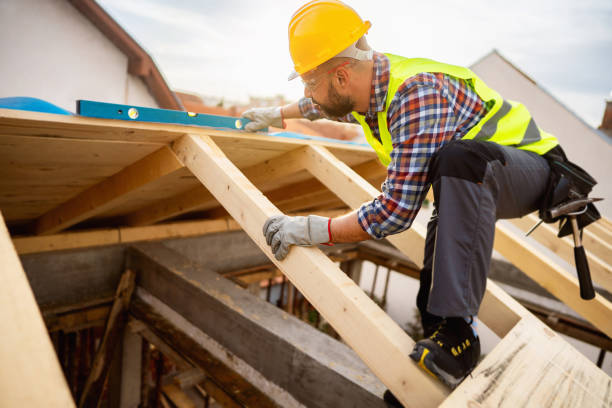
Last spring a roofer knocked on his door and said his shingles looked bad. Said he could see daylight from the yard. Said if Dad didn’t fix it before winter, the whole ceiling would come down on him while he slept.
He asked for $14,800 up front. Cash. Told my dad the banks charge crooks like him too much, so cash was cheaper for everyone.
Dad drove to the credit union in his slippers. I know that detail because the teller mentioned it to my sister months later, almost as an aside, not understanding yet what it would come to mean to us. He handed the money over in a manila envelope with my mom’s name still written on it from 1987, an old envelope he’d kept in his desk drawer for decades because he never liked to waste things that still had use left in them.
The roofer loaded three bundles of shingles onto Dad’s lawn, took a photo of them, shook Dad’s hand, and drove off in a white Silverado.
He never came back.
For six weeks my dad sat by the front window every morning with his coffee, waiting. He didn’t tell me. He didn’t tell my sister. He was too ashamed, I think, in that particular way men of his generation get ashamed — not of being wronged, but of having been foolish enough to let it happen, as though trusting someone were itself the crime.
I only found out because I stopped by to change his furnace filter and saw the shingles still sitting in the grass, soaked through and moldy, the plastic wrapping torn and curling at the edges from weeks of rain and sun.
When he finally told me what happened, his hands were shaking so bad he spilled his coffee on the kitchen table. He kept saying, “I’m sorry, son. I’m so sorry. Mom would’ve never let me do that.”
I called the cops. They said they’d “look into it.” I called the state consumer protection office. They said “file a report,” gave me a case number that felt, even as I wrote it down, like it was already destined for a drawer somewhere.
So I called my uncle Ray, who rides with a club out of Youngstown. I told him what happened. There was a long silence on the phone.
Then Ray said, “Give me the address of the roofer’s shop. We’re taking care of this tonight.”
I didn’t think he was serious.
I sat on my dad’s porch after that call and watched the sun go down over the shingles rotting in his yard. My dad was inside making us grilled cheese, the smell of butter on the griddle drifting out through the screen door. He didn’t know I’d called Ray. He didn’t know I’d called anyone.
He was eighty-four years old and he’d apologized to me eleven times that afternoon for being stupid. I counted.
The last time my dad cried in front of me was 1998, when my mom died. He didn’t cry when he buried his brother. He didn’t cry when he retired from the mill after forty-one years, standing in the break room with a cake someone had bought from the grocery store and a card everyone signed. He didn’t cry when the doctor told him his heart was working at half capacity and he probably had five good years left, a number he repeated to me afterward with the same flat tone he’d use to tell me the price of gas.
But he cried in the kitchen that afternoon. Just a little. Just enough for me to see one tear go down the side of his nose before he wiped it with the back of his hand and pretended he was rubbing his eye.
That’s when something inside me shifted. I’m not proud of what I felt. I’m just telling you what it was.
I wanted that roofer to hurt.
Not arrested. Not fined. Not written up in the paper.
Hurt.
At 6:47 p.m. I was standing at the kitchen sink helping my dad wash the grilled cheese plates when I heard them.
You don’t hear thirty bikes coming the way you hear a car coming. You feel them first. The glass in the window over the sink started buzzing. My dad froze with a dish towel in his hand and looked at me.
“What in the hell is that?”
I dried my hands and walked to the front door.
They came up the road in two lines, headlights on, riding slow. Ray was at the front on his old Road King. Behind him were twenty-nine other bikers I’d never seen before in my life. Old guys. Every one of them.
The youngest one had to be sixty. Most of them were closer to seventy. Gray beards. Weathered faces. Vests covered in patches from every state I could think of, the leather soft and cracked from decades of weather, the kind of patches that meant something only to the men wearing them.
They pulled up in front of my dad’s house and killed the engines one by one. When the last bike went quiet, the whole neighborhood was silent except for a dog barking two houses down, and somewhere farther off, a screen door slamming as a neighbor stepped out to see what the commotion was.
My dad came up behind me on the porch. He was still holding the dish towel.
“Son. What did you do?”
Ray got off his bike and walked up the driveway. He hugged my dad. He held on longer than a normal hug. When he stepped back, he had his hands on my dad’s shoulders.
“Walt. I heard what happened. I’m here to fix it.”
My dad shook his head. His mouth was open a little.
“Ray, I don’t want no trouble. I made a mistake. That’s on me.”
Ray looked at him for a long time. Then he said something I’ll never forget as long as I live.
“You didn’t make a mistake, Walt. A man came to your door and looked you in the eye and took your money. That ain’t your mistake. That’s his.”
The bikers didn’t stay long at the house. Ray asked me to come with them and told my dad to sit tight. My dad tried to argue. Ray just shook his head and said, “Walt, sit down. Watch your show. We got this.”
I climbed on the back of Ray’s bike. My knees were shaking. I hadn’t been on a motorcycle since I was seventeen, since the one summer Ray let me ride on the back of his old Sportster down to the lake and back, my mom furious about it for a week afterward.
We rode out to Route 11. Then east, past the truck stop, past the old drive-in they turned into a flea market, past the field where I used to hunt pheasant with my dad when I was ten, the two of us up before dawn with a thermos of coffee and a dog that’s been dead almost as long as my mom.
The roofer’s shop was in a strip mall next to a pawnshop and a tanning salon. There was a white Silverado parked out front. The same one that had pulled out of my dad’s driveway three months ago.
The bikes rolled into the parking lot and lined up in a half circle around the front door. Ray killed his engine. Everybody else killed theirs.
The front door of the shop opened and a man stepped out.
He was maybe thirty-eight. Big guy. Had on a black T-shirt and cargo shorts and he was holding a Budweiser. He was smiling when he came out. Like he thought some old boys had rolled up to hire him for a job.
Then he counted the bikes.
The smile went off his face slow. Real slow. Like ice melting.
Ray got off his bike and walked toward him. Ray is seventy-one years old. He walks with a slight limp from a wreck in ’89. But when he walks toward a man, you feel it.
“You Dale?”
The roofer nodded. His eyes were moving side to side, counting bikes again like the number might change.
“You take fourteen thousand eight hundred dollars off an eighty-four-year-old man in Ashtabula last May?”
Dale opened his mouth. Then he closed it. Then he opened it again.
“Man, I don’t know what you’re talkin’ about. I got a lot of customers. I—”
“His name is Walter Hensley,” Ray said. “Lives on Maple. You dropped three bundles of shingles in his yard and drove off. His son is standing right behind me.”
Dale looked at me. I looked back at him.
I didn’t say anything. I just stared. My hands were in fists at my sides. I could feel my nails digging into my palms.
Dale tried to laugh. It came out weird. High-pitched.
“Look, man, I been swamped. I was gonna get back to that job. It’s on my list. I got the shingles right in the—”
Ray held up his hand. Dale stopped talking.
Ray reached in his vest and pulled out a folded piece of paper. He held it out.
“Read that.”
Dale took the paper. His hand was shaking. He unfolded it and looked at it.
It was a printout of Dale’s business page. His Facebook. His Google reviews.
Ray had circled things in red pen. Fourteen circles. Fourteen different names of people who’d left one-star reviews saying Dale had taken their money and disappeared.
Some of the reviews were from 2021. Some were from last month.
“Read the top one,” Ray said.
Dale’s mouth was moving but no sound was coming out.
Ray took the paper back and read it himself. His voice was flat.
“Marilyn Cooper. Age seventy-nine. Bellville, Ohio. Paid Dale Whitaker nine thousand two hundred dollars in April 2022 for a roof he never touched. Marilyn passed away last November. Her daughter is still trying to get the money back to pay for her mother’s funeral.”
Dale’s beer bottle slipped out of his hand and hit the pavement. It didn’t break. It just rolled toward the curb, spilling foam behind it.
“You’ve been doing this a long time, Dale.”
“Man, I—look. I can pay him back. I can pay everybody back. I just need time to—”
“You had time,” Ray said. “You had three months of time. What you did with that time was buy that Silverado over there and take your girlfriend to Panama City for spring break. We know because you posted the pictures.”
Dale looked at the parking lot. He looked at the bikes. He looked at the door of his own shop like he was thinking about running back inside.
Then he did something that I think about a lot now, months later.
He looked at me. Right at me. Not at Ray. Not at the other bikers. Right at the son of the man he’d stolen from.
And he said, “It was just a job, man. He’s an old man. He’s got nothing to spend it on anyway.”
I don’t remember moving.
I remember Ray’s hand on my chest, stopping me before I got to him. I remember one of the other bikers, a big guy with a white beard, stepping in front of me and saying, “Not you, brother. Not you. You go home to your dad.”
I remember Ray turning back to Dale, real slow, and saying something quiet that I couldn’t hear.
I remember Dale saying “Wait” three times.
I remember the sound.
It wasn’t a big sound. It was smaller than I thought it would be. Just a crack. Like stepping on a dry stick in the woods.
Dale went to his knees on the pavement. He didn’t scream. He made a sound like a dog that got kicked. Then he curled up on his side, holding his right arm against his chest.
Ray stood over him. He wasn’t out of breath. He wasn’t even sweating.
“You’re going to do three things, Dale,” he said. “You listening?”
Dale nodded. His face was white.
“One. You’re going to write a check to Walter Hensley for fourteen thousand eight hundred dollars tonight. Right now. From your shop’s checkbook. Two. Tomorrow morning you’re going to call every one of those fourteen people on this list and pay them back too. Three. You’re going to shut down this business by the end of the week.”
Dale was crying. Real tears. Snot down his face.
“I can’t. I don’t have that kind of money.”
“Then you’re gonna sell that Silverado,” Ray said. “And that boat we saw on your Facebook page. And that four-wheeler. Whatever you gotta do. Because if I hear about you scamming one more old person in Ohio, we’re not coming to break your arm next time, Dale. We’re coming to have a longer conversation.”
Dale nodded. Fast. Over and over.
“Get up. Go inside. Write the check.”
Dale wrote the check with his left hand because his right one was hanging wrong. It took him a while. His signature looked like a kid’s.
I stood in the doorway of his shop and watched him do it.
The office smelled like stale beer and cigarettes. There was a framed photo on the desk of Dale with a little boy at a Cavaliers game. The boy was maybe six years old. He had Dale’s smile.
I looked at that photo for a long time.
When Dale handed me the check, I didn’t say anything. I just took it and folded it and put it in my back pocket.
He was still crying. He said, “Please don’t tell my wife.”
I looked at him. I looked at that photo of his kid again.
Then I said the only thing I said to him that whole night.
“You told my dad he was stupid for trusting you. You should tell your son the same thing about you before he finds out the hard way.”
I walked out.
The bikes rode back to my dad’s house in the same formation. Two lines, headlights on, going slow.
When we pulled into the driveway, my dad was standing on the porch in his slippers. He’d been watching for us. I could tell he’d been watching the whole time we were gone, probably sitting right there in his chair the entire drive, the way he used to wait up when I was a teenager out past curfew.
He came down the steps as I got off Ray’s bike. My legs were still shaking, but for a different reason now.
I pulled the check out of my back pocket and put it in my dad’s hand.
He looked at it for a long time. Then he looked at me. Then he looked at Ray. Then at all the other bikers still sitting on their bikes in the driveway.
His eyes filled up. He tried to say something and couldn’t.
Ray got off his bike and walked up to him. He put his hand on my dad’s shoulder.
“Walt. You paid dues at that mill for forty-one years so guys like your son could have a good life. You raised a boy who called for help when you needed it. You did everything right.”
My dad shook his head. He couldn’t talk yet.
Ray leaned in a little closer.
“There ain’t no shame in getting cheated, brother. The shame is on the man who did it. Not you. Never you.”
My dad started crying then. Really crying. Not the one-tear kind he did in the kitchen that afternoon. The kind where your shoulders shake and you can’t stop.
Ray hugged him. Held on a long time.
One by one, the other bikers came up the driveway. Each one shook my dad’s hand or hugged him or clapped him on the back. None of them had ever met him before that night.
The last one was the big guy with the white beard who’d stopped me in the parking lot. He held my dad’s hand in both of his and said, “My father got taken for six thousand dollars in 2019 by a guy just like that. Died two years later. Never got the money back. I’ve been waiting a long time to be part of something like tonight.”
Then he got on his bike and they all rode out.
My dad and I sat on the porch for a long time after they left. Neither of us said much. He was still holding the check.
Finally he said, “Son. I don’t understand what just happened.”
I told him. Everything. From the phone call to Ray, to the parking lot, to Dale on the ground, to the photo of the little boy on the desk.
When I got to that last part, he was quiet for a while.
Then he said, “You feel okay about it? What happened to that man?”
I thought about it for a long time before I answered.
“I feel okay about the money coming back,” I said. “I feel okay about him not doing it to anybody else. I don’t feel great about his arm. But I don’t feel bad about it either. I think I feel exactly what I’m supposed to feel.”
My dad nodded. He looked down at the check in his hand.
“Your mother would’ve had my hide for trusting him.”
“Mom would’ve been proud of you tonight, Dad.”
He looked at me. His eyes were red.
“For what? I didn’t do anything tonight. You did.”
“You raised the son who called Ray. That’s what you did.”
He didn’t say anything to that. He just reached over and put his hand on top of mine on the porch railing and squeezed it. His hand was thin and cold and covered in the brown spots old men get.
We sat like that until it got dark.
The check cleared three days later. Dale did call the other fourteen people, my uncle Ray checked. Twelve of them got paid back. The other two he couldn’t reach because one had moved and one had passed away.
Dale’s roofing business shut down that Friday. His Facebook page came down. His Silverado went up for sale on Marketplace the following Monday.
I don’t know where he is now. I don’t know if his arm healed right. I don’t know if he told his wife what happened or how he explained it.
I know one thing.
My dad hired a real roofer last month. A guy from church. Paid him when the work was done, the way you’re supposed to. He climbed up on the ladder himself when the guy was finishing up, at eighty-four years old, to hand him a glass of iced tea.
I watched him do it from the driveway. He looked ten years younger than he had in June.
That night, he called me and asked if I wanted to come over for grilled cheese.
I said yes.
When I got there, he’d made two sandwiches and cut them the same way my mom used to cut them, in triangles instead of squares. He set them on the table and sat down and said grace.
Then he looked at me across the table and said, “I want you to do me a favor, son.”
“Anything, Dad.”
“Next time you talk to your Uncle Ray and all those fellas — tell ’em an old man in Ashtabula thinks about them every single night before he goes to sleep. Tell ’em I don’t know what I did to deserve them. But I’m grateful. Every day I’m still here, I’m grateful.”
I told him I would.
I called Ray that same night and told him word for word.
Ray was quiet for a minute. Then he said, “Tell your dad that’s what brotherhood is. It ain’t about the vests or the bikes. It’s about showing up when somebody’s dad needs help and there ain’t nobody else coming.”
I hung up the phone and looked out my kitchen window at the moon.
Thirty old men on motorcycles. Guys I’d never met. Guys who’d never met my dad. Guys who dropped whatever they were doing on a Tuesday night to ride two hours and stand in a parking lot for a man they didn’t know.
I don’t care what anybody says about bikers. I don’t care about the movies or the news stories or the stereotypes.
I know what I saw with my own eyes.
I saw thirty men who showed up when the cops wouldn’t. Who fixed something the system couldn’t. Who stood beside my father in his driveway and hugged him like he was one of their own.
And I’ll ride with them the rest of my life if they’ll have me.

Laura Bennett writes about complicated family dynamics, difficult conversations, and the quiet moments that change everything. Her stories focus on real-life tensions — inheritance disputes, strained marriages, loyalty tests — and the strength people find when they finally speak up. She believes the smallest decisions often carry the biggest consequences.