No Problem
When the plane touched down at Portland International Airport, the tires hit the runway with a scream so loud that the woman next to me grabbed her armrest.
I didn’t move.
I had stopped flinching at things three days earlier.
My name is Amelia. I’m thirty-five years old. And that morning, in a little village in northern Portugal, I buried my husband, James, in soil that didn’t belong to either of us.
I turned my phone on before the plane even reached the gate. The flight attendant gave me a look. I didn’t care.
My fingers were shaking.
Not from the cold.
From hope. Some small, stupid, desperate part of me still believed my family would be waiting.
I opened our family group chat. It was called The Brandts with a little house emoji. My mother had named it. It had my mom, my dad, my older brother Troy, his wife Kelsey, and me.
I typed:
My flight arrives at 5:00 p.m. Can someone please pick me up?
I hit send before I could change my mind.
The three typing dots appeared almost right away.
For a second, I felt something loosen in my chest. Someone was answering. Someone was coming.
Then Troy’s message popped up.
Troy: We’re overwhelmed today. Just get an Uber.
I read it once. Then again.
A few seconds later, my mother answered.
Mom: Why didn’t you plan this more carefully? You know Tuesdays are difficult for everyone.
I stared at the screen until the words went blurry.
Plan more carefully.
As if I had scheduled my husband’s brain aneurysm.
As if his death had been something I could have put on the family calendar a few weeks ahead, between Kelsey’s book club and Dad’s dentist appointment.
The plane jerked to a stop at the gate. All around me, people stood up and started pulling bags out of the overhead bins. Somebody’s elbow hit my shoulder. A man behind me was on the phone telling someone, “Yeah, babe, just landed, I’ll see you outside in ten.”
I looked down at my phone again.
I didn’t argue.
I didn’t remind them that for the past five days, I’d identified James’s body in a cold room in a foreign hospital. That I’d signed forms in a language I didn’t speak, with a translator who kept apologizing. That I’d chosen a coffin by pointing at a picture in a binder. That I’d stood alone at his grave that morning while an old priest said words I didn’t understand.
I just typed two words.
No problem.
Then I put the phone face down on my lap and waited for the aisle to clear.
At the time, I had no idea that in less than twenty-four hours, every person in that group chat would be watching what came next on the evening news.
By the time I got to baggage claim, my phone buzzed again.
My father.
Dad: They’re predicting rain tonight. Be careful driving home.
Driving. I didn’t even have my car. My car was in our garage, where James had parked it the night before we left, because he said the airport lot was a rip-off.
Before I could answer, Mom sent another one.
Mom: Your father and I are having dinner with the Hendersons tonight. We accepted the invitation weeks ago.
I read that one twice too.
The Hendersons. My parents’ friends from church. Nice people. Gary Henderson had a boat and liked to talk about it.
A dinner reservation mattered more than meeting their daughter at the airport the day she buried her husband.
I locked the phone and slid it into my coat pocket.
The luggage belt groaned and started moving.
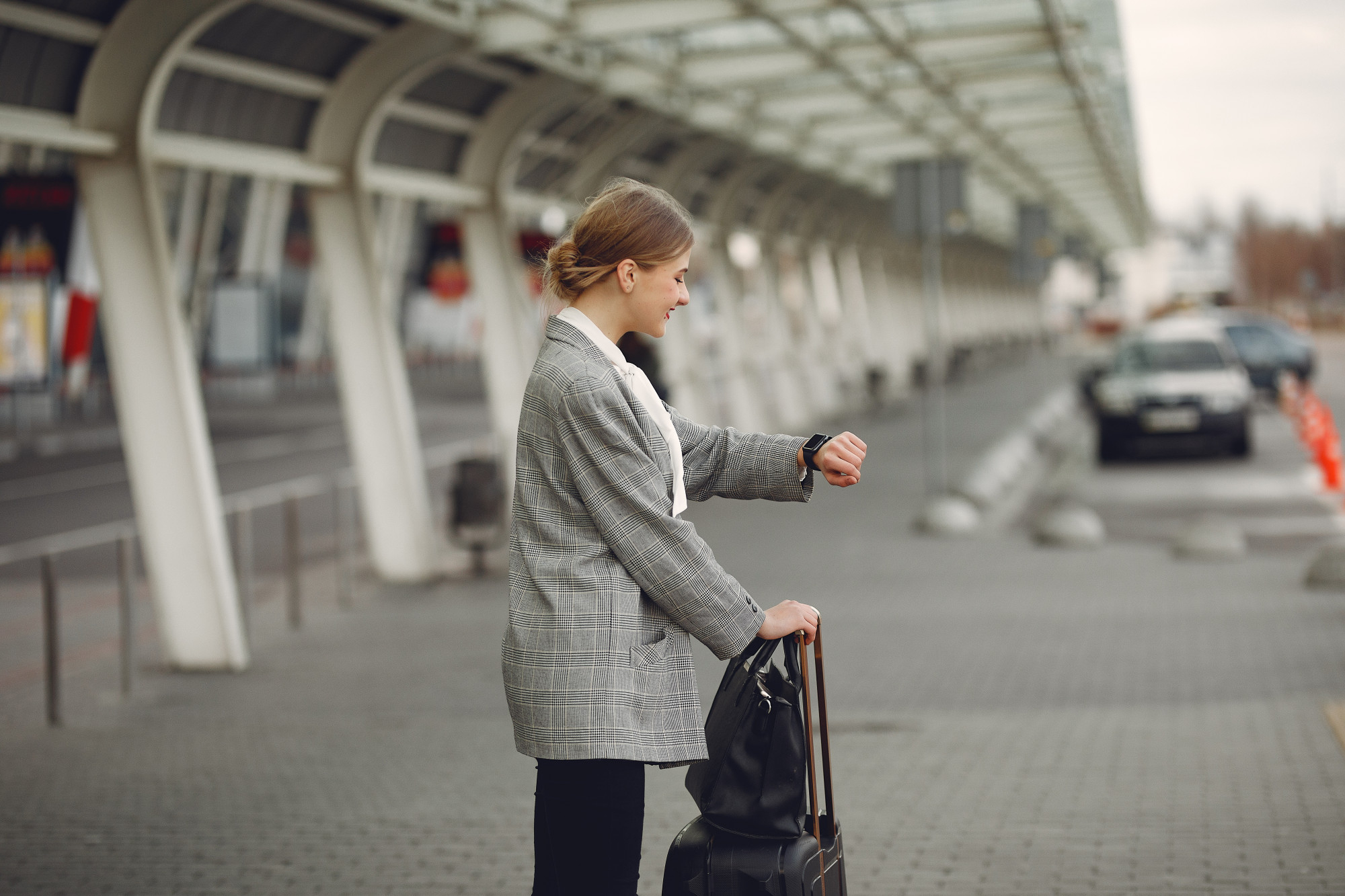
Two big black suitcases came around the corner. Mine and James’s. I’d packed both of them that morning in the hotel room in Portugal, kneeling on the floor, folding his shirts the way he liked them folded. Arms in, then in half, then in half again.
They held almost everything I had left of him.
His shirts. His running shoes. His shaving kit with the cheap razor he refused to replace. The navy tie he wore to our anniversary dinner every single year, because I told him once that it made his eyes look darker, and he never forgot it.
I grabbed the first suitcase and pulled it off the belt. It was heavy. I hadn’t eaten anything real in two days and my arms felt like rope.
I got the second one onto a luggage cart, then stacked the first one on top.
I pushed the cart toward the exit.
One of the front wheels jammed.
The cart stopped dead.
The top suitcase slid forward, tipped, and hit the floor so hard the zipper burst open along one whole side.
James’s things spilled across the polished tile.
Socks. Ties. His gray hoodie. Folded shirts that still smelled faintly like his cologne. A paperback he’d been reading on the flight over, with a boarding pass still stuck in it as a bookmark. Page 211. He never got to page 212.
People stepped around me.
A man in a suit sighed loudly and lifted his roller bag over James’s running shoe.
A teenager glanced at me, then looked away fast, the way you look away from someone crying on a bus.
I dropped to my knees and started grabbing things. Shoving them back into the suitcase. A sock. The book. His hoodie.
Then I picked up the navy tie.
And that’s when I stopped being able to breathe.
I just knelt there on the floor of the Portland airport holding a tie, with my mouth open, making a sound I didn’t recognize.
“Hey. Hey, honey.”
A woman crouched down next to me. She was older, maybe sixty, in pink hospital scrubs with a lanyard around her neck. She didn’t ask what was wrong. She just started picking up shirts and folding them, quickly and neatly, like she’d done it a thousand times.
“These your husband’s?” she asked quietly.
I nodded.
She didn’t say anything else. She didn’t need to. She folded his gray hoodie and laid it on top. She pushed the suitcase closed with her knee and yanked the zipper as far as it would go. Then she pulled a long elastic strap out of her own tote bag and wrapped it around the suitcase twice and buckled it.
“There,” she said. “That’ll hold till you get home.”
“I can’t take your strap.”
“Honey, I’ve got six more. My daughter buys me one every Christmas because she doesn’t know what else to get me.” She helped me stand up. She kept one hand on my elbow. “Somebody picking you up?”
I opened my mouth.
“Yes,” I lied. “They’re outside.”
She looked at me for a long second, like she knew.
Then she squeezed my arm and walked away toward the parking garage.
I never got her name.
My own family was less than an hour away.
A stranger in pink scrubs had done more for me in two minutes than any of them had done in five days.
I should explain about the five days.
James died on a Thursday.
We were in Portugal because of his work. He was a building inspector for the city of Portland, and once a year he went to a conference on building safety. That year, it was in Porto. He asked me to come. He said we’d tack on a few days afterward and drive up to the little village where we’d honeymooned eight years earlier. A place called Ponte de Lima, with a long stone bridge and a river so slow it barely moved.
“We’ll eat too much bread,” he said. “We’ll sit on the bridge. We’ll do nothing.”
On the second morning of the conference, he came back to the hotel room at lunch and said he had a headache.
“A real one,” he said, pressing his palm against his forehead. “Like someone’s standing on my skull.”
I gave him two ibuprofen and told him to lie down.
He lay down.
He said, “I love you, Amelia. Wake me up at three.”
At three, I couldn’t wake him up.
The doctors said it was an aneurysm. A weak spot in a blood vessel in his brain that had probably been there his whole life. It could have burst at any time. When he was ten. When he was eighty. It just happened to burst on a Thursday in a hotel room in Portugal.
“There was nothing you could have done,” the doctor said in careful English. “Nothing anyone could have done.”
People keep telling you that, after. They mean it kindly. It doesn’t help.
I called my family from the hospital hallway that night. I remember the floor tiles were green and white, like a checkerboard. I remember staring at them.
My mother answered on the fifth ring.
“Amelia? It’s almost midnight there, isn’t it? Is everything okay?”
“Mom.” My voice broke. “Mom, James died.”
There was silence.
Then she said, “What do you mean, died?”
I told her. All of it. The headache. Three o’clock. The ambulance. The doctor.
“Oh my God,” she said. “Oh, honey. Oh my God.”
For a moment, it was enough. For a moment, she sounded like my mother.
Then she said, “Well, what are you going to do? Are you bringing him home?”
“I don’t know. I don’t know anything. The man at the funeral home said it could take weeks to bring him back. There’s paperwork. It’s thousands of dollars.”
“Weeks?”
“Mom, can you come? Can someone come? Please. I’m by myself.”
I heard her breathe out. I heard the TV in the background. I heard my father ask, “Who is it?”
“It’s Amelia,” she said, away from the phone. “James passed.”
Then she came back.
“Honey, we can’t just drop everything and fly to Portugal. Do you know what those flights cost on short notice? And your father’s knee. He can’t sit on a plane for fourteen hours.”
“Troy could come.”
“Troy has the kids. And work. You know how his job is.”
I did know how his job was. Troy sold commercial insurance. He worked from home three days a week.
“Look,” my mother said. “You’ll handle the arrangements over there, and then when you get back, we’ll do something here. A nice service. At the church. Okay? Everyone will come to that.”
I stood in that green-and-white hallway and didn’t say anything.
“Amelia? Are you there?”
“I’m here.”
“You’ve always been so capable,” she said. “You’ll be fine.”
So I handled the arrangements.
I learned that bringing James home would take three to five weeks and cost more than we had in savings. I learned that his body would have to be embalmed under rules I didn’t understand and shipped in the cargo hold of a plane, in a sealed metal box, like freight.
And then I remembered something James said on our honeymoon.
We’d been sitting on that stone bridge in Ponte de Lima, eating bread out of a paper bag, with our feet hanging over the river. He’d been quiet for a long time. Then he said, “You know, if I die first, don’t ship me anywhere. I hate that idea. Being mailed. Just put me somewhere with a view.”
“You’re morbid,” I’d said.
“I’m a building inspector. I think about worst cases for a living.” He’d bumped my shoulder with his. “Somewhere with a view, okay? And come visit.”
So I found a small cemetery on a hill above the river. A local priest agreed to bury a stranger. The funeral director drove me up there in his own car and wouldn’t take money for the gas.
That morning, at nine o’clock local time, they lowered James into the ground.
The only people there were me, the priest, the funeral director, and two old men with shovels who took off their caps.
Somewhere with a view.
Then I went back to the hotel, packed his suitcase, and got on a plane.
I ordered the Uber standing outside the terminal under the overhang, while rain started falling in thin gray lines.
The driver’s name was Hassan. He drove a silver Camry that smelled like pine air freshener and coffee. When he saw the suitcases, one of them strapped shut, he jumped out and loaded them himself without being asked.
“Long trip?” he said, smiling, when we pulled away from the curb.
I looked out the window.
“Coming home or visiting?” he tried a few minutes later.
I didn’t answer that one either.
He glanced at me in the rearview mirror. I saw his eyes go to my hands. I was still holding the navy tie. I hadn’t put it back in the suitcase. I’d been holding it the whole time and hadn’t even noticed.
He stopped talking after that. He turned the radio down low. He drove carefully, slower than he had to.
The rain got heavier.
Halfway home, my phone buzzed. I looked at it. Kelsey, Troy’s wife, had sent a message to the group chat.
Kelsey: Sorry Amelia! Crazy day here. Hope you get home ok! ❤️
A heart. She’d sent a heart.
Then my mother sent a photo. It was a picture of the Hendersons’ dining room table, set with white candles and blue napkins. Lovely evening! she wrote under it.
She must have meant to send it to someone else.
Or maybe she didn’t.
I turned the phone off completely and put it in my pocket.
When we turned onto my street, Hassan slowed down. It was a quiet street in Southeast Portland, lined with old houses and big maple trees. Ours was the gray one near the end, with the crooked porch light James always meant to fix.
Every window was dark.
Hassan pulled into the driveway. He looked at the house. Then he looked at me in the mirror.
“Nobody home?” he asked gently.
“No.”
“You want me to bring the bags in? To the door?”
“I’ve got it.”
He got out anyway. He carried both suitcases up the porch steps and set them down by the door. The rain was coming down hard now. His jacket was soaked across the shoulders.
I fumbled with my keys. My hands wouldn’t work right. It took me three tries to get the key in the lock.
Hassan was still standing at the bottom of the steps.
“Ma’am,” he said. “Are you going to be okay tonight?”
I almost laughed. It was such a simple question. Nobody in my family had asked it.
“I’ll be fine,” I said. “Thank you.”
He nodded slowly. He didn’t look like he believed me.
Then he went back to his car. He sat in the driveway for almost a full minute with his headlights shining on the porch before he finally backed out and drove away.
I didn’t know it then, but that minute would end up mattering.
The house was freezing.
We’d turned the heat way down before we left, the way James always did when we traveled. “No reason to heat an empty house,” he’d say. Ten days in October, and the cold had settled into the walls.
I dragged the suitcases inside and left them by the front door. I didn’t turn on the lights.
I don’t know why. I think I didn’t want to see it. The house the way we’d left it, like nothing had happened. His coffee mug in the drying rack. His reading glasses on the side table. His muddy boots by the back door.
In the dark, it could still be any night. He could still be upstairs.
I walked into the living room by feel. My hand found the back of the big brown armchair. James’s chair. It was old and ugly and lumpy, and he’d bought it at a garage sale the first year we were married for twenty dollars. I’d begged him to get rid of it a hundred times.
Every Sunday morning, he sat in that chair with a cup of coffee and the newspaper. He was the last person under sixty in Portland who still got the paper delivered. He read me the weird stories out loud. A man in Ohio who built a house out of bottles. A goat that got elected honorary mayor of some town in Vermont.
I curled up in it with my coat still on and my shoes still on and the navy tie still in my hand.
The cushion still smelled like him. Coffee and cedar and something I could never name.
The silence pressed in from everywhere.
I thought I was completely alone.
Lying there in the dark, I kept thinking about the last normal Saturday we’d had before the trip.
It was three weeks earlier. I’d come home from the grocery store and found James on his knees in the side yard, next to the gas meter, with his face almost touching the pipe.
“What are you doing?” I said.
“Smell that?”
I sniffed. “Smell what?”
“Rotten eggs. Faint. Come here. Get down here.”
I knelt in the wet grass next to him and sniffed again. Maybe. Maybe there was something. It was so faint I couldn’t be sure.
“I don’t know,” I said. “Maybe? It could be the neighbor’s compost.”
“It’s not compost.” He stood up and wiped his knees. “That’s mercaptan. That’s what they add to natural gas so you can smell a leak. I’ve been smelling it on and off for a week. Out here and in the basement.”
“So call the gas company.”
“I did. Tuesday.”
“And?”
He made a face. “They sent a guy. Young guy. He walked around with his little detector for about ten minutes and said everything was within normal range. Said it’s probably just the meter venting. Said it’s an old neighborhood and old neighborhoods smell.”
“Well, there you go.”
“Amelia.” He looked at me. That serious, quiet look he had. “I’ve inspected two hundred houses in this city that had a guy say ‘within normal range.’ Some of them aren’t there anymore.”
I rolled my eyes. I’m not proud of it.
“So what do you want to do? Dig up the street?”
“I want to install a monitored system. Gas detectors in the basement, the kitchen, near the meter. Carbon monoxide too. If it goes off, it calls us, and if we don’t answer, it calls whoever we put on the list, and then it calls 911.”
“Isn’t that expensive?”
“It’s forty bucks a month.”
“For a smell you’re not even sure about.”
He smiled. “Humor me.”
I humored him.
He spent the whole next weekend drilling holes and running wires and swearing at the instruction manual. He put little white sensors near the furnace, under the kitchen sink, by the water heater, and one in the side yard by the meter in a weatherproof box. He stuck a panel on the wall by the front door that glowed soft green.
Then he sat at the kitchen table with his laptop to set up the account.
“Okay,” he said. “Emergency contacts. Who do you want after us?”
“I don’t know. Ruth next door?”
“Ruth’s eighty-one.”
“Ruth’s tougher than both of us.”
He laughed. Then he said, “What about your family? Troy and your mom?”
I made a face.
“Amelia.” He reached over and took my hand. “I know they’re not… easy. I know your mom says things. I know Troy’s Troy. But they’re your family. Whatever else, they’re family. If something happens and we can’t answer, they should be the ones who know.”
I didn’t argue. It didn’t seem important then.
So he typed them in. Me. Him. Troy. Mom. Then Ruth.
“There,” he said, and closed the laptop. “Now I can stop worrying.”
“You’re never going to stop worrying.”
“No,” he said. “Probably not.”
He also called the gas company again that week. And then a third time. He told me about it in the car on the way to the airport.
“I filed a formal complaint,” he said. “In writing. With the date and everything. If they’re wrong, I want it on paper that I told them.”
“You’re the most stubborn man in the world.”
“Thank you,” he said, and kissed my hand at a red light.
That was nine days before he died.
I must have fallen asleep in the chair.
I don’t remember closing my eyes. One minute I was thinking about him kissing my hand at that red light, and the next minute I was dreaming. In the dream, we were sitting on the stone bridge in Ponte de Lima, and he was reading me a story from the newspaper about a goat, and I couldn’t hear the words. His lips were moving, but there was no sound.
Then there was sound.
It came out of nowhere and filled the whole house.
A high, piercing shriek. WEEEE-OOOO. WEEEE-OOOO. So loud it hurt my teeth.
I jerked awake so hard I nearly fell out of the chair.
For a second, I didn’t know where I was. The room was black. My heart was slamming. The sound kept going, over and over, coming from everywhere at once.
Then a calm, flat, electronic voice cut through it.
“Warning. Natural gas detected. Leave the building immediately. Warning. Natural gas detected.”
I sat there frozen.
And then I smelled it.
Not faint anymore. Not something you had to kneel in the grass to notice. It was thick. Sour. Rotten eggs, but worse, so strong I could taste it at the back of my throat. My head was pounding. My mouth felt like metal.
How long had it been building? How long had I been sitting in it?
I stood up. My legs wobbled. The room tilted to one side and I grabbed the arm of the chair.
My hand went automatically toward the wall. Toward the light switch by the doorway. I needed to see.
My fingers touched the plastic.
And I heard James’s voice in my head, as clear as if he were standing behind me.
Never flip a switch if you smell gas. Never. A switch makes a tiny spark. That’s all it takes.
He’d told me that a hundred times. At dinner parties. On walks. Once, in the middle of a movie, when a character turned on a light in a house full of gas and James threw his hands up and yelled, “Come ON.”
I pulled my hand back like the switch was hot.
I stood in the dark with my heart going a mile a minute.
If I’d turned on the lights when I came home. If I’d walked in like a normal person and flipped every switch the way I always did.
I didn’t let myself finish the thought.
My coat pocket was buzzing. My phone. I’d turned it off in the Uber, but the alarm system had a backup. It was sending messages to the old tablet in the kitchen and to James’s phone, which was in the suitcase by the door, buzzing and lighting up through the fabric.
I grabbed my own phone and held the power button with shaking fingers. The screen came on. A notification was already waiting from the alarm app.
GAS ALERT — BASEMENT SENSOR — LEVEL: CRITICAL.
And under it, a note. One of those little custom instructions you can type in when you set up the system. I had never seen it. James must have written it the night he installed everything.
Amelia — if you’re reading this, don’t touch anything. No lights. No stove. Don’t look for the leak. Just get out. Leave everything. I mean it. Get out and call me. — J
Call me.
I made a sound. I don’t know what it was. A laugh or a sob or both.
I started for the front door.
The suitcases were right there. Both of them, sitting by the door where I’d left them, one still wrapped in that stranger’s elastic strap.
Leave everything.
But it was everything. It was all I had left of him. His shirts. His book with the boarding pass at page 211. His gray hoodie.
I bent down and grabbed the strap and pulled.
The suitcase didn’t budge. It was too heavy. I’d barely lifted it at the airport, and that was before my head was spinning and my lungs were full of gas.
I pulled again. My vision went gray around the edges.
Somebody was pounding on the front door.
“AMELIA! AMELIA, ARE YOU IN THERE?”
Ruth.
I dropped the strap and fumbled for the doorknob. I couldn’t find it. My hands kept sliding across the wood. The alarm screamed. The voice kept saying Leave the building immediately.
The door flew open from the outside.
Ruth Lindqvist was standing on my porch in a quilted bathrobe and rubber boots, holding the spare key James had given her two years earlier, with her white hair flattened on one side from her pillow. Behind her, I could see porch lights coming on up and down the street.
She grabbed my wrist with a grip like a steel trap.
“OUT,” she said. “Right now. Come on.”
“The suitcase—”
“Out, Amelia!”
She hauled me across the porch and down the steps. I made it to the bottom. I made it to the wet grass of the front lawn. And then my knees just quit, and the ground came up, and the last thing I remember was the rain on my face and Ruth yelling at someone to call 911, and someone else yelling back that they already had, that the trucks were coming, and somewhere far away, a siren.
I was still holding the tie.
Here’s what I didn’t know while I was lying on the lawn.
When the basement sensor hit critical, at 11:14 p.m., the monitoring company’s computer did exactly what James had told it to do.
It called me first. My phone was off.
It called James second. His phone rang inside a suitcase by the front door.
It called Troy third.
Troy was at home, on his couch, watching a basketball game with his feet up. He looked at his phone, saw an unknown number from a 1-800 area code, and hit decline.
Two minutes later, the company called him again.
He declined it again. He told me later he thought it was a spam call about his car’s extended warranty.
Then it called my mother.
My mother was at the Hendersons’. She had her phone on silent in her purse because she thinks it’s rude to have your phone on at the dinner table. She was, at that exact moment, eating a slice of lemon cake and listening to Gary Henderson talk about his boat.
The fifth number on the list was Ruth.
Ruth picked up on the second ring.
Ruth is eighty-one years old and a light sleeper. She’d already heard the alarm through her bedroom wall. She was already putting on her boots.
At the same time the monitoring company was calling Ruth, it automatically sent a dispatch to 911.
But the first call 911 received about our street that night didn’t come from the monitoring company.
It came from Hassan.
He’d dropped me off, driven to the end of the block, and stopped at the stop sign. He sat there. He couldn’t stop thinking about the dark house and the strapped-up suitcase and the tie in my hands. He thought about turning around to check on me and told himself he was being weird. He drove two more blocks. Then he pulled over and rolled down his window to get some air, because the car felt stuffy.
And he smelled gas.
Not at my house. Two blocks away. Out on the street. He told the 911 dispatcher it was so strong he could smell it with his windows up. That’s how big the leak had gotten.
He told them exactly where it was. He said, “There’s a lady on that street who just came home alone. She’s in a dark house. I think something is wrong.”
By the time the fire trucks came screaming around the corner, our whole street was standing outside.
I didn’t see most of it. I was flat on my back on the wet grass with a paramedic shining a light in my eyes and putting a plastic oxygen mask over my face. But I heard it. Doors banging. Dogs barking. Kids crying. Someone yelling, “Is it a fire? Where’s the fire?”
The firefighters went down the street with handheld detectors. Every few seconds, I’d hear one of them shout a number, and the numbers kept getting worse.
They started knocking on doors. Every door. Fourteen houses on both sides of the street.
“Out. Everybody out. No phones in the house. Don’t start your cars. Walk to the end of the block. Go. Go now.”
People came out in pajamas, in winter coats over T-shirts, carrying babies, carrying cats. Mr. Delgado from across the street came out with his elderly mother in a wheelchair, pushing her down the sidewalk in the rain.
The gas company trucks came next. Then two police cars. Then a big white van with a crew that started cutting into the asphalt in the middle of the street with a giant saw.
I remember a firefighter crouching next to me. She was a woman about my age with a sharp face and a gray streak in her dark hair. Her helmet said Capt. Reyes.
“Ma’am,” she said. “Can you hear me? Is anyone else inside your house?”
I shook my head under the mask.
“Nobody?”
“My husband’s things,” I said. My voice sounded far away. “His suitcase. It’s by the door.”
She looked at me. Then she looked at Ruth, who was standing next to me, holding an umbrella over my face.
“Her husband died,” Ruth said. “She buried him this morning. In Portugal. She just got home tonight.”
Captain Reyes looked at me for a long second.
Then she stood up and walked straight back toward my house.
“Captain!” one of the other firefighters yelled. “Levels are still—”
“Thirty seconds,” she said.
She came out twenty seconds later carrying James’s suitcase by the strap.
She set it down on the grass next to me.
“Everything else stays in until we’re clear,” she said. “But that comes with you.”
I couldn’t say anything. I just put my hand on the suitcase.
A man with a TV camera on his shoulder was standing by the police tape at the end of the street. I didn’t notice him. I didn’t notice that he got the whole thing on film. The firefighter in the rain. The suitcase. The woman on the grass holding a navy tie against her chest with an oxygen mask on her face.
They took me to the hospital at around one in the morning.
The doctors said I had mild gas exposure, dehydration, and what one of them called “profound exhaustion.” I hadn’t eaten anything except airplane pretzels in almost forty-eight hours. My blood pressure was all over the place. They wanted to keep me overnight.
Ruth rode in the ambulance with me. She refused to go home.
“My house is evacuated anyway,” she said, settling into the plastic chair next to my bed. She was still in her bathrobe and rubber boots. “Where else am I going to go? The Motel 6? At my age?”
Around three in the morning, I turned my phone on.
I don’t know what I expected.
I scrolled up through the group chat. The last message was the photo my mother had posted of the Hendersons’ dinner table. Under it, Kelsey had written, So pretty! and my mother had replied, Gary made the lemon cake himself!
Troy had posted a screenshot of the basketball score with three fire emojis.
Nobody had asked if I got home.
Nobody had asked anything at all.
I scrolled down to my missed notifications. There were twenty-two from the alarm company. There were three voicemails from numbers I didn’t know. One of them was from Hassan, who’d somehow gotten my number through the Uber app.
I played it.
“Hi, ma’am, this is Hassan, your driver from earlier. I’m sorry to bother you. I just… I heard there was something on your street. I hope you are okay. I’m praying for you. Okay. Bye.”
I listened to it three times.
Then I put the phone face down on the blanket and cried until a nurse came in and quietly turned off the beeping machine I was making go crazy.
Captain Reyes came to see me at six in the morning.
She was out of her gear, in a navy T-shirt and jeans, holding two cups of coffee. She gave one to Ruth. Ruth nodded at her like they were old friends now.
“I wanted to tell you before you see it on the news,” Reyes said. She pulled up a chair. “Because you’re going to see it on the news.”
“See what?”
“The leak wasn’t in your house. Not at first. It was a corroded section of the gas main under your street. The old cast iron. Probably been leaking slowly for weeks. The cold snap this week shifted the ground and opened it up wide. The gas was moving through the soil and coming up through basements. Yours first, because your house sits lowest on the block.”
I just stared at her.
“Ma’am,” she said. “When we got there, there were four houses on that street at explosive levels. Four. Yours, the Delgados’, and two others. One spark. One person turning on a light or starting a furnace or plugging in a phone charger in the wrong place.” She shook her head. “We’d have been pulling people out of rubble this morning instead of out of their beds.”
My hands were cold around the coffee cup.
“Your husband’s system triggered the alarm. That got your neighbor out of bed, and it dispatched us. And the Uber driver called it in from two blocks away at almost the same time. Between the two of them, we got everybody out.” She paused. “Fourteen families, Mrs. Whitaker. Thirty-one people. Six kids. Two dogs, three cats, and a parrot that’s very angry with all of us.”
Ruth laughed. I didn’t.
“There’s something else,” Reyes said. “The gas company pulled their records last night. Your husband filed a complaint about a smell on your block. Three times. The last one was in writing. With dates, times, and the exact location of the smell.” She looked at me. “He was right. Every single word.”
I closed my eyes.
If they’re wrong, I want it on paper that I told them.
“He was a building inspector,” I said. “He thought about worst cases for a living.”
“Well,” Reyes said quietly. “He just saved his whole street.”
The news crews were already there at dawn.
I didn’t talk to them. Ruth did.
I found out later she’d marched right up to the reporter from Channel 8 in her bathrobe and rubber boots and said, “You want a story? I’ll give you a story.”
I watched the segment on my phone that evening at Ruth’s sister’s house in Gresham, where we’d ended up because our street was still closed. Ruth’s sister, Inga, was eighty-four and fed me three bowls of chicken soup before she’d let me touch my phone.
The story aired at 6:00 p.m.
It started with footage from the night before. The fire trucks. The flashing lights. The crew cutting into the street. Then the shot the cameraman got of Captain Reyes carrying the suitcase across the lawn in the rain and setting it down next to a woman lying on the grass holding a tie.
Me.
The reporter’s voice was soft.
“Investigators say a monitored gas detection system — installed just weeks ago by a city building inspector worried about a leak the gas company told him didn’t exist — likely prevented a catastrophic explosion on this quiet Southeast Portland street. That inspector, James Whitaker, will never know he was right. He died suddenly while traveling abroad last week. His widow, Amelia, buried him in Portugal yesterday morning, then flew home alone.”
Then they showed Mr. Delgado standing on his porch.
“She came home alone,” he said. He looked angry. “That’s what I can’t get over. She buried her husband in the morning and took an Uber home from the airport at night to a dark, freezing house. By herself. Where was her family? Where was anybody?”
Then they showed Ruth.
“The alarm company called her brother,” Ruth said, staring straight into the camera with her chin up. “And her mother. They were on the list. James put them there himself, because he said whatever else they were, they were family.” She paused, and I watched her decide to say it. “Neither one of them picked up.”
Then they cut to a shot of Hassan, standing next to his silver Camry.
“I just had a feeling,” he said, and shrugged, a little embarrassed. “She was holding a tie. The whole drive. She never let go of it. I just thought, somebody should check on this lady.”
The reporter came back on.
“Fourteen homes were evacuated overnight. No one was seriously injured. The gas utility has issued a statement saying it is reviewing how it handled Mr. Whitaker’s complaints. Back to you, Tom.”
That was it. Two minutes and forty seconds.
I put the phone down on Inga’s kitchen table.
Ruth was sitting across from me, looking at me over her reading glasses. She looked a little nervous, for the first time since I’d known her.
“Too much?” she said.
I thought about my mother’s message. Why didn’t you plan this more carefully?
“No,” I said. “Not too much.”
I found out later exactly what happened at my parents’ house when that story aired.
My father told me. Weeks afterward, sitting on my back steps.
He said they were in the living room. My mother was on the couch scrolling through photos from the Hendersons’ dinner. He was in his recliner half-watching the news. He wasn’t really paying attention until he heard the reporter say “Southeast Portland” and he looked up and saw a street that looked familiar.
Then he saw my porch. The crooked porch light that James never fixed.
Then he saw me on the grass.
He said he didn’t recognize me at first. He said I looked so small.
“Carol,” he said. “Carol, look.”
My mother looked up.
He said she didn’t say anything for the whole two minutes and forty seconds. Not a word. When Mr. Delgado said Where was her family?, she put her hand over her mouth. When Ruth said Neither one of them picked up, her phone slid out of her hand and hit the hardwood floor.
My father said she just sat there staring at the TV with the phone lying face-down at her feet.
Across town, Troy was in his kitchen making a sandwich. Kelsey had the news on her laptop at the counter. Kelsey screamed his name.
Troy told me later he watched it standing up, with the butter knife still in his hand. When it got to the part about the alarm company calling him, he pulled out his phone and scrolled back through his call history.
There they were.
Two missed calls from a 1-800 number at 11:16 p.m. and 11:18 p.m.
Declined. Declined.
He told me he dropped the phone right there on the kitchen floor. The screen cracked down the middle. He never got it fixed. He said he didn’t want to.
At 6:04 p.m., my phone started ringing.
It didn’t stop for an hour.
I didn’t answer.
Mom called nine times. Troy called fourteen. Dad called twice and then sent a text that just said Amelia. Please. Kelsey sent a long message with a lot of crying emojis.
The group chat exploded.
Mom: Amelia why didn’t you TELL us it was serious???
Mom: Call me RIGHT NOW
Troy: I didn’t know those calls were about you. I swear to God I didn’t know.
Troy: Where are you? I’ll come get you. Tell me where you are.
Mom: How could you let us find out from the NEWS???
That last one is the one I kept staring at.
How could you let us find out from the news.
Like I’d done something to them.
Ruth was watching me.
“You don’t have to answer them tonight,” she said.
“I know.”
“You don’t have to answer them ever, if you don’t want.”
“I know.” I set the phone down. Then I picked it back up. “But they’re my family.”
Ruth sighed. “That’s what James said.”
“He was right about the gas.”
“Yes,” Ruth said. “He was. But he was a building inspector, honey. Not a fortune teller.”
I laughed. It surprised both of us.
Then I typed one message into the group chat.
I’m safe. I’m staying with a friend. I’ll call tomorrow.
I turned the phone off before anyone could answer.
They didn’t wait until tomorrow.
At 8:30 that night, someone knocked on Inga’s front door. Inga, who was four foot eleven and wore a hearing aid, opened it before anyone could stop her.
It was Troy.
He was standing on the porch in the rain without a jacket. His hair was wet. His eyes were red. Behind him, in the driveway, I could see my parents’ car, with my father getting out of the driver’s side and my mother still sitting in the passenger seat.
“How did you find me?” I asked from the hallway.
“Ruth’s sister. The news said the neighbors went to family in Gresham. There’s only one Lindqvist in Gresham in the phone book.” He laughed, but his voice was shaking. “Who still has a phone book? Inga, apparently.”
“I do,” Inga said proudly.
Troy looked at me. My big brother. Three years older. The one who taught me to ride a bike and then let go of the seat without telling me and laughed when I crashed into the neighbor’s hedge. The one my mother always called “her rock.”
“Amelia,” he said.
“You’re getting Inga’s floor wet,” I said.
He looked down at his feet. Then he stepped back onto the porch mat.
“Can I come in?”
I looked at him for a long time.
“Ask Inga,” I said. “It’s her house.”
They all came in.
My father came in first. He didn’t say anything. He walked down the hallway and put his arms around me, and he held on. My father isn’t a hugger. He’s a handshake-and-a-pat-on-the-shoulder kind of man. He held on and his chest was shaking, and I realized he was crying, and I couldn’t remember ever seeing him cry. Not even when his own mother died.
“I’m sorry,” he said into my hair. “Honey, I’m so sorry. I’m so sorry.”
“You told me to be careful driving home,” I said.
He pulled back and looked at me.
“I didn’t have my car, Dad. I didn’t have a car. You didn’t even think about it.”
His face crumpled. “I know.”
My mother came in last.
She stood in Inga’s little front hallway in her good wool coat, the one she wears to church. Her mascara was smeared. She was holding her phone in both hands like a little shield.
For a second, nobody said anything.
Then she said, “Why didn’t you tell us?”
I felt my whole body go still.
“Tell you what, Mom?”
“That it was this… bad. That you were alone. That you were in that house all by yourself. If you’d just said—”
“I did say.” My voice came out louder than I meant. “I said ‘Can someone please pick me up.’ I said please.”
“You said ‘no problem’!”
“Because you told me I should have planned better!”
The words rang in the little hallway. Inga quietly turned off her TV in the other room.
My mother opened her mouth. Then she closed it.
“I called you from the hospital in Portugal,” I said. My voice was shaking now. “I said ‘James died.’ I said ‘I’m by myself.’ I said ‘Can someone come.’ And you told me the flights were too expensive and Dad’s knee was bad and Troy had the kids. And you told me I was capable. You told me I’d be fine.” I took a breath. “I buried my husband yesterday with two strangers holding shovels, Mom. And then I came home and asked for a ride. That was all I asked for. A ride.”
“We had the Hendersons,” she said weakly. “We’d said yes weeks ago. It would have been rude to—”
She heard it as soon as she said it. I watched her hear it.
She stopped.
Nobody said anything.
Troy was standing against the wall with his arms crossed tight over his chest, staring at the floor.
“Troy,” I said.
He looked up.
“You declined it twice.”
“I thought it was spam.” His voice cracked. “I swear, Amelia, it was a 1-800 number, I get those calls all the time, I didn’t—”
“I know you didn’t know. I’m not mad you didn’t pick up a 1-800 number.” I swallowed. “I’m mad that you told me to get an Uber. Seven hours earlier. When you did know.”
He didn’t answer.
“What were you overwhelmed with, Troy? On Tuesday? What was so overwhelming?”
He uncrossed his arms. Then crossed them again.
“Nothing,” he said finally. “Nothing. I was watching the game. Kelsey was at book club. The kids were at her mom’s.” He laughed, and it came out ugly. “I just didn’t want to drive to the airport in traffic. That’s it. That’s the whole reason. I didn’t want to deal with it. I didn’t want to see you sad. I didn’t know what to say to you.”
He put his hand over his eyes.
“James would’ve come,” he said. “If it was me. If it was Kelsey who died. James would have been at the airport. He’d have been there an hour early with a sign.”
I didn’t say anything.
Because it was true. James would have. James picked Troy up from the airport once when Troy’s flight got canceled and rerouted at two in the morning. Troy didn’t even ask him. James just saw it on the group chat and got in the car.
“He put you on the list,” I said quietly. “On the alarm. He put you and Mom on there. I didn’t even want to. He said whatever else you were, you were family. He said you should be the ones who know.”
My mother made a small sound. Like something breaking.
Troy slid down the wall until he was sitting on Inga’s hallway floor, with his knees up, the way he used to sit when we were kids and got sent to our rooms. He put his face in his hands.
My father put his hand on my mother’s back. She was crying now. Really crying. Not the polite church kind.
I stood there in the hallway and looked at the three of them.
I’d spent five days wishing they were next to me. I’d imagined it a hundred times. My mother holding my hand at the grave. My brother carrying the suitcases. My father driving us home through the rain.
Now they were here. All three of them. In a stranger’s hallway in Gresham, crying.
And I didn’t feel better.
I just felt tired.
“I think you should go home,” I said.
My mother looked up. “Amelia—”
“Not forever. Just tonight. I can’t do this tonight. I haven’t slept. I haven’t even really cried yet, not the way I need to.” I looked at my father. “I’ll call you. I promise. But I need you to go.”
My father nodded slowly. He helped my mother up. He held out his hand to Troy and pulled him off the floor.
At the door, my mother stopped. She turned around.
“Can I at least… is there anything you need? Anything at all?”
I thought about it. I really did.
“Yes,” I said. “There’s a suitcase in Ruth’s car. It’s got a strap around it. It’s James’s. Could you take it home and wash his shirts? I can’t do it. I can’t put them in the machine. But I want them clean.”
My mother looked at me like I’d handed her something precious.
“Yes,” she said. “Yes. I can do that.”
“Don’t use the strong detergent. He hated the strong detergent. It made him itch.”
“I’ll use the gentle one.” She was crying again. “I’ll do it by hand if I have to.”
Then they left. And I went into Inga’s guest room and lay down on a bed that smelled like mothballs and lavender, and I finally slept.
The street reopened four days later.
The gas company replaced almost a whole block of pipe. They brought in a team from out of state. A vice president of the company came to my door, a tall man in a raincoat, and stood on my porch and said that a full investigation was underway. He said my husband’s complaints should have been escalated. He said they had already changed their policy, so that any written complaint from a licensed building inspector would trigger an automatic second inspection.
“We’re calling it the Whitaker Protocol, internally,” he said. “If that’s all right with you.”
I looked at him for a long time.
“He’d hate that,” I said. “He’d think it was embarrassing.”
The man looked uncertain. “We can change the name—”
“No,” I said. “Keep it. He’d hate it. That’s why I like it.”
The first few weeks were hard. I’m not going to pretend they weren’t.
There were mornings I couldn’t get out of bed. There were nights I sat in James’s ugly brown armchair until three in the morning with all the lights on. Every light in the house. I couldn’t stand the dark anymore.
The alarm panel by the front door glowed soft green all the time. Every time I walked past it, I touched it, like you’d touch somebody’s shoulder.
My family tried.
They weren’t good at it. That’s the truth. You don’t learn how to show up for somebody overnight when you’ve spent thirty-five years not doing it.
My mother brought casseroles. Too many casseroles. My freezer was full of tuna noodle bakes. She called every morning at 8 a.m. sharp, and she didn’t always know what to say, so sometimes we just talked about the weather. But she called.
When she brought James’s shirts back, they were washed and pressed and folded perfectly. Arms in, then in half, then in half again. Exactly the way he folded them. I’d never told her how he folded them.
“How did you know?” I asked her.
She looked down at the stack. “I went through every photo you ever posted,” she said quietly. “There was one from your trip to the coast. Two summers ago. His suitcase was open on the bed in the background. I zoomed in.”
I didn’t know what to say to that.
So I hugged her. It was awkward. Neither of us was good at it. But I hugged her.
My father came on Saturdays.
He’d show up in his old work clothes with his toolbox and say, “What’s broken?” And there was always something. A leaky faucet. A sticky door. On the third Saturday, he stood on a ladder for two hours and finally fixed the crooked porch light.
When it was done, he climbed down and stood in the yard looking at it.
“He always said he’d fix that,” I said.
“I know,” my father said. “That’s why I did it. So you didn’t have to look at it every day and think about it.”
Then he sat down on my back steps and told me what happened that night when they saw the news. About my mother’s phone hitting the floor. About how he hadn’t slept for two days afterward.
“I keep thinking about that message,” he said. “‘Be careful driving home.’ I didn’t even think. I just typed something. Something a dad says. I wasn’t really there. I haven’t really been there for a long time. Your mother runs the show and I just…” He shook his head. “I just go along. It’s easier.”
“I know, Dad.”
“It’s not an excuse.”
“I know.”
He was quiet for a while. Then he said, “James used to call me. Did you know that?”
I looked at him. “What?”
“Every couple of months. Just to talk. He’d ask about my knee. He’d ask if I wanted to go to a Timbers game.” My father’s voice got thick. “I went with him twice. Last year. I never told your mother. She’d have made a thing of it.” He wiped his eyes with the back of his wrist. “He was trying to get me to show up more. For you. I see that now. He was trying to teach me.”
I didn’t know any of that. James never said a word.
He just quietly did things, the way he always did. Sensors in the basement. Spare keys for the neighbor. Phone calls to my father. Notes in an alarm app I didn’t even know existed.
Preparing for worst cases.
Hoping he’d never need to.
Troy took the longest.
He didn’t come around much at first. He sent texts. Thinking about you. Need anything? I’d answer I’m okay. And that would be the end of it.
Then, about six weeks after the gas leak, he showed up at my door on a Tuesday afternoon.
A Tuesday.
He was holding a cardboard tube.
“Can I come in?”
I let him in. He sat at my kitchen table and didn’t say anything for a while. He kept turning the tube around and around in his hands.
“I took the day off,” he said finally. “Kelsey’s got the kids. I don’t have anywhere to be. I made sure. I wanted to come on a Tuesday.”
I sat down across from him.
“I’ve been thinking about what I’d say for six weeks,” he said. “And I keep coming back to the same thing. I didn’t come because I didn’t want to see you sad. Because I didn’t know what to say. Because it was easier to stay on the couch. And I told myself it was fine. I told myself you had it handled.” He laughed bitterly. “You always have it handled. That’s what we all say about you. ‘Amelia’s got it.’ Since we were kids. Mom says it, Dad says it, I say it. Amelia’s got it.”
“I didn’t have it,” I said.
“I know. I know that now.” He looked up at me. “And I think maybe you never did. I think maybe you were just the only one who never got to say you didn’t.”
That was the first time anyone in my family had ever said it out loud.
I didn’t cry. I’d done enough crying. I just reached across the table and took his hand. He held on tight.
Then he pushed the cardboard tube toward me.
“What is it?”
“Open it.”
Inside was a rolled-up poster. A map. An old-fashioned map of northern Portugal, printed on thick cream paper, with a tiny red heart drawn in pen next to a town by a river.
Ponte de Lima.
“I looked it up,” Troy said. “Where you buried him. I didn’t even know where it was. I never asked. I didn’t even ask you where my own brother-in-law is buried.” He swallowed. “There’s a flight in October. The anniversary. I already looked. I’d like to come with you. If you’ll let me. Mom and Dad want to come too. Dad already asked his doctor about his knee. He says he’ll sit in the aisle seat and get up every hour.”
I stared at the map. At the little red heart.
“You don’t have to answer now,” he said quickly. “And if you want to go alone, I get it. I totally get it. I just… I wanted you to know the offer was there. Before you had to ask.”
Before you had to ask.
I looked at my brother. Really looked at him. He looked older. Tired. Like a man who’d been carrying something heavy for six weeks.
“Okay,” I said.
“Okay you’ll think about it?”
“Okay, come.”
The village had not changed.
The stone bridge was still there. The river was still slow. The bread was still too good.
We stood on the hill above the cemetery on a bright, cold October morning, exactly one year after I’d stood there alone. Me, my mother, my father, Troy.
And Ruth.
I’d invited her. She said she was too old to fly that far. Then she bought a ticket the next morning without telling anyone and showed up at the gate in Portland with a carry-on bag and a crossword book.
“I’ve never been to Portugal,” she said. “At my age, you don’t say no to things.”
My father did sit in the aisle seat. He got up every hour. My mother held his elbow every time.
James’s grave was small and plain. A gray stone with his name and the dates. The priest’s housekeeper, an old woman named Fernanda, had been putting fresh flowers on it every week. I didn’t ask her to. She just did. When I tried to pay her, she pushed the money back into my hand and said something in Portuguese that the funeral director, who’d driven up to meet us, translated.
“She says a man who is visited is never truly far from home.”
My mother knelt in front of the stone. She was wearing her good wool coat again.
She put her hand on the cold granite.
“James,” she said. “I’m sorry I didn’t come. The first time.” Her voice shook. “You put me on your list. You trusted me. And I didn’t pick up.”
She stayed there for a long time.
Troy went next. He didn’t say anything out loud. He just stood with his hands in his pockets and stared at the stone, and after a minute, he put down a little paper cup of coffee. Black. The way James drank it.
My father put down a Timbers scarf.
Ruth put down a crossword, half finished. “He always helped me with the sports clues,” she said, sniffing. “I’ve been stuck on fourteen across for a year.”
Then it was me.
I knelt down. I took the navy tie out of my coat pocket. I’d carried it the whole way. I’d almost left it at home, then turned around at the door and went back for it.
I didn’t leave it on the grave. I’d thought I would, but when I got there, I couldn’t.
Instead, I just held it.
“You were right,” I told him quietly. “About the gas. About the list. About my family.” I laughed a little. “It took them a while. But you were right. They’re here.”
The wind blew across the hill. Down below, the river kept moving. Slow and steady. Like it had all the time in the world.
“Somewhere with a view,” I said. “Just like you asked.”
We flew home three days later.
The flight landed at Portland International Airport at 5:00 p.m. on a Tuesday.
I didn’t plan it that way. It’s just how the flights worked out. When I saw the arrival time on the itinerary, I laughed so hard my mother thought something was wrong.
When the plane touched down, the tires screamed on the runway, just like they had a year before.
I turned on my phone before we even reached the gate.
There was one message in the group chat. It had been sent two hours earlier, while we were still over the ocean.
It was from Kelsey, who’d stayed home with the kids.
Kelsey: There’s a whole crowd of us at arrivals. Just so you know. Don’t freak out.
I didn’t know what she meant.
Then we came down the escalator into baggage claim.
And I saw them.
Kelsey and the kids, holding a hand-painted sign that said WELCOME HOME AUNT MEL in purple glitter. Mr. Delgado and his mother in her wheelchair. Inga, wearing a hat with a feather in it. Captain Reyes, out of uniform, in jeans and a Timbers jacket.
And standing a little behind everyone, holding a cup of coffee and looking a little embarrassed to be there, was Hassan.
“Your brother found me,” he said, when I got to him. “On the internet. He sent me a message. He said you were coming home on a Tuesday at five, and he asked if I would like to be there.” He shrugged. “I said of course. I have been wondering for a year if you were okay.”
I hugged him. He laughed and almost spilled his coffee.
“I’m okay,” I said. “I’m okay now.”
Behind me, I heard my father say, “Where’s the luggage? Troy, get the cart. No, not that one, that one’s got a bad wheel.”
I turned around.
My family was at the baggage carousel. All of them. My mother was pulling her suitcase off the belt. My brother was wrestling a cart. My father was pointing at things and telling everyone what to do.
The belt groaned and kept moving.
A black suitcase came around the corner. Mine. It was the same one from a year before. I’d never replaced it. It still had the stranger’s elastic strap wrapped around it twice. I’d never taken it off either.
Troy grabbed it before I could. He lifted it onto the cart.
“I’ve got it,” he said.
And for once, I let him.
People ask me sometimes what the meaning of all this is. Usually people who saw the news story. The gas leak. The widow on the lawn. The suitcase.
They want it to be about the alarm. About how James saved fourteen houses from a grave on the other side of the world. And it is about that, a little. I think about it every time I walk past that green light by my front door.
But that’s not really what it’s about for me.
For me, it’s about the list.
The one James typed into a laptop at our kitchen table, while I made faces at him. The list of people who should be called when something goes wrong and you can’t answer for yourself.
I used to think that list was just my family. Whoever shared my last name. Whoever was supposed to be there.
Now I know the list is everyone who picks up.
A stranger in pink scrubs who has six extra straps. An eighty-one-year-old neighbor in rubber boots. A taxi driver who sat in my driveway for one extra minute because something didn’t feel right. A firefighter who walked back into a house full of gas for a suitcase full of shirts.
And yes, my family too. Not because they were born on it.
Because they learned how to answer.
It took them a while. It took the evening news and a cracked phone screen and a year of Tuesdays.
But they learned.
My alarm list has nine names on it now. I updated it the week after we came home from Portugal. Ruth is at the top. Then Troy. Then my mother. Then Dad.
Last week, I got a text in the family group chat. It was from my mother.
Mom: Our flight back from Aunt Linda’s lands Thursday at 3. Can someone pick us up?
The three dots appeared almost immediately.
Troy: I’ll be there.
Dad: I can drive myself, Carol, I’m not ninety.
Mom: Your knee, Frank.
I smiled at my phone. And I typed two words.
I’m coming.

Lila Hart is a dedicated Digital Archivist and Research Specialist with a keen eye for preserving and curating meaningful content. At TheArchivists, she specializes in organizing and managing digital archives, ensuring that valuable stories and historical moments are accessible for generations to come.
Lila earned her degree in History and Archival Studies from the University of Edinburgh, where she cultivated her passion for documenting the past and preserving cultural heritage. Her expertise lies in combining traditional archival techniques with modern digital tools, allowing her to create comprehensive and engaging collections that resonate with audiences worldwide.
At TheArchivists, Lila is known for her meticulous attention to detail and her ability to uncover hidden gems within extensive archives. Her work is praised for its depth, authenticity, and contribution to the preservation of knowledge in the digital age.
Driven by a commitment to preserving stories that matter, Lila is passionate about exploring the intersection of history and technology. Her goal is to ensure that every piece of content she handles reflects the richness of human experiences and remains a source of inspiration for years to come.