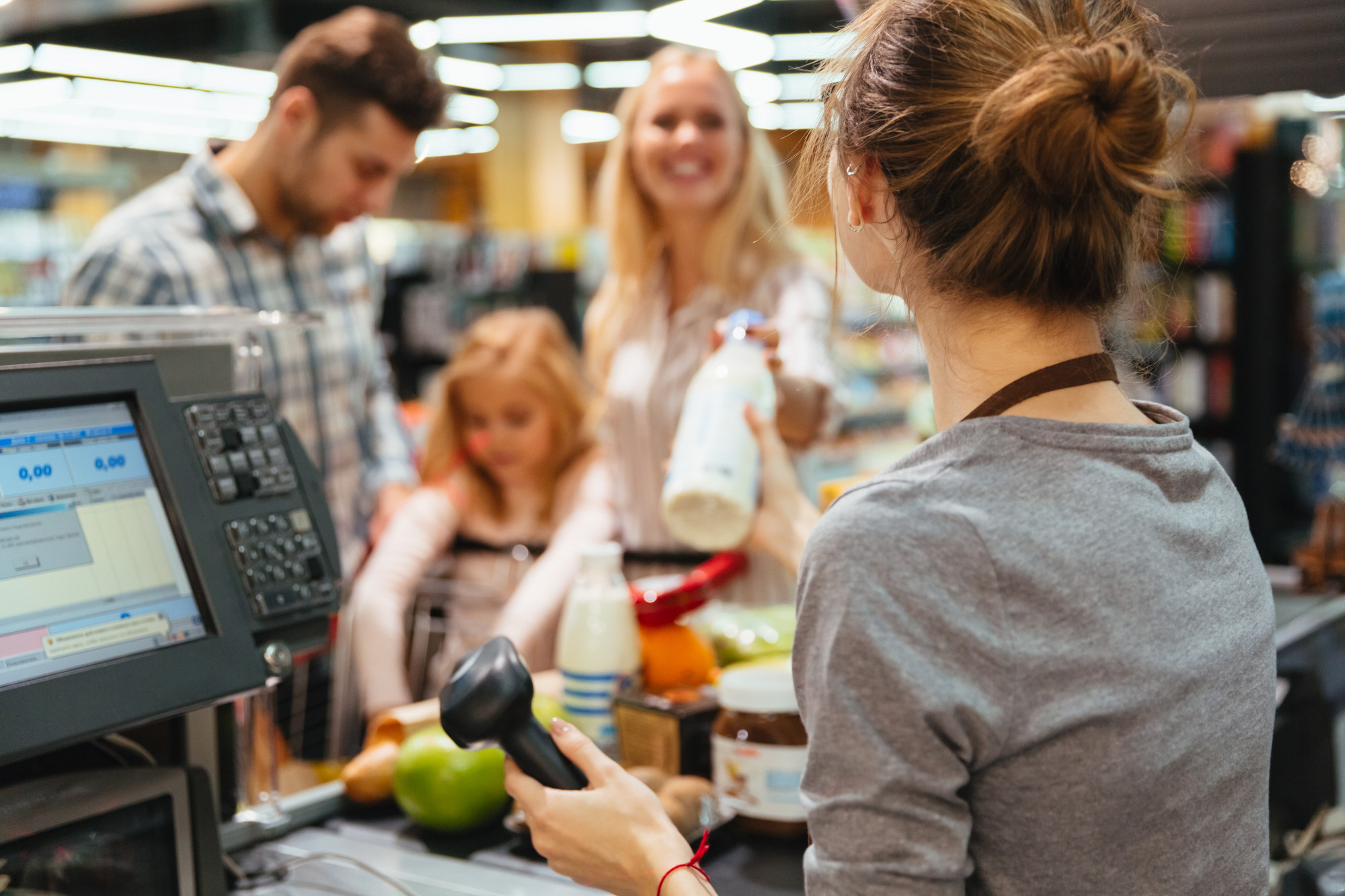
The Eight Dollars and Forty-Two Cents
The card declined the first time, and the woman tried to smile like it was nothing.
The second time, the little screen flashed red again, and the smile fell off her face.
Behind her, a man in a camouflage cap let out a long, loud sigh. Somebody further back muttered, “Unbelievable.” One of the babies strapped to her chest was screaming so hard his tiny face had turned the color of a strawberry.
The woman looked at me. Her lips were trembling.
“Sorry,” she whispered. “Can you take the diapers off?”
I looked down at the screen. She was short $8.42.
And I didn’t know it yet, but that number was about to change my whole life.
But I’m getting ahead of myself. Let me start at the beginning of that day, because the beginning matters. It always does.
That Friday started like every other Friday.
My alarm went off at six. I hit snooze once, then lay there staring at the water stain on my ceiling that looked a little bit like a rabbit. I’d been meaning to get someone to look at the roof for two years. I never had the money.
I could hear my mom in the kitchen. The kettle. The radio playing old country songs low, the way she liked it. The scrape of a chair.
I’m thirty-four years old and I still live with my mother. I used to be embarrassed about that. I’m not anymore. After my dad died, it was just the two of us, and somewhere along the way we stopped being a mother and a daughter who lived together and became two people holding each other up.
I pulled on my work polo, the green one with HOLLIS MARKET stitched over the pocket, and went downstairs.
“Morning, Rae,” Mom said. She was sitting at the table with her coffee and the electric bill. She had a pencil behind her ear. That’s never a good sign.
“How bad?” I asked.
She took off her reading glasses and rubbed her eyes. “It’s not bad. It’s just… it’s a lot for October.”
I sat down across from her and looked at the number. She was right. It was a lot.
“I’ll pick up an extra shift,” I said.
“You already work six days a week.”
“Then I’ll work seven.”
“Rachel.” She said my full name, which meant she was serious. “You can’t keep doing that. You’re going to run yourself into the ground.”
“Dad worked seven days a week sometimes.”
She went quiet. She always does when I bring him up. Not sad quiet, exactly. More like she’s listening to something far away.
“Your father,” she finally said, “was a stubborn fool who never knew when to stop.”
“I know.”
“You’re just like him.”
“I know that too.”
She smiled then, a little. She reached over and squeezed my hand. Her fingers were cold. They’re always cold in the mornings.
“Go on,” she said. “You’ll be late. And take a banana. You never eat breakfast.”
I took the banana. I didn’t eat it. It sat on the passenger seat of my car all day, getting browner, like it does every day.
My car is a 2009 Honda with a cracked windshield and a check engine light that has been on so long I think of it as decoration. That morning it made a new noise when I turned the key. A kind of grinding cough.
“Not today,” I told it. “Please. Not today.”
It started on the third try. I patted the dashboard like it was a horse.
On the drive to work I did math in my head. That’s what I do. I do math everywhere. In the shower, in line at the bank, lying in bed at night. Rent we split. The electric bill. Mom’s prescriptions. Insurance on the car. Whatever that new noise was going to cost. My paycheck didn’t come until next Thursday, and I had exactly sixty-one dollars in my checking account.
Sixty-one dollars. I remember the number because I’d checked it twice that morning.
Millbrook is a small town. One stoplight, two churches, a hardware store, a diner called Patty’s that has served the same meatloaf special every Tuesday since 1987, and Hollis Market, where I’ve worked for six years.
When you work the register in a town this size, you don’t just know people. You know their lives. You know who’s on a diet because they stopped buying the ice cream. You know who’s having money trouble because they switched from the name brand cereal to the store brand. You know who’s pregnant before their own mothers do, because of the ginger ale and the saltines and the way they look at the prenatal vitamins.
I pulled into the employee lot at 6:52. Lori’s car was already there. Lori is always early. She’s sixty-three, has worked at Hollis since before I could walk, and she knows everything about everybody. She calls herself the town’s unofficial newspaper.
“You look tired,” she said when I walked in.
“Good morning to you too, Lori.”
“I’m just saying. You’ve got bags under your eyes like suitcases.”
“Thank you. That’s very kind.”
She laughed and handed me a cup of coffee from the break room. “Drink. You’ll need it. Mike says the truck’s late again and we’re short on stockers.”
Mike Delgado is our store manager. He’s a big guy, with a gray beard and reading glasses he keeps pushed up on his forehead and always forgets about. He looks grumpy. He sounds grumpy. But I’ve seen him slip a gallon of milk to an old man who forgot his wallet, and I’ve seen him drive an hour in a snowstorm to bring a cashier’s forgotten insulin to her house. He just doesn’t like anyone to know he’s soft.
“Hale,” he called when he saw me. He calls everyone by their last name. “Register three today. Lori’s on two.”
“Got it.”
I walked to register three and did what I do every single morning. I opened the drawer, counted the float, wiped down the belt, and checked that the little photo was still there.
It’s a small photo. Wallet sized. It’s taped to the side of the register, just below the scanner, where I can see it but most customers can’t unless they’re really looking.
It’s my dad.
He’s standing beside his truck, a big blue Peterbilt, with his arms crossed and a grin on his face like he just heard the best joke in the world. He’s wearing his old Carhartt jacket and a baseball cap pushed back on his head. You can see his watch on his wrist, catching the sun. That watch was the only nice thing he ever owned. My mom bought it for him on their tenth anniversary. She saved for almost a year.
He died when I was twelve. Black ice on Route 9, on a night in March. He was coming home early because he missed us.
I keep the photo there because my dad used to say something to me, back when I was little and complaining about the world not being fair.
“You can’t fix the whole world, Rae-bug,” he’d say. “But you can fix the next ten minutes for somebody.”
I touch the corner of the photo every morning before my first customer. It’s a silly habit. I know that. But I’ve done it for six years, and I wasn’t going to stop.
“Morning, Dad,” I whispered.
Then the doors slid open, and my day began.
Fridays are busy. Payday for half the town. By ten I’d rung up Mrs. Kowalski’s prune juice and cat food, the Jensen boys’ energy drinks and beef jerky, and a whole cart of party supplies for little Emma Tate’s seventh birthday. Her mother showed me a picture of the cake on her phone. It was shaped like a unicorn and slightly lopsided.
“It’s perfect,” I told her.
“It’s a disaster,” she laughed.
“Perfect disaster, then.”
By noon I’d eaten half a sleeve of crackers from my bag and still not touched the banana. By three my feet hurt. By five the after-work rush started and the lines got long, and everyone got a little short-tempered the way people do when they’re hungry and tired and just want to get home.
At 6:40, she walked in.
I noticed her right away. You notice strangers in a town like Millbrook. They stand out like a red sock in a load of whites.
She was thin. Not skinny, thin. The kind of thin that comes from skipping meals so somebody else can eat. Her hair was in long braids pulled back with a rubber band. She wore a gray hoodie that was too big for her and jeans worn white at the knees.
And on her chest, in a big black twin carrier, were two babies.
They couldn’t have been more than four or five months old. Both boys, I guessed, from the little blue hats. One was sound asleep with his mouth open and his tiny fist curled against his mother’s collarbone. The other was awake, and he was not happy about it.
He was crying the way only small babies can cry. Not just loud. Desperate. Like the whole universe had betrayed him.
The woman kept bouncing gently on her feet as she walked the aisles, whispering to him. “Shh, shh, I know, baby. I know. We’re almost done. Mama’s almost done.”
She didn’t have a cart. She carried everything in her arms. When she came to my line, there were already four people ahead of her and the line kept growing behind her.
I watched her while I rang up the others. She kept looking at the things in her arms. Then she’d look at her phone. Then back at the things. Her lips were moving like she was counting.
I know that look. I’ve worn that look. I wore it that morning in my own car.
The man right behind her was Dale Pruitt. Dale runs a small auto body shop on the edge of town. He’s not a bad man, but he’s not a patient one either. He had a case of beer, a frozen pizza, and a look on his face like he wanted to be anywhere but here.
The crying baby screamed louder. Dale sighed loudly enough for the whole store to hear.
Finally she reached me.
“Hi there,” I said. “Find everything okay?”
“Yes. Thank you.” Her voice was soft, with an accent I couldn’t place. Somewhere south, maybe. She set down a gallon of milk, a can of baby formula, and a pack of diapers. Size two. The cheapest brand we carry.
That was it. That was everything.
“Oh, they’re beautiful,” I said, nodding at the babies. “Twins?”
“Yes.” She tried to smile. “This one’s Noah. He’s the loud one. And this sleepy one is Eli.”
“Hi, Noah,” I said. “You’re having a rough day, huh?”
Noah answered by screaming directly into his mother’s ear. She winced and laughed at the same time.
“He’s hungry,” she said. “And wet. And mad at me. Mostly mad at me.”
“Well, he’s got good lungs.”
“He’s got his father’s lungs,” she said, and something flickered across her face. Something closed, like a door.
I scanned the milk. The formula. The diapers. I told her the total.
She tapped her card on the reader.
The little machine beeped, thought about it, and flashed a word on the screen.
DECLINED.
“Oh,” she said. “Oh, that’s… that’s weird. Let me try again.”
She pulled the card back and tapped it again. Her hand was shaking so badly she missed the reader the first time and had to tap it twice.
Beep.
DECLINED.
Behind her, Dale Pruitt let out the longest sigh I’ve ever heard a human being make. “Are you kidding me?” he said, not quite under his breath. “It’s Friday night.”
Someone further back said, “Can we open another register?”
The woman’s cheeks went red. Deep red, all the way down her neck. She started digging through her diaper bag with one hand while trying to bounce Noah with the other. She pulled out a wallet. Opened it. Inside, I could see a library card, a folded piece of paper, and a few coins.
She counted the coins. I watched her count them. Her lips moved.
Then she closed the wallet and looked down at the counter.
“Sorry,” she whispered. “Can you take the diapers off?”
I looked at the screen. With the diapers removed, she’d have enough for the milk and the formula. With them, she was short $8.42.
Eight dollars and forty-two cents.
It’s such a small number. People drop that much on a coffee and a muffin without thinking. But I’ve seen what eight dollars can mean. I’ve seen people put back bread. I’ve seen kids put back birthday candles. I’ve seen my own mother, years ago, put back a pack of chicken and stand there in the checkout line with her chin up like she’d meant to all along.
And here was this woman, with two babies strapped to her chest, one of them screaming, and she was choosing between milk and diapers. Between feeding them and keeping them dry.
I thought about my sixty-one dollars. I thought about the electric bill and the grinding noise in my car. I thought about it for maybe one second.
Then I thought about my dad. The photo was right there under my hand. His grin.
You can fix the next ten minutes for somebody.
I reached into my back pocket and pulled out my own debit card.
“Ma’am,” I said. “It’s okay. I’ve got it.”
She looked up so fast she almost knocked the formula off the counter. “What? No. No, no, no. You don’t have to do that.”
But I’d already tapped my card. The machine beeped. APPROVED.
The receipt started printing.
Her eyes filled with tears. Just like that, all at once, like a dam breaking. She put her hand over her mouth.
“No,” she said again, softer. “You don’t have to. I don’t… I don’t know if I’ll be able to pay you back.”
I smiled at her. I tore off the receipt and put it in her bag with the diapers.
“You don’t have to do anything,” I said. “Just take your groceries home and please don’t worry about it.”
She stood there. She didn’t move. Behind her, Dale shifted his feet and opened his mouth like he was going to say something else, and then he looked at her face and closed it again.
The woman was staring at me. Then her eyes moved down. Down to my hand, resting on the edge of the register.
Down to the photo.
I saw it happen. I saw her look at the photo of my dad, and I saw all the color leave her face. It was like watching someone see a ghost. Her mouth opened a little. Her hand, the one on Noah’s back, went completely still.
“Ma’am?” I said. “Are you okay?”
She didn’t answer. She just stared at that photo.
“Ma’am?”
She blinked hard. She looked back up at me, and her eyes were wet all over again, but different this time. Wider. Searching my face like she was trying to read something written there.
“What’s…” she started. Then she stopped. She shook her head.
Noah screamed. Eli woke up and joined him. Now both babies were crying, and the line behind her was a dozen people long, and somebody near the back said, “Come on, people,” and the moment broke apart like a soap bubble.
“I’m sorry,” she said quickly. “I’m sorry. Thank you. Thank you so much.”
“Of course.”
She grabbed her bag. She took two steps. She turned back.
“Thank you,” she said again. “You have no idea. You have no idea what this means to me. Today. Today of all days.”
“It’s really nothing.”
“It’s not nothing.” She said it almost fiercely. “It’s not nothing. Thank you.”
She thanked me three more times on her way to the door. The last time she was halfway out, with the automatic doors trying to close on her and opening again, and she looked back over her shoulder, not at me, but at the register.
At the photo.
Then she was gone.
Dale stepped up and put his beer on the belt without a word. He didn’t look at me. I scanned the beer, then the pizza.
“Thirty-one sixteen,” I said.
He paid in cash. When I handed him his change, he held onto it for a second.
“That was a nice thing you did,” he said gruffly. He still wasn’t looking at me.
“She needed it.”
“Yeah.” He shoved the change into his pocket. “Yeah. I guess she did.”
He walked out. I watched him go. He stopped by the door and looked out at the parking lot for a long moment, like he was looking for someone. Then he shook his head and went to his truck.
The rest of my shift was a blur. Mrs. Abernathy and her coupons. A teenager trying to buy cigarettes with an ID that said he was born in 1971. A spilled jar of pickles in aisle four that made the whole front of the store smell like vinegar.
But I kept thinking about her face. The way she looked at the photo. Like she’d been punched.
At ten, Mike came by to close out my drawer.
“Lori says you paid for a customer’s groceries,” he said, counting bills.
“Only eight dollars.”
“Hm.” He wrote a number down. “You know we’re not supposed to do that. Policy.”
“I know.”
“Hm,” he said again. He snapped a rubber band around the twenties. “Go home, Hale. You look like a ghost.”
On my way out I passed the break room and saw my banana on the counter where I’d brought it in from the car, completely black now. I threw it away. I wasn’t hungry anyway.
The car started on the first try that night. I took that as a sign.
When I got home, the kitchen light was on. Mom was waiting up like she always does, even though I’ve told her a hundred times not to. She was in her robe, with a cup of chamomile tea and a crossword puzzle.
“There’s soup on the stove,” she said. “Potato.”
“Thanks, Mom.”
I ladled some into a bowl and sat down across from her. I ate three spoonfuls before I realized I was starving.
“Long day?” she asked.
“Long day.”
She filled in a word. Then she looked at me over her glasses. “Something happened.”
“How do you do that?”
“I’m your mother. Spill.”
So I told her. The woman. The twins. The declined card. The eight dollars and forty-two cents. I left out the part about my sixty-one dollars, because I knew she’d worry, but she’s not stupid. She knew.
When I finished, she put down her pencil and was quiet for a long time.
“Your father,” she said finally, “used to do that. All the time.”
“I know. You’ve told me.”
“No, Rae. I mean all the time. It used to make me crazy. We’d be short on the mortgage and he’d come home and tell me he’d paid for some stranger’s tank of gas at a truck stop in Ohio.” She shook her head and laughed softly. “One time he came home without his coat. In December. Gave it to a kid hitchhiking outside Pittsburgh.”
“I didn’t know that one.”
“I was so mad at him. I yelled. I told him he couldn’t save everybody.” She turned her teacup slowly on the table. “And you know what he said?”
“You can’t fix the whole world,” I said quietly. “But you can fix the next ten minutes for somebody.”
My mom looked at me with shining eyes. “He said that to you too?”
“All the time.”
“Well.” She picked up her pencil again and pretended to look at her crossword. “He was a stubborn fool.”
“I know, Mom.”
“I miss him every day.”
“I know.”
I went to bed around midnight but I couldn’t sleep. I lay there looking at the rabbit-shaped water stain and thinking about the woman’s face.
There was something about the way she’d looked at that photo. It wasn’t the way you glance at a picture of a stranger. It was recognition. I was sure of it. But that was impossible. My dad had been gone twenty-two years. She couldn’t have been more than thirty-five or thirty-six. She would have been a kid when he died.
And besides, she wasn’t from here. I would have known.
Maybe I imagined it, I told myself. Maybe she was just exhausted and overwhelmed and staring at nothing.
I thought about my dad that night. I do sometimes, when I can’t sleep. I thought about the night he died. How the phone rang at two in the morning. How my mom made a sound I’d never heard before and have never heard since. How the next morning she sat at that same kitchen table, very straight, very still, and made phone calls in a voice that didn’t sound like hers.
I thought about the funeral. The open casket I wasn’t allowed to see. The trucker friends of his who came from four different states and stood in the back of the church in their good jackets, crying without making any noise.
And I thought about the watch.
The state police gave my mom a plastic bag with his things in it. His wallet. His wedding ring. His keys. A half-eaten bag of sunflower seeds. A crumpled receipt from a diner in Kentucky.
But not the watch.
Mom called the police three times. She called the tow yard. She called the hospital. Nobody had it. She decided it must have been lost in the crash, thrown somewhere in the snow on the side of Route 9. In the spring, after the thaw, she drove out there with me and we walked the ditch for two hours looking for it.
We never found it.
She never said much about it, but I knew it broke something in her. She’d saved for a year to buy that watch. She’d had it engraved. He wore it every single day for eight years. And it was just gone.
I fell asleep around three, thinking about a watch lying somewhere under the dirt and leaves on Route 9, still ticking away in the dark.
The next morning I was late.
Not very late. Four minutes. But I’m never late, so it felt like forty.
I rushed through the employee entrance, tying my apron as I went, and I was halfway to register three when Lori came speed-walking toward me from the front of the store.
Lori doesn’t speed-walk. Lori moves at exactly one speed, which is the speed of a woman who has worked on her feet for forty years and refuses to hurry for anyone.
But she was hurrying now. And her face was pale.
“Rachel,” she said. Her voice was shaking. “Mike needs you in his office. Right now. He told me to cover your register.”
My stomach dropped into my shoes.
“What? Why?”
“I don’t know. He just said to send you in the second you got here.”
“Lori, what’s going on? Am I in trouble?”
She opened her mouth. Closed it. Then she squeezed my arm.
“Just go, honey,” she said.
The walk from the front of the store to Mike’s office is about forty steps. I know because I counted them that morning. Forty steps past the deli counter, past the dairy case, past the swinging doors to the back stockroom, down a short hallway that smells like cardboard and floor cleaner.
With every single step, my brain made a list.
He knew about the eight dollars. That was it. It was against policy, and he’d said so last night, and someone had complained. Maybe Dale. Maybe someone else in line. Maybe the woman herself had come back and said I’d pressured her somehow, or made her feel bad, or…
Or maybe the drawer was short. Maybe I’d miscounted. Maybe I’d given someone the wrong change.
Or maybe it was the cigarettes. Maybe the kid with the fake ID had come back with his father, saying I’d been rude to him.
I’d never been written up. Not once in six years. But I knew the store was struggling. Mike had said in a meeting last month that corporate was watching the numbers. That some people might lose hours.
I couldn’t lose hours. I couldn’t lose this job. Not with the electric bill, and Mom’s prescriptions, and the car making that grinding noise.
By the time I reached his door, my hands were sweating so badly I had to wipe them on my apron before I knocked.
“Come in,” Mike said.
I opened the door.
Mike’s office is tiny. A metal desk, a filing cabinet, a calendar from a meat supplier with a picture of a cow on it, and two chairs. One behind the desk. One in front of it, a cheap plastic chair that wobbles.
Mike was sitting behind the desk. His reading glasses were on his forehead. He had his hands folded on top of a white envelope.
He didn’t look angry. That was the first thing I noticed. He looked strange. Like a man trying very hard to keep his face still.
“Close the door, Hale,” he said.
I closed it.
“Sit.”
I didn’t sit. I couldn’t. My legs felt like they were made of paper.
“Mike, if this is about last night, I can explain. I know it’s against policy. I know. But she had those two babies and she was short and the line was…”
“Hale.”
“…and I used my own card, not the store’s, so technically I didn’t…”
“Rachel.”
I stopped. He never called me Rachel.
“Tell me something,” he said slowly. “Did you pay for some items yesterday for a woman who didn’t have enough money?”
I nodded. My throat was too tight to talk.
“A young woman. Braids. Twin boys.”
I nodded again.
Mike looked down at the envelope under his hands. He was quiet for a long moment. Then he picked it up and held it out to me across the desk.
“That woman you helped with the diapers yesterday,” he said, “came back after your shift ended. Just before we closed. She asked me to give this to you.”
I stared at the envelope. It was a plain white envelope, the cheap kind you get in a box of fifty at the drugstore. On the front, in careful handwriting, it said:
For Rachel. The cashier at register three. Please.
The word Please was underlined twice.
I took it. It was heavier than I expected. Lumpy at the bottom.
“She came back?” I said. “Last night?”
“Around ten after ten. I was closing out the safe.” Mike took off his reading glasses, which were on his forehead the whole time, and rubbed his eyes. “She had those babies with her. Both asleep, finally. She asked me what your full name was.”
“My full name?”
“I wasn’t going to tell her. You know. Privacy.” He put his glasses on the desk. “But she asked me a question first. She asked if your father’s name was Tom.”
The floor tilted a little under my feet.
“She asked what?”
“She asked if your father’s name was Tom. If he drove a truck.” Mike’s voice was very gentle now, gentler than I’d ever heard it. “I know about your dad, Rachel. You’ve talked about him. So I said yes. And she started crying, right there by the customer service desk. Then she asked if your mother’s name was June.”
I couldn’t breathe.
“I said I thought it was,” Mike went on. “And she just… she just stood there holding onto the counter. Then she wrote that, and sealed it up, and made me promise I’d give it to you first thing. Made me promise twice.”
My fingers were trembling. I slid my thumb under the flap of the envelope and tore it open.
The first thing I saw was a small plastic sandwich bag at the bottom. Inside were coins. Quarters, dimes, nickels, and pennies, and one wrinkled five-dollar bill and three ones, folded small. A torn piece of paper was taped to the bag with handwriting on it: $8.42. I told you I’d pay you back.
Behind the bag was a folded letter. Two pages, written front and back in blue pen.
And beneath the letter, wrapped in a clean white baby washcloth, was something hard and round and heavy.
I set the envelope on the desk. I picked up the washcloth. I unfolded it slowly, one corner at a time.
And there it was.
A man’s wristwatch. Silver, with a black face and a worn brown leather band, cracked at the holes where it had been buckled thousands of times. The crystal had a tiny scratch across the number four. It was ticking. I could hear it ticking in the silence of that tiny office.
I knew that watch. I knew that scratch. I had sat on my father’s lap as a little girl and traced that scratch with my fingertip while he told me stories about the places he’d driven.
I turned it over with hands that didn’t feel like my own.
On the back, in small engraved letters that had worn soft over the years, it said:
Tom. Come home to us. Love always, June.
The room went white around the edges.
I don’t remember sitting down. I just remember that suddenly I was in the wobbly plastic chair, and Mike was beside me with his big hand on my shoulder, and he was saying, “Breathe, Rachel. Breathe. Put your head down. Put your head down,” and I was holding my father’s watch against my chest so hard the metal was cutting into my palm.
“That’s my dad’s watch,” I said. My voice sounded like it was coming from the bottom of a well. “Mike. Mike, that’s my dad’s watch.”
“I know, honey.”
“It’s been gone twenty-two years. It was lost. It was lost in the crash. We looked for it. Me and my mom, we walked the ditch…”
“I know.”
“How does she have it? How does she have my dad’s watch?”
Mike didn’t answer. He just picked up the letter from the desk and pressed it gently into my free hand.
“I think,” he said quietly, “she wrote it all down.”
He went and got me a cup of water from the cooler in the hall. He told me to take as long as I needed. Then he did something I’ll never forget. He stepped out of his own office and closed the door behind him, and I heard him say to someone in the hallway, “Nobody goes in there. I don’t care if the building’s on fire.”
I unfolded the letter. My eyes were swimming so badly it took me three tries to read the first line.
Dear Rachel,
I don’t know how to start this letter, so I’m just going to start.
My name is Maya Brooks. I’m thirty-six years old. Twenty-two years ago, when I was fourteen, I met your father.
I need to tell you about that night, because I have been carrying it with me my whole life, and I think it belongs to you more than it belongs to me.
When I was fourteen, I was in a foster home in Kentucky. It was not a good place. I won’t write down everything that happened there. I’ll just say I left one night in January with a backpack and eleven dollars and no plan except to never go back.
I walked for a long time. It was snowing. I ended up at a truck stop diner off the interstate around midnight because it was the only place with lights on. I sat in a booth in the back and ordered a cup of hot water because it was free and I was so cold I couldn’t feel my feet. I was trying to figure out how far eleven dollars could take me. I was trying very hard not to cry.
A man sat down in the booth across from me. I was scared. I thought about running. But he just put his hands up and smiled and said, “I’m not gonna bother you. I just noticed you’ve been looking at that menu for twenty minutes like it owes you money.”
He had a kind face. A big grin. A baseball cap pushed back on his head. He said his name was Tom.
He ordered me a stack of pancakes, eggs, bacon, and a hot chocolate with whipped cream. He didn’t ask me any questions while I ate. He just talked. He told me about his wife June, who he said was the smartest person he’d ever met and much too good for him. He told me about his little girl. He said her name was Rachel, but he called her Rae-bug. He said she was twelve and stubborn and wanted to be a veterinarian, and that she had a laugh like a hiccup.
He showed me a picture of you from his wallet. You were missing your front tooth.
I had to stop reading. I pressed the letter against my knee and cried so hard my whole body shook. I had wanted to be a veterinarian. I’d forgotten that. I’d completely forgotten. I gave it up after he died, along with a lot of things.
When I could see again, I kept going.
After I ate, he asked me where I was going. I don’t know why, but I told him the truth. I told him I had an aunt in Georgia, my mother’s sister, who I hadn’t seen since I was eight. I told him I didn’t know if she’d even want me.
He went quiet for a long time. Then he said, “Well, there’s only one way to find out.”
He took me to the bus station in his truck. He told me to stay in the cab where it was warm while he went in. He came back with a ticket to Macon. He’d called a number for some kind of help line from the pay phone, and they had called my aunt, and my aunt had said yes. She said yes, Rachel. She said bring her home.
But the ticket had a layover in Atlanta, and the connection was a whole day later, and your father only had enough cash left for the ticket itself. He emptied his wallet onto the dashboard to show me. Four dollars and change.
So he took off his watch.
I told him no. I said I couldn’t. He said, “Listen to me. If you get stuck anywhere, if anything goes wrong, you sell this. It’s worth something. It’ll get you the rest of the way.” He put it on my wrist and had to buckle it on the very last hole, and it still slid around.
I said, “But your wife gave you this. It says so on the back.”
He laughed. He said, “June will understand. June will yell at me for about an hour, and then she’ll understand. That’s the deal we’ve got.”
Before I got on the bus, I asked him why he was helping me. He crouched down so he was looking me right in the eye. And he said something I have never forgotten for one day of my life.
He said, “You can’t fix the whole world, kiddo. But you can fix the next ten minutes for somebody. Tonight it’s your turn. Someday it’ll be your turn to do it for somebody else.”
The letter slipped out of my fingers and landed on the floor. I picked it up. I couldn’t stop shaking. Those were his words. His exact words. Words I’d thought belonged only to me.
I didn’t need to sell the watch. I made it to Atlanta. I slept in the bus station with the watch inside my sleeve so nobody could see it. I made it to Macon. My aunt was waiting on the platform in her church dress. She hugged me so hard I couldn’t breathe. She raised me until I was grown. She is the reason I finished high school. She is the reason I became a nurse’s aide. She is the reason I’m alive, and your father is the reason I got to her.
I tried to find him, Rachel. I want you to know that. I tried for years. When I was sixteen I wrote a letter to the truck stop asking about a driver named Tom with a blue truck. Nobody answered. When I was older and had a computer, I searched every way I could think of. But all I had was a first name, a wife named June, a daughter named Rachel, and a watch. I didn’t know what state he lived in. I didn’t know his last name. He never told me, and I was too young and too scared to ask.
I kept the watch. I wound it every morning. When things were bad, and there have been a lot of bad times, I would hold it and hear it ticking and remember that once, a stranger decided I was worth four dollars and a watch and a ride to the bus station. It got me through more than I can tell you.
I have never sold it. Not ever. Not even yesterday.
Rachel, I need to be honest with you about yesterday. My husband left in July. The boys were three months old. He took the car and most of the money and he hasn’t called since. I found a job as an aide at the Willow Creek nursing home here in Millbrook, which is why I moved to this town. I start Monday. I rented the little yellow house on Pike Street because it was the cheapest place I could find. My first paycheck won’t come for two more weeks. My bank account was overdrawn by a fee I didn’t know about. I had eleven dollars and thirty cents in cash until yesterday. Funny, isn’t it. Eleven dollars again.
Yesterday morning I sat on my kitchen floor with the watch in my hand and thought about selling it. I thought, the boys need diapers. Tom said if I ever got stuck, sell it. And I was stuck. I have never been so stuck.
But I couldn’t do it. It was never mine. It was only borrowed. I kept thinking someday I’d find him and give it back.
Then I came into your store and my card didn’t work and the whole line was staring at me and Noah was screaming and I thought I was going to break into a thousand pieces right there by the gum. And you paid for the diapers. You smiled at me like it was nothing. And then I looked down and saw the picture taped to your register.
It was him. It was Tom. The same grin. The same cap. The same blue truck. And on his wrist, the same watch.
I couldn’t speak. I thought I was losing my mind. I went home and fed the boys and changed them, with the diapers you bought, and then I sat at my kitchen table and held the watch next to the receipt with your register number on it and I cried for an hour.
I came back tonight to ask your manager if I was crazy. He told me your father’s name was Tom. He told me Tom drove a truck and died when you were twelve.
I am so sorry, Rachel. I’m so sorry. I didn’t know he was gone. Somehow I always pictured him still out there, on some highway, grinning at somebody new.
I’m giving the watch back now, where it belongs. Please give it to your mother. Please tell her that he did come home. It just took him twenty-two years and a girl from Kentucky to get there.
And please tell her that he wasn’t wrong. It did get me the rest of the way.
The money in the bag is the $8.42. It took me a while to scrape it together, and some of it is from the bottom of the diaper bag, so I’m sorry it’s sticky. I know you said I didn’t have to pay you back. But I want to. Your father fixed my next ten minutes, and yesterday you fixed my next ten minutes, and I think the least I can do is not let you be out eight dollars because of me.
Thank you. For yesterday. And for him.
With all my heart,
Maya Brooks
The yellow house on Pike Street
P.S. Your father said you had a laugh like a hiccup. I hope you still do. I hope somebody makes you laugh like that today.
I don’t know how long I sat in that chair.
Long enough that the water in the paper cup got warm. Long enough that I read the letter twice more, front and back, and then once more just the P.S. Long enough that my eyes swelled half shut.
The watch ticked against my palm the whole time. Steady. Patient. Like it had all the time in the world.
Twenty-two years. It had been ticking for twenty-two years. In a bus station in Atlanta, tucked inside a scared girl’s sleeve. In a house in Georgia. In whatever apartments and hospitals and hard places Maya had been. On her kitchen floor yesterday morning, while she decided not to sell it for diapers.
It had never stopped. Somebody had wound it every single morning for twenty-two years.
Eventually there was a soft knock on the door.
“Hale?” Mike said through the door. “You alive in there?”
“Yeah,” I croaked.
He opened the door a crack and looked in. He saw my face and his own face crumpled a little behind the beard.
“Go home,” he said.
“I can’t, it’s Saturday, you’re short-staffed…”
“Lori’s covering. I’ll cover. I’ve run a register before.” He came in and crouched down beside my chair, knees popping. He looked at the watch in my hand. “That’s really his?”
I turned it over and showed him the engraving. He read it. He read it twice. Then he cleared his throat and stood up fast and looked at the cow calendar on the wall for a while.
“Go home,” he said again, and his voice was rough. “Go show your mother.”
I put the watch back in the washcloth. I folded the letter and slid it back into the envelope with the little bag of coins. I stood up, and my legs held.
At the door I stopped.
“Mike.”
“Yeah.”
“Thank you. For not telling her no. For giving her my name.”
He waved a hand at me without turning around. “Policy,” he grunted. “Get out of here.”
When I walked back through the store, Lori was at register three, ringing up Mrs. Kowalski. She took one look at me and stopped scanning mid-beep.
“Oh, honey,” she said. “Oh, honey, what happened?”
“I’ll tell you later,” I said. “I promise. I’ll tell you everything.”
I stopped beside the register. I reached down and touched the corner of my dad’s photo, the way I do every morning.
“Hi, Dad,” I whispered. “You came back.”
Mrs. Kowalski looked at Lori. Lori looked at me. I didn’t explain. I just walked out into the bright, cold morning.
I don’t remember the drive home. I know I drove under the speed limit the whole way with both hands on the wheel, like I was carrying something that might spill.
Mom’s car was in the driveway. Saturdays she does her shopping in the afternoon, so I knew she’d be home. When I came in the kitchen door, she was at the sink washing the breakfast dishes, humming along to the radio.
She heard the door and turned around, surprised.
“Rae? What are you doing home? Are you sick?”
Then she saw my face, and the dish towel fell out of her hands.
“What happened? Is it the car? Did you get in an accident?” She came toward me fast, wet hands reaching for my face. “Rachel. Talk to me. What’s wrong?”
“Nothing’s wrong,” I said. And then I started crying again, which made her face go even whiter, so I grabbed her hands. “Mom. Mom, listen. Nothing’s wrong. I promise. Sit down. Please sit down.”
“You’re scaring me.”
“I know. I’m sorry. Just sit.”
She sat at the kitchen table, in her chair, the one with the cushion that doesn’t match the others. I sat across from her. I put the envelope on the table between us.
“You remember the woman I told you about last night? With the twins?”
“Of course.”
“She came back to the store after I left. She left me this.”
I took out the washcloth. I laid it on the table. My mom looked at it, puzzled.
“What is it? A baby cloth?”
I didn’t say anything. I just unfolded it.
The watch lay there in the middle of our kitchen table, in the morning light coming through the window over the sink. Ticking.
My mom didn’t move.
I watched her face. I watched her eyes go to the watch, and then go wide. I watched her stop breathing. Her lips parted, but nothing came out.
Very slowly, the way you’d reach for a bird you were afraid would fly away, she put out one hand and touched the leather band with her fingertip.
She picked it up. She turned it over.
She read the back.
And then my mother, who did not cry at the funeral, who did not cry when the state police handed her the plastic bag, who did not cry when we walked the ditch on Route 9 for two hours and came home with muddy boots and nothing else, my strong, stubborn, cold-fingered mother put the watch against her mouth and broke apart.
She made the sound. The same sound she made on the phone at two in the morning, twenty-two years ago. But it was different this time. It wasn’t the sound of something ending. It was the sound of something that had been stuck for a very long time finally coming loose.
I came around the table and held her. She held the watch. We stayed like that a long time, rocking a little, while the radio played some old Patsy Cline song neither of us was listening to.
“Where?” she finally whispered into my shoulder. “Where was it? How?”
“There’s a letter,” I said. “Do you want me to read it to you?”
She nodded against me. She didn’t let go of the watch.
So I read it to her. The whole thing. The diner. The pancakes. The bus ticket. The four dollars and change on the dashboard. June will yell at me for about an hour, and then she’ll understand. When I read that line, my mom let out a laugh so wet and broken it was almost a sob.
“That fool,” she said. “That stubborn fool.”
“Did you yell at him for an hour?” I asked.
“He never told me.” She shook her head, wiping her eyes with the back of her hand. “He never told me, Rae. He came home that January and I asked where his watch was, and he said he left it in the truck. I asked him again a week later and he said it needed a new battery and he dropped it at the jeweler in Lexington. Then he…” She stopped. Her mouth trembled. “Then he was gone, and I thought it was lost in the snow. All these years. I thought it was out there in the ditch.”
“I know.”
“I used to dream about it. Did you know that? I used to dream I was walking that road and I could hear it ticking under the leaves but I couldn’t find it.”
I didn’t know that. I squeezed her hand.
“He gave it to a little girl,” she said, very softly, like she was testing the words. “He gave his watch to a little runaway girl so she’d be safe.”
“Yeah, Mom. He did.”
She looked at the watch for a long time. Then she looked up at me, and for the first time in twenty-two years, her face looked young. Not happy, exactly. Something deeper than happy. Like someone who’d been holding a heavy box for so long they forgot it was there, and somebody finally took it out of their arms.
“Read the end again,” she said. “The part about coming home.”
I read it again. Please tell her that he did come home. It just took him twenty-two years and a girl from Kentucky to get there.
My mom closed her eyes.
“Where does she live?” she asked.
“The yellow house on Pike Street.”
She opened her eyes. She stood up. She took her purse off the hook by the door. She put my dad’s watch on her own wrist, on the very last hole, where it slid around loose, and she held her wrist against her chest.
“Get your keys,” she said.
“Mom, she might be…”
“Rachel Ann Hale. Get your keys.”
We stopped at Hollis Market on the way. I know that sounds strange. But my mom insisted. She marched up and down the aisles with a cart like a general going into battle. Diapers, two packs, size two and size three, the good brand. Formula. Wipes. Milk, eggs, bread, butter, a whole chicken, potatoes, carrots, apples, peanut butter, oatmeal, coffee. A box of tea. A bag of those chocolate cookies with the marshmallow in the middle.
“Mom, we can’t afford this,” I whispered.
“We can afford it this week,” she said. “Next week, we’ll figure out next week.”
At register three, Lori rang us up without a word. She’d been crying too. I could tell. When the total came up, Mike appeared from the back with his arms crossed.
“Employee discount,” he said. “Thirty percent.”
“We don’t have an employee discount,” Lori said.
“We do today,” said Mike. “Ring it up.”
Pike Street is on the far edge of town, past the grain elevator, where the houses get small and the yards get long. The yellow house was at the very end. It had a sagging porch and a screen door with a hole in the bottom, and the yellow paint was peeling in long curls like old wallpaper. But there were two tiny blue socks drying on the porch rail, and somebody had put a coffee can of orange marigolds by the steps.
There was no car in the driveway. Of course there wasn’t. He took the car.
My mom stood at the bottom of the porch steps for a long minute with her hand over the watch.
“What if she doesn’t want to see us?” I said. “What if it’s too much?”
“Then we leave the groceries on the porch and go home,” Mom said. “But I have to try.”
I knocked.
From inside, a baby started to cry. Then footsteps. Then the door opened about four inches, with the chain still on, and Maya’s face appeared in the gap.
She was wearing the same gray hoodie. Her braids were down this time. She had a burp cloth over one shoulder and dark circles under her eyes.
She saw me first, and her eyes went wide. Then she looked past me, at my mother.
At the watch on my mother’s wrist.
Maya’s hand went to her mouth.
“June?” she whispered.
My mom nodded. She couldn’t speak.
The door closed. I heard the chain rattle. Then it opened all the way, and Maya stood there in the doorway, and for a moment nobody moved at all.
Then my mother walked up the porch steps and put her arms around this woman she had never met, and held her the way she’d held me at the kitchen table. And Maya held onto her like she was fourteen years old again and standing on a bus platform in Macon.
“He’d have been so happy,” my mom kept saying into Maya’s hair. “He’d have been so happy to see you grown. To see you safe.”
“I’m sorry,” Maya kept saying. “I’m so sorry. I’m so sorry he’s gone. I’m so sorry I kept it so long.”
“Don’t you ever be sorry,” my mom said fiercely. She pulled back and held Maya’s face in both her hands. “You hear me? Don’t you ever be sorry. You kept it safe. You wound it every day. You brought him home.”
Behind them, inside the house, both babies were now crying at full volume.
Maya laughed through her tears and wiped her face on the burp cloth. “I’m sorry. They’re… they don’t like it when I leave the room.”
“Well then,” my mom said, “let’s not keep them waiting.”
The inside of the yellow house was small and nearly empty. A secondhand couch with a blanket over the torn cushion. A card table with two folding chairs. A playpen in the corner of the living room where Noah and Eli lay side by side, red-faced and furious. The kitchen had one pot on the stove and one box of saltines on the counter.
But it was clean. Spotless. The floor was swept. The baby bottles were lined up on a dish towel like soldiers. There was a picture from a magazine taped to the refrigerator, a field of sunflowers, and next to it, a calendar with the word MONDAY circled in red and FIRST DAY!! written underneath.
My mom went straight to the playpen like she’d done it every day of her life.
“May I?” she asked.
“Please,” Maya said. “Please, yes. That’s Noah. He’s the loud one.”
Mom scooped Noah up and settled him against her shoulder, and she did the bounce. The mom bounce. The one I don’t even think she knows she does. And in about fifteen seconds Noah stopped crying and started hiccupping instead, and then he grabbed a fistful of her hair and stared at her with enormous, wet, astonished eyes.
“Well, hello there, mister,” my mom said softly. “Hello, you.”
Maya picked up Eli. I went back to the car and started bringing in groceries.
It took four trips. On the second trip, Maya saw what I was carrying and stopped me in the doorway.
“Rachel, no. No. You already did so much. I can’t…”
“It wasn’t me,” I said. “It was my mom. And you can’t argue with her. I’ve been trying for thirty-four years.”
“I heard that,” said my mom from the living room.
Maya looked at the bags. The diapers. The good formula. The chicken. Her chin trembled.
“I’ll pay you back,” she whispered. “When I get my first check. I’ll pay you back every penny.”
“Maya,” I said. I set the bags down on the card table. Then I reached into my pocket and took out the little sandwich bag of coins and the five-dollar bill. The $8.42. I put it in her hand and closed her fingers over it. “You already paid us back. You paid us back twenty-two years ago, and every morning since. Please. Let us do this.”
She looked down at the little bag of sticky coins in her hand. She didn’t say anything. She just nodded, over and over, while tears dripped onto Eli’s blue hat.
We stayed all afternoon.
My mom made a chicken soup in Maya’s one pot, with carrots and potatoes and too much pepper, the way my dad liked it. We sat at the card table, Maya and my mom in the folding chairs and me on an upside-down laundry basket, and we ate soup out of mugs because Maya only had two bowls.
And Maya told us everything.
She told us about the bus station in Atlanta and the man there who tried to talk to her, and how she’d held the watch inside her sleeve and kept repeating Tom’s words in her head. You can fix the next ten minutes. She told us about her Aunt Rosalind in Macon, who sang in the church choir and made peach cobbler every Sunday and never once asked Maya about Kentucky unless Maya wanted to talk about it. Who passed away three years ago. Maya still had her cobbler recipe in a plastic sleeve.
She told us about becoming a nursing aide. About the old men she bathed and fed and sat with when they were dying, so they wouldn’t be alone.
“I always told them about him,” she said, looking down into her mug. “About Tom. When they were scared. I’d tell them about the trucker who bought me pancakes and gave me his watch. I’d tell them that people are better than we think. Some of them believed me. Some of them didn’t. But they all liked the story.”
My mom set down her soup.
“Tell me what he said,” she said. “At the diner. Tell me everything he said, every word you remember. Please. I don’t care if it’s small. I want all of it.”
So Maya did.
She told us Dad said the coffee at that diner tasted like it had been brewed in a tire. She told us he said June was the smartest person he ever met, and much too good for him, and that the best decision of his whole life was asking her to dance at the Grange hall when he was nineteen, even though he couldn’t dance and stepped on her foot four times.
“Five times,” my mom said. She was laughing and crying at the same time. “It was five times. He always said four. It was five.”
Maya told us that Dad said his daughter was going to be a veterinarian. That she brought home every stray cat in the county and once tried to keep a possum in the bathtub.
“I forgot about the possum,” I said.
“He said your mother screamed so loud the neighbors called the police,” Maya said.
“I did not scream,” said my mom. “I spoke firmly.”
“You screamed, Mom. I remember now. You screamed and stood on the toilet.”
And then we were all laughing, really laughing, the three of us at that wobbly card table with the babies asleep in the playpen. And I heard myself laughing and it sounded like a hiccup. It did. It really did.
Maya heard it too. She stopped laughing and looked at me with the softest expression.
“There it is,” she said quietly. “He was right.”
It was almost dark by the time we left. My mom gave Maya our phone number written on the back of a grocery receipt. She made Maya promise to call if anything happened, anything at all, day or night. Then she made her promise again.
At the door, my mom stopped. She looked down at the watch on her wrist. Then she looked at Maya.
“Do you want to keep it?” she asked. “You’ve had it longer than I did.”
Maya shook her head right away.
“No,” she said. “It was always his. It was always yours. I was just holding it for a while.” She smiled a little. “Besides. I don’t need it anymore. I’ve got the real thing now.”
“The real thing?”
Maya looked at me. Then at my mom.
“People,” she said. “I’ve got people now.”
On the drive home, my mom didn’t say much. She sat in the passenger seat with her hand over the watch and looked out the window at the fields going purple in the dusk.
Just before our street, she said, “Pull over.”
I pulled onto the shoulder. She sat there for a minute. Then she said, “This is the Route 9 turnoff.”
It was. I hadn’t even noticed. This was the road. Not the exact spot, that was eleven miles further, but this was the road where it happened.
“I used to hate driving past here,” she said. “Every time. For twenty-two years. Even when I didn’t have to go this way, I’d feel it, you know? Like a bruise you keep pressing.”
“I know, Mom.”
She rolled down her window. The cold air came in, smelling like dead leaves and woodsmoke. She held her wrist up near her ear and listened to the watch tick.
“He wasn’t lost out here,” she said. “All this time I thought some piece of him was lost out here in the ditch. But he wasn’t. He was in Georgia. He was in a bus station in Atlanta. He was in a nursing home holding some old man’s hand.” Her voice broke, just a little. “He was everywhere that girl went. He got to keep going.”
She rolled the window up.
“Okay,” she said. “Let’s go home.”
I didn’t tell anyone at work the whole story at first. It felt too private. Too big to say out loud next to the gum and the magazines.
But Millbrook is a small town, and Lori is the unofficial newspaper, and Mike, it turned out, is terrible at keeping his face still. By Tuesday half the town knew some version of it. By Thursday all of them did.
That’s when things started happening.
On Wednesday, Pastor Greene from First Methodist showed up at the yellow house with a crib his granddaughter had outgrown, then went back for a second one.
On Thursday, Patty from the diner started sending over a meatloaf dinner every Tuesday. She said it was a mistake, that the kitchen made too much. It kept being a mistake every single Tuesday.
The Willow Creek nursing home, where Maya started her job, found out from the receptionist, whose cousin is Lori’s niece. The director arranged for Maya’s first paycheck to be advanced. One of the residents, a ninety-one-year-old retired schoolteacher named Mrs. Odell, knitted two tiny sweaters, one green and one blue, and insisted on giving them to Maya personally from her wheelchair.
But the thing I’ll remember most happened the next Friday.
I was working register three. It was 6:30, the after-work rush. And Dale Pruitt got in my line.
He didn’t have beer this time. He had a loaf of bread and a jar of peanut butter. He set them on the belt and didn’t look at me. When I told him the total, he paid in cash, and then he just stood there with his hands in the pockets of his work jacket.
“That woman,” he said finally. “From last week. With the babies.”
“Maya.”
“Maya.” He said the name like he was trying it out. He cleared his throat. “I heard about the… the watch. And your dad.”
“Yeah.”
He nodded slowly. He looked at the photo taped to my register. He looked at it for a long time.
“I knew your dad a little,” he said. “Back when I was a kid. He used to bring his truck by my old man’s garage. Gave me a dollar once for washing his windshield. A whole dollar. I thought I was rich.”
I didn’t know that. I didn’t know what to say.
“I was a real jerk last week,” Dale said. “In line. Sighing and carrying on.” His jaw worked. “I’d just found out that morning I had to let two of my guys go. Business is slow. And I was standing there feeling sorry for myself, and that girl’s standing in front of me with two babies and no money and I’m complaining about five minutes.” He shook his head. “My mother would have smacked me.”
“It’s okay, Dale.”
“No, it’s not.” He pulled his hand out of his pocket. There was an envelope in it. A plain one, folded in half. He put it on the counter and slid it toward me. “Give that to her, will you? Don’t tell her who it’s from. Just tell her it’s from somebody who should’ve done better.”
I looked at the envelope.
“Dale, you just said business is slow.”
“Yeah, well.” He picked up his bread and peanut butter. “You can’t fix the whole world, right?”
I stared at him.
He shrugged, a little embarrassed, and headed for the door. Halfway there he stopped and looked back.
“Your dad used to say that,” he said. “Did you know that? He said it to me when I was ten years old and crying because my bike got stolen. You can’t fix the whole world, kid, but you can fix the next ten minutes. Then he helped me look for it for an hour.”
“Did you find it?”
“Nope.” Dale grinned, and suddenly he looked about ten years old himself. “But I never forgot the hour.”
The doors slid shut behind him.
I put the envelope in my apron pocket. That night I drove it to the yellow house on Pike Street. Maya opened it at the card table. Inside were three twenty-dollar bills and a note that said, in blocky capital letters, SORRY FOR SIGHING. GOOD LUCK WITH THE BOYS.
Maya read it twice. Then she taped it to her refrigerator, right next to the sunflowers and the calendar.
Things don’t wrap up neatly in real life. I know that. Maya still had hard months that winter. The furnace in the yellow house broke in January and Mike’s brother-in-law came out and fixed it for the price of the part. Eli got an ear infection in February and screamed for three nights straight. Her ex-husband never called. Never sent a dime. Some nights I know she sat on that kitchen floor again, tired down to her bones.
But she wasn’t alone on the floor anymore.
My mom started going to the yellow house every Wednesday and Saturday. At first it was to help with the boys so Maya could sleep. Then it was to teach Maya how to make my grandmother’s biscuits. Then it was just because. Because she wanted to. Because somewhere in those months, without anyone saying it out loud, Maya and those two little boys became family.
Noah and Eli call my mom Nana June now. They’re almost a year old. Noah is still the loud one. Eli still sleeps through everything.
My mom wears the watch every day. She had a jeweler in Lexington put new holes in the leather band so it fits her wrist. She wouldn’t let him replace the band. She said the cracks in it were his. The jeweler offered to polish out the little scratch across the number four.
“Don’t you dare,” my mom told him.
As for me, something changed too. I’m not sure I can explain it well. I still work register three at Hollis Market. I still do math in my head. The car still makes the grinding noise, although Dale took a look at it in November and refused to let me pay him.
But in January, I signed up for an online course. Veterinary assistant certification. Two nights a week. It’ll take me a year and a half at the pace I can afford.
My mom cried when I told her. Then she put a picture of me at twelve on the refrigerator, the one with the missing front tooth, holding a very annoyed orange cat.
“Your father would have bought you a whole stack of pancakes,” she said.
And I keep a small jar under my register now. It’s an old pickle jar, washed out, with the label peeled off. I put a little in it when I can. A dollar here. Some change there. Lori puts in more than I do, but she pretends she doesn’t. Mike pretends not to see it, because it’s against policy.
On the front, I taped a piece of paper. It doesn’t say much. It just says:
For the next ten minutes.
Whenever somebody comes through my line and comes up short, I don’t make a big thing of it. I just reach into the jar and make up the difference and hand them their receipt and say, “You’re all set.” Most of them don’t know what happened. Some of them do. Some of them cry. One old man last month shook my hand and wouldn’t let go for almost a full minute.
And sometimes, maybe once a week, I find money in the jar I didn’t put there. Folded bills. A few quarters. Once, a crumpled envelope with sixty dollars and a note in blocky capital letters that just said FOR WHOEVER.
I know who it’s from. I never say anything.
A few weeks ago, Maya came through my line. She had both boys in a double stroller now instead of the carrier, and they were both awake, both wearing the sweaters Mrs. Odell knitted. She set her groceries on my belt. Milk. Formula. Diapers, size four. A box of those marshmallow cookies.
I told her the total. She tapped her card.
Beep. APPROVED.
She grinned at me. I grinned back.
“Look at that,” she said.
“Look at that,” I said.
Then she reached into her purse and pulled out a little plastic sandwich bag. It was full of coins. Quarters, dimes, nickels, pennies. She dropped it into the pickle jar, and it landed at the bottom with a soft, heavy clink.
“Eight forty-two,” she said. “Every month, from now on. For as long as I can.”
“Maya, you don’t have to…”
“I know,” she said. “That’s why I want to.”
She pushed the stroller out the door. Noah was yelling at a balloon somebody had tied to the bubblegum machine. Eli was asleep again.
I looked down at the jar. Then at the photo of my dad, grinning beside his blue truck.
“Hi, Dad,” I whispered. “I think you’d like her.”
That night I came home late. The kitchen light was on, like always. Mom was asleep at the table with her head on her crossword puzzle and her reading glasses still on, a cold cup of chamomile tea by her elbow.
I didn’t wake her right away. I just stood in the doorway for a minute.
The house was quiet. The radio was off. The only sound in the whole kitchen was the watch on her wrist, resting on the table in the circle of yellow light.
Tick. Tick. Tick.
Steady and patient, the way it had been ticking for twenty-two years, in bus stations and nursing homes and on a kitchen floor in a little yellow house. Wound every morning by somebody who refused to let it stop.
I pulled out the chair across from her, the one that wobbles, and sat down. I put my hand over hers, over the worn leather band with the cracks in it.
Her fingers were warm.

Lila Hart is a dedicated Digital Archivist and Research Specialist with a keen eye for preserving and curating meaningful content. At TheArchivists, she specializes in organizing and managing digital archives, ensuring that valuable stories and historical moments are accessible for generations to come.
Lila earned her degree in History and Archival Studies from the University of Edinburgh, where she cultivated her passion for documenting the past and preserving cultural heritage. Her expertise lies in combining traditional archival techniques with modern digital tools, allowing her to create comprehensive and engaging collections that resonate with audiences worldwide.
At TheArchivists, Lila is known for her meticulous attention to detail and her ability to uncover hidden gems within extensive archives. Her work is praised for its depth, authenticity, and contribution to the preservation of knowledge in the digital age.
Driven by a commitment to preserving stories that matter, Lila is passionate about exploring the intersection of history and technology. Her goal is to ensure that every piece of content she handles reflects the richness of human experiences and remains a source of inspiration for years to come.