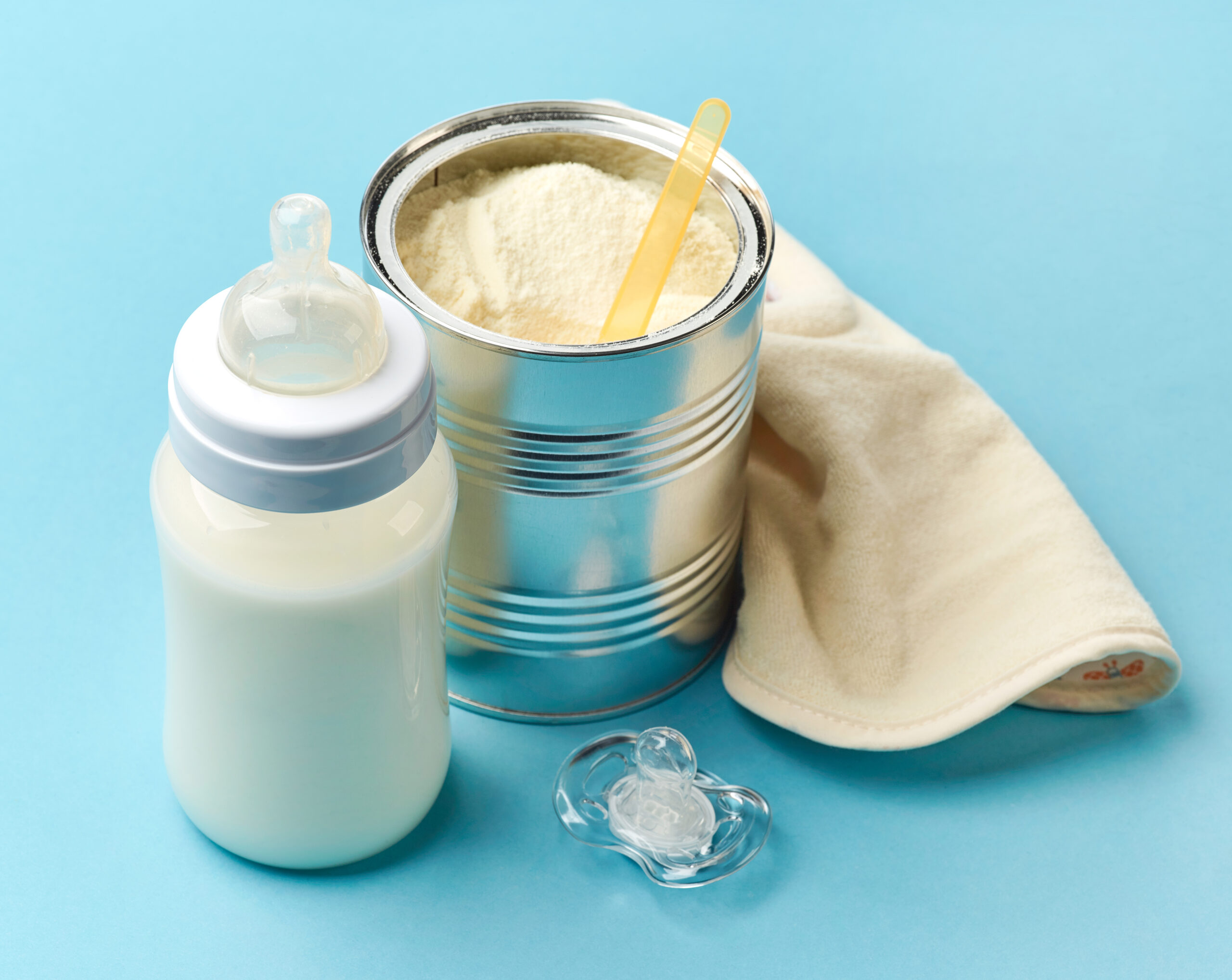
The cashier pushed the two dented cans of formula back across the counter because Ivy’s wet coins did not cover the total.
“That’s eighty-six dollars and fourteen cents,” the manager said. “I need the full amount.”
Ivy looked at the coins in her palm and counted them with the tip of one finger. “One, two, three.” She stopped at twelve.
I was at the next checkout with a basket containing coffee, bread, and a jar of soup. I had noticed the child because she was trying very hard not to look at anyone.
“I can pay it,” I said.
The manager turned toward me. “Sir, that’s not necessary.”
I put my card on the counter.
Ivy shook her head. “Mama said not to take money from strangers.”
“Then don’t take it from me,” I said. “Let me buy the groceries.”
She looked at the two cans, then at me. “Mama needs these.”
“I can see that.”
The manager waited with his hand resting beside the register. Behind us, a woman shifted her basket from one arm to the other and looked toward the entrance. Ivy’s lower lip moved once. Then she dropped to her knees and gathered the coins against her skirt.
“I just need the formula,” she said.
I stepped forward and handed over my card. The machine approved the payment with a small green light. The manager put the receipt beside the cans. “There you are.”
Ivy stood and wiped her hands on the front of her coat. “Thank you.”
“Where is your father?”
She looked down. “He’s not coming.”
“Your grandmother?”
“No.”
“Who brought you here?”
“Mama.”
That answer did not fit the way she was standing there alone. I picked up the grocery bag. “I’ll carry this.”
“I can carry it.”
“I know.”
She took one can anyway.
At 10:24, we reached the loading corridor behind the store, where the noise of carts and automatic doors was softer. I set the bag on a low concrete ledge.
“Tell me what is wrong.”
“Mama has been sick for two days.”
“Has she seen a doctor?”
Ivy shook her head.
“Is there an adult with her now?”
“No.” She said it without hesitation.
I looked at the formula can in her hands. “Where do you live?”
“Lower River Street.”
“Who else is there?”
“Noah and Leo.”
“Your brothers?”
She nodded. “They’re babies.”
I knew the answer before I asked the next question. “How old?”
“Six weeks.”
The old watch on my wrist showed 10:27. Ivy noticed it. “You were a soldier?”
“Once.”
“Mama said soldiers know what to do.”
I adjusted the watchband. “Does your mother have a phone?”
“It stopped working.”
“When?”
“Yesterday.”
“Did she tell you to come here?”
Ivy nodded. “She told me to buy formula.”
“And after that?”
Ivy looked toward the service door. “I have to show you.”
We went out through the side entrance. Rain had made the pavement dark, and I kept several yards behind her as she walked toward Jefferson Avenue.
“Slow down,” I called.
She did not turn. The bus stop was ahead of us. Then Ivy crossed the street.
“Ivy.”
She turned into a narrow alley between two brick buildings. “That isn’t the bus stop,” I said.
“I know.” I followed her. At the far end she pushed through a gate that leaned against its hinges.
“How much farther?”
“Three blocks.”
“Does your mother know you left?”
“She told me to.”
That answer bothered me more than the rain.
We reached Lower River Street at 10:49. The house stood behind a short fence with peeling white paint. Ivy took a brass key from her coat pocket, but she did not use it. Instead, she opened the front door with a key already in the lock.
She looked back at me. “Don’t make noise.”
“Why?”
“The babies are sleeping.”
Inside, the house smelled of old wood and cold coffee. Two infants lay on a sofa beneath a faded blanket. One moved his hand against the fabric. The other turned his head toward the sound of Ivy’s shoes.
“Noah,” Ivy whispered. Then, “Leo.”
I put the grocery bag on the floor. “Where is your mother?”
Ivy pointed toward the bedroom. I followed her down the narrow hall. Evelyn lay on the bed. For several seconds, I saw only a woman with dark hair spread across a pillow, one hand resting outside the blanket. Then she turned her face slightly. I stopped. There was a small crescent mark above her ear.
I had seen that mark before, in photographs, in family records, and once on the cheek of a child who had been carried into my sister’s kitchen.
“Evelyn,” I said.
Ivy looked at me. “You know Mama?”
I did not answer. She stepped closer to the bed. “Mama, I found somebody.”
Evelyn’s eyelids moved but did not open. Ivy touched the edge of the blanket. “He’s a soldier.”
I looked at the children in the hall. Then I looked back at Evelyn. For years I had used the name Arthur Pendelton because it was safer than the name written in those family records. That safety had lasted until 10:49 on a Thursday morning.
I picked up the grocery bag and carried it into the kitchen. Ivy followed.
“You know her,” she said.
“Yes.”
“How?”
I set the bag beside the sink. “Not yet.”
She frowned. “Mama said if she didn’t wake up, I had to find a soldier.”
I turned toward her. “Who told you to find one?”
“Mama.”
“Why a soldier?”
Ivy looked toward the bedroom. “She said he would know what to do.”
I straightened my watchband. “Ivy, tell me exactly what your mother told you to do.”
She put one finger against the first formula can. Then the second. Then the two baby bottles waiting beside the sink. She began counting again.
I kept my hand on the edge of the mattress a moment longer, looking at the woman who shared my father’s blood and my mother’s absence from every sentence that had ever been spoken about either of us in that house. Ivy was watching me from the doorway, one hand closed around the corner of her blanket.
“Mama told me not to let anybody move her.”
“Did she tell you why?”
Ivy counted the bedpost, the lamp, the chair with one finger. “She said somebody was trying to make her go away.”
The damaged stove rattled as the water came to a boil. I turned the burner down and set two cans of formula on the counter.
“How long has your mother been sick?”
“Three days.”
“Three days exactly?”
Ivy nodded. “Mama marked Thursday on the calendar. Then Friday. Then Saturday.”
“And Sunday?”
“Sunday was today.”
She measured the powder carefully, then stopped with the scoop halfway over the bottle. “Mama said there was a man with a silver cane.”
I looked at her. “What did he do?”
“He came to the house before she got sick. He did not come inside. He stood by the fence.”
“Did your mother know him?”
“She knew his cane.”
That answer sat between us while the radiator knocked twice. I filled the bottle and handed it to her. Ivy carried it to the sofa. Noah’s fingers closed around the edge of her blanket as she leaned over him, and Leo turned his head toward her voice.
“Did Mama tell you his name?”
“No.”
“Did she tell you to remember anything else?”
Ivy looked toward the bedroom. “She said, ‘If I don’t wake up, find the soldier.'”
I straightened my watchband. “Did she say which soldier?”
Ivy shook her head. I did not ask her again. Instead, I put the kettle aside and checked the bedroom. Evelyn had not moved much. Her eyes opened when I came near, then settled somewhere past my shoulder. I pulled the bedside table drawer out. There were two envelopes, a comb, three loose aspirin tablets, and a receipt folded beneath a magazine. The receipt was from a private pharmacy on Adams Avenue. The date stopped me. September 14th. Evelyn had supposedly lost access to her accounts in June.
I unfolded the paper on the blanket. The pharmacy had charged seventy-eight dollars and forty cents to an account ending in 2147. Evelyn’s eyes moved toward the receipt.
“That account,” she said.
I leaned closer. “What about it?”
She swallowed. “It was closed.”
“When?”
“June 19th.” Her voice was barely there, but the date was exact.
“Who could still use it?”
Evelyn closed her eyes. “Arthur.”
I waited. She opened them again. “No. Not Arthur.”
The radiator knocked again. “Julian?”
Her fingers moved against the sheet, searching for the corner of something that was not there. I folded the receipt once, then again.
“David?”
Her eyes found mine. She said nothing.

Specialty: Emotional Turning Points
Rachel Monroe writes character-driven stories about betrayal, second chances, and unexpected resilience. Her work highlights the emotional side of family conflict — the silences, the misunderstandings, and the moments when someone quietly decides they’ve had enough.