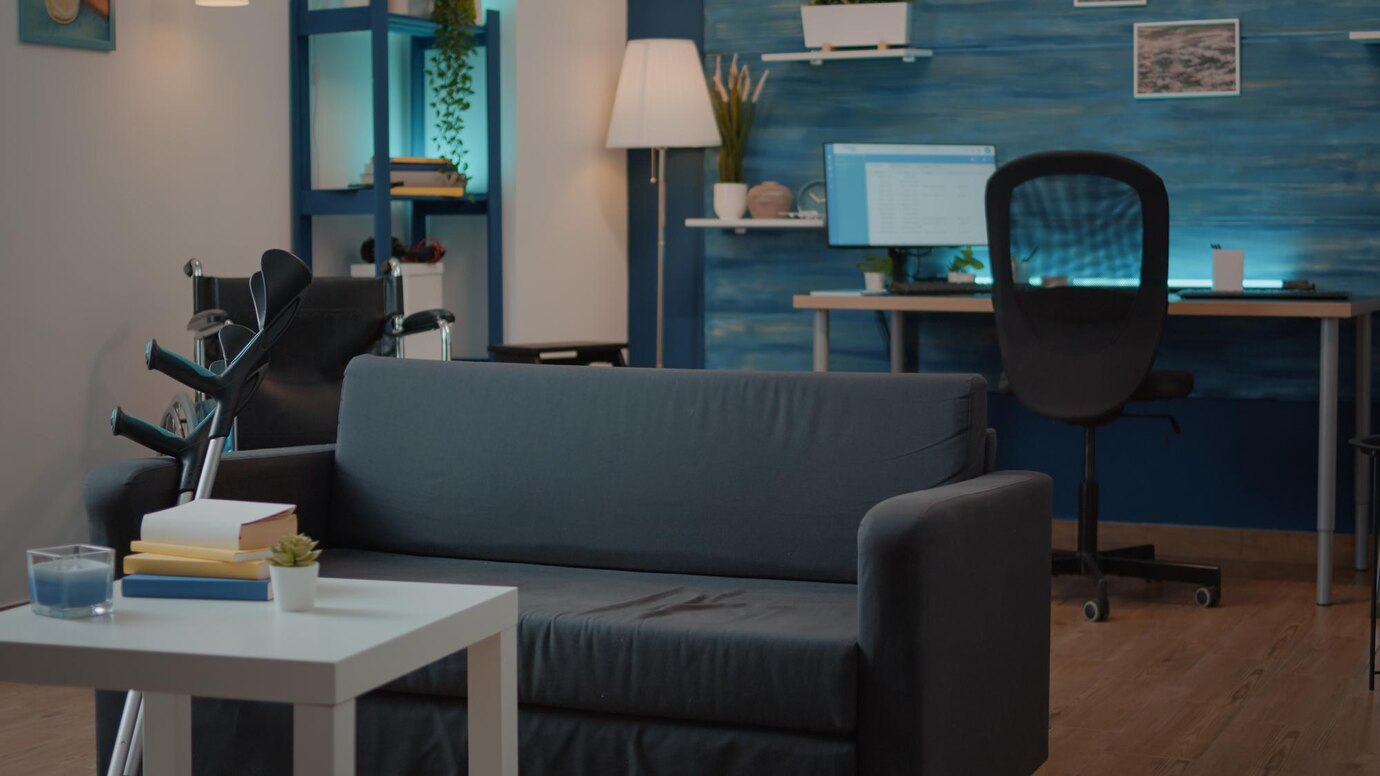
On Sunday morning, my daughter-in-law stood in my kitchen and casually said, “We need your house for New Year’s. My whole family is coming. Fifteen people. I already found you a motel off the highway.”
I looked at my son. He just lowered his head.
“I’ll be away that weekend,” I replied.
“Great.”
My daughter-in-law smiled, but as she left, she quietly slipped my spare house key into her pocket.
I saw everything but said nothing.
Five weeks later, she returned with all fifteen people, opened my front door, and froze when she saw what was waiting for her.
The hydrangeas needed water every morning, even in December. That was the thing about winter gardens that most people never understood. The cold did not mean the growing stopped. It only meant you had to pay closer attention.
I pulled on my garden gloves and stepped out through the back door into the pale morning light, my breath forming small clouds in the air. The yard was quiet in the way that only early Sunday mornings could be, quiet before the neighborhood fully woke up and the sound of leaf blowers and car engines filled in all the empty spaces. I moved slowly between the rows, tilting the watering can at the base of each plant, watching the dark soil soak it in.
Sixty-six years old. Thirty years as a head nurse at Millbrook Regional Hospital. A pension. A 401k that had grown steadily and quietly for three decades. And a life insurance policy from my late husband, Gerald, that had paid off this house entirely before I turned fifty-eight.
None of that was visible from the outside, of course. From the outside, I was just a woman in old gardening clothes, driving a beat-up Subaru with a cracked bumper sticker. That was exactly how Blythe saw me.
The sliding glass door at the back of the house opened with a sharp metallic scrape. Her heels struck the stone patio in quick, deliberate taps, the walk of someone who expected surfaces to hold still for her. I did not look up.
“We need your house for New Year’s weekend,” Blythe said in the same tone she might use to tell a restaurant server to hold the onions. She was holding the glass of orange juice I had squeezed forty minutes ago, one thumb scrolling her phone without pause. “My parents are flying in from Florida. All fifteen of us. Your house has five bedrooms and a big yard. Hotel prices right now are absolutely ridiculous.”
I set the watering can down slowly. She finally glanced up from her screen, her expression carrying the mild inconvenience of someone asking a stranger to move their shopping cart. Not quite rude enough to be embarrassing, but not quite polite enough to be human.
“I already found you something,” she continued, as if this were a kindness. “There is a motel off the highway. Very affordable. Three days, maybe four. You would barely notice you were gone.”
I turned and looked at Corbin. My son, thirty-two years old, was standing just inside the sliding glass door with both hands shoved into the front pockets of his jeans, his eyes fixed on the patio stones like he was reading something written there.
As Blythe crossed back toward the door, she passed the small brass hook mounted beside the pantry window, the one where I kept the spare house key. And her hand moved so quickly and naturally that if I had blinked, I would have missed it entirely.
Corbin’s gaze shifted for exactly one second, then dropped back to the ground.
“Corbin,” I said. “What do you think?”
He shifted his weight from one foot to the other and cleared his throat. “Mom, it’s just a few days. Blythe’s parents haven’t been out to the East Coast in a long time. The house really is big for one person.” His eyes still had not met mine. “It would mean a lot to us.”
Blythe smiled that sharp, self-satisfied smile of someone who has already decided the conversation is finished.
“I will be away that weekend,” I said simply.
“Even better,” she chirped, already turning back toward the door. “We’ll let ourselves in. Don’t worry about a single thing.”
The front door closed. The kitchen settled into silence.
I pulled off my garden gloves one finger at a time and walked back inside. I set them on the counter, crossed to the pantry, and looked at the small brass hook beside it. Empty.
I stood there looking at it for what felt like a long time. My chest did not tighten. My eyes did not sting. What moved through me was something quieter and more precise than anger. A cold, clear feeling, like stepping out of a warm fog into sharp winter air and suddenly being able to see all the way to the tree line.
I thought about the morning five years ago when Blythe had walked into this house for the first time as Corbin’s wife and looked around the living room and said, “It’s cozy for its size,” with a smile so polite it could only mean the opposite. I thought about the Thanksgiving she had spent two hours reorganizing my kitchen cabinets because my system didn’t make sense to her, then left without putting a single dish in the sink. I thought about the tuition checks, the wedding catering bill, the insurance payments that came out of my account every month without a word of acknowledgment from either of them.
I had made choices. Every one of those things had been a choice I made willingly because I loved my son, and I had believed, in the quiet and reasonable way that mothers believe things, that love given freely finds its way back eventually.
But the key was not a disagreement. The key was not a difference of opinion about kitchen cabinet organization. Taking the key meant she had already decided that what I wanted did not factor into any of this. It meant she had looked at me and seen not a person, but an obstacle that had conveniently agreed to remove itself.
That was the thing that changed.
I picked up my phone from the kitchen counter, scrolled through my contacts, and stopped at a name I had known for over thirty years. My thumb hovered over the screen for just a moment. Then I pressed call. The line rang once, twice. Then Doris picked up, her voice alert even on a Sunday morning.
“Lavinia, what’s wrong?”
I looked at the empty brass hook one last time. “Nothing’s wrong,” I said. “I just need your truck.”
Doris arrived in nineteen minutes. I heard her Ford F150 pull into the driveway before I saw it, that familiar low rumble of an engine that had driven me to the airport, helped me move Gerald’s things out of the bedroom after he passed, and sat idling outside the hospital on the night I finally retired.
She killed the engine and walked through the front door without knocking, the way she had done for thirty-one years. She took one look at me sitting at the kitchen table with my hands wrapped around a cold mug of tea and said, “Tell me everything.”
So I did. I told her about the orange juice, about Blythe standing in my kitchen scrolling her phone while she issued instructions like a property manager to a tenant who had overstayed her welcome. About Corbin and his shoes and his complete, practiced inability to look his own mother in the eye. About the empty brass hook.
Doris listened without interrupting, which was one of the things I had always loved most about her. When I finished, she was quiet for a moment. Then she said, “How long has this been going on?”
I thought about that honestly. “Five years,” I said. “Give or take.”
She nodded slowly, the way she did when she had already suspected the answer before she asked the question.
I told her about five years of it. The condescending comments disguised as opinions. The kitchen cabinets. The tuition checks. The wedding bills. The $18,000 in car insurance premiums I had paid without being asked and without being thanked. I told her all of it in about four minutes. It didn’t take long. I had never said it out loud before, but I had been carrying it for years.
Doris didn’t say anything for a moment. Neither did I. We just sat there with the weight of it between us on the kitchen table.
Every single time, I had told myself it was a choice. That I was giving freely. That love didn’t keep a ledger. But Blythe had looked at that hook this morning and made a calculation. She had decided that the key was already hers. That the house was already hers. And that I was simply a logistical obstacle that had been gracious enough to agree to move itself out of the way.
She hadn’t asked. She hadn’t discussed. She had simply reached out and taken.
That wasn’t a misunderstanding. That was a conclusion she had arrived at because I had spent five years providing no evidence to the contrary.
“I’ve been thinking about selling the house,” I told Doris.
She raised an eyebrow.
“It’s too big,” I said. “Too much maintenance for one person. There’s a young couple, the Hendersons, from the open house back in September. They left a note with my realtor. They’re still interested.” I looked around the kitchen at the cabinets Blythe had rearranged two Thanksgivings ago, which I had quietly put back the way I liked them the day after she left. “I just hadn’t decided on the timing yet.”
“And now you have,” Doris said. It wasn’t a question.
“Now I have.”
She leaned back in her chair and crossed her arms. “So what do you need from me?”
I opened my laptop. “Your truck. Your Saturday. And your opinion on Caribbean cruise packages.”
Doris stared at me for a full three seconds. Then she laughed. A real laugh, the kind that comes from somewhere deep and genuine.
“Book it,” she said. “Book it right now.”

Sophia Rivers is an experienced News Content Editor with a sharp eye for detail and a passion for delivering accurate and engaging news stories. At TheArchivists, she specializes in curating, editing, and presenting news content that informs and resonates with a global audience.
Sophia holds a degree in Journalism from the University of Toronto, where she developed her skills in news reporting, media ethics, and digital journalism. Her expertise lies in identifying key stories, crafting compelling narratives, and ensuring journalistic integrity in every piece she edits.
Known for her precision and dedication to the truth, Sophia thrives in the fast-paced world of news editing. At TheArchivists, she focuses on producing high-quality news content that keeps readers informed while maintaining a balanced and insightful perspective.
With a commitment to delivering impactful journalism, Sophia is passionate about bringing clarity to complex issues and amplifying voices that matter. Her work reflects her belief in the power of news to shape conversations and inspire change.