My sister Vanessa is three years older than me.
She’s beautiful. She always has been. Long dark hair, perfect skin, the kind of smile that makes strangers want to do things for her. When we were kids, teachers adored her. Waiters gave her free desserts. Boys followed her around the playground like ducklings.
And my parents gave her whatever she wanted.
I don’t think they meant to. I think it started small. Vanessa was a colicky baby. She cried constantly for the first year of her life. My mother told me once that she spent so many months trying to make Vanessa stop crying that she just never stopped trying.
By the time I came along, the pattern was set.
When Vanessa wanted something, she got it. And if she didn’t get it right away, she cried, or screamed, or sulked, or broke something. And then she got it anyway.
I learned that lesson early.
When I turned seven, my aunt gave me a stuffed rabbit for my birthday. It was white and soft with long pink ears. I named it Clementine. I slept with it every night.
Two weeks later, Vanessa decided she wanted Clementine.
“Share with your sister,” Mom said. “You’re the younger one, but you have to learn to be generous.”
“But it’s mine. Aunt Linda gave it to me.”
“Claire. Don’t be selfish.”
Vanessa took Clementine to her room. She lost interest in it after three days. I found it a month later under her bed, covered in dust, one ear torn.
When I was eleven, Vanessa wanted my bedroom. Mine had the bigger window. The one that looked out over the backyard and the big maple tree.
“Being a good sister means making sacrifices,” Dad said, carrying my boxes down the hall.
Dad rarely took sides. He worked long hours as an accountant, and when he came home he mostly wanted peace. Whatever ended the argument fastest. Usually that meant giving Vanessa what she wanted.
When I was nineteen, Vanessa borrowed six hundred dollars from me to fix her car. I’d saved that money for a year from my job at a music store. She promised to pay me back in a month.
Four months later, I asked about it.
“Oh my God, Claire,” she said. “Are you seriously keeping track? That’s so petty.”
Mom agreed with her. “It’s family. You don’t keep score with family.”
I never got the money back.
Every time Vanessa crossed a line, someone softened the consequences.
Every time I objected, I became the difficult one.
By the night of the concert, I was twenty-two years old.
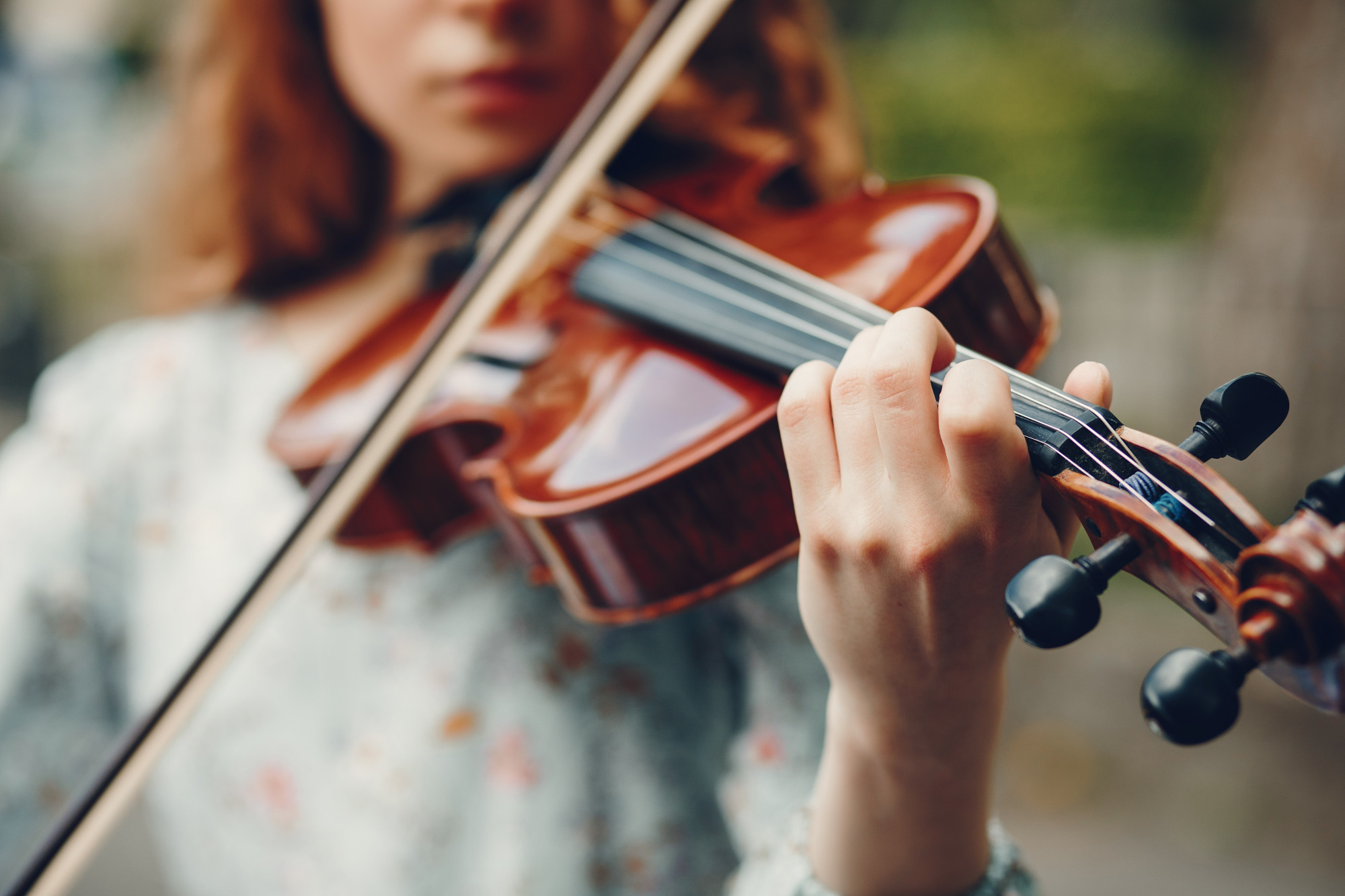
I’d just finished my undergraduate degree in violin performance at a small music school in New Jersey. I’d been accepted into the New York Metropolitan Youth Orchestra’s advanced fellowship program, which takes musicians up to age twenty-four. Out of three hundred applicants, they’d chosen twelve.
And at the end of the season, after weeks of auditions, Maestro Adrian Cole had chosen me to perform the final movement of the Sibelius Violin Concerto as the featured soloist at the orchestra’s spring gala.
The spring gala was the biggest night of the year. The audience would include major donors, music critics from three newspapers, and directors from several prestigious conservatories. Juilliard. Curtis. The New England Conservatory. They came every year to scout for graduate students.
I wanted to go to Curtis more than anything in the world. They accept only a few violinists every year. Full scholarships for everyone. If one of their faculty liked my performance, it could change my entire life.
I had spent years preparing for an opportunity like this.
But the part that mattered most to me had nothing to do with who was sitting in the audience.
I was going to play the Sibelius on my grandfather’s violin.
On a real stage. In front of people who mattered.
Just like I’d promised him.
Two weeks before the gala, I bought a dress.
I’d never spent much money on clothes. Most of my wardrobe was black. Performance black. Concert black. Black pants, black blouses, black shoes. Musicians wear black so the audience looks at the music, not at us.
But Maestro Cole had told me that soloists at the spring gala were allowed to wear color.
“It’s your night,” he said. “Wear something that makes you feel like you belong on that stage.”
I went to a little boutique in the West Village that I’d walked past a hundred times. In the window was an emerald-green dress. Floor length. Silk. Simple neckline, cap sleeves, a soft skirt that moved when you walked. It was the exact color of the velvet lining in Grandpa’s violin case.
I stood in front of that window for ten minutes. Then I went in and tried it on.
It cost four hundred and twenty dollars. More than I’d ever spent on anything except my bow.
I bought it anyway. I’d been saving tips from teaching beginner violin lessons for months. I told myself Grandpa would have wanted me to.
When I got home, I hung it on my closet door and just stared at it.
Vanessa stopped in my doorway. She’d come over for dinner, the way she did every Sunday, and she’d seen the shopping bag.
“Oh my God,” she said. “Where did you get that?”
“A shop in the Village.”
She walked over and touched the fabric. “It’s stunning. How much was it?”
“A lot.”
“You should let me borrow it sometime.”
“It’s for the gala.”
She smiled. “After the gala, then.”
I didn’t answer. She didn’t notice.
Vanessa had her own reasons for caring about the gala.
Eight months earlier, she’d gotten engaged to a man named Ethan Whitmore.
Ethan was nice. Genuinely nice. Quiet, a little shy, with wire-rimmed glasses and a laugh that came out like a hiccup. He worked as an architect at a firm in Brooklyn. He adored Vanessa the way people always adored Vanessa.
His mother, Eleanor Whitmore, was the chair of the board of the New York Metropolitan Youth Orchestra.
Eleanor was seventy-one years old. Elegant, silver-haired, sharp as a scalpel. Her late husband had made a fortune in shipping and left her most of it. She’d spent the last twenty years giving it away, mostly to music programs for young people.
She’d been a violinist herself once. A serious one. Before she married. Before her hands got too stiff.
Vanessa was terrified of her.
“She doesn’t like me,” Vanessa told me at one of our Sunday dinners. “I can tell. She looks at me like I’m a stain on her carpet.”
“I’m sure she likes you.”
“She doesn’t. Ethan says she’s just reserved. But I know.” Vanessa stabbed at her salad. “The gala is my chance. She’ll be there with all her rich friends. Ethan’s introducing me to everyone as his fiancée. If I make a good impression, she’ll have to accept me.”
There was something else, too. Something Vanessa had mentioned only once, quickly, like she didn’t want to jinx it.
Eleanor had offered her a job. A real one. Associate director of donor relations at the Whitmore Foundation, starting in June. It paid nearly twice what Vanessa made doing event planning for a hotel in Midtown. Ethan had pushed for it. Eleanor had agreed, on one condition.
“She said she wants to see me in action at the gala,” Vanessa said. “Working the room. Charming donors. If she likes what she sees, the job is mine.”
So that night mattered to both of us.
I just didn’t know yet how much.
The concert was on a Saturday evening in late May, at a beautiful old hall on the Upper West Side. Gold balconies. Red velvet seats. A ceiling painted with clouds and angels.
I arrived at five o’clock for warm-ups. The performance started at seven-thirty. I was scheduled to go on at eight-fifteen, right after intermission.
The orchestra had hired a small film crew that season. A young documentary maker named Jonah Reyes. He was making a short film about the fellowship program for the orchestra’s website and the donor reception. He’d followed several of us around for weeks, filming rehearsals and lessons.
For the gala, he wanted to capture what he called “the last hour before the stage.”
“Just a tiny camera,” he said, holding up a little black box no bigger than a deck of cards. “I’ll put it on the shelf in your dressing room. It’ll record the whole hour. Your warm-up, your nerves, everything. I’ll edit it down to two minutes. Is that okay?”
“Sure,” I said. I signed the release form. “Just don’t film me changing.”
“I’ll angle it at the mirror and the case,” he promised. “You can change behind the screen.”
He set it up on the shelf above the dressing table, tucked between a vase of white roses the orchestra had sent and a stack of sheet music. A tiny red light glowed on the front.
After a few minutes, I forgot it was there.
By seven-forty-five, I was ready.
I’d warmed up for an hour. My hands were loose. My fingers were warm. Grandpa’s violin was resting in its open case on the table, the green velvet glowing under the lights. I’d tuned it twice.
The emerald dress was hanging beside the mirror. I was still in my robe, putting on my makeup. I was going to change at eight, right before the call.
Outside, I could hear the orchestra finishing the first half. Dvořák. The applause came through the walls like rain.
Less than half an hour before I was supposed to walk onto the stage, I heard the door open behind me.
My older sister Vanessa appeared in the doorway.

Adrian Hawthorne is a celebrated author and dedicated archivist who finds inspiration in the hidden stories of the past. Educated at Oxford, he now works at the National Archives, where preserving history fuels his evocative writing. Balancing archival precision with creative storytelling, Adrian founded the Hawthorne Institute of Literary Arts to mentor emerging writers and honor the timeless art of narrative.